
Table of Contents
Your living room walls are waiting. Not for perfection, but for personality — for textures that catch the afternoon light, colors that shift the mood when you walk in, and pieces that feel like you.
Creating your own wall art isn’t just about filling empty space. It’s about slowing down with your hands, choosing materials that speak to your senses, and building a room that feels both intentional and alive.
Modern doesn’t mean cold. It means clean lines softened by natural textures, bold statements balanced with breathing room, and a confidence that comes from knowing exactly what belongs. Let’s explore how to bring that energy to your walls — with your own two hands.
Why DIY Wall Art Transforms Modern Spaces
There’s something deeply satisfying about art you’ve made yourself. It carries your energy, your choices, your Saturday afternoon spent mixing paint or arranging dried florals.
In a modern living room, where simplicity reigns, handmade pieces add the warmth that prevents minimalism from feeling stark. They tell visitors this space is lived in, loved, thought about.
And practically? DIY wall art lets you customize scale, color, and texture to fit your exact space. No more searching for the perfect piece in the perfect size. You become the curator and the creator.
Essential Materials for Modern DIY Wall Art
Before you begin, gather materials that align with modern aesthetics — clean, natural, and tactile.
Canvas and substrates: Stretched canvas in various sizes, wooden panels, or even high-quality watercolor paper mounted on board. Modern art loves the rawness of exposed canvas edges.
Paints and mediums: Acrylic paints in neutrals (ivory, charcoal, sage, terracotta), metallics (gold leaf, copper), and textured mediums like modeling paste or drywall joint compound for dimension.
Natural elements: Pressed botanicals, reclaimed wood pieces, wool roving for fiber art, air-dried clay, or handmade paper. These bring organic texture that modern spaces crave.
Tools for texture: Palette knives, trowels, sponges, or even credit cards for scraping. Texture is what elevates DIY art from craft to gallery-worthy.
Sustainable options: Consider eco-friendly paints, upcycled materials like old book pages or fabric scraps, or digital prints from museum archives printed on recycled paper.
Textured Canvas Art: The Foundation Technique
Start here if you’re new to DIY wall art. Textured canvases are forgiving, impactful, and endlessly customizable.
Creating Depth with Drywall Compound
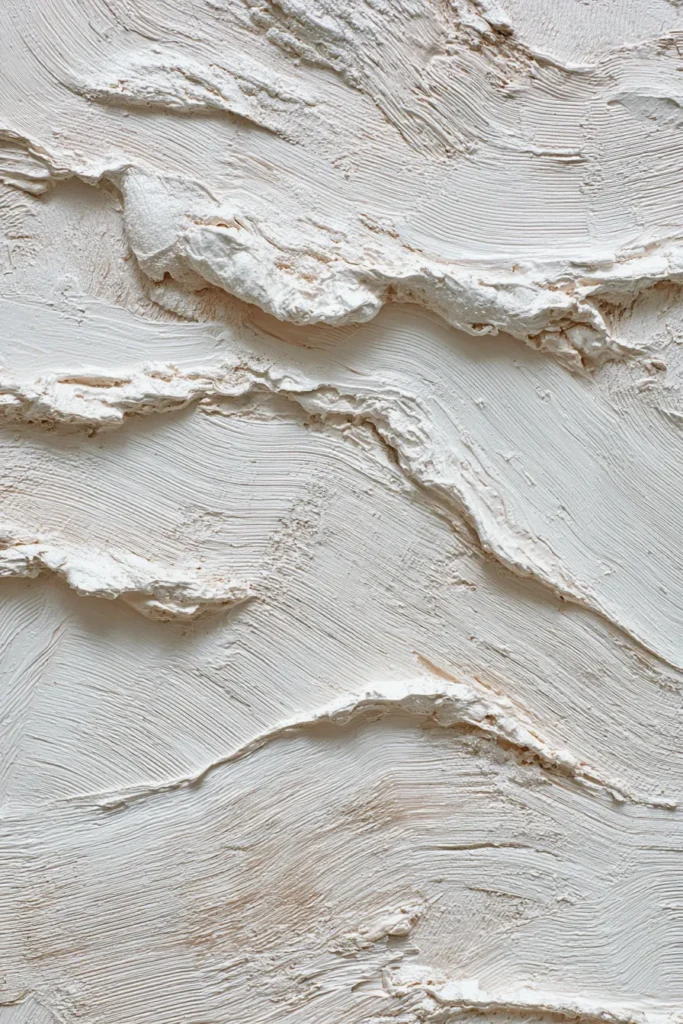
This technique mimics expensive plaster art at a fraction of the cost. Mix drywall joint compound (the lightweight kind) with acrylic paint in your chosen neutral — think warm white, soft gray, or sandy beige.
Apply it to canvas with a trowel or palette knife in sweeping, organic strokes. Let it dry completely, then seal with matte medium. The result feels sculptural, architectural, like something from a Copenhagen gallery.
Layer multiple shades for depth. A base of cream with highlights of pure white catches light beautifully throughout the day.
Abstract Geometric Texture
Use painter’s tape to create clean sections on your canvas. Apply textured medium to alternating sections, leaving others smooth.
Once dry, paint each section in different tones of the same color family. Remove the tape to reveal crisp lines between textured and flat surfaces.
This approach works beautifully in modern spaces that balance organic and geometric elements — think Scandinavian or minimalist industrial styles.
Gallery Wall Curation: The Modern Approach
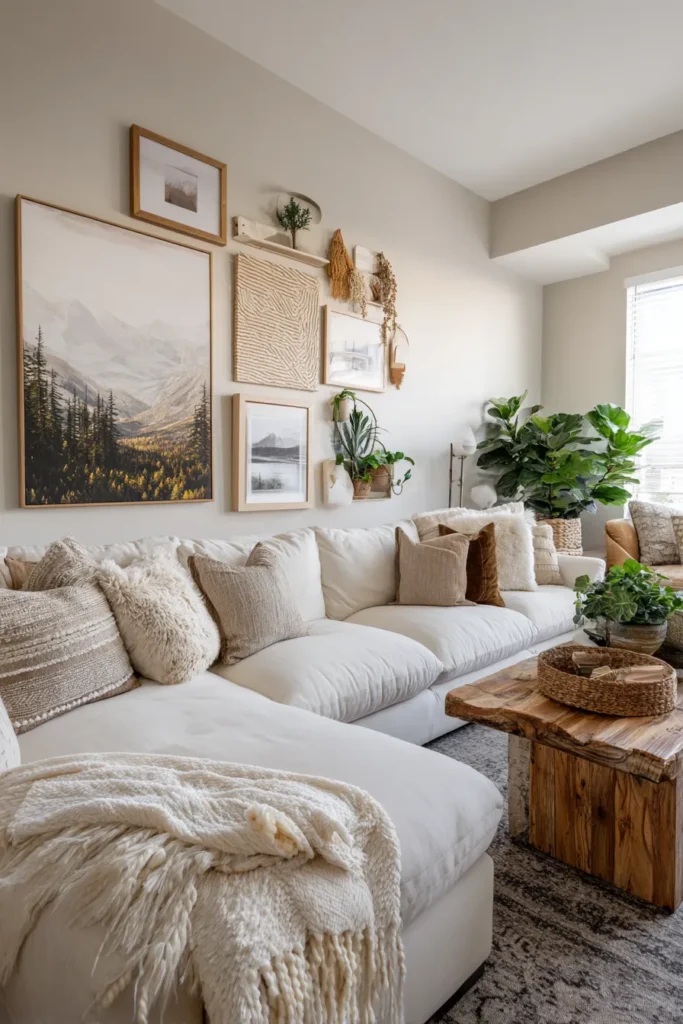
A gallery wall is personal storytelling on display. In modern living rooms, restraint is key.
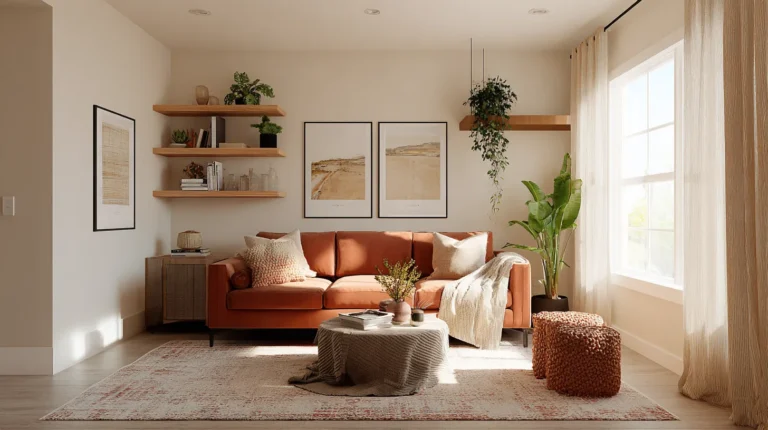
Choose a cohesive color palette first — perhaps black and white with one accent color, or all earthy neutrals. This prevents visual chaos.
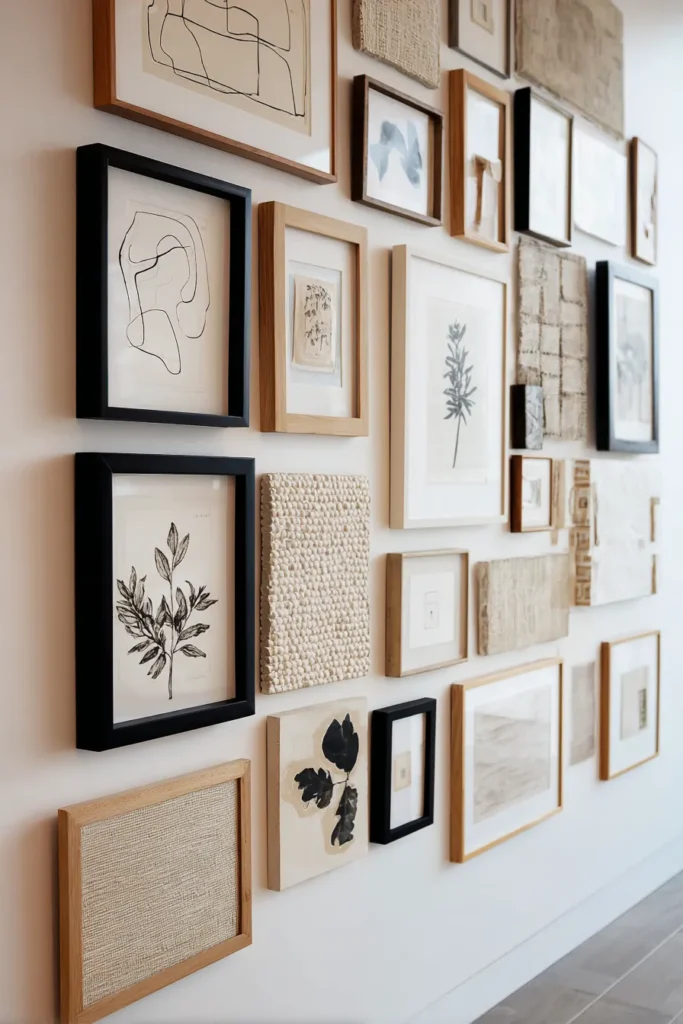
Mix mediums intentionally: a framed textile piece beside minimalist line drawings, a textured canvas next to a simple botanical print. The variety should feel deliberate, not random.
Spacing matters: Modern gallery walls often use consistent spacing (2-3 inches between frames) rather than the tighter, salon-style arrangements. This gives each piece room to breathe.
Start with the largest piece at eye level, then build around it. Use paper templates taped to the wall before committing to nail holes.
Minimalist Line Art and Abstracts
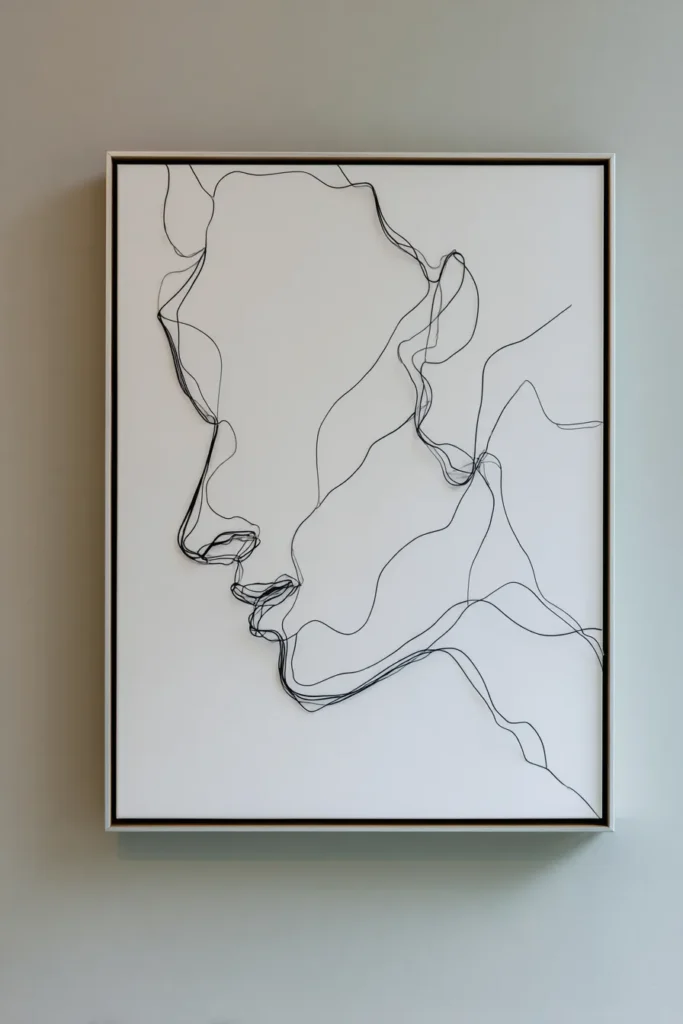
Sometimes the most powerful art is the simplest. One continuous line forming a face, a vase, a female form — these feel effortlessly sophisticated.
Create your own using black acrylic paint or markers on white canvas. Practice the line on paper first, then commit with confidence. The slight imperfection of a hand-drawn line is what gives it soul.
For abstracts, try this: choose three colors maximum. Apply paint loosely, allowing drips and organic shapes. Modern abstract art isn’t about perfection — it’s about intention and negative space.
Mount these in natural wood frames or floating frames that show the canvas depth. The framing elevates DIY work instantly.
Natural Material Wall Art
Bringing the outside in is fundamental to modern biophilic design. Wall art using natural materials adds texture and grounds a space.
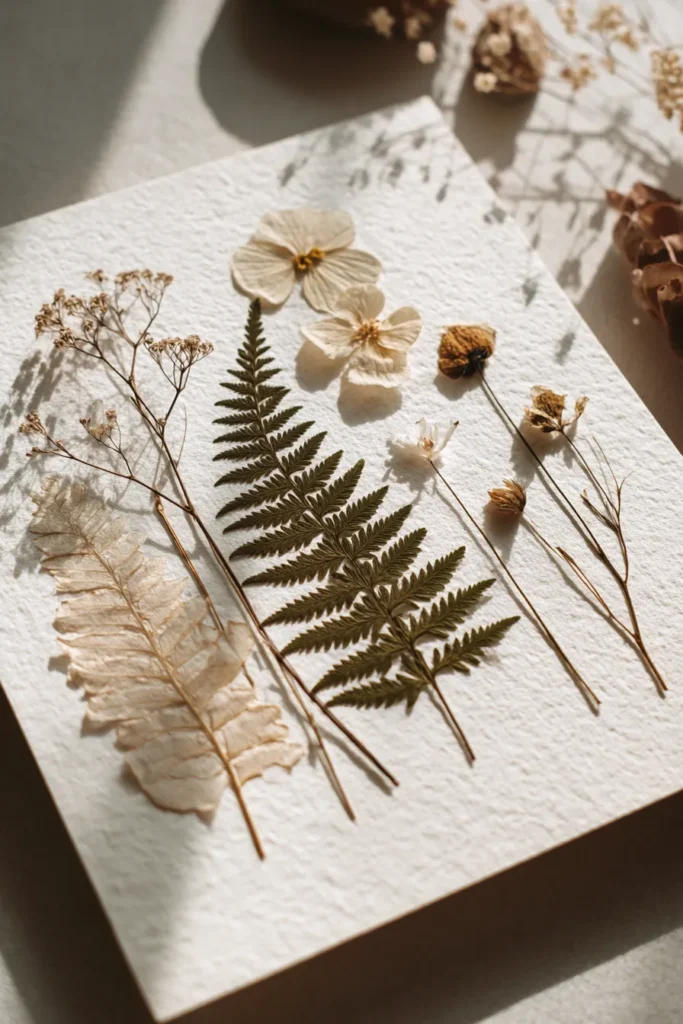
Pressed Botanical Displays
Collect leaves, ferns, or flowers and press them between heavy books for 2-3 weeks. Arrange them on neutral paper or fabric, then frame under glass.
The translucency of pressed botanicals catches light beautifully. Group several small frames together, or create one large statement piece.
This works especially well in modern living rooms with plenty of natural light and neutral color schemes.
Wooden Wall Sculpture
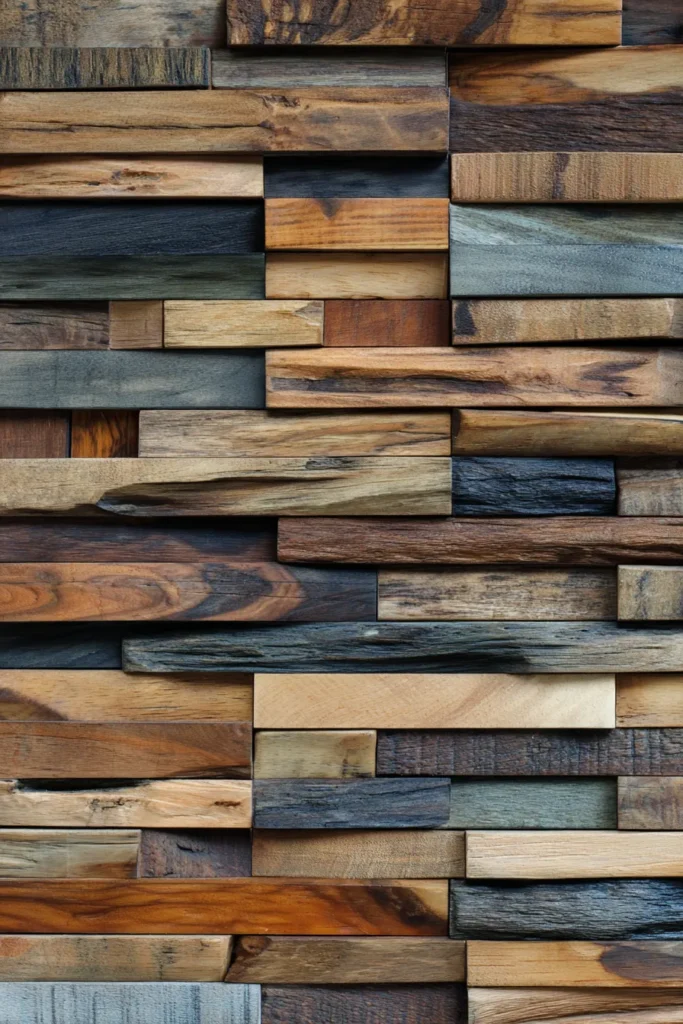
Reclaimed wood pieces arranged in geometric patterns create dimensional art with warmth. Sand and seal wood in natural finish or paint in your room’s accent color.
Arrange pieces of varying lengths horizontally, creating a woven or stacked effect. Mount on a backing board before hanging.
The texture and shadow play makes this type of art feel alive throughout the day as light shifts.
Macramé and Fiber Art
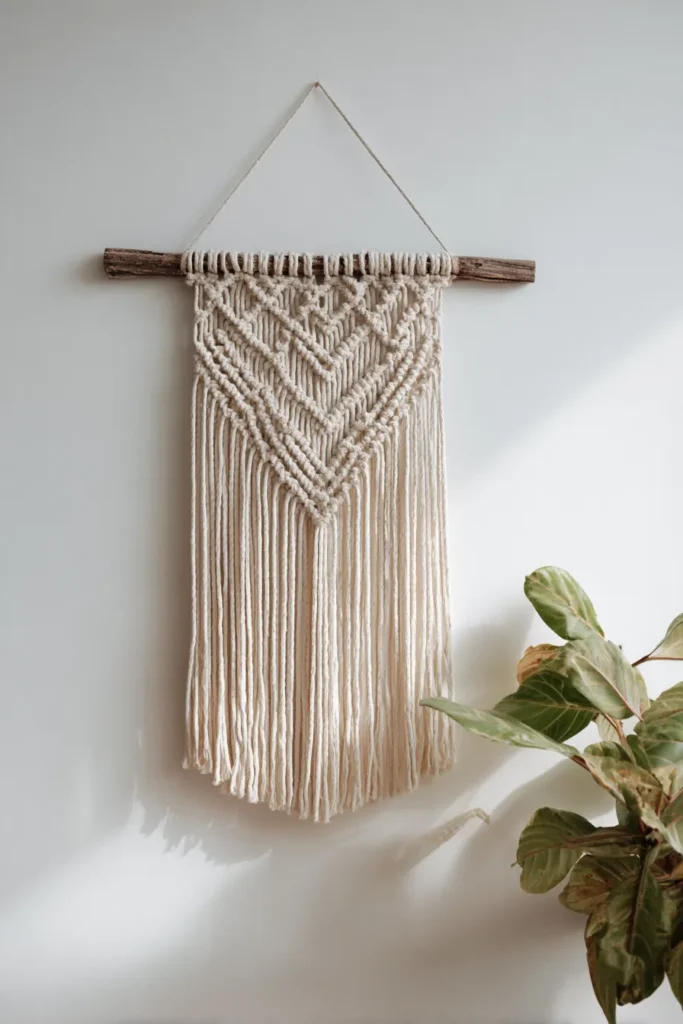
Modern macramé has evolved far beyond the 1970s. Contemporary fiber art uses simple knots in neutral cotton or jute, creating sculptural wall hangings that add softness without fuss.
Focus on clean geometric shapes — circles, diamonds, or simple fringe. The texture contrasts beautifully with smooth walls and sleek furniture.
Digital Art and Printables: High Style, Low Cost
Museum-quality art is more accessible than ever. Institutions like the Smithsonian, Met, and Rijksmuseum offer free high-resolution downloads of their collections.
Print these on archival paper through local print shops, or explore Etsy for contemporary digital art. Choose pieces that align with your aesthetic — minimalist landscapes, abstract line drawings, or vintage botanical illustrations.
Frame in simple black, white, or natural wood frames. The combination of timeless art and clean framing feels both modern and collected.
This approach allows you to rotate art seasonally without breaking your budget. Swap frames between rooms as your mood shifts.
Smart and Tech-Enhanced Wall Art
Modern living embraces technology when it enhances rather than dominates. Consider wall art that integrates lighting or digital elements thoughtfully.
Backlit Canvas Art
Create a canvas piece using translucent materials or strategic paint placement. Mount LED strip lights behind the canvas for soft, glowing ambiance in evenings.
This works beautifully with abstract compositions or simple silhouettes. The dual function — art by day, lighting by night — appeals to modern efficiency.
Digital Frame Displays
High-quality digital frames can rotate through your own photography or curated digital art collections. Choose frames with matte displays that mimic paper texture.
Display your travel photography as a rotating gallery, or program seasonal art changes. This satisfies the modern desire for both minimalism and variety.
Personalization for Modern Design Styles
Your modern living room has a personality. Let your wall art amplify it.
Scandinavian Modern
Focus on: Black and white line art, natural wood pieces, simple botanicals, and textile art in cream and gray. Keep composition clean and uncluttered.
Industrial Modern
Incorporate: Metal elements, aged wood, monochromatic abstracts, and oversized statement pieces. Embrace raw textures and architectural elements.
Mid-Century Modern
Choose: Geometric abstracts in warm tones, sunburst designs, and bold color blocking. Think 1960s Palm Springs — confident and optimistic.
Biophilic Modern
Emphasize: Pressed botanicals, natural fiber art, earth-tone abstracts, and anything bringing organic texture and natural patterns indoors.
The Psychology of Wall Art in Modern Spaces
Your wall art affects how you feel in your space. Understanding this deepens your creative choices.
Horizontal lines create calm and spaciousness — perfect for relaxation-focused living rooms. Vertical lines energize and lift, adding drama and height.
Abstract art stimulates creativity and conversation. Nature-inspired pieces reduce stress and promote wellbeing — studies show even representations of nature provide psychological benefits.
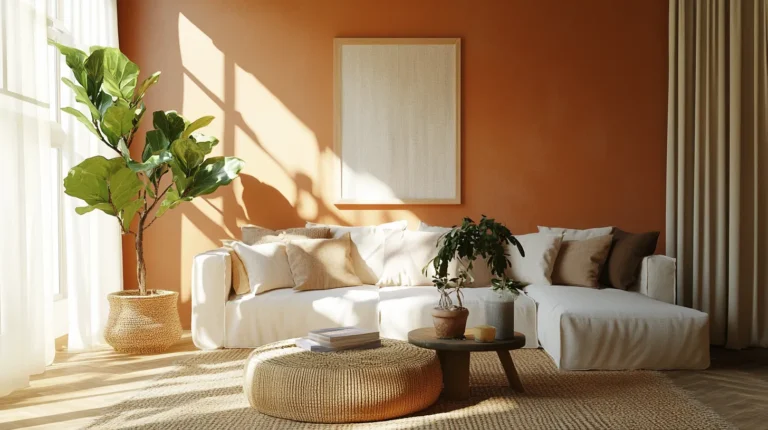
Color psychology matters: Blues and greens calm, terracottas and warm neutrals ground, while strategic black adds sophistication and focus.
Choose art that supports how you want to feel in your space. Your living room should nurture, not just impress.
Budget-Friendly Pro Tips
Creating gallery-quality art on a budget is entirely possible with smart choices.
Thrift frames: Find frames at thrift stores, spray paint them uniform colors, and replace the matting. Instant cohesion for minimal cost.
Oversized impact: One large DIY canvas (30×40 or bigger) makes a bigger statement than several small pieces and often costs less.
Material swaps: Use house paint samples instead of artist acrylics for large backgrounds. Use cardboard or foam board instead of canvas for pieces that will be framed.
Sustainable sourcing: Reclaimed wood, fabric scraps, old books for paper crafts, and natural items from walks cost nothing but carry beautiful texture.
Quality over quantity: Three excellent handmade pieces outshine ten mediocre ones. Invest time in fewer projects.
Step-by-Step: Modern Textured Abstract
Let’s walk through creating a sophisticated textured piece perfect for modern living rooms.
Materials needed: 24×36 canvas, drywall joint compound, acrylic paint (two complementary neutrals), palette knife, matte sealant.
Step 1: Mix joint compound with your lighter paint color until it reaches thick cream consistency.
Step 2: Apply to canvas in organic, sweeping strokes using the palette knife. Vary thickness for dimension — thicker in some areas, nearly smooth in others.
Step 3: While still slightly wet, add streaks of your second color. Blend edges slightly but maintain distinct movement.
Step 4: Let dry completely (24-48 hours). The texture will lighten as it dries.
Step 5: Seal with matte medium to protect and enhance color depth.
Step 6: Mount in a floating frame or hang as-is for a modern raw-edge look.
This technique never fails. Each piece is unique, and the texture catches light beautifully throughout the day.
Key Takeaways Checklist
- Start with textured canvases using drywall compound for instant sophistication
- Maintain color cohesion — limit your palette to 2-4 colors maximum
- Mix mediums and textures within a unified color scheme for gallery walls
- Incorporate natural materials for warmth and biophilic benefits
- Use digital prints from museum archives for budget-friendly, high-style art
- Consider the psychology of your art choices — how do you want to feel?
- Frame consistently or use no frames at all for modern cohesion
- Scale matters — one large piece often works better than several small ones
- Sustainable materials add texture and reduce environmental impact
- Personalize to your specific modern style: Scandinavian, industrial, mid-century, or biophilic
Creating Your Art Sanctuary
The walls you wake up to matter. They set the tone for your mornings, provide the backdrop for evening conversations, and hold space for quiet moments alone with your thoughts.
DIY wall art isn’t about achieving perfection. It’s about the meditative process of creating, the pride of displaying something made by your hands, and the subtle ways handmade art warms a modern space that could otherwise feel too curated.
Start small if you need to. One textured canvas. One pressed botanical. One afternoon with paint and possibility. Your walls will thank you, and your living room will finally feel like the sanctuary you’ve been creating all along.
The beauty is in the doing. The art is in the living.
Frequently Asked Questions
What are the easiest DIY wall art projects for beginners?
Textured canvas using drywall compound offers the most forgiving entry point. Simple pressed botanicals framed under glass, or abstract paintings using just 2-3 colors also work beautifully for first projects. Focus on texture and limited color palettes — these naturally look sophisticated and hide imperfections.
How can I make DIY wall art look expensive and gallery-quality?
The secret is in the finishing: use quality frames or go frameless with gallery-wrapped canvas, ensure clean edges, seal textured pieces with matte medium, and hang at proper eye level (center at 57-60 inches). Consistent framing across multiple pieces and thoughtful spacing elevate DIY work significantly.
What materials create the best texture in modern wall art?
Drywall joint compound, modeling paste, and thick gel mediums create dimensional texture. Natural materials like reclaimed wood, macramé cord, or pressed botanicals add organic texture. For subtler dimension, try layering paint in varying sheens — matte base with satin or metallic accents catches light beautifully.
How do I choose wall art colors for my modern living room?
Pull colors directly from your space — your sofa, rug, or favorite throw pillow. In modern design, neutrals (ivory, charcoal, warm gray, terracotta) provide sophistication, while one accent color adds personality. Consider your room’s natural light — cool light suits blue-grays, warm light enhances earth tones.
Can I mix different DIY wall art styles in one modern living room?
Absolutely, if united by color palette or framing. Mix textured abstracts with minimalist line drawings, or combine pressed botanicals with geometric pieces. The key is consistent spacing and a unified element — whether that’s all black frames, similar color tones, or matching mat borders. Variety with cohesion feels intentionally curated.