
Table of Contents
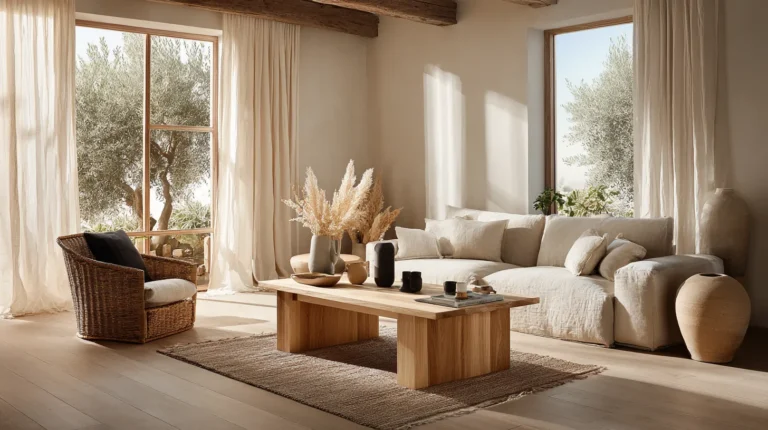
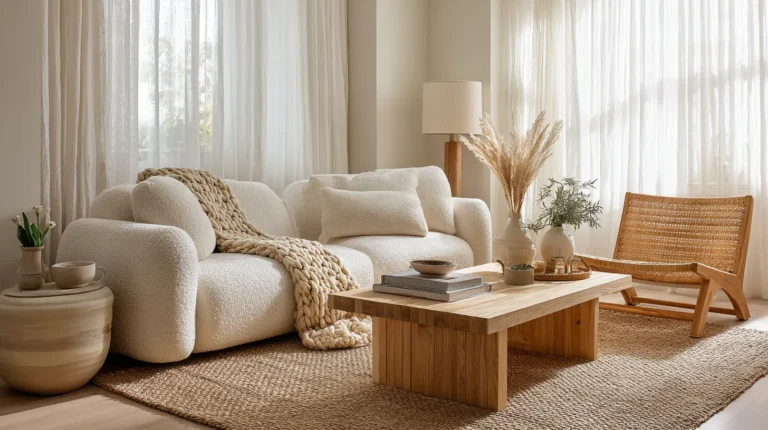
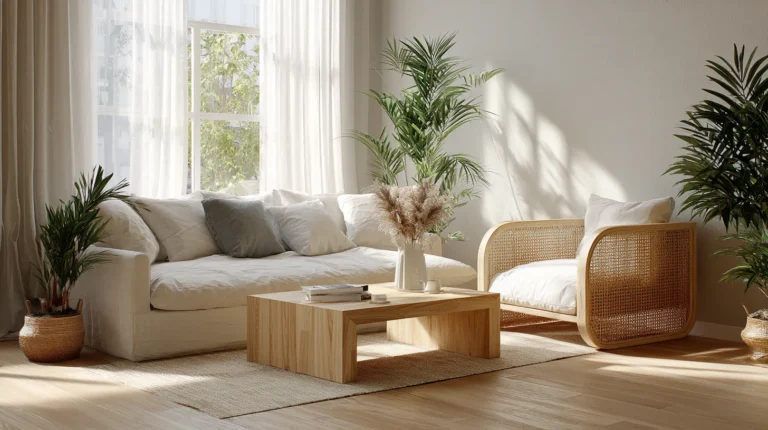
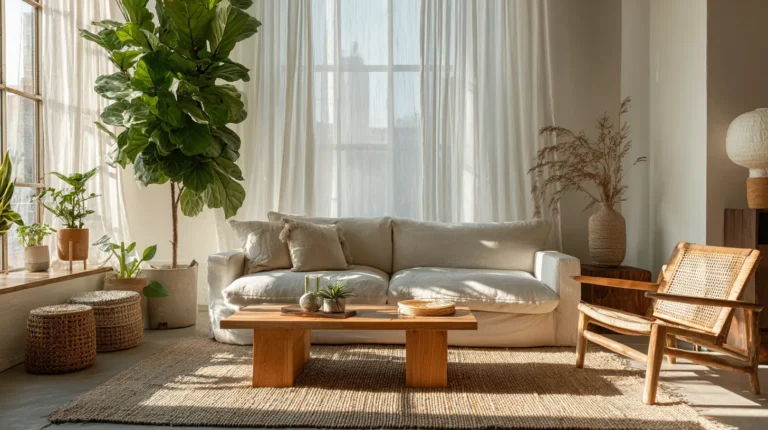
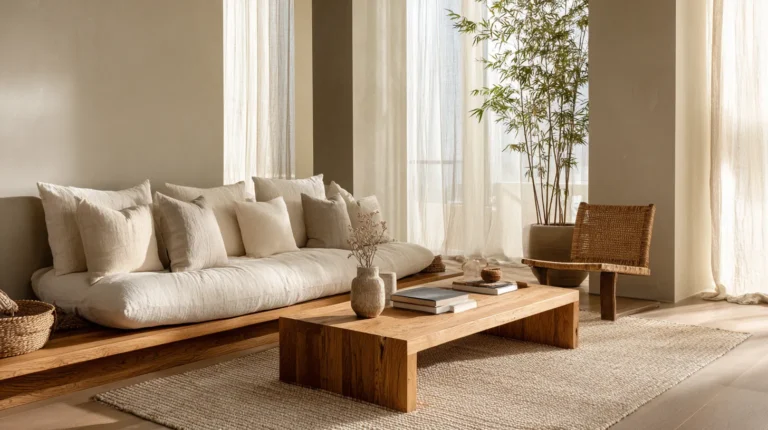
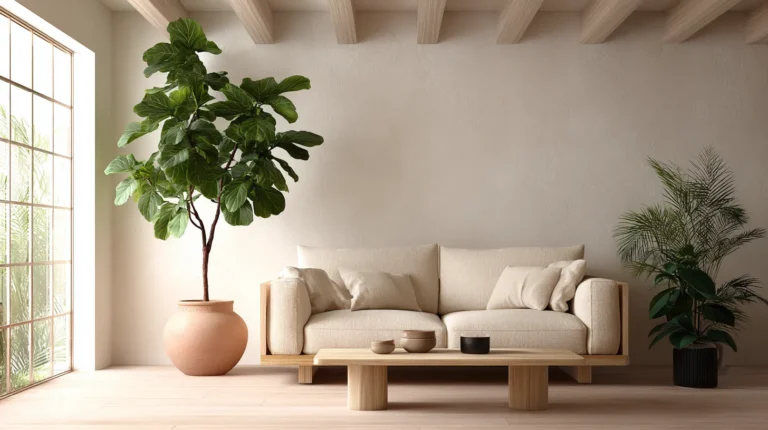
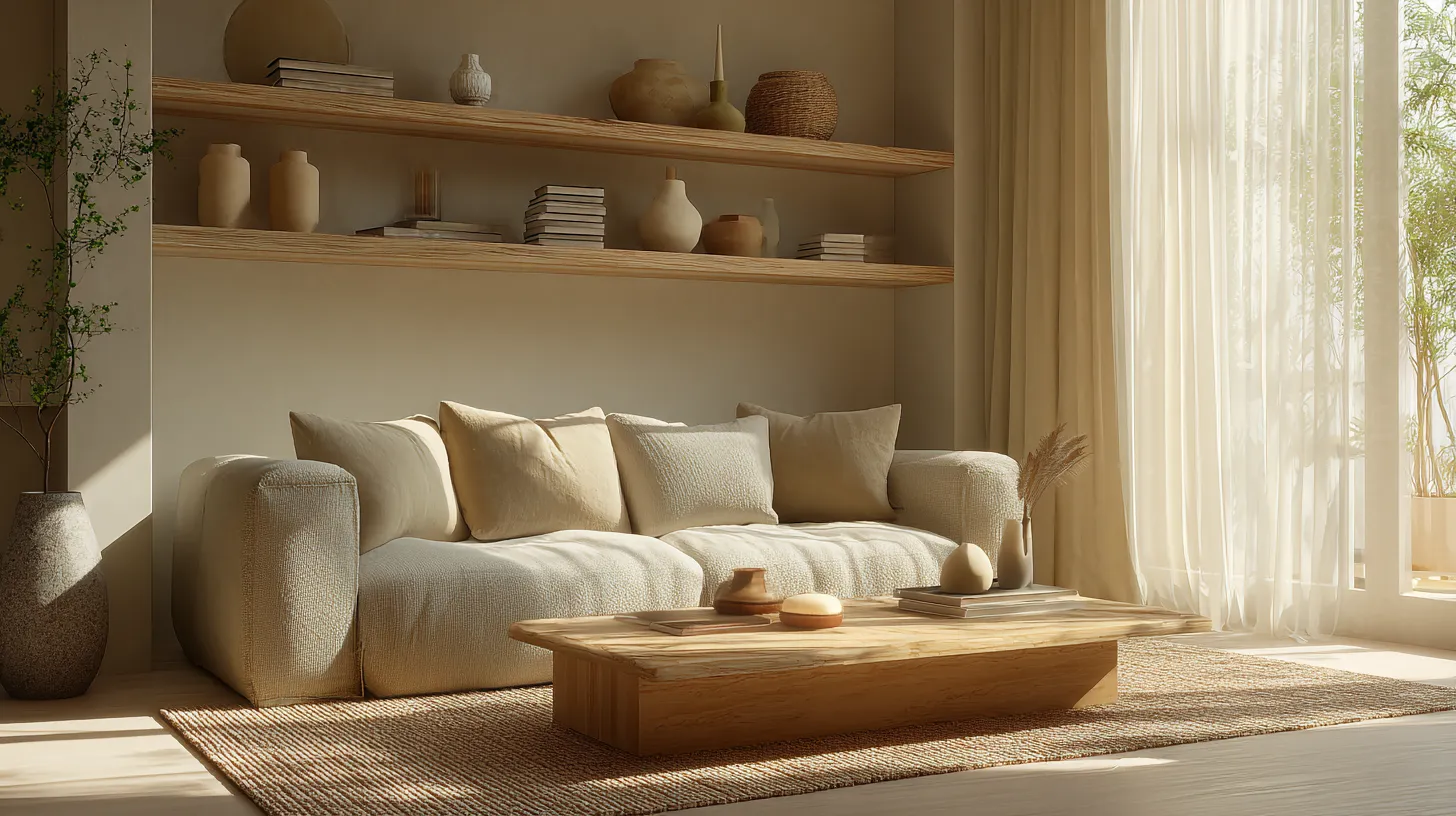
Imagine walking into a living room where clean lines meet warm wood grain. Where minimalism doesn’t feel cold, but quietly welcoming. This is the essence of Japandi—a gentle marriage of Scandinavian lightness and Japanese discipline that transforms your space into a sanctuary.
You don’t need deep pockets to create this look. What you need is intention, a discerning eye, and an understanding of what truly matters in your space.
Japandi living room furniture thrives on quality over quantity, natural materials over synthetic shine, and pieces that serve both function and soul. Let’s explore how to build this aesthetic within reach—whether you’re working with $1,500 or $8,000, or somewhere beautifully in between.
Understanding the Japandi Philosophy Before You Shop
The main rule of Japandi style is simple yet profound: wabi-sabi meets hygge. It’s about finding beauty in imperfection while embracing cozy minimalism.
This isn’t about empty rooms or stark white walls. It’s about selecting fewer pieces with greater care—furniture that breathes, materials that age gracefully, and colors that calm rather than stimulate. Every item should earn its place through utility, beauty, or ideally, both.
Before you spend a single dollar, ask yourself: Does this piece bring function and peace? If the answer is no, keep looking.
Breaking Down Your Japandi Living Room Budget
The Starter Budget: $1,500–$2,500
Yes, you can absolutely create a Japandi living room for under $2,000. It requires strategic choices and patience, but the result is deeply satisfying.
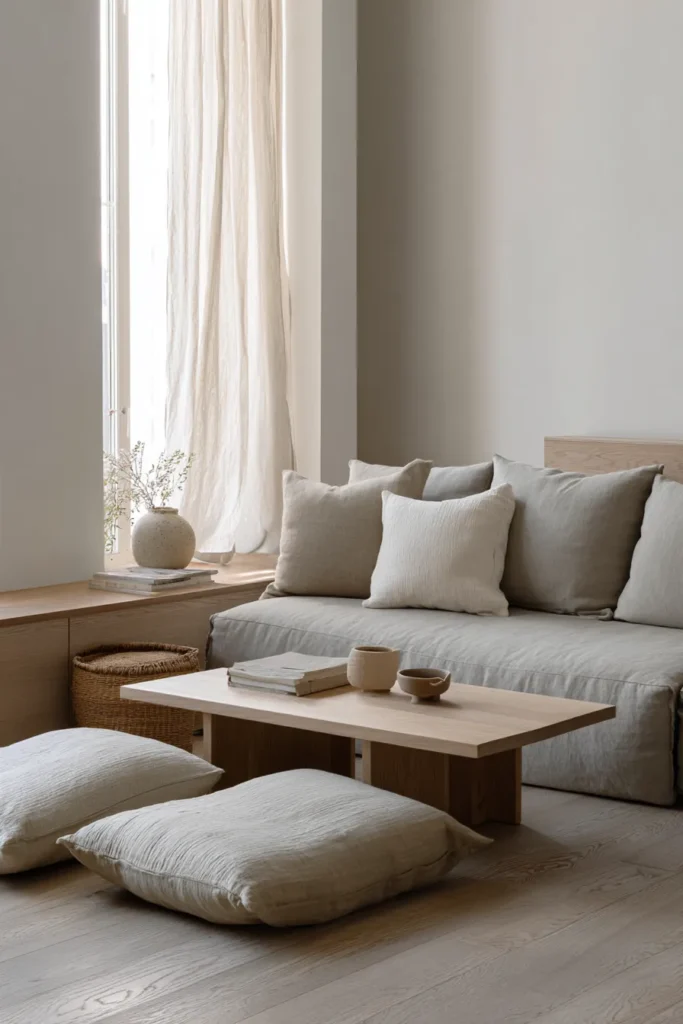
Core Furniture Investment:
| Item | Price Range | Where to Find |
|---|---|---|
| Low-profile sofa or futon-style seating | $400–$700 | IKEA, Wayfair, Article Outlet |
| Simple coffee table in light wood | $150–$300 | MUJI, Target, West Elm Sale |
| Floor cushions or pouf seating | $40–$80 each | Etsy, H&M Home, Amazon |
| Floating shelves or minimal storage | $100–$200 | IKEA, The Container Store |
| Natural fiber rug | $150–$300 | Rugs USA, IKEA, Overstock |
| Accent chair or meditation stool | $150–$250 | Wayfair, Article, Facebook Marketplace |
Budget-Stretching Strategy:
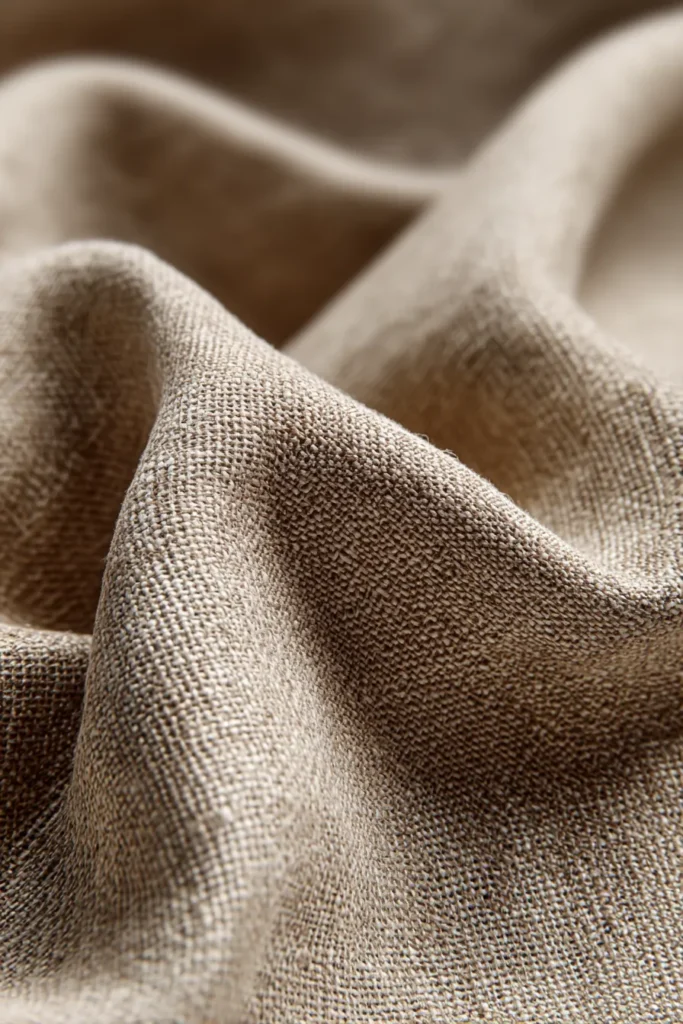
Focus 60% of your budget on the sofa—it’s the room’s anchor. Choose neutral tones like warm gray, beige, or soft charcoal in linen or cotton blends. These materials soften with use, embodying that wabi-sabi acceptance of gentle wear.
For the coffee table, seek out solid wood or bamboo rather than veneer. Even a simple MUJI design in oak will outlast three particle-board alternatives. The longevity justifies the slightly higher cost.
Fill remaining gaps with secondhand finds. Mid-century modern chairs from vintage shops often align perfectly with Japandi’s clean lines—just reupholster in natural linen if needed.
The Mid-Range Sweet Spot: $3,000–$5,000
This budget allows breathing room for higher-quality pieces and thoughtful layering.
Elevated Furniture Selection:
| Item | Price Range | Recommended Retailers |
|---|---|---|
| Quality low-profile sofa in natural fabric | $1,200–$1,800 | Article, Burrow, NORDE Interiors |
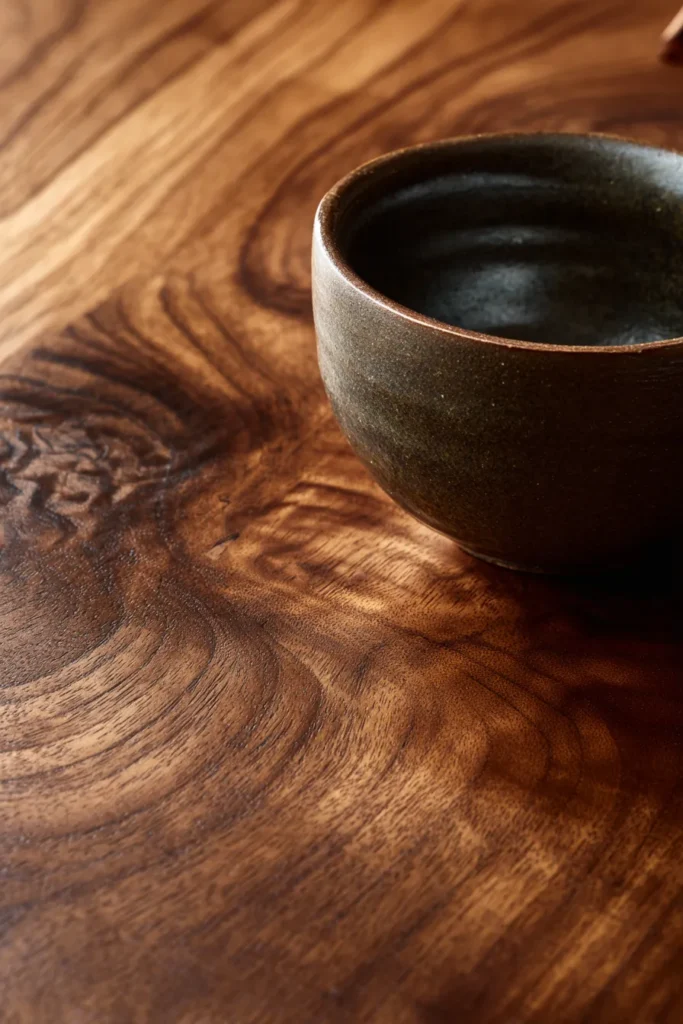
| Solid wood coffee table (teak, walnut, oak) | $400–$700 | West Elm, CB2, FROY |
| Lounge chair with clean lines | $500–$800 | Article, Design Within Reach Sale |
| Modular storage system | $300–$600 | MUJI, String Furniture, IKEA Eket |
| Handwoven rug in natural fibers | $400–$600 | Lulu & Georgia, Rugs Direct |
| Ceramic or wooden side table | $150–$250 | Etsy artisans, Room & Board |
| Reading lamp with sculptural quality | $100–$200 | MUJI, CB2, Schoolhouse Electric |
At this level, invest in multifunctional pieces. A storage ottoman becomes both seating and hidden organization. A credenza offers media storage while displaying ceramics or books horizontally—very Japandi.
Look for eco-conscious materials and brands transparent about sourcing. NORDE Interiors and FROY specialize in sustainable, minimal furniture that aligns with both aesthetics and values.
The Investment Tier: $6,000–$10,000+
Here, you’re curating rather than decorating. Each piece becomes an heirloom.
Premium Selection Strategy:
Allocate $2,500–$4,000 for a custom or designer sofa in organic linen or Japanese cotton. Brands like Hem, HAY, or local craftspeople deliver furniture that improves with age.
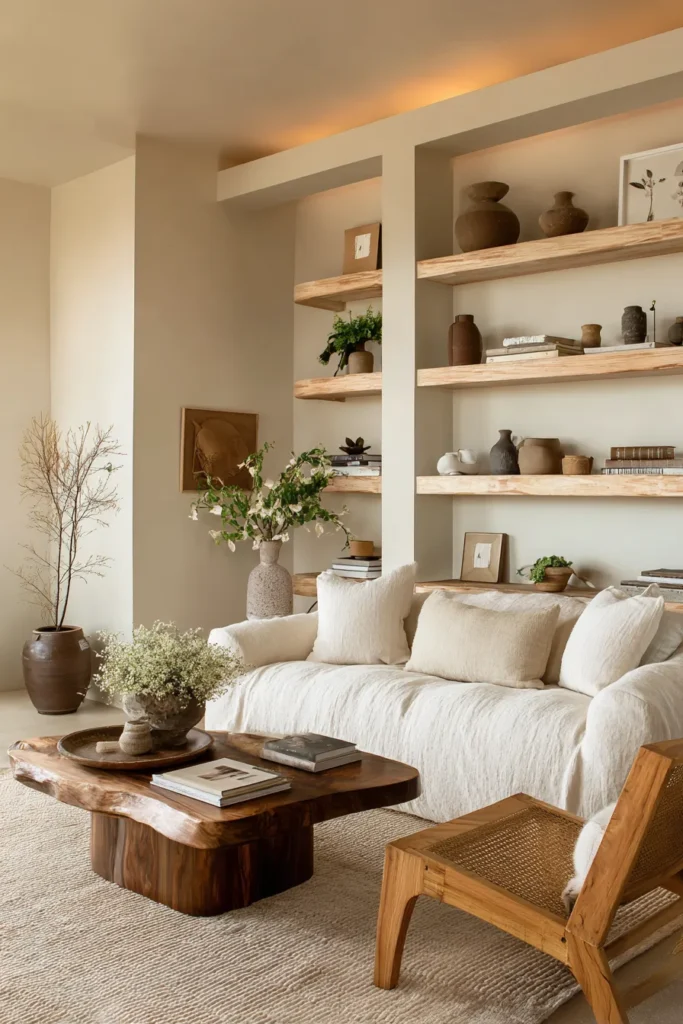
Invest $1,000–$1,500 in a statement coffee table—perhaps a live-edge walnut slab or a handcrafted Japanese chabudai. These pieces anchor the room with quiet authority.
The remaining budget allows for artisan accessories: a hand-thrown ceramic vase ($150–$300), woven wall hanging ($200–$400), or vintage tansu chest repurposed as media storage ($800–$1,500).
At this tier, consider virtual design consultations. Many interior stylists offer Japandi-specific guidance for $300–$500, helping you avoid costly mistakes and source unique pieces that complete your vision.
Strategic Shopping: Where to Find Affordable Japandi Furniture
Budget-Friendly Champions
IKEA remains unmatched for Japandi essentials on a budget. Their SÖDERHAMN sofa in beige, LISABO coffee table, and SINNERLIG pendant lamp could anchor an entire room for under $1,500.
MUJI embodies Japanese minimalism at accessible prices. Their oak furniture, natural linen textiles, and storage solutions practically define the aesthetic. Everything is thoughtfully designed and built to last.
Target’s Project 62 and Hearth & Hand collections offer surprising Japandi-aligned pieces—ceramic planters, woven baskets, and simple wood furniture at remarkably gentle prices.
Mid-Range Excellence
Article delivers Scandinavian-inspired furniture with excellent quality-to-price ratios. Their Sven and Timber sofas in birch ivory or charcoal have become Japandi staples.
West Elm during sales offers solid wood tables and chairs that would otherwise stretch budgets. Sign up for their email list and watch for 30% off events.
FROY and NORDE Interiors specialize in eco-conscious, minimalist furniture. Their curated selections save you from endless scrolling through generic retailers.
The Secondhand Secret
Don’t overlook Facebook Marketplace, Craigslist, and estate sales. Mid-century modern pieces—teak credenzas, Danish chairs, simple bookcases—often need just light refinishing to become Japandi perfect.
A $50 vintage chair reupholstered in natural linen ($100–$150 for fabric and labor) becomes a $600-quality piece for $200 total. This approach adds character while honoring sustainability.
Mixing Price Points for Balanced Beauty
One of Japandi’s most beautiful secrets: you can blend budget and investment pieces seamlessly.
The Formula:
- Invest in foundations (sofa, coffee table, rug)
- Save on multiples (floor cushions, storage baskets)
- Splurge on one statement piece (chair, lamp, art)
Pair a $400 IKEA LISABO coffee table with a $1,200 Article sofa and $60 linen cushions from H&M Home. The natural materials and neutral palette create visual harmony regardless of price tags.
The eye perceives overall composition, not individual costs. When everything shares similar tones (warm whites, soft grays, natural woods) and materials (linen, cotton, wood, ceramic), the room feels cohesive.
Sustainable and Eco-Conscious Choices
Japandi philosophy extends beyond aesthetics into environmental mindfulness. Choosing sustainable furniture isn’t just ethical—it’s economical long-term.
What to Look For:
- FSC-certified wood from responsibly managed forests
- Natural, undyed textiles in organic cotton, linen, or hemp
- Low-VOC finishes that don’t off-gas harmful chemicals
- Minimal packaging or recyclable materials
- Local artisans reducing transportation emissions
Brands like MUJI, Sabai, and Burrow prioritize sustainability. Sabai even offers modular sofas in recycled materials with lifetime warranties—the ultimate Japandi combination of minimalism and longevity.
Buying secondhand is inherently sustainable. That vintage credenza required no new resources and diverted furniture from landfills.
DIY and Upcycling for Authentic Japandi Character
Some of the most beautiful Japandi spaces incorporate handcrafted or restored elements.
Simple DIY Projects:
- Sand and oil-finish a plain pine table for warm, natural beauty ($30–$50 in supplies)
- Create a low platform bed using plywood and hairpin legs ($100–$150)
- Refinish thrifted wood furniture with natural oil or wax rather than paint
- Make floor cushions from canvas drop cloth and foam inserts ($40 each)
- Build floating shelves from reclaimed wood ($20–$40 per shelf)
These projects add personal warmth while saving significant money. A DIY coffee table made from reclaimed wood and steel legs costs $80–$120 versus $400–$600 retail.
The slight imperfections in handmade pieces embody wabi-sabi—that acceptance of impermanence and imperfection that makes Japandi feel lived-in rather than staged.
Space-Saving and Multifunctional Furniture
Japandi excels in small spaces through intelligent furniture choices.
Smart Selections:
- Storage ottomans that hold blankets while providing seating
- Nesting coffee tables that expand when hosting, tuck away otherwise
- Wall-mounted drop-leaf tables for flexible dining or work surfaces
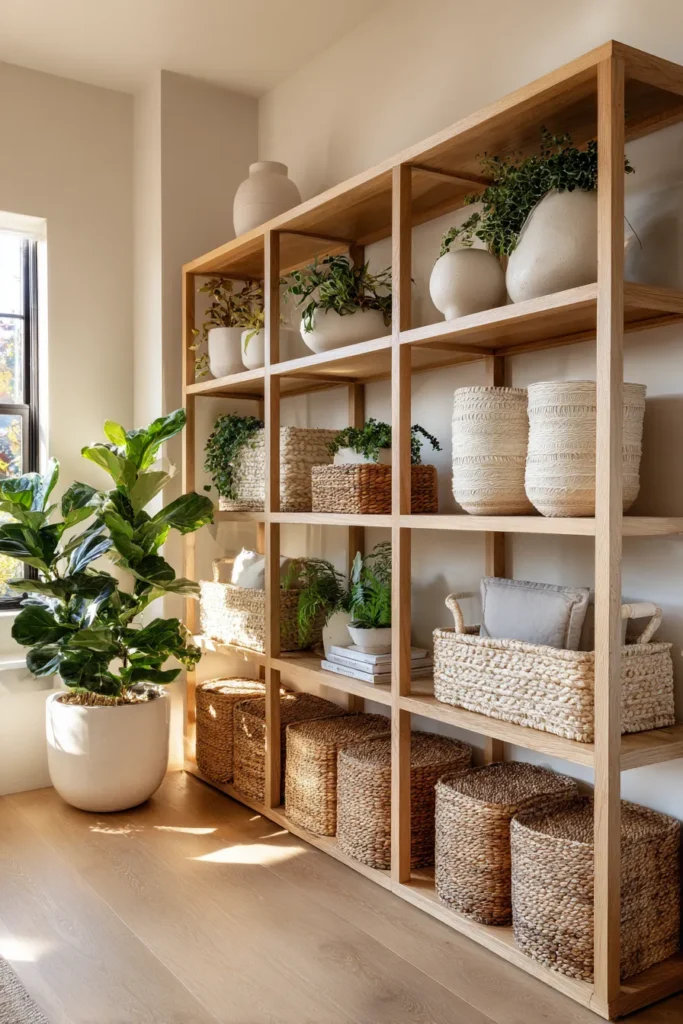
- Modular shelving systems that grow with your needs
- Low-profile furniture that doesn’t visually crowd small rooms
MUJI’s wall-mounted furniture and IKEA’s modular systems offer remarkable flexibility. A $200 investment in adaptable storage prevents future furniture purchases as needs evolve.
Choose furniture with exposed legs rather than skirted pieces—seeing floor beneath creates the illusion of more space, a crucial Japandi principle.
Maintenance and Longevity: Protecting Your Investment
Quality Japandi furniture improves with age when properly cared for. These practices extend furniture life significantly.
Wood Furniture Care:
- Dust weekly with soft, dry cloth
- Oil natural wood annually with food-safe mineral oil or specialized wood conditioner
- Use coasters and placemats to prevent water rings
- Keep away from direct heating vents that can crack wood
- Embrace natural patina—slight darkening adds character
Natural Fabric Care:
- Vacuum upholstery weekly to prevent dirt embedding
- Spot-clean immediately with mild soap and water
- Use washable linen slipcovers that can be laundered seasonally
- Rotate cushions monthly for even wear
- Keep out of direct sunlight to prevent fading
General Principles:
- Address issues immediately rather than letting damage worsen
- Use furniture as intended—don’t stand on chairs or overload shelves
- Tighten hardware annually to prevent joint loosening
- Consider professional cleaning for upholstered pieces every 2–3 years
Well-maintained Japandi furniture can last 15–20+ years, making higher initial investments worthwhile.
Personalizing Your Japandi Space Within Budget
Japandi shouldn’t feel generic. Add personality through thoughtful, budget-conscious touches.
Affordable Personalization:
- Display meaningful ceramics on open shelving ($20–$80 per piece from local potters)
- Incorporate vintage family pieces if they have clean lines and natural materials
- Add botanical prints or abstract art in simple wood frames ($30–$100 total)
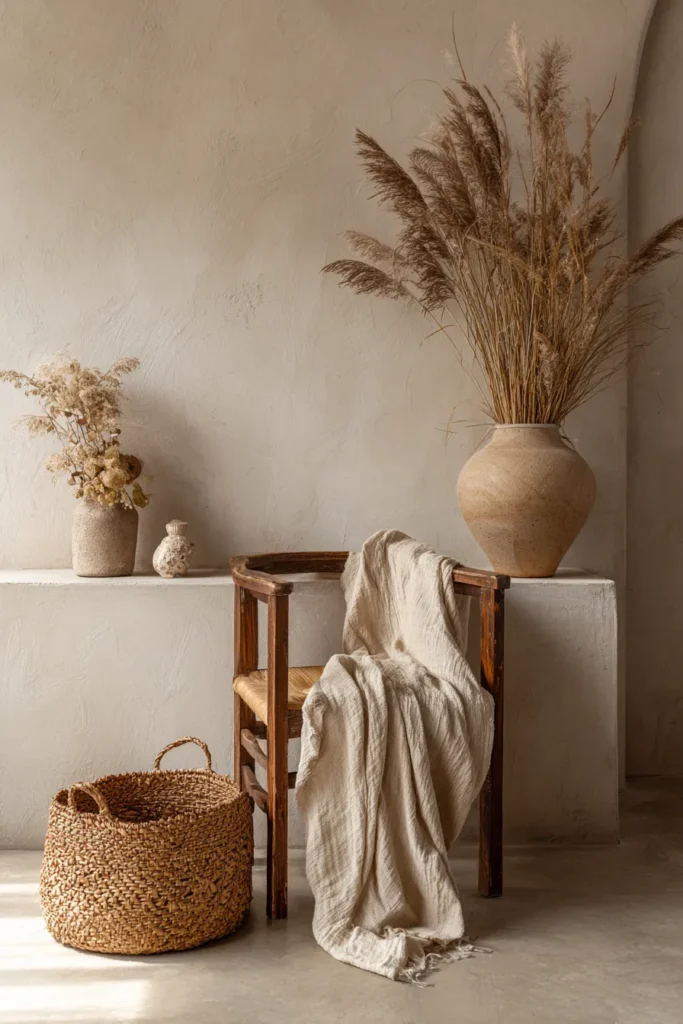
- Layer textures with handwoven baskets, knit throws, and linen cushions
- Include living plants in simple ceramic pots—greenery is quintessentially Japandi
Virtual design consultations ($150–$500) help personalize spaces without costly trial-and-error. Many designers now offer Japandi-specific guidance via video call, providing shopping lists tailored to your budget and space.
The goal is your sanctuary, not a showroom replica. Let pieces accumulate slowly, each selected with intention.
Quick Checklist: Japandi Living Room Essentials by Budget
Under $2,000:
- Low-profile sofa in neutral fabric ($400–$700)
- Simple wood coffee table ($150–$300)
- Natural fiber rug ($150–$300)
- Floor cushions or affordable seating ($100–$200)
- Basic storage solution ($100–$200)
- Lighting and accessories ($200–$300)
$3,000–$5,000:
- Quality sofa in organic fabric ($1,200–$1,800)
- Solid wood coffee table ($400–$700)
- Accent chair ($500–$800)
- Handwoven rug ($400–$600)
- Modular storage ($300–$600)
- Lighting and décor ($200–$500)
$6,000+:
- Designer or custom sofa ($2,500–$4,000)
- Statement coffee table ($1,000–$1,500)
- Premium accent chair ($800–$1,200)
- Artisan rug ($600–$1,000)
- Custom storage or vintage piece ($800–$1,500)
- Curated lighting and art ($500–$1,000)
Finding Beauty in Restraint
The most profound lesson Japandi offers isn’t about furniture at all. It’s about living with less, but better. It’s about spaces that breathe, pieces that matter, and the quiet joy of coming home to calm.
Your budget—whatever it is—is enough. Start with one beautiful thing. A single chair in warm oak. A simple ceramic vase catching afternoon light. A soft linen cushion in that perfect shade of undyed beige.
Let your space unfold slowly, piece by intentional piece. This is how Japandi works its subtle magic—not through abundance, but through the careful curation of what truly serves your life.
The furniture will come. The room will evolve. And one day, you’ll realize you’ve created not just a Japandi living room, but a sanctuary that feels entirely, peacefully yours.
Frequently Asked Questions
Can I create a Japandi living room with less than $2,000?
Absolutely. Focus your budget on a quality sofa (around $600–$700), a simple wood coffee table ($150–$300), and a natural fiber rug ($150–$300). Fill remaining needs with floor cushions, secondhand finds, and DIY projects. IKEA and MUJI offer excellent Japandi-aligned pieces at accessible prices. The key is selecting fewer items of better quality rather than filling the space quickly with mediocre furniture.
What are the best affordable stores for Japandi furniture?
IKEA leads for budget-conscious Japandi shopping, with pieces like the LISABO table and SÖDERHAMN sofa. MUJI offers authentic Japanese minimalism at mid-range prices. Target’s Project 62 line provides surprising quality for the cost. For slightly higher budgets, Article and West Elm during sales offer excellent value. Don’t overlook secondhand sources—Facebook Marketplace and estate sales often yield mid-century pieces perfect for Japandi style.
How do I mix expensive and budget furniture in Japandi design?
Invest in foundational pieces like your sofa and coffee table, then save on multiples like cushions and storage baskets. The neutral color palette and natural materials of Japandi create visual harmony regardless of price points. Pair a $1,200 Article sofa with $60 Hu0026amp;M linen cushions and a $50 vintage chair—the similar tones and materials make everything feel cohesive. Always prioritize natural materials over synthetic, even in budget pieces.
What materials are essential for authentic Japandi furniture?
Natural wood finishes—especially oak, walnut, teak, and bamboo—form Japandi’s foundation. For upholstery, choose linen, organic cotton, or hemp in neutral, undyed tones. Look for ceramic, stone, and rattan accents. Avoid plastic, heavily treated woods, and synthetic fabrics. The goal is materials that age beautifully, develop patina, and feel tactile and warm. Even budget pieces in genuine natural materials outperform expensive synthetic alternatives in achieving authentic Japandi feeling.
How can I maintain Japandi furniture to make it last longer?
Oil natural wood annually with food-safe mineral oil or specialized wood conditioner. Vacuum upholstered pieces weekly and spot-clean immediately when spills occur. Use coasters and placemats to protect wood surfaces. Rotate cushions monthly for even wear. Keep furniture away from direct heat sources and prolonged sunlight. Embrace natural aging—slight darkening and gentle wear embody wabi-sabi philosophy. Address small issues immediately rather than letting damage worsen. With proper care, quality Japandi furniture easily lasts 15–20+ years.