
Table of Contents
There’s something quietly magical about walking into a room where light doesn’t just illuminate—it breathes. It pools softly in corners, glows warmly against wood grain, and invites you to settle in without saying a word. This is the essence of Japandi living room furniture lighting: a delicate balance between Japanese wabi-sabi simplicity and Scandinavian hygge warmth.
In Japandi design, lighting is never an afterthought. It’s woven into every piece of furniture, every material choice, every quiet moment you spend curled up with a book. The glow matters as much as the shadow.
If you’re craving a living room that feels both grounded and luminous, you’ve come to the right place. Let’s explore how to create layered, warm-toned lighting that transforms your space into a sanctuary—where furniture and light move together like old friends.
Understanding Japandi Lighting Philosophy
Japandi lighting isn’t about bright overhead floods or dramatic spotlights. It’s about creating a diffused glow that mimics the soft light of dawn filtering through shoji screens or the golden hour settling over a Nordic forest.
This style embraces indirect lighting—tucking light sources behind furniture, beneath shelves, or within paper lanterns. The goal is to eliminate harsh shadows while maintaining a sense of gentle mystery. Think of light as something you feel before you see.
The Balance of Wabi-Sabi and Hygge
Japanese wabi-sabi teaches us to find beauty in imperfection and transience. Scandinavian hygge invites warmth and coziness into every corner. Together, they create lighting that’s warm without being overwhelming, minimal without being cold.
This means choosing fixtures that feel handcrafted, organic, and unpretentious. A bamboo pendant with visible grain. A ceramic table lamp with a slightly irregular glaze. These imperfections aren’t flaws—they’re the soul of the space.
Choosing the Right Color Temperature for Japandi Living Rooms
Color temperature might sound technical, but it’s one of the most transformative decisions you’ll make. Japandi style thrives on warm-toned lighting between 2700K and 3000K—the color of candlelight, sunset, and comfort.
Cooler bulbs (4000K and above) feel clinical and sterile, breaking the intimate atmosphere you’re trying to build. Stick with warm white or soft white bulbs that make wood furniture glow honey-gold and neutral textiles feel embracing.
Dimmable Options for Flexible Ambiance
Install dimmable switches wherever possible. Morning coffee needs gentle brightness; evening conversations call for something softer. Dimmable lights let your living room shift moods throughout the day, adapting to your rituals rather than dictating them.
Smart LED bulbs compatible with home automation systems can enhance your hygge experience—program warm glows for sunset hours or create gentle wake-up sequences that respect your natural rhythms.
Layered Lighting: The Three Essential Levels
Japandi living rooms rely on layered lighting to create depth and dimension. Think of it as building a symphony: ambient, task, and accent lighting all playing their parts.
Ambient Lighting: The Foundation
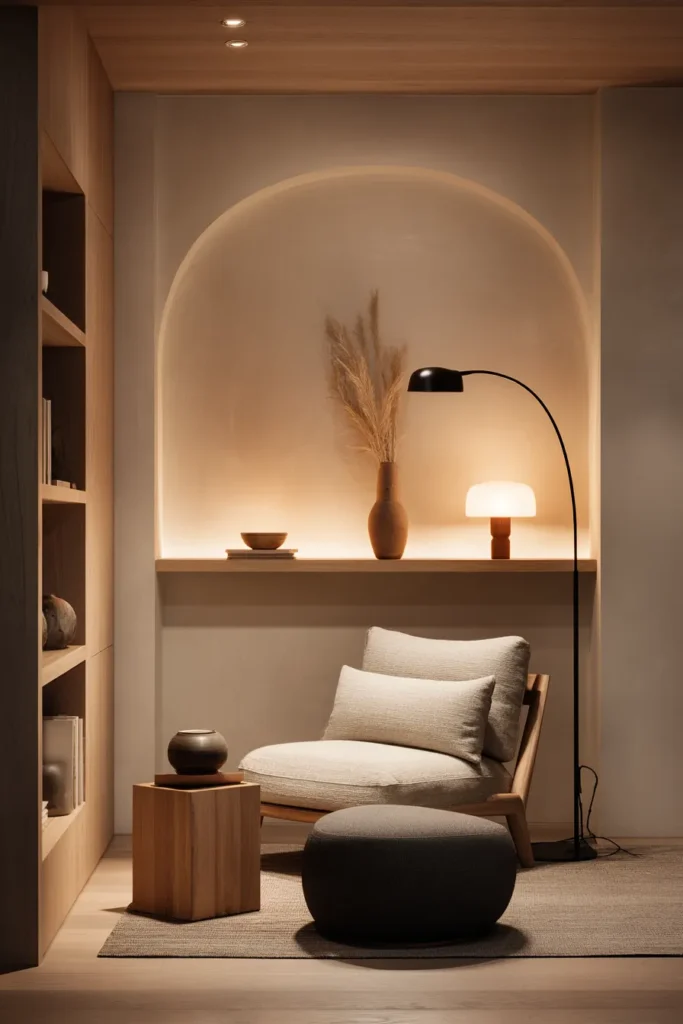
This is your base layer—soft, overall illumination that fills the room without commanding attention. Paper pendant lights or recessed ceiling fixtures with warm bulbs work beautifully here.
Consider hidden indirect lighting: LED strips tucked behind floating shelves or underneath low-profile cabinets. The light bounces off walls and ceilings, creating a gentle wash that feels sourceless and serene.
Task Lighting: Functional Grace
Task lighting serves specific activities—reading, crafting, working—without disrupting the room’s calm. Place a wooden arc floor lamp beside your sofa, or position a minimalist desk lamp on a console table.
Look for adjustable options with bamboo or walnut arms. They blend seamlessly with Japandi furniture while offering practical directional light when you need it.
Accent Lighting: Creating Focal Points
Accent lights draw the eye to special elements: a collection of ceramic vessels, a textured wall hanging, or a beloved piece of art. Small picture lights or strategically placed candles can highlight these treasures without overwhelming them.
Use accent lighting sparingly—Japandi design values restraint. One or two focal points are enough to create visual interest while maintaining that essential sense of calm.
Best Japandi Lighting Fixtures for Living Room Furniture
The right fixtures don’t just light your space—they become part of your furniture story. Each piece should feel intentional, natural, and quietly beautiful.
Pendant Lights and Ceiling Fixtures
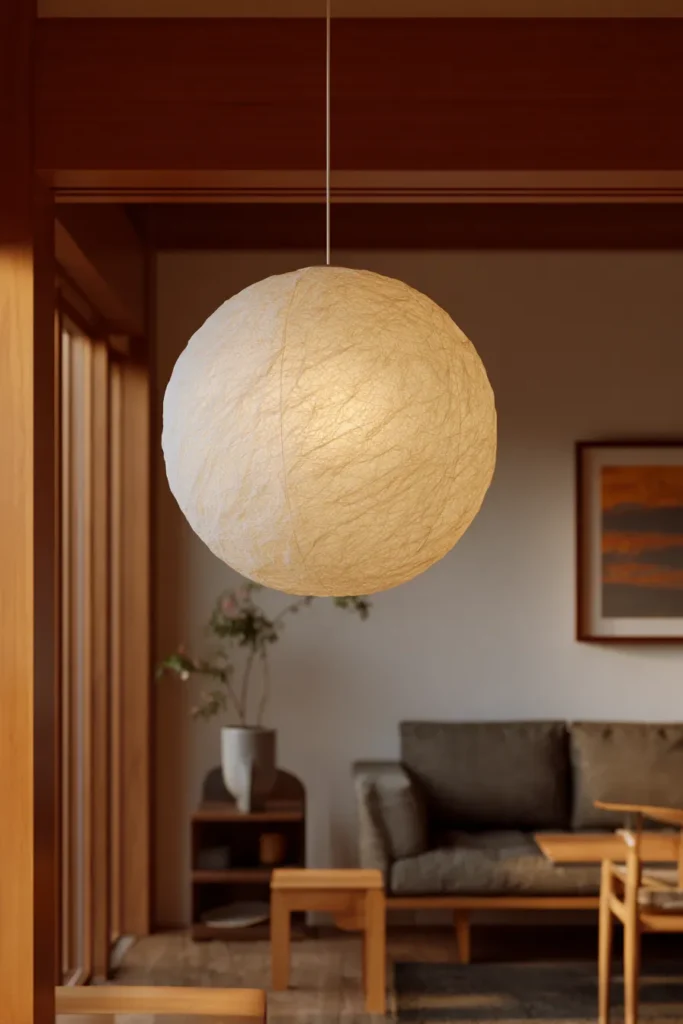
Washi paper lanterns remain the quintessential Japandi choice. Their soft, translucent quality diffuses light beautifully, creating that signature warm glow. Hang them at varying heights above a low coffee table for visual rhythm.
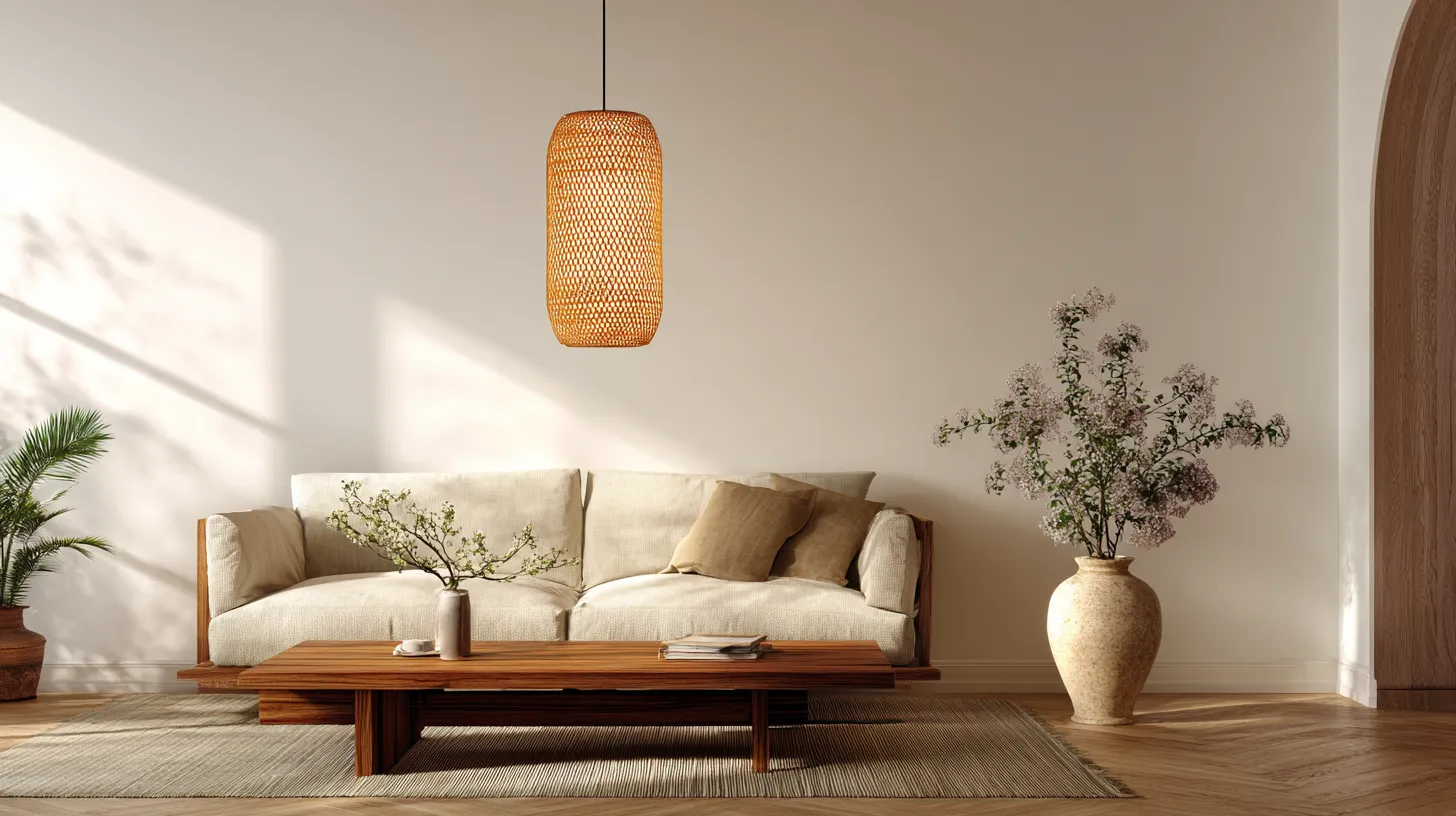
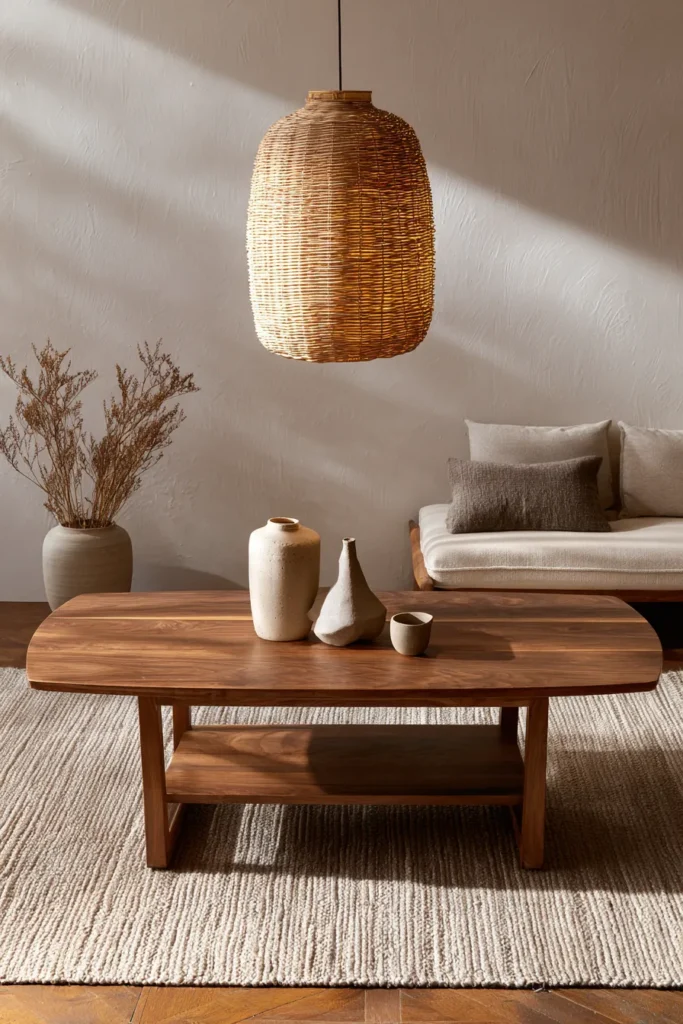
Rattan and bamboo pendant lights add organic texture overhead. Their woven patterns cast delicate shadows across walls, adding movement and life to your space. Choose simple, spherical shapes or elongated cylinders for modern appeal.
Floor Lamps: Vertical Interest
Japanese-inspired floor lamps with wooden tripod bases or bamboo stems bring warmth to empty corners. Pair them with neutral linen or paper shades that complement your organic wood furniture.
Arc floor lamps in walnut or oak extend over seating areas, providing task lighting without requiring side tables. This works especially well in small spaces where furniture placement is critical.
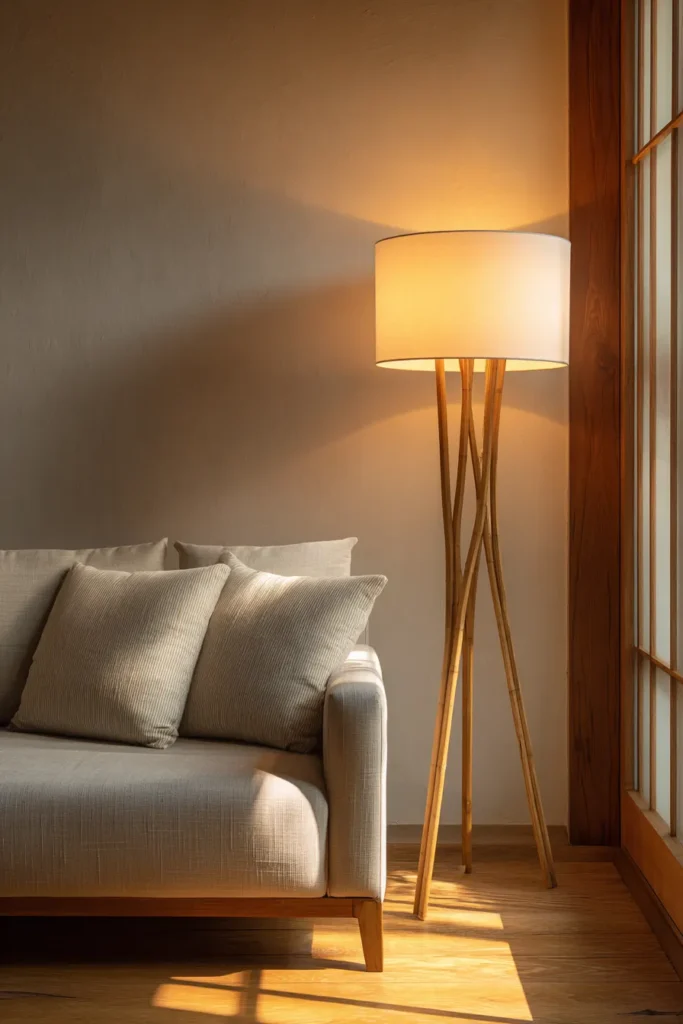
Table Lamps: Intimate Accents
Place ceramic or wood base table lamps on floating shelves, console tables, or low credenzas. Look for sculptural simplicity—a single curved form, a cylindrical ceramic body, or a minimalist triangular base.
Lamps with adjustable warm dimming features let you control the mood. Position them where they’ll illuminate specific furniture pieces: beside a reading chair, flanking a media console, or on a window ledge to echo natural light.
Wall Sconces: Space-Saving Solutions
Wall-mounted bamboo sconces free up surface space while providing beautiful ambient lighting. Install them at eye level flanking a low bookshelf or artwork to create symmetry and balance.
Hidden LED strips behind floating shelves offer clean lines and indirect glow—perfect for showcasing your collection of Japanese ceramics or Scandinavian design books.
Integrating Lighting with Japandi Living Room Furniture
Furniture and lighting should feel inseparable in a Japandi living room. Each element enhances the other, creating a cohesive, breathable whole.
Modular Sofas and Low-Profile Seating
Pair low-profile sofas in natural linen or cotton with floor lamps positioned at the sofa’s edge. The light should pool beside you—close enough to read by, warm enough to make you linger.
Consider modular pieces with built-in LED strips underneath. This creates a floating effect while providing subtle ambient light that doesn’t require additional floor space.
Coffee Tables and Lighting Synergy
A walnut or oak coffee table with clean lines becomes even more stunning when lit from above with a pendant at the right height. Hang it low enough to create intimacy but high enough to avoid obstructing sightlines—typically 30-36 inches above the table surface.
Place a small ceramic table lamp on the coffee table itself if you have the space. Its glow will highlight the wood grain and create a cozy focal point for evening gatherings.
Storage and Display Units
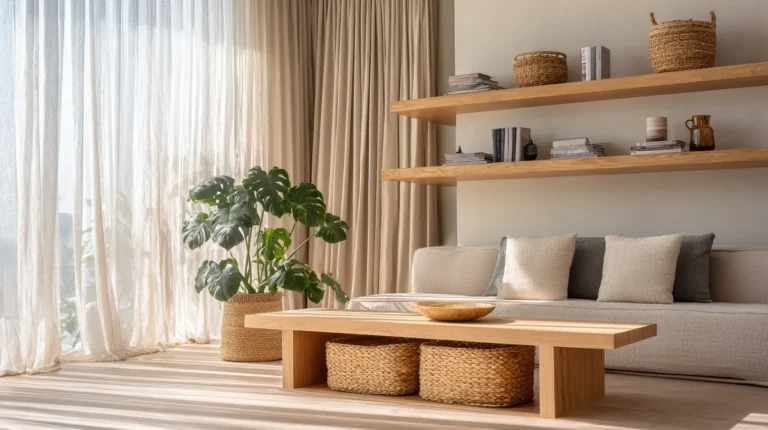
Floating shelves in light wood tones look stunning with integrated LED strip lighting. The glow illuminates decorative objects while emphasizing the furniture’s grain and craftsmanship.
Open credenzas and media consoles benefit from table lamps placed on their surfaces. Choose lamps that echo the furniture’s materiality—bamboo lamp beside bamboo accents, ceramic beside matte finishes.
Creating Furniture-Lighting Combos on a Budget
You don’t need to spend thousands to achieve beautiful Japandi lighting. Focus on a few key pieces that make the biggest impact.
| Budget Range | Lighting Investment | Furniture Pairing | Total Effect |
|---|---|---|---|
| $200-$400 | 1 paper pendant + 1 bamboo floor lamp | Low oak coffee table + neutral sofa | Warm, minimal foundation |
| $400-$600 | Add 2 ceramic table lamps + LED strips | Floating shelves + modular seating | Layered ambient glow |
| $600-$800 | Include wall sconces + smart dimmers | Complete furniture set with cohesive materials | Full Japandi atmosphere |
Maximizing Natural Light in Your Japandi Living Room
Before adding artificial lighting, honor the natural light you already have. Japandi design worships sunlight—it’s free, ever-changing, and connects you to the rhythm of the day.
Window Treatments That Welcome Light
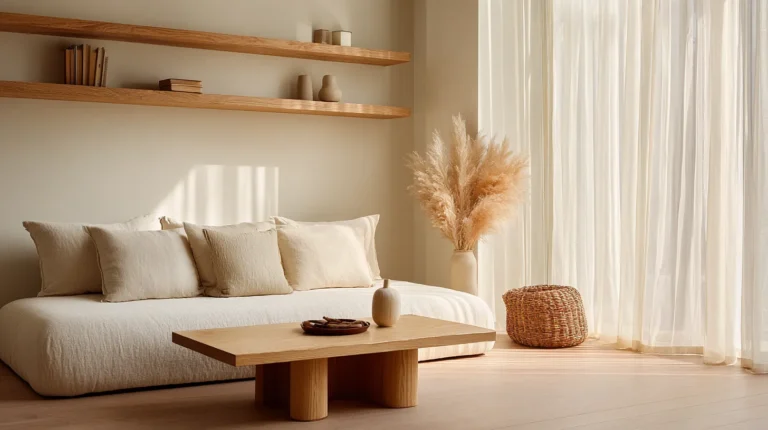
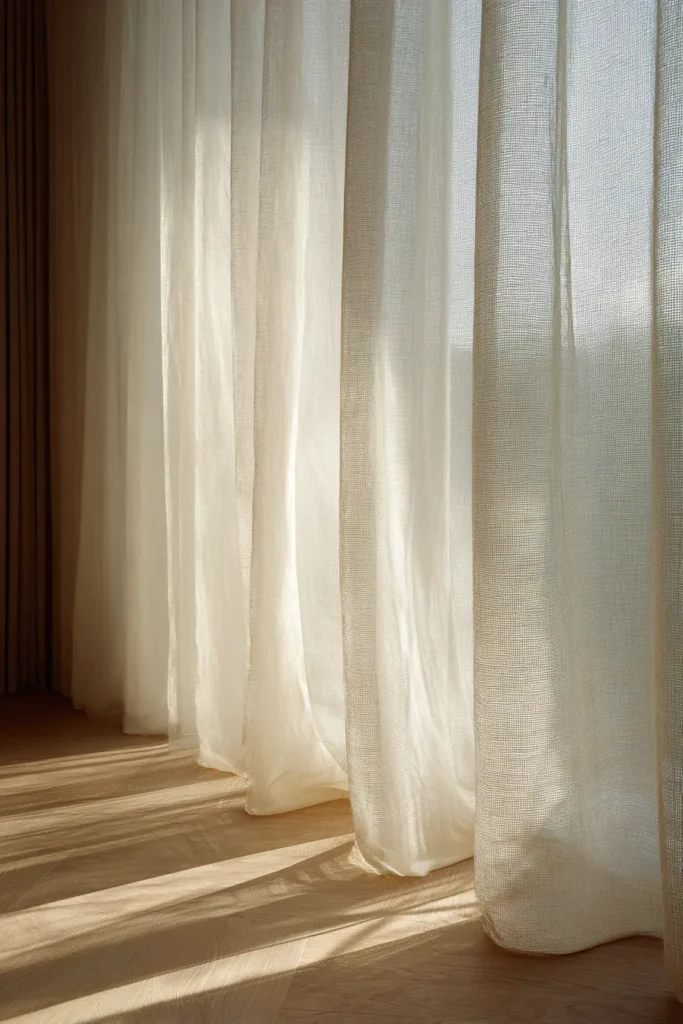
Choose sheer linen curtains or light-filtering bamboo blinds. They soften harsh midday sun while maintaining privacy, creating that signature diffused glow throughout the day.
Avoid heavy drapes or dark colors that block light. Instead, use translucent materials in cream, oatmeal, or soft white that complement your neutral palette.
Mirrors and Reflective Surfaces
Position a large mirror opposite your main window to bounce natural light deeper into the room. Choose frames in natural wood or leave them frameless for a clean, modern look.
Reflective surfaces don’t have to be obvious—a glossy ceramic vase, a glass-topped coffee table, or even a polished concrete planter can subtly amplify available light.
SAD Lamps for Seasonal Balance
In darker months, consider full-spectrum SAD (Seasonal Affective Disorder) lamps that mimic natural daylight. While they don’t fit the warm Japandi aesthetic at night, they’re invaluable for morning routines and can be tucked away when not in use.
Sustainable Materials in Japandi Lighting
Sustainability isn’t optional in Japandi design—it’s foundational. Choose lighting made from natural, renewable materials that age beautifully and respect the earth.
Bamboo: Fast-Growing and Versatile
Bamboo lamps, pendants, and sconces bring organic texture while supporting sustainable forestry. Bamboo grows rapidly, requires minimal resources, and develops a lovely patina over time.
Look for fixtures with visible bamboo grain and natural coloring rather than painted finishes. The rawness is part of the appeal.
Washi Paper: Translucent Beauty
Traditional Japanese washi paper lanterns create the softest, most ethereal glow. These handcrafted pieces filter light through layers of mulberry bark fibers, creating warmth without glare.
Choose lanterns with wood frames in natural finishes. They’re surprisingly durable and can last years with gentle care.
FSC-Certified Wood
For wooden fixtures—whether walnut floor lamps or oak table bases—verify FSC (Forest Stewardship Council) certification. This ensures the wood comes from responsibly managed forests.
The grain tells a story. Each lamp becomes a small monument to the tree it came from—a very wabi-sabi sentiment.
Recycled and Upcycled Options
Ceramic lamps made from recycled clay or pendants crafted from reclaimed wood add character while reducing environmental impact. These pieces often carry slight irregularities that enhance their handmade charm.
Small-Space Japandi Lighting Solutions
Not everyone has a sprawling living room. Japandi principles adapt beautifully to compact spaces where every choice must work harder.
Wall-Mounted Fixtures Save Precious Floor Space
Replace floor lamps with wall sconces positioned at sitting height. This frees up corners for plants or small furniture pieces while maintaining warm ambient light.
Choose sconces with adjustable arms so you can direct light exactly where you need it—perfect for reading nooks or highlighting wall art.
Multi-Functional Furniture with Built-In Lighting
Look for side tables or media consoles with integrated LED lighting underneath. These pieces serve double duty, eliminating the need for separate table lamps.
Floating shelves with hidden LED strips provide storage, display space, and lighting simultaneously—an elegant solution for studio apartments or narrow living rooms.
Vertical Lighting Draws the Eye Up
In small spaces, use tall floor lamps or hanging pendants to create vertical interest. This draws the eye upward, making ceilings feel higher and the room more spacious.
A single statement pendant centered over a small seating area can define the entire zone without cluttering surfaces with multiple small lamps.
Japandi Lighting Trends for 2025
While Japandi design values timelessness, subtle evolutions keep the style fresh and relevant without abandoning its core principles.
Smart LED Compatibility
Modern Japandi embraces technology that enhances comfort. Smart bulbs with app-controlled warm dimming let you program lighting schedules that support natural circadian rhythms.
The key is keeping the fixtures themselves simple and organic while hiding the technology inside. A bamboo pendant with smart LED compatibility offers ancient materials with modern convenience.
Bio-Luminescent Accents
Experimental designers are incorporating gentle bio-luminescent elements—moss or algae-based glows—as living accent lights. While still emerging, this trend aligns perfectly with Japandi’s reverence for nature.
These pieces blur the line between plant and light, bringing literal life into your lighting design.
Warmer Color Temperatures
The trend is shifting even warmer—down to 2200K-2500K for evening lighting. This candlelight-level warmth creates deeper coziness and supports better sleep hygiene by reducing blue light exposure.
Consider having multiple bulb options: 2700K for general use, 2200K for evenings and relaxation.
Key Takeaways: Your Japandi Lighting Checklist
Creating the perfect Japandi living room lighting requires thoughtful layering and intentional choices. Here’s your essential guide:
- Color temperature: Stick to 2700K-3000K warm bulbs throughout your space
- Layer your light: Combine ambient (paper pendants, indirect LEDs), task (floor lamps, adjustable fixtures), and accent (small table lamps, candles) lighting
- Natural materials: Choose bamboo, washi paper, rattan, and FSC-certified wood fixtures
- Dimmable everything: Install dimmer switches or use smart bulbs for flexible ambiance control
- Furniture integration: Position lighting to enhance wood grain and texture in your furniture pieces
- Maximize natural light: Use sheer curtains, mirrors, and light colors to amplify daylight
- Sustainable sourcing: Verify certifications and choose recycled or upcycled options when possible
- Small-space solutions: Wall sconces and multi-functional furniture with built-in lighting
- Budget wisely: Start with 1-2 statement pieces ($200-400) and build layers over time
- Hidden sources: Use indirect lighting behind shelves and under furniture for sourceless glow
Bringing It All Together
Creating a Japandi living room where furniture and lighting dance in harmony isn’t about following rigid rules. It’s about listening to what feels right—what makes you breathe deeper, sit longer, smile softer.
Start with one beautiful fixture. Maybe it’s a paper lantern that casts gentle patterns on your wall. Or a bamboo floor lamp that leans into the corner like it’s always belonged there. Let that piece guide your next choice, and the next, until your room glows with quiet intention.
The beauty of Japandi lighting is how it changes throughout the day. Morning light streams through sheer curtains, touching your oak coffee table. Afternoon finds your space bright and energized. Evening brings dimmers down low, lamps clicking on one by one, wrapping you in warmth.
This is lighting that doesn’t just illuminate objects—it illuminates moments. The steam rising from your tea. The texture of a favorite blanket. The face of someone you love across the room.
Your living room is waiting to glow. All it needs is your thoughtful touch, some warm bulbs, and the courage to embrace simplicity. The rest will unfold naturally, the way light always does—softly, beautifully, exactly as it should.
Frequently Asked Questions
What color temperature is best for Japandi living room lighting?
Japandi spaces thrive with warm-toned lighting between 2700K and 3000K. This temperature range mimics candlelight and sunset, creating the cozy, intimate atmosphere central to both Japanese wabi-sabi and Scandinavian hygge. Avoid cool white bulbs (4000K+) as they feel too clinical and disrupt the natural, organic aesthetic you’re building.
How do I add Japandi lighting to a living room with existing furniture?
Start by assessing your current furniture’s materials and colors. Add warm-toned bulbs to existing fixtures first—this instant change costs little but transforms the mood. Then incorporate one statement piece: a bamboo floor lamp beside your sofa or a washi paper pendant over your coffee table. Layer in smaller touches like ceramic table lamps on shelves or LED strips under floating cabinets. The key is choosing fixtures in natural materials (wood, bamboo, paper, ceramic) that complement rather than compete with your furniture.
What’s the difference between Japandi and Scandinavian lighting?
While both styles embrace minimalism and natural materials, Japandi lighting incorporates more organic textures and warmer tones than traditional Scandinavian design. Scandinavian lighting often uses sleek metal, glass, and cooler whites with emphasis on maximizing natural light. Japandi adds Japanese elements like paper lanterns, bamboo fixtures, and a focus on diffused, indirect glow with softer shadows. The result feels warmer and more textural while maintaining Scandinavian clean lines.
Can I use Japandi lighting in small living rooms?
Absolutely—Japandi lighting actually works beautifully in compact spaces. Choose wall-mounted sconces instead of floor lamps to save surface area. Use floating shelves with integrated LED strips for combined storage and lighting. Hang a single statement pendant at the room’s center to draw eyes upward, making the ceiling feel higher. Multi-functional furniture with built-in lighting eliminates the need for separate fixtures. The key is choosing pieces that serve double duty while maintaining that essential warm, minimal aesthetic.
What are the most sustainable materials for Japandi lighting fixtures?
Bamboo tops the list as a fast-growing, renewable resource that requires minimal water and no pesticides. Washi paper made from mulberry bark is traditional, biodegradable, and creates beautiful diffused light. Look for FSC-certified wood (oak, walnut, ash) from responsibly managed forests. Ceramic lamps made from recycled clay, rattan from sustainable harvesting, and fixtures crafted from reclaimed or upcycled wood all support Japandi’s environmental values. Always verify certifications and prioritize makers who transparently share their sourcing practices.