
Table of Contents
There’s a certain magic that happens when light meets intention. In a Japandi living room, lighting isn’t just functional—it’s the breath that brings minimalism to life, the whisper that softens clean lines into sanctuary.
The beauty of Japandi design lies in its duality: Japanese wabi-sabi simplicity merged with Scandinavian warmth. And lighting? It’s the thread that ties these worlds together, creating spaces that feel both grounded and airy, calm yet alive.
Understanding warm versus cool lighting transforms your living room from a collection of furniture into an experience. It’s the difference between walking into a room that hugs you and one that merely exists.
Let’s explore how to balance these temperatures, layer your light sources, and create a Japandi living room that glows with quiet sophistication.
Understanding Warm vs Cool Lighting in Japandi Design
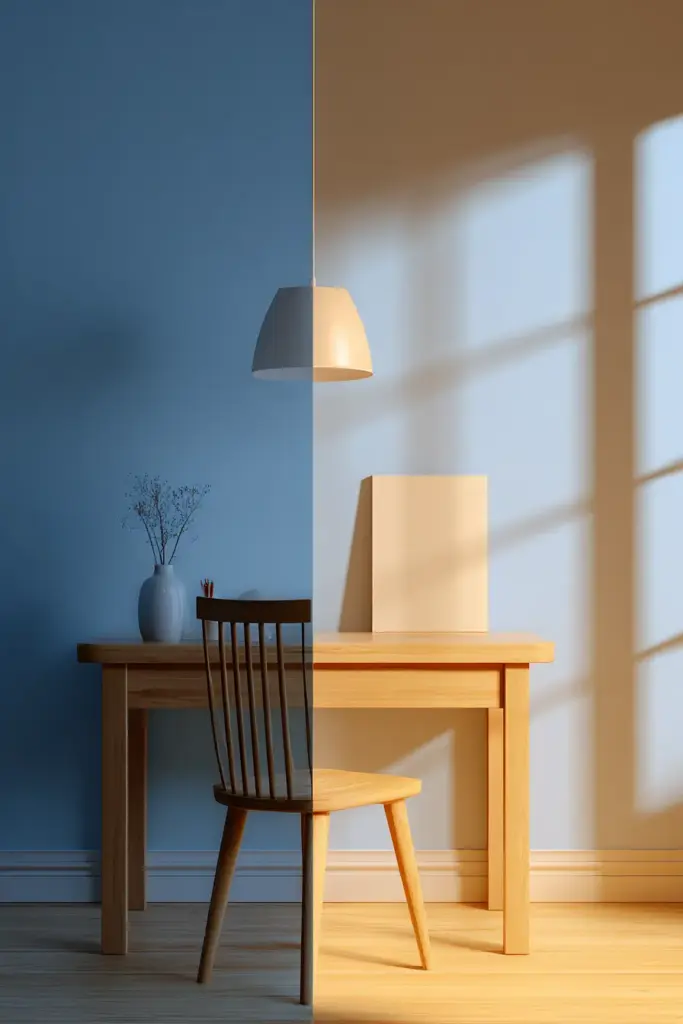
Color temperature shapes mood in ways we feel before we understand. Measured in Kelvin (K), it determines whether your space feels like a sunset retreat or a midday workspace.
Warm lighting (2700K-3000K) casts amber and beige tones reminiscent of candlelight or golden hour. This range reduces eye strain by approximately 25% and psychologically boosts calm by 20%—exactly what Japandi spaces crave. Think soft glows that make natural wood grain come alive and linen textures appear touchable.
Cool lighting (4000K-5000K+) emits blue-white tones that mimic daylight. While energizing for task areas, it can feel harsh and clinical in living spaces, disrupting the serene atmosphere central to Japandi philosophy.
The secret most designers know? A Japandi living room thrives on predominantly warm temperatures with strategic cool accents—like dawn breaking through a minimalist window.
The Kelvin Scale: Your Lighting Compass
| Color Temperature | Kelvin Range | Visual Effect | Japandi Use |
|---|---|---|---|
| Warm White | 2700K-3000K | Soft beige/amber glow | Primary ambient lighting |
| Neutral White | 3000K-4000K | Balanced dawn-like tone | Accent/transition zones |
| Cool White | 4000K-5000K | Crisp blue-gray light | Task areas only (minimal) |
| Daylight | 5000K+ | Harsh bright white | Avoid in living rooms |
This table isn’t just numbers—it’s your roadmap to emotional design. Pin warm tones to your walls, reserve cool for reading nooks if necessary, and watch your space transform.
Why Warm Lighting Dominates Japandi Living Rooms
Warmth isn’t a preference in Japandi design—it’s a philosophy. The aesthetic celebrates hygge (Danish coziness) and ma (Japanese negative space), both requiring light that invites rather than intrudes.
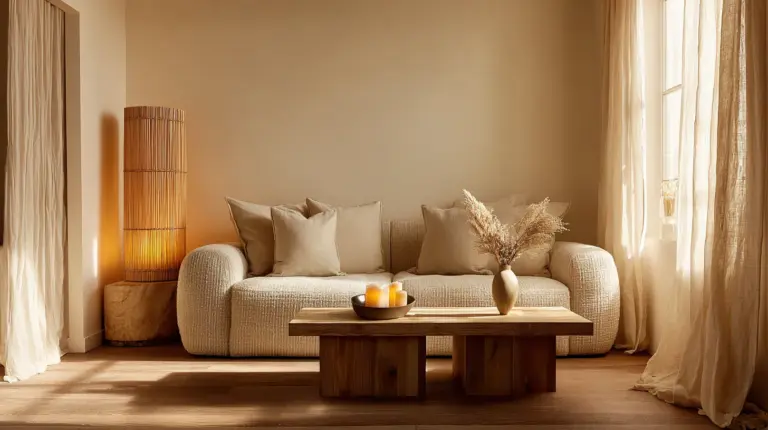
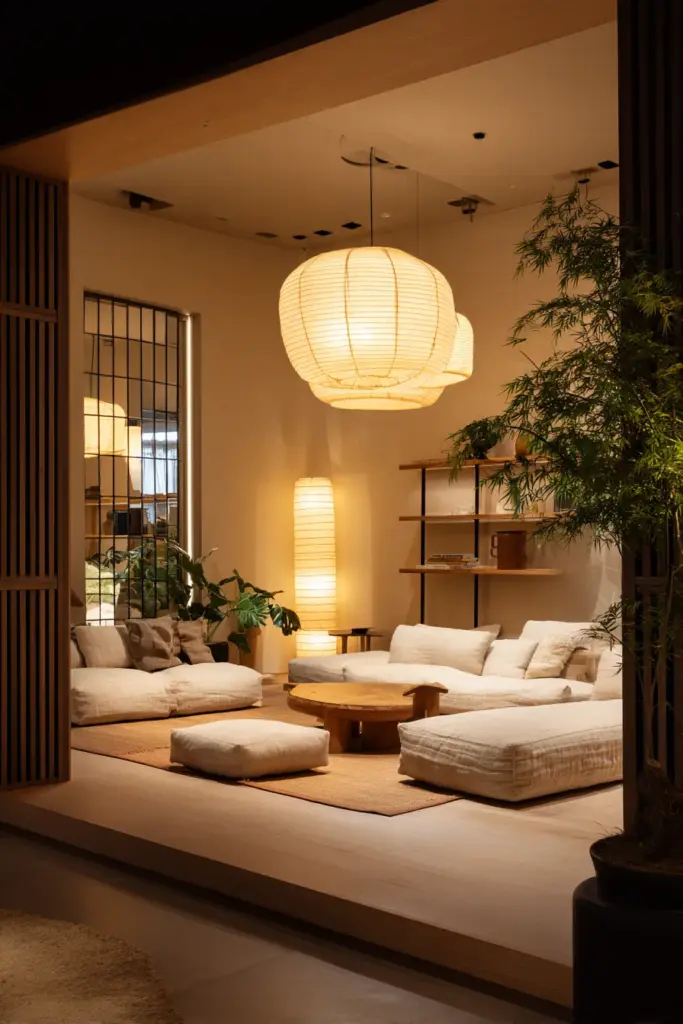
Warm-toned LEDs between 2700K-3000K create soft glows that complement natural materials. Wood beams absorb and reflect amber light beautifully. Bamboo screens cast gentle shadows. Washi paper diffuses illumination into something almost tangible—like capturing fog.
In the Philippines’ humid climate, warm LEDs offer practical advantages too. They generate less heat than traditional bulbs while maintaining energy efficiency, and their amber tones pair perfectly with tropical hardwoods like narra and molave common in Filipino homes.
The psychological effect is measurable: warm light signals our bodies to relax, supporting evening wind-down rituals. Cool light, conversely, suppresses melatonin and keeps us alert—lovely for offices, disruptive for living sanctuaries.
Layering Your Japandi Lighting Scheme
Great Japandi lighting isn’t about a single fixture—it’s about layering three distinct types that work in harmony.
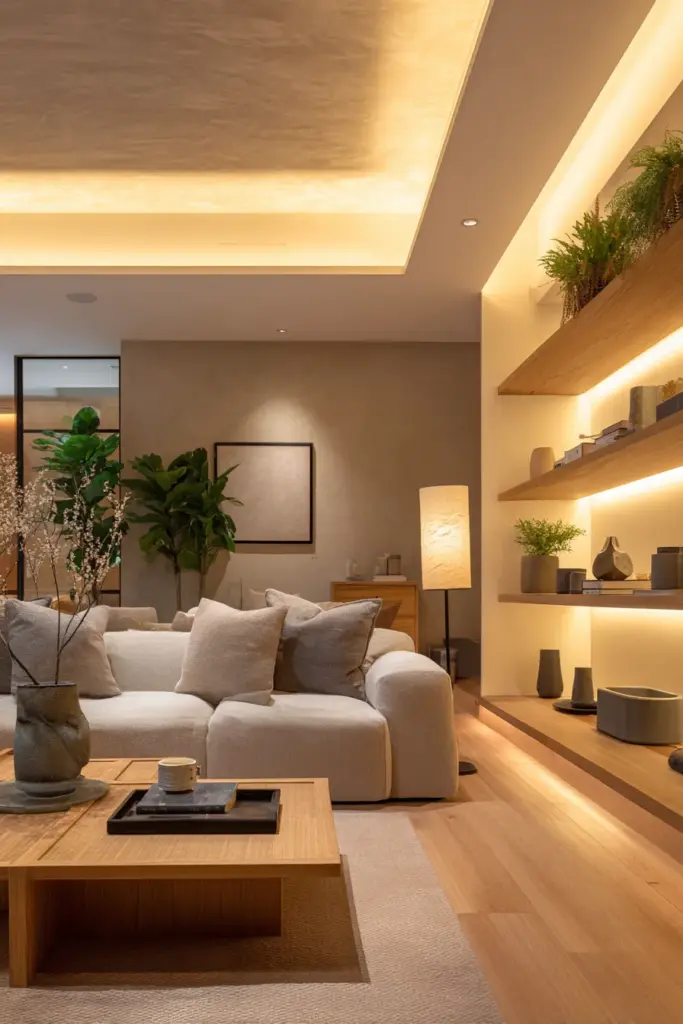
Ambient Lighting: Your Foundation
This is your room’s base glow, setting overall mood. Think recessed warm LED fixtures (2700K), rice paper ceiling lamps, or soft indirect lighting hidden in architectural details.
The goal? Even, diffused illumination without harsh shadows or bright spots. Ambient light should feel like it’s emanating from the room itself—organic, gentle, everywhere and nowhere.
Consider dimmable overhead fixtures that adjust throughout the day. Morning might need slightly brighter warmth; evening deserves that 2700K golden depth.
Task Lighting: Functional Focus
Even minimalist spaces need targeted light for reading, crafting, or intimate conversations. Here, you can introduce slightly cooler temperatures (3000K-3500K) without breaking Japandi’s serene spell.
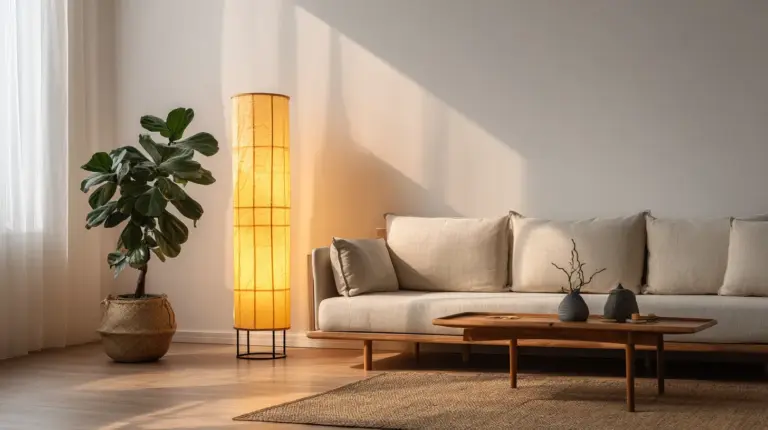
Adjustable wooden floor lamps with linen shades work beautifully. Position them beside low seating—a classic Japandi move that keeps sightlines open. The contrast between warm ambient glow and focused task light creates visual interest while maintaining cohesion.
In Philippine homes, consider placement near large windows to supplement natural light during monsoon months when daylight dims early.
Accent Lighting: Shadow and Depth
This layer adds drama. It’s the sculptural pendant over your coffee table, the LED strip behind floating shelves, the small spotlight grazing a textured wall.
Accent lighting plays with chiaroscuro—the interplay of light and shadow that Japanese design reveres. Use warm 2700K LEDs to highlight natural materials: the grain of a wooden sideboard, a ceramic vase, a woven wall hanging.
Dimmer switches become essential here. They let you choreograph your room’s mood from energizing brunch space to contemplative evening retreat.
Choosing Japandi-Appropriate Light Fixtures
Fixtures in Japandi spaces are sculptures in their own right—understated yet intentional.
Natural Material Fixtures
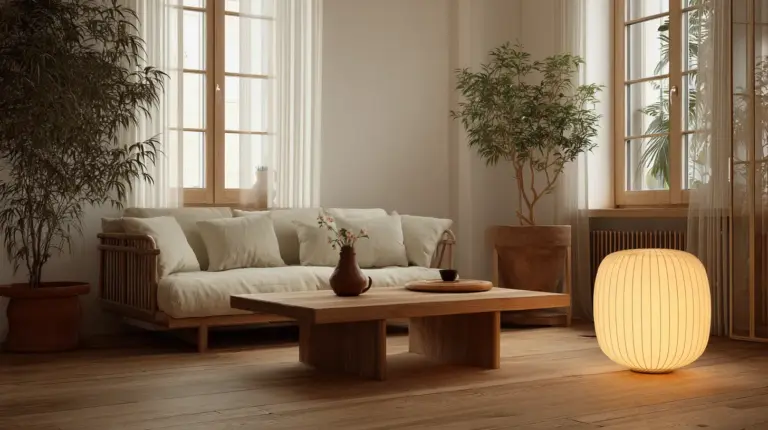
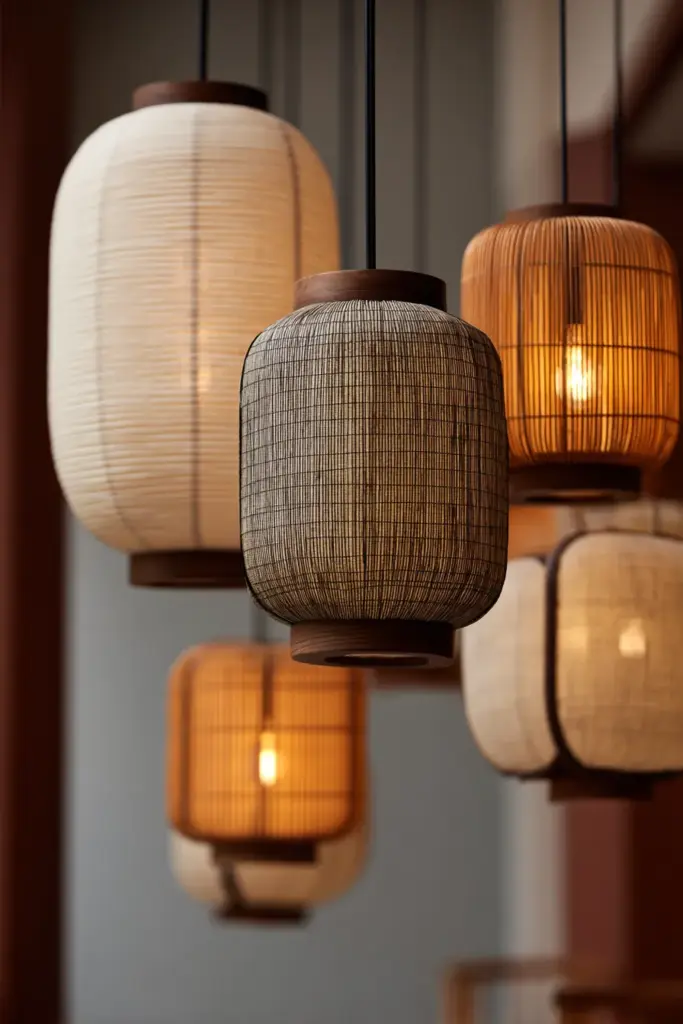
Washi paper lanterns diffuse light like morning mist. They’re classic for a reason: affordable, beautiful, and culturally authentic. In humid Philippine climates, look for mold-resistant alternatives or treated washi that withstand moisture.
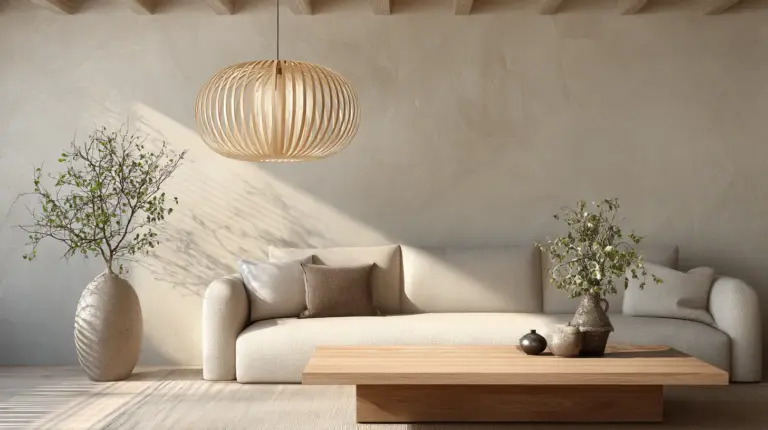
Bamboo pendants bring organic texture overhead. Their natural slats create fascinating shadow patterns while maintaining that crucial warm glow. Pair with 2700K LED bulbs for energy efficiency.
Wood and linen combinations offer Scandinavian warmth. A simple oak frame with a cream linen shade delivers maximum impact with minimal visual weight—pure Japandi.
Minimalist Modern Options
Sometimes sleek beats rustic. Black metal fixtures with warm Edison-style bulbs bridge industrial and organic. Ceramic dome pendants in matte white or earth tones maintain clean lines while diffusing light softly.
The rule? Let fixtures complement, never compete. If your sofa makes a statement, lighting whispers. If walls are bold, fixtures stay neutral.
Budget-Friendly Philippine Options
| Fixture Type | Price Range (PHP) | Where to Find | Pros | Cons |
|---|---|---|---|---|
| IKEA Paper Lantern | 500-1,500 | IKEA SM Stores | Affordable, authentic look | Delicate, needs care |
| Bamboo Pendant | 1,200-3,500 | Lazada, Shopee | Natural, humidity-resistant | Limited designs |
| Wooden Floor Lamp | 2,500-4,800 | Abenson, Wilcon | Adjustable, sturdy | Higher investment |
| LED Strip Lights (warm) | 300-1,200 | Ace Hardware, online | Versatile accents | Installation required |
These options prove Japandi lighting doesn’t demand luxury budgets—just thoughtful selection.
Common Japandi Lighting Mistakes to Avoid
Even beautiful fixtures fail without strategy. Here’s what disrupts Japandi serenity:
Mixing color temperatures chaotically. Using 2700K in pendants but 5000K in recessed lights creates visual discord. Stick to the 2700K-3000K family, with 3500K maximum for task areas.
Harsh blue-toned cool lighting. That crisp 5000K+ feels corporate, not cozy. It flattens textures and drains warmth from wood—the opposite of Japandi’s material celebration.
Overusing pendant lights. While stylish, too many hanging fixtures crowd sightlines and contradict minimalist principles. Choose one or two statement pieces maximum.
Ignoring dimmer switches. Static brightness can’t adapt to morning energy or evening calm. Dimmers are non-negotiable for authentic Japandi flexibility.
Forgetting natural light integration. Japandi celebrates nature. Position furniture to honor daylight, using artificial warm lighting to extend that golden-hour feeling after sunset.
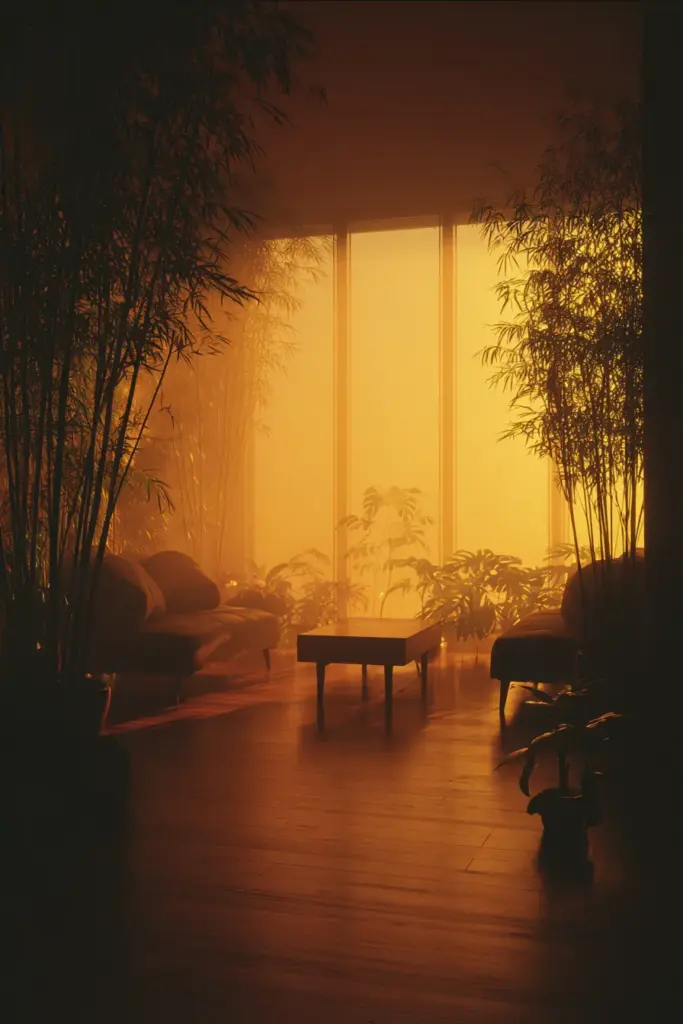
Biophilic Lighting: Plants and LEDs in Harmony
Here’s where Japandi gets innovative: pairing your lighting with living greenery.
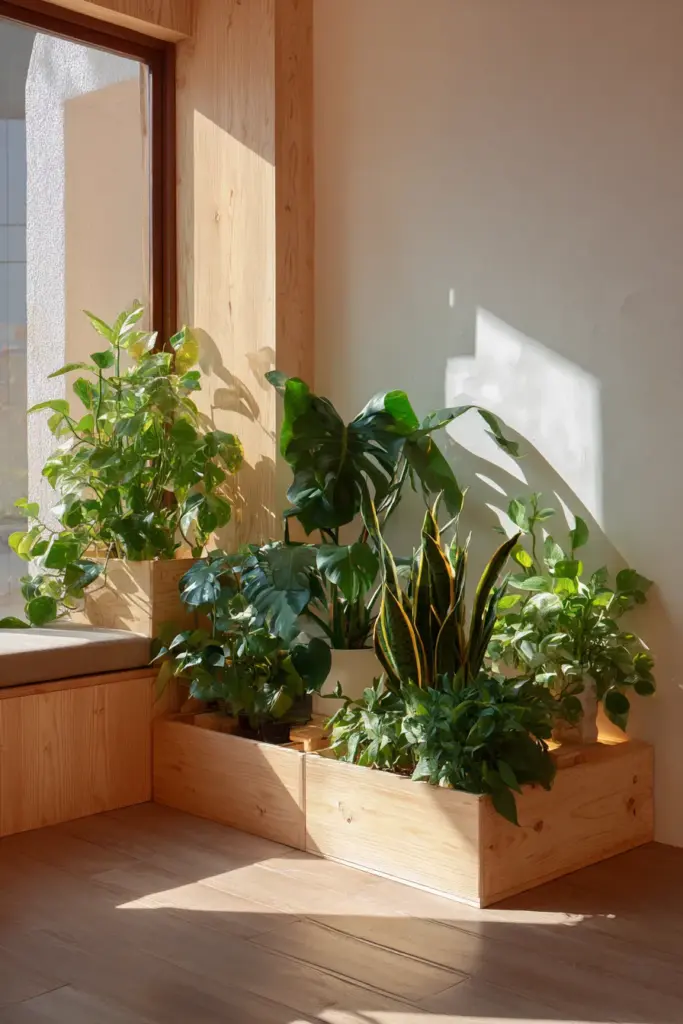
Modern warm LEDs in the 3000K range can support low-light houseplants like pothos, snake plants, and ferns—staples in tropical Philippine homes. Position grow-friendly bulbs in floor lamps near plant corners, creating dual-purpose fixtures that nurture life while illuminating space.
The bonus? Plants respond to consistent warm light cycles, and you benefit from biophilic design proven to reduce stress and improve air quality. It’s symbiotic beauty—very Japandi.
For those in Silang, Calabarzon, where humidity runs high, combine plants that thrive in moisture with mold-resistant washi alternatives or well-ventilated bamboo fixtures. The climate becomes an asset, not obstacle.
DIY Upcycle: Transforming IKEA Lamps into Japandi Warmth
Sustainability lives at Japandi’s core. Why buy new when you can reimagine?
Step 1: Choose an IKEA REGOLIT paper lamp (PHP 500-800) as your base—its simple globe shape is perfect.
Step 2: Swap standard bulbs for warm 2700K LED bulbs (PHP 150-300). This single change shifts the entire mood.
Step 3: Optional: Wrap natural jute twine around the metal frame for added texture, or brush on a light tea stain to age white paper into warmer cream.
Step 4: Pair with a braided fabric cord in neutral linen or black for that elevated minimalist touch.
Total investment: Under PHP 1,500 for a custom Japandi fixture that rivals designer pieces. This approach honors resourcefulness—a quiet luxury in itself.
The 2026 Trend: AI-Dimmable “Firefly” Lighting
Technology meets tranquility in emerging smart lighting that mimics natural phenomena. AI-powered LEDs now replicate firefly patterns—gentle pulses of warm 2700K light that ebb and flow organically.
These systems learn your routines, brightening gradually with morning coffee and dimming as evening approaches. They respond to ambient light levels, maintaining consistent warmth regardless of cloud cover—perfect for unpredictable Philippine weather.
While still premium-priced, the technology signals where Japandi lighting heads: human-centric, nature-inspired, effortlessly adaptive. Early adopters in Metro Manila report 30% improved sleep quality and measurably lower evening stress.
Your Japandi Lighting Checklist
Before finalizing your living room design, ensure you’ve covered these essentials:
- Dominant warm temperature: 2700K-3000K for all ambient sources
- Three-layer approach: Ambient foundation + task focus + accent drama
- Dimmable controls: On at least 80% of fixtures for mood flexibility
- Natural material fixtures: Washi, bamboo, wood, or linen in 1-2 statement pieces
- Energy-efficient LEDs: Reduce consumption while maintaining warmth
- Strategic cool accents: 3000K-3500K maximum, only where functional need exists
- Plant-friendly placement: Position lights to support biophilic greenery
- Humidity considerations: Mold-resistant materials for tropical climates
- Shadow play: Accent lights that create depth, not just brightness
- Budget alignment: Quality over quantity—invest in fewer, better pieces
This checklist ensures your space honors Japandi principles without compromising comfort or culture.
Bringing It All Together: A Living Room That Breathes Light
Imagine walking into your living room as evening settles. Recessed warm LEDs glow softly from the ceiling—2700K amber that makes your bamboo flooring shimmer. A washi pendant hovers above the low-slung sofa, casting diffused light that feels like captured moonlight.
In the corner, a wooden floor lamp bends toward your favorite reading chair, its 3000K bulb bright enough for focus but warm enough to belong. Behind floating shelves, LED strips illuminate your ceramic collection, creating gentle shadows that dance as you move.
Everything dims smoothly with a touch, adapting from energizing afternoon to meditative night. Plants thrive under thoughtfully placed warm LEDs. Not a single harsh blue tone interrupts the serenity.
This is Japandi lighting mastered—where function becomes poetry, and every switch carries intention.
Conclusion: Light as Language
At ERYLIN, we believe light speaks before words do. It sets the emotional temperature of your home, determines how you feel in your own space, and quietly shapes your daily rituals.
Choosing warm over cool in your Japandi living room isn’t about following trends—it’s about honoring how light makes us human. It’s about creating rooms that don’t just look beautiful in photographs but feel beautiful in life. Spaces where you exhale fully, where conversation flows easier, where simple moments become sacred.
Your lighting decisions are love letters to yourself. Write them in warm amber tones, layer them with care, and let them transform your living room into the sanctuary you deserve.
May your home always glow with intention.
Frequently Asked Questions
What color temperature is best for Japandi living room lighting?
Warm temperatures between 2700K-3000K create the serene, cozy atmosphere essential to Japandi design. These amber tones complement natural materials like wood and bamboo while reducing eye strain and promoting relaxation—perfect for living spaces meant to nurture calm.
Can I use cool lighting in a Japandi living room?
Use cool lighting sparingly and strategically. While warm tones should dominate, neutral whites (3000K-3500K) work for specific task lighting like reading nooks. Avoid harsh blue-toned bulbs above 4000K, as they disrupt the peaceful aesthetic and feel clinical rather than inviting.
How do I layer lighting in a Japandi living room?
Create three distinct layers: ambient (warm recessed LEDs or ceiling fixtures for overall glow), task (adjustable floor or table lamps for focused activities), and accent (LED strips or spotlights highlighting textures and objects). Use dimmer switches to adjust each layer independently throughout the day.
What are common Japandi lighting mistakes to avoid?
The biggest errors include mixing incompatible color temperatures (like 2700K warm with 5000K cool), using too many pendant fixtures that clutter sightlines, choosing harsh blue-white bulbs, and forgetting dimmer switches. Also avoid ignoring how natural materials like washi paper respond to humidity in tropical climates.
Are there budget-friendly Japandi lighting options in the Philippines?
Absolutely. IKEA paper lanterns (PHP 500-1,500), bamboo pendants from Lazada/Shopee (PHP 1,200-3,500), and warm LED bulbs (PHP 150-300) create authentic Japandi ambiance affordably. Focus on fewer quality pieces rather than many mediocre ones, and consider DIY upcycles of existing fixtures with warm bulbs and natural accents.