
Table of Contents
Light moves differently in a small room. It pools in corners, glances off pale walls, and carves out invisible boundaries that make a space feel either like a sanctuary or a cage.
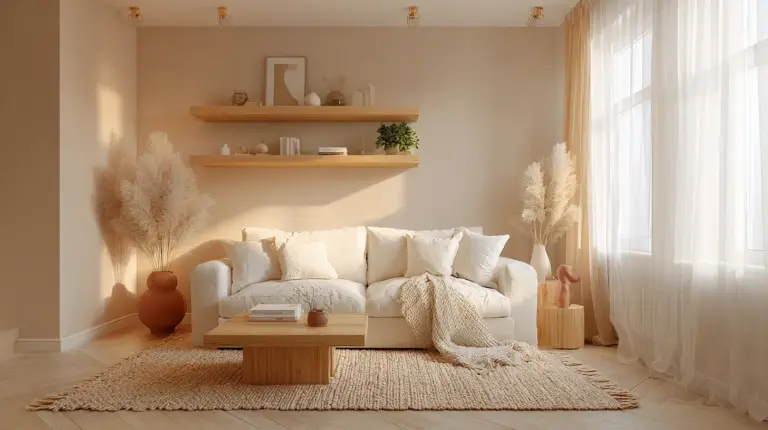
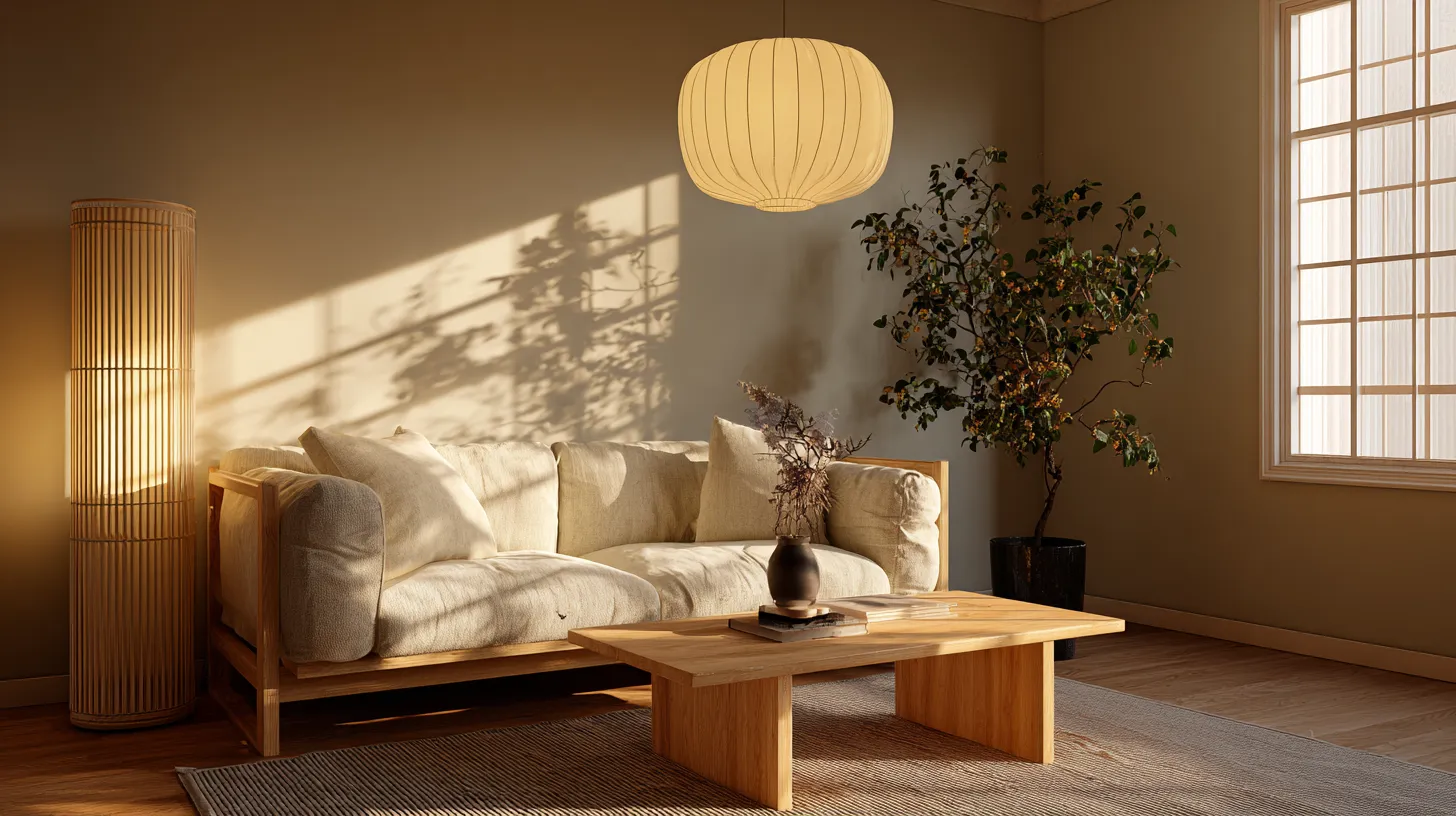
In Japandi design, light isn’t just functional—it’s poetry. It’s the soft glow of washi paper filtering warmth across tatami-inspired rugs, the sculptural shadow of bamboo against linen curtains, the quiet dignity of a floor lamp that asks for nothing but offers everything.
When your living room measures 10 to 20 square meters, every lumens count. You’re not just lighting a room; you’re expanding it, softening it, breathing life into every corner without clutter or excess.
This is where Japandi’s marriage of Japanese minimalism and Scandinavian hygge becomes transformative. Let’s explore how to layer light, choose fixtures wisely, and create a compact living room that feels twice its size—and infinitely more serene.
Understanding Japandi Lighting Principles
Japandi lighting is rooted in wabi-sabi and hygge—the Japanese appreciation for imperfect beauty and the Scandinavian embrace of cozy contentment. Together, they create a lighting philosophy that values warmth over brightness, natural materials over synthetic shine, and layered ambiance over harsh overhead glare.
In small spaces, this approach is particularly powerful. Instead of fighting your room’s dimensions, you’re working with them, using light to blur edges, invite depth, and celebrate simplicity.
The Rule of Natural Materials
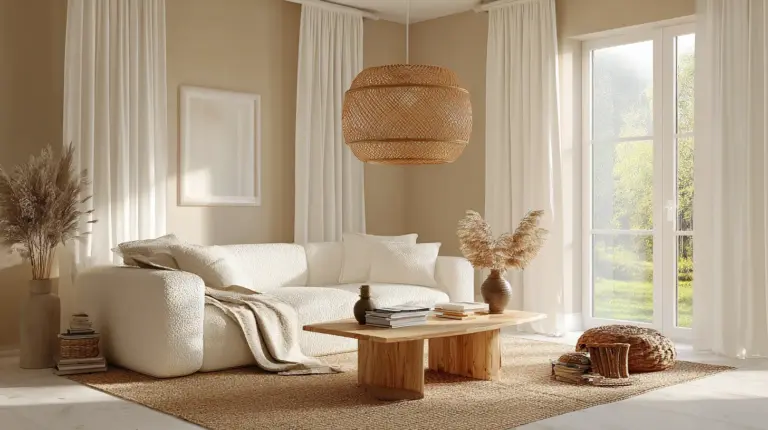
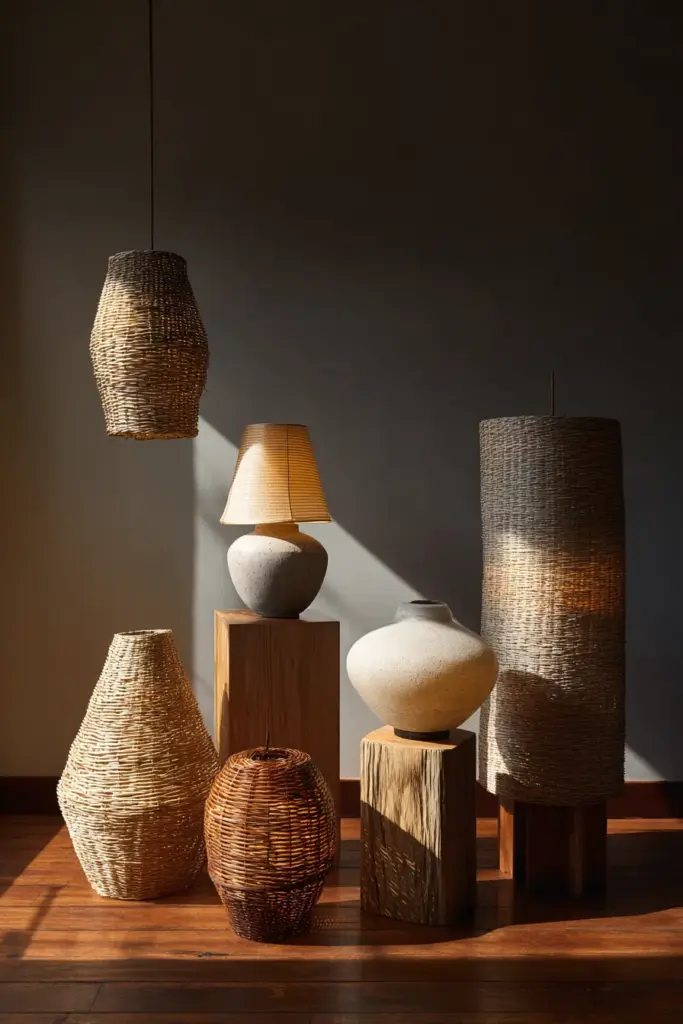
Paper, bamboo, linen, rattan, wood—these aren’t just aesthetic choices. They’re light diffusers that transform stark LED rays into something softer, more human. A bamboo pendant doesn’t just hang; it casts latticed shadows that add dimension to flat walls.
Washi paper lamps from Japanese artisans (or their affordable AliExpress counterparts) turn harsh light into a gentle glow that makes even a 5-square-meter corner feel expansive. Akita cedar frames and kumiko-patterned lanterns add texture without visual weight.
Warm White Over Cool White
Color temperature matters profoundly in compact Japandi spaces. Aim for 2700K to 3000K warm LEDs—the range that mimics candlelight and early morning sun. Studies show warm tones reduce anxiety and make rooms feel 20% larger perceptually, especially when layered at 300-500 lux total output.
Cool white (4000K+) may feel modern, but in Japandi design, it undermines the cozy minimalism you’re cultivating. Save those for task lighting in kitchens, not living sanctuaries.
Layering Light in Small Japandi Living Rooms
The secret to making a small living room feel generous? Never rely on a single light source. Layering creates depth, eliminates harsh shadows, and gives you control over mood from dawn to midnight.
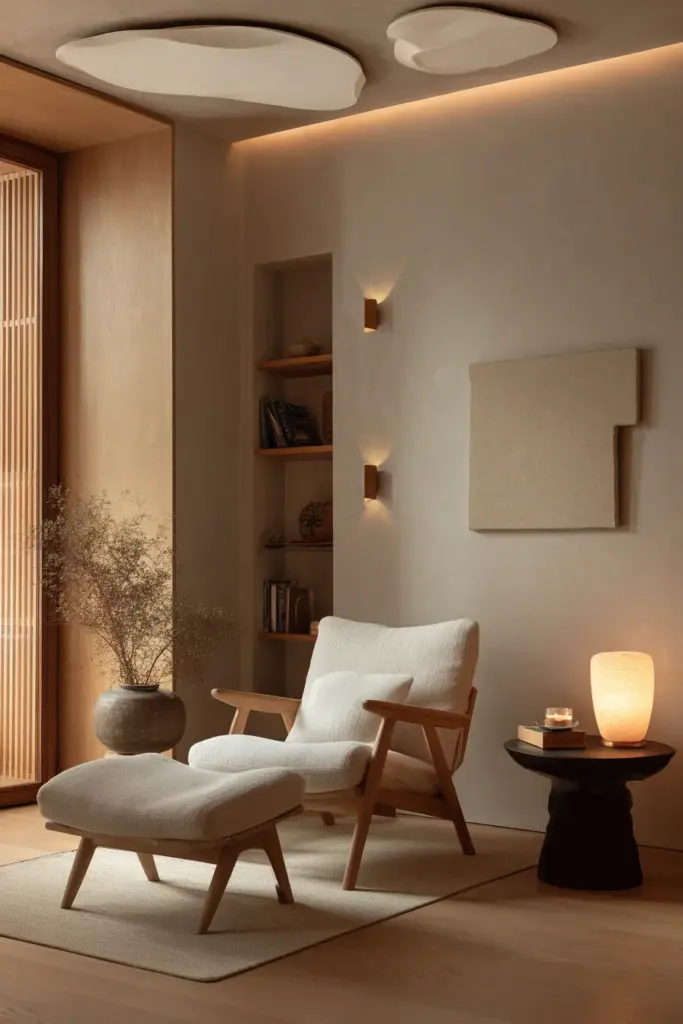
Ambient Lighting: The Foundation
This is your room’s base glow—the light that fills space without demanding attention. In Japandi design, ambient light should feel like it’s been there forever.
Recessed ceiling lights with warm dimmers work beautifully in apartments where you can’t install pendants. Keep them indirect; bounce light off ceilings rather than aiming downward. Alternatively, wall sconces flanking a low sofa save precious floor space while casting upward-reaching light that lifts ceilings visually.
For renters in places like Silang or Metro Manila condos, track lighting with bamboo or linen shades offers flexibility without permanent installation. Position them to graze walls, not flood the center.
Task Lighting: Purposeful and Beautiful
Task lights in Japandi spaces must earn their place through dual purpose—function and sculptural presence.
A slim floor lamp beside your reading nook, crafted from natural oak with a paper drum shade, provides focused light without bulk. Look for designs with clean lines and adjustable arms—think Muji’s minimalist sensibility or local Philippine makers using sustainable rattan.
Table lamps on low side tables (30-40cm high to match Japanese-inspired seating) create intimate pools of light. Choose bases in matte black steel or unvarnished wood, topped with linen or washi shades that diffuse rather than direct.
Accent Lighting: The Poetic Touch
This is where Japandi lighting becomes art. Accent lights highlight texture, create shadow play, and add emotional weight to your space.
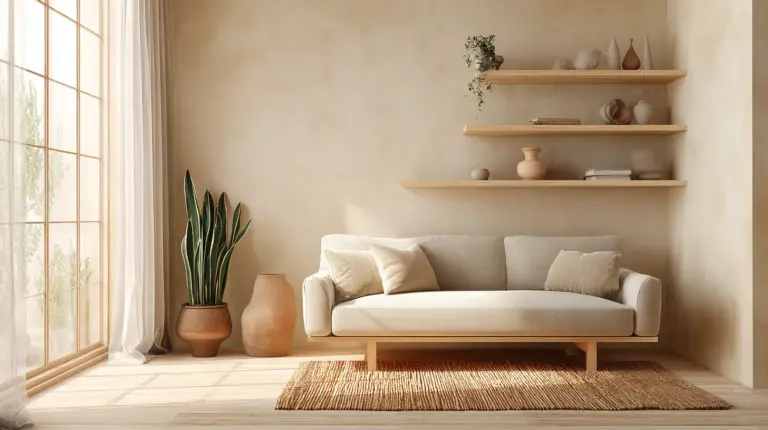
LED strip lights hidden beneath floating shelves (displaying ceramics or bonsai) cast a subtle glow that makes walls recede. Choose magnetic strips for easy repositioning—no drilling required.
A pendant light made from kumiko woodwork or rice paper, hung low over a corner meditation cushion, becomes a focal point that draws the eye upward, making ceilings feel taller. In a 10m² room, one statement pendant can replace three mediocre fixtures.
Space-Saving Fixture Solutions for Compact Rooms
Small Japandi living rooms demand fixtures that respect every centimeter. Here’s how to maximize light while minimizing footprint.
Wall-Mounted and Clamp-On Options
Wall sconces are your best friend when floor space is limited. Mount them at 150-170cm height to create eye-level warmth without interfering with furniture. Choose swing-arm designs in brushed brass or matte black for adjustable task lighting that tucks away when not needed.
Clamp-on lamps attach to shelving, windowsills, or desk edges—perfect for Philippine apartments where drilling restrictions apply. Look for bamboo or steel models with cloth-wrapped cords that blend into your Japandi palette.
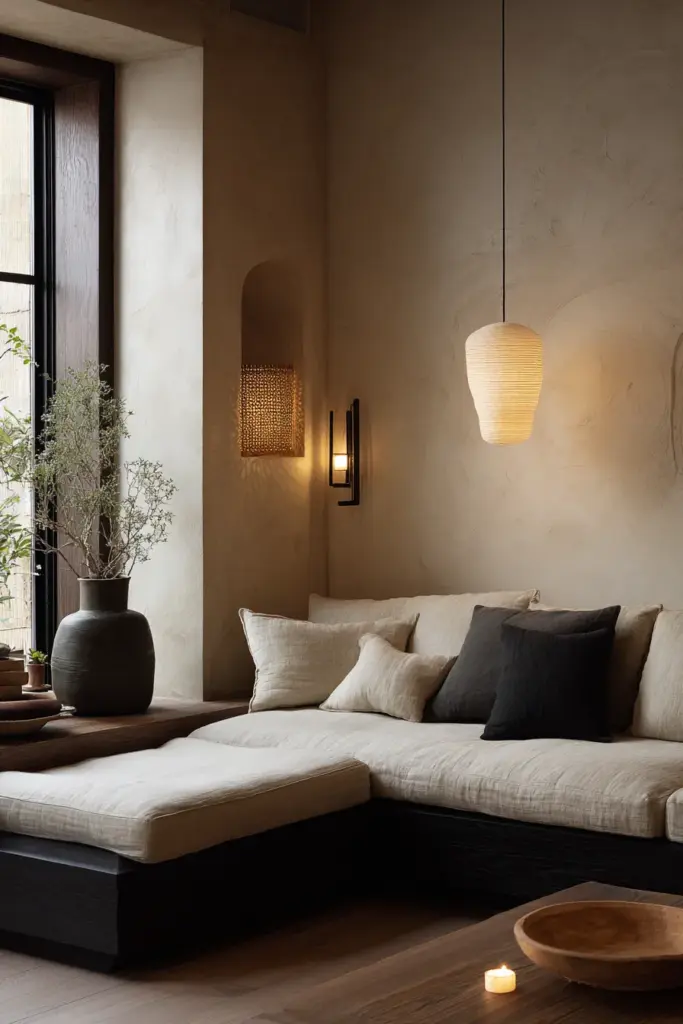
Slim Pendants and Sculptural Floor Lamps
Not all floor lamps are space hogs. Arc lamps with narrow bases reach over seating areas, providing overhead light without the footprint of a table lamp. Choose natural materials—a wooden arc with a linen shade feels intentional, never cluttered.
For pendants, think vertical, not wide. A tall, slender paper lantern (15-20cm diameter) occupies minimal visual space while offering maximum glow. Suspend it off-center to create asymmetry—a Japandi principle that adds movement to static rooms.
Smart Tech for Minimal Bulk
App-controlled warm LEDs with motion sensors transform how light works in tight spaces. Program your lights to dim automatically at sunset, or activate with a wave when your hands are full. For a 5m² living area, this eliminates the need for multiple switches and cords.
Smart dimmers allow you to shift from 100 lux (movie night) to 500 lux (cleaning day) without changing fixtures. In Japandi design, this flexibility supports the hygge concept of adapting your environment to your mood.
Budget-Friendly and DIY Lighting Ideas for Philippine Homes
Authentic Japanese paper lamps can cost ₱15,000+. But Japandi’s wabi-sabi ethos celebrates resourcefulness—imperfection with intention.
Local Market Upcycling
Visit your nearest palengke or bamboo supplier. Bamboo poles (₱50-200 each) can be shaped into pendant frames using jute twine and simple knotting techniques. Wrap them with translucent linen or rice paper from craft stores for a DIY shade that rivals expensive imports.
Rattan placemats from home stores (₱100-300) can be sewn into cylindrical lamp covers. Add a warm LED bulb kit (₱200 from hardware stores), and you’ve created a Japandi-style fixture for under ₱500.
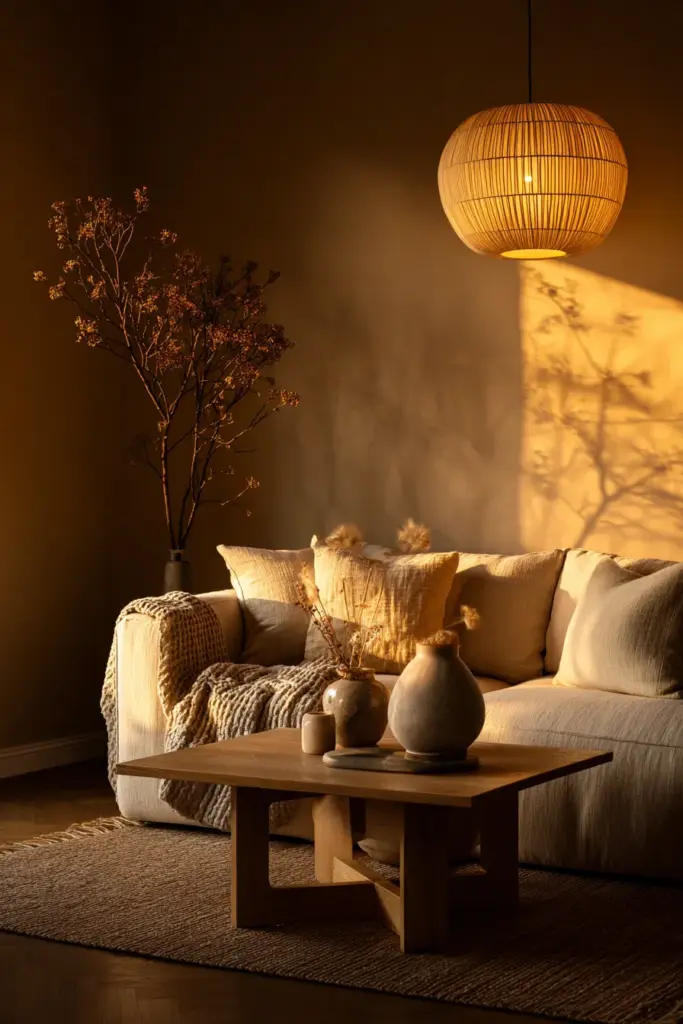
Affordable AliExpress Alternatives
Washi-style paper lanterns on AliExpress cost ₱800-1,500 versus ₱12,000+ for authentic Japanese versions. While the paper quality differs, the aesthetic impact remains. Layer these with thrifted wooden bases or second-hand brass stands for elevated styling.
Warm LED strips (₱300-600 per meter) offer incredible value. Install them under shelves, behind mirrors, or along baseboards to create ambient glow without visible fixtures.
Humidity-Resistant Modifications for Tropical Climates
Calabarzon’s humidity can warp paper and bamboo. Seal bamboo fixtures with clear matte varnish (₱250/can) to prevent moisture absorption. Choose LED bulbs that emit less heat to preserve natural materials—look for “cool to touch” labels at Ace Hardware or Wilcon Depot.
For paper lamps, spray with fabric protector (₱400/bottle) or choose synthetic washi alternatives that mimic the look while resisting mold. Position these away from open windows during monsoon season.
How Lighting Design Enlarges Perceived Space
The right lighting doesn’t just illuminate—it optically expands your living room through psychological and architectural principles.
The 300-500 Lux Formula
Research shows rooms lit at 300-500 lux total (combined from all sources) feel 20% more spacious than those at 150 lux or below. In Japandi design, this isn’t about brightness—it’s about evenness.
Distribute light across zones: 150 lux ambient ceiling glow, 200 lux from a corner floor lamp, 100 lux from accent strips. This layered approach eliminates dark pockets that visually shrink rooms.
Mirror Placement and Reflective Surfaces
Position floor lamps beside mirrors to double their output. A single washi pendant reflected in a rattan-framed mirror creates the illusion of two light sources, adding depth to narrow spaces.
Matte white walls (Japandi’s favorite) bounce warm light gently, while dark corners benefit from uplighting—sconces that cast shadows upward, drawing eyes to ceilings and creating vertical space.
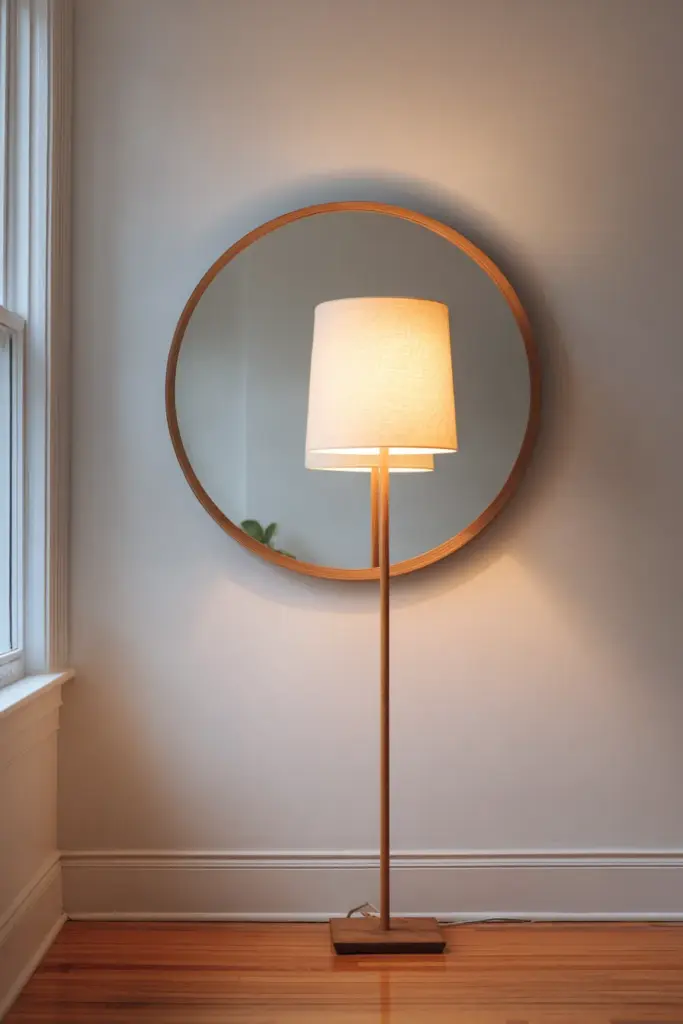
Daylight Amplification Techniques
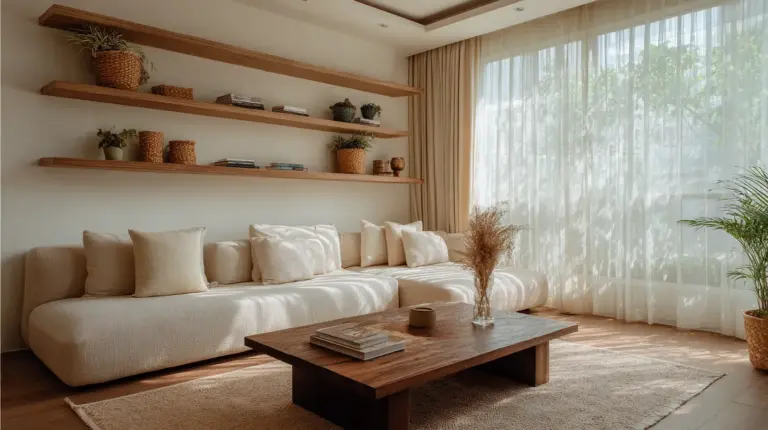
Sheer linen curtains filter natural light into soft, diffused rays that complement artificial sources. In small rooms, this hybrid approach—layering daylight with warm LEDs—makes transitions from day to night seamless.
For north-facing Philippine apartments with limited sun, consider daylight-mimicking SAD lamps (₱2,000-5,000) in 5000K that adjust to 2700K in evenings. These support circadian rhythms while maintaining Japandi’s warm ethos after dark.
Choosing the Right Fixtures: A Practical Checklist
Not every beautiful lamp belongs in a small Japandi living room. Use this guide to curate wisely.
Fixture Size Guidelines
| Room Size | Pendant Diameter | Floor Lamp Height | Table Lamp Height |
|---|---|---|---|
| 5-10 m² | 15-25 cm | 120-150 cm | 30-45 cm |
| 10-15 m² | 25-35 cm | 150-180 cm | 40-50 cm |
| 15-20 m² | 35-45 cm | 150-200 cm | 45-60 cm |
Oversized fixtures overwhelm; undersized ones disappear. Match proportions to your specific square meterage.
Material and Color Palette
- Bases: Natural oak, walnut, bamboo, matte black steel, brushed brass
- Shades: Washi paper, linen (oatmeal, greige, soft white), rice paper, rattan
- Accents: Jute cord, leather pulls, ceramic details in earthy tones
Avoid chrome, glass (unless frosted), or anything overly glossy. Japandi celebrates matte textures that absorb rather than reflect.
Bulb Selection Essentials
- Wattage: 4-6W LED for ambient, 8-10W for task
- Color Temp: 2700K (candlelight) to 3000K (warm white)
- CRI (Color Rendering Index): 90+ to render wood tones accurately
- Dimmable: Always—flexibility is core to Japandi living
Purchase from trusted Philippine retailers like Orange & Bronze or Firefly Electric to ensure quality.
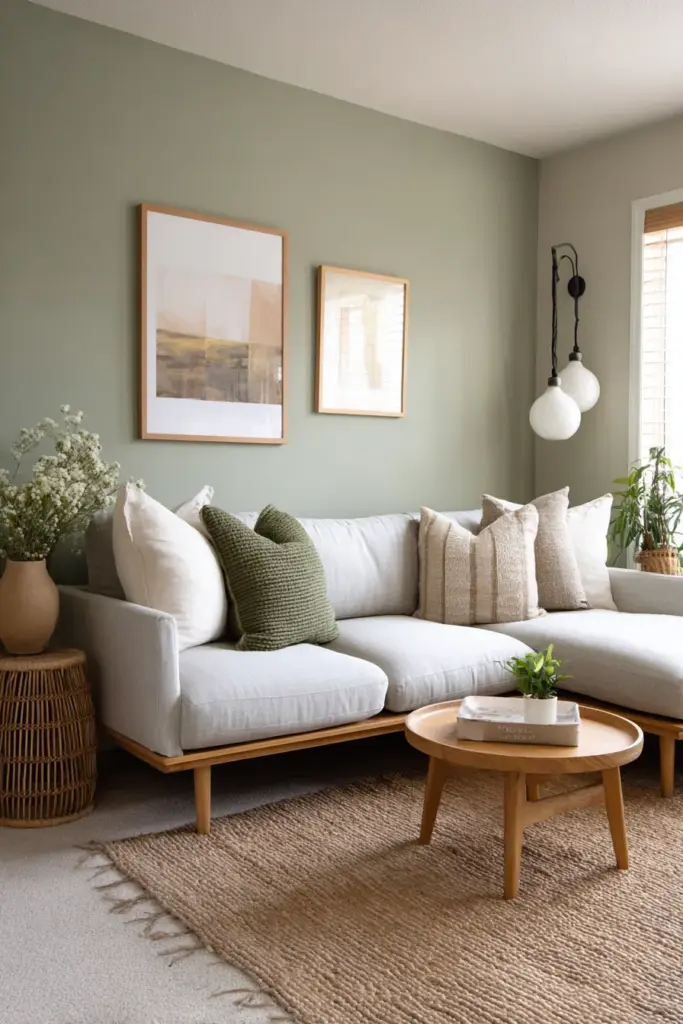
Sustainability and Maintenance in Humid Climates
Japandi design honors nature—which means choosing materials that endure and age gracefully, especially in tropical environments.
Eco-Friendly Options
Solar-rechargeable paper lanterns (₱1,500-3,000) eliminate cords while offering portability. Charge them on windowsills by day, move them to reading nooks by night.
Look for FSC-certified bamboo fixtures from brands that prioritize sustainable harvesting. Local Philippine makers often source responsibly—ask about origins before purchasing.
Care Tips for Longevity
- Dust bamboo monthly with microfiber cloths to prevent buildup that attracts moisture
- Vacuum paper shades gently using upholstery attachments
- Wipe metal bases with damp (not wet) cloths; dry immediately
- Rotate LED bulbs annually even if functional—color temps shift over time
During monsoon season, run dehumidifiers in living areas to keep fixtures pristine. A small investment (₱2,000-4,000) protects your lighting investment for years.
Small Space Japandi Lighting Checklist
Before finalizing your lighting plan, review these essentials:
- Three light layers: Ambient base + task focus + accent poetry
- Warm color temperature: 2700-3000K across all sources
- Natural materials: At least 70% of fixtures use paper, bamboo, wood, or linen
- Space-saving designs: Wall mounts, clamps, or slim floor lamps only
- Dimmers installed: On all non-accent lighting for mood control
- Total lux output: 300-500 combined across room
- Mirror placement: Positioned to reflect and multiply light
- Bulb quality: 90+ CRI, dimmable LEDs from reputable brands
- Humidity protection: Sealed or treated natural materials
- Budget allocation: ₱5,000-15,000 total for 10-15m² room
Download our free Japandi Lighting Fixture Size & Bulb Guide PDF to reference while shopping—includes measurement charts and Philippine supplier recommendations.
Conclusion: Light as the Soul of Small Spaces
There’s a moment, just after sunset, when your living room could go either way. It could retreat into shadows, feeling smaller and colder. Or it could bloom—warm light pooling on linen cushions, bamboo casting gentle patterns, every corner breathing softly into evening.
This is what Japandi lighting offers. Not perfection, but presence. Not excess, but exactly enough.
Your small living room isn’t a limitation. It’s an invitation to be intentional, to choose light that serves both function and feeling, to create a space where 10 square meters feels like infinite calm.
Let the light guide you home.
Frequently Asked Questions
What lighting makes a small living room feel bigger in Japandi style?
Layered ambient lighting at 300-500 lux total makes rooms feel 20% more spacious by eliminating dark corners. Use warm LEDs (2700K) with mirrors positioned near floor lamps to double perceived light sources. Incorporate daylight-mimicking SAD lamps for north-facing rooms, and choose diffused fixtures like washi paper pendants over harsh downlights. The key is even distribution—not brightness alone—combined with natural materials that soften light rather than reflect it harshly.
How to layer lighting in a Japandi living room?
Start with ambient lighting (recessed ceiling lights or wall sconces) for base glow. Add task lighting through slim floor lamps or table lamps beside seating and reading areas. Finish with accent lighting—LED strips under shelves, a statement pendant, or uplighting sconces. In small spaces, aim for three sources minimum but avoid overcrowding. Use dimmers to adjust intensity throughout the day, balancing natural light from sheer curtains with warm artificial glow at night.
Best Japandi lamps for small spaces under ₱5,000?
Look for slim floor lamps (120-150cm) in bamboo or oak (₱2,000-4,000 at local furniture stores). Washi-style paper pendants from AliExpress (₱800-1,500) pair with wooden ceiling roses (₱500). Clamp-on lamps in rattan (₱1,200-2,500) save floor space. DIY bamboo pendants using palengke materials cost under ₱500. Prioritize warm LED bulbs (₱200-400 each) over fancy fixtures—good light quality matters more than expensive bases in small rooms.
How many lumens for a 10-square-meter Japandi living room?
Target 3,000-5,000 lumens total distributed across ambient, task, and accent sources—translating to 300-500 lux. A 6W warm LED bulb produces approximately 450-550 lumens, so you’ll need 6-10 bulbs strategically placed. For example: two ceiling recessed lights (800 lumens each), one floor lamp (600 lumens), two table lamps (400 lumens each), and LED strips (200 lumens). Layer rather than concentrate—10 dimmed sources beat one bright overhead.
Are smart bulbs worth it for small Japandi living rooms?
Yes, especially in compact Philippine apartments. App-controlled warm LEDs (₱800-1,500 per bulb) with dimmers eliminate wall switches and cord clutter. Program them to shift from 100 lux (evening relaxation) to 500 lux (daytime tasks) without changing fixtures. Motion sensors work well in 5-10m² spaces where hands-free control adds convenience. Choose brands like Philips Hue or Xiaomi that support 2700K temperatures—essential for maintaining Japandi’s warm aesthetic while gaining modern flexibility.