
Table of Contents
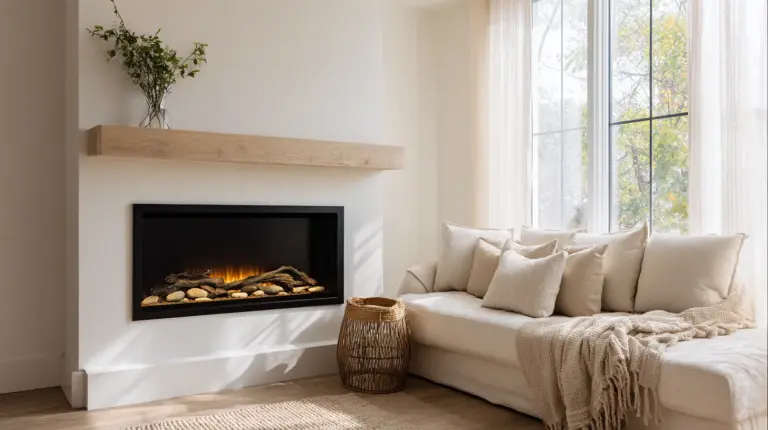
The best small living rooms don’t feel small at all. They feel intentional — like every object earned its place, every corner breathes, and every surface whispers calm.
That’s the promise of Japandi design. Born from the quiet marriage of Japanese wabi-sabi and Scandinavian hygge, this style strips away the noise and leaves only what matters: warmth, texture, and light. It’s minimalism with a heartbeat.
And for those of us living in compact spaces — whether it’s a Manila apartment or a cozy urban flat — Japandi isn’t just beautiful. It’s practical magic. Let’s walk through how to create a small Japandi living room that feels expansive, grounded, and unmistakably yours.
What Is Japandi Style in a Living Room?
Japandi is the gentle fusion of two design philosophies that share a love for simplicity. From Japan, we borrow wabi-sabi — the art of finding beauty in imperfection, natural materials, and understated elegance. From Scandinavia, we embrace hygge: cozy textures, functional furniture, and soft, diffused lighting.
The result? A living room that feels both serene and lived-in. Clean lines meet organic textures. Neutral palettes anchor warm earth tones. Every piece is multifunctional, uncluttered, and deeply intentional.
For small spaces, Japandi becomes even more essential. It teaches us to edit ruthlessly, choose quality over quantity, and let negative space do the heavy lifting.
How Do You Make a Small Living Room Feel Bigger Japandi Style?
Embrace Low-Profile Furniture
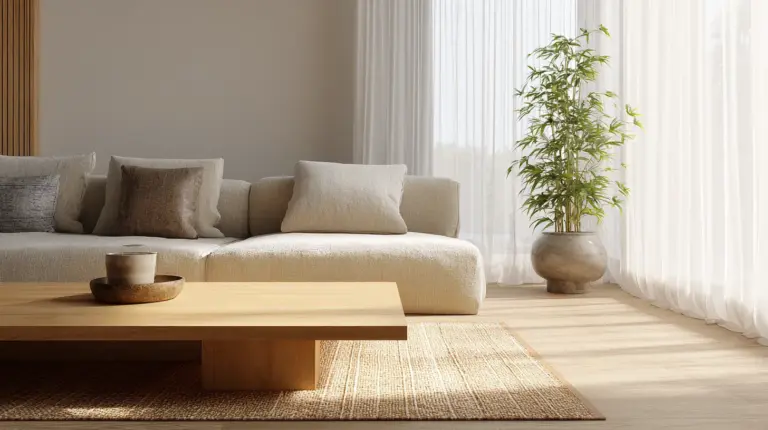
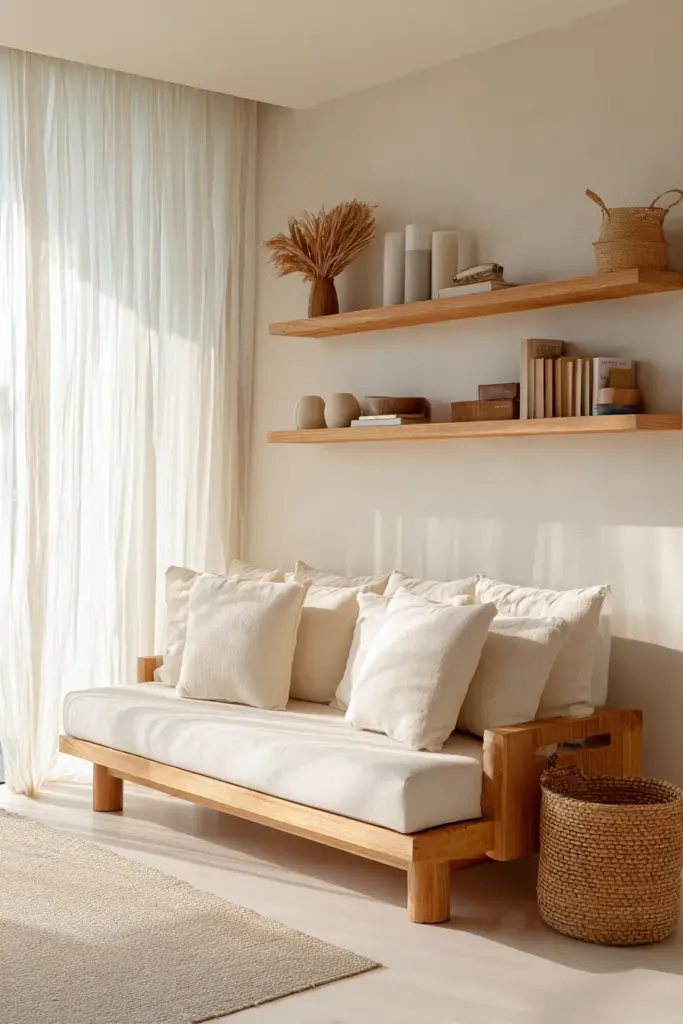
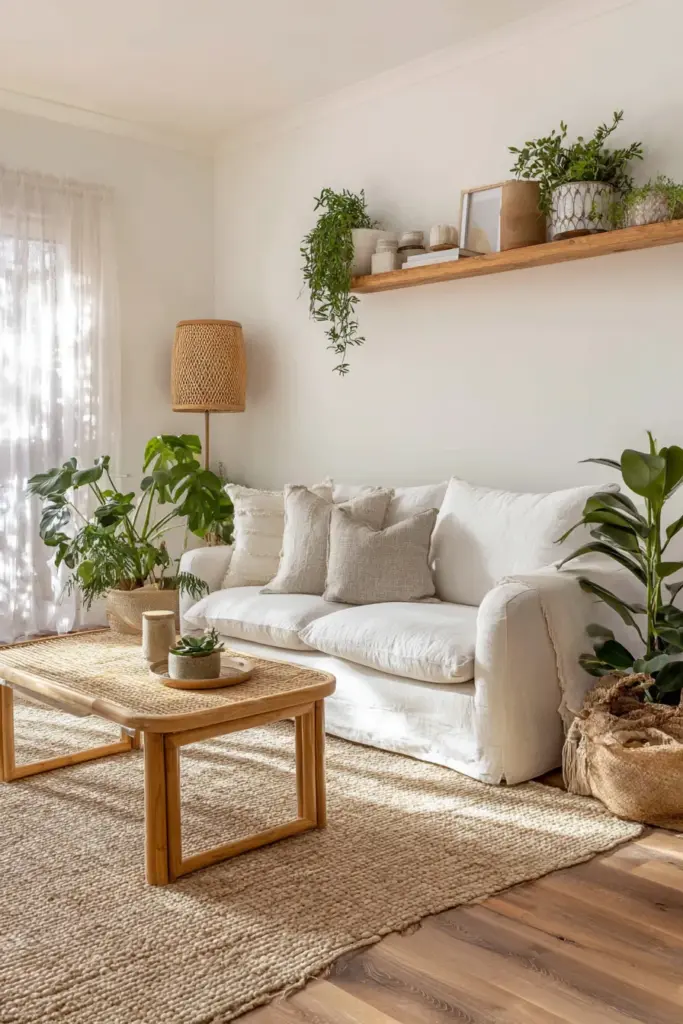
Low sofas, floor cushions, and streamlined coffee tables create visual flow. When furniture hugs the ground, ceilings appear taller and walls recede. A low-profile oak sofa with linen cushions, for example, opens sightlines while anchoring the room in natural warmth.
Pair this with floating shelves instead of bulky bookcases. Mount them at eye level to keep essentials within reach without crowding the floor.
Let Light Lead the Way
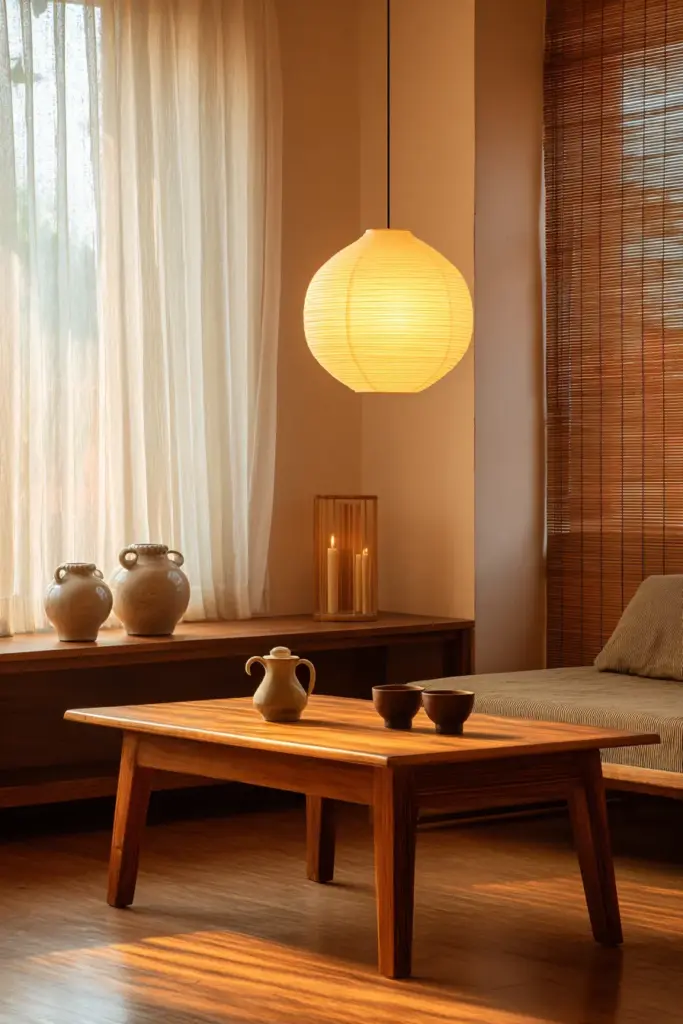
Natural light is Japandi’s secret weapon. Replace heavy curtains with bamboo blinds or sheer linen panels that filter sunlight into soft, golden pools. If privacy allows, leave windows bare — let the outside in.
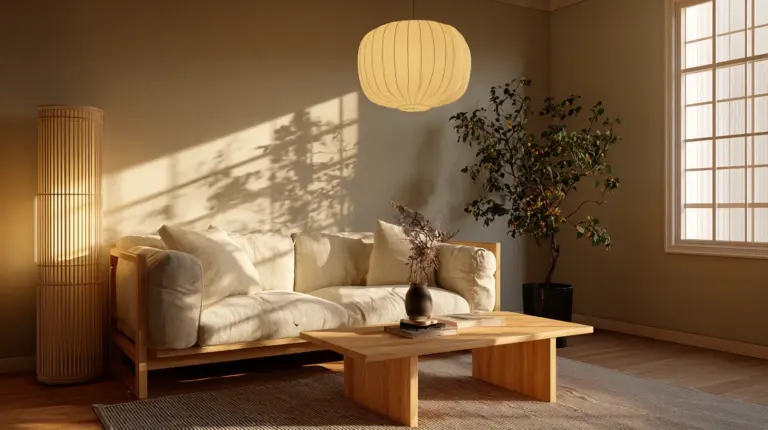
For artificial lighting, layer your sources. A ceramic pendant lamp casts ambient warmth, while a rattan floor lamp offers task lighting for reading. Choose bulbs in the 2700K range (warm white) to mimic sunset glow — this color temperature soothes the nervous system and makes small rooms feel inviting rather than clinical.
Use Mirrors and Reflective Surfaces Strategically
A round wooden-framed mirror opposite a window doubles your natural light. Place it where it reflects greenery or sky, not clutter. Reflective surfaces — a ceramic vase, a glass tabletop — catch and scatter light without adding visual weight.
Avoid overdoing metallics; Japandi leans toward matte finishes. Think brushed brass, not chrome.
Stick to a Neutral Palette with Earthy Accents
Your foundation should be soft whites, warm grays, and creamy beiges. These hues expand space by blurring boundaries between walls and furniture. Then layer in earth tones: terracotta, sage green, charcoal, muted mustard.
A single accent pillow in burnt orange or a clay planter in deep brown adds warmth without overwhelming the eye.
What Are Japandi Living Room Ideas for Small Spaces?
Multifunctional Storage Solutions
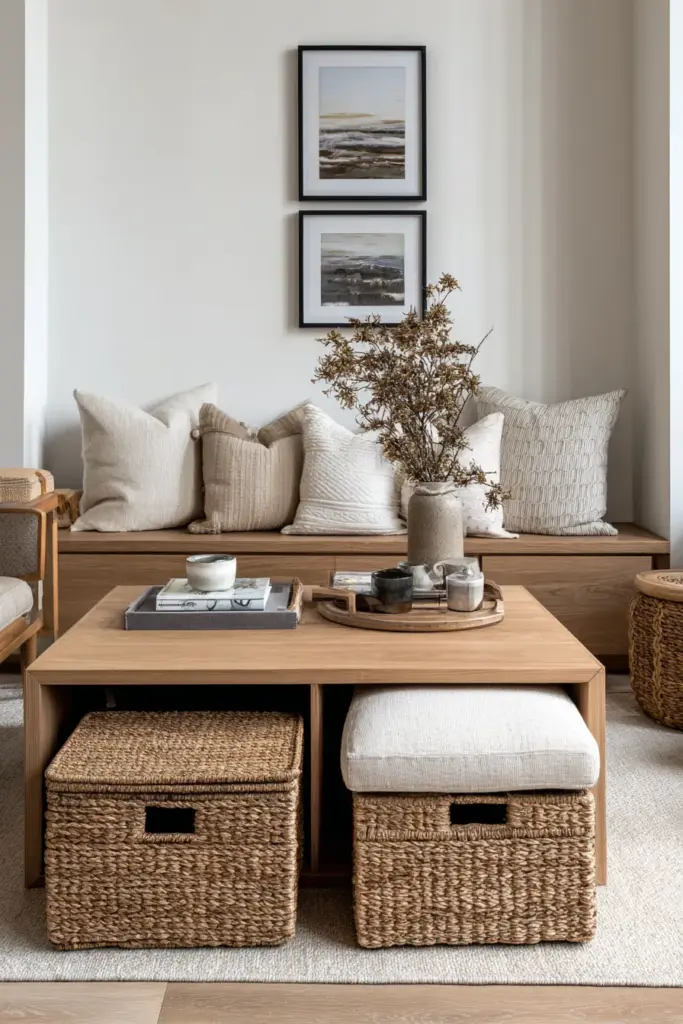
In a small Japandi living room, every piece works overtime. A rattan ottoman stores blankets while serving as a coffee table. A wooden bench with built-in cubbies holds books and doubles as extra seating.
Look for furniture with clean lines and hidden compartments. A minimalist media console in light oak can house electronics while maintaining that uncluttered aesthetic. The key: closed storage keeps visual noise at bay.
Indoor Plants for Air and Soul
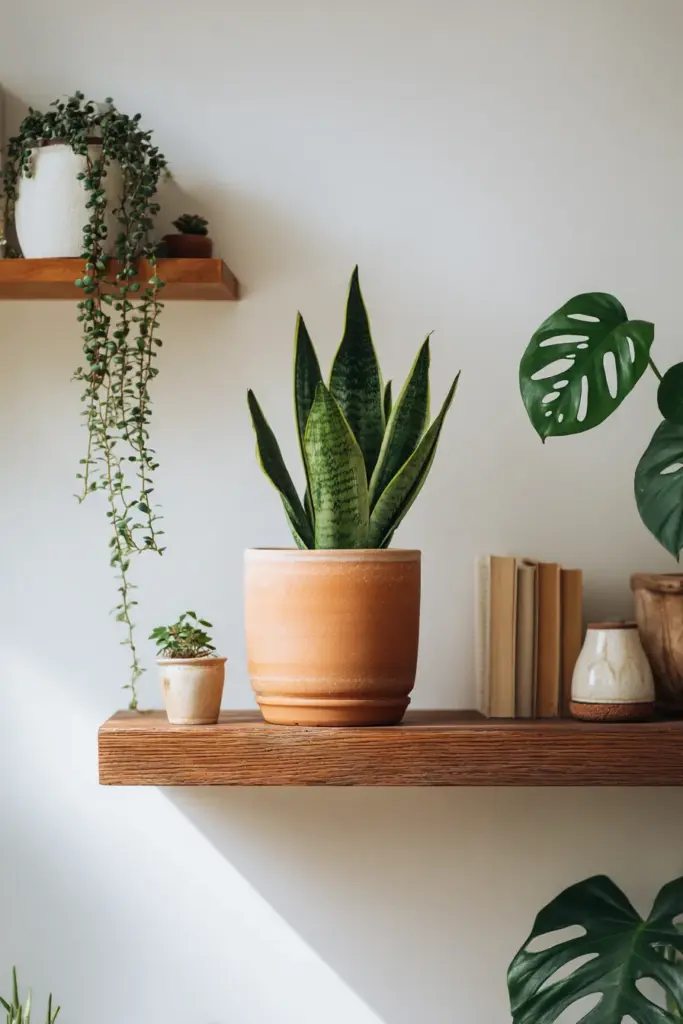
Greenery isn’t just decor in Japandi spaces — it’s a philosophy. Plants purify air, soften hard edges, and connect us to nature. For humid climates like Manila, choose low-maintenance species: snake plants thrive in low light, pothos vines cascade beautifully from shelves, and monstera adds sculptural drama.
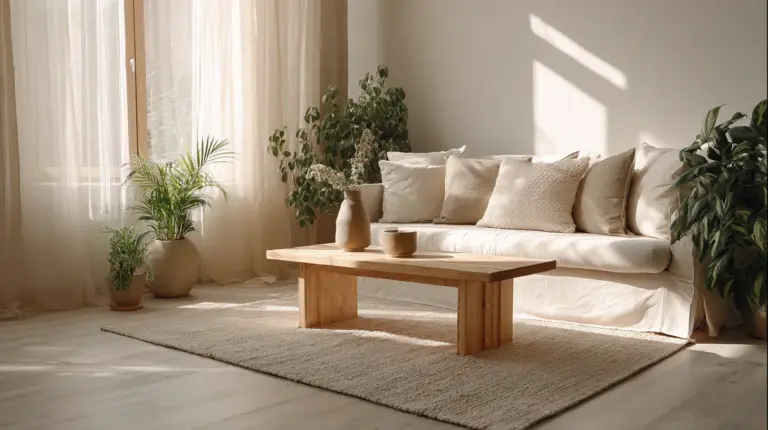
Group plants at varying heights. A tall fiddle-leaf fig in a ceramic pot anchors a corner, while smaller succulents on a floating shelf create rhythm. In small spaces, vertical greenery maximizes impact without claiming precious floor space.
Plant Care for Humid Spaces:
- Mist leaves weekly to prevent dust buildup
- Use terracotta pots for better drainage
- Rotate plants monthly for even light exposure
Texture Layering: The Japandi Signature
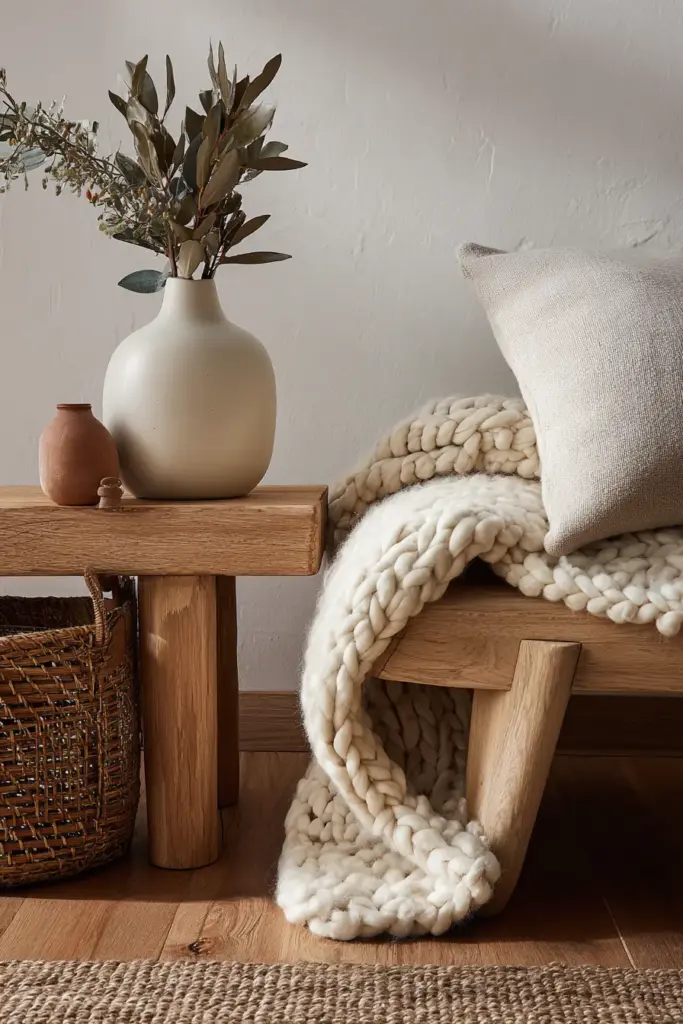
Minimalism doesn’t mean sterile. Japandi invites texture: a chunky knit throw draped over linen upholstery, a jute rug grounding the seating area, raw wood grain against smooth ceramic.
Mix materials deliberately. A concrete side table next to a velvet cushion. A bamboo basket holding soft cotton blankets. Each contrast tells a story — rough and smooth, organic and refined.
Even your walls can participate. Limewash paint adds subtle texture, or consider a single accent wall in natural grasscloth wallpaper.
Declutter Like Your Sanity Depends on It
Japandi spaces practice ruthless curation. If it doesn’t serve a purpose or spark joy, it doesn’t belong. Display only a few cherished objects: a handmade ceramic bowl, a vintage book, a single stem in a glass vase.
Use the “one in, one out” rule. When you bring in something new, something else leaves. This keeps small spaces from tipping into chaos.
How Can I Create a Japandi Minimalist Living Room on a Budget?
DIY Japandi Hacks for Renters
You don’t need to repaint or drill to achieve Japandi vibes. Peel-and-stick wallpaper in soft sage or textured white transforms walls without losing your deposit. Tension rod shelving creates floating displays without nails.
Swap out builder-grade hardware: replace plastic light switches with wooden toggles, or add bamboo drawer pulls to existing furniture. Small swaps, big impact.
Budget Breakdown: Under ₱25,000 Setup
Here’s a realistic Japandi living room for Manila renters, sourced from Lazada and Shopee:
| Item | Source | Price (₱) |
|---|---|---|
| Low-profile linen sofa (2-seater) | Shopee | 8,500 |
| Rattan coffee table | Lazada | 2,200 |
| Jute area rug (120x180cm) | Shopee | 1,800 |
| Bamboo floor lamp | Lazada | 1,500 |
| Set of 3 ceramic planters | Shopee | 650 |
| Floating wooden shelf (80cm) | Lazada | 900 |
| Linen curtains (2 panels) | Shopee | 1,200 |
| Snake plant + pothos bundle | Local nursery | 800 |
| Knit throw blanket | Shopee | 750 |
| Miscellaneous (cushions, candles) | — | 2,000 |
| Total | ₱20,300 |
Upcycling and Secondhand Finds
Scout thrift shops for solid wood pieces. Sand down a vintage teak side table, apply natural oil, and you’ve got Japandi gold for a fraction of retail. Old wooden crates become modular storage. A worn leather pouf gains character with a patch and some saddle soap.
Manila’s weekend markets (Cartimar, Dapitan) offer bamboo baskets, rattan trays, and ceramic bowls at bargain prices. Buy local artisan pieces when possible — they carry more soul than mass-produced items.
Lighting Psychology for Tiny Japandi Spaces
Light shapes mood more than we realize. In a small living room, thoughtful lighting can blur boundaries and expand perception.
Layer Your Light Sources
Ambient lighting sets the foundation. A pendant lamp with a paper or linen shade diffuses light evenly, eliminating harsh shadows. Hang it low over your coffee table to create intimacy without shrinking the room.
Task lighting serves function. A brass reading lamp beside your sofa, an LED strip under floating shelves highlighting books or plants. These focused beams add dimension.
Accent lighting brings drama. A small uplighter behind a fiddle-leaf fig casts sculptural shadows on the wall. Candles in ceramic holders flicker with organic warmth.
Color Temperature Matters
Warm white bulbs (2700K–3000K) mimic afternoon sunlight — they signal relaxation to our brains. Cool white (4000K+) feels clinical and energizing, better suited for work areas.
In a Japandi living room, keep it warm. The glow should feel like honey light through rice paper: soft, golden, enveloping.
Multifunctional Furniture Hacks for Small Japandi Living Rooms
Storage Ottomans and Bench Seating
A linen-upholstered storage ottoman serves triple duty: footrest, coffee table, and hidden compartment for throws or magazines. Choose one in neutral beige or charcoal — it’ll disappear visually while working hard practically.
A wooden bench with woven baskets underneath offers seating when guests arrive and corrals clutter when they don’t.
Nesting Tables and Foldable Solutions
Nesting side tables in light oak tuck away when not needed, expand when hosting. A foldable bamboo tray table leans against the wall, ready to serve tea or hold a laptop.
These pieces honor Japandi’s core principle: adapt to life’s rhythms without creating permanent bulk.
Wall-Mounted Desks and Fold-Down Surfaces
If your living room doubles as a workspace, install a wall-mounted fold-down desk in natural wood. When closed, it’s a slim shelf; when open, a functional workstation. Pair it with a lightweight stool that slides under when not in use.
2026 Japandi Trends: What’s Emerging
Wabi-Sabi Meets Smart Technology
The new Japandi embraces minimal tech: smart bulbs that adjust color temperature throughout the day, hidden charging stations in wooden side tables, AI-powered air purifiers disguised as sculptural vases.
The goal? Technology that enhances calm without announcing itself.
Upcycled and Sustainable Materials
Reclaimed wood, recycled ceramic, and plant-based textiles are no longer optional — they’re expected. Look for furniture made from fast-growing bamboo or salvaged timber. Choose organic cotton and linen over polyester blends.
Sustainability isn’t a trend; it’s Japandi’s ethical foundation coming full circle.
Modular and Adaptive Furniture
As urban living spaces shrink globally, modular systems gain traction. Sofas with removable sections, shelving units that reconfigure, tables that expand or collapse. Japandi design increasingly asks: how can this adapt as life changes?
Your Small Japandi Living Room Checklist
Foundation Elements:
- Low-profile sofa in neutral linen or cotton
- Jute or wool area rug in natural tones
- Floating wooden shelves (light oak or walnut)
- Bamboo or paper pendant lamp
Texture & Warmth:
- Chunky knit throw blanket
- Linen or velvet cushions in earth tones
- Ceramic or terracotta planters
- Woven rattan basket for storage
Lighting Layers:
- Warm white bulbs (2700K) in all fixtures
- Floor or table lamp for task lighting
- Candles in ceramic or concrete holders
Greenery:
- At least 2-3 indoor plants (snake plant, pothos, monstera)
- Mix of heights and textures
- Natural ceramic or terracotta pots
Decluttering:
- Only display 3-5 meaningful objects
- Hidden storage for everything else
- “One in, one out” rule for new items
Conclusion: The Art of Breathing Room
A small Japandi living room teaches us something radical: that less can hold more. More peace. More intention. More room to breathe, think, and simply be.
It’s not about perfection — wabi-sabi reminds us that cracks and wear tell stories. It’s about creating a space that supports your life rather than complicating it. Where every cushion, every plant, every beam of light serves a purpose beyond just looking beautiful.
So start small. Swap one harsh overhead bulb for a warm floor lamp. Bring home a single snake plant in a clay pot. Replace clutter with one cherished object. Each step is a conversation between you and your space, teaching it to hold you gently.
Your living room doesn’t need to be big to be whole. It just needs to be honest.
FAQs
Can I mix Japandi with other styles in a small living room?
Absolutely, but edit carefully. Japandi pairs beautifully with boho (through natural textures) or mid-century modern (via clean lines). The key: keep the neutral palette as your anchor and limit bold style elements to 1-2 pieces so the space doesn’t feel cluttered.
What’s the biggest mistake people make with small Japandi spaces?
Overcrowding with too many u0022minimalu0022 pieces. Just because each item is simple doesn’t mean you need twenty of them. Start with fewer, higher-quality pieces and add only as gaps reveal themselves. Trust negative space — it’s doing work you can’t see.
How do I maintain a Japandi living room with kids or pets?
Choose durable, cleanable fabrics like performance linen or tightly woven cotton. Opt for washable jute rugs over delicate wool. Keep plants out of reach (many are toxic to pets). The beauty of Japandi is its practicality — it’s meant to be lived in, not just admired.
Where can I find affordable Japandi furniture in the Philippines?
Check Shopee and Lazada for rattan, bamboo, and linen pieces (search u0022Japandi,u0022 u0022natural wood furniture,u0022 or u0022minimalist living roomu0022). Visit local markets like Dapitan or Cartimar for bamboo baskets and ceramic planters. For solid wood, explore secondhand shops and upcycle with sandpaper and natural oil.
Do I need to paint my walls for Japandi style?
Not necessarily. If you’re renting or want a quick refresh, use peel-and-stick wallpaper in soft neutrals or textured grasscloth patterns. Otherwise, warm white or light gray paint works beautifully. The focus should be on furnishings and textures rather than dramatic wall colors.