
Table of Contents
There’s something deeply satisfying about stepping barefoot onto the right floor. The coolness of oak under your toes on a summer morning. The warmth of honey-toned bamboo catching afternoon light. Your floor isn’t just a surface—it’s the foundation of every feeling your living room holds.
In Japandi design, flooring becomes poetry. It’s where Scandinavian hygge meets Japanese wabi-sabi, where minimalism finds warmth, and where every color choice whispers rather than shouts. This style doesn’t demand perfection; it celebrates the beauty of natural materials, honest textures, and colors that feel like they’ve always belonged.
Today, we’re exploring the Japandi living room flooring color palette—not just which shades work, but why they work, and how they transform your space into a sanctuary. Whether you’re renovating or simply reimagining, consider this your gentle guide to floors that ground you.
Understanding the Japandi Color Philosophy
Japandi living embraces what we call “quiet luxury.” Think of colors that exist in nature without trying: the pale gray of river stones, the soft beige of linen left in sunlight, the warm taupe of weathered driftwood.
This hybrid style borrows Scandinavia’s love of light neutrals and Japan’s reverence for earth tones. The result? A palette that feels both expansive and intimate, modern yet timeless. Your flooring sets this tone—it’s the canvas upon which everything else rests.
The magic lies in restraint. Japandi floors typically fall within a spectrum of warm neutrals, light woods, and soft grays, occasionally punctuated by deeper browns or muted terracotta. These aren’t colors that compete for attention; they’re colors that make you breathe deeper.
The Essential Japandi Flooring Color Palette
Light Oak and Ash Tones
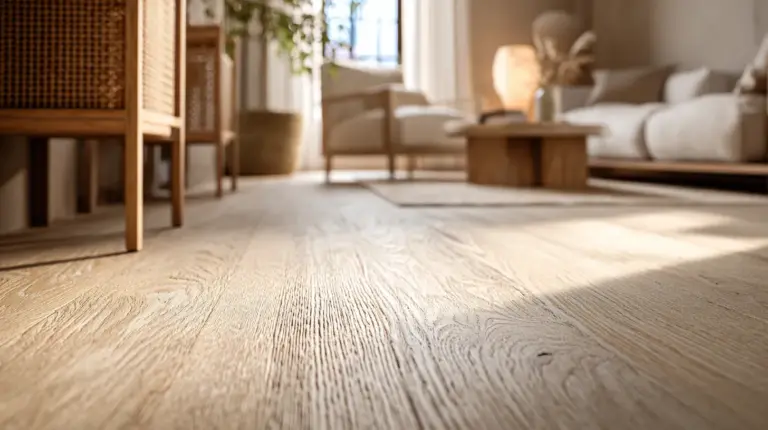
Picture pale oak catching morning light—that’s your Japandi sweet spot. Light oak flooring (think hex #F5DEB3 wheat, #FAF0E6 linen white) creates an airy foundation that makes small living rooms feel generous and large ones feel intentional.
Ash tones lean slightly cooler (#F5F5F4 ash gray, #E8E8E8 platinum), offering that coveted Scandinavian brightness while maintaining warmth through natural wood grain. These floors pair beautifully with white walls and charcoal textiles, creating contrast without harshness.
Best for: North-facing rooms needing light, minimalist spaces, open-concept living areas.
Warm Honey and Mid-Tone Oak
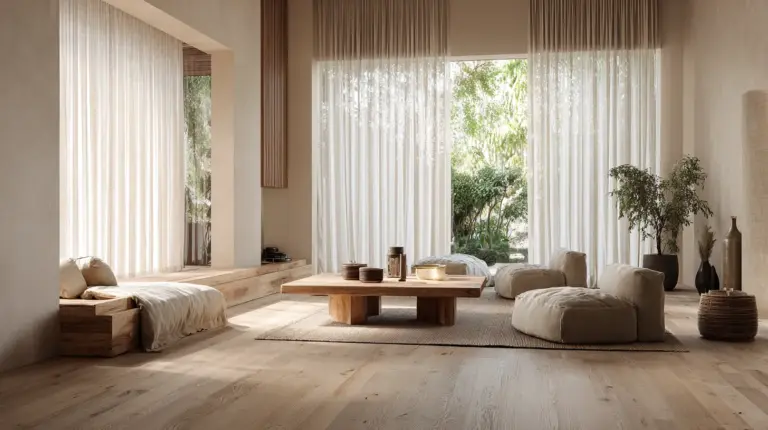
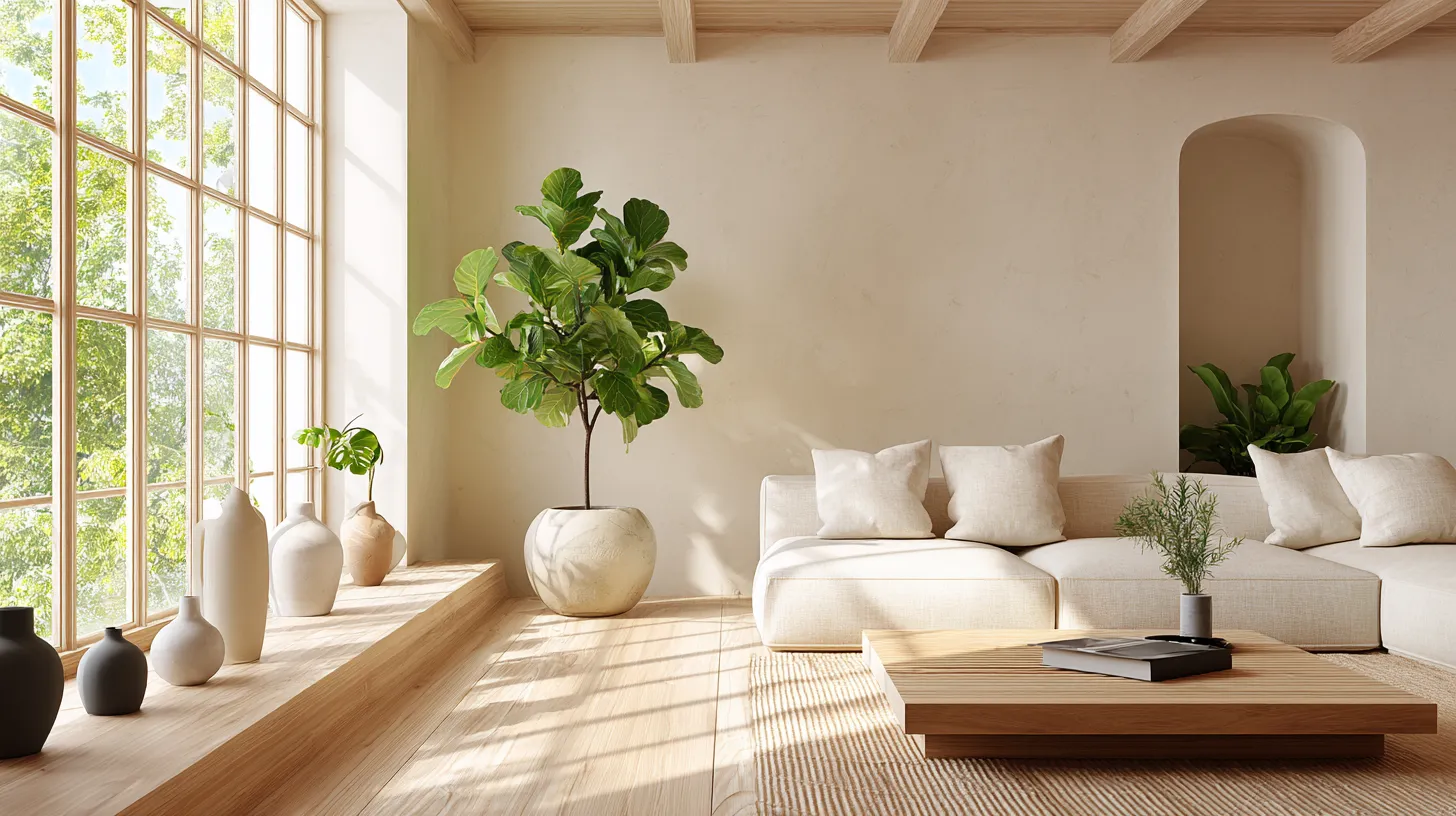
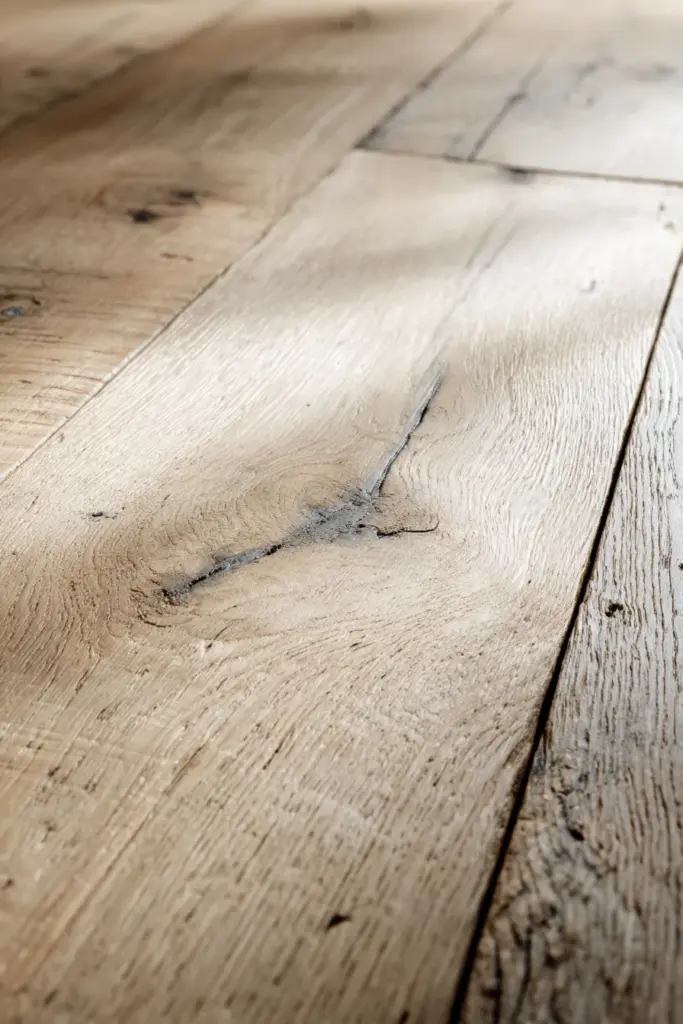
Honey bamboo and mid-tone oak (#D2B48C tan, #C19A6B camel) bring that hygge warmth Japandi craves. These shades feel lived-in from day one, showing character through subtle grain variations and natural knots.
Mid-tone floors ground a room without darkening it. They’re forgiving with wear, hide dust better than pale options, and create a cozy backdrop for neutral furniture and greenery. Add a cream-colored sofa and terracotta pottery, and you’ve captured Japandi’s soul.
Cost insight: Engineered oak runs $4–7 per square foot; bamboo offers sustainability at $2–5 per square foot with similar warmth.
Soft Taupe and Beige
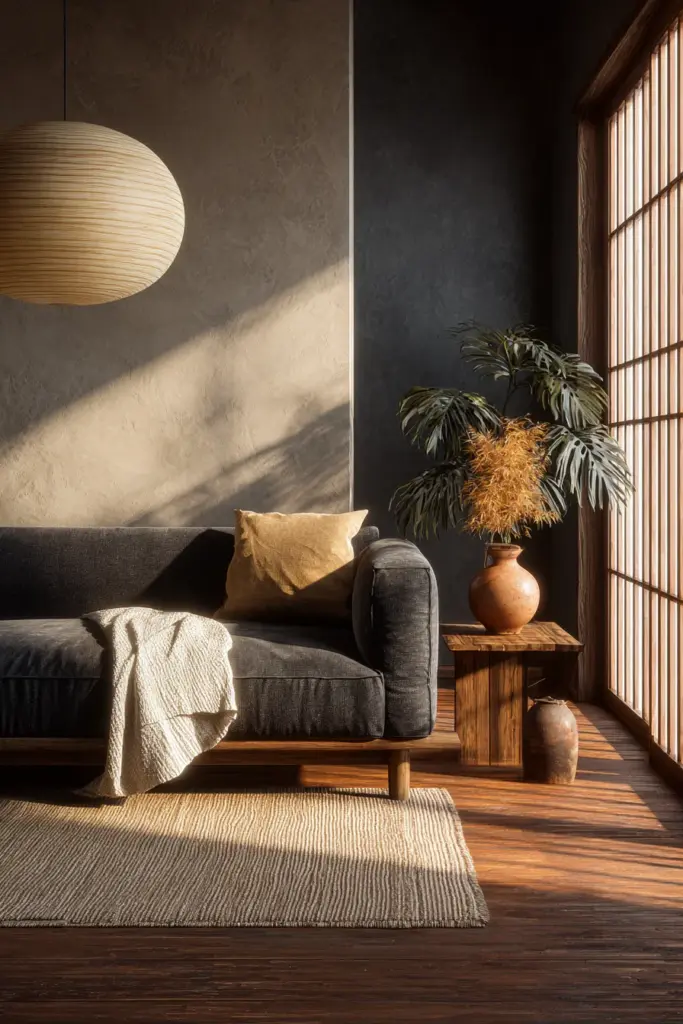
Taupe flooring (#967969 beaver, #9F8B70 khaki) exists in that liminal space between brown and gray—earthy yet refined. It’s the diplomat of Japandi colors, pairing effortlessly with both cool Nordic blues and warm Japanese clay tones.
Beige (#F5F5DC beige classic, #E8D5C4 champagne) offers versatility for those who worry about commitment. It complements nearly every accent color while maintaining that neutral, calming base essential to Japandi living rooms.
Pro tip: Beige floors with off-white grout create subtle definition in tile or luxury vinyl plank installations, adding dimension without pattern.
Warm Browns and Walnut Accents
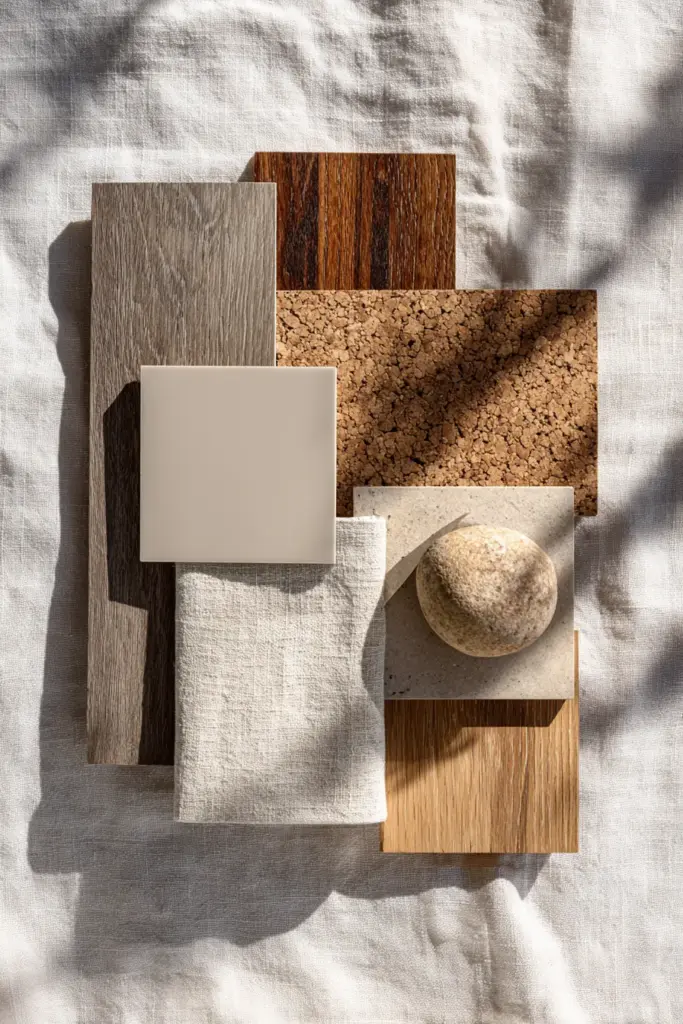
While Japandi leans light, selective use of warm brown floors (#8B7355 coyote brown, #704214 walnut) can anchor large, sun-drenched spaces. Think wide-plank walnut or aged teak—woods with stories to tell.
These deeper tones work best when balanced with plenty of white or cream walls, light textiles, and strategic natural light. They bring Japanese wabi-sabi’s appreciation for aged beauty and patina into your living room.
Consideration: Darker floors show dust and scratches more readily. Choose for high-ceiling rooms or spaces with abundant light.
Muted Terracotta and Clay Accents
Terracotta isn’t typically a flooring color itself, but as an accent in tile borders or concrete staining (#E2725B terracotta, #CC8B65 clay), it introduces that pop of warmth Japandi sometimes craves.
Polished concrete with clay undertones (#C8B89F mushroom, #B8A284 sand) offers industrial minimalism with Japanese restraint. It’s cool underfoot in summer, pairs beautifully with radiant heating, and ages gracefully.
Sustainability note: Concrete and terracotta tiles are long-lasting, recyclable options. Look for low-VOC sealants.
Best Flooring Materials for Japandi Living Rooms
Engineered Oak and Ash
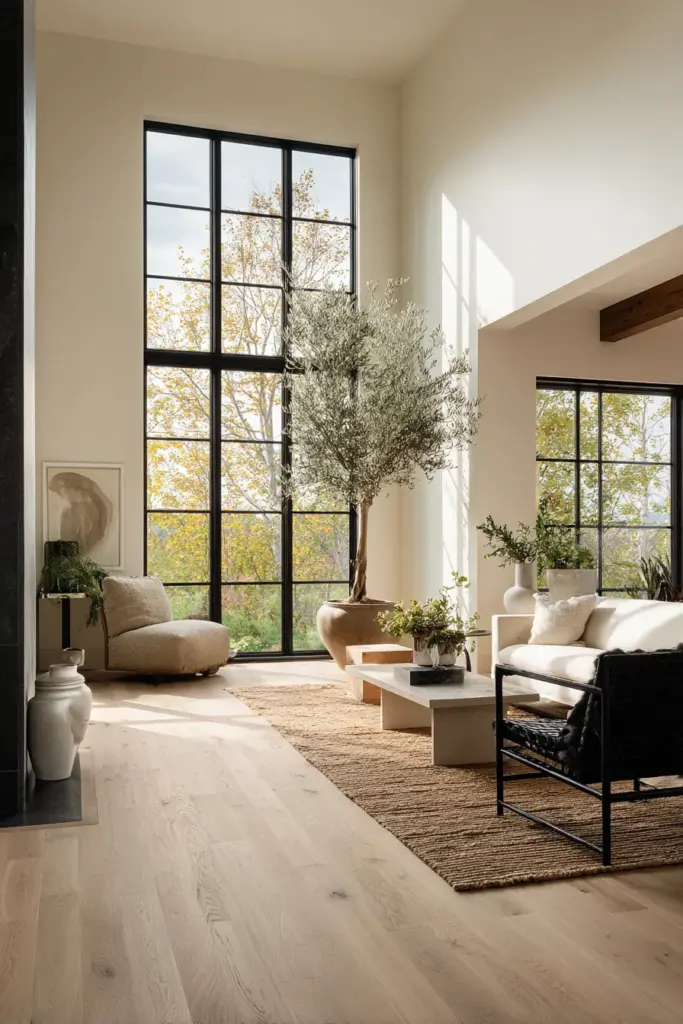
Engineered hardwood delivers real wood beauty with better moisture resistance than solid planks. Light oak or ash in wide planks (5–7 inches) emphasizes Japandi’s clean lines while showing off natural grain.
The layered construction means more stability in varying humidity—crucial if you live where seasons shift. Choose matte or natural oil finishes over glossy polyurethane for that understated Japandi aesthetic.
Traffic resilience: Medium to high. Refinishing potential extends lifespan 20+ years.
Bamboo Flooring
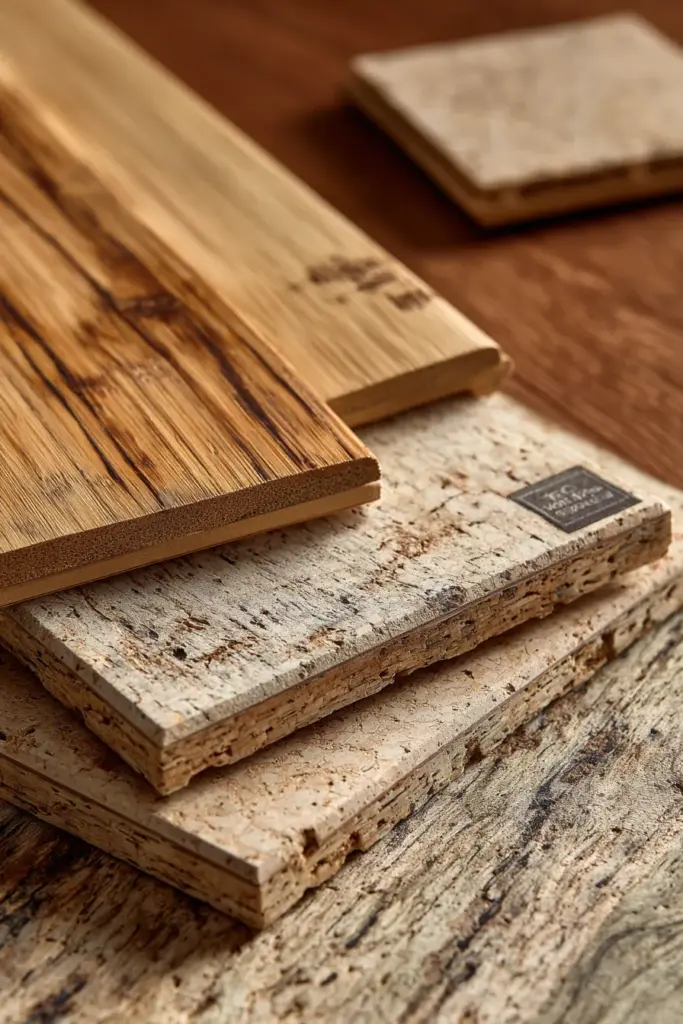
Bamboo checks every Japandi box: sustainable, warm-toned, naturally minimalist. Strand-woven bamboo offers hardness rivaling oak, while horizontal-grain styles showcase distinctive node patterns.
Choose honey or natural bamboo finishes for warmth. Avoid carbonized (darker) bamboo in Japandi spaces—it skews too traditional. The light variants (#D4AF8E bamboo natural) pair beautifully with Japanese ceramics and Scandinavian textiles.
Cost: $2–5 per square foot installed. FSC-certified options support sustainable forestry.
Luxury Vinyl Plank (LVP)
For budget-conscious renovators, high-quality LVP mimics wood beautifully at $3–6 per square foot. Modern LVP captures light oak grain, feels warmer underfoot than laminate, and handles moisture better than real wood.
Choose wider planks (6–8 inches) in matte finishes. Avoid high-gloss or heavily embossed options—subtlety is Japandi’s signature. LVP works brilliantly in high-traffic living rooms and pet-friendly homes.
Pet-friendly bonus: Scratch-resistant, easy to clean, waterproof options available.
Cork Flooring
Cork brings quiet luxury—literally. It’s sound-dampening, warm underfoot, and naturally antimicrobial. The soft, honeyed tones (#DDB896 cork) and subtle texture add dimension without visual noise.
Cork’s slight give feels gentle on joints and dropped ceramics. It’s ideal for apartment living rooms where noise reduction matters. Seal properly for durability, especially in high-traffic areas.
Sustainability: Harvested from bark without harming trees. Biodegradable and recyclable.
Polished Concrete
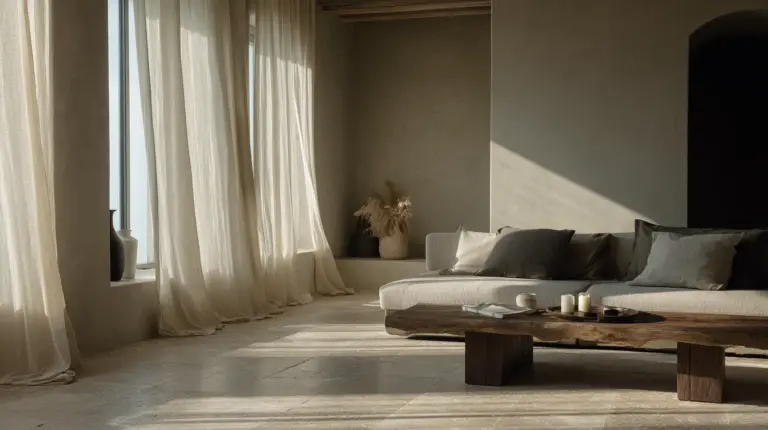
For industrial-leaning Japandi, polished concrete in light gray (#B2BEB5 ash gray concrete) or sand tones offers minimalist elegance. The smooth, cool surface contrasts beautifully with soft textiles and warm wood furniture.
Pair with radiant floor heating for year-round comfort. The monolithic look expands visual space—perfect for smaller living rooms. Seal well to prevent staining.
Cost: $3–12 per square foot depending on finish complexity.
Matching Flooring Colors to Your Living Room Elements
Pairing Floors with Wall Colors
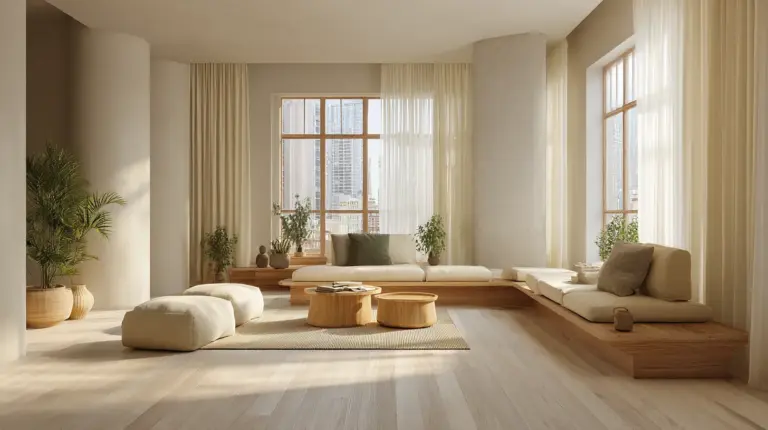
Light oak floors + off-white walls = classic Japandi airiness. Add warmth by painting one accent wall in warm gray (#9C9687 greige) or soft sage (#B2AC88 sage).
Mid-tone honey floors ground brighter whites, allowing you to go crisp (think #FFFEFA ivory) without coldness. The floor provides warmth so walls can stay clean and minimal.
Darker walnut floors need lightness above. Stick to whites, creams, or pale stone tones (#E4D5C9 oatmeal) to maintain Japandi’s essential brightness.
Coordinating with Furniture and Textiles
Warm oak flooring loves neutral upholstery—think linen sofas in sand, charcoal, or muted terracotta. Add texture through chunky knit throws and natural fiber rugs that echo the floor’s organic quality.
Beige or taupe floors create flexibility. Pair with both black accents (Japanese influence) and natural woods (Scandinavian warmth). Layer in cream, camel, and soft greens through cushions and ceramics.
Cooler ash-toned floors balance beautifully with warmer textiles. A caramel leather chair or rust-colored wool pillow provides necessary warmth against gray-toned wood.
Natural Light Considerations
North-facing rooms: Choose warm honey or mid-tone oak to compensate for cooler natural light. These floors reflect warmth even on overcast days.
South-facing spaces: Embrace pale ash or light oak. Abundant sunlight brings out their subtle variations without overwhelming the space.
Small living rooms: Light floors (ash, pale oak) visually expand space by reflecting light. Avoid dark walnut unless you have high ceilings and large windows.
5-Step Palette Matcher: Creating Your Japandi Flooring Scheme
1. Assess your light: Note which direction windows face and how much natural light enters throughout the day. This determines whether you need warm (honey, mid-oak) or cool (ash, pale oak) floor tones.
2. Consider traffic and lifestyle: High-traffic homes with pets? Choose mid-tone oak or quality LVP that hides wear. Quieter spaces can embrace lighter, more delicate options.
3. Select your primary neutral: Pick your floor color first—this anchors everything. Use the 60-30-10 rule: 60% floor neutral, 30% wall/large furniture neutrals, 10% accent colors.
4. Test samples in your space: Bring home large samples (minimum 12″x12″). Observe them at different times of day against your existing walls and furniture. Colors shift dramatically between morning and evening light.
5. Build your complementary palette: Once you’ve chosen flooring, select 2-3 harmonious neutrals for walls and furniture (beiges, grays, creams) plus one muted accent (terracotta, sage, dusty blue) for depth.
Budget-Friendly Japandi Flooring Solutions
Under $5 Per Square Foot Options
Quality LVP delivers Japandi aesthetics without premium hardwood prices. Brands like Lifeproof and CoreLuxe offer light oak and ash-toned planks with realistic grain at $2–4 per square foot.
Bamboo flooring from sustainable sources runs $2–5 installed. It’s naturally Japandi in color and ethos—renewable, warm, minimalist. Choose solid or engineered depending on your subfloor.
DIY consideration: Both LVP and click-lock bamboo are relatively DIY-friendly, saving on installation costs.
Mid-Range Excellence ($5–8 Per Square Foot)
Engineered oak or ash in wider planks hits the sweet spot for quality and authenticity. You get real wood character with better stability than solid hardwood.
Premium cork flooring falls here too—offering unique texture, warmth, and sustainability. The investment pays off in comfort and longevity.
Investment Pieces (Over $8 Per Square Foot)
Wide-plank solid oak or ash, FSC-certified and with natural oil finishes, becomes an heirloom feature. Custom concrete with integral color or exposed aggregate offers one-of-a-kind minimalism.
These options make sense for forever homes or high-impact living rooms where flooring is a design statement.
Japandi Flooring Color Palette Comparison Table
| Flooring Color | Hex Code Example | Best Room Type | Material Options | Cost Range ($/sqft) |
|---|---|---|---|---|
| Light Oak | #FAF0E6 | Small, north-facing | Engineered oak, LVP | $3–7 |
| Ash Gray | #F5F5F4 | Modern, bright spaces | Engineered ash, LVP | $4–8 |
| Honey Bamboo | #D4AF8E | Medium-sized, cozy | Bamboo, engineered | $2–6 |
| Mid-Tone Oak | #D2B48C | High-traffic, versatile | Engineered oak, solid | $4–9 |
| Warm Taupe | #967969 | Versatile, any size | LVP, porcelain tile | $3–7 |
| Soft Beige | #F5F5DC | Flexible, neutral base | LVP, cork, tile | $2–6 |
| Warm Brown | #8B7355 | Large, bright rooms | Solid oak, walnut | $6–12 |
| Clay Concrete | #C8B89F | Industrial-Japandi | Polished concrete | $5–12 |
Sustainability in Japandi Flooring Choices
Japandi’s philosophy extends beyond aesthetics to mindful consumption. Choose FSC-certified woods that ensure responsible forestry. Bamboo regenerates in 3-5 years versus 20+ for hardwoods, making it inherently sustainable.
Cork harvesting doesn’t harm trees—bark regrows every nine years. Reclaimed wood brings both character and eco-consciousness, though it requires more installation expertise.
Look for low-VOC finishes and adhesives. Your living room should breathe health, not off-gas chemicals. Water-based polyurethane or natural oil finishes align with Japandi’s connection to nature.
Longevity matters: Investing in durable flooring you’ll love for decades is more sustainable than replacing cheap materials every few years.
Common Japandi Flooring Mistakes to Avoid
Going too dark: Walnut or espresso floors overpower Japandi’s essential lightness. If you love dark wood, use it in furniture instead.
High-gloss finishes: Shiny floors feel dated and formal. Japandi celebrates matte or satin finishes that let natural grain shine subtly.
Ignoring undertones: “Light wood” isn’t monolithic. Some oaks lean yellow, others pink or gray. Test samples against your walls—mismatched undertones create discord.
Forgetting maintenance: Light floors show dirt; dark floors show scratches. Choose realistically for your lifestyle rather than Instagram aesthetics.
Overly distressed looks: Japandi appreciates natural patina, not artificially aged “farmhouse” finishes. Choose clean-lined planks that will age authentically.
Key Takeaways: Your Japandi Flooring Color Checklist
- Prioritize light to mid-tone woods: Oak, ash, and bamboo in natural to honey shades form your foundation
- Embrace warm neutrals: Beige, taupe, and soft grays create versatile, calming bases
- Consider your light: North-facing rooms need warmer floors; south-facing can go cooler
- Invest in quality materials: Engineered hardwood, solid bamboo, or premium LVP over cheap laminates
- Choose matte or natural finishes: Skip the shine for authentic Japandi minimalism
- Think sustainability: FSC-certified woods, bamboo, cork, and low-VOC finishes honor nature
- Test before committing: Live with large samples for days, observing how light changes them
- Balance cool and warm: Cooler floors need warmer textiles; warmer floors can anchor crisp whites
- Plan for longevity: Durable flooring in timeless colors transcends trends
Bringing It All Home
Your floor is where your day begins and ends. It’s where children play, where you practice yoga on Sunday mornings, where winter light pools in golden rectangles.
Choosing a Japandi living room flooring color palette isn’t about following rules—it’s about creating space that feels like exhaling. Light oak that makes small rooms breathe. Honey bamboo that welcomes bare feet. Soft taupe that quietly unifies every element above it.
Start with one principle: nature knows color best. Emulate the pale sand of Japanese gardens, the silvered wood of Scandinavian coastlines, the warm clay of earth after rain. When your floor echoes these honest, elemental tones, everything else falls into place.
Your Japandi living room is waiting—grounded, light-filled, utterly you.
Frequently Asked Questions
What colors go with Japandi flooring?
Japandi flooring pairs beautifully with neutral walls in off-white, warm gray, or soft beige. For textiles and accents, layer in cream, charcoal, muted terracotta, sage green, and dusty blue. The key is maintaining a predominantly neutral palette with one or two subtle accent colors that feel borrowed from nature. Black accents add Japanese minimalism; natural wood tones bring Scandinavian warmth.
What is the best flooring for Japandi living room?
Light to mid-tone engineered oak or bamboo flooring best captures Japandi aesthetics. Engineered oak offers durability and authentic wood character, while bamboo provides sustainability and natural warmth. For budget-conscious projects, high-quality luxury vinyl plank in light oak or ash tones delivers similar visual impact. Cork flooring suits those wanting unique texture, while polished concrete works for industrial-leaning Japandi spaces. Prioritize matte finishes and natural tones.
What wood floor is good for Japandi?
Light oak and ash are ideal Japandi woods, offering pale, neutral tones that maximize brightness while showing subtle grain variation. Wide-plank formats (5-7 inches) emphasize clean lines. Honey-toned bamboo works beautifully for warmth and sustainability. Choose matte or natural oil finishes over glossy polyurethane. Avoid heavily distressed or artificially aged looks—Japandi celebrates authentic, honest materials that age gracefully over time.
What is Japandi color scheme?
The Japandi color scheme centers on warm neutrals and earth tones: sand (#F5DEB3), clay (#CC8B65), ivory (#FFFEFA), beige (#F5F5DC), taupe (#967969), and warm browns (#8B7355). These are balanced with cooler Scandinavian tones like ash gray (#F5F5F4) and platinum (#E8E8E8). Accent colors remain muted—terracotta, sage green, dusty blue—used sparingly. The palette prioritizes natural light, organic materials, and colors that exist in nature without embellishment.
How do I choose Japandi flooring for high-traffic areas?
For high-traffic living rooms, select mid-tone oak or quality luxury vinyl plank—both hide wear, scratches, and dust better than pale or dark extremes. Consider strand-woven bamboo for hardness comparable to oak with eco-friendly benefits. Choose matte or satin finishes that disguise scuffs. If you have pets, waterproof LVP offers the best durability and maintenance ease while maintaining Japandi aesthetics. Avoid ultra-light ash or soft cork in heavily used spaces; save those for bedrooms or low-traffic areas.