
Table of Contents
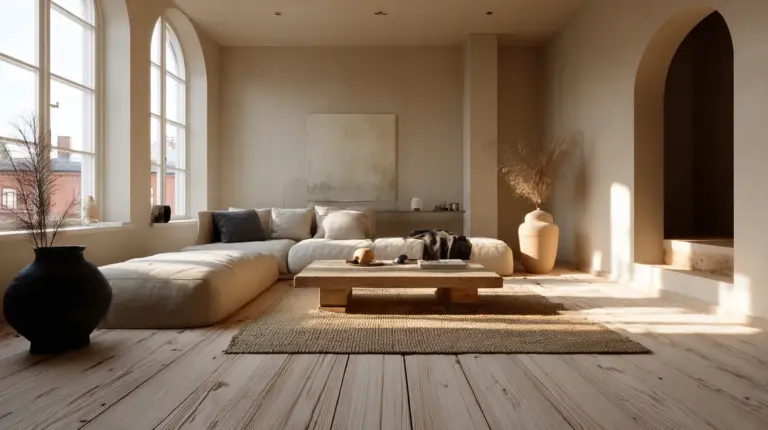
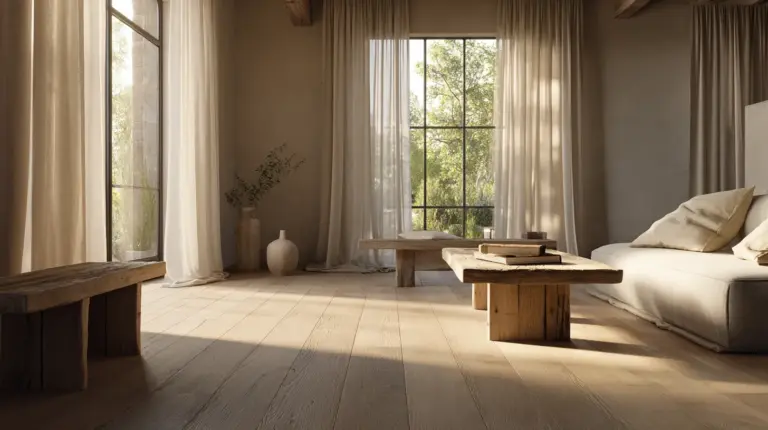
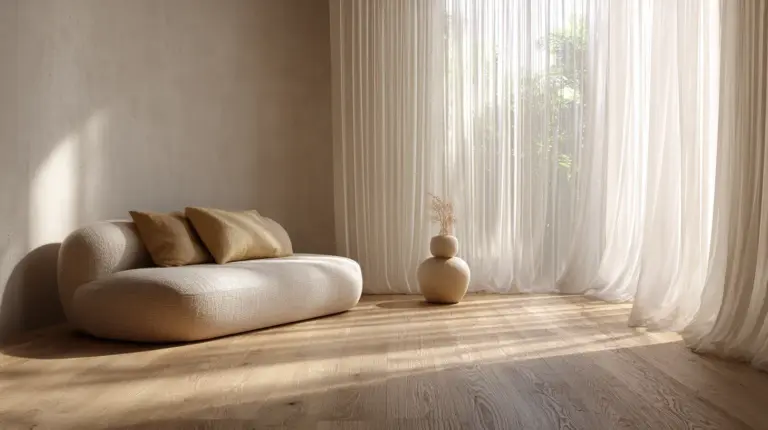
There is something deeply restful about a Japandi living room. The hush of bare walls, the glow of morning light on pale timber, the faint scent of natural materials settling into a space — it all begins with the floor beneath your feet.
Japandi design — a beautiful meeting of Japanese minimalism and Scandinavian warmth — is not just an aesthetic. It is a philosophy of living with intention. And that philosophy starts at the ground level, quite literally.
But creating that serene, soul-settling floor comes with real decisions and real costs. Whether you are renovating a compact Manila apartment or refreshing a Calabarzon home, knowing what to spend — and where to spend wisely — makes all the difference.
In this guide, ERYLIN walks you through the best Japandi flooring materials, their 2026-updated costs, installation realities, and the kind of sensory details that will help you choose not just with your budget, but with your heart.
What Makes Flooring “Japandi”?
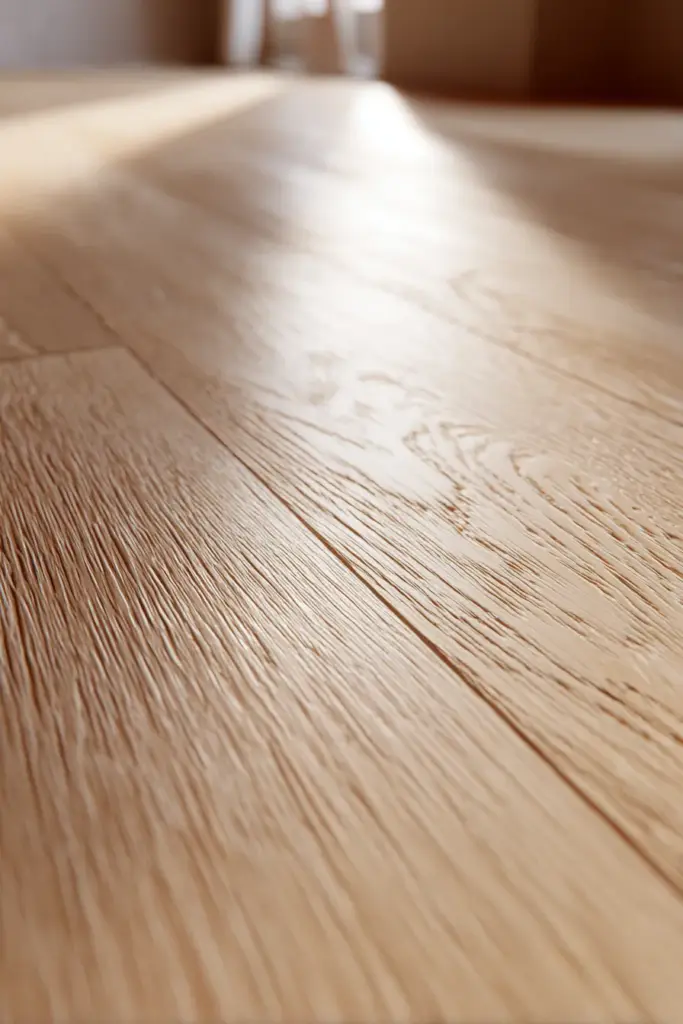
Before we talk numbers, let us talk feeling. Japandi flooring is defined by restraint and texture. It is never shiny, never loud. Think matte finishes, warm undertones, subtle wood grain, and materials that seem to belong to the earth rather than a factory floor.
The palette leans toward ash, honey, stone grey, and soft sand. Surfaces feel tactile underfoot — slightly cool in the morning, grounding and warm by afternoon. These are floors meant to be walked on barefoot and noticed quietly.
The best Japandi floors share these qualities: they are durable, sustainably sourced where possible, and easy to live with. Wabi-sabi, the Japanese appreciation for imperfection, gives you permission to choose materials that age gracefully rather than look perpetually new.
Japandi Flooring Materials & 2026 Cost Breakdown
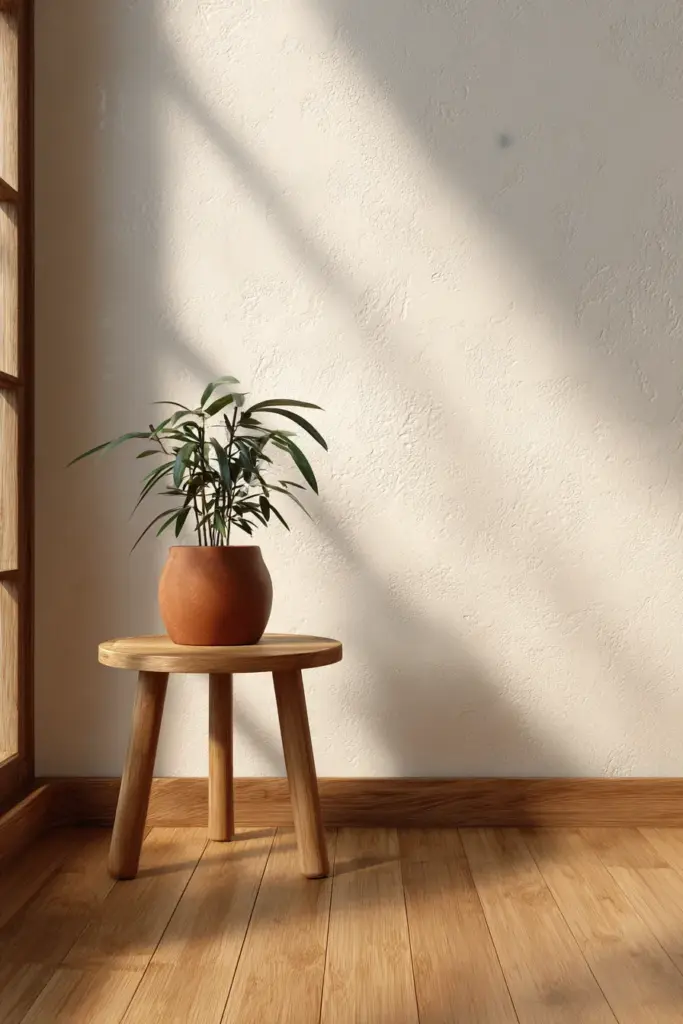
1. Natural Wood Flooring — The Heartwood of Japandi Style
Nothing anchors a Japandi living room quite like real wood. The warmth it brings is physical and emotional — a pale maple plank, a soft oak grain, the faint amber of teak catching the late afternoon light.
Natural hardwood is the premium choice, and its cost reflects that. In 2026, prices have adjusted upward by approximately 8–12% from 2024 figures, driven by supply chain costs and sustainable sourcing demands.
| Wood Type | Cost (USD/sq ft) | Cost (PHP/sqm approx.) | Notes |
|---|---|---|---|
| Oak (white/red) | $5–$12 | ₱2,800–₱6,700 | Most popular Japandi choice |
| Maple | $4–$10 | ₱2,200–₱5,600 | Light, subtle grain; hygge-perfect |
| Teak | $8–$15 | ₱4,500–₱8,400 | Humidity-resistant; excellent for PH |
| Ash | $5–$11 | ₱2,800–₱6,100 | Cool undertones; very Scandinavian |
Installation adds approximately $2–$4/sq ft (₱600–₱1,200/sqm) for professional labor in the Philippines.
Best for: Homeowners investing long-term. Natural wood lasts 25–80 years with proper care.
Humidity note for Philippine homes: In Calabarzon and Metro Manila climates, choose teak or properly sealed maple. High humidity can cause warping in untreated softwoods.
2. Bamboo Flooring — The Sustainable Japandi Choice
Bamboo carries the spirit of Japan in every fiber. It is strong, renewable, and grows to harvest maturity in just five years — a remarkable contrast to the decades required for hardwood.
In 2026, bamboo has seen a 10% year-on-year price increase globally due to rising demand for eco-conscious materials. Still, it remains one of the most accessible options for achieving an authentic Japandi look without the hardwood price tag.
| Bamboo Type | Cost (USD/sq ft) | Cost (PHP/sqm approx.) | Durability |
|---|---|---|---|
| Strand-woven bamboo | $3–$7 | ₱1,700–₱3,900 | Excellent; harder than most hardwoods |
| Horizontal bamboo | $2.50–$5 | ₱1,400–₱2,800 | Good; natural grain is beautiful |
| Vertical bamboo | $2.50–$4.50 | ₱1,400–₱2,500 | Good; more uniform appearance |
Is bamboo or oak better for a Japandi living room budget? Bamboo wins on cost by roughly 40–60%. Oak wins on resale value and longevity. For a budget-conscious Japandi renovation, strand-woven bamboo is the ERYLIN recommendation — it offers the warmth and texture of wood with a lower price and a smaller carbon footprint.
Installation in the Philippines: Labor costs run approximately ₱300–₱600/sqm depending on your location and subfloor condition.
3. Vinyl Plank Flooring — The Practical Japandi Performer
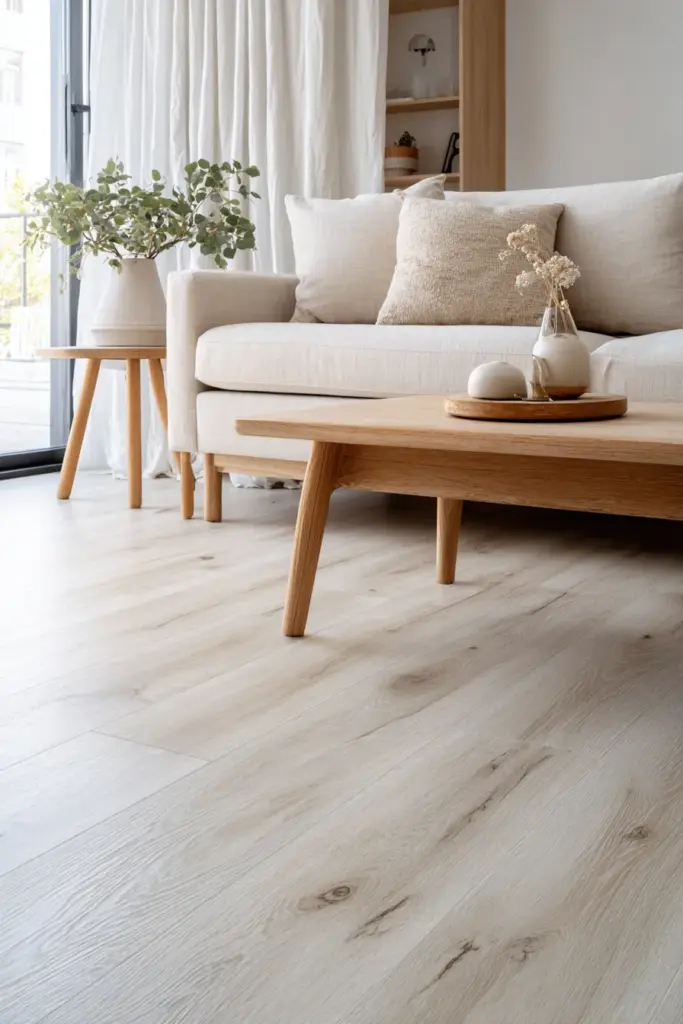
Do not underestimate vinyl plank. Today’s SPC (Stone Plastic Composite) and LVP (Luxury Vinyl Plank) options are a world away from the cheap vinyl of decades past. They mimic the look of natural wood or stone with surprising fidelity, and they are genuinely forgiving in tropical climates.
For families with children, pets, or high-traffic living rooms, vinyl plank is the most practical path to Japandi aesthetics. It is waterproof, scratch-resistant, and comfortable underfoot with the right underlayment.
| Vinyl Type | Cost (USD/sq ft) | Cost (PHP/sqm approx.) | Best For |
|---|---|---|---|
| Standard LVP | $2–$4 | ₱1,100–₱2,200 | Budget-conscious rooms |
| Premium SPC | $3–$6 | ₱1,700–₱3,400 | High-traffic areas, humid climates |
| Hybrid SPC (incl. install, PH) | — | ₱2,500–₱4,500/sqm | Full installed cost, Philippines 2026 |
What is the average price for vinyl plank Japandi floors? Expect to spend $2–$5/sq ft for materials alone in the US, or ₱300–₱600/sqm in the Philippines — making this the most affordable Japandi-compatible flooring option available.
ERYLIN tip: Choose vinyl planks with a matte finish and warm undertones (honey, greige, or pale ash tones) to stay true to Japandi sensibility. Avoid anything with a high-gloss surface — it breaks the quiet calm the style is built on.
4. Cork Flooring — The Underrated Softness
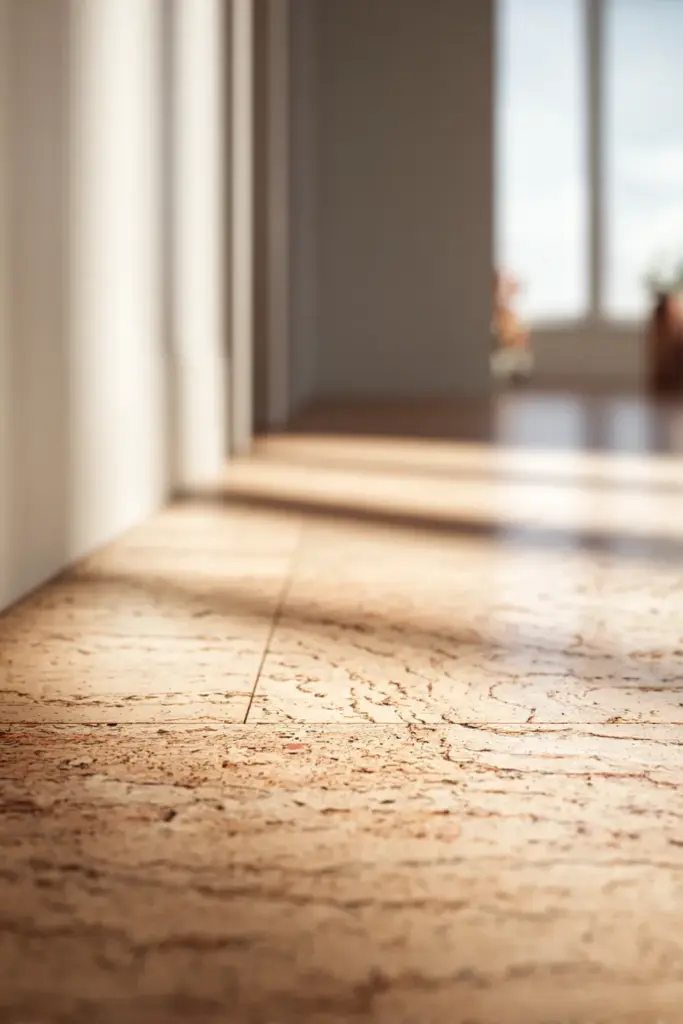
Cork is one of the most sensory materials you can put underfoot. It is slightly warm, slightly soft, and wonderfully quiet — each footstep absorbed rather than echoed. It also carries natural antibacterial properties and excellent thermal insulation, which is a quiet luxury in air-conditioned interiors.
In a Japandi living room, cork reads as organic and intentional. Its natural tone — ranging from pale cream to warm caramel — fits the palette perfectly.
| Cork Type | Cost (USD/sq ft) | Cost (PHP/sqm approx.) |
|---|---|---|
| Cork tiles | $2–$5 | ₱1,100–₱2,800 |
| Cork planks (click-lock) | $3–$7 | ₱1,700–₱3,900 |
Note: Cork is softer and more susceptible to moisture than bamboo or vinyl. Seal it well and avoid use in areas prone to water exposure. In Philippine humidity, opt for pre-sealed cork planks.
5. Concrete & Stone Flooring — Raw Japandi Groundedness
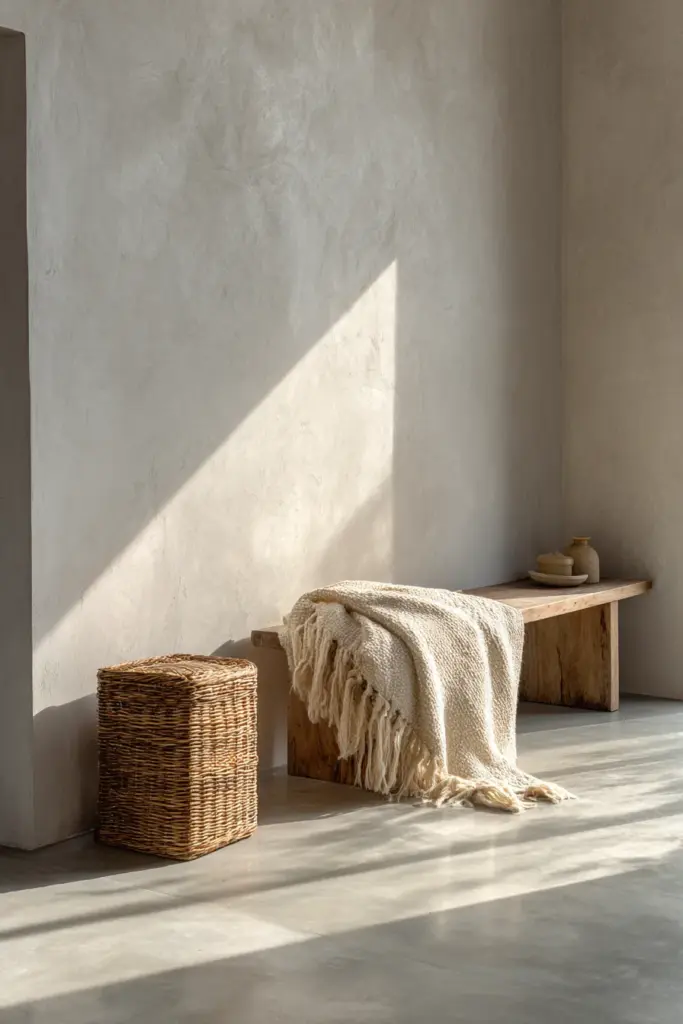
Polished concrete and natural stone bring the Japanese concept of ma — negative space, stillness — into the floor itself. A pale grey concrete slab, a smooth limestone tile, a subtle travertine — these materials say nothing loudly and everything quietly.
Stone and concrete are the highest-cost Japandi flooring options, but they are also the longest-lasting. A well-poured polished concrete floor can last the lifetime of a building.
| Material | Cost (USD/sq ft) | Cost (PHP/sqm approx.) | Lifespan |
|---|---|---|---|
| Polished concrete | $2–$8 (new pour) | ₱1,100–₱4,500 | 50+ years |
| Travertine | $5–$15 | ₱2,800–₱8,400 | 75–100 years |
| Limestone | $4–$12 | ₱2,200–₱6,700 | 50–100 years |
| Slate | $4–$10 | ₱2,200–₱5,600 | 75+ years |
For Philippine homes: Concrete is an excellent choice — it stays cool underfoot in warm climates and pairs beautifully with cozy area rugs and low-profile furniture that define the Japandi aesthetic.
Installation Costs & DIY vs. Professional
Philippines-Specific Installation Guide
Installation is where many renovation budgets go off the rails — not because the costs are unreasonable, but because they are rarely discussed upfront. Here is the honest breakdown for 2026 Philippine rates.
| Flooring Type | DIY Possible? | Pro Labor Cost (PH) | Subfloor Prep (if needed) |
|---|---|---|---|
| Vinyl plank (SPC) | Yes — click-lock systems | ₱150–₱350/sqm | ₱200–₱500/sqm |
| Bamboo (click-lock) | Yes, with patience | ₱200–₱400/sqm | ₱200–₱500/sqm |
| Hardwood (nail-down) | Not recommended | ₱400–₱700/sqm | ₱300–₱600/sqm |
| Cork tiles | Yes — peel and stick | ₱100–₱250/sqm | Minimal |
| Concrete/Stone | No — specialist needed | ₱800–₱1,500/sqm | Included |
A note on subfloor preparation: In older Philippine homes, uneven or damaged subfloors are common. Skipping proper prep is the single most expensive mistake in flooring projects. A leveling compound application (approximately ₱200–₱400/sqm) before laying your floor protects your investment and your warranty.
Small Living Room Calculator
For a typical Metro Manila living room of 20–30 sqm, here is what to expect in total installed costs (materials + labor, Philippines 2026):
- Vinyl plank (budget): ₱8,000–₱18,000 total
- Bamboo (mid-range): ₱15,000–₱35,000 total
- Hardwood (premium): ₱45,000–₱120,000+ total
- Concrete/stone (investment): ₱30,000–₱100,000+ total
ROI, Sustainability & Lifecycle Costs
Which Japandi Floor Is Worth the Investment?
The cheapest floor is not always the least expensive floor. When you factor in lifespan, maintenance, and resale value, the calculus shifts.
- Hardwood has the highest ROI for property resale — buyers respond to real wood. Over 30 years, the cost-per-year often rivals mid-range options.
- Bamboo offers the best sustainability ROI — carbon-negative production, rapid renewability, and a lifespan of 15–25 years with proper care.
- Vinyl plank offers the best short-term ROI — lowest upfront cost, minimal maintenance, and excellent durability in tropical climates.
- Stone and concrete offer the best lifecycle economics — pay more once, never pay again.
Carbon Footprint at a Glance
| Material | Carbon Footprint | Certifications to Look For |
|---|---|---|
| Bamboo | Low — carbon-negative growth | FSC, USDA BioPreferred |
| Cork | Very low — bark is harvested without felling | FSC |
| Hardwood (certified) | Moderate — slow growth offset by longevity | FSC, PEFC |
| Vinyl/SPC | Higher — petroleum-based | FloorScore, GREENGUARD |
| Concrete | Moderate — cement production is energy-intensive | LEED credits |
Japandi Flooring Maintenance Guide
How to Care for Each Material
A Japandi floor should age like a well-loved book — with character, not neglect. Here is what each surface needs.
Natural wood: Sweep daily, damp-mop weekly with a pH-neutral cleaner, re-oil or re-seal every 3–5 years. Avoid standing water.
Bamboo: Similar to wood — sweep, damp mop, condition annually. Keep humidity between 40–60% where possible.
Vinyl plank: The easiest to maintain — sweep or vacuum, mop with mild cleaner. No sealing or conditioning required.
Cork: Sweep gently, damp mop sparingly, reseal every 2–3 years. Avoid heavy furniture without felt pads.
Stone/concrete: Sweep, mop with stone-safe cleaner, reseal concrete every 1–2 years, stone every 3–5 years.
Pairing Your Floor With Japandi Furniture & Plants
The floor is not the whole room — it is the foundation. Pair it thoughtfully.
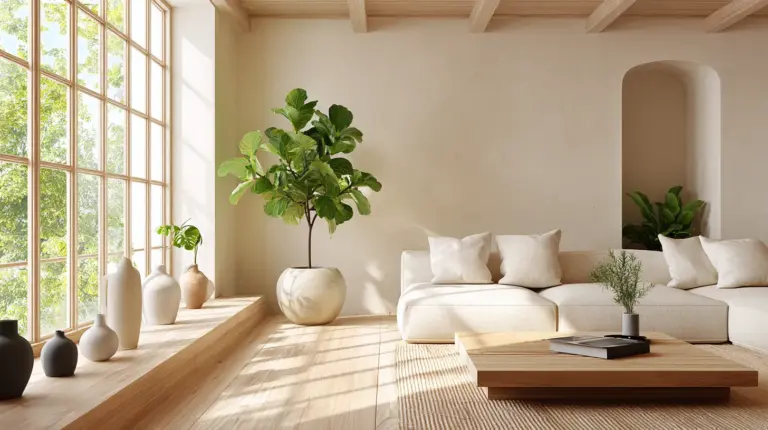
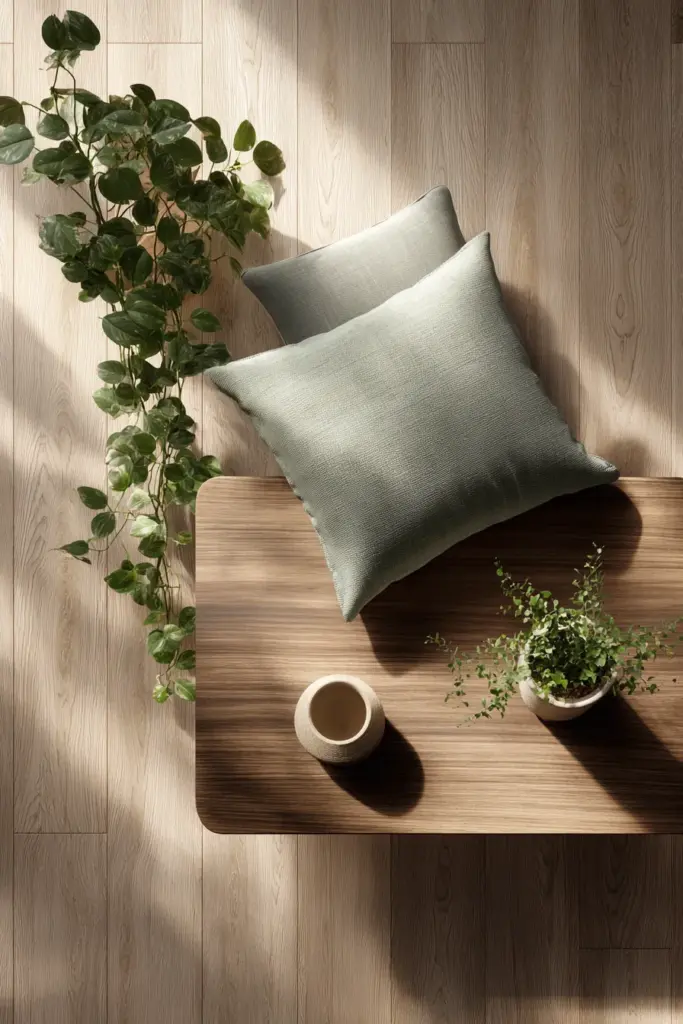
- Light maple or bamboo floors pair beautifully with low-slung walnut or ash furniture, linen upholstery, and trailing pothos or peace lilies.
- Concrete or stone floors call for warm textiles — chunky wool throws, rattan side tables, and the soft glow of warm-toned lighting ideas that cast long shadows in the evening.
- Cork floors are perfectly matched with grounded, simple furniture — think solid wood benches, low coffee tables, and the company of a fiddle leaf fig in a terracotta pot.
Quick Checklist: Japandi Flooring Decision Guide
Before you commit to a material, ask yourself:
- Budget per sqm: Is it under ₱2,000, ₱5,000, or above?
- Climate: High humidity demands water-resistant materials — teak, SPC vinyl, sealed bamboo.
- Traffic: Children, pets, or frequent gatherings call for strand-woven bamboo or SPC vinyl.
- Aesthetic priority: Do you want warmth (wood, bamboo), quiet (concrete, stone), or softness (cork)?
- DIY or professional? Click-lock vinyl and cork are genuinely DIY-friendly. Hardwood and stone are not.
- Long-term vs. short-term: Investing long? Choose wood or stone. Renting or likely to renovate again? Choose vinyl plank.
- Sustainability: Prioritize FSC-certified bamboo, cork, or reclaimed wood.
Conclusion
A Japandi living room is not built in a day, and its floor is not chosen in an afternoon. It is a decision made slowly, held up to the light of your actual life — your budget, your climate, your family, your idea of what rest and beauty feel like underfoot.
At ERYLIN, we believe that a beautiful home begins with honest choices. Not the most expensive material, but the most right one. Not the trendiest finish, but the one that will still feel quietly perfect five years from now, when the light comes through your window the same way it always has, and your floor carries the gentle record of a life well lived.
Start with what feels true. The rest will follow.
Frequently Asked Questions
What is the cheapest Japandi flooring for a living room?
Vinyl plank (LVP or SPC) is the most affordable Japandi-compatible flooring, starting at $2–$3/sq ft in the US or approximately ₱300–₱500/sqm in the Philippines for materials alone. It offers excellent visual fidelity to natural wood or stone with a matte finish that suits the Japandi aesthetic perfectly.
How much does Japandi wood flooring cost per square meter?
Natural hardwood flooring ranges from $4–$15/sq ft depending on species (approximately ₱2,200–₱8,400/sqm). Adding professional installation in the Philippines brings the total to approximately ₱3,500–₱10,000/sqm. Bamboo is a more affordable alternative at ₱1,700–₱3,900/sqm for materials.
Is bamboo or oak better for a Japandi living room on a budget?
Bamboo is significantly more affordable — typically 40–60% less than oak — and offers comparable durability in strand-woven form. For budget-conscious renovations, bamboo is the stronger choice. Oak, however, has greater long-term resale value and a more classic character that deepens with age.
What is the Japandi flooring installation cost in the Philippines?
Professional installation in the Philippines runs approximately ₱150–₱700/sqm for labor depending on material type and complexity. Full installed cost (materials + labor) for a hybrid SPC vinyl plank in 2026 is approximately ₱2,500–₱4,500/sqm. Hardwood installed runs ₱5,000–₱12,000+/sqm.
What is the average price for vinyl plank Japandi floors?
In the US, vinyl plank Japandi flooring averages $2–$5/sq ft for materials. In the Philippines, quality SPC hybrid planks with matte, wood-look finishes range from ₱300–₱700/sqm for materials, or ₱2,500–₱4,500/sqm fully installed. Prices have risen moderately in 2026 due to import costs, but vinyl remains the most accessible entry point into Japandi flooring.