
Table of Contents
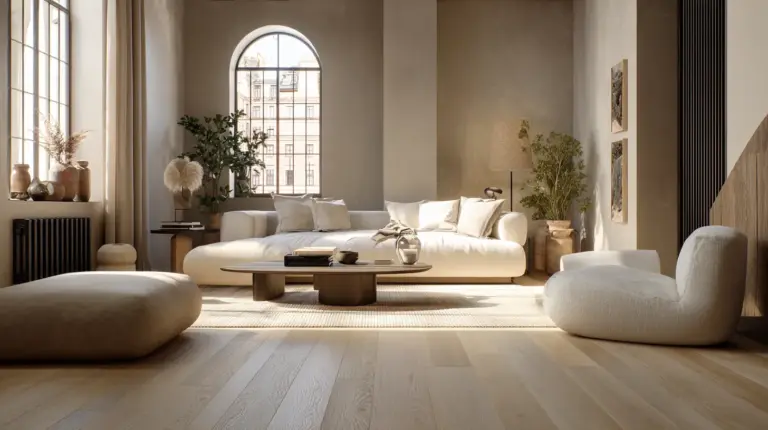
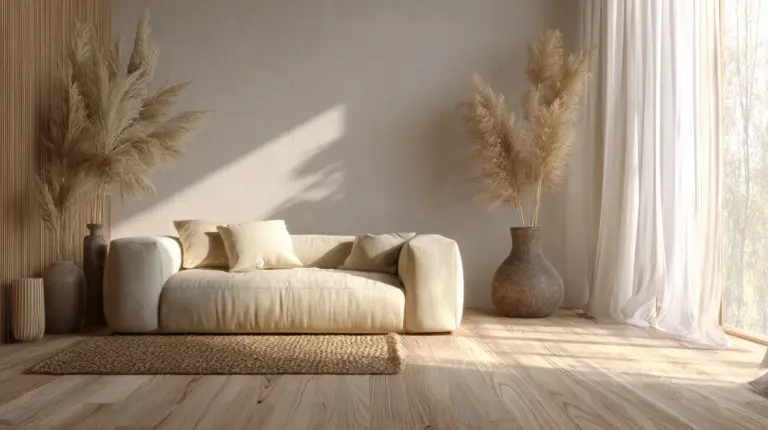
Imagine stepping onto your living room floor on a quiet morning. The surface is warm beneath your feet — not just from the heating beneath, but from the pale grain of engineered oak catching the first light of day. This is what Japandi living feels like when it’s done right.
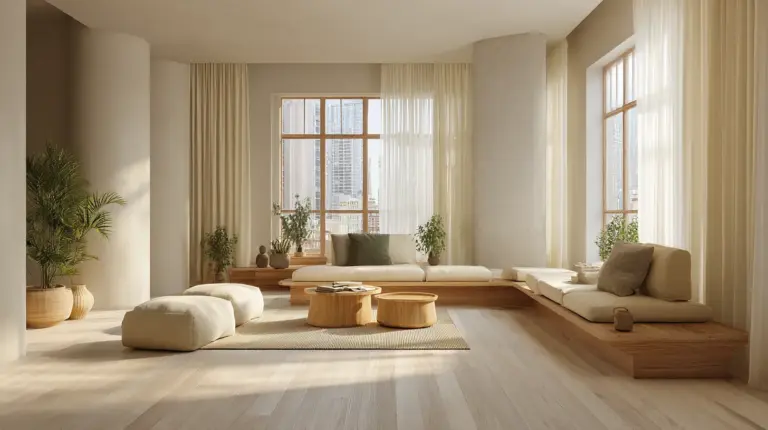
The Japandi aesthetic — a union of Japanese wabi-sabi and Scandinavian hygge — thrives on simplicity, natural materials, and spaces that feel genuinely restful. But warmth isn’t only visual. It’s physical. And underfloor heating (UFH) might be the most quietly transformative element you can add to a Japandi living room.
This guide bridges two worlds that rarely meet in one place: the precise, technical world of UFH compatibility, and the soul-led world of Japandi interior design. We’ll walk you through which floors work, which don’t, and how to make your heated floor feel like the most natural thing in the room.
Whether you’re designing from scratch or upgrading what you have, read on — this is your warmth roadmap.
What Makes Japandi Flooring Different?
Japandi flooring isn’t just about looks. It carries a philosophy.
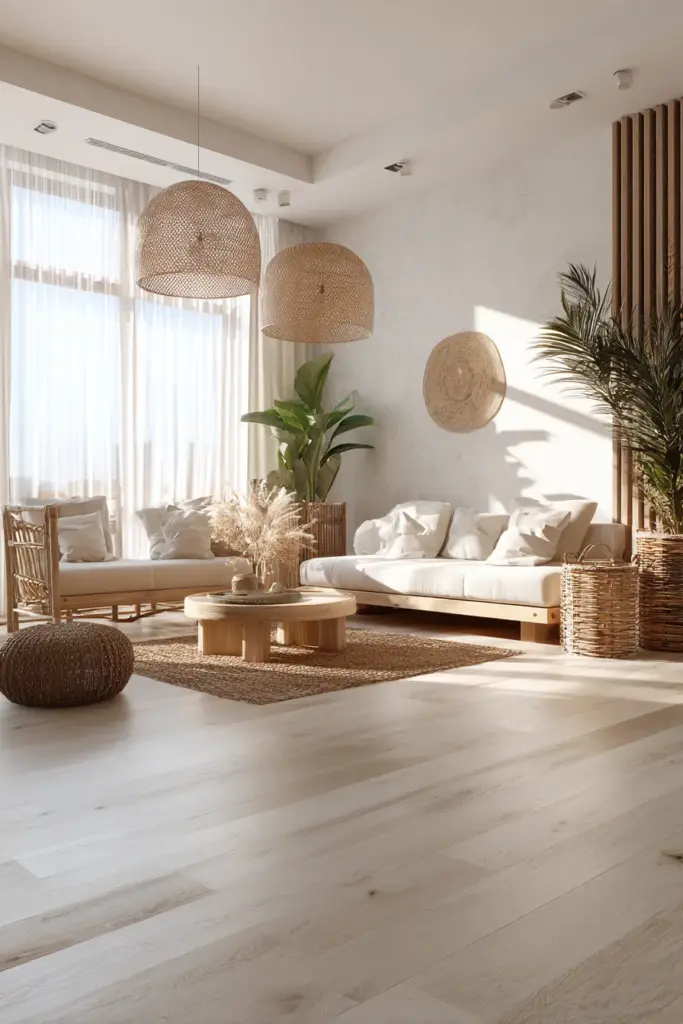
The ideal Japandi floor is grounded, honest, and unhurried. Think wide-plank light oak, smooth concrete-look tiles, pale ash, or even matte bamboo — surfaces that speak quietly and age beautifully. Nothing glossy, nothing forced.
The Aesthetic Foundation
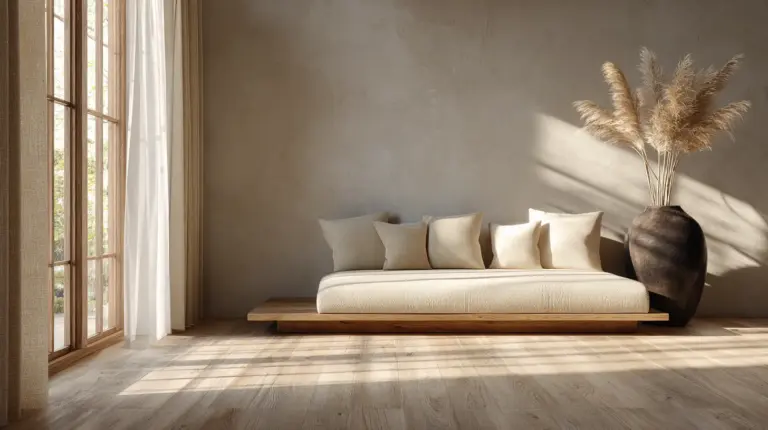
Japandi interiors favor ma — the Japanese concept of meaningful negative space. Your floor is a canvas, not a statement. It should feel like earth underfoot: cool-toned or warm-neutral, never competing with the furniture or the light.
Key textures that define Japandi flooring include matte-finished wood planks, honed stone or terrazzo, and soft concrete-look vinyl. All of these, happily, can be made compatible with underfloor heating — with the right choices.
Understanding Underfloor Heating: The Basics
UFH works by radiating heat upward from beneath the floor surface. It’s efficient, invisible, and ideal for minimalist interiors where radiators would break the visual calm.
There are two main systems to consider.
Electric vs. Hydronic UFH
Electric UFH uses heating mats or cables installed beneath the floor. It heats up quickly and is ideal for smaller spaces, apartments, or renovations where opening up the subfloor isn’t practical. For a single Japandi living room in a Manila apartment, electric UFH is often the smarter, more affordable choice.
Hydronic UFH (water-based) pumps warm water through pipes embedded in the screed. It’s more efficient for whole-home heating and works especially well with tiled or stone floors, but requires more complex installation. For larger homes or new builds, it’s worth the investment — energy savings of 20–30% compared to traditional radiators make it highly cost-effective over time.
What is Thermal Resistance (Tog Rating)?
Every floor covering has a thermal resistance rating, measured in tog. Think of it as how much the floor resists letting heat through. The lower the tog, the better the heat transfer.
For UFH compatibility, your floor’s tog rating should be ≤ 2.5. Anything higher insulates against the heat you’re paying for, reducing efficiency and potentially damaging the system over time.
The Best Flooring for Japandi Living Rooms with Underfloor Heating
This is where the magic happens — where thermal efficiency meets wabi-sabi beauty.
Engineered Oak: The Japandi Ideal
Engineered oak is the frontrunner for good reason.
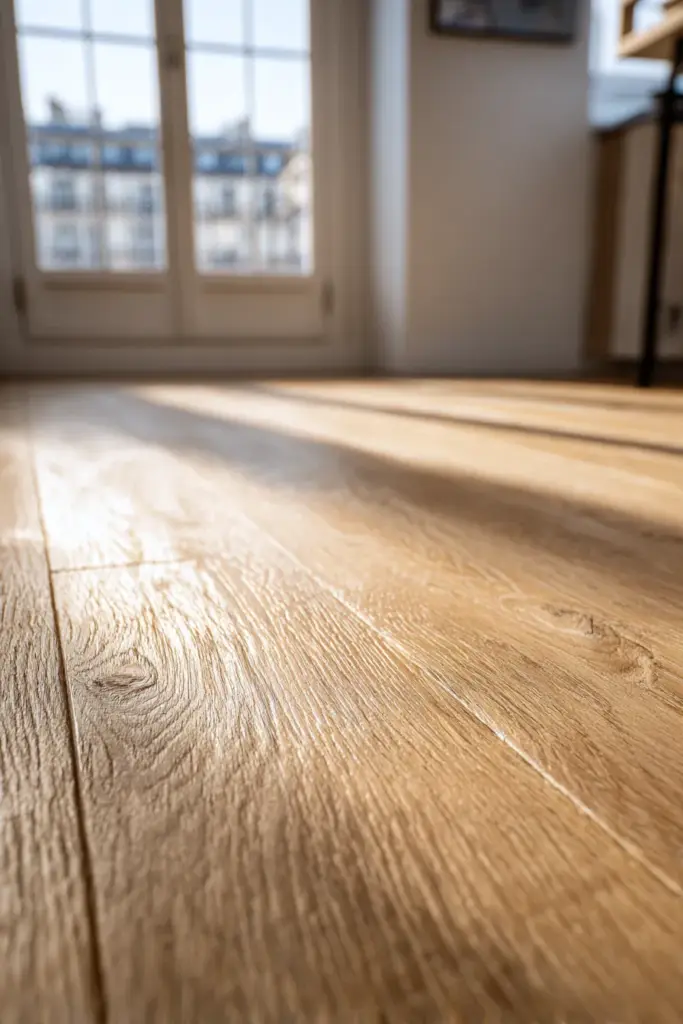
Unlike solid hardwood, engineered wood has a cross-layered plywood core that resists the expansion and contraction caused by heat cycling. It’s dimensionally stable, which matters when your floor is warming and cooling daily. A quality engineered oak plank — FSC-certified, finished with low-VOC oils — will conduct heat gently and maintain its pale, honeyed tone for years.
Recommended specs: Look for boards under 18mm thick with a thermal resistance (Rc) below 0.09 m²K/W. Plank widths of 120–190mm tend to work best, as very wide boards can still gap slightly over time.
Aesthetic note: Choose a wire-brushed or lightly matte-oiled finish. It catches light softly, feels warm underfoot without looking polished, and ages into the kind of floor that tells a quiet story.
Light Ash and Pale Wood Tones
Ash offers a slightly cooler, more neutral tone than oak — perfect for living rooms where the Japandi palette leans Scandinavian. It’s similarly stable when engineered, conducts heat well, and has that fine, straight grain that Japandi interiors love.
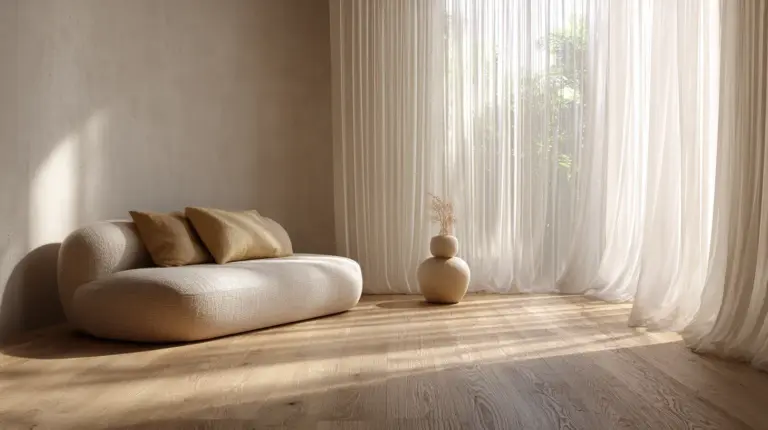
Pair ash floors with linen cushions, rattan accents, and low-profile seating for a room that feels like a deep breath.
Ceramic and Porcelain Tiles: Superior Heat Conductors
No material conducts heat better than tile.
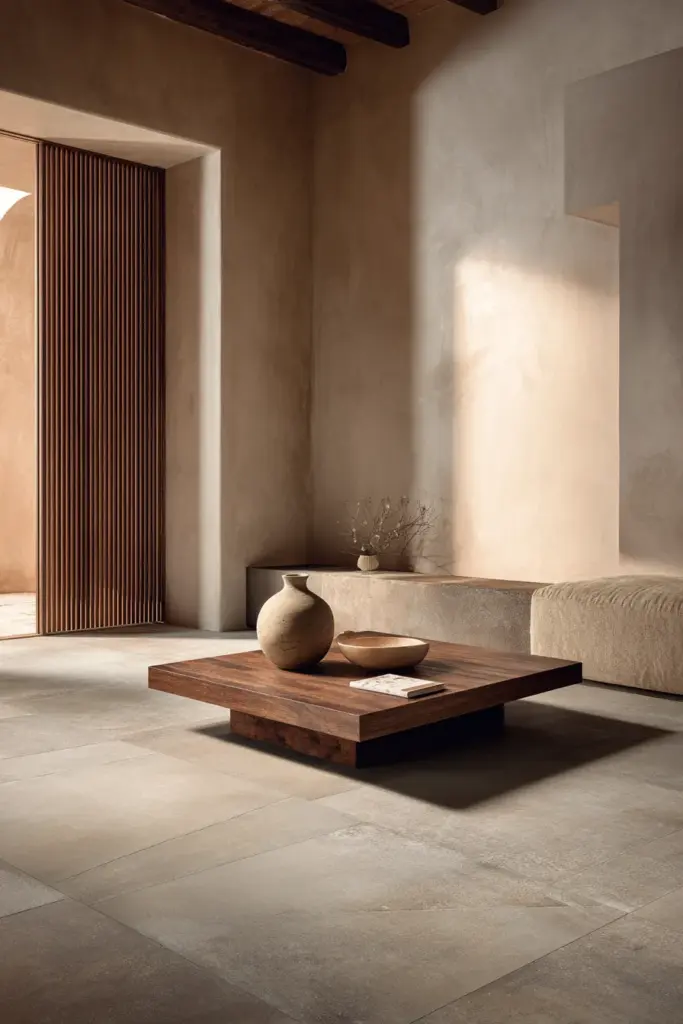
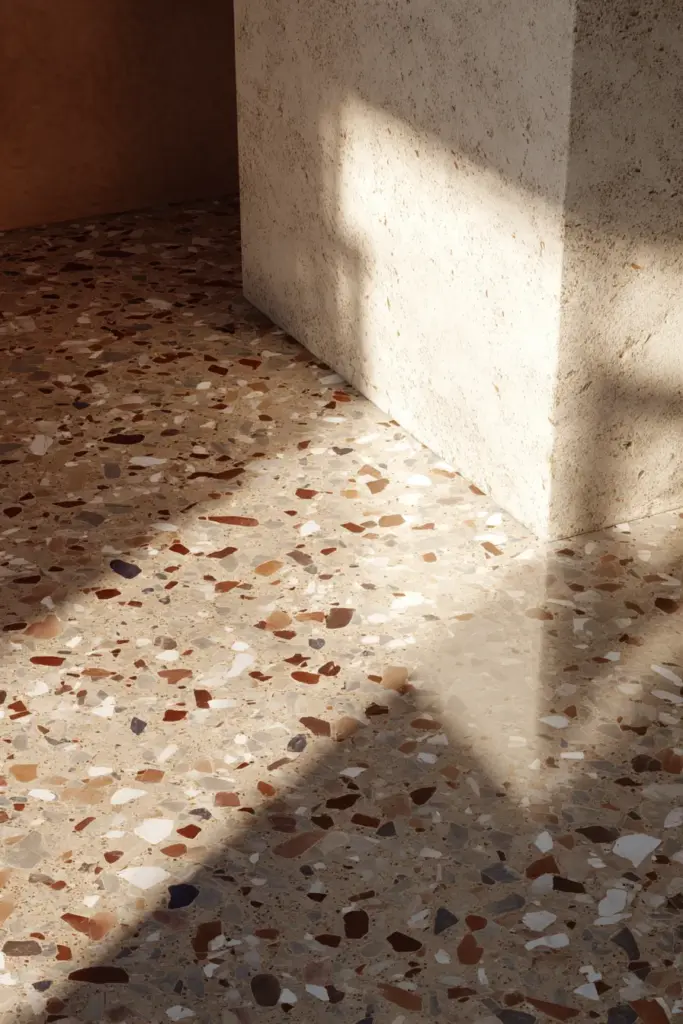
Ceramic and porcelain tiles have virtually zero thermal resistance, making them the most efficient choice for UFH. For a Japandi living room, this opens up a world of beautiful options: concrete-effect tiles in warm grey, terrazzo-look surfaces with mineral flecks, or large-format natural stone-look porcelain in pale bone or greige.
Terrazzo, in particular, is having a design moment that aligns beautifully with wabi-sabi — its irregular flecks and handcrafted feel embody the imperfect, organic beauty that Japandi celebrates.
The one consideration with tile: it can feel cool to stand on before the system heats up. Pair tile floors with a low-tog rug (≤ 2.5 tog) in natural jute, cotton, or a flat-weave wool blend to add softness without blocking heat.
Luxury Vinyl Tile (LVT): The Practical Choice
Don’t underestimate LVT — it’s come a long way.
Modern LVT mimics wood and stone with surprising authenticity. It’s 100% UFH-compatible, waterproof (a genuine advantage in humid climates), and often the most budget-friendly option. In the Philippines, UFH-compatible LVT can be found from approximately PHP 600–900 per square meter.
Choose a matte, wood-look LVT in light oak or pale grey concrete for a Japandi feel. Install with a compatible adhesive (not a floating floor over UFH, where heat cycling can cause problems) and keep the floor temperature below 27°C to preserve the material.
What to Avoid
Some flooring types are genuinely incompatible with UFH — or require careful management.
- Solid hardwood: Prone to gapping, warping, and cupping from heat, especially in humid climates. Not recommended.
- Thick carpets: Tog ratings far exceed 2.5 — they insulate against your heating system.
- Cork and rubber: High thermal resistance. Not suitable as primary UFH flooring.
- Bamboo: Can work if specifically rated for UFH, but requires careful acclimation. In humid environments like Manila, standard bamboo may cup or swell.
UFH Flooring Compatibility Chart
| Flooring Type | Tog Rating | UFH Compatible | Japandi Aesthetic Fit | Notes |
|---|---|---|---|---|
| Engineered Oak | ~0.5–1.0 | ✅ Yes | ★★★★★ | Ideal — stable, warm, beautiful |
| Porcelain / Ceramic Tile | ~0.0–0.2 | ✅ Yes | ★★★★☆ | Best heat conductor |
| LVT / Vinyl | ~0.5–0.8 | ✅ Yes | ★★★☆☆ | Budget-friendly, waterproof |
| Laminate | ~0.5–1.5 | ⚠️ Check specs | ★★☆☆☆ | Use only UFH-rated boards |
| Solid Hardwood | ~1.0–1.5+ | ❌ Not ideal | ★★★★★ | Risk of warping — avoid |
| Thick Carpet | >2.5 | ❌ No | ★☆☆☆☆ | Blocks heat entirely |
| Bamboo (UFH-rated) | ~0.5–1.0 | ⚠️ With care | ★★★☆☆ | Check humidity tolerance |
| Terrazzo | ~0.1–0.3 | ✅ Yes | ★★★★★ | Wabi-sabi textures, excellent conductor |
Japandi Living Room Layout: Zoning Your UFH
A Japandi living room is curated, not crammed — and your UFH plan should reflect that.
When designing your UFH mat layout, think in zones. You don’t need to heat the entire floor uniformly. Instead, focus heat under the main seating area and leave perimeter zones unheated. This saves energy and allows you to define space — very much in keeping with the ma philosophy.
Layering Rugs Over UFH
Rugs and underfloor heating can coexist beautifully — with one firm rule. Any rug placed over UFH must have a combined tog rating of 2.5 or less, including both the rug and any underlay.
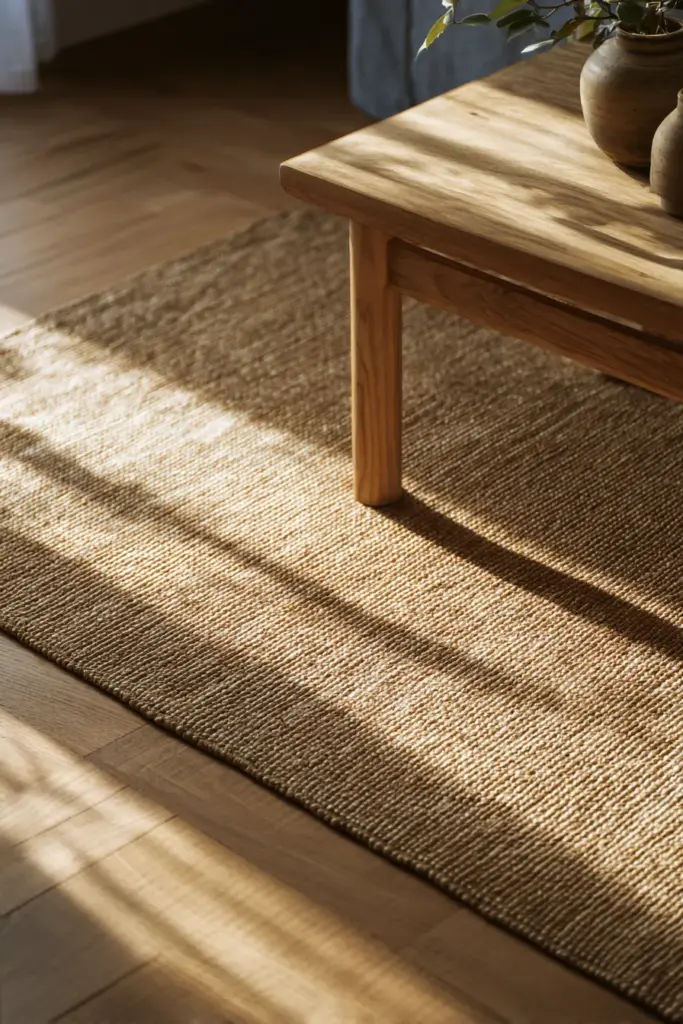
For Japandi living rooms, the best choices are thin, flat-weave rugs in natural fibers: jute, sisal, undyed cotton, or low-pile wool. These materials add texture and warmth to the eye without blocking heat from reaching the room.
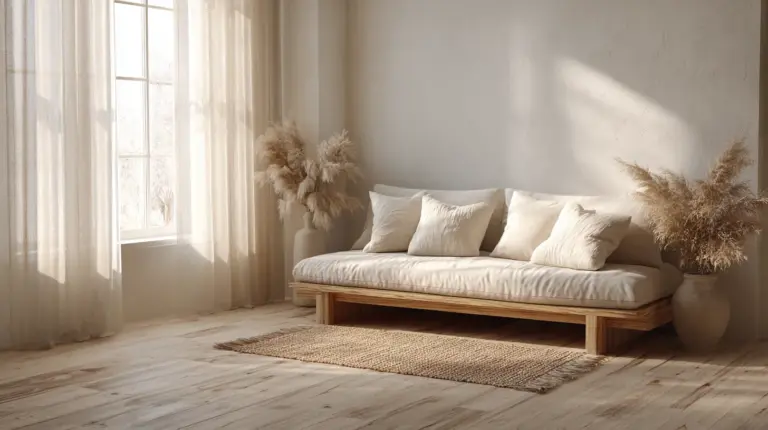
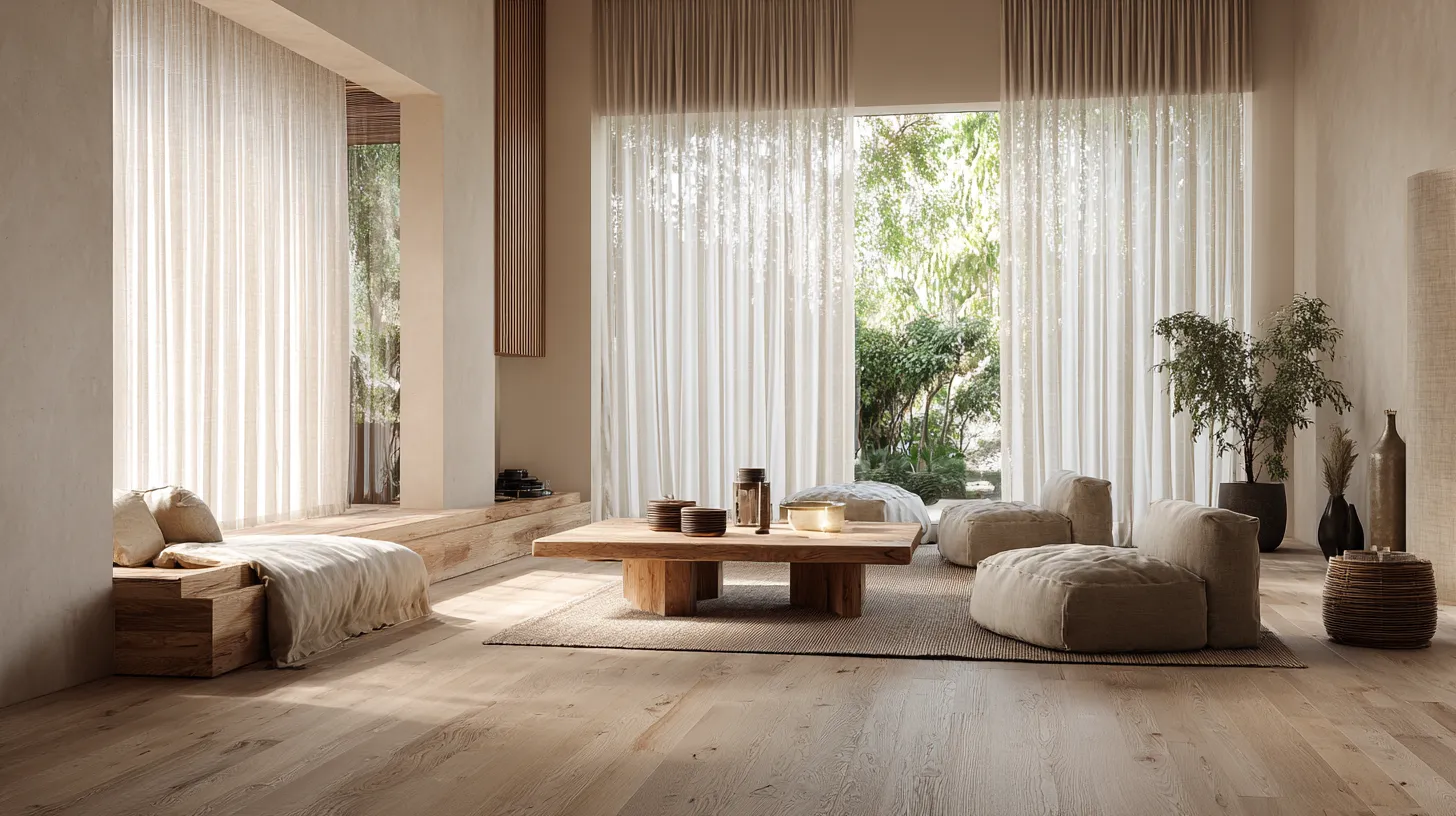
A pale, undyed jute rug beneath a low-profile Japanese-style coffee table, with engineered oak visible at the edges, is one of the most effortlessly Japandi combinations possible.
Smart Heating Integration
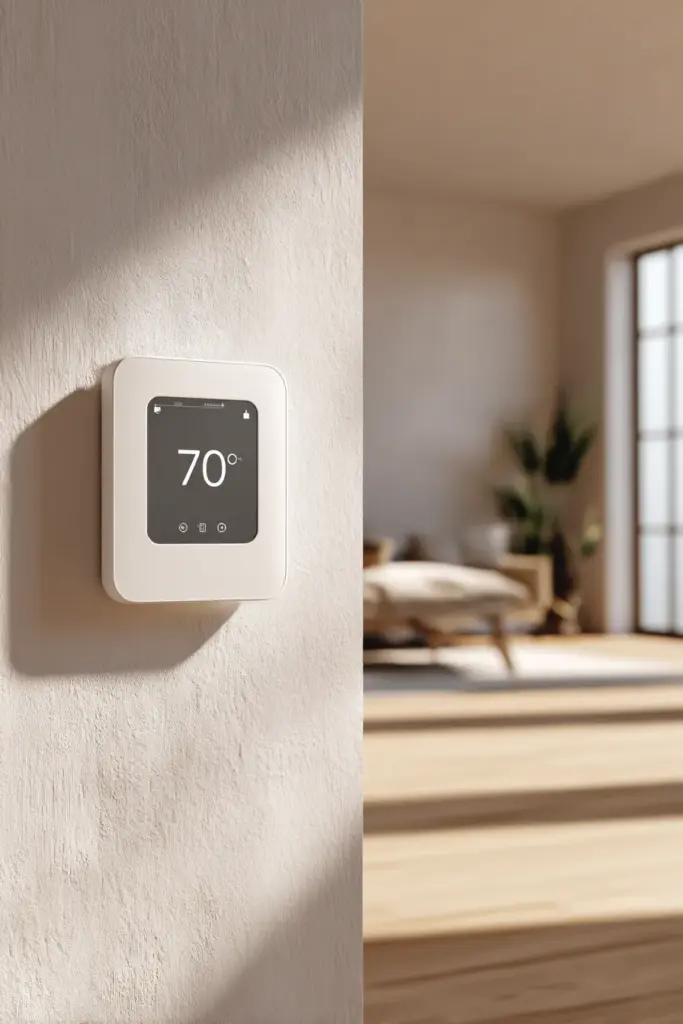
Modern UFH systems pair beautifully with Japandi’s love of clean surfaces and hidden technology. App-controlled thermostats and motion-sensing UFH systems allow you to heat the room only when it’s occupied — pure minimalism in practice.
Japandi UFH Flooring: A Checklist
Before you choose your floor, run through this quick compatibility check:
- Tog rating ≤ 2.5 — check the manufacturer’s spec sheet, not just general guidance
- For wood: engineered, not solid — stability is non-negotiable over heat
- Floor temperature limit: 27–29°C maximum — check your floor material’s spec
- Thermal resistance (Rc) < 0.09 m²K/W for wood and wood-look floors
- Use compatible adhesive — floating installations are not recommended over UFH
- Acclimate wood flooring before installation — especially important in humid climates
- Rug tog rating ≤ 2.5 if layering over UFH
- FSC-certified or sustainably sourced materials where possible
- Low-VOC adhesives and finishes — aligned with Japandi’s clean, healthy-home values
- Electric UFH for apartments; hydronic for whole-home installations
A Note on Humidity and Climate
If you’re designing a Japandi living room in a tropical climate, read this section carefully.
Humidity is the hidden challenge for wood flooring over UFH in places like Manila or other high-humidity environments. Heat from below combined with humid air above creates the conditions for wood to cup, swell, or gap.
The solution is twofold: choose engineered wood with a stable core (plywood or HDF), and maintain consistent indoor humidity levels (40–60% RH is ideal). A quiet dehumidifier — tucked discreetly, of course — can make the difference between a floor that thrives and one that warps within a season.
LVT and porcelain tile are naturally immune to humidity-related issues, making them especially practical in tropical Japandi living rooms.
Conclusion
There’s something quietly radical about a warm floor.
In a world that moves fast and shouts loud, a Japandi living room with underfloor heating is an act of intention. The pale grain of engineered oak beneath your feet. The even, invisible warmth rising to meet the morning. The low table, the textured cushion, the single plant catching the light.
It all begins with the floor — and the floor begins with the right choice.
At ERYLIN, we believe that beautiful design and practical wisdom belong together. Choose materials that are honest, certified, and carefully spec’d for your heating system. Let the warmth be real: underfoot, in the textures, in the room itself.
Your living room is waiting to become somewhere you truly want to be.
Frequently Asked Questions
What is the best flooring for a Japandi living room with underfloor heating?
Engineered oak is widely considered the best combination of Japandi aesthetics and UFH compatibility. It’s dimensionally stable, has a low thermal resistance (Rc u0026lt; 0.09 m²K/W), and offers the pale, natural grain tone central to Japandi design. Porcelain and ceramic tiles are technically superior heat conductors and work beautifully with concrete-look or terrazzo aesthetics — another strong choice.
Can you use wood flooring with underfloor heating in a Japandi style?
Yes — but only engineered wood, not solid hardwood. Engineered wood has a cross-layered core that resists warping and gapping caused by heat cycling. Solid wood expands and contracts too much over UFH and is not recommended, especially in humid climates. Choose boards under 18mm thick and always check the manufacturer’s UFH compatibility rating before purchasing.
What flooring conducts heat best for underfloor heating?
Ceramic and porcelain tiles have the lowest thermal resistance of any standard flooring material, making them the most efficient heat conductors. Stone (marble, slate, limestone) performs similarly. For a Japandi aesthetic, concrete-effect porcelain or terrazzo-look tiles deliver both excellent performance and wabi-sabi beauty.
Is laminate or vinyl suitable for Japandi floors over UFH?
Vinyl (LVT) is generally well-suited to UFH — it’s stable, low-tog, and waterproof, making it practical in various climates. Always choose UFH-rated LVT and install with adhesive rather than floating. Laminate can also work, but quality varies widely; only use boards explicitly rated for underfloor heating, and keep floor temperatures below 27°C to prevent warping or delamination.
How do I choose Japandi flooring that works with electric vs. hydronic heating?
Both systems are compatible with the same range of flooring materials — engineered wood, porcelain tile, and LVT work with either. The key is the floor covering’s tog rating (≤ 2.5) and thermal resistance (Rc u0026lt; 0.09 m²K/W for wood). Electric UFH heats up faster and is better suited to smaller rooms or apartments; hydronic runs at lower temperatures and is more efficient for larger spaces. For either system, avoid solid wood, thick carpet, and cork.