
Table of Contents
There is something quietly transformative about a room where the sound of moving water meets the stillness of a well-placed plant. It is the kind of space that slows you down the moment you step inside — where the air feels cleaner, the light softer, and your shoulders instinctively drop.
That feeling has a name. It is Japandi — a design philosophy born from the marriage of Japanese wabi-sabi and Scandinavian hygge. It celebrates imperfection, natural materials, and the beauty of living simply.
When you layer in plants and water features, Japandi stops being just an aesthetic. It becomes a sensory experience — the sound of trickling water, the cool green of a fern catching morning light, the earthy scent of wet stone and moss.
This guide walks you through everything you need to bring that calm into your home, whether you have a full garden or a single sunny corner in a studio apartment.
What Is the Japandi Design Philosophy?
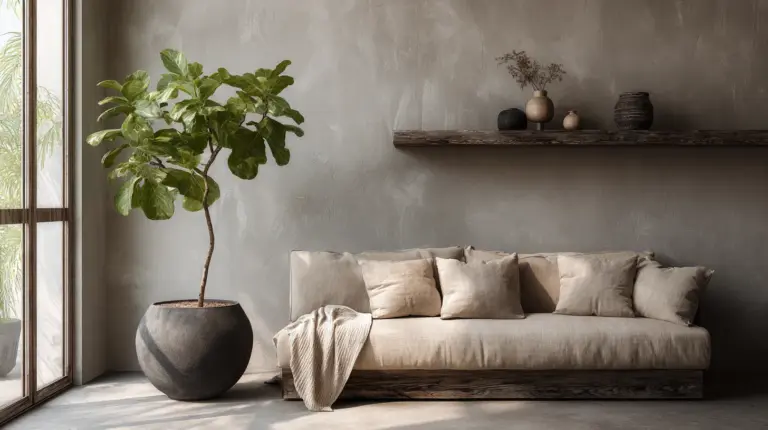
At its core, Japandi is about restraint with warmth. It strips away the unnecessary and keeps only what is honest — raw linen, aged wood, matte ceramics, bare branches, and living things that breathe.
Japanese aesthetics contribute ma (negative space), asymmetry, and a reverence for the natural world. Scandinavian design brings warmth, softness, and the concept of lagom — just enough, not too much.
Together, they produce interiors that feel both elevated and deeply livable. Nothing shouts for attention. Everything belongs.
Water and plants are not decorative additions in this philosophy. They are essential elements — they bring movement to stillness, life to stone, and humidity to air that might otherwise feel sterile.
Why Water Features Belong in a Japandi Space
In Japanese garden design, water is a symbol of continuity and purity. The sound of flowing water — even a whisper — signals to the nervous system that the environment is safe and alive.
In a Japandi home, a small tabletop fountain or stone basin does not need to be dramatic. It simply needs to be present. The quiet sound it produces creates what designers call a sonic anchor — a gentle, consistent backdrop that makes the space feel inhabited and intentional.
Water also raises the ambient humidity, which is a quiet gift to the plants you place nearby. Humidity-loving varieties like ferns, peace lilies, and mosses thrive in the gentle mist of a nearby fountain, reducing your need to mist them manually and keeping their leaves lush and vivid.
There is a practical beauty in that kind of symbiosis.
Best Plants for Japandi Water Features
Indoor Plants That Thrive Near Tabletop Fountains
Choosing the right plant is not about following trends — it is about understanding what a plant needs and letting that guide where it lives in your space.
| Plant | Light Needed | Humidity Preference | Japandi Appeal |
|---|---|---|---|
| Snake Plant (Sansevieria) | Low to bright indirect | Low to moderate | Clean lines, sculptural form |
| Boston Fern | Indirect light | High | Lush, cascading texture |
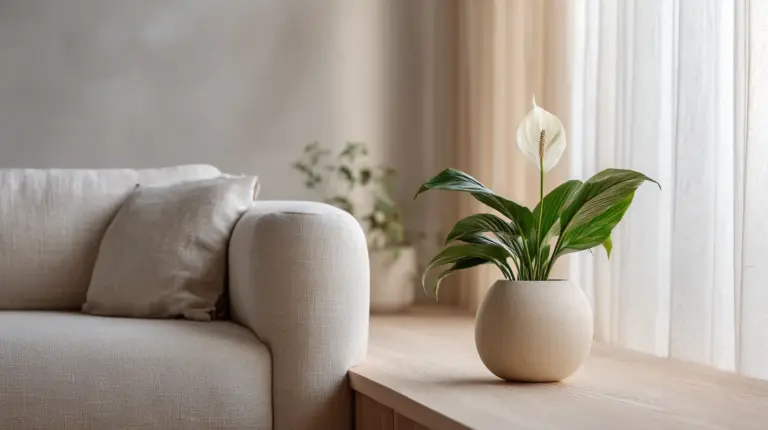
| Peace Lily | Low to indirect | High | White blooms, graceful silhouette |
| Bamboo (lucky or real) | Bright indirect | Moderate | Strong vertical line, cultural resonance |
| Moss Ball (Kokedama) | Indirect | High | Raw, earthy, meditative |
| Japanese Sweet Flag | Indirect to bright | High | Aquatic-friendly, grassy elegance |
| Creeping Jenny | Bright indirect | High | Trailing softness, chartreuse tone |
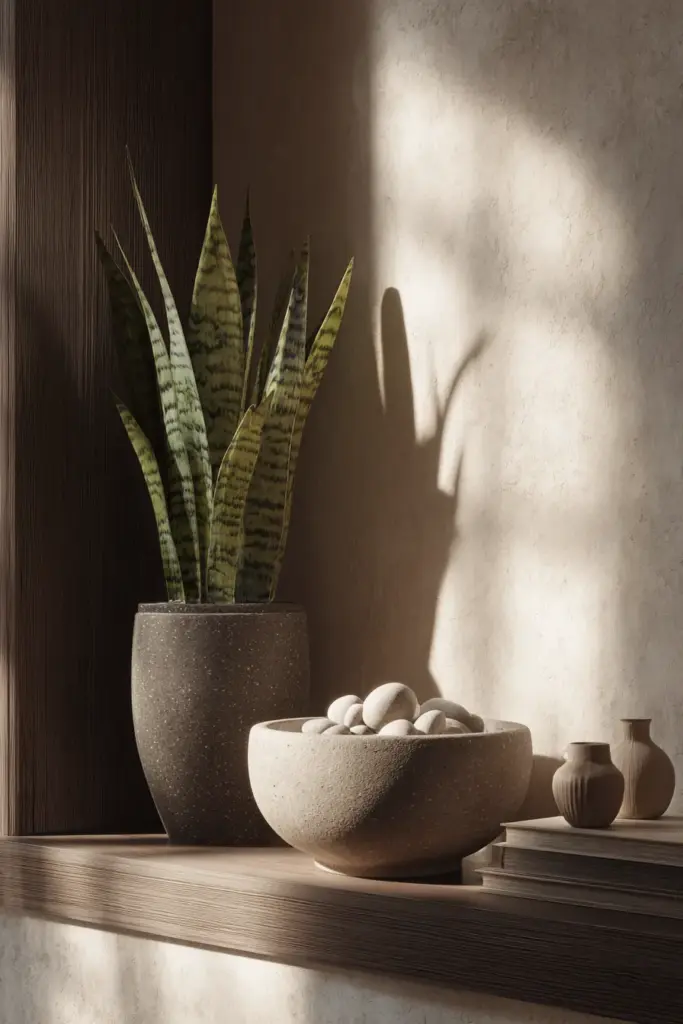
Snake plants are a Japandi essential — their geometric, upright leaves embody the clean minimalism of the style, and they ask almost nothing in return. Place one beside a tabletop fountain where it can enjoy the light humidity without sitting in soggy soil.
Boston ferns drape beautifully from shelves or hanging baskets near a water feature. Their feathery fronds soften the visual weight of stone or concrete basins, and the moisture in the air around a fountain keeps them from the dry, crispy edges they are prone to in warm, dry rooms.
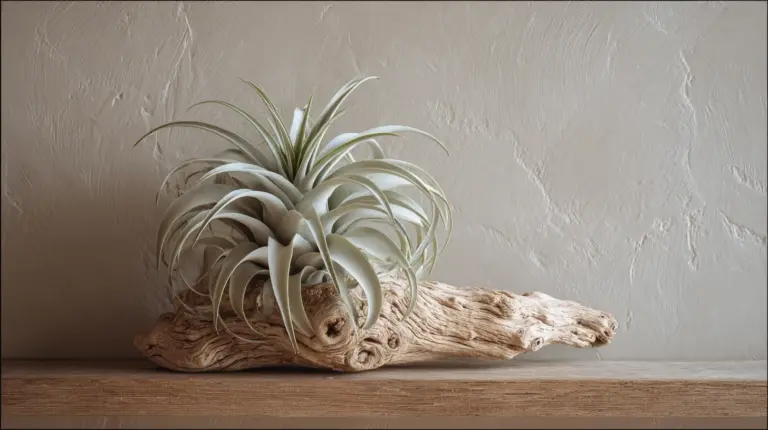
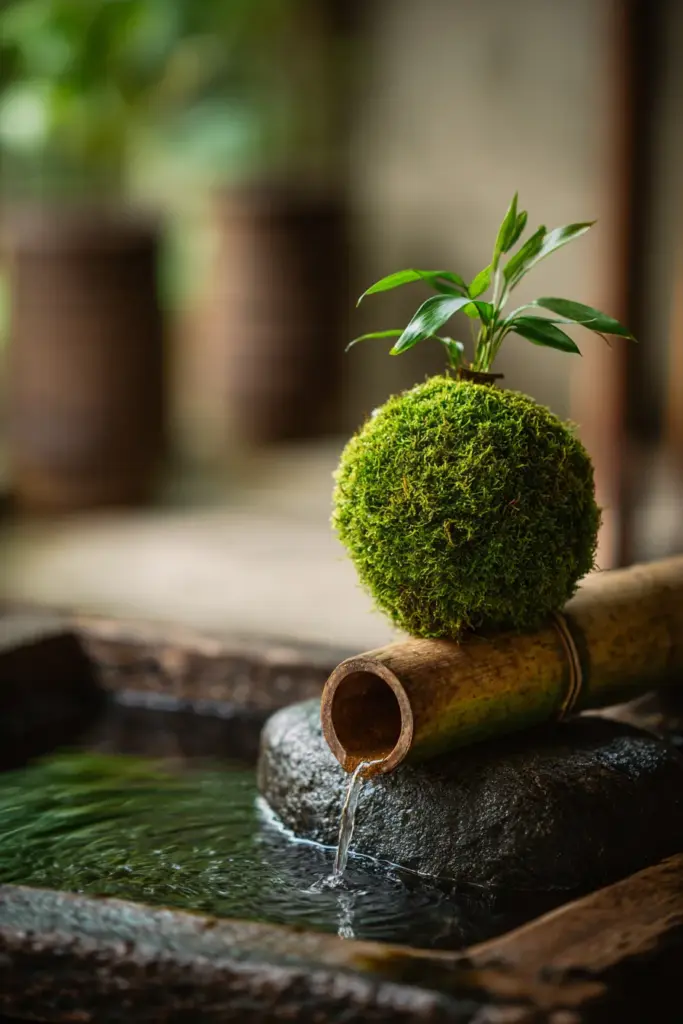
Kokedama — the Japanese art of wrapping plant roots in moss balls — is perhaps the most poetic pairing with a water feature. The moss stays beautifully green in humid conditions, and the overall form is sculptural without being fussy.
Outdoor and Garden Plants for Japandi Water Elements
If you have an outdoor space — even a small balcony or courtyard — the possibilities expand beautifully.
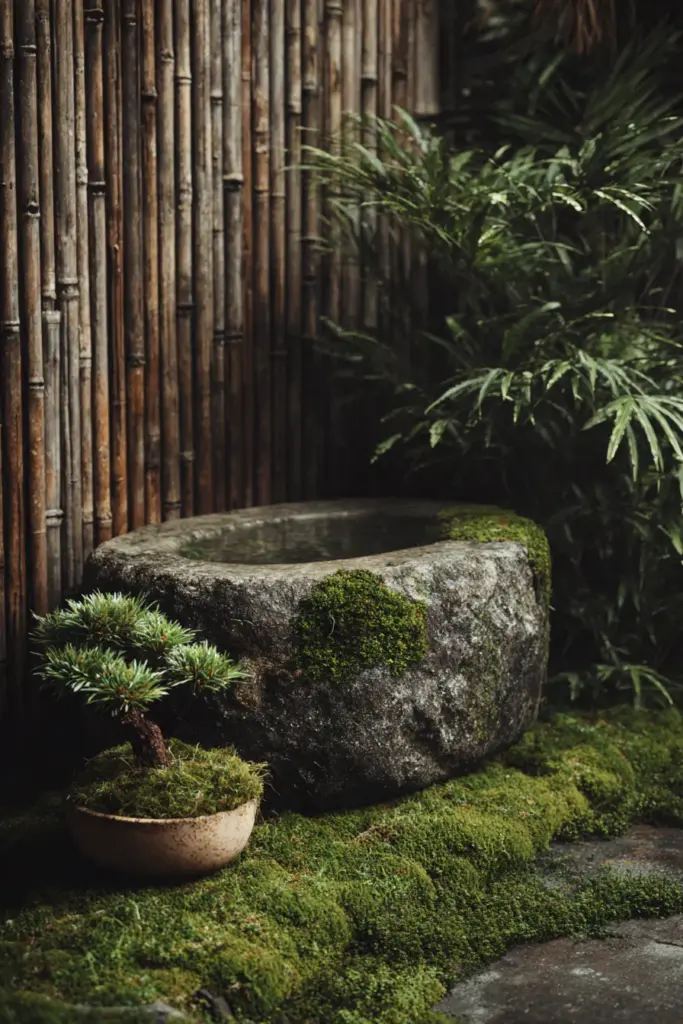
Black pines and dwarf bonsai give structure and age to an outdoor Japandi vignette. Placed beside a stone basin with a bamboo spout, they create the feeling of a centuries-old Japanese garden compressed into a modest balcony.
Moss is the quiet hero of outdoor Japandi water gardens. It spreads softly around the base of stones and water features, blurring the line between the built and the grown. In humid Calabarzon conditions, moss establishes quickly and asks for very little maintenance.
Creeping Jenny and Japanese sweet flag work beautifully as marginal or edge plants around outdoor fountains and ponds. Their low, spreading growth softens hard edges without competing for attention.
How to Style Indoor Japandi Plants Around Tabletop Fountains
Placement Principles: Asymmetry and Negative Space
In Japandi design, symmetry feels too deliberate, too controlled. Instead, arrange your plants and water feature asymmetrically — two or three plants of varying heights placed off-center, with intentional empty space left open.
That empty space is not a mistake. It is part of the composition. It gives the eye somewhere to rest and the arrangement somewhere to breathe.
A simple approach: place your tabletop fountain slightly to one side of a shelf or console. Flank it with a tall snake plant on one side and a low moss ball or trailing fern on the other. Leave the opposite end of the surface empty — perhaps just a smooth river stone or a single small ceramic vessel.
Materials That Anchor the Aesthetic
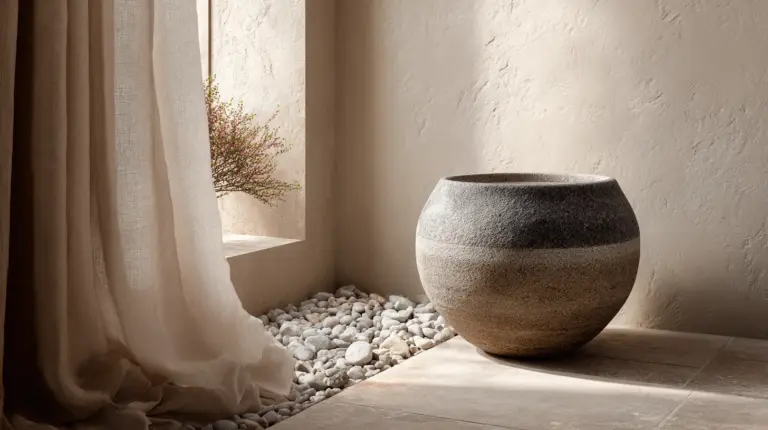
The surfaces and vessels you choose matter as much as the plants themselves. Lean into matte black, aged stone, unglazed ceramic, raw wood, and slate — materials that feel like they have been somewhere, that carry the memory of the natural world in their texture.
Avoid anything that shines or sparkles. Japandi is not about glamour. It is about the quiet confidence of things that are genuinely beautiful.
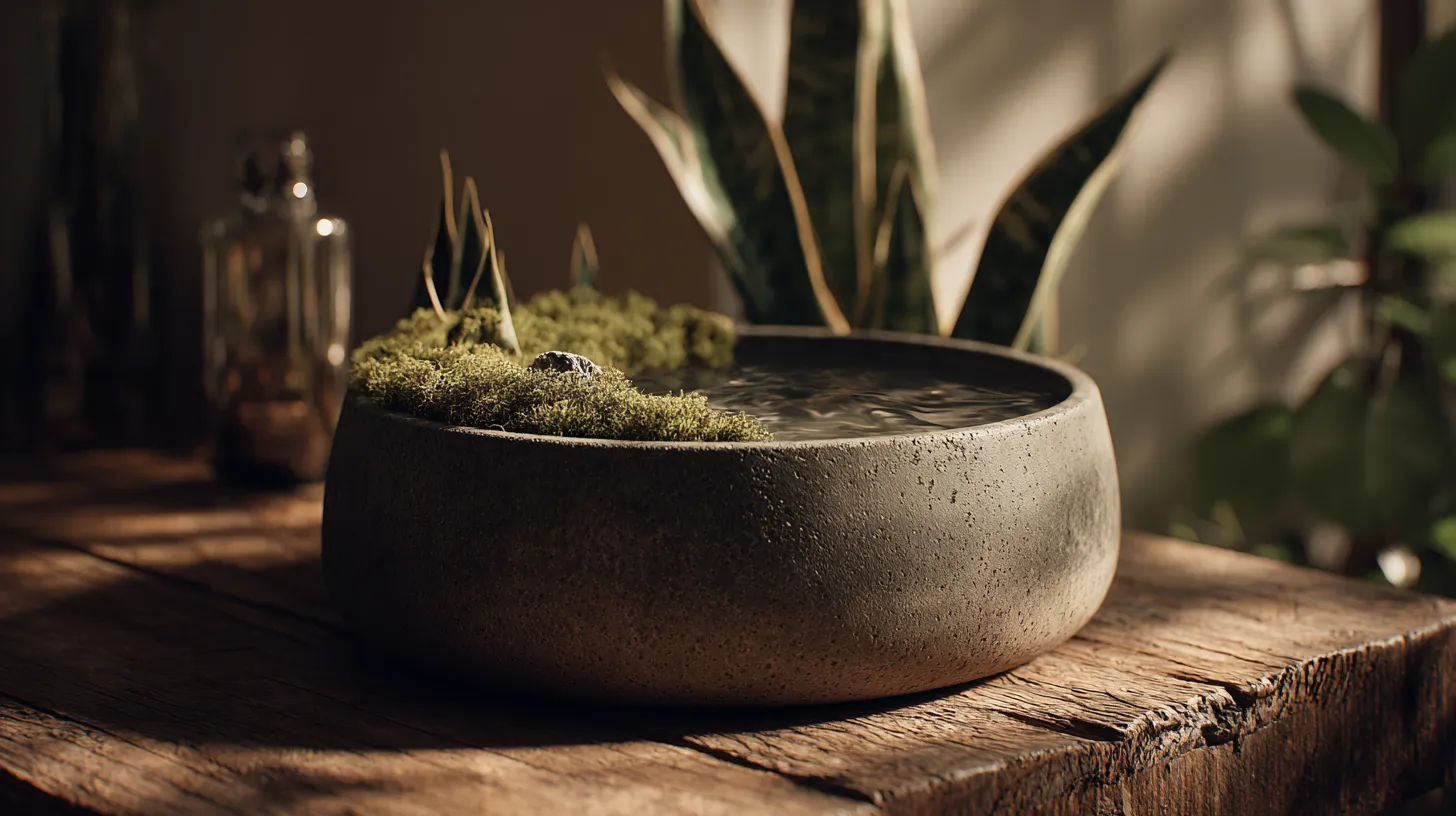
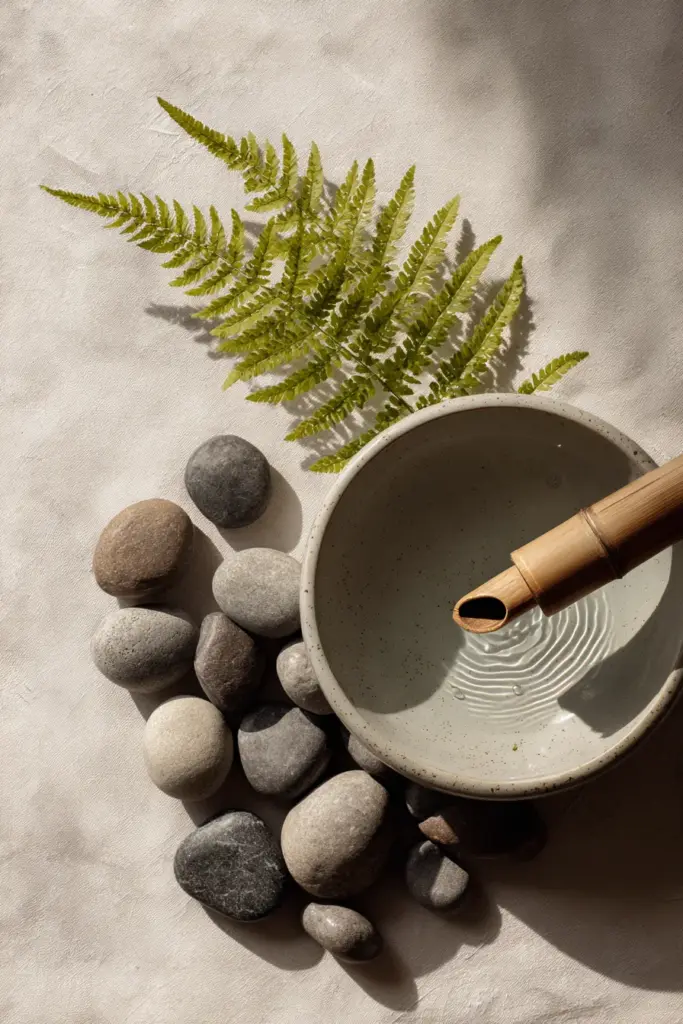
A bamboo spout fountain on a slate base, surrounded by a moss ball and a small fern in an unglazed pot — that is the essence of the style. Understated. Alive. Completely intentional.
Lighting: The Softest Layer
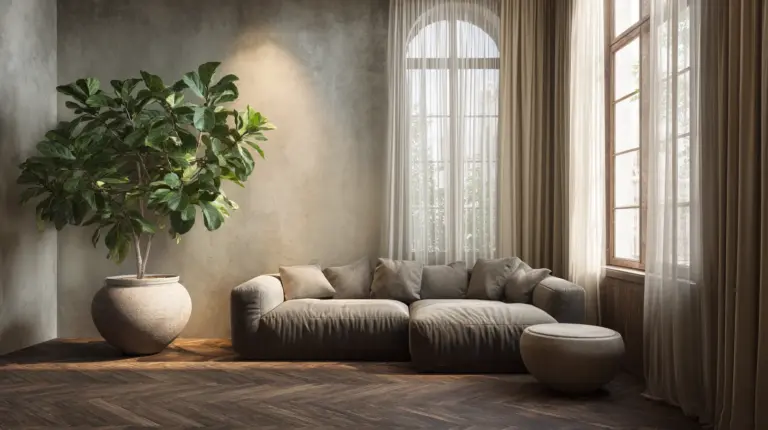
Lighting ideas can make or break a Japandi vignette. Harsh overhead light flattens texture and kills the mood. Instead, use warm, diffused light — a small Edison bulb pendant, a paper lantern, or filtered natural light through a linen curtain.
The way soft light plays on moving water is one of the most calming visual experiences a room can offer. The gentle shimmer of a tabletop fountain in late afternoon sun is reason enough to rearrange your entire living room shelf.
DIY Japandi Water Feature with Plants: A Simple Guide
You do not need to spend a fortune to build something beautiful. A small, functioning Japandi-inspired water feature can be assembled for under PHP 3,000–5,000 using locally sourced materials.
What You Will Need
- A shallow stone or ceramic basin (available at Silang garden centers or weekend markets in Cavite)
- A small submersible pump (PHP 300–600 at hardware stores or Lazada)
- Bamboo spout or carved stone outlet
- River stones or smooth pebbles for the base
- A snake plant, moss ball, or small fern in a complementary pot
- Waterproof sealant if using a porous stone basin
Step-by-Step Build
Step 1 — Choose your basin. Look for a vessel with enough depth to submerge the pump. Unglazed ceramic and natural stone work beautifully and age gracefully over time.
Step 2 — Set your pump. Place the submersible pump at the bottom of the basin, hidden beneath river stones. Run the tube up through or alongside your bamboo spout.
Step 3 — Layer your stones. Arrange river stones naturally and loosely — avoid perfect rows. Leave the pump’s intake area accessible by keeping the stones slightly elevated around it.
Step 4 — Add your spout. Secure your bamboo or stone spout so water falls gently into the basin. The sound should be soft — a murmur, not a splash.
Step 5 — Style your plants. Place a snake plant in a matte ceramic pot directly beside the basin. Add a hanging kokedama overhead or tuck a small fern at the base. Leave space. Let it breathe.
Step 6 — Maintain weekly. Top up the water every two to three days. Clean the pump filter monthly. Trim any yellowing leaves immediately to keep the composition clean.
Japandi Plant and Fountain Compatibility Guide
| Pairing | Light | Maintenance | Mood Evoked |
|---|---|---|---|
| Snake Plant + Stone Basin | Low–Indirect | Very Low | Clean, meditative |
| Boston Fern + Bamboo Spout | Indirect | Moderate | Lush, textural |
| Kokedama + Ceramic Bowl Fountain | Indirect | Low | Earthy, artful |
| Peace Lily + Tabletop Fountain | Low | Low | Soft, serene |
| Japanese Sweet Flag + Outdoor Pond | Bright | Low | Wild, natural |
| Bonsai + Stone Basin | Bright indirect | Moderate–High | Ancient, sculptural |
2026 Trends: Sustainability Meets Japandi Serenity
The most forward-thinking Japandi spaces in 2026 are incorporating solar-powered fountain pumps — silent, energy-free, and completely in tune with the philosophy’s respect for nature. A small solar panel tucked behind the plant arrangement can power most tabletop fountains through a full day of sun exposure.
Zero-waste filtration is another emerging practice — using activated bamboo charcoal in fountain basins to keep water clear without chemical treatments. The charcoal itself becomes a visual element, dark and sculptural against pale stone.
Biophilic design research continues to confirm what Japandi has always known instinctively: proximity to plants and moving water measurably reduces cortisol levels, lowers heart rate, and improves focus. These are not soft, vague claims — they are the science behind why your Japandi corner feels the way it does.
Japandi Water Feature Setup Checklist
Before you build or style your space, run through this quick checklist:
- Choose a basin material in stone, unglazed ceramic, or slate
- Select a small submersible pump appropriate for the basin size
- Use a bamboo or carved stone spout for natural sound quality
- Choose plants with varying heights for asymmetrical arrangement
- Pair humidity-loving plants (fern, moss, peace lily) closest to the water
- Use matte, earthy vessels — avoid gloss or shine
- Light the vignette with warm, diffused light
- Leave negative space in the arrangement — resist the urge to fill it
- Top up water every two to three days
- Clean the pump filter once a month
- Trim plants promptly to maintain clean, intentional lines
- Consider a solar pump for sustainable, silent operation
Conclusion
A Japandi space with plants and water is not a trend you follow. It is a feeling you return to.
It is the sound of water when the house is quiet. The particular green of a fern in low morning light. The roughness of an unglazed pot beneath your fingertips. The way a room that holds living things asks nothing of you except to slow down and be present.
You do not need a large space or a generous budget. You need intention — a handful of materials chosen with care, a plant that belongs in your climate, and the willingness to leave some things beautifully empty.
Build it slowly. Let it grow into itself. That is the whole point.
Frequently Asked Questions
What plants work best with Japandi water features?
Low-maintenance, humidity-loving plants are the best fit — snake plants, Boston ferns, peace lilies, kokedama, and Japanese sweet flag all thrive near the gentle moisture of a tabletop or outdoor fountain. Choose plants with clean, simple forms that complement rather than compete with the water feature.
How do I style indoor Japandi plants around a tabletop fountain?
Use asymmetrical placement with plants of varying heights. Keep negative space intentional — leave areas of the surface empty. Pair your fountain with matte ceramic or stone pots and warm, diffused lighting for the most cohesive result.
What are the best outdoor plants for a Japandi water garden?
Moss, black pines, dwarf bonsai, creeping Jenny, and Japanese sweet flag all suit outdoor Japandi water elements beautifully. They complement bamboo spouts and stone basins without overpowering the composition.
Can I build a Japandi water feature on a small budget?
Yes — a functional and beautiful tabletop fountain can be built for under PHP 5,000 using a shallow stone or ceramic basin, a small submersible pump, river stones, and a bamboo spout. Source your materials from local garden centers in areas like Silang, Cavite for affordable options.
Are there low-maintenance aquatics for Japandi setups?
Japanese sweet flag and peace lilies are both excellent choices — they enjoy high humidity and proximity to water, require minimal care, and bring a quiet elegance that suits the Japandi palette perfectly.