
Table of Contents
By ERYLIN — Your Calm Guide to Intentional Living
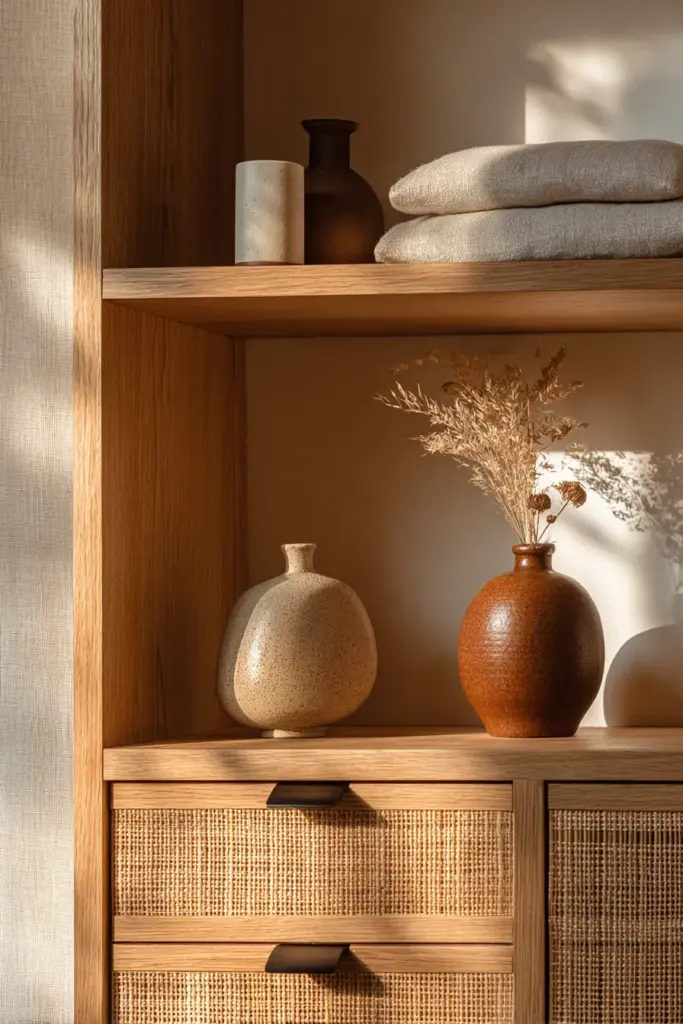
There is something quietly revolutionary about looking at an old dresser and seeing possibility instead of clutter. Japandi — the soulful fusion of Japanese wabi-sabi and Scandinavian hygge — teaches us that beauty lives not in newness, but in honesty. A piece of furniture worn at the edges, painted in warm stone, dressed with rattan hardware: that is where the magic begins.
You do not need a decorator’s budget or a renovation crew. You need a brush, a plan, and the willingness to slow down long enough to see what your space is asking for. This guide will walk you through thoughtful, budget-friendly DIY Japandi furniture makeovers — from thrift flips to IKEA transformations — with local Philippine material recommendations and real cost breakdowns under ₱5,000.
Whether you live in a Silang studio or a Quezon City condo, Japandi style adapts beautifully to small spaces. It asks only for intention: fewer things, chosen with care, allowed to breathe.
Let us begin.
What Is Japandi Style Furniture?
Japandi is the design language of intentional restraint. It draws from Japan’s wabi-sabi — the love of imperfection and impermanence — and Scandinavia’s hygge — the pursuit of warmth, simplicity, and comfort.
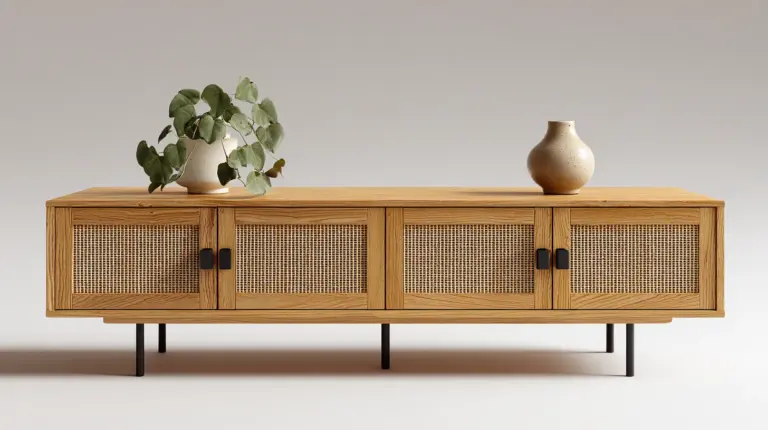
In furniture, this translates to natural wood tones, muted earthy palettes, clean lines with organic texture, and the quiet confidence of pieces that do not shout. Think: a low oak platform bed, a linen-slipped chair, a rattan-handled cabinet in warm ash.
The beauty of Japandi is that it welcomes imperfection. Wood knots are not flaws — they are character. A slightly uneven brush stroke on a repainted cabinet is not a mistake — it is evidence of a human hand, and that is precisely the point.
How to Achieve the Japandi Look on a Budget
Japandi on a budget is not a compromise. It is a practice. The style was built on the philosophy of enough — not excess — which makes it naturally affordable when you work with what you already have.
The most powerful tool in your Japandi makeover kit is paint. A coat of warm greige, soft clay, or deep charcoal can transform a laminate IKEA shelf into something that looks curated and calm. Sand lightly first, prime if needed, and let the grain breathe where you can.
Hardware swaps are the second-fastest win. Replace plastic or brass knobs with matte black pulls, carved wood handles, or natural rattan rings. A ₱300 pack of hardware from Divisoria can shift the entire energy of a cabinet.
Budget Breakdown: Japandi Starter Kit (Under ₱5,000)
| Material | Estimated Cost (PH) | Where to Find |
|---|---|---|
| Water-based matte paint (neutral tone) | ₱400–₱800 | Ace Hardware, True Value |
| Sandpaper set (80–220 grit) | ₱150–₱250 | Any hardware store |
| Rattan or wood hardware (set of 6) | ₱200–₱500 | Divisoria, Lazada |
| Teak oil or beeswax finish | ₱300–₱600 | Handumanan, specialty wood shops |
| Linen or jute fabric (for slipcovers or wrapping) | ₱200–₱400 | Divisoria, fabric districts |
| Wood slat sheet (for panel accents) | ₱600–₱1,200 | Timber yards, OnABudget local suppliers |
| Total Estimated | ₱1,850–₱3,750 |
This leaves room in your ₱5,000 budget for a small plant — and every Japandi space deserves at least one.
Easy DIY Japandi Furniture Ideas to Start This Weekend
You do not need to redo your whole home. You need one piece, transformed with care, to shift the feeling of a room entirely.
The Japandi Dresser Makeover
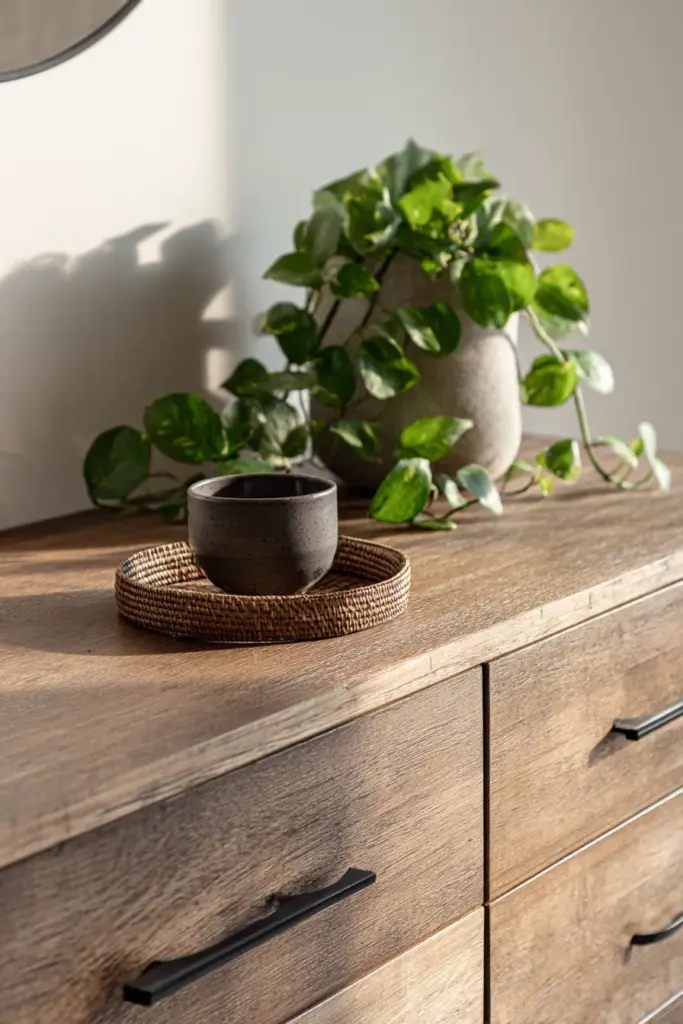
A thrifted dresser — even a scarred, laminate one — becomes something sculptural with the right treatment. Sand the surface until it accepts paint evenly. Apply two coats of a warm neutral: think Aged Linen, Warm Stone, or Misty Taupe. Let it dry fully between coats.
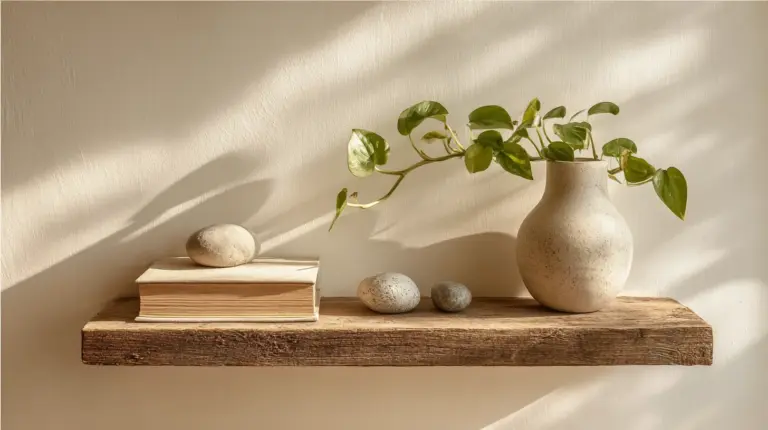
Swap the original hardware for matte black bar pulls or carved wood knobs. Line the top with a small woven tray, a ceramic bowl, and a single trailing pothos. Done. That dresser now anchors the room with a calm authority it never had before.
The IKEA Japandi Transformation
IKEA pieces are Japandi’s best raw material. The MALM dresser, BILLY bookcase, and KALLAX shelving unit all have the clean lines that Japandi asks for — they simply need a warmer finish and more organic details.
For the MALM: sand the surface lightly, apply a wood-tone contact paper or a warm matte paint, and replace the default hardware with slim rattan pulls. For the BILLY: add a shoji-inspired back panel in thin wood slats or textured wallpaper in a linen weave pattern. The transformation costs under ₱2,000 and takes a single afternoon.
Pro tip for Philippine humidity: Seal all painted IKEA surfaces with a matte water-based varnish. Laminate can bubble in tropical climates without a proper topcoat. Choose finishes labeled humidity-resistant or apply teak oil to any real wood components for lasting protection.
Wood Slat Wall Panel: The Weekend Project
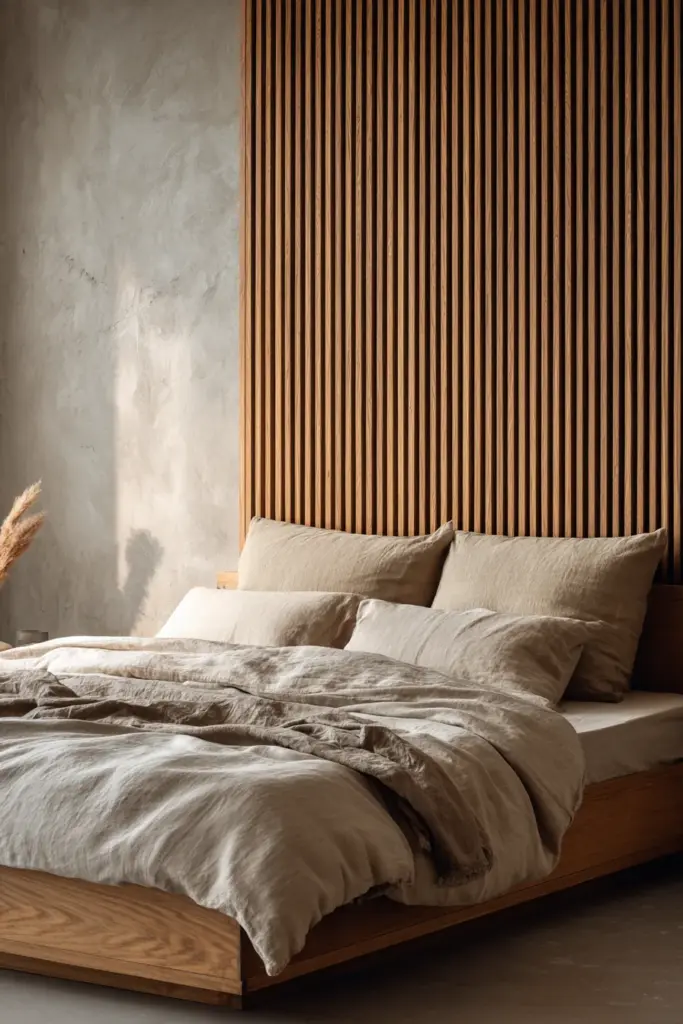
A wood slat panel accent wall behind a bed or sofa is one of the most dramatic — and achievable — Japandi upgrades you can make. Purchase thin pine or bamboo strips from a local timber yard (often sold by the bundle in areas like Divisoria or Baguio market), sand them smooth, and stain them in a warm walnut or natural ash tone.
Attach with construction adhesive or thin finishing nails. The result is a textured, architectural backdrop that makes the entire room feel intentional and warm. Total cost: approximately ₱1,200–₱2,500 depending on wall size.
Thrift Flip: Upcycling Furniture the Japandi Way
Second-hand furniture markets — ukay-ukay for furniture, online Facebook Marketplace finds, or Quiapo surplus shops — are treasure chests for the Japandi-minded. Look for solid wood pieces with good bones, even if the finish is damaged. Look past the ugly veneer. Look at the shape.
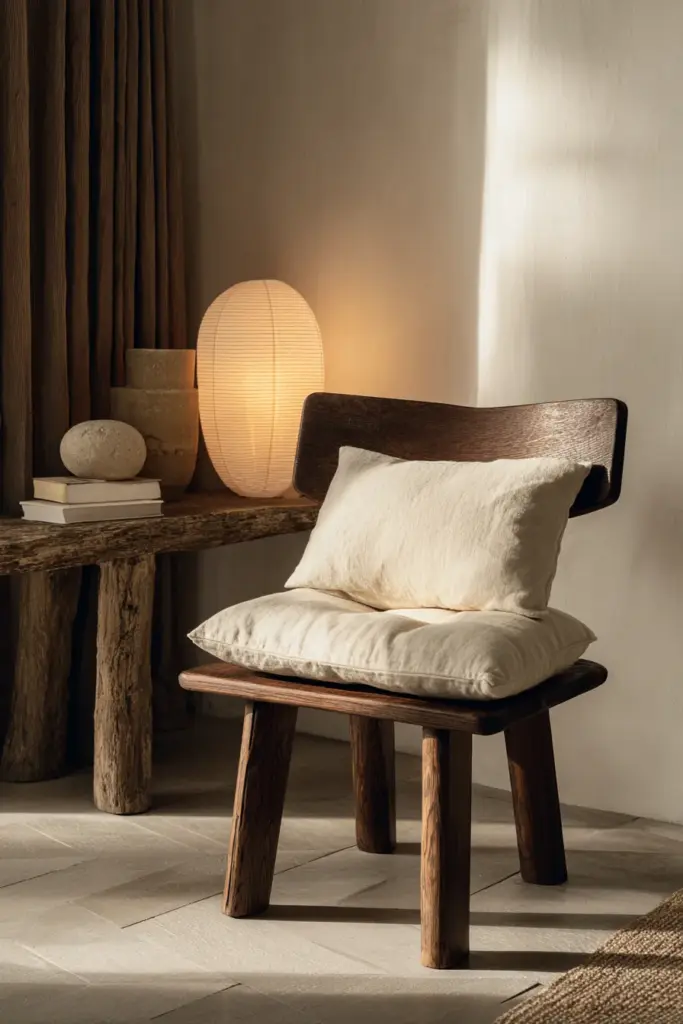
A worn wooden chair with good joinery can be sanded down to reveal natural grain, oiled with teak oil, and re-cushioned with a linen or cotton fabric in cream, oat, or dusty sage. That chair — bought for ₱150 at a surplus shop — becomes a statement piece that anchors a reading corner with quiet dignity.
Embrace wabi-sabi: Do not sand away every imperfection. A small dent, a visible wood knot, a slightly uneven paint edge — these are the marks of a life lived, and in Japandi philosophy, they are the most beautiful parts of all.
Biophilic Pairings: Plants for Your Japandi Furniture
No Japandi space feels complete without living green. Plants are not decoration here — they are participants in the design, breathing life into still surfaces and connecting the interior to the natural world outside.
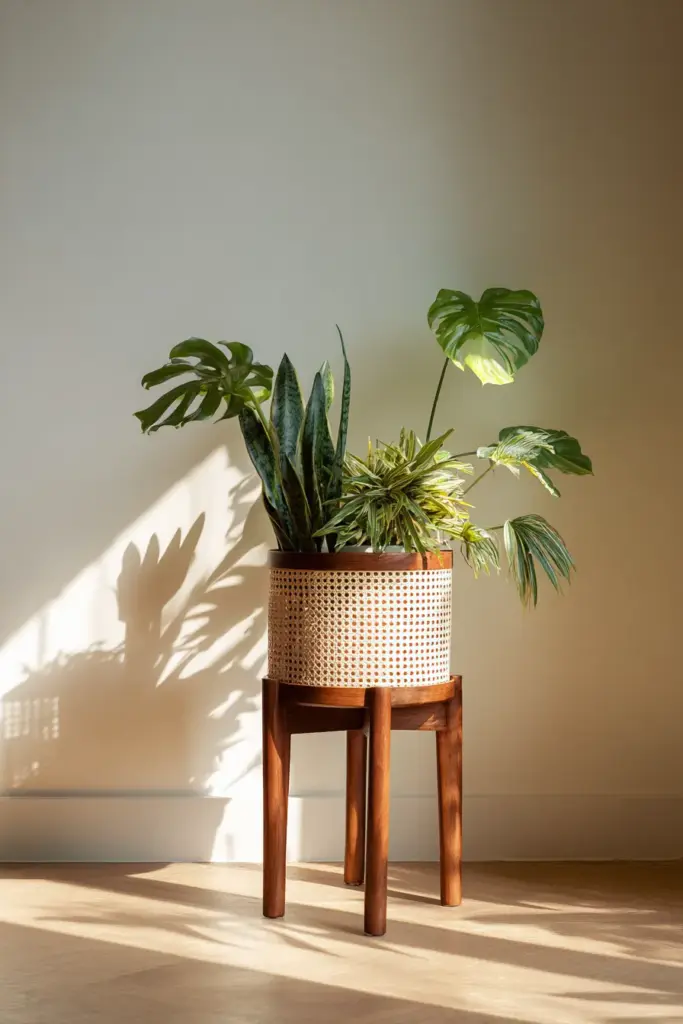
For upcycled shelves and plant stands, choose low-light companions: Monstera deliciosa (for drama), Sansevieria (for clean vertical lines), or Pothos trailing down a repainted cabinet edge. These thrive in Philippine indoor light and humidity.
A DIY Japandi plant stand — three tapered wooden legs joined at a platform top, stained in warm teak — takes under two hours to build and costs roughly ₱400–₱700 in materials from a local timber shop. Place it beside a window with a woven rattan pot cover, and that corner of your room becomes a small, breathing sanctuary.
Lighting for Your Japandi Space
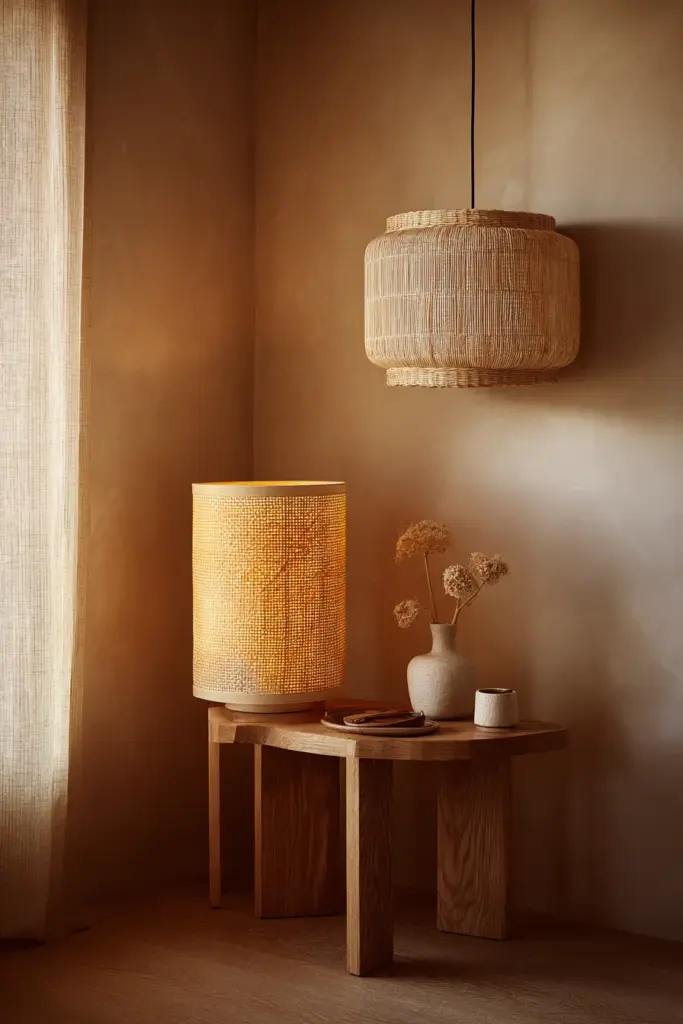
Lighting is the invisible furniture of any well-designed room, and Japandi asks for warmth, layering, and softness. Avoid bright white overhead lights. Instead, layer: a warm-toned floor lamp (a thrifted base rewired with a paper shade), a small table lamp beside the bed, and perhaps a simple rattan pendant over a reading chair.
Warm LED bulbs in the 2700K–3000K range create the amber glow that Japandi interiors are known for — that feeling of late afternoon light held still inside a room.
If you are rewiring a thrifted lamp base, please consult a licensed electrician for safety. The aesthetic is worth doing correctly.
Checklist: Your Japandi Furniture Makeover Essentials
- Sand all surfaces before painting — adhesion is everything
- Choose matte or eggshell finishes over gloss for an organic feel
- Stick to a palette of 2–3 neutrals: warm whites, taupes, warm greys, natural wood
- Swap hardware to matte black, wood, or rattan
- Seal all painted surfaces with matte varnish, especially in humid climates
- Add one plant per furniture vignette — no more, no less
- Layer warm LED lighting at multiple heights
- Embrace wabi-sabi: imperfection is the point
- Source locally: Divisoria, Baguio rattan suppliers, Quiapo surplus for affordable materials
- Photograph your before-and-after to track your Japandi makeover journey
Conclusion
A Japandi furniture makeover is not a weekend project. It is a quiet act of care — for the objects you already own, for the space you live in, and for the version of yourself that deserves to come home to something beautiful.
You do not need to buy everything new. You need to see what you already have differently. Sand it down. Paint it warm. Add something living. Step back, and let the stillness settle.
At ERYLIN, we believe your home is your most intimate story. Tell it slowly, with intention, and let every piece you choose — or transform — speak of the life you are building.
Frequently Asked Questions
What is Japandi style furniture?
Japandi furniture blends Japanese minimalism and wabi-sabi with Scandinavian warmth and hygge. It features natural wood tones, muted neutral palettes, clean lines, and an appreciation for imperfection and organic texture.
How can I achieve the Japandi look on a budget in the Philippines?
Start with what you own. Sand and repaint furniture in warm neutrals, swap hardware for rattan or matte black pulls, and add a single plant. A full starter makeover can cost under ₱3,750 using local materials from Divisoria and your nearest hardware store.
What are easy DIY Japandi furniture ideas for beginners?
The easiest starting points are a dresser repaint with hardware swap, a wood slat wall panel behind a sofa, or an IKEA piece like the MALM or BILLY refreshed with warm paint and organic hardware. Each project can be completed in one afternoon.
Can I Japandi-fy IKEA furniture?
Absolutely. IKEA’s clean-lined pieces are ideal Japandi canvases. Sand, paint in warm neutrals, add rattan or wood hardware, and finish with a humidity-resistant topcoat — especially important in the Philippine climate.
What finishes are best for Japandi furniture in a humid climate like the Philippines?
Use water-based matte paint sealed with a matte varnish for painted pieces. For natural wood elements, teak oil or beeswax offers protection against humidity while preserving the organic feel that Japandi demands. Avoid glossy finishes — they interrupt the calm, matte aesthetic central to the style.