
Table of Contents
There is something deeply satisfying about pressing your hands into a pillow you made yourself — one that smells faintly of raw linen and tells a story of quiet intention. That is the spirit at the heart of Japandi design: beauty born from simplicity, warmth earned through texture, and meaning woven into every deliberate choice.
Japandi — the soulful blend of Japanese minimalism and Scandinavian hygge — has transformed modern interiors into sanctuaries of calm. And throw pillows, small as they seem, are one of its most expressive tools. They soften a rigid sofa, anchor a floating floor cushion, and invite you to slow down and sink in.
Making your own DIY Japandi throw pillows is more than a craft project. It is a meditation. You choose the fabric with care, cut it with intention, and bring something genuinely handmade into a space that craves authenticity over perfection.
In this guide, ERYLIN walks you through everything — from choosing the right linen to styling your cushions with biophilic intention. Whether you sew or not, there is a path here for you.
What Is the Japandi Aesthetic, and Why Does It Matter for Pillows?
Japandi is not a trend. It is a philosophy of living that values natural materials, muted warmth, and the beauty of imperfection — what the Japanese call wabi-sabi. Every element in a Japandi interior earns its place, including the pillows resting on your sofa.
A Japandi throw pillow is not merely decorative. It is grounding. It speaks in textures — the cool smoothness of washed linen, the gentle nub of hand-loomed cotton, the soft resistance of natural wool. It whispers in color — warm white, dusty sage, clay beige, and storm gray.
When you make your own, you bring an extra layer of meaning. There is no mass-production here. There is only your hands, your chosen cloth, and your home.
Choosing Japandi Fabrics: Linen, Cotton, and Texture Rules
What Fabric Is Best for Japandi Throw Pillows?
The fabric you choose is the soul of your pillow. For Japandi, the hierarchy is clear: linen leads, followed by cotton canvas, textured wool, and hand-loomed blends.
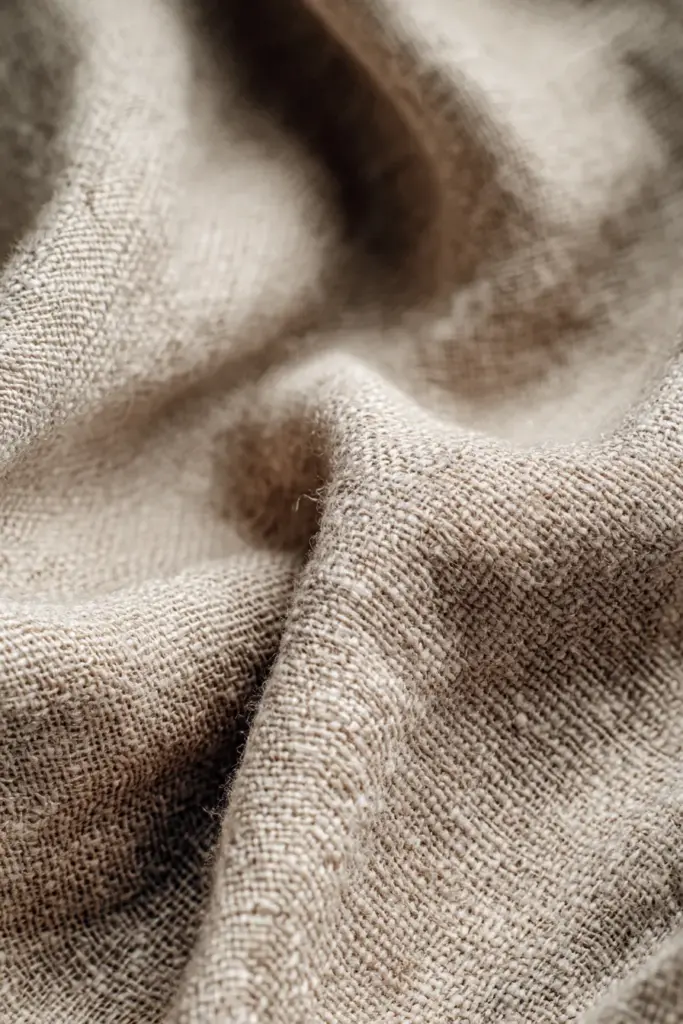
Linen, in particular, is the gold standard. It wrinkles beautifully, softens with washing, and holds color in that perfectly imperfect way that defines wabi-sabi. A pillow made from pre-washed linen feels like something that has been loved for years — exactly the look Japandi craves.
The Japandi Fabric Hierarchy
| Fabric | Why It Works | How to Use It |
|---|---|---|
| Washed Linen | Naturally textured, softens over time, breathable | Main pillow cover, front panel |
| Cotton Canvas | Sturdy, matte, takes dye well | Backing panels, structured cushions |
| Textured Wool | Warmth, depth, subtle visual interest | Accent pillows, layering pieces |
| Hand-Loomed Cotton | Artisanal feel, slight irregularity | Feature pillow, floor cushions |
| Sheer Linen Blend | Lightness, layering texture | Decorative overlay panels |
Fabrics to Avoid in a Japandi Interior
Not all materials belong in this world. Japandi breathes through restraint, and some fabrics fight against that calm.
Avoid: shiny polyester, heavy embroidery, loud printed patterns, metallic threads, faux velvet, and anything that announces itself too loudly. These fabrics compete for attention — and in a Japandi space, nothing competes. Everything simply is.
How to Pre-Soften Linen for a Wabi-Sabi Feel
Fresh linen can feel stiff and overly crisp — too precise for Japandi’s lived-in warmth. To soften it naturally, wash the fabric two or three times in cool water before cutting. Add a cup of white vinegar to the first wash to relax the fibers and deepen that beautiful matte finish.
You can also lightly crumple damp linen and air-dry it in indirect sunlight. The result is fabric that looks like it carries a gentle history — perfectly imperfect, exactly as intended.
The Japandi Color Palette for DIY Pillow Covers
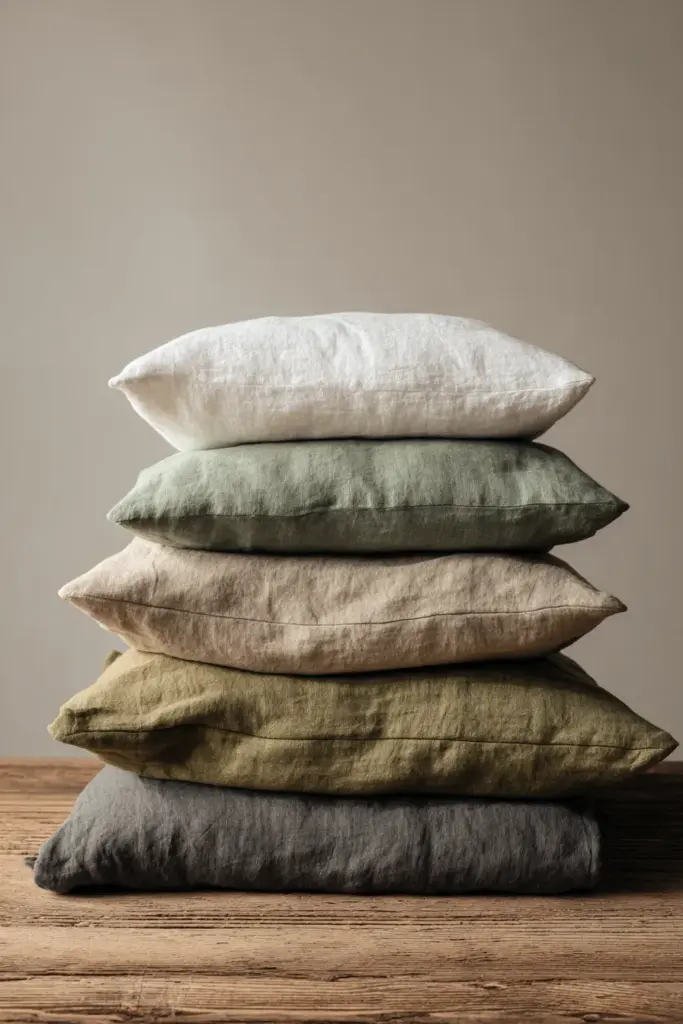
Color in Japandi is never loud. It is a conversation in whispers — warm neutrals, muted naturals, and the occasional soft earthy accent that feels like a stone pulled from a riverbed.
Japandi Pillow Color Guide
| Color Family | Specific Tones | Mood It Creates |
|---|---|---|
| Warm Whites | Cream, rice white, warm ivory | Airiness, light, openness |
| Soft Beiges | Sand, oat, linen natural | Groundedness, comfort |
| Warm Grays | Stone, driftwood, ash | Sophistication, calm |
| Muted Greens | Sage, eucalyptus, moss | Biophilic freshness |
| Clay Tones | Terracotta blush, warm rust | Earthiness, depth |
| Deep Accents | Charcoal, ink navy, warm black | Contrast, definition |
The most effective Japandi pillow groupings use two to three of these families together — never more. Think a sand linen pillow beside a sage wool cushion, anchored by one deeper charcoal piece. Simple. Considered. Quietly stunning.
Step-By-Step: How to Sew a Simple Japandi Throw Pillow Cover
What Do I Need to Make DIY Throw Pillows?
Before you begin, gather your materials. This is a beginner-friendly project — no advanced sewing skills required.
You will need:
- ½ to ¾ yard of washed linen or cotton canvas fabric
- Matching thread (neutral — ivory, gray, or stone)
- Scissors or rotary cutter
- Pins or fabric clips
- Sewing machine (or needle for hand-stitching)
- Pillow insert (18×18 or 20×20 inches is standard Japandi scale)
- Iron and ironing board
- Optional: invisible zipper or envelope closure
What Size Should a Japandi Throw Pillow Be?
For sofas, 18×18 inches is the most versatile Japandi size — grounded but not overwhelming. For floor cushions and layering, 22×22 or 24×24 inches adds visual weight and comfort. Lumbar pillows at 14×22 inches are ideal for adding horizontal rhythm to a bench or bed.
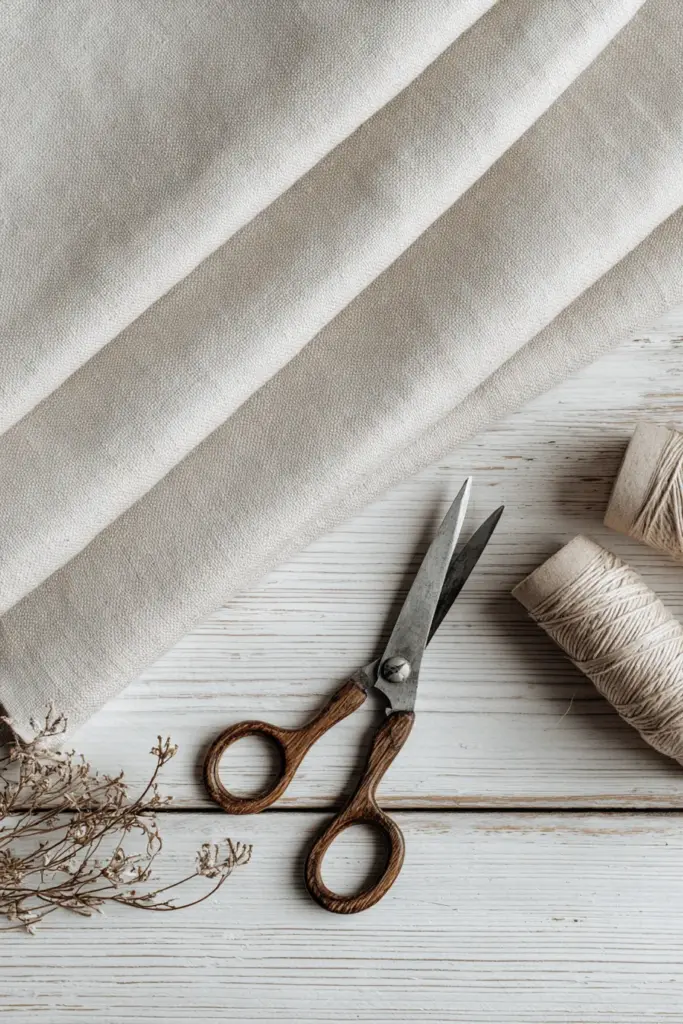
Step 1 — Wash and Press Your Fabric
Wash the linen twice, then press it lightly with a warm iron. You want soft wrinkles, not sharp creases — Japandi thrives in gentle imperfection.
Step 2 — Cut Your Fabric Panels
For an envelope closure (no zipper needed):
- Cut one front panel: 19×19 inches
- Cut two back panels: 19×13 inches each
The back panels will overlap, creating a clean, invisible closure. Add ½ inch seam allowance to all sides.
Step 3 — Hem the Back Panels
Fold one long edge of each back panel over twice (¼ inch, then ¼ inch again) and press. Stitch along the folded edge. This creates the clean overlap that holds your pillow insert in place.
Step 4 — Assemble the Pillow
Lay the front panel face-up. Place the two back panels face-down on top, hemmed edges overlapping in the center. Pin everything in place.
Stitch around all four sides with a ½ inch seam allowance. Trim the corners at a 45-degree angle to reduce bulk — this gives your pillow crisp, clean corners when turned right-side out.
Step 5 — Turn and Fill
Turn the cover right-side out through the envelope opening. Use a blunt tool to gently push out the corners. Insert your pillow form and fluff.
Notice how the linen settles around the insert — softly, slightly asymmetrically. That is wabi-sabi at work. That is exactly right.
No-Sew Japandi Pillow Ideas for Beginners
How Do You Make No-Sew Japandi Throw Pillows?
No sewing machine? No problem. Japandi’s handmade, imperfect spirit is perfectly suited to no-sew techniques — and in some ways, they feel even more authentic.
Fabric-glue envelope closure: Cut your panels as above and use a strong fabric adhesive to bond the seams. Press flat and allow to cure overnight. The result is a clean, sturdy pillow cover with zero stitching.
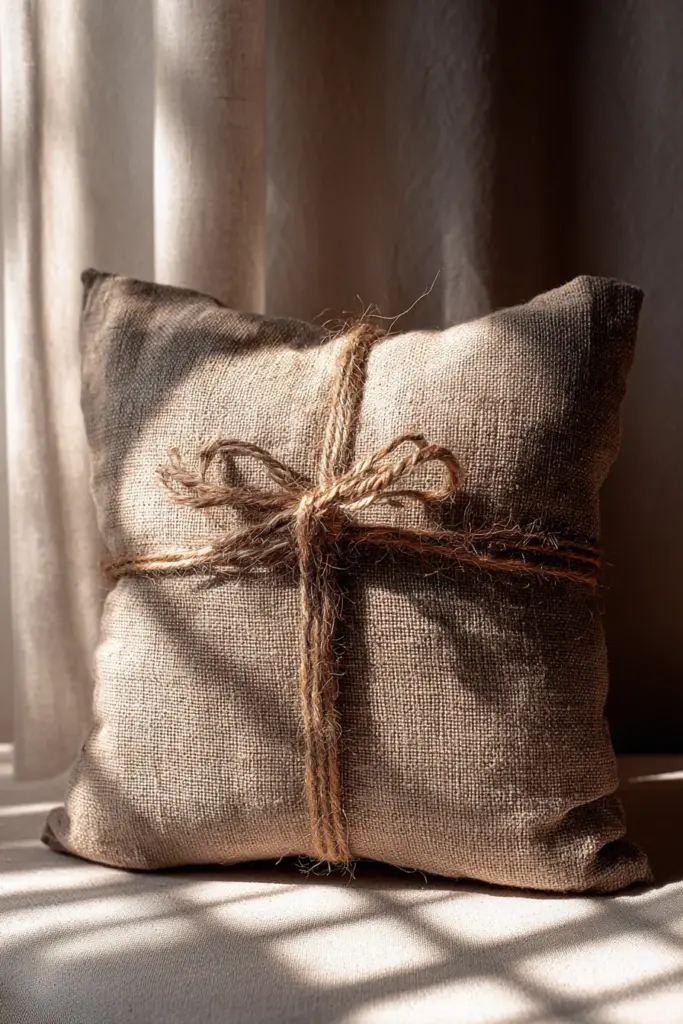
Tied linen wrap: Cut a large square of soft linen, place your pillow insert in the center, and fold the corners in like wrapping a gift. Secure with a simple knot or a piece of natural jute twine. This creates a beautifully rustic, organic look — no sewing, no glue, just cloth and intention.
Painted linen covers: Take a plain linen pillow cover and use water-based fabric ink to create simple, hand-drawn motifs — a single curved line, a small abstract leaf, a loose geometric border inspired by washi tape. The imperfection is the point. No two will be identical, and that is what makes them yours.
How to Style Japandi Throw Pillows on a Sofa or Floor
How Many Throw Pillows Should You Use in a Japandi Living Room?
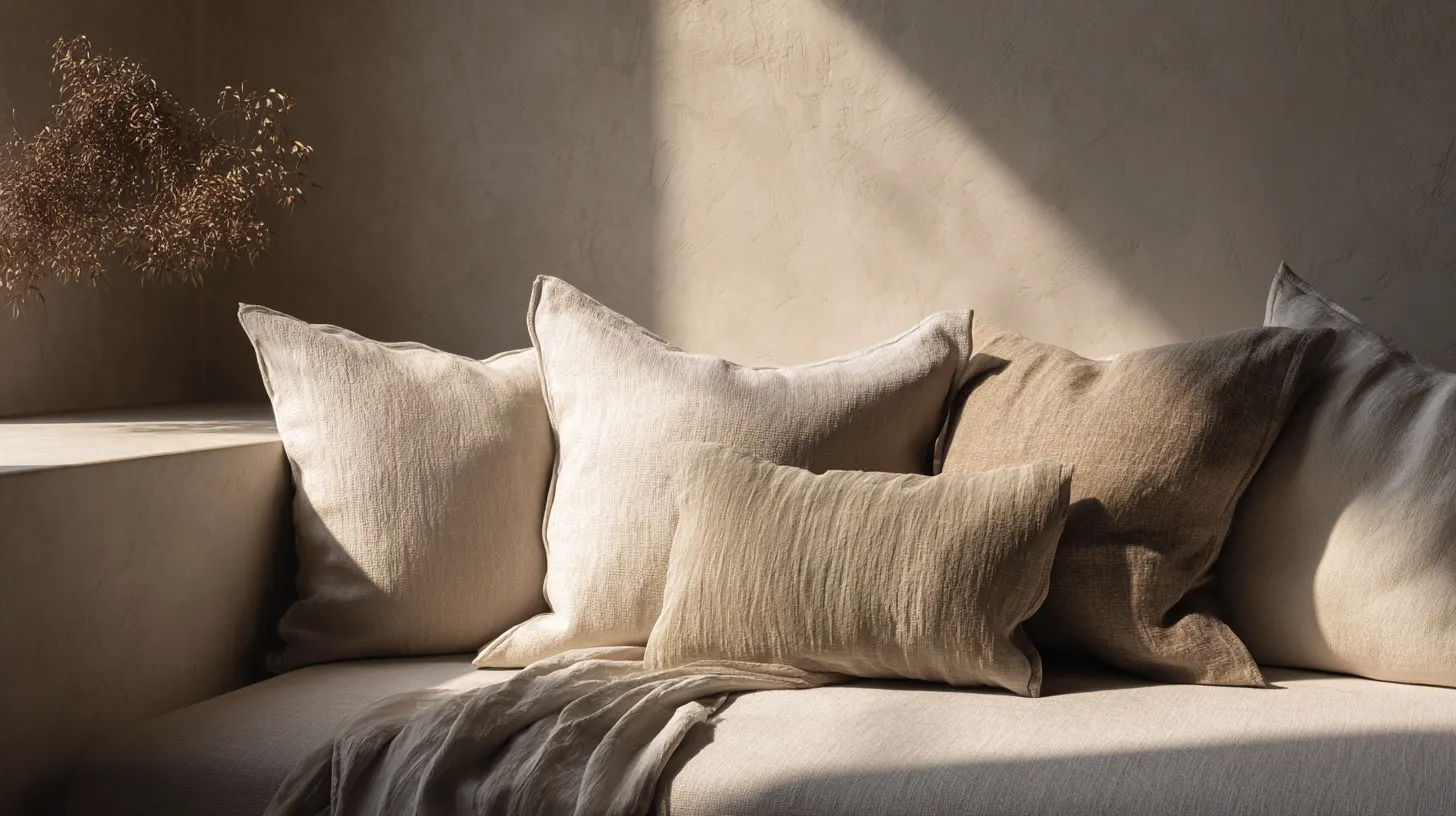
Less, always. Japandi styling follows the principle of ma — the Japanese concept of meaningful negative space. A sofa drowning in pillows loses its calm. Two to three pillows, thoughtfully placed, feel intentional and serene.
The Japandi Pillow Styling Formula:
| Placement | Pillow Type | Recommended Size |
|---|---|---|
| Back left corner | Washed linen, neutral | 20×20 in |
| Back right corner | Textured wool or cotton | 20×20 in |
| Center lean | Lumbar or accent | 14×22 in |
| Floor, beside sofa | Oversized floor cushion | 24×24 in |
Use odd numbers when styling — one, three, or five pillows create natural visual rhythm. Even numbers can feel too symmetrical, too controlled. Japandi prefers the slight surprise of asymmetry.
Where to Place Japandi Throw Pillows for Biophilic Impact
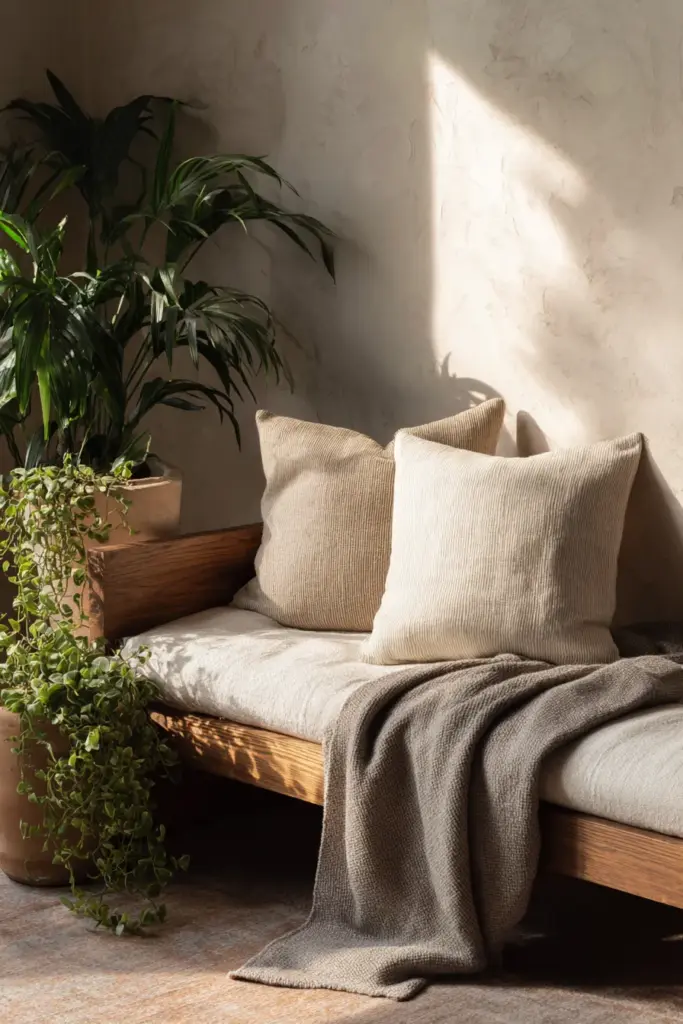
Position one floor cushion beside a low plant or trailing vine — something green and living. Place a linen pillow near a window where natural light falls across its texture, making it glow softly at different hours of the day.
Pair your cushions with a single woven throw — undyed cotton or natural wool — draped loosely across the arm of a sofa. The layering of textures tells a story of warmth and ease, of a life that is curated but never staged.
Eco-Friendly and Slow-Fashion Japandi Pillow Ideas
Japandi philosophy is inseparable from sustainability. Making pillows from upcycled fabric is not just practical — it is a form of respect for materials and for the world they came from.
Upcycle old linen curtains into pillow covers. The fabric is already softened from years of use and light — it will have that wabi-sabi quality immediately, without any pre-washing needed.
Try shibori dyeing — a Japanese resist-dyeing technique that uses folds, twists, and binds to create naturally irregular indigo patterns. Even beginner shibori results in something genuinely beautiful and utterly unique.
Hand-dye with natural pigments — turmeric for warm gold, avocado pits for dusty rose, black tea for warm beige. These slow, natural processes connect you to the material in a way that fast fashion never can. The resulting colors are always a little uncertain, a little alive.
How to Care for Your Japandi Linen Throw Pillows
How Do You Wash Linen Throw Pillows?
Linen is forgiving — more so than it looks. Wash covers in cool water on a gentle cycle, using a mild, fragrance-free detergent. Never use bleach or harsh fabric softeners, which break down linen’s natural structure.
Air-dry flat or hang loosely to preserve the soft drape. Avoid the tumble dryer if possible — or use it briefly on low, then remove while still slightly damp and allow to finish air-drying.
Do not iron aggressively. Light pressing while damp, or even none at all, keeps that characteristic Japandi softness intact.
How Do You Keep Throw Pillows from Looking Flat?
Fluff your pillow inserts regularly — a simple karate chop along the top edge (yes, really) redistributes filling and restores shape. Choose inserts filled with down-alternative or natural cotton batting for the best Japandi loft. Avoid thin polyester inserts, which compress quickly and lose their form.
If a cover begins to look tired, consider re-dyeing it with a natural pigment — a subtle shift in tone can make an old piece feel entirely new. This is the Japandi way: not discarding, but renewing.
Japandi Pillow Checklist
Before you finish, run through these key points to ensure your DIY Japandi throw pillows are true to the aesthetic:
- Fabric: Linen, cotton canvas, or textured wool — washed and softened before cutting
- Color: Warm neutrals, muted greens, clay tones, or deep charcoal — never loud or synthetic-looking
- Texture: Visible weave, gentle wrinkle, natural matte surface — avoid sheen
- Scale: 18×20×22 inch sofa pillows; 24 inch+ for floor cushions; 14×22 inch for lumbar
- Quantity: Two to three pillows per sofa; odd numbers for natural rhythm
- Closure: Envelope back (no-sew or sewn) for clean, minimal look
- Styling: Layer with a neutral throw, position near plants or natural light
- Care: Cool wash, air-dry, fluff regularly — restore rather than replace
Conclusion
There is a moment, after the last pillow is placed and the room settles into itself, when you feel it — that particular quietude that Japandi interiors are made for. The light is low and warm. The textures speak softly to one another. And somewhere in the corner, a pillow you made with your own hands rests against the sofa as if it has always belonged there.
That is the gift of making something yourself. Not perfection, but presence. Not trend, but meaning.
At ERYLIN, we believe your home should feel like an exhale — a place where beauty is earned, not purchased, and where every object carries intention. Your DIY Japandi throw pillows are exactly that. Small, deliberate, and deeply yours.
Start with one pillow. Let the fabric surprise you. Trust the imperfection.
Frequently Asked Questions
What is the best fabric for DIY Japandi throw pillows?
Washed linen is the top choice for Japandi throw pillows because it is naturally textured, breathable, and softens beautifully over time — embodying the wabi-sabi principle of imperfect beauty. Cotton canvas and textured wool are excellent alternatives. Avoid shiny synthetics, loud prints, or heavily embroidered fabrics, which conflict with Japandi’s calm, minimal spirit.
How do you make Japandi throw pillows without sewing?
You can create beautiful no-sew Japandi pillow covers using fabric glue and an envelope closure method, or by simply wrapping a square of linen around a pillow insert and tying the corners with natural jute twine. Painting simple motifs onto plain linen covers using water-based fabric ink is another beginner-friendly option that adds a handmade, artisanal quality.
What colors work best for Japandi throw pillows?
The ideal Japandi pillow palette includes warm whites, soft beiges, warm gray tones, muted sage or eucalyptus greens, and earthy clay or terracotta accents. Deep charcoal or warm black can be used sparingly for grounding contrast. Avoid bright, saturated, or cool-toned colors, which disrupt Japandi’s warm, serene atmosphere.
How many throw pillows should you put on a Japandi sofa?
Two to three throw pillows per sofa is the Japandi ideal. The Japanese concept of ma — meaningful negative space — means that restraint creates more impact than abundance. Use odd numbers of pillows and vary sizes (one larger, one smaller, one lumbar) for a styling that feels natural rather than staged.
How do you care for linen Japandi throw pillow covers?
Wash linen covers in cool water on a gentle cycle with mild detergent. Air-dry flat or hang loosely and avoid aggressive ironing — light pressing while damp preserves linen’s characteristic soft texture. Fluff inserts regularly to maintain shape. If covers look tired, refresh them with natural fabric dye rather than replacing them — this aligns with Japandi’s slow-living, minimal-waste philosophy.