
Table of Contents
There is something almost meditative about a room lit well. Not bright, not harsh — just warm, layered, and alive with texture. That is the soul of Japandi lighting: a quiet philosophy borrowed equally from Japanese wabi-sabi and Scandinavian hygge, where imperfection is honored and comfort is designed.
You do not need a renovation budget or a design degree to bring that feeling home. You need rice paper, bamboo, a little patience — and the willingness to slow down and make something beautiful with your own hands.
This guide walks you through everything: the philosophy behind Japandi light, the best DIY projects for every space and budget, and practical tips tailored for small Philippine apartments. Whether you are building your first paper shade or hacking an IKEA pendant, ERYLIN is here as your calm, creative companion.
Let the light lead you in.
What Is Japandi Lighting Style?
Japandi is not a trend. It is a feeling — the quiet intersection of two Nordic and East Asian design traditions that share more than they differ.
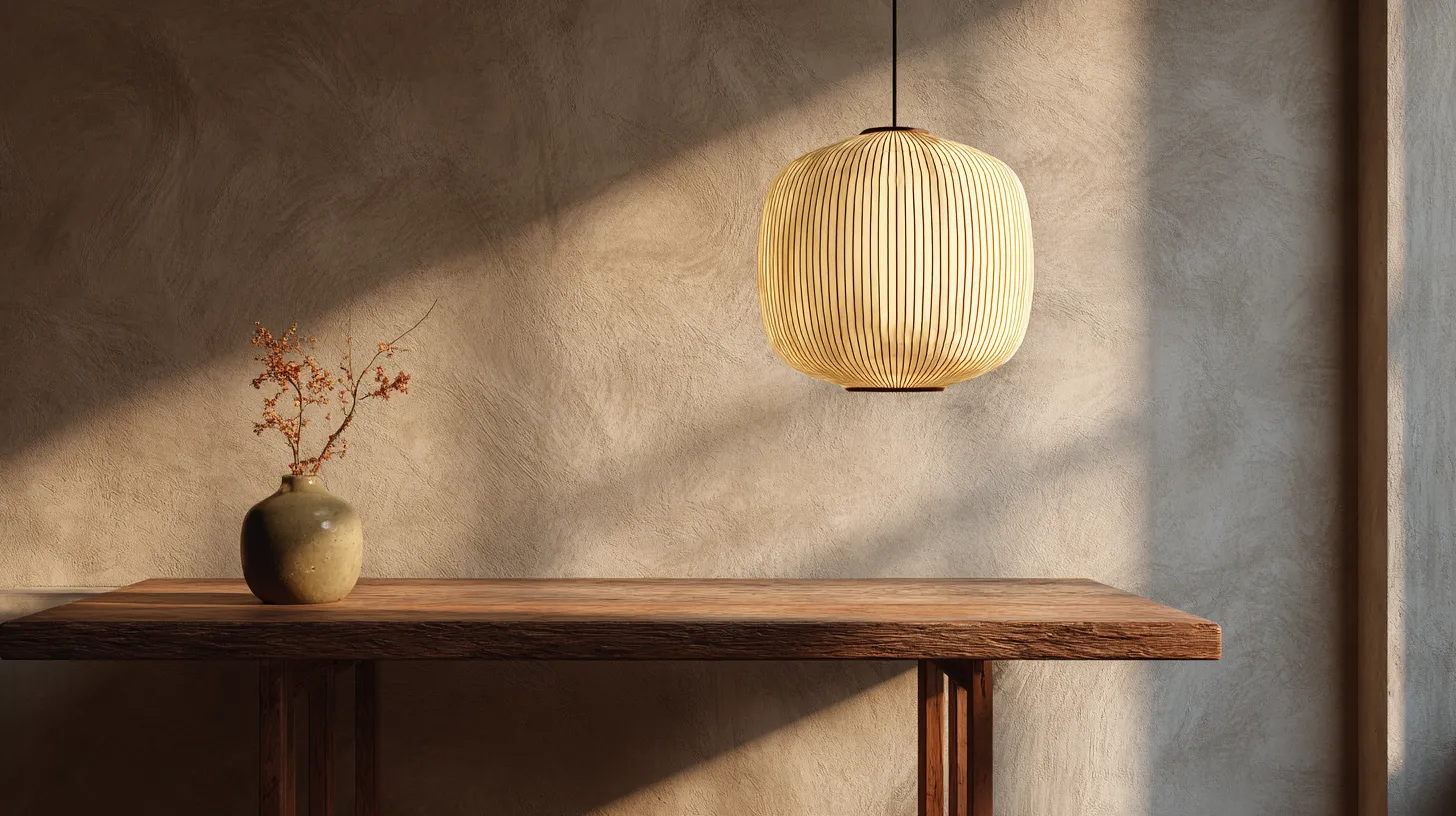
At its heart, Japandi lighting values soft, diffused illumination over bright overhead glare. Light is meant to settle gently into a room, not flood it. Think warm white bulbs at 2700K, shadows that pool in corners, and shades that glow rather than shine.
The materials tell the story just as much as the light itself. Natural bamboo, rattan, washi paper, raw linen, and aged wood are the textures that define this style. Each one diffuses light differently — rattan casts lace-like shadows, rice paper glows like a paper moon, linen gives off a soft, cottony warmth.
Japandi lighting also layers. A single ceiling light is rarely enough. Instead, the room breathes through a combination of ambient pendants, task sconces, and low floor lamps — each one doing quiet, specific work.
Materials Used in DIY Japandi Lighting
The materials you choose will determine how your light feels before it even turns on.
Natural Fiber and Paper
Rice paper and washi paper are the most iconic Japandi shade materials. They transmit light without harshness, filtering a warm LED into something that looks almost like candlelight. Washi paper, in particular, has a beautiful fibrous texture that becomes luminous when lit from within.
Linen fabric is another favorite — heavier, more rustic, with a slight weave that catches light in a grounded, earthy way. It works beautifully as a drum shade or a loosely wrapped pendant cover.
For Philippine crafters, abaca fiber is a wonderful local alternative to washi. It has natural variations in texture and color that align perfectly with wabi-sabi sensibility — no two shades will ever look exactly the same.
Wood, Bamboo, and Rattan
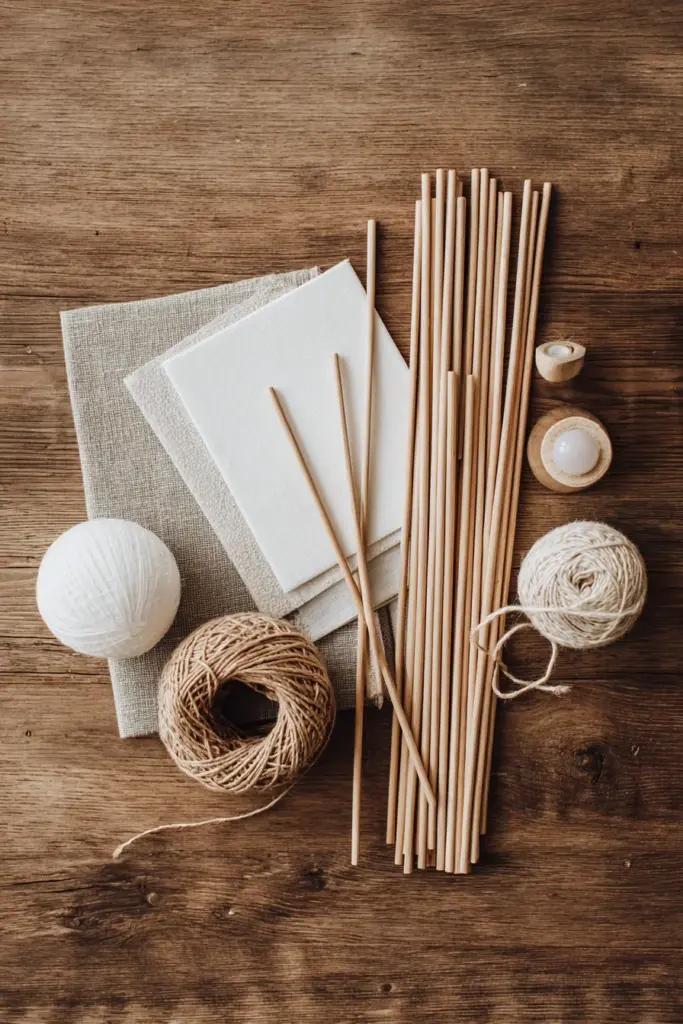
Bamboo dowels form crisp, geometric frames for pendant and table lamps. They are lightweight, easy to cut, and deeply sustainable. A bamboo-framed shade with a rice paper panel reads as effortlessly Japandi.
Rattan — whether as a ready-made shade or woven strips applied to an existing frame — creates that beloved shadow-play effect. When lit from inside, rattan casts intricate patterned shadows that turn a plain wall into something poetic.
Natural wood bases and stands ground a lamp in warmth and weight. Even a simple piece of driftwood or a raw timber block can become an elegant table lamp base.
Bulbs: The Most Important Material of All
No Japandi lamp is complete without the right bulb. Always choose warm white LEDs at 2700K — this color temperature mimics late afternoon sunlight and makes skin, wood, and linen all look their most beautiful.
Avoid bulbs above 3000K; they skew too cool and clinical. A dimmable LED paired with a smart dimmer lets you adjust the mood from bright-enough-to-read to amber-and-dreamy with a single touch.
DIY Japandi Table Lamp Tutorial
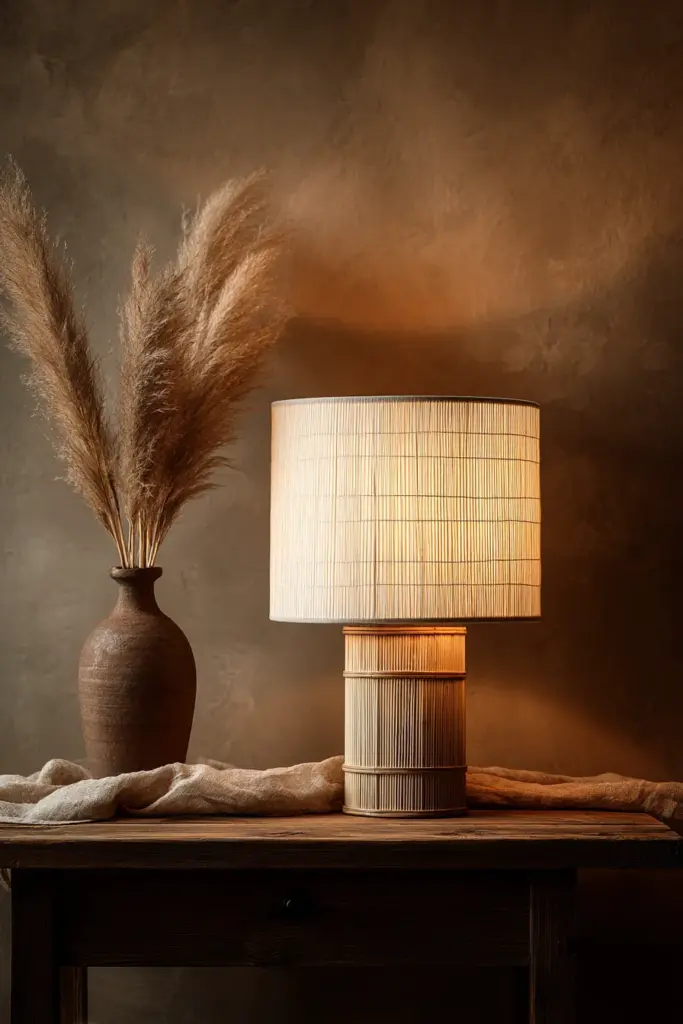
A handmade table lamp is one of the most rewarding weekend projects you can take on. This one uses a bamboo frame and a rice paper shade.
What You Will Need
| Material | Estimated Cost (PHP) |
|---|---|
| Bamboo dowels (6–8 pcs, 30cm) | ₱80–120 |
| Rice paper or washi sheets | ₱150–300 |
| Wood or bamboo base | ₱100–200 |
| Lamp cord set with socket | ₱200–350 |
| LED bulb 2700K, 4–6W | ₱80–120 |
| PVA glue or craft paste | ₱50–80 |
| Twine or jute string | ₱30–50 |
| Total | ₱690–1,220 |
Step-by-Step Instructions
Step 1: Build the frame. Cut your bamboo dowels to equal lengths and form a rectangular or square cage shape. Bind the joints tightly with jute twine, wrapping several times and finishing with a secure knot. Let the natural variation in the bamboo show — imperfection is the point.
Step 2: Attach the rice paper panels. Cut your rice paper slightly larger than each panel opening. Apply a thin, even layer of PVA glue to the bamboo frame edges and press the paper gently against them. Smooth out air bubbles from the center outward. Let each panel dry fully before moving on.
Step 3: Wire the base. Thread your lamp cord up through your wooden or bamboo base. Attach the socket according to the cord set instructions — in the Philippines, outlets run at 220V, so always use cord sets rated for that voltage and never attempt DIY wiring if you are unfamiliar with electrical safety. When in doubt, ask an electrician to make the final connection.
Step 4: Fit the shade. Rest the bamboo-and-paper shade over the socket. You can secure it with small hooks, a notch cut into the base, or simply weight and proportion. Screw in your warm LED and switch it on.
Step 5: Admire. The rice paper will glow softly, the bamboo joints will cast thin linear shadows, and the whole lamp will feel like something you found at a quiet craft market — because it essentially is.
DIY Japandi Pendant Light Ideas
Pendant lights anchor a room. They draw the eye upward and define the atmosphere of the whole space. Here are three approaches at different effort levels.
The Paper Lantern Pendant (Beginner)
Inflate a round balloon to your desired shade size. Tear washi paper into irregular pieces and apply layer by layer using diluted PVA glue, working over the entire surface. Let each layer dry before adding the next — aim for three to four layers total. Once fully dry, pop the balloon, cut a hole at the top for the cord fitting, and hang with a pendant cord set. The result is a glowing orb that looks like it belongs in a ryokan.
The Rattan Upcycle (Intermediate)
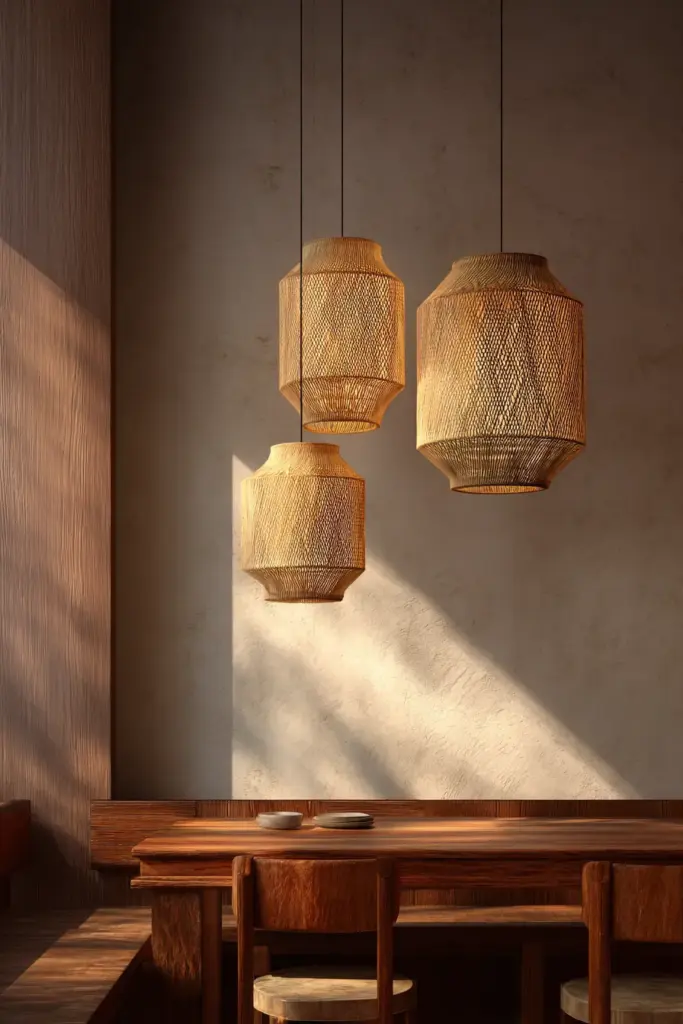
Source a plain rattan shade from a thrift store or Divisoria market — these often sell for ₱150–400. Clean it, and if needed, lightly sand any rough spots. Replace a tired pendant fitting with a new fabric cord set in natural cotton or jute. You can add a linen insert for more diffusion, or leave the rattan open for that beautiful shadow pattern. An IKEA BLÅSTÅNG shade works perfectly for this same approach if you prefer a more uniform weave.
The Woven Bamboo Pendant (Advanced)
For the crafters who want a true showpiece: weave or lash thin bamboo strips around a wire pendant frame. This takes patience but produces an organic, artisanal shade with incredible character. Finish with a warm Edison-style LED and a braided cotton cord. This kind of pendant becomes the focal point of an entire room.
Japandi Wall Sconce: A Small-Space Solution
In a 20–40 sqm apartment, wall-mounted lighting is a gift. It frees up floor space, adds a layered glow, and feels intentional rather than improvised.
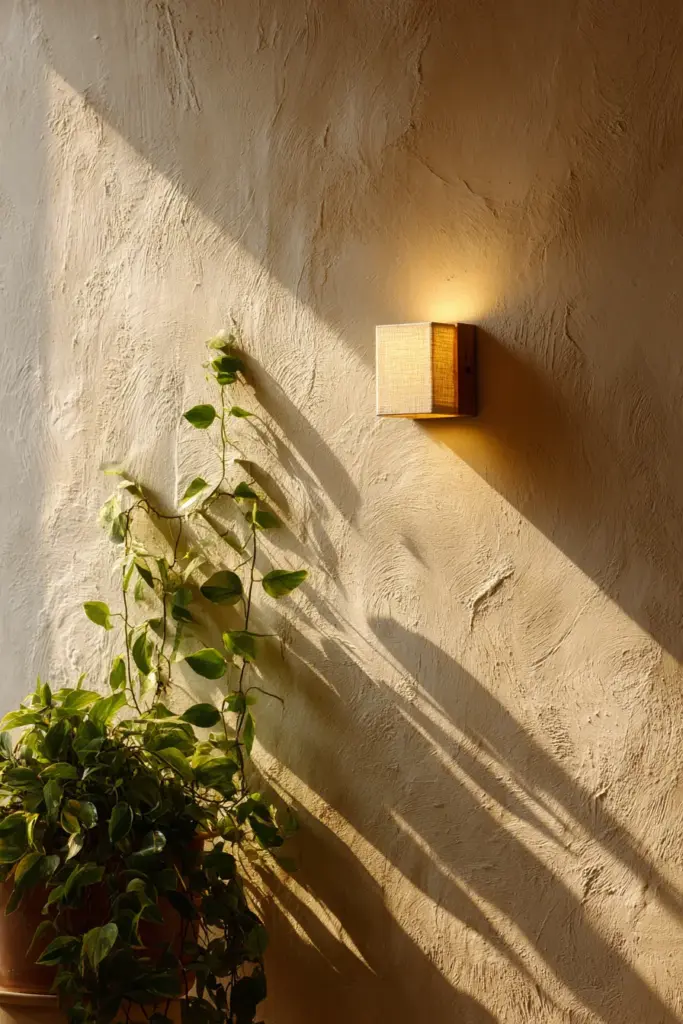
A simple Japandi sconce can be made from a wooden plank base, a bent copper pipe or bamboo tube, and a small shade made from linen or rice paper. Mount it at shoulder height for the warmest ambient effect. Pair it with a trailing plant nearby — the light catching green leaves is one of the most biophilic, soothing combinations in Japandi design.
Wall sconces are also ideal for bedrooms, reading corners, and entryways where a floor lamp would crowd the space. Budget for this project runs between ₱500–900, especially when sourcing materials from local hardware or craft stores.
How to Layer Lighting in a Japandi Room
Layering light is the single most transformative thing you can do for a room, and it costs far less than new furniture.
The Japandi approach uses three layers working together:
- Ambient light — the main source, usually a pendant or ceiling lamp that sets the overall tone. Keep it warm and diffused.
- Task light — a table lamp or sconce positioned for reading, cooking, or working. This layer adds practicality without breaking the mood.
- Accent light — a floor lamp tucked in a corner, a small LED strip behind a shelf, or a candle-height lamp near the floor. This layer creates depth and shadow, which is the real secret to a cozy, dimensional room.
Introduce a smart dimmer to any of these layers and you gain complete control over mood at any hour. Dim everything down at 8pm, leave the accent lamp at 10%, and the room transforms entirely.
Japandi Lighting for Small Philippine Apartments
The Philippine climate and living context brings its own specific considerations to Japandi lighting design.
Humidity and heat are the two biggest challenges. Always use LED bulbs — they emit far less heat than incandescent alternatives, which matters both for comfort and for the longevity of your paper and fiber shades. In humid areas, avoid applying paper directly over bulbs without proper clearance; heat can yellow or warp the shade over time.
Local materials are a genuine advantage here. Philippine-sourced bamboo, rattan, and abaca are among the finest in the world, and they are available at a fraction of what they would cost abroad. Divisoria, Tabora, and local hardware stores carry most of what you need. Craft shops in Makati and BGC stock quality washi paper and lamp cord sets.
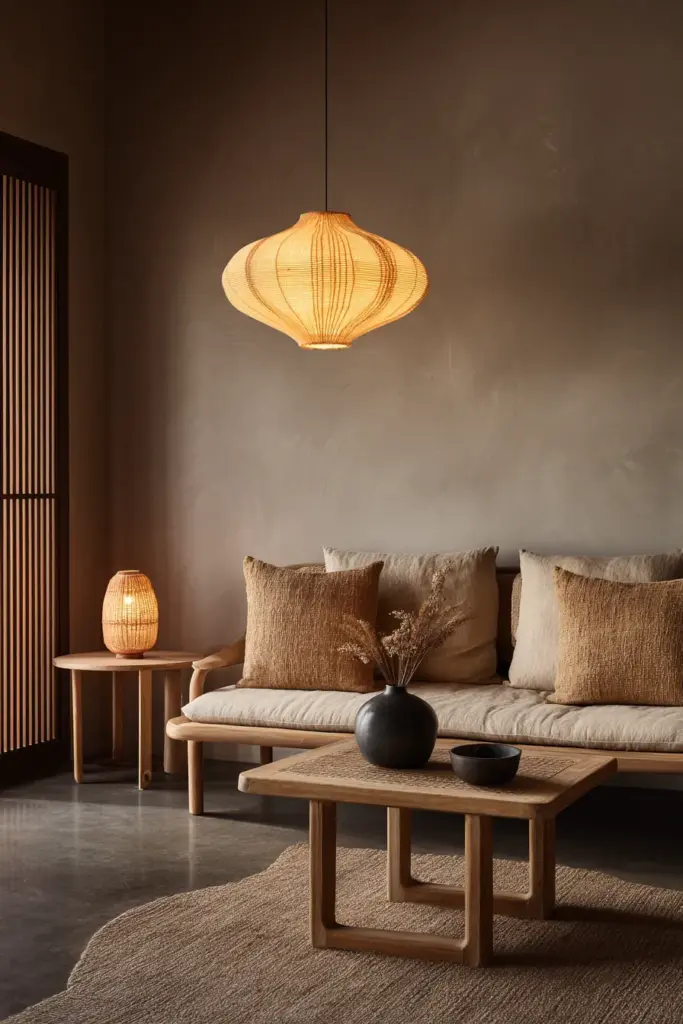
Small-space design calls for vertical thinking. Wall sconces, hanging pendants in clusters, and tall floor lamps all draw the eye upward, making ceilings feel higher and rooms feel larger. A single well-placed pendant over a dining table or reading nook can define the entire character of a small apartment.
Troubleshooting and Maintenance Tips
Even beautifully made things need a little care.
- Paper shade tearing? Apply a thin patch of the same paper on the inside with a small amount of PVA. It will be nearly invisible once dried.
- Uneven glue showing on washi? Lightly mist the shade with water and smooth gently with your fingers. Most PVA haze disappears as it dries.
- Shade yellowing over time? Replace your bulb with a lower-wattage LED and ensure there is 15–20cm of clearance between bulb and shade material.
- Humidity loosening rattan weave? Wipe with a slightly damp cloth and allow to fully air dry. A light coat of clear matte sealant can protect rattan in very humid rooms.
- Bamboo frame joints loosening? Rewrap with fresh jute twine and apply a small amount of wood glue to the joint before binding. Clamp or hold until set.
DIY Japandi Lighting: Quick Summary
- Use warm white LEDs at 2700K — always, without exception.
- Choose natural materials: rice paper, washi, linen, bamboo, rattan, abaca.
- Layer three types of light: ambient, task, and accent.
- In small Philippine apartments, go vertical and wall-mounted to save floor space.
- Always use 220V-rated cord sets and observe electrical safety.
- Source locally: Divisoria and Philippine craft markets offer excellent materials at low cost.
- Budget realistically: most projects fall between ₱500–1,500.
- Embrace imperfection — in Japandi, the handmade mark is the point.
- Use a smart dimmer to shift mood effortlessly throughout the day.
- Maintain paper shades by keeping heat away and patching tears promptly.
Conclusion
Every lamp you make by hand carries something no store-bought fixture ever can: the weight of the afternoon you spent making it, the smell of the glue drying, the quiet satisfaction of switching it on for the first time and seeing the light do exactly what you hoped.
That is Japandi, at its most essential. Not a style to be purchased, but a feeling to be cultivated — slowly, thoughtfully, with materials that come from the earth and return to it.
ERYLIN believes your home deserves that kind of intention. Start with one lamp. Let the warm glow teach you the rest.
Light slowly. Live beautifully.
Frequently Asked Questions
What materials are best for DIY Japandi lighting?
The most used materials are rice paper, washi paper, bamboo, rattan, linen, and natural wood. For Philippine crafters, abaca fiber is an excellent local alternative to washi — it has beautiful natural texture and diffuses warm LED light softly. Warm white LED bulbs at 2700K are essential for achieving the signature Japandi glow.
How do I make a DIY Japandi lamp at home?
The most beginner-friendly method is the paper lantern technique: inflate a balloon to your desired size, apply torn washi paper with diluted PVA glue in three to four layers, let it fully dry, then pop the balloon and fit the dried shell with a pendant cord set. For a table lamp, build a simple bamboo dowel frame, apply rice paper panels with glue, and pair with a wired base and warm LED.
Is DIY Japandi lighting safe for Philippine apartments (220V)?
Yes, with the right precautions. Always purchase cord sets and socket fittings rated for 220V, which is the standard voltage in the Philippines. Use LED bulbs to minimize heat output, maintain clearance between the bulb and any paper or fabric shade, and if you are unsure about wiring, have a licensed electrician make the final electrical connection.
How much does a DIY Japandi lighting project cost in the Philippines?
Most projects run between ₱500 and ₱1,500, depending on size and complexity. A basic rice paper table lamp can cost as little as ₱700 when sourcing bamboo, paper, and a cord set locally. Rattan upcycle pendants are often even cheaper if you start with a thrifted shade. Materials from Divisoria, Tabora, and local hardware stores keep costs low without compromising on quality.
How do I layer lighting in a Japandi-style room?
Japandi layering uses three sources: ambient light from a central pendant or ceiling lamp, task light from a table lamp or wall sconce, and accent light from a floor lamp or low shelf light. Dimming each layer independently — ideally with smart dimmers — allows you to transition a room from functional daytime brightness to a deeply cozy evening atmosphere simply by adjusting the balance between all three.