
Table of Contents
There is something quietly powerful about a single candle flame. It asks nothing of you — only that you pause, breathe, and be present. In the world of Japandi design, that small act of lighting a candle becomes something close to a ritual.
Japandi is the beautiful marriage of Japanese wabi-sabi — the art of finding beauty in imperfection — and Scandinavian hygge, that deep, Nordic feeling of cozy warmth. Together, they create interiors that feel both spare and soulful, minimal yet deeply alive.
DIY Japandi candles are one of the most accessible ways to bring this philosophy into your home. You don’t need a studio or a specialty shop. You need intention, natural materials, and a little quiet time.
This guide walks you through everything: choosing your wax, your vessel, your scent, your wick — and then, how to live with your candles in a way that feels genuinely Japandi.
What Makes a Candle Truly Japandi?
Not every candle belongs in a Japandi space. The Japandi aesthetic calls for restraint, natural materials, and a muted, earthy palette. Think undyed wax in warm ivory or soft cream. Think vessels of rough-edged clay, matte ceramic, or repurposed glass. Think scents drawn from the forest floor, the tea garden, or the morning after rain.
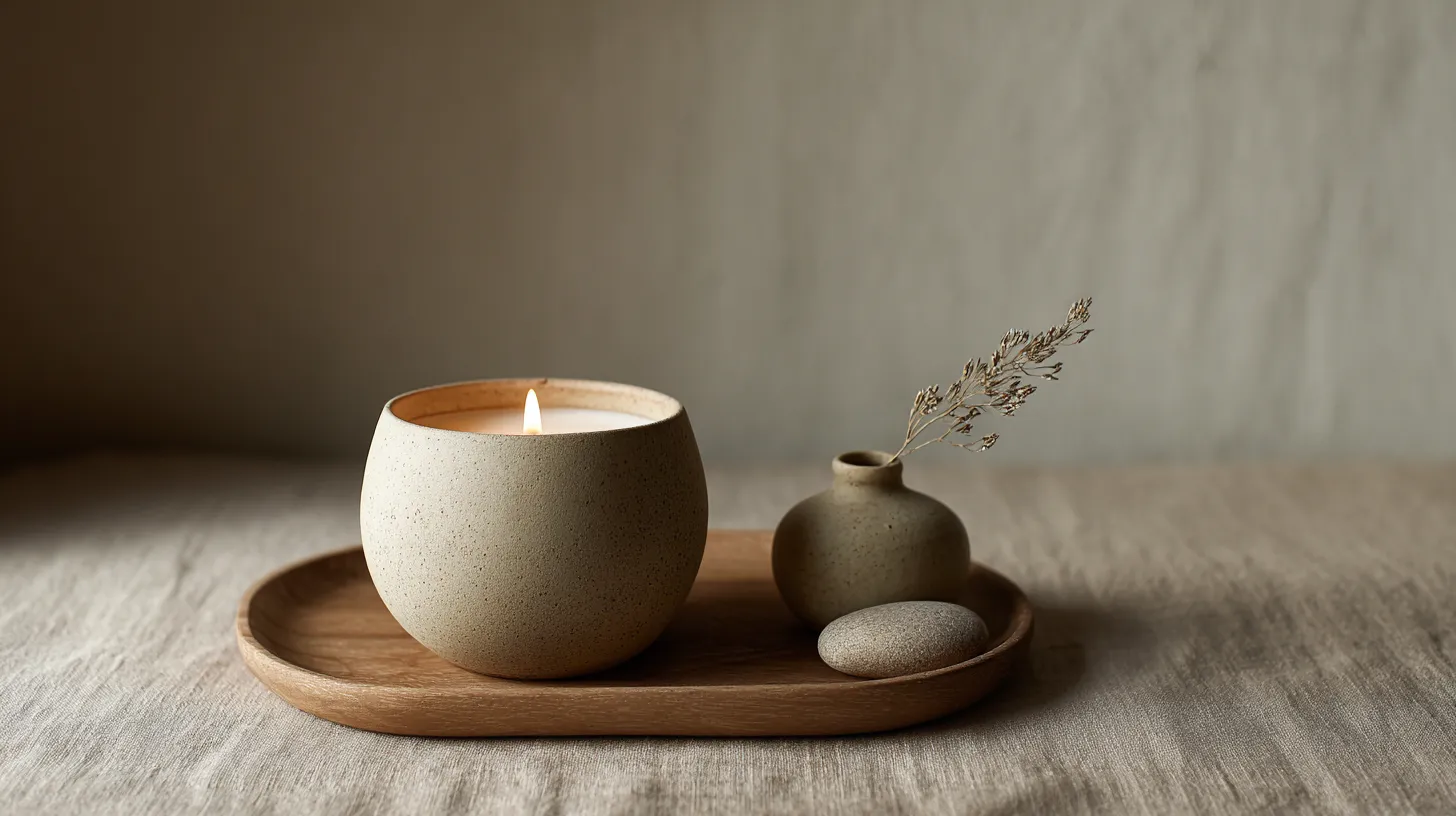
A Japandi candle is never loud. It doesn’t compete for attention. It simply is — glowing softly on a low wooden tray, beside a ceramic bud vase and a small smooth stone.
The Japandi Candle Aesthetic at a Glance
| Element | Japandi Choice | What to Avoid |
|---|---|---|
| Wax colour | Natural ivory, cream, undyed | Bright white, bold dyes |
| Vessel | Clay, matte ceramic, raw glass | Shiny metallic, ornate |
| Scent | Hinoki, yuzu, matcha, woods | Heavy florals, synthetic |
| Wick | Wooden wick or cotton, lead-free | Zinc-core wicks |
| Flame count | 1–3 per surface | Clustered excess |
What You’ll Need: Materials for DIY Japandi Candles
Choosing Your Wax
The wax you choose matters — both for the aesthetic and for your health. Japandi is a philosophy of clean, calm, healthy spaces, so non-toxic, low-soot options are essential.
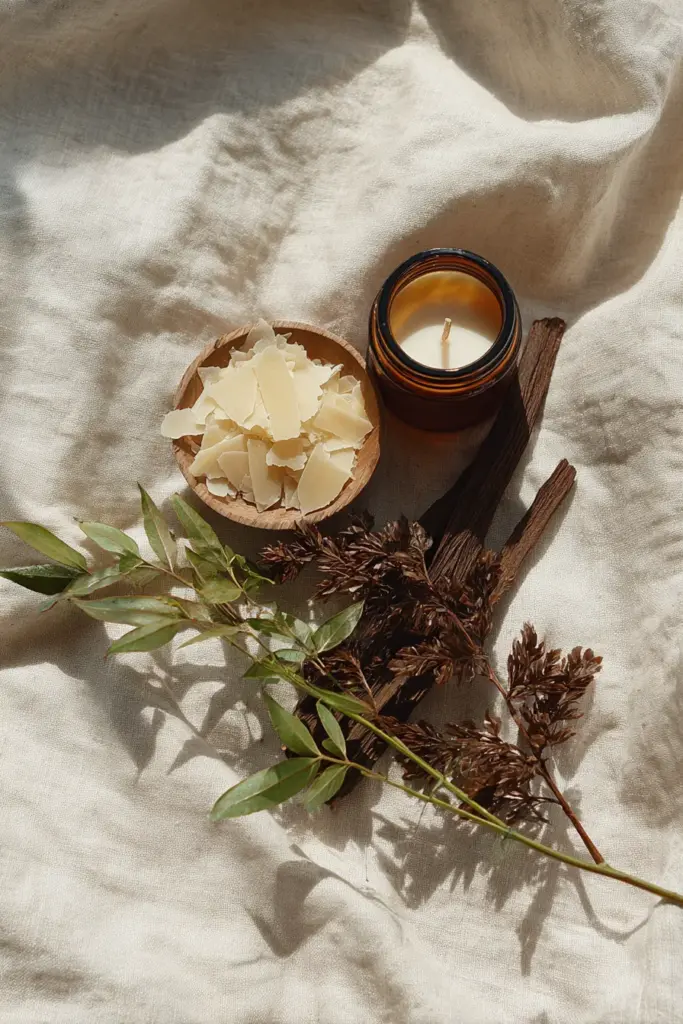
Soy wax is the most accessible choice. It burns cleanly, holds fragrance well, and gives candles a soft, slightly frosted finish that suits the Japandi palette beautifully. Beeswax burns even cleaner and carries a gentle natural honey warmth — ideal if you want a candle with almost no added scent. Coconut wax is the most luxurious of the natural options, with an exceptionally smooth throw and a creamy texture.
Avoid paraffin wax. It produces soot and releases petrochemicals — the opposite of what a Japandi interior stands for.
Choosing Your Vessel
Your vessel is as important as the candle itself. In Japandi design, the container is part of the composition.
- Repurposed glass jars — yogurt jars, jam jars, wide-mouth drinking glasses — work beautifully and align with the Japandi value of thoughtful reuse.
- Raw clay or cement holders are ideal for tealights. You can make simple ones yourself using air-dry clay pressed into small dome or bowl shapes.
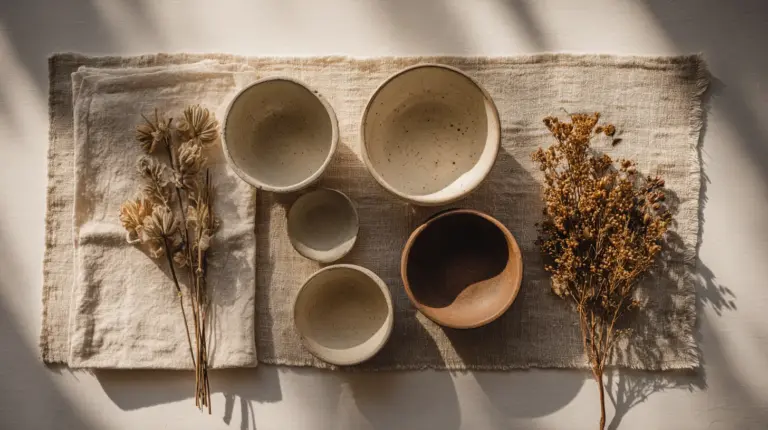
- Matte ceramic bowls in neutral tones (warm grey, dusty sand, off-white) elevate the candle into an object of quiet beauty.
If you’re in the Philippines, locally sourced clay or concrete molds are excellent alternatives to imported FIMO polymer clay. The slight roughness and organic variation of local materials actually deepens the wabi-sabi quality of your candle.
Choosing Your Wick
Use wooden wicks for an authentic Japandi experience. The soft crackle of a wooden wick evokes a fireplace, a forest, a meditative stillness. Choose wicks sized to your vessel’s diameter and always verify they are lead-free and sustainably sourced.
Cotton wicks are also a good option — clean-burning and minimal. Avoid zinc-core wicks entirely.
Choosing Your Scent
Scent is where the Japanese influence in Japandi becomes most vivid. These are the fragrance notes that belong in a Japandi home:
- Hinoki (Japanese cypress) — warm, woody, gently resinous. The scent of ancient forests and temple gardens.
- Yuzu — bright, citrusy, clean. Like sunlight through shoji screens.
- Matcha / green tea — earthy, grounding, subtly sweet.
- Sakura — soft, barely-there floral. Not perfume; more like memory.
- Sandalwood + cedar — deeply calming, slightly smoky, entirely grounding.
If you’re working with locally available essential oils, try blending citrus (calamansi or lemon) with cedarwood or vetiver. It evokes Japandi beautifully without needing imported ingredients.
Three DIY Japandi Candle Recipes
Recipe 1: The Soy Wax Japandi Pillar Candle
Minimal geometry. Natural ivory. Deeply calm.
You’ll need: 200g soy wax flakes, 1 wooden wick with tab, a cylinder mold (or a tall glass jar), 15–20 drops of hinoki or cedarwood essential oil, a double boiler, a thermometer.
Steps:
- Melt soy wax in a double boiler until it reaches 75–80°C (167–176°F).
- Remove from heat. Allow to cool to 60–65°C (140–149°F) before adding fragrance.
- Stir in essential oils slowly and evenly — about 10% of the total wax weight.
- Secure your wooden wick in the center of the mold using a wick holder or two pencils laid across the top.
- Pour slowly to avoid bubbles. Leave a small amount of wax in reserve.
- Allow to cool completely — at least 4–6 hours, ideally overnight.
- Top-fill any sinkholes that appear with reserved melted wax.
- Trim the wick to 5mm before the first burn.
Styling tip: Place on a raw wood slice or stone coaster. Add a single dried sprig of pampas grass or a smooth river pebble beside it.
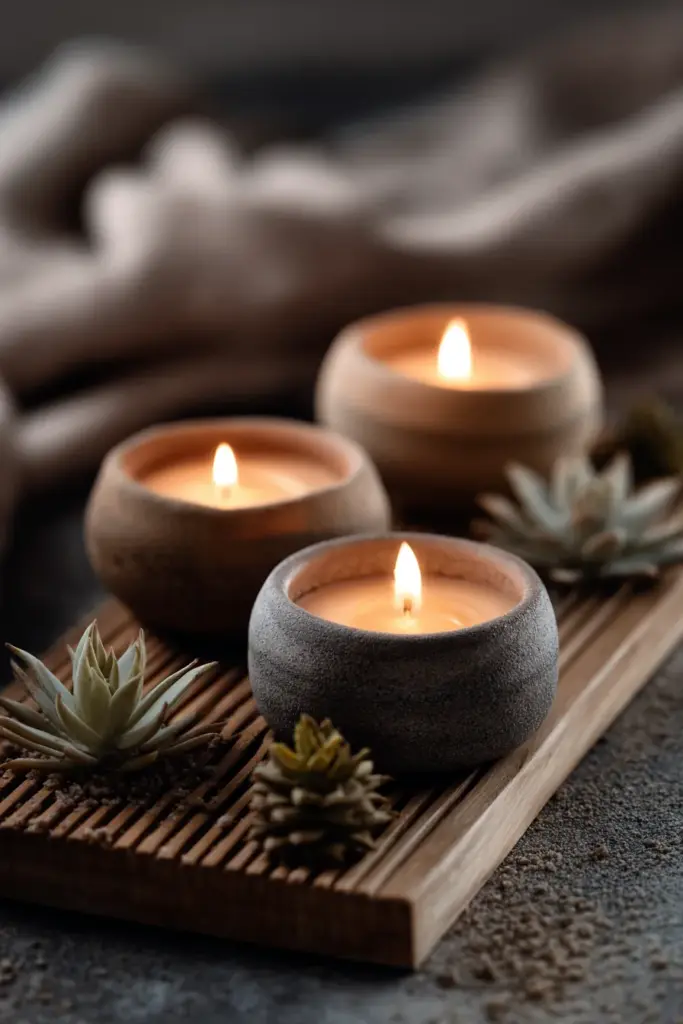
Recipe 2: Japandi Matcha Tealights in Clay Holders
Small, handmade, entirely imperfect — and perfect for that reason.
You’ll need: 100g soy or beeswax, pre-tabbed cotton wicks, air-dry clay, matcha or green tea essential oil, small bowl or ring mold for the clay holder.
Steps:
- Shape your clay holder first — press air-dry clay into a small bowl form, about 5–6cm in diameter. Smooth the inside, leave the outside slightly textured. Allow to dry fully (24–48 hours).
- Melt wax using the same method as Recipe 1.
- Add 8–10 drops of matcha or green tea oil at 60°C.
- Place wick tab in the center of the holder and pour carefully.
- Cool overnight. Trim wick to 5mm.
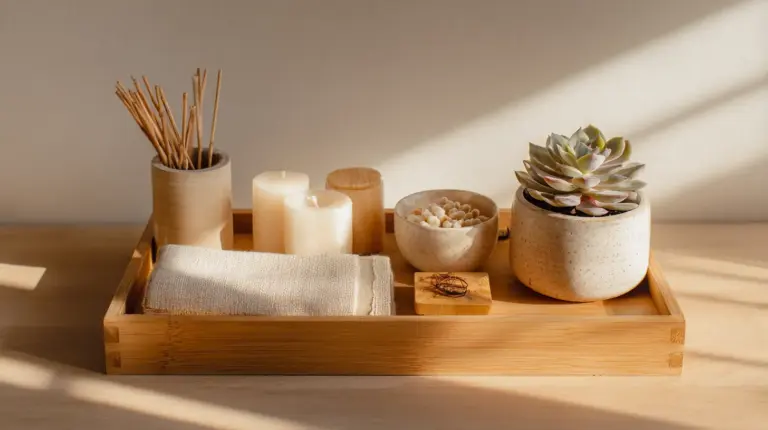
These tealights look beautiful grouped in threes on a low bamboo tray, with small succulent cuttings tucked between them.
Recipe 3: The Kodo-Inspired Small Vessel Candle
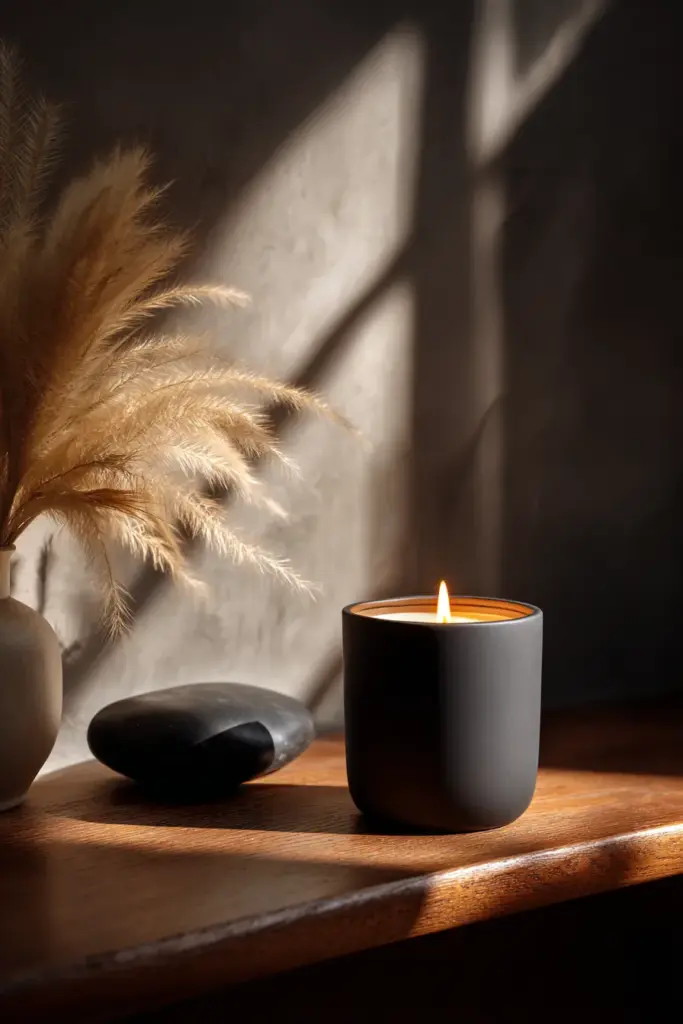
For the coffee table vignette. Hinoki and yuzu. A candle that feels like ceremony.
Kodo is the ancient Japanese art of listening to incense — a practice of stillness and heightened sensory attention. This candle draws from that tradition.
You’ll need: 150g coconut wax, a matte ceramic vessel (4–6cm wide), wooden wick, hinoki essential oil, yuzu essential oil.
Steps:
- Melt coconut wax gently — it liquefies at a lower temperature than soy (around 50–55°C / 122–131°F). Watch it carefully.
- At 50°C, add your fragrance blend: 10 drops hinoki, 5 drops yuzu. Stir for one full minute.
- Secure the wooden wick in the ceramic vessel.
- Pour slowly. The coconut wax surface will be exceptionally smooth and creamy.
- Allow to set undisturbed for at least 8 hours.
- First burn: allow the wax to pool fully to the edges before extinguishing. This prevents tunneling.
Japandi Candle Safety: A Calm Home is a Safe Home
Japandi is about clean, healthy living — and candle safety is part of that.
The Japandi Safety Checklist:
- Trim your wick to 5mm before every burn. Untrimmed wicks cause excess smoke and uneven burning.
- Use stone, ceramic, or clay bases — never place a candle directly on wood or fabric.
- Keep away from curtains and textiles. Japandi spaces often use linen and cotton — beautiful, but flammable.
- Avoid adding colour dyes to your wax. They increase soot and chemical load.
- Never leave a burning candle unattended, especially in a bedroom or on a low surface near pets or children.
- For homes with young children or curious pets, consider unscented beeswax tealights in enclosed ceramic holders, or explore flame-free alternatives like diffusers in Japandi-style vessels.
- First burn matters. Always allow the wax to melt fully to the edge of the vessel on the first use. This sets the “memory” of the wax and prevents tunneling on all future burns.
How to Style DIY Japandi Candles: Room by Room
The Japandi Living Room
The living room is where your candle becomes a focal point. Keep it low — on a coffee table, a floor tray, or a low shelf. Group sparingly.
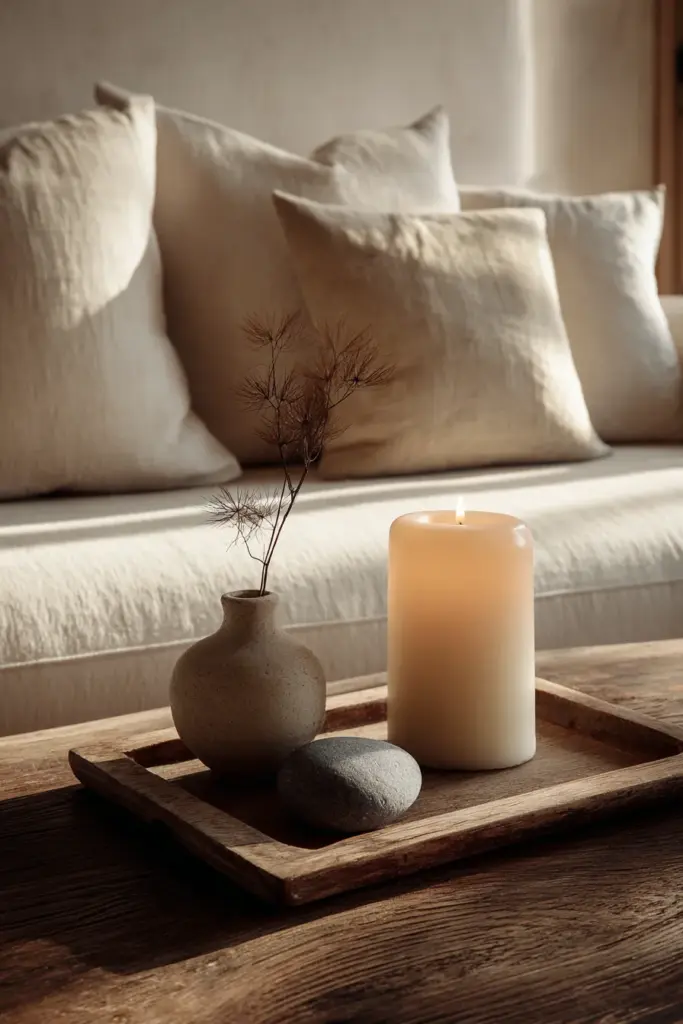
The 3×3 Japandi Styling Grid for a coffee table:
| Left | Center | Right |
|---|---|---|
| Small ceramic bud vase or bonsai cutting | Your candle (the anchor) | Smooth stone or small wooden object |
Use this as a repeatable formula. The candle is always the center. Everything else serves it.
Use 1–3 candles maximum per surface. More than three reads as clutter, not calm.
The Japandi Bedroom
The bedroom calls for softness and restraint. Choose unscented candles or very lightly scented ones — lavender, sandalwood, or plain beeswax. Place a single candle on a small tray on your bedside table or dresser. Keep the vessel muted: matte clay or unglazed ceramic.
Avoid strong fragrances in the bedroom. Your sleep space should feel like breath, not perfume.
The Japandi Entry or Balcony
A small tealight in a clay holder placed near the entrance creates a moment of welcome. On a balcony, tuck a candle between potted greenery — a small fern, a trailing plant, a smooth-leafed succulent. The flame and the living green together are quietly extraordinary.
The Japandi Candle Ritual: Living With Your Creation
Making the candle is only the beginning. The Japandi philosophy asks us to slow down — to find meaning in small, repeated acts.
Here is a simple ritual template to build around your candle:
Evening Ritual Structure:
- Prepare your space. Clear one surface. Remove anything that doesn’t belong.
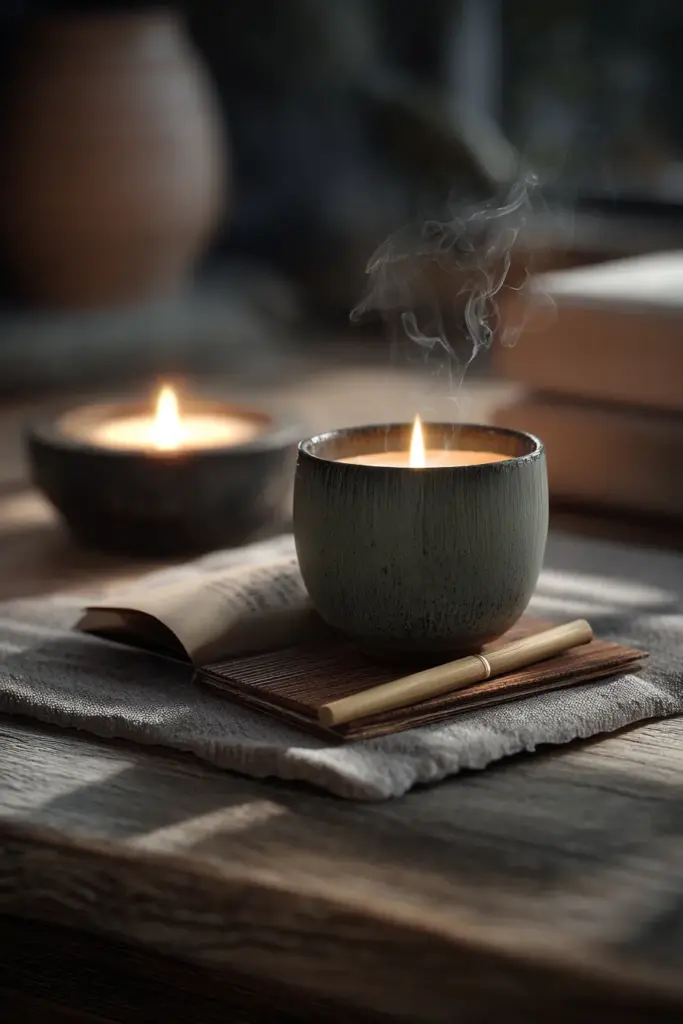
- Brew your tea. Matcha, hojicha, or simple green tea. Let the steam rise while you set the tray.
- Light your candle. Slowly. Intentionally.
- Sit for three minutes before reaching for your phone, your book, your journal. Just watch the flame.
- Journal, read, or simply rest in the warmth of the light.
- Extinguish gently — with a snuffer if possible, not your breath. A candle snuffer is itself a small, beautiful Japandi object.
This structure anchors your evening and gives your handmade candle a purpose beyond decoration.
Key Takeaways
- Choose natural waxes — soy, beeswax, or coconut — for clean, low-soot burns that honour the Japandi ethos.
- Select vessels with texture — raw clay, matte ceramic, repurposed glass — over anything shiny or ornate.
- Use wooden or lead-free cotton wicks for safety and that gentle crackling quality.
- Reach for earthy, woodsy, or delicately citrus scents — hinoki, yuzu, matcha, sandalwood.
- Style with restraint — 1 to 3 candles per surface, always anchored by natural objects.
- Always trim your wick, use a non-combustible base, and practise the first full burn rule.
- Build a candle ritual — the making and the lighting are both acts of care.
Conclusion
A single candle, hand-poured and simply placed, can change the entire feeling of a room.
There is no complexity required here. No expensive materials, no elaborate technique. Only the quiet satisfaction of making something with your hands, choosing what goes into it, and then allowing it to fill your home with warmth and light.
Your DIY Japandi candle is not just décor. It is a small daily practice — a reminder that beauty lives in the unhurried, the natural, and the deliberately simple.
Light it tonight. Sit with it for a moment. Let your home breathe.
Frequently Asked Questions
What wax is best for DIY Japandi candles?
Soy wax is the most practical and accessible choice — it burns cleanly, holds fragrance well, and has a naturally matte finish that suits Japandi aesthetics. Beeswax is a beautiful, nearly unscented alternative. Coconut wax produces the smoothest surface and the cleanest burn of the three.
Are wooden wicks safe to use in Japandi-style candles?
Yes, wooden wicks are safe when properly sized to your vessel. Choose wicks rated for your vessel’s diameter, ensure they are lead-free, and always trim to 5mm before each burn. The soft crackling sound they produce is a deeply welcome quality in a calm, Japandi home.
How do I style DIY Japandi candles on a coffee table?
Keep it spare. Place one candle at the center of a low wooden tray. Add one natural object to the left — a small plant, a ceramic piece — and one to the right: a stone, a small piece of driftwood. This 3-object grouping is a repeatable formula that always feels balanced and intentional.
What scents work best with Japandi décor?
Hinoki (Japanese cypress), yuzu, matcha, green tea, and sandalwood are the most authentic. If you’re working with locally available oils, a blend of citrus and cedarwood or vetiver creates a similarly grounding, woodsy quality. Always choose subtle over strong — Japandi scent should feel like the edge of a forest, not a fragrance counter.
Can I reuse old candles or jars for a Japandi DIY project?
Absolutely — and this is encouraged. Reusing glass jars from your kitchen (yogurt pots, jam jars, wide drinking glasses) is both practical and perfectly Japandi in spirit. Melt down leftover wax from old candles, strain out any debris, and repour into your cleaned vessel with a fresh wick. The small imperfections of a repoured candle only deepen its wabi-sabi character.