
Table of Contents
By ERYLIN — Your guide to warm, intentional living.
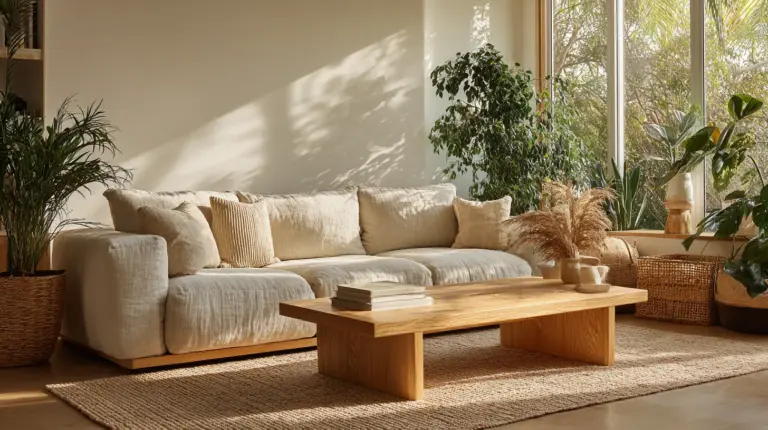
There is something quietly transformative about a single green leaf catching the morning light. In Japandi design — that beautiful marriage of Japanese wabi-sabi and Scandinavian hygge — plants are not decoration. They are presence. They breathe life into the negative space, soften the clean lines, and remind us that stillness can be lush.
The good news? You don’t need a designer budget to create this feeling. Some of the most beloved Japandi plants cost less than a cup of coffee, and a handful can even be propagated for free. This guide is your gentle, practical companion to building a budget-friendly biophilic Japandi space — wherever you are.
Whether you’re starting from scratch in a small apartment or slowly curating a corner shelf, these ideas will help you spend wisely and style beautifully. We’ll walk through the best low-maintenance plants, how to style them the Japandi way, and — for our readers in the Philippines — exactly where to find them and what to expect to pay in 2026.
Let’s begin, slowly and with intention.
What Makes a Plant “Japandi”?
Not every plant belongs in a Japandi space — and that’s part of the beauty. Japandi design favors plants with sculptural silhouettes, muted or deep tones, and a quietly dramatic presence. Think architectural leaves over fussy blooms, vertical forms over sprawling vines (unless softly draped), and textures that feel organic rather than manicured.
The plant itself becomes part of the composition — paired thoughtfully with neutral pots, natural wood, woven baskets, and filtered light.
The Three Japandi Plant Principles
1. Form over fuss. Choose plants with interesting shapes: upright swords, rounded paddles, or arching fronds. The silhouette should feel intentional.
2. Low maintenance = mindful living. Japandi is not about obsessive care. Plants that thrive with weekly or fortnightly attention — low water, indirect light — suit the philosophy perfectly.
3. Neutral, natural vessels. The pot matters as much as the plant. Matte concrete, unglazed terracotta, sand-toned ceramic, or a woven rattan basket — these ground the plant in the Japandi palette.
15 Budget-Friendly Japandi Plants (With Philippine Prices)
Here is your curated starter list — beautiful, forgiving, and easy to find locally.
| Plant | Japandi Appeal | PH Price (2026) | Light Needs | Water |
|---|---|---|---|---|
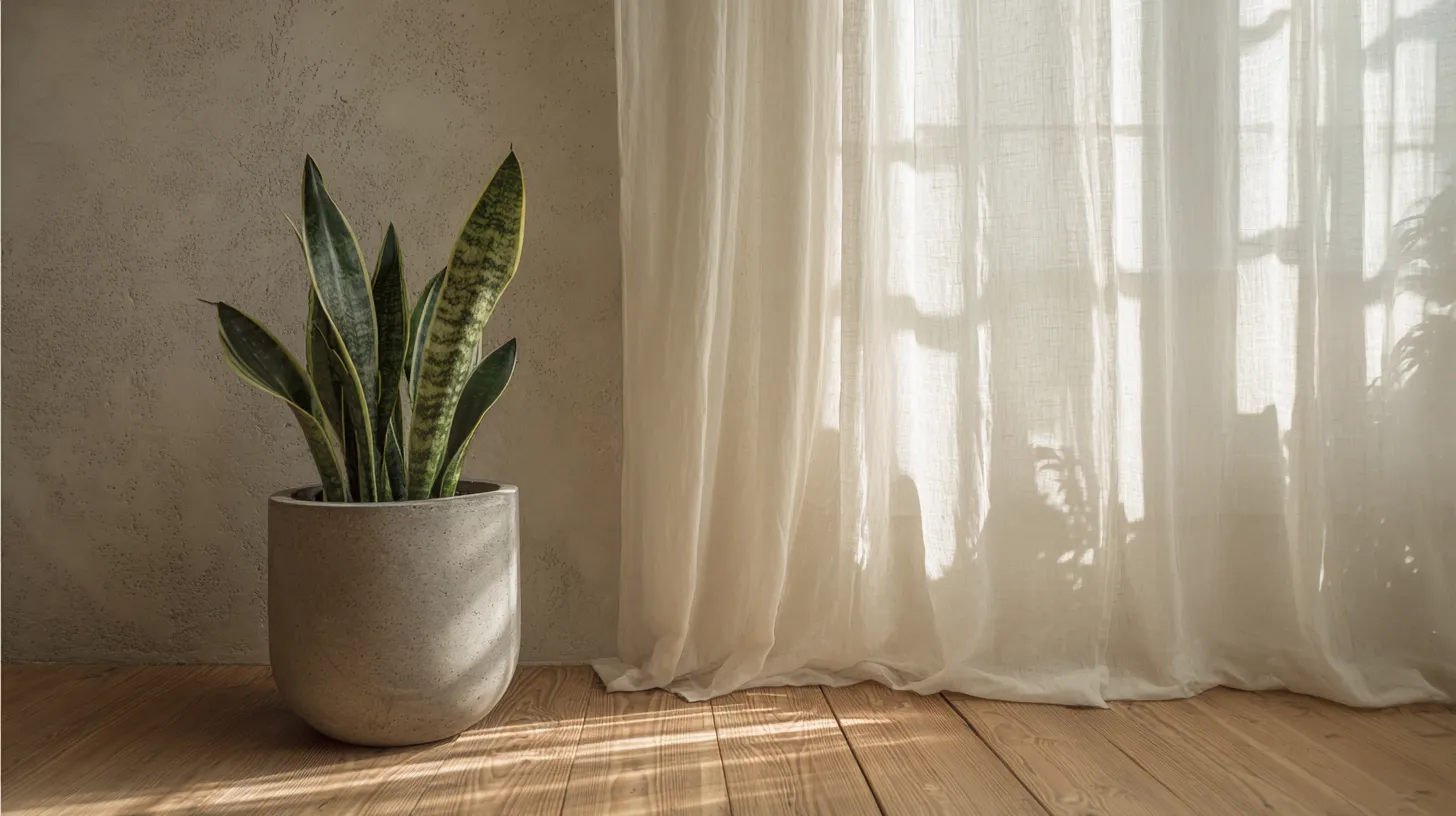
| Snake Plant (Sansevieria) | Architectural, upright | ₱200–₱400 | Low to bright indirect | Every 2–3 weeks |
| Pothos | Trailing softness | ₱80–₱200 (or free cuttings) | Low to indirect | Weekly |
| ZZ Plant | Glossy, sculptural | ₱300–₱600 | Low light tolerant | Every 2–3 weeks |
| Spider Plant | Airy, layered texture | ₱100–₱250 | Indirect | Weekly |
| Peace Lily | Elegant white blooms | ₱150–₱350 | Low to indirect | Weekly |
| Rubber Plant | Bold, dark leaves | ₱250–₱500 | Bright indirect | Every 10–14 days |
| Chinese Evergreen | Patterned, lush | ₱150–₱300 | Low to indirect | Weekly |
| Bird’s Nest Fern | Ruffled, jungle softness | ₱200–₱400 | Indirect, humid | Twice weekly |
| Aloe Vera | Structural succulent | ₱100–₱200 | Bright indirect | Every 2–3 weeks |
| Lucky Bamboo | Zen-inspired form | ₱100–₱300 | Low to indirect | Water change weekly |
| Monstera Deliciosa | Dramatic split leaves | ₱300–₱800 | Bright indirect | Weekly |
| Heartleaf Philodendron | Soft draping vines | ₱100–₱250 | Indirect | Weekly |
| Boston Fern | Feathery, textured | ₱200–₱400 | Indirect, humid | Twice weekly |
| Dracaena | Tall, elegant, minimal | ₱250–₱500 | Low to indirect | Every 10–14 days |
| Calathea | Patterned leaf art | ₱200–₱450 | Indirect | Weekly |
Prices sourced from Shopee PH, Lazada, and local plant markets. Propagation can reduce costs to near zero for pothos, spider plants, and snake plants.
Best Japandi Plants Under ₱500 in the Philippines
Where to Find Them Locally
You don’t need a specialty plant shop to build your Japandi garden. Some of the most affordable and beautiful options are hiding in plain sight.
Divisoria and local palengkes often carry sansevieria, pothos, and spider plants for under ₱150. Sellers in weekend markets in Batangas, Silang, and Tagaytay frequently stock regional varieties at a fraction of online prices. It’s worth asking — many will throw in cuttings for free.
Shopee and Lazada are excellent for rarer varieties like ZZ plants and calatheas. Search for “snake plant cutting” or “pothos node” to find propagation-ready pieces starting at ₱50–₱80. Filter by Cavite or CALABARZON sellers for faster shipping and lower delivery costs if you’re based in the south.
Facebook Marketplace plant groups — search “Plant Sale Philippines” — are communities where hobbyists sell cuttings, rare finds, and starter pots for remarkably low prices. Many propagators offer bundles: three snake plant pups for ₱200, or a set of pothos cuttings in water jars for ₱100.
The Free Option: Propagation
This is the most Japandi thing you can do — take what already exists and give it new life.
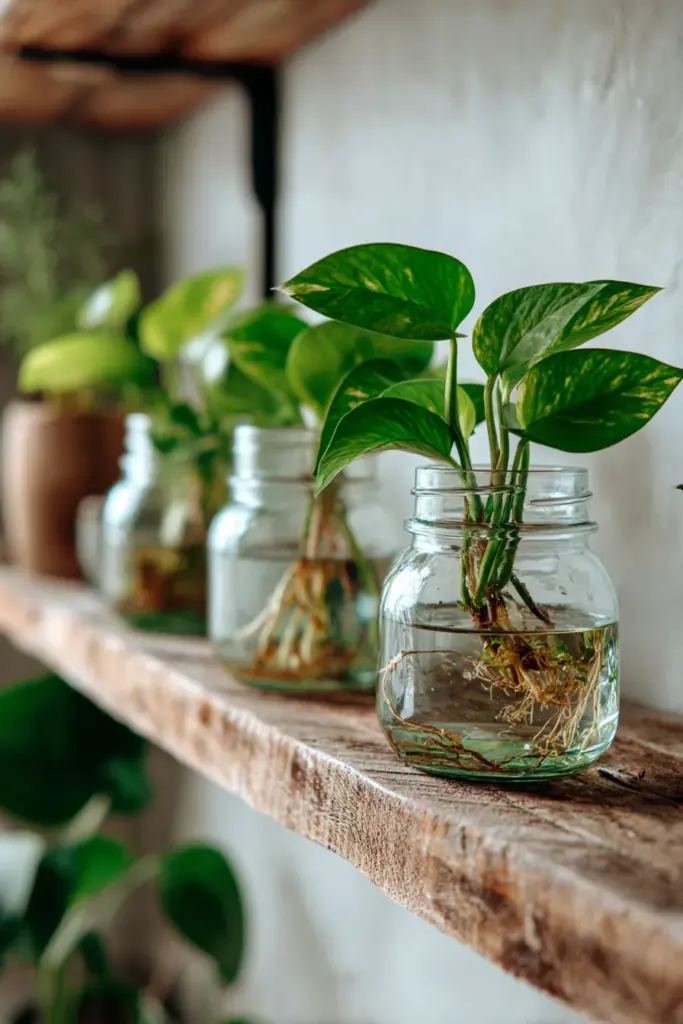
Snake plants produce pups (small offshoots at the base) that can be separated and repotted with minimal effort. Pothos propagates effortlessly in a glass of water; a single node cutting will sprout roots in 1–2 weeks. Spider plants create “babies” — hanging plantlets that root almost on their own.
Propagating is slow, meditative, and deeply satisfying. It fits perfectly into the Japandi way of living — deliberate, unhurried, and connected to natural cycles.
How to Style Japandi Plants Affordably
Choosing the Right Pots
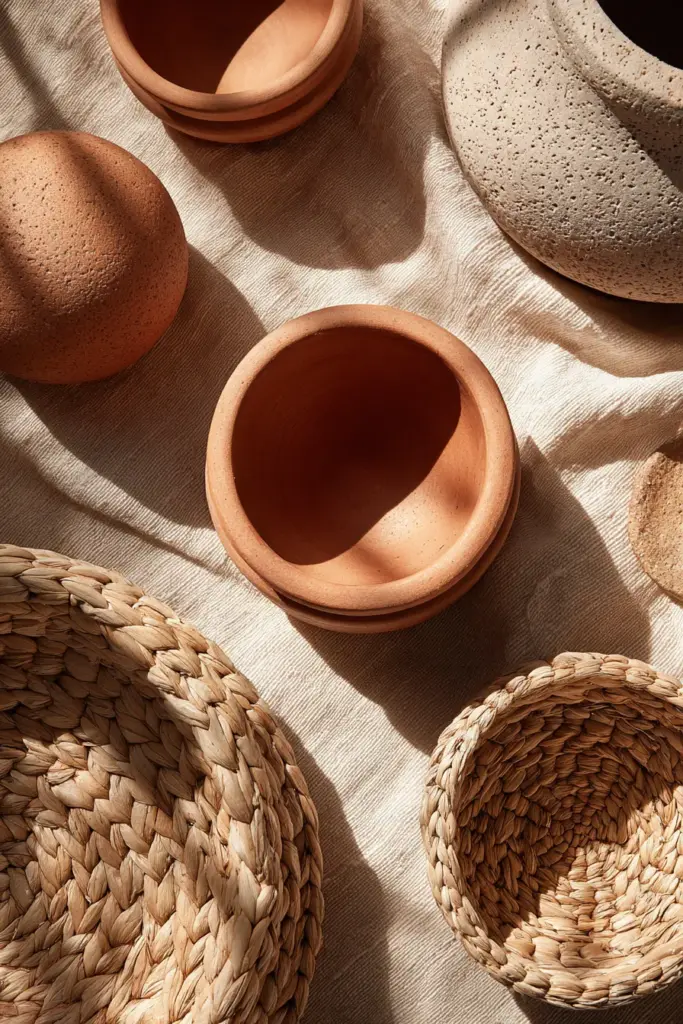
The vessel is part of the design. In Japandi, pots should feel grounded and handmade — never shiny, never loud.
Look for:
- Unglazed terracotta — warm, breathable, beautiful as it ages (₱50–₱150 at hardware stores)
- Matte cement or stone-look pots — cool, modern, sculptural (₱100–₱300 on Shopee)
- Woven rattan or seagrass baskets — add texture without visual noise; use as pot covers (₱80–₱250 at ukay-ukay or Divisoria)
- Thrifted mismatched ceramics — imperfect, wabi-sabi, endlessly charming (₱50 or less at tiangge)
Avoid plastic pots in bright colors unless you’re using them as hidden nursery containers inside a more beautiful outer vessel.
Vertical Shelving and Plant Stands
Japandi spaces treat height and layering as compositional tools. A single plant on a timber stand becomes a moment. Three plants at varying heights become a scene.
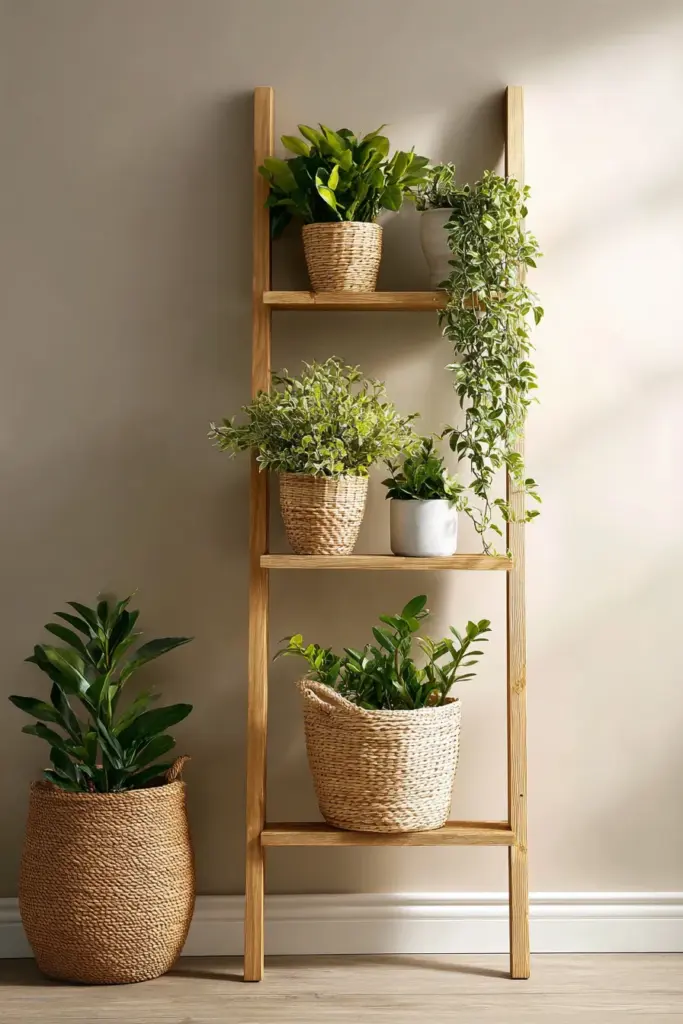
DIY wooden plant stands from bamboo or scrap timber cost almost nothing and look deliberately handcrafted — which is exactly the point. You can also stack staggered wooden crates for a modular shelf effect, or use a simple ladder shelf (readily available secondhand) to display plants at eye level, mid-height, and floor level.
Hanging plants — particularly pothos or heartleaf philodendron in a woven macramé hanger — add softness to high corners and draw the eye upward, making small spaces feel taller and more curated.
Grouping for Humidity and Beauty
Here’s a practical Japandi styling secret: group your plants together rather than scattering them around the room. This serves two purposes.
First, it creates a focal vignette — a composed moment in the room that feels designed rather than accidental. Second, grouped plants naturally raise local humidity through transpiration, which is especially helpful in the dry season here in the Philippines. Your ferns, calatheas, and peace lilies will thank you.
Aim for odd-numbered groupings — three or five — and vary the height, texture, and leaf shape. Pair a tall snake plant with a trailing pothos and a low, rounded ZZ plant for contrast that feels balanced.
Japandi Plant Care Calendar for the Philippines
The tropical climate of the Philippines — humid summers, cooler Tagaytay highlands, dusty dry months from March to May — creates specific care needs that most Western plant guides overlook.
| Month | Care Task |
|---|---|
| January–February | Reduce watering (cooler, slower growth); clean leaves gently with a damp cloth |
| March–May | Increase humidity (misting or pebble trays); watch for pests in dry heat |
| June–August | Peak growing season; feed with diluted liquid fertilizer monthly |
| September–October | Ease back on fertilizer; prune leggy growth for clean Japandi lines |
| November–December | Move plants away from A/C drafts; reduce watering again |
Fertilizer note: In Japandi, less is more. A diluted all-purpose liquid fertilizer at half strength, once a month during growing season, is enough. Over-fertilizing creates lush but structurally messy plants that clash with the aesthetic’s calm precision.
Pet-Safe Japandi Plants: A Gentle Consideration
It’s worth noting that some popular Japandi plants — ZZ plants and snake plants — are mildly toxic to cats and dogs. If you share your home with curious paws, consider these safer alternatives:
- Spider plant — non-toxic, easy to propagate, beautiful trailing form
- Boston fern — safe for pets, loves humidity, adds softness
- Calathea — non-toxic, stunning leaf patterns, thrives in indirect light
- Peperomia — small, structural, completely safe
Place any mildly toxic plants out of reach — on high shelves or hanging — rather than at floor level.
Creating a 1 m² Japandi Plant Corner
You don’t need a large space. One square meter is enough to build a complete Japandi plant moment.
Here’s a simple formula:
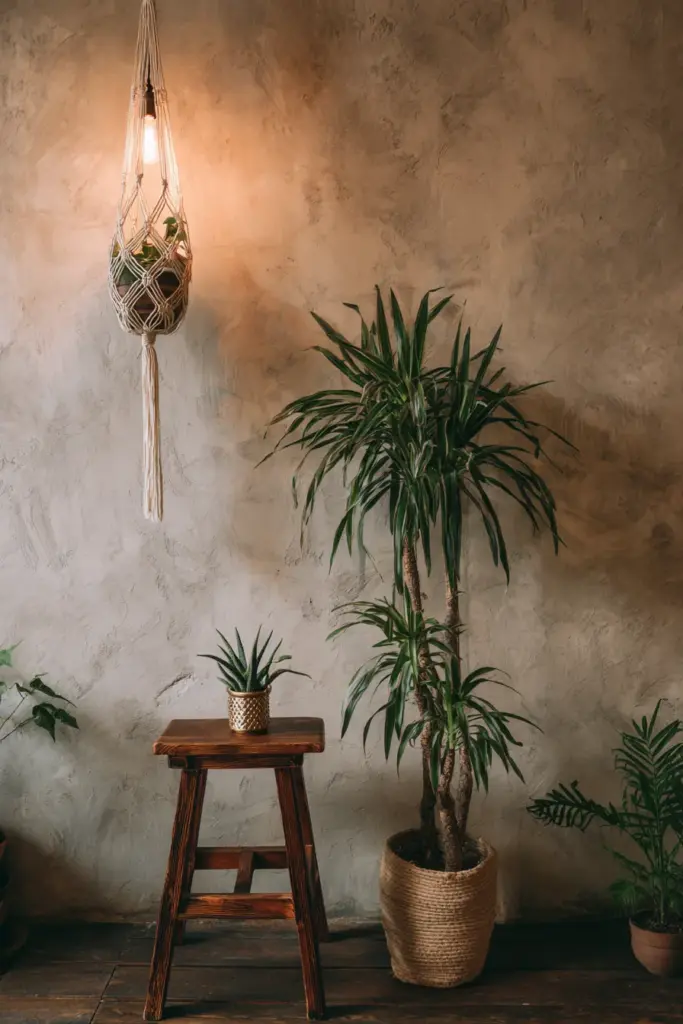
- 1 tall statement plant (snake plant or dracaena) on the floor or a low wooden stand — this anchors the composition
- 1 medium trailing plant (pothos or heartleaf philodendron) on a shelf or hanging above — adds softness and movement
- 1 small accent plant (aloe, peperomia, or lucky bamboo) on a small ledge or side table — brings the eye down and completes the trio
Frame this corner with a textured neutral wall (a linen panel, woven mat, or simply bare concrete works beautifully), warm ambient lighting, and one or two natural objects — a smooth river stone, a piece of driftwood, a small ceramic bowl.
The result? A corner that breathes, grounds, and quietly tells the story of who you are.
Japandi Plant Styling: Quick Checklist
Use this as your starting guide before your next plant haul:
- Choose plants with sculptural leaf shapes — upright, trailing, or broadly paddle-shaped
- Limit your palette to 2–3 plant varieties per vignette for visual calm
- Use neutral, matte, or natural-texture pots — no shiny surfaces, no loud colors
- Group plants in odd numbers for natural-looking composition
- Vary height and texture: tall + trailing + low
- Propagate what you already have before buying new
- Keep pots clean and free of debris — neatness is part of the aesthetic
- Source locally first: palengke, tiangge, Facebook plant groups
- Rotate plants toward light sources monthly for even, symmetrical growth
- Wipe leaves gently every 2–3 weeks to keep them dust-free and luminous
A Soft Closing: The Plant is Not the Point
In a Japandi home, plants are not a trend. They are not a checklist item or a photo prop — though they are undeniably beautiful in both.
They are a reminder that living things bring a quality to a room that no furniture can replicate. A quiet aliveness. A slow, reliable beauty that changes with the seasons and asks only for a little water and light.
Start small. Start with what you have — a single cutting in a glass jar on a windowsill. Let it root. Let it grow. Then let it guide you toward the next choice, and the next.
Your Japandi space will come together the same way a good life does: one intentional moment at a time.
Frequently Asked Questions
What plants are best for Japandi style on a budget?
The top budget-friendly Japandi plants are snake plants (₱200–₱400), pothos (₱80–₱200 or free via cuttings), ZZ plants (₱300–₱600), spider plants (₱100–₱250), and peace lilies (₱150–₱350). All offer sculptural forms, low maintenance, and thrive in the indirect light typical of Japandi interiors. In the Philippines, many of these are available at local palengkes or via Shopee for well under ₱500.
How do I style indoor plants in a Japandi aesthetic affordably?
Focus on neutral vessels — unglazed terracotta, matte cement, or woven rattan baskets — and arrange plants at varying heights using DIY wooden stands or ladder shelves. Group three plants together in a composed corner vignette, mixing one tall form, one trailing variety, and one low accent plant. The effect is deliberately understated and quietly striking.
Are there low-maintenance Japandi plants under ₱500?
Yes — most of the list above falls comfortably under ₱500. Snake plants, ZZ plants, pothos, spider plants, aloe vera, and Chinese evergreens are all forgiving of irregular watering and low-light conditions. For the most hands-off approach, start with a snake plant or ZZ plant, both of which can go two to three weeks without water.
Can I create a Japandi plant space without spending much?
Absolutely. Propagation is the most cost-effective strategy: pothos, spider plants, and snake plants all propagate easily from cuttings or pups, often available for free from neighbors or plant community groups. Pair free cuttings in thrifted ₱50 pots with a DIY bamboo plant stand, and you have a complete Japandi vignette for under ₱200 total.
Which Japandi plants are best for the Philippine climate and humidity?
The Philippines’ tropical humidity actually benefits many Japandi plants. Bird’s nest ferns, peace lilies, calatheas, and Boston ferns love the moisture. Snake plants and ZZ plants handle both humidity and occasional dry spells gracefully. During the hot, dry months of March to May, grouping plants together and using pebble trays with water helps maintain the microhumidity these plants love.