
Table of Contents
There’s a certain stillness that washes over you when you walk into a well-balanced room. The air feels lighter. Your shoulders drop. You exhale.
That feeling doesn’t happen by accident — it’s the quiet result of thoughtful design. And right now, one of the most soul-satisfying ways to achieve it is through the Japandi high-low approach: a deliberate mix of tall and low-profile furniture that creates visual rhythm, layered calm, and a grounded sense of ease.
Japandi, the design philosophy born from the union of Japanese wabi-sabi and Scandinavian hygge, has always celebrated restraint and beauty through simplicity. But the high-low principle takes it one step further — it asks us to think vertically, to honor both the sweep of a ceiling and the pull of the earth beneath us.
Whether you’re styling a living room from scratch or simply refreshing what you already have, this guide will walk you through every element of the Japandi high-low balance — the materials, the pairings, the mistakes to avoid, and the small, affordable shifts that make the biggest difference.
What Is Japandi Style and Why Is It So Popular?
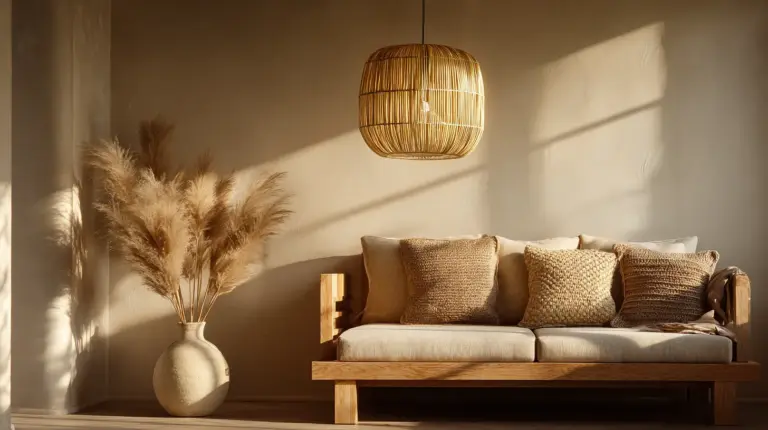
Japandi is more than an aesthetic — it’s a feeling you cultivate in your home. It blends the warm, cozy textures of Scandinavian interiors with the meditative simplicity of Japanese design. Think pale oak alongside matte ceramics, linen cushions next to raw-edge wood, a single dried pampas stem in a tall stoneware vase.
Its popularity has grown because it speaks to something many of us are quietly craving: less noise, more meaning. In a world saturated with bold colors and maximalist trends, Japandi whispers. It invites you to slow down, to touch the texture of a handwoven throw, to notice the way afternoon light pools on a low wooden coffee table.
The high-low element adds depth to this philosophy. By pairing pieces of intentionally different heights, you create a living landscape — one that the eye can travel through restfully, not frantically.
What Is the Difference Between Japandi and Scandinavian Design?
Scandinavian design is bright, warm, and functional — rooted in hygge, that Danish and Norwegian concept of comfort and togetherness. It loves light woods, clean lines, and spaces that feel joyful and livable.
Japandi takes all of that and adds a layer of philosophical stillness. It introduces lower profiles, inspired by Japanese floor-living traditions. It embraces imperfection — the crack in the glaze, the knot in the wood — through the lens of wabi-sabi. Where Scandi might feel cheerful, Japandi feels contemplative.
The most visible difference? Furniture height. Japandi rooms hug the ground. Platform beds, low sofas, floor cushions, and close-to-earth side tables are signatures of the style. And yet — and this is where the high-low magic enters — tall elements are still present. Slim open shelves, rattan pendant lamps, arched floor lamps, and high wooden frames anchor the vertical axis and prevent the space from feeling sunken or flat.
Why Low-Profile Furniture in Japandi?
Low furniture in Japandi isn’t just an aesthetic choice — it’s a philosophy made physical. When your sofa sits close to the floor, your body is closer to the earth. There’s a grounding quality to that. A sense of intentional stillness.
In traditional Japanese homes, life happens low: sleeping on futons, sitting at chabudai (low dining tables), gathering on tatami. This relationship with the floor brings a kind of presence — you’re not perched above the room, you’re in it.
From a design perspective, low-profile furniture also opens up visual space. A room with a low-slung sofa feels airy and wide. Light moves more freely. The ceiling breathes. Paired with a tall arched lamp or a set of floating shelves, that contrast becomes its own form of beauty.
Recommended low-profile pieces: platform bed frames in natural oak, low-back sofas in oatmeal linen, floor-level poufs in braided jute, solid wood coffee tables no higher than 35 cm.
How to Mix High and Low Furniture in a Japandi Living Room
The 5-Step Japandi High-Low Layout
Getting the balance right isn’t complicated — but it does require intention. Here’s a simple framework to follow.
Step 1: Anchor with a low sofa.
Choose a sofa with a seat height of 35–40 cm. Linen, boucle, or wool blends in warm neutrals — cream, oat, warm grey — work beautifully. This becomes the gravitational center of your living room.
Step 2: Add a mid-height element.
A slim wooden dining chair, a raw-edge accent table, or a ceramic stool at around 45–55 cm creates a visual stepping stone between your low sofa and the taller pieces to come.
Step 3: Introduce height with lighting.
A tall arched floor lamp or a rattan pendant hung low over a coffee table brings the eye upward without breaking the calm. Warm-toned bulbs (2700K) are essential — they cast the soft, amber glow that makes a Japandi room feel like candlelight made permanent.
Step 4: Layer vertically with shelving.
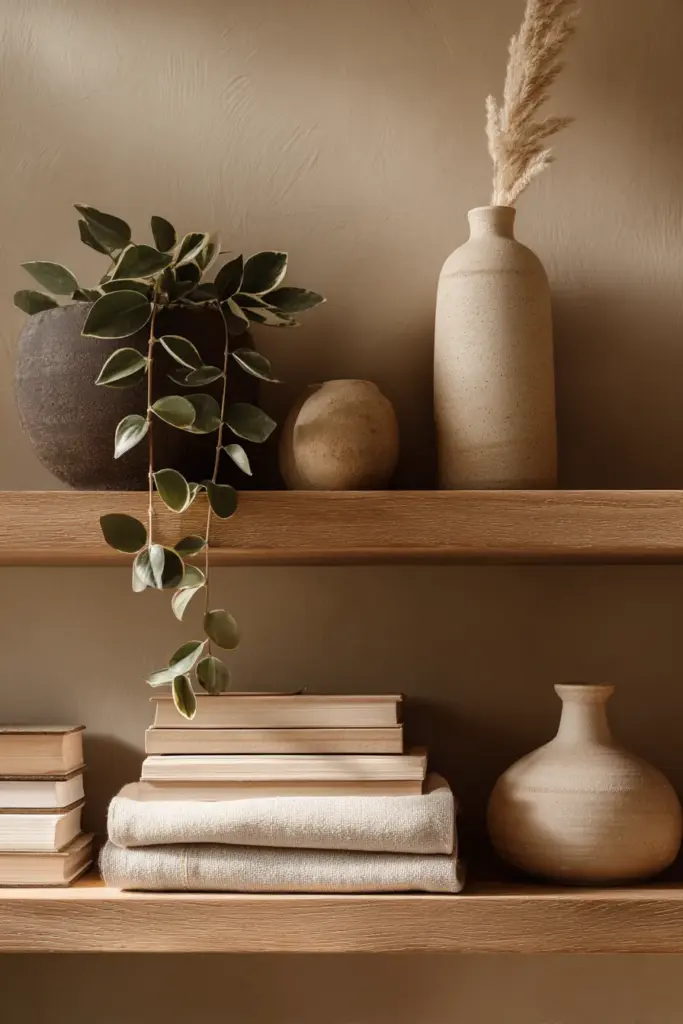
Open floating shelves, a tall narrow bookcase, or a slim floor-to-ceiling ladder shelf adds vertical dimension. Style them sparsely: a ceramic vase, a trailing pothos, a few stacked linen books. Negative space on shelves is not emptiness — it’s breathing room.
Step 5: Ground it with texture.
A chunky jute or wool rug beneath your low sofa ties everything together. It delineates the seating area and adds warmth underfoot — especially important when furniture sits close to the floor.
High vs. Low Japandi Furniture Pairing Guide
| High Element | Pairs With | Effect |
|---|---|---|
| Tall arched floor lamp | Low linen sofa | Dramatic calm, vertical sweep |
| Floating wall shelves | Low platform bed | Airy storage, grounded sleep space |
| Rattan pendant lamp | Low oak coffee table | Warmth + texture contrast |
| Slim open bookcase | Floor-level seating cushions | Visual height without heaviness |
| Dried floral arrangement in tall vase | Low console table | Nature + architectural tension |
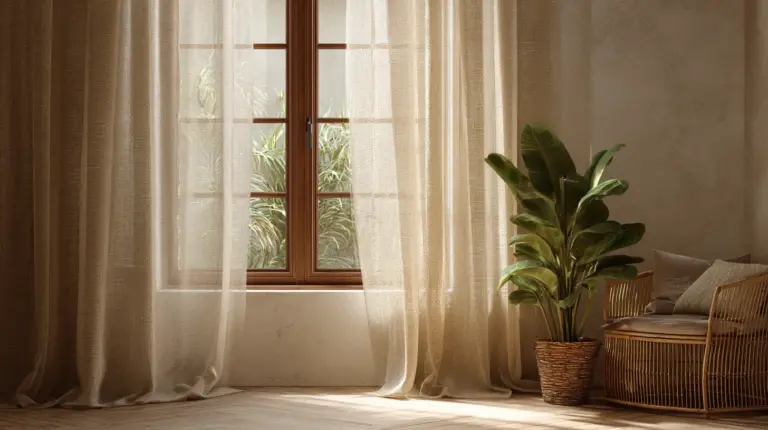
| High window with sheer linen curtains | Low daybed | Light floods in, room feels expanded |
High-Low Ideas by Room
Living Room
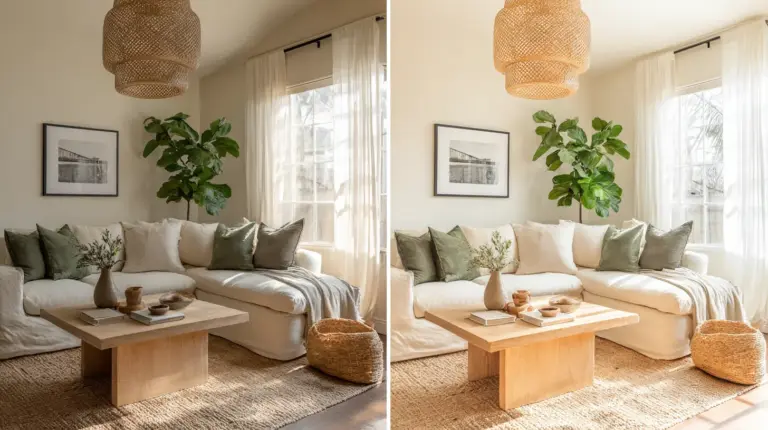
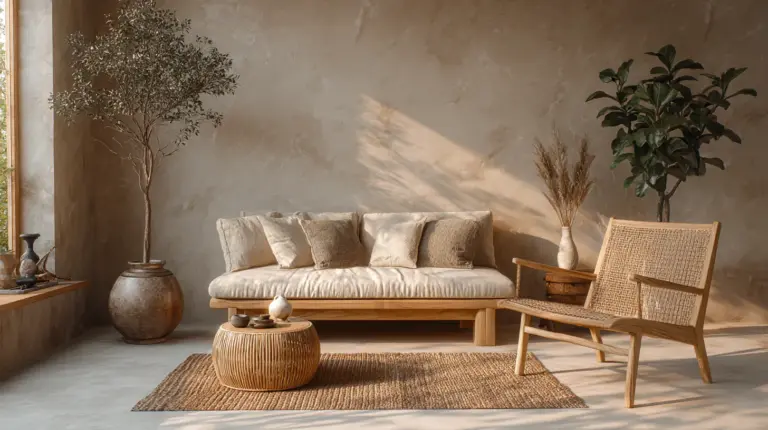
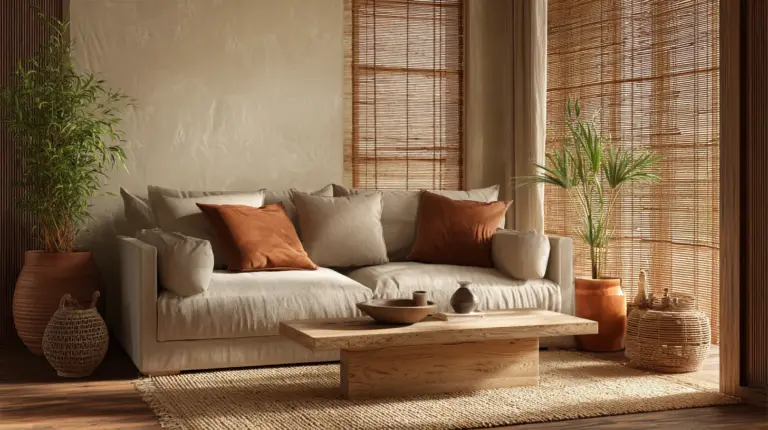
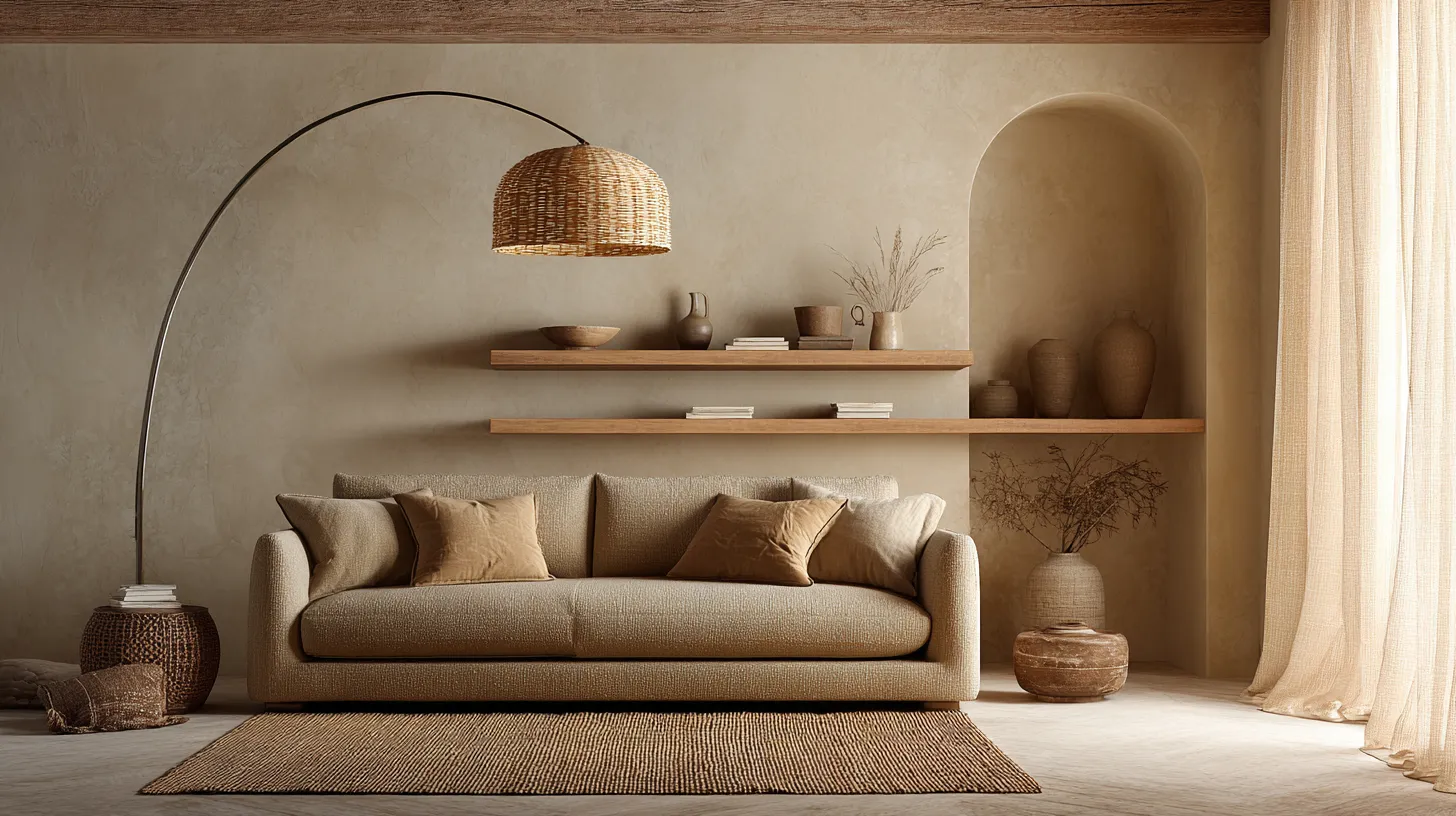
The Japandi high-low living room thrives on contrast. A low-profile sofa — think seats no higher than 40 cm — becomes your anchor. Above it, you might hang a statement rattan pendant or position an arched lamp whose curve echoes the softness of the space.
On the opposite wall, tall floating shelves display ceramics, dried botanicals, and a trailing plant. The eye moves — up, across, down — without ever feeling rushed.
Textural tip: Layer a chunky oatmeal knit throw over the back of your low sofa. The weight of the texture grounds the lightness of the space.
Bedroom
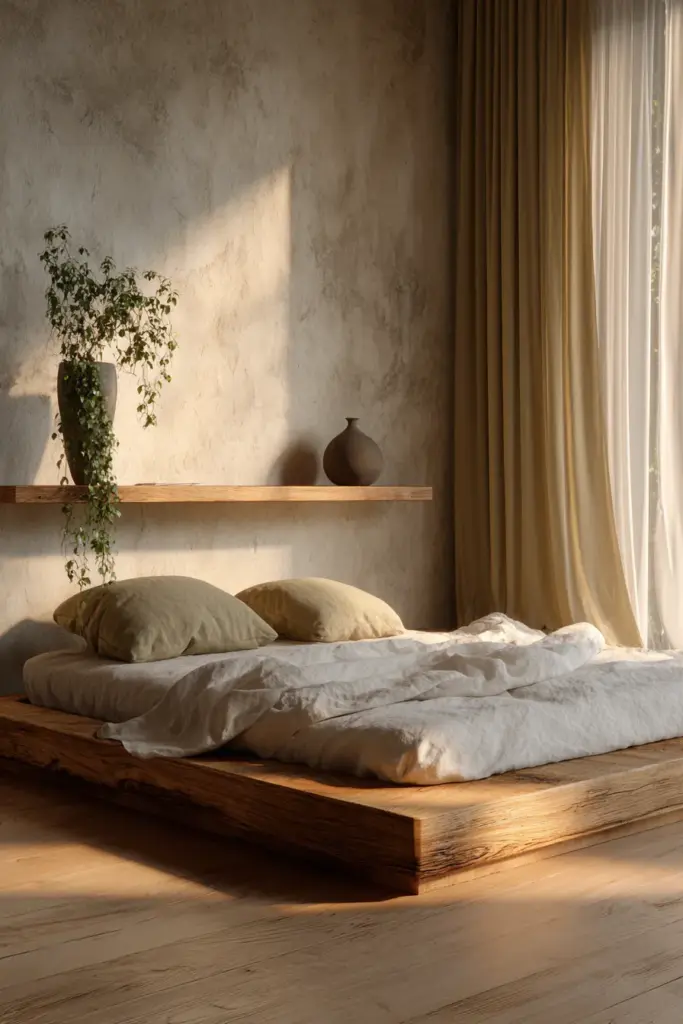
The low platform bed is the cornerstone of Japandi bedroom design. Set against a wall, it sits close to the floor — almost as if it emerged from the ground itself. Around it, low bedside tables or wooden trays hold a single ceramic lamp and a small plant.
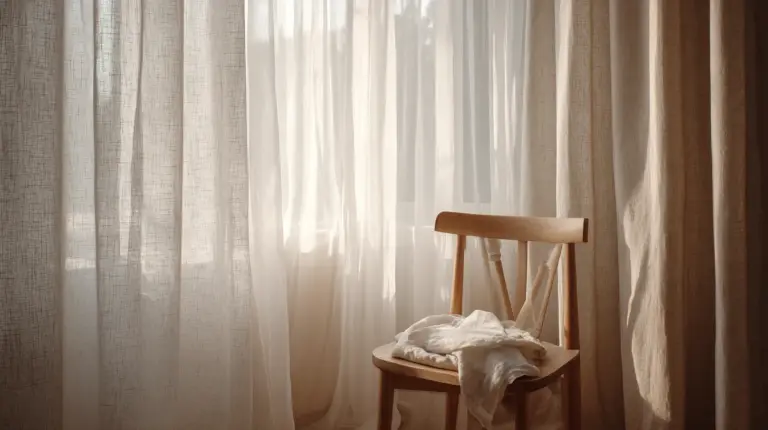
Above, tall linen curtains pooling gently at the floor draw the eye up to the ceiling. A floating shelf or two above the bed adds storage without visual bulk. The result is a room that feels both spacious and safe — like a quiet exhale at the end of the day.
Entryway
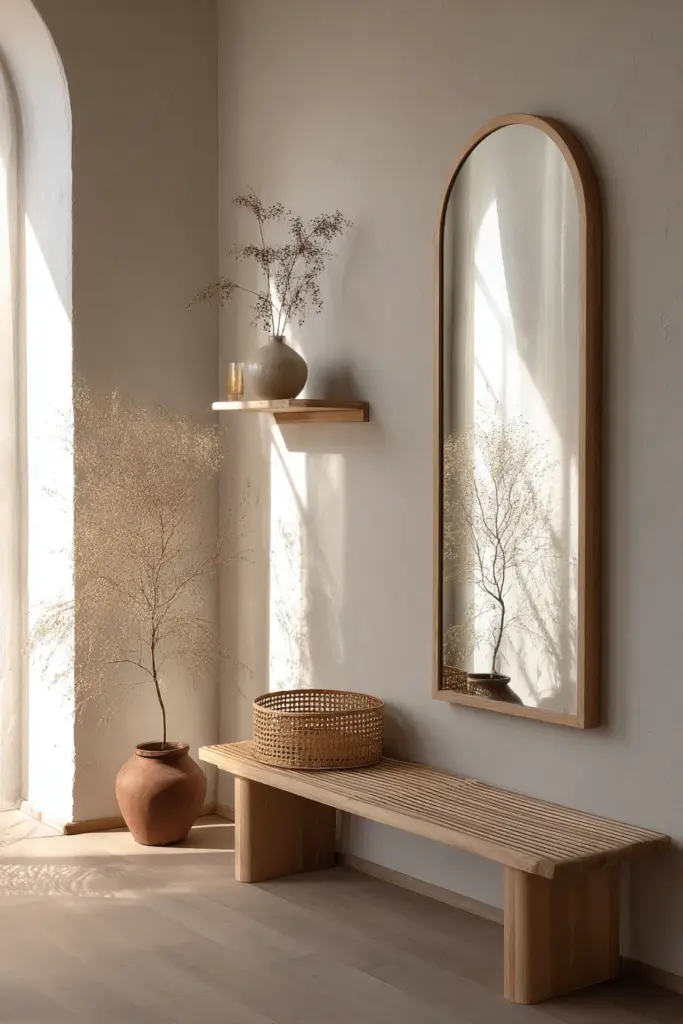
Even small entry spaces benefit from high-low thinking. A low wooden bench or rattan tray at floor level for shoes and keys. Above it: a tall arched mirror, a slim coat hook rail, or a wall-mounted shelf holding a single potted plant. The contrast makes even a narrow hallway feel considered and calm.
Budget Japandi High-Low: DIY Hacks and Local Finds
You don’t need to invest in an entirely new furniture collection to bring this aesthetic into your home. In fact, some of the most beautiful Japandi high-low rooms are built slowly, thoughtfully, and affordably.
Upcycle what you have. A high-backed thrift store chair can be given a Japandi life with a coat of matte white or warm greige paint and a new linen seat cover. Paired with a low oak coffee table, the contrast becomes intentional rather than accidental.
DIY low platforms. A simple platform base built from solid pine or reclaimed wood — painted matte or left natural — can elevate (or ground, rather) a mattress or sofa for under the cost of a new bed frame.
Source locally. In the Philippines, local markets and furniture artisans offer incredible alternatives to imported Japandi pieces. Bamboo low stools, woven abaca baskets, rattan shelving, and handmade ceramic vessels can be sourced from local craftspeople — and they carry the natural imperfection that wabi-sabi celebrates.
A woven abaca storage basket on the floor beside a tall rattan shelf? That’s Japandi high-low, locally made and beautifully real.
Biophilic Balance: Plants in the High-Low Japandi Space
Nature is never an afterthought in Japandi design — it’s a structural element. And in the high-low approach, plants play a specific architectural role.
Place tall, slender plants — a fiddle leaf fig, a bamboo palm, a snake plant — beside or behind low furniture to emphasize height contrast. On high shelves, trailing plants like pothos or string of pearls cascade downward, softening the vertical line and connecting high and low visually.
On low consoles or coffee tables, small terracotta pots with succulents or a single stem in a bud vase add texture at ground level.
The effect is a room that breathes — like a garden, quietly arranged.
Common Japandi Mistakes to Avoid
Even the most beautifully sourced pieces can miss the mark if the balance is off. Here’s what to watch for.
- Overcrowding low surfaces. A low coffee table drowning in decorative objects loses its grounding effect. Keep surfaces intentional — one ceramic, one plant, one book.
- Ignoring the vertical axis entirely. A room full of only low furniture can feel flat or even depressing. Height is necessary — it’s the counterbalance that makes low pieces feel purposeful.
- Mismatched wood tones. Japandi thrives on tonal cohesion. Stick to one or two wood families — light oak and walnut rarely coexist comfortably unless carefully layered.
- Harsh lighting. Overhead fluorescents or cool-white bulbs undermine the entire atmosphere. Layer your lighting: floor lamps, table lamps, pendant lights — all warm-toned.
- Ignoring texture. A room can be perfectly proportioned and still feel lifeless without tactile variety. Layer linen, wool, wood, ceramic, and woven natural fibers.
Japandi High-Low Checklist: Key Takeaways
- Choose a low anchor — platform bed, low-back sofa, or floor seating as the base of your design.
- Add intentional height — arched lamps, floating shelves, tall plants, sheer curtains.
- Stick to a neutral palette — warm whites, oats, warm greys, muted sage, clay.
- Use natural materials throughout — oak, bamboo, linen, jute, ceramic, rattan.
- Balance your plant placement — tall floor plants near low furniture, trailing plants on high shelves.
- Keep surfaces restrained — negative space is part of the design.
- Layer your lighting — warm-toned, multi-source, never overhead-only.
- Embrace local and secondhand — imperfection and provenance are wabi-sabi values.
- Create visual pathways — let the eye move comfortably from low to high and back.
- Stay functional — every piece should serve a purpose, whether aesthetic or practical.
A Closing Thought
The Japandi high-low approach is, at its heart, about relationship — the conversation between the earth and the sky, between the grounded and the reaching, between simplicity and depth.
When you lower your sofa and raise your shelves, you’re not just arranging furniture. You’re creating a space that breathes. A room where the light knows where to land, where your body knows how to rest, where quiet becomes something you can feel in the walls.
Start with one piece. Lower it. Then reach upward with something slender and graceful. Watch the room shift.
That’s the ERYLIN way — calm, considered, and deeply intentional.
Frequently Asked Questions
What is Japandi style in simple terms?
Japandi is a design style that combines Japanese minimalism and wabi-sabi philosophy with Scandinavian warmth and functionality. It prioritizes natural materials, neutral tones, clean lines, and spaces that feel calm and purposeful.
Why does Japandi use low-profile furniture?
Low furniture creates a grounded, meditative atmosphere rooted in Japanese living traditions. It opens up visual space in a room and makes the ceiling feel higher — especially effective when balanced with taller elements like shelves and floor lamps.
How do I mix high and low furniture in a Japandi room?
Start with a low anchor piece — a sofa or platform bed — and build upward with lighting, open shelving, and tall plants. The key is contrast: low pieces feel intentional when there’s something tall nearby to create visual dialogue.
Can I do Japandi high-low on a budget?
Absolutely. Upcycle thrift store pieces with matte paint and new fabric, build a simple low platform from affordable pine, and source handmade ceramics and woven baskets from local artisans. The wabi-sabi spirit actually celebrates imperfection and humble materials.
What are the most common Japandi mistakes?
Overcrowding surfaces, using only low furniture with no vertical balance, mismatching wood tones, relying on harsh overhead lighting, and ignoring texture. The style rewards restraint — when in doubt, remove rather than add.