
Table of Contents
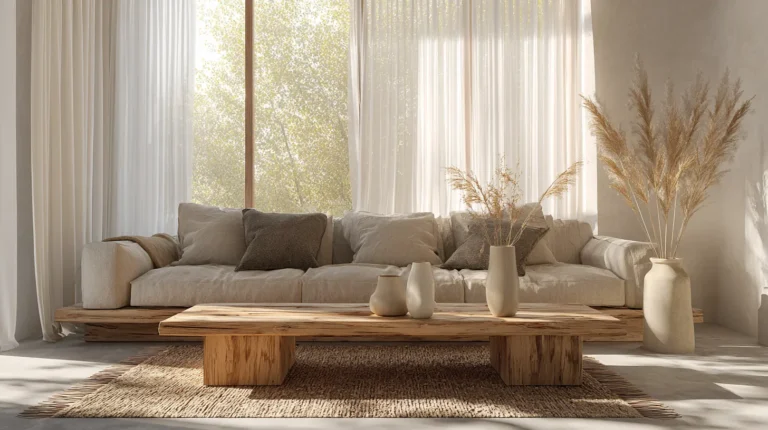
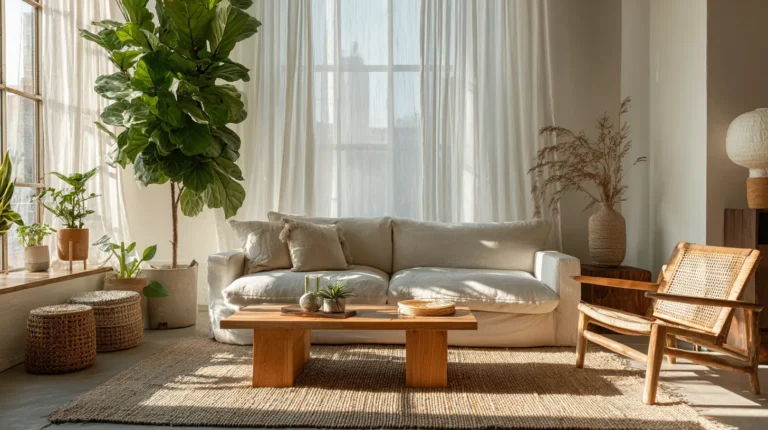
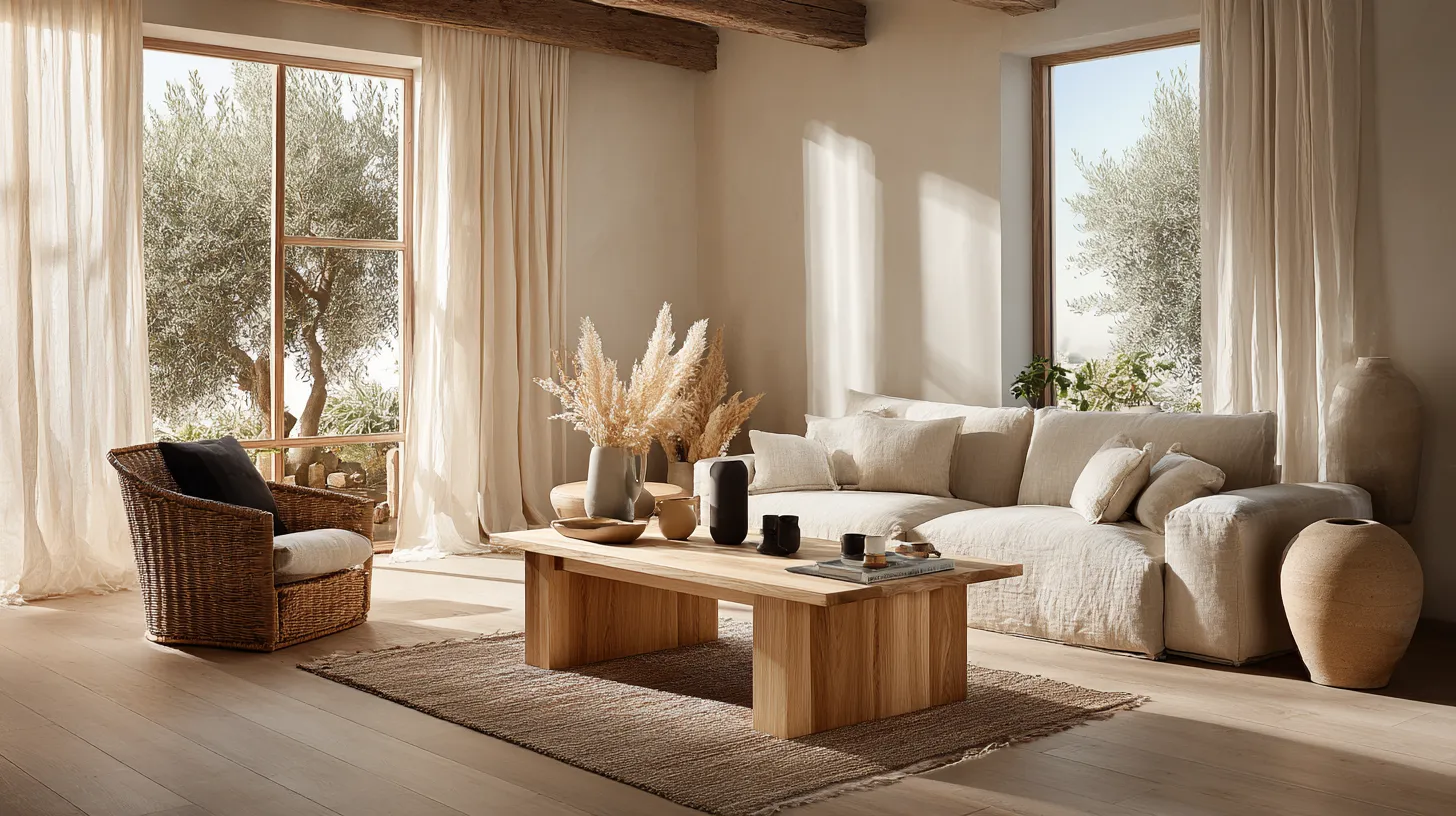
There’s something quietly magical about a room that breathes with light. Not harsh, glaring brightness—but the kind of luminosity that filters through linen curtains at midday, pooling across pale oak floors and warming the grain of a low-slung console. This is the essence of Japandi design: where Japanese minimalism meets Scandinavian warmth, and natural light becomes the invisible thread stitching it all together.
Your living room deserves more than overhead lighting and artificial glow. It craves the dance of daylight—the way morning sun catches the edge of a ceramic vase, how afternoon rays soften the lines of a beige linen sofa. Japandi furniture isn’t just about clean lines and neutral palettes; it’s about creating vessels for light to move through your space.
In this guide, we’ll explore how to select and arrange Japandi living room furniture that doesn’t just tolerate natural light—it celebrates it. From material choices that reflect and diffuse brightness to strategic placement that maximizes every sun-drenched hour, you’ll learn to design a space where illumination feels effortless.
Let’s step into the light together.
Understanding Natural Light in Japandi Design Philosophy
Natural light in Japandi interiors serves a deeper purpose than mere visibility. It’s rooted in the Japanese concept of ma—the conscious use of negative space and light—and the Scandinavian necessity for maximizing precious daylight during long winters. Together, they create a design language where sunshine becomes architecture.
Think of light as your first piece of furniture. Before choosing a coffee table or selecting throw pillows, observe how brightness travels through your living room throughout the day. Notice where shadows pool at dawn, where midday glare hits hardest, and where golden hour creates warmth.
The Japandi approach treats natural light as dynamic decor. Your furniture should work with these patterns, not against them. A walnut credenza positioned to catch afternoon rays will glow with inner warmth. A paper pendant lamp near a north-facing window creates diffused, gallery-like illumination even on cloudy days.
Choosing Furniture Materials That Amplify Natural Light
Wood Tones and Natural Light Interaction
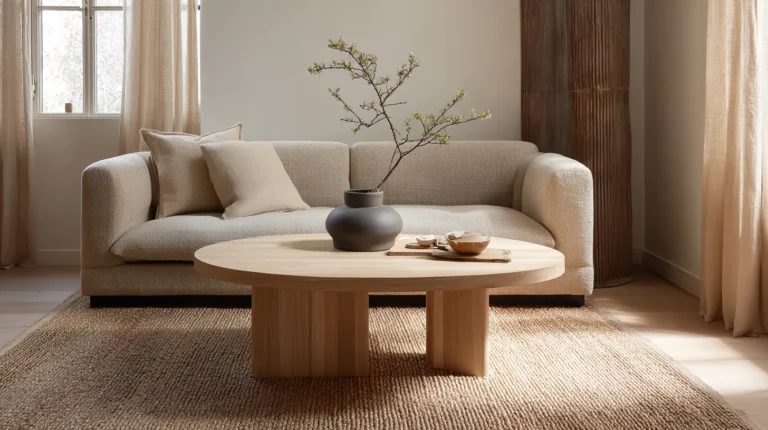
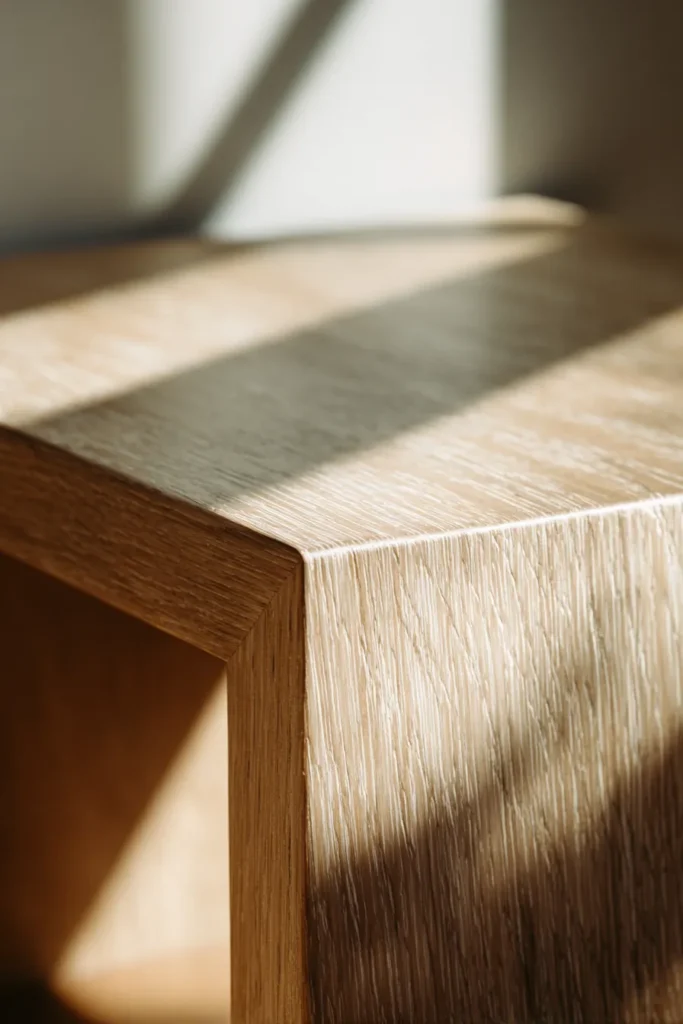
Light-toned woods are the foundation of light-friendly Japandi spaces. Pale oak, ash, and Japanese cypress reflect brightness without glare, their subtle grain patterns creating visual texture that shifts with the sun’s angle. A blonde wood coffee table acts like a horizontal mirror, bouncing light upward to illuminate faces and eliminate harsh shadows.
Contrast this with darker walnut or teak accents—not throughout, but strategically. A single dark wood dining chair or side table provides visual grounding while allowing lighter pieces to shine. The key is balance: 70% light woods, 30% deeper tones.
Upholstery Fabrics That Breathe Light
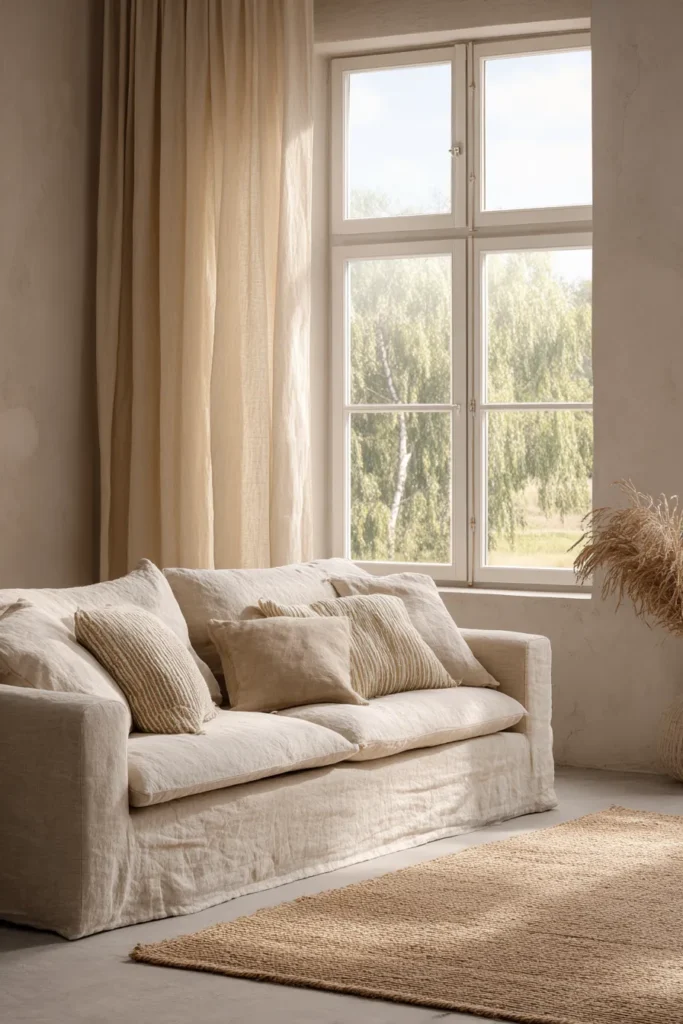
Natural textiles transform how light moves through your space. Linen in oat, sand, or pale gray doesn’t just look serene—it has a subtle texture that catches and scatters light, creating depth without heaviness. Your sofa becomes luminous rather than light-absorbing.
Avoid synthetic fabrics with sheen; they create distracting hotspots of glare. Instead, choose matte-finish cotton, hemp, or wool blends in colors like taupe, soft sage, or warm ivory. These hues have enough pigment to feel grounded but remain receptive to changing daylight.
Consider a beige linen sectional paired with charcoal gray throw pillows—the neutral base maximizes brightness while darker accents prevent the space from feeling washed out. Layer a jute area rug underneath to add earthiness without blocking light reflection from your floors.
Reflective and Translucent Elements
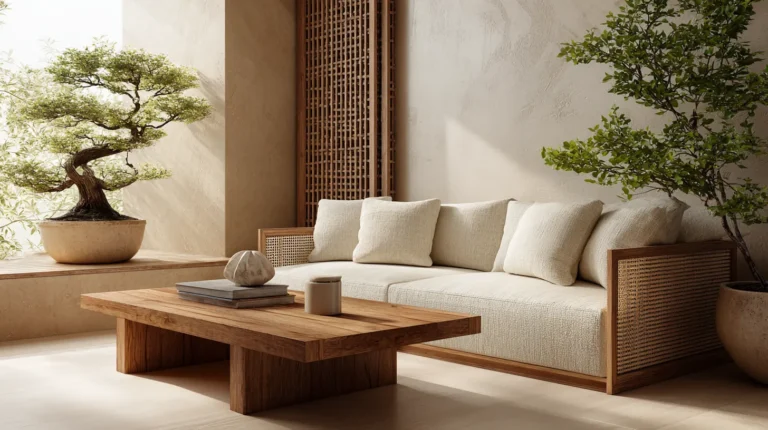
Introduce materials that play with light rather than simply absorbing it. Rattan chairs with open weaving patterns allow sunshine to filter through, creating dancing shadow patterns on walls. Glass-topped side tables preserve sightlines and let light travel to lower surfaces.
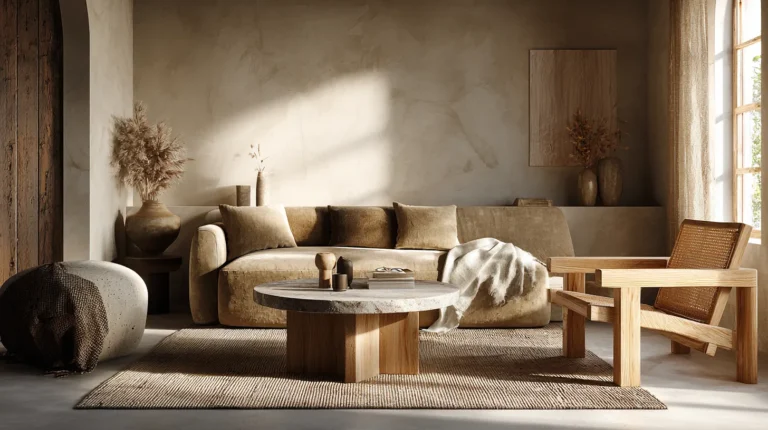
Ceramic and stoneware in pale, unglazed finishes provide subtle reflection. A white ceramic vase on a window-facing shelf catches morning light beautifully, while a stone sculpture with natural texture creates shifting shadow play as the day progresses.
Strategic Furniture Placement for Maximum Natural Light
The Window-First Approach
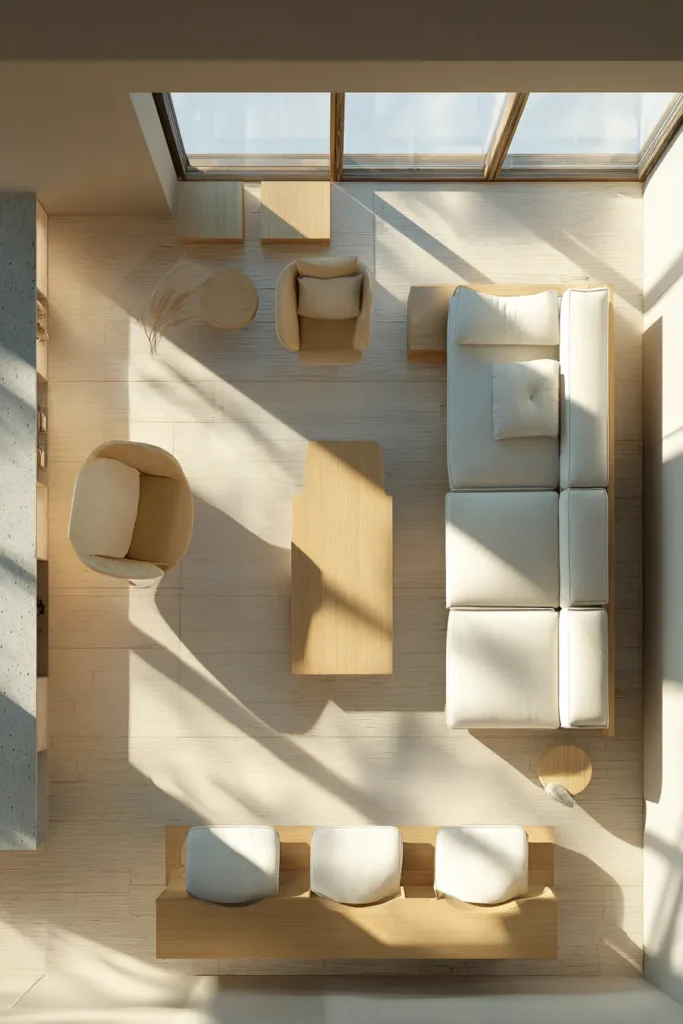
Start your furniture arrangement by identifying your primary light sources. In Japandi design, windows aren’t obstacles to work around—they’re the focal points your furniture serves. Position your largest seating pieces perpendicular to main windows rather than blocking them.
A low-profile sofa parallel to a wall adjacent to windows allows light to flow over it, illuminating the room beyond. Avoid tall bookcases or high-backed chairs directly in front of windows; instead, place them on interior walls where they won’t create light-blocking barriers.
Create clear pathways for light to travel from windows to interior spaces. A coffee table with slim legs and an open base allows brightness to pass underneath, while a solid chest would create a dark zone behind it.
Furniture Height and Light Flow
Japandi aesthetics favor low-slung furniture—and physics favors it too. Pieces with minimal height leave more wall space for light to bounce across. A platform sofa at 28 inches high versus a traditional 36-inch model means eight additional inches of wall exposed to natural brightness.
Choose console tables, media units, and credenzas that hover around 24-30 inches. This height range preserves sightlines while providing functional storage. Pair these with floor cushions or low poufs for additional seating that practically disappears in terms of light obstruction.
Creating Light Corridors
Think of your furniture arrangement as channels directing light flow. Leave a 36-48 inch pathway between your sofa and opposing chairs—this corridor allows light from one window to reach another, creating cross-illumination. The negative space isn’t wasted; it’s functional, breathable, and essential to the Japandi aesthetic.
Position reflective surfaces—like a pale wood console or ceramic lamp—in these pathways to bounce light deeper into your space. This technique is especially valuable in rectangular living rooms where natural light enters from only one end.
Essential Japandi Furniture Pieces for Light-Filled Living Rooms
The Low Coffee Table
A Japanese-inspired coffee table—clean-lined, low to the ground, in pale oak or ash—becomes the centerpiece without dominating. Look for designs with rounded edges and minimal ornamentation. The table should sit around 14-16 inches high, preserving sightlines and light flow.
Materials matter profoundly here. A solid wood top in a light finish reflects warmth, while a lower shelf in matching wood or woven rattan adds storage without visual weight. Avoid glass tops in heavy frames; choose delicate designs where the transparency feels intentional.
The Sculptural Seating
Your sofa should be a study in restraint—generous in comfort, minimal in profile. A three-seat linen sofa in warm beige or soft gray provides ample seating while maintaining visual lightness. Opt for exposed wooden legs in the same light oak palette; they create literal space for light to pass underneath while connecting to other wooden elements.
Add a sculptural accent chair in slightly darker tones—perhaps a mid-century inspired piece in charcoal fabric with walnut legs. Position it at an angle near a window where it catches both natural light and creates an inviting reading nook.
Storage That Stays Invisible
Japandi living rooms embrace hidden storage to maintain uncluttered surfaces that don’t interrupt light. Choose floating credenzas in light wood—pieces that appear to hover above the floor, allowing brightness to flow underneath and around them. The visual weightlessness is essential.
Open shelving works when styled with restraint: a few ceramic pieces, a plant, some books. But the shelves themselves should be light wood or white powder-coated metal—materials that recede rather than demand attention.
Window Treatments That Enhance Rather Than Block
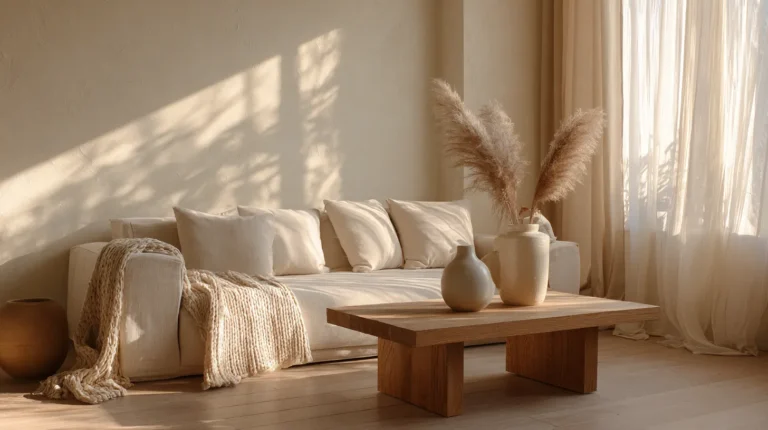
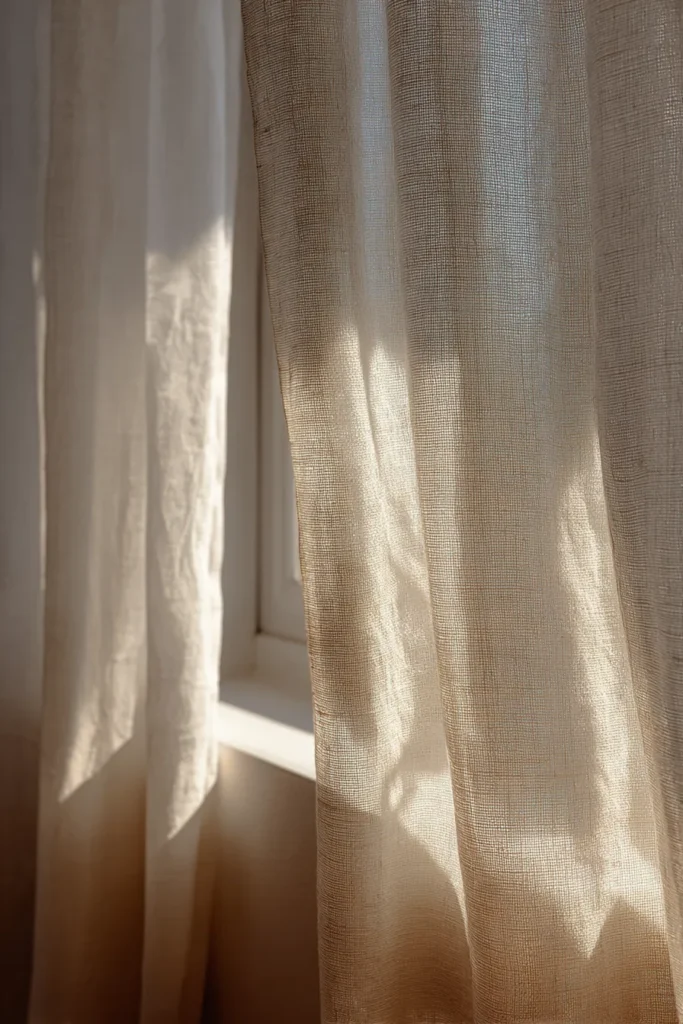
Natural light in Japandi design isn’t about leaving windows bare—it’s about filtering brightness with intention. Sheer linen curtains in ivory or pale gray diffuse harsh midday sun while maintaining privacy. They create a soft, even glow that eliminates harsh shadows and makes small spaces feel larger.
Layer your window treatments for flexibility. Combine sheers with bamboo roller blinds or light-filtering cellular shades. During peak brightness, lower the bamboo for textured shade; in morning and evening, let the sheer curtains work alone to maximize gentler light.
Avoid heavy drapes, dark fabrics, or busy patterns that create visual weight. If you need blackout capabilities for screen glare, choose pale-colored room-darkening sheers—they’re available in warm whites and maintain the aesthetic while offering functional control.
Hardware Matters Too
Install curtain rods just below the ceiling and extend them 6-8 inches beyond the window frame on each side. This allows you to draw curtains fully away from windows, maximizing glass exposure. Choose slim rods in matte black or light wood finishes—hardware that complements without competing.
Color Palettes for Furniture in Light-Drenched Spaces
| Color Family | Primary Furniture Use | Light Interaction | Recommended Materials |
|---|---|---|---|
| Warm Whites (Ivory, Cream) | Sofas, ottomans | Reflects 70-80% of light | Linen, cotton canvas |
| Soft Grays (Dove, Taupe-Gray) | Accent chairs, cushions | Reflects 50-60% of light | Wool blends, hemp |
| Beige/Sand Tones | Rugs, larger pieces | Reflects 60-70% of light | Jute, sisal, linen |
| Sage/Olive Green | Accent pillows, small chairs | Absorbs 40-50% of light | Velvet (matte), cotton |
| Warm Browns (Teak, Walnut) | Side tables, legs, frames | Absorbs 60-70% of light | Solid wood, veneer |
| Charcoal/Deep Gray | Artwork frames, small accents | Absorbs 80-90% of light | Metal, dark wood |
Your primary furniture should come from the top three rows—colors that work with light rather than against it. Use the bottom three sparingly, as grounding elements that prevent your space from feeling washed out.
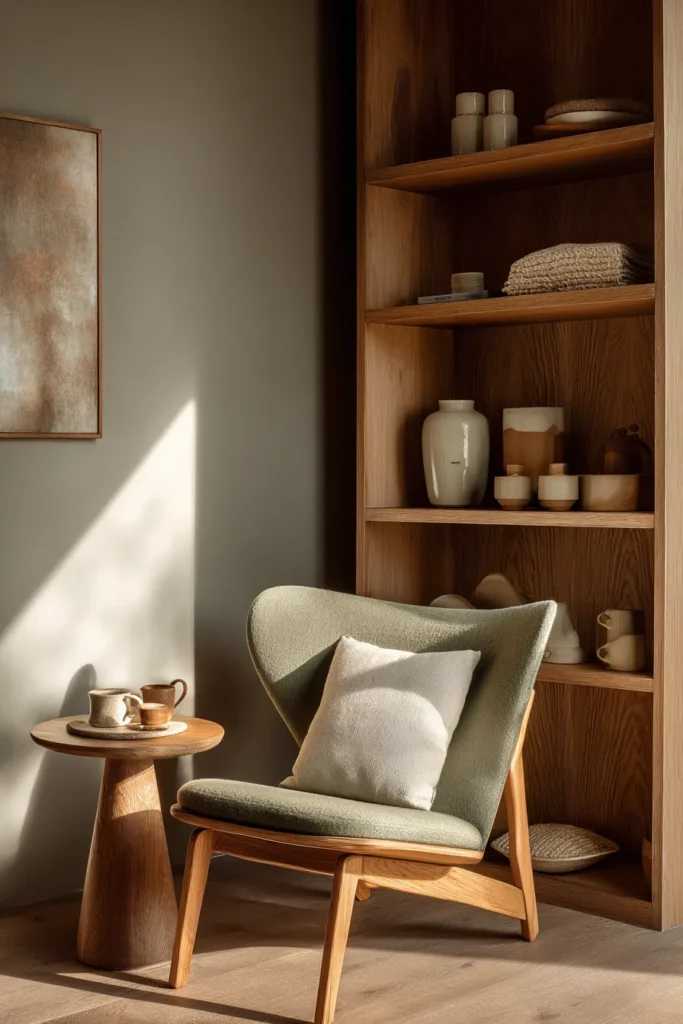
The magic happens in layering these tones. A beige linen sofa with sage green pillows, a pale oak coffee table, and charcoal ceramic accents creates depth while maintaining overall brightness. Each layer adds visual interest without blocking precious natural light.
Mirrors and Reflective Accents as Functional Furniture
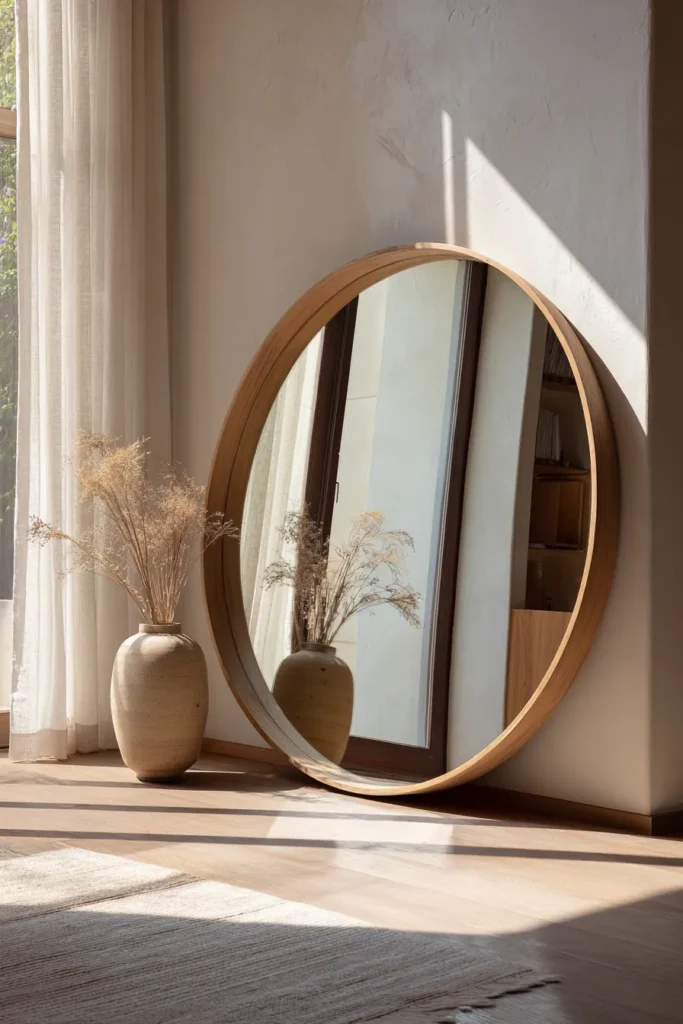
A large mirror isn’t just decor—in Japandi philosophy, it’s functional furniture that doubles your natural light. Position a floor-length mirror with a simple wooden frame opposite your main window. Suddenly, you’ve created a second light source, illuminating corners that would otherwise remain dim.
Choose mirrors with minimal frames in light oak or thin metal. Oversized round mirrors echo the soft, organic forms found in Japanese design while their shape bounces light in all directions rather than just straight across. Lean one against a wall rather than hanging it—this casual placement feels more organic and typically sits at the perfect angle to catch and redirect sunshine.
Metallic Furniture Accents
Incorporate brushed brass or matte bronze sparingly—a magazine rack, a side table base, or sculptural legs on a console. These warm metals catch and warm natural light without the cold glare of chrome or polished silver. They add subtle luxury while serving the practical purpose of light amplification.
A brass-based table lamp near a window creates beautiful interplay as daylight shifts across its surface. Even when unlit, the lamp becomes a piece of functional sculpture that enhances your room’s luminosity.
Layering Artificial Lighting With Natural Light
Natural light varies throughout the day, so your furniture arrangement should anticipate artificial lighting needs. In Japandi spaces, this means multiple, low-level light sources rather than one harsh overhead fixture. Position floor lamps near seating areas, table lamps on consoles, and paper pendants in corners.
Choose lighting with warm LED bulbs (2700-3000K) that mimic afternoon sunshine. This creates continuity between your abundant natural midday light and evening ambiance. Dimmer switches are essential—they let you adjust intensity to match fading daylight rather than creating abrupt transitions.
Place a sculptural floor lamp behind your sofa or beside an accent chair. Arc lamps work beautifully in Japandi spaces, their curved forms directing light exactly where needed without requiring bulky side tables. Opt for linen or paper shades that diffuse brightness gently, echoing how your window treatments soften natural light.
Small Space Strategies: Maximizing Light in Compact Living Rooms
Multi-Functional Furniture for Openness
Small Japandi living rooms demand furniture that works harder. A storage ottoman in pale fabric serves as coffee table, extra seating, and hidden storage—all while maintaining a light, uncluttered appearance. Nesting side tables in light oak can be tucked away when not needed, preserving open floor space where light can travel.
Choose a loveseat instead of a full sofa if space is tight. Position it facing your main window rather than against a wall—this unconventional arrangement maximizes your view of natural light and makes the room feel larger by drawing the eye to the brightest point.
Vertical Elements That Lift the Eye
In compact spaces, draw attention upward where light naturally lives. A tall, slender floor plant in the corner (like a fiddle leaf fig or bamboo palm) creates vertical interest without blocking horizontal light flow. A narrow ladder shelf in light wood provides display space while maintaining visual transparency.
Avoid heavy, low furniture that creates horizontal barriers in small rooms. Instead, choose pieces with visible legs and open space underneath—this trick makes rooms feel more spacious while allowing light to reach baseboards and lower walls.
Sustainable Material Choices and Natural Light
Japandi design’s connection to nature extends to material selection. FSC-certified wood furniture in light finishes doesn’t just look beautiful—it carries a story of responsible forestry that aligns with the philosophy’s respect for natural resources. Oak, ash, and bamboo from certified sources have the same light-enhancing properties while supporting environmental health.
Natural, undyed textiles like organic linen and hemp have subtle color variations that create interest when lit naturally. Unlike synthetics with uniform pigment, these materials reveal depth as light shifts—a beige hemp cushion might appear warm gold in morning light and cool stone in afternoon shade.
Choose furniture with longevity in mind. Timeless Japandi pieces in classic materials will serve you for decades, their relationship with natural light remaining constant even as trends shift. A well-crafted pale oak chair will catch and reflect sunshine just as beautifully twenty years from now.
Seasonal Adjustments for Changing Natural Light
Natural light shifts dramatically with seasons. In summer, you’re managing intensity and preventing glare; in winter, you’re capturing every precious ray. Your furniture arrangement should anticipate these changes without requiring major overhauls.
Summer might mean adding a sheer linen curtain to east-facing windows where morning glare hits your seating area. Winter could involve repositioning a reading chair slightly closer to your south-facing window to capture maximum warmth. These micro-adjustments take minutes but dramatically improve how you experience your space.
Consider lightweight furniture that’s easy to shift. A rattan armchair on a jute rug can be pushed forward or back as needed. Poufs and floor cushions offer flexible seating that moves with the light rather than fighting it.
Budget-Friendly Light-Maximizing Tips
| Budget Level | Furniture Investment | Light-Enhancing Strategy | Expected Impact |
|---|---|---|---|
| $200-500 | Paint walls warm white, add sheer curtains | Foundation for light reflection | 30% perceived brightness increase |
| $500-1000 | Add pale wood coffee table, floor mirror | Strategic light-catching pieces | 50% perceived brightness increase |
| $1000-2000 | Invest in beige linen sofa, quality lighting | Transform primary seating area | 70% perceived brightness increase |
| $2000+ | Complete Japandi furniture refresh | Full light-optimized design | 90%+ perceived brightness increase |
You don’t need a complete overhaul to improve natural light flow. Start by decluttering surfaces—visual noise absorbs perceived brightness. Add one large mirror and swap dark throw pillows for light ones. Paint a single accent wall in warm white to create a reflective surface.
The most impactful change costs nothing: rearranging your existing furniture. Pull pieces away from windows, create clear sightlines, and remove anything blocking light pathways. You’ll be surprised how much brighter your space feels with zero financial investment.
Key Takeaways for a Light-Filled Japandi Living Room
- Choose light-toned woods (oak, ash, bamboo) for primary furniture pieces—they reflect 60-80% of natural light
- Position furniture perpendicular to windows rather than blocking them
- Keep furniture low-profile (under 30 inches) to preserve wall space for light bounce
- Layer window treatments: sheer linen curtains for diffusion, bamboo blinds for control
- Use neutral upholstery in beige, sand, warm gray, or soft sage with matte finishes
- Add mirrors opposite windows to double your natural light
- Maintain 36-48 inch pathways between furniture for light corridors
- Choose pieces with visible legs and open bases for light flow underneath
- Limit dark accents to 30% of your furniture palette
- Invest in warm LED lighting (2700-3000K) to complement natural brightness
Bringing It All Home
Creating a Japandi living room that sings with natural light isn’t about following rigid rules—it’s about developing a relationship between your space, your furniture, and the sun. It’s watching how afternoon rays warm the armrest of your linen sofa and knowing you’ve chosen exactly the right piece. It’s understanding that the low coffee table isn’t just aesthetically pleasing; it’s functionally allowing brightness to reach every corner of your room.
This is design as meditation, as daily practice. Each morning, you’ll notice something new: how your pale oak console glows at 7 a.m., how the shadow of your rattan chair creates patterns on the wall at noon, how everything softens into warm gold as evening approaches. Your furniture becomes more than objects—they become participants in the dance of light that makes a house feel alive.
Let your living room breathe. Let light move freely through it. Choose pieces that enhance rather than obstruct, that reflect rather than absorb. In the end, the most beautiful Japandi spaces aren’t just well-designed—they’re well-lit, naturally, generously, and with profound intention.
Your space is waiting to be illuminated.
Frequently Asked Questions
u003cstrongu003eHow do I maximize natural light with furniture placement in a Japandi living room?u003c/strongu003e
Position your largest furniture pieces perpendicular to windows rather than directly in front of them, creating clear pathways for light to travel across the room. Keep furniture low-profile (under 30 inches high) and choose pieces with visible legs that allow brightness to flow underneath and reach baseboards.
What window treatments work best for natural light in Japandi style?
Sheer linen curtains in warm white, ivory, or pale gray beautifully diffuse harsh sunlight while maintaining privacy and a soft, even glow throughout your space. Layer these with bamboo roller blinds or light-filtering cellular shades for flexible light control during peak brightness hours.
Which furniture materials amplify natural light in Japandi interiors?
Light-toned woods like pale oak, ash, and Japanese cypress reflect 60-80% of natural light and create warmth without glare. Pair these with matte-finish natural textiles like linen, cotton, and hemp in neutral tones—these fabrics scatter light beautifully while adding subtle texture that shifts throughout the day.
How can I create Japandi lighting that complements natural light?
Layer multiple low-level artificial light sources with warm LED bulbs (2700-3000K) that mimic natural afternoon sunshine, ensuring smooth transitions as daylight fades. Position floor lamps near seating areas, add table lamps on consoles, and choose paper or linen shades that diffuse brightness gently—just like your window treatments soften natural light.
What colors should I choose for Japandi furniture in bright spaces?
Build your foundation with warm whites, soft grays, beige, and sand tones for primary furniture—these colors reflect 60-80% of light while feeling grounded and serene. Add depth with strategic darker accents in sage green, warm brown, or charcoal (limiting these to 30% of your palette) to prevent your space from feeling washed out while maintaining overall brightness.