
Table of Contents
There’s a quiet magic that happens when Japanese minimalism meets Scandinavian warmth. It’s in the way morning light catches the grain of an oak frame, or how linen upholstery invites you to sink in after a long day.
Your sofa isn’t just furniture—it’s where life unfolds. It’s the Sunday morning coffee ritual, the evening book with a soft throw, the place where conversations linger.
In Japandi design, every piece serves both beauty and purpose. The sofa becomes a grounding element, a textural anchor that brings calm to your living room without sacrificing comfort or style.
Let’s explore how to choose a Japandi sofa that feels like coming home.
What Is a Japandi Sofa?
A Japandi sofa embodies the fusion of two beloved design philosophies. It carries the wabi-sabi elegance of Japanese interiors—celebrating imperfection, natural materials, and restraint—while embracing Scandinavian hygge with its emphasis on coziness, functionality, and lived-in warmth.
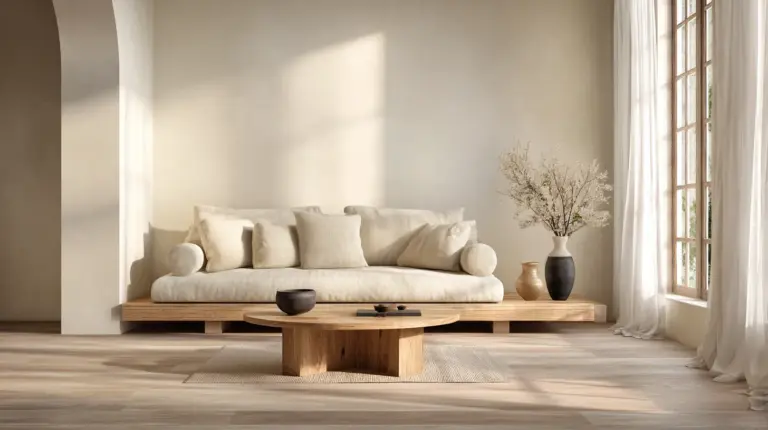
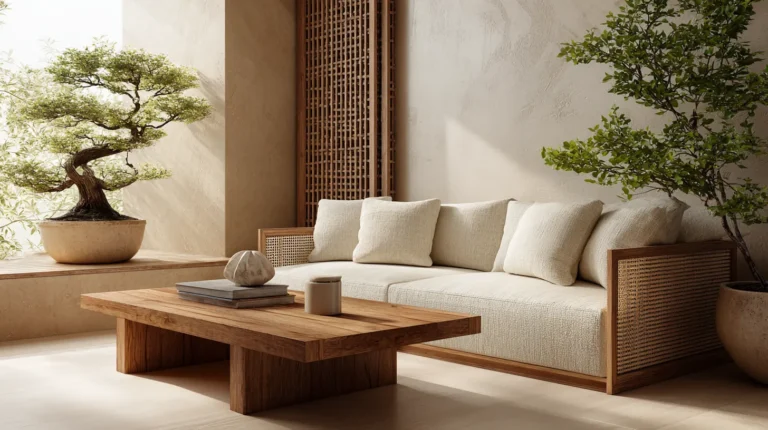
These sofas typically feature low profiles that create visual space and maintain clean horizontal lines. You’ll notice neutral upholstery in beige, light gray, taupe, or soft clay tones that ground the room without demanding attention.
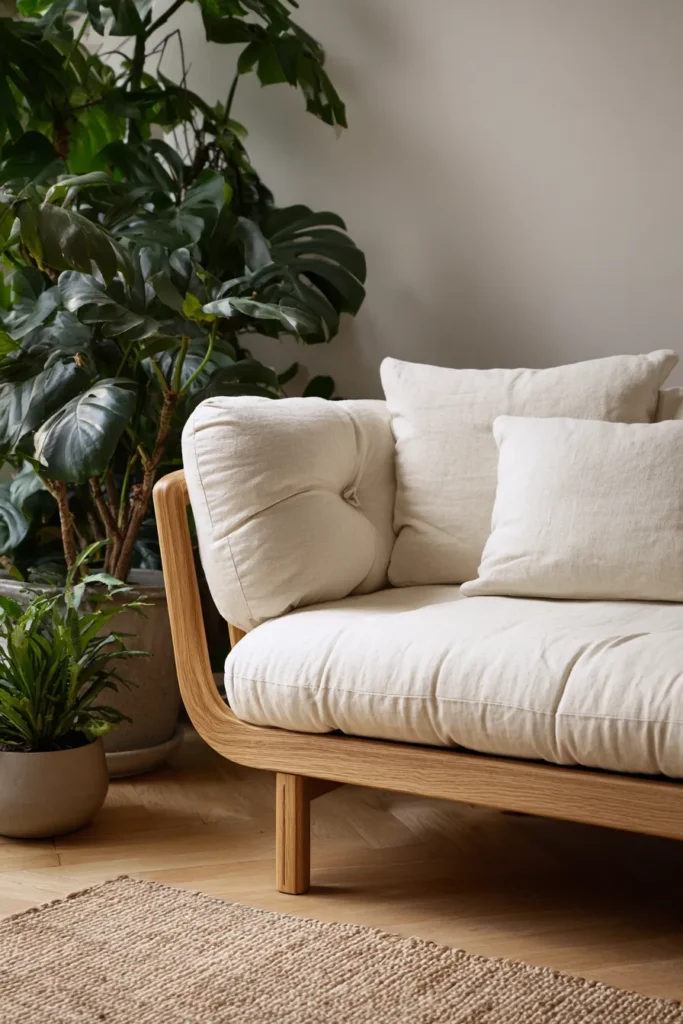
The structure speaks volumes through simplicity. Exposed wooden legs in oak, ash, or walnut, clean-lined frames without excessive ornamentation, and ergonomic designs that support both posture and relaxation.
The Design Philosophy Behind Japandi Sofas
Japandi furniture asks a simple question: Does this piece bring joy and serve a purpose?
The answer lies in thoughtful material choices. Natural wood frames from sustainable sources, breathable fabrics like linen and cotton that age beautifully, and construction methods that honor craftsmanship over mass production.
There’s also a deeper principle at work—ma, the Japanese concept of negative space. A Japandi sofa doesn’t crowd your room; it creates breathing room around itself, allowing your living space to feel expansive even in smaller apartments.
How to Choose a Sofa for Your Japandi Living Room
Prioritize Clean Lines and Low Profiles
The silhouette matters more than you might think. Low-back sofas maintain sightlines across your room, making spaces feel larger and more connected.
Look for designs with straight or gently curved arms that avoid bulkiness. The frame should feel architectural—structured enough to make a statement, minimal enough to blend with your existing décor.
Consider height carefully. Japandi sofas typically sit lower to the ground (around 16-18 inches seat height) compared to traditional Western styles, creating that signature grounded aesthetic.
Select Natural, Tactile Materials
Frame Construction:
- Solid rubberwood or oak for durability
- Exposed wooden legs in natural finishes
- FSC-certified sustainable wood sources
- Hand-finished details that celebrate the grain
Upholstery Fabrics:
- Linen for breathability and texture
- Cotton blends for everyday comfort
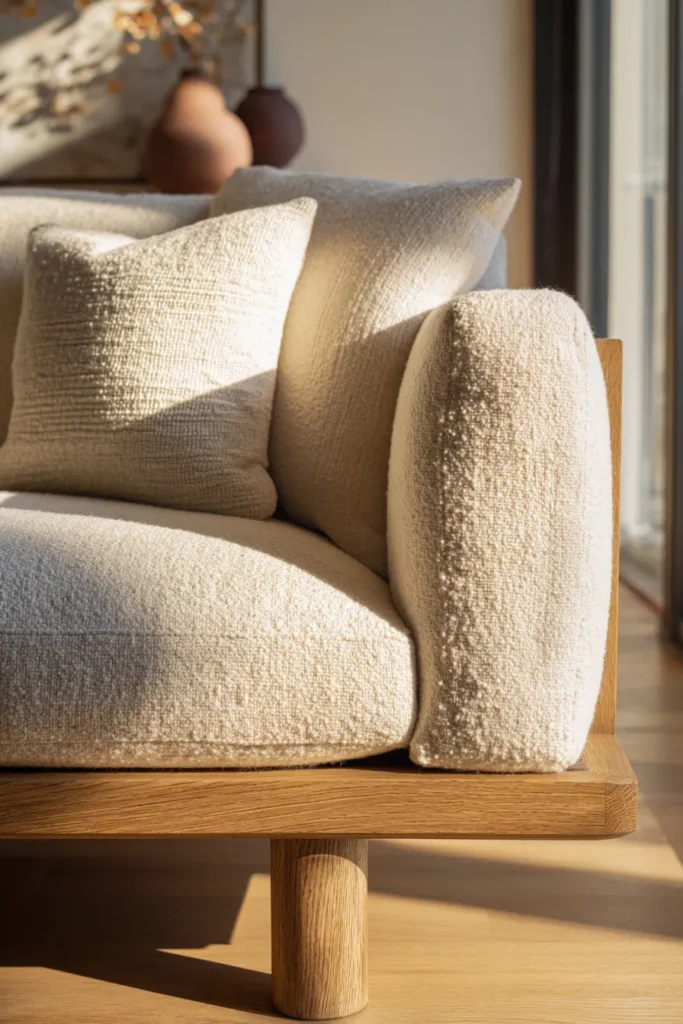
- Boucle for visual interest and warmth
- Wool for cooler climates
- Velvet in muted tones for subtle luxury
The fabric you choose should feel as good as it looks. Run your hand over samples before deciding—Japandi design is deeply sensory.
Size and Scale for Your Space
| Sofa Size | Dimensions | Best For | Seating Capacity |
|---|---|---|---|
| 2-Seater | 150-176 cm wide | Studios, small apartments | 2 people comfortably |
| 3-Seater | 200-220 cm wide | Standard living rooms | 3-4 people |
| 4-Seater | 230-240 cm wide | Spacious rooms, families | 4-5 people |
| Sectional | 240+ cm (L-shape) | Open-plan layouts | 5+ people |
For small living rooms: Choose compact 2-3 seaters with open legs that allow light to pass underneath, creating visual space. Avoid bulky armrests or deep seats that overwhelm the room.
For larger spaces: A low-profile sectional in neutral tones can define your seating area without blocking flow. Add a wooden coffee table and rattan accent chair to complete the arrangement.
Embrace Neutral and Earthy Color Palettes
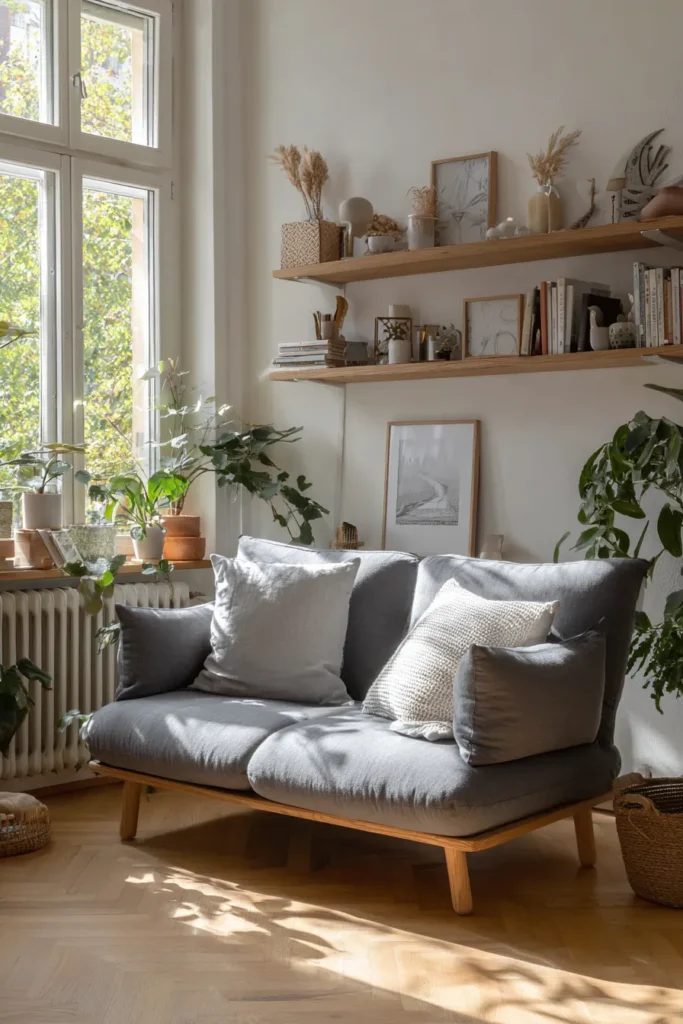
Japandi sofas live in the realm of understated elegance. Think warm beige that catches afternoon sun, soft gray that shifts with changing light, or taupe that grounds bolder accent pieces.
Earthy tones like sage green, terracotta, or clay can work beautifully if your walls and flooring are neutral. These colors connect your interior to nature—a core tenet of both Japanese and Scandinavian design.
Avoid stark white (too clinical) or heavy dark colors (too visually dense) unless you’re balancing them carefully with lighter textiles and natural wood tones throughout the space.
Japandi Living Room Ideas with Sofas
The Minimalist Sanctuary
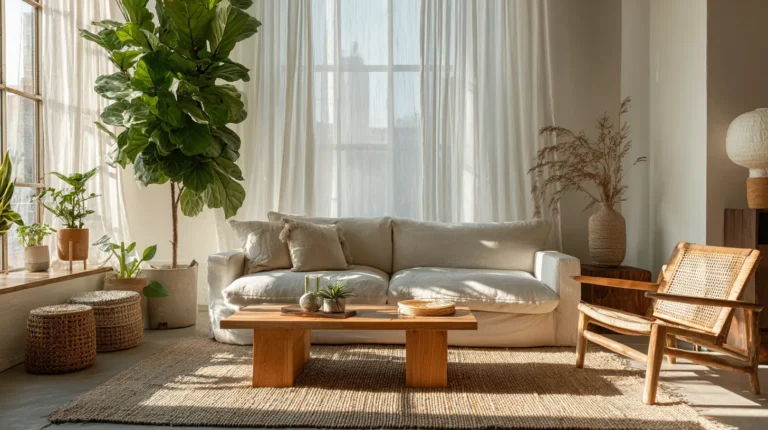
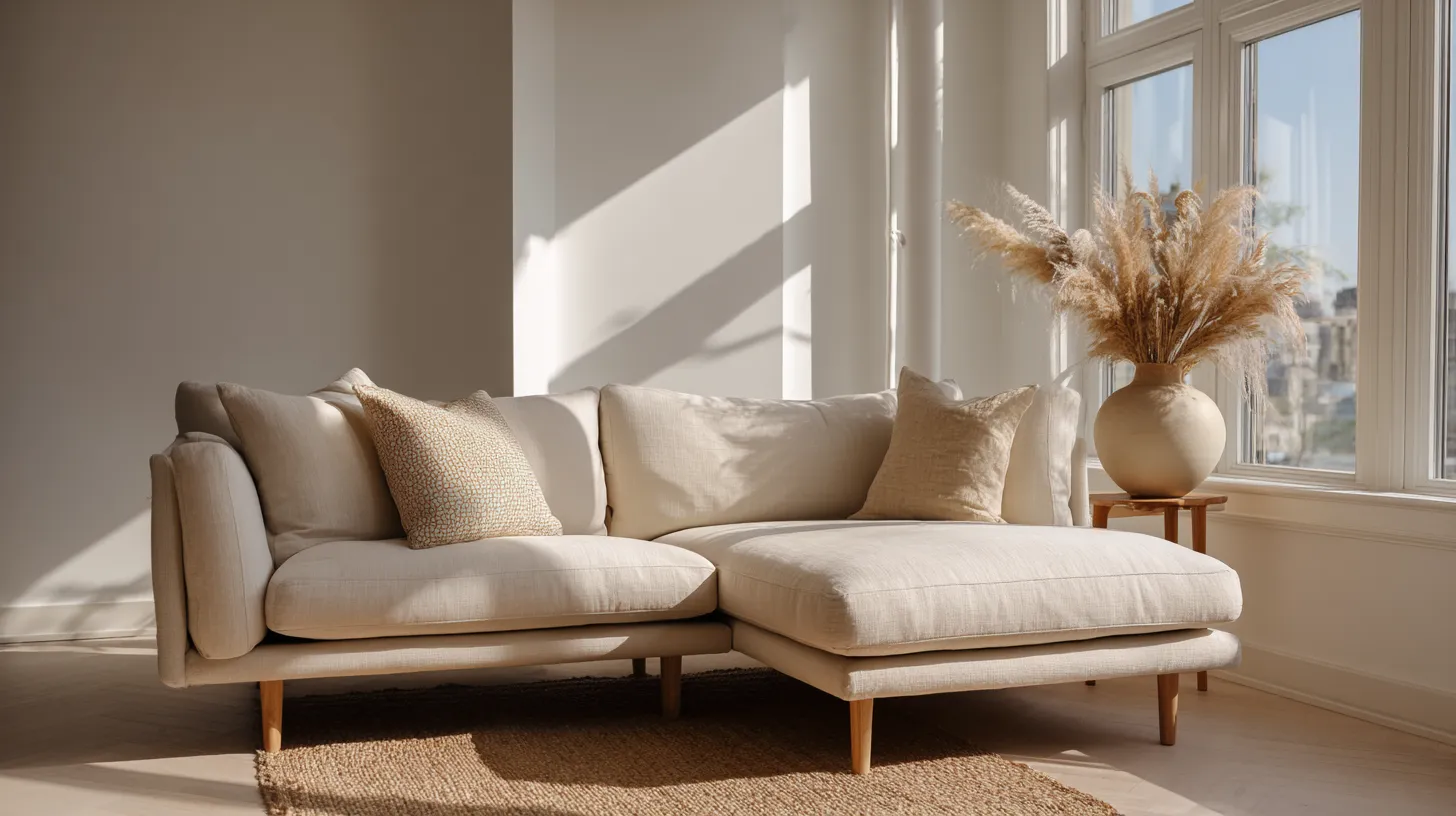
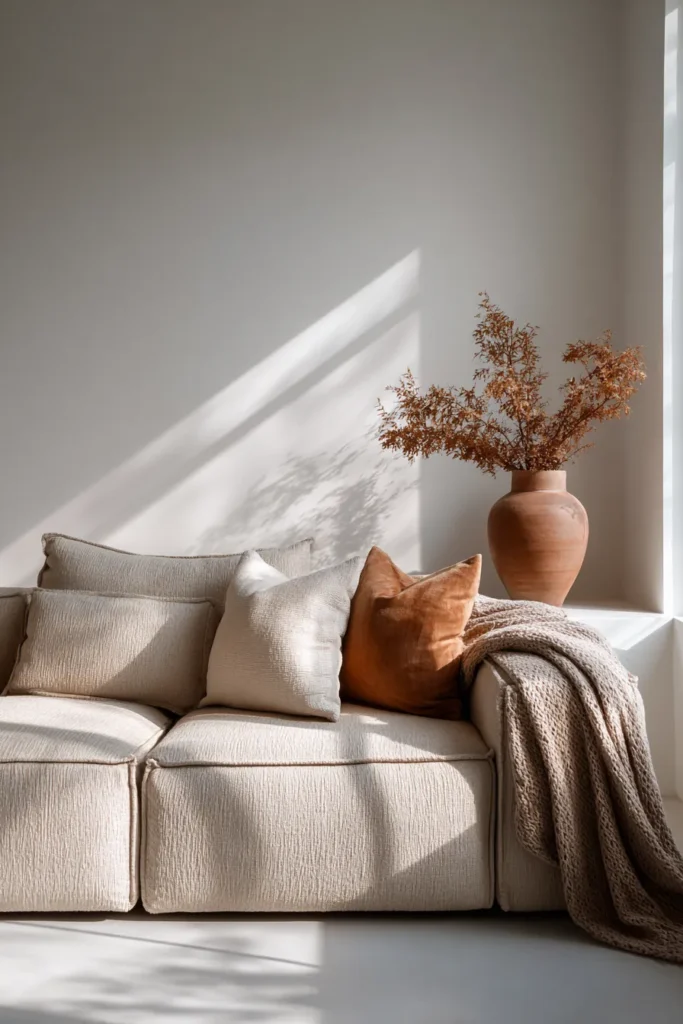
Picture a low beige linen sofa against a white wall, flanked by a slim wooden side table holding a single ceramic vase. A jute rug softens the oak flooring beneath.
This setup celebrates restraint. Each element has purpose—the sofa for rest, the table for function, the vase for a touch of life. Nothing competes for attention.
Add warmth through layered textiles: a chunky knit throw in cream, linen pillows in varying textures, perhaps one accent cushion in muted sage.
The Textural Living Room
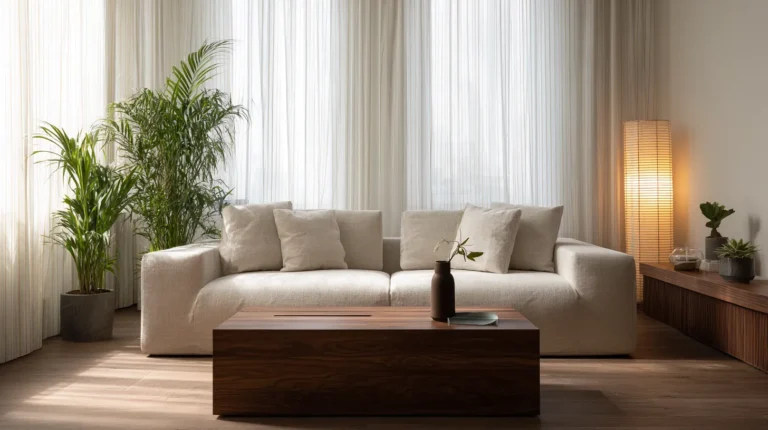
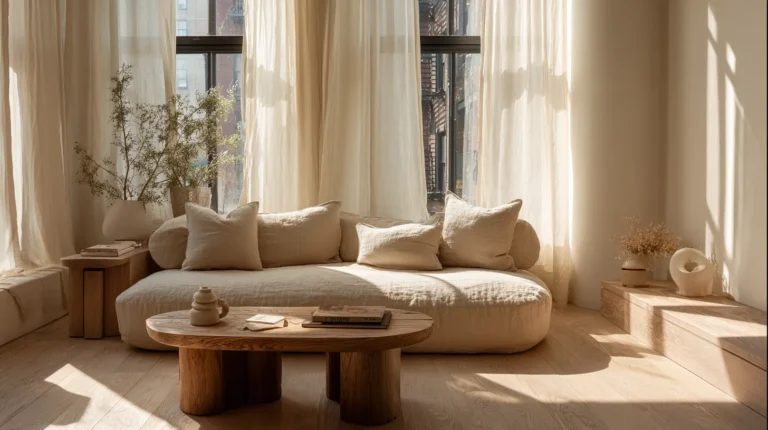
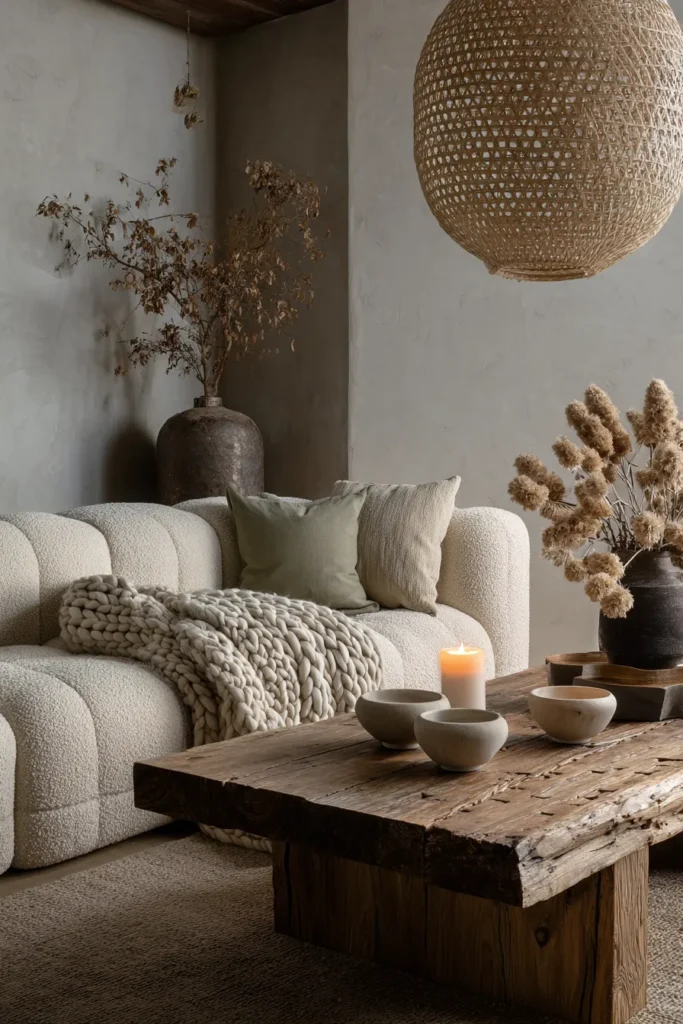
Japandi design comes alive through contrast. Pair a smooth linen sofa with a raw wood coffee table that shows natural imperfections. Balance structured furniture with organic elements like a woven basket or dried pampas grass.
Layer materials thoughtfully:
- Boucle sofa upholstery for visual depth
- Smooth ceramic accessories
- Rough-hewn wooden shelving
- Soft wool throws
- Natural rattan lighting fixtures
The interplay between refined and rustic creates richness without clutter.
The Functional Family Space
Japandi doesn’t mean sacrificing practicality. Choose a sofa with removable, washable covers in durable cotton blends. Opt for memory foam cushions that maintain shape with daily use.
Renter-Friendly Additions:
- Peel-and-stick Japandi wallpaper in soft geometric patterns
- Modular sofa sections that adapt to different layouts
- Multi-use sofa beds for guest accommodation
- Furniture risers to adjust height for personal preference
Storage ottomans in natural wood serve as footrests and hidden organization—perfect for urban apartments where every inch matters.
Smart Integration for Modern Living
The 2025 Japandi aesthetic embraces subtle technology. Install warm-toned LED strip lighting (2700-3000K) behind your sofa or under floating shelves to create ambient glow without harsh overhead lights.
Choose Japandi-compatible smart home elements: minimalist black or wood-finished speakers, cable management solutions that hide cords, and wireless charging side tables in natural materials.
The goal is technology that enhances comfort without disrupting the serene aesthetic.
Comparing Japandi Sofas to Other Styles
Japandi vs. Mid-Century Modern
While mid-century design celebrates bold colors and sculptural forms, Japandi leans toward restraint and neutral palettes. Both value quality craftsmanship and exposed wood, but Japandi sofas sit lower and emphasize horizontal lines over statement-making curves.
Mid-century pieces might feature walnut with vibrant upholstery; Japandi prefers oak or ash with muted linens. If you love both styles, choose mid-century accent chairs with a Japandi sofa as your foundation.
Japandi vs. Pure Scandinavian
Scandinavian design embraces bright whites, playful patterns, and hygge coziness. Japandi adds Japanese restraint—fewer patterns, more emphasis on natural wood tones, and deeper connection to wabi-sabi philosophy.
A Scandinavian sofa might feature cheerful cushions and light birch; a Japandi sofa uses varied neutral textures and darker woods like walnut for grounding warmth.
Material Deep Dive: What Makes Quality Japandi Sofas
Frame Construction
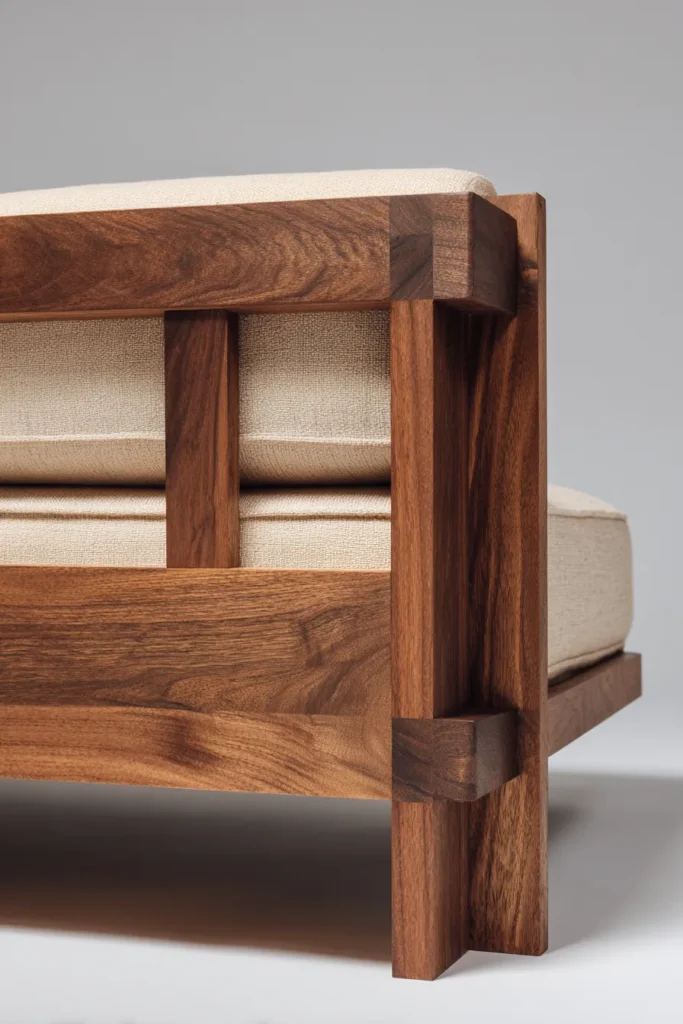
Invest in solid hardwood frames (oak, ash, walnut, or rubberwood) over engineered wood or metal. These materials age gracefully, developing character rather than showing wear.
Look for:
- Mortise-and-tenon joinery (stronger than screws)
- Hand-finished legs that show wood grain
- Sustainable FSC certification
- Natural oil finishes instead of heavy lacquers
A quality frame should feel substantial without being heavy. Lift one corner gently—it shouldn’t flex or creak.
Cushion Fill and Support
Memory foam offers ergonomic support that contours to your body. Perfect for daily use and long movie marathons.
Down-blend provides luxurious softness but requires regular fluffing. Best for low-traffic guest rooms or design-focused spaces.
High-density foam with down toppers balances support and comfort—the sweet spot for most Japandi living rooms.
Choose cushions with removable covers for easy cleaning. Life happens, and washable upholstery means your sofa stays beautiful longer.
Sustainable and Eco-Friendly Options
Japandi philosophy honors the environment. Seek out:
- Recycled fabric upholstery (including innovative options made from plastic bottles)
- VOC-free finishes and adhesives
- Local or fair-trade sourced materials
- Brands with transparent supply chains
Curved edges using bent plywood techniques reduce waste while adding organic softness to geometric frames. This 2025 trend marries sustainability with evolving aesthetics.
Budget-Friendly Japandi Sofa Options
Price Tiers and What to Expect
| Price Range | Quality Level | Expected Features |
|---|---|---|
| $500-$800 | Entry-level | Engineered wood frame, polyester blends, basic construction |
| $800-$1,500 | Mid-range | Rubberwood or pine frame, linen/cotton blends, removable covers |
| $1,500-$2,500 | Premium | Solid hardwood, memory foam, boucle or quality linen |
| $2,500+ | Luxury | FSC oak/walnut, down-blend cushions, artisan craftsmanship |
Budget Japandi Sofas Under $1,000:
- Look for direct-to-consumer brands that skip retail markups
- Choose simpler designs (straight arms, standard legs)
- Opt for cotton blends over pure linen initially
- Consider floor models or seasonal sales from established brands
Quality doesn’t always require luxury pricing. A well-constructed mid-range sofa with proper care will outlast a cheap replacement cycle.
DIY Japandi Sofa Upholstery
Transform an existing sofa with new slipcovers in natural linen or cotton. Choose neutral tones and ensure tailored fit—saggy covers break the clean-lined aesthetic.
Replace dark wood legs with lighter oak or ash alternatives from hardware stores. Sand and oil them yourself for a custom finish that costs under $50.
Add Japandi character through textiles: a handwoven throw, linen cushion covers in varying textures, or a single accent pillow in muted terracotta.
Care and Maintenance for Longevity
Fabric Care by Material
Linen:
- Vacuum weekly with upholstery attachment
- Spot-clean spills immediately with cold water
- Professional cleaning annually
- Embrace natural wrinkling as part of the aesthetic
Cotton Blends:
- Machine-wash removable covers in cold water
- Air dry to prevent shrinkage
- Iron on medium heat while slightly damp
- Rotate cushions monthly for even wear
Boucle:
- Brush gently with soft-bristle brush weekly
- Blot (don’t rub) liquid spills
- Use specialized upholstery cleaner for stains
- Avoid direct sunlight to prevent fading
Velvet:
- Vacuum with soft brush attachment
- Steam refresh every few months
- Address pile direction by brushing in one direction
- Professional cleaning for deep stains
Wood Frame Care
Natural wood deserves gentle attention. Dust weekly with microfiber cloth. Apply furniture oil (like Danish oil or beeswax) every 6-12 months to nourish the wood and maintain its luster.
Avoid placing your sofa in direct sunlight for extended periods—UV rays can fade and dry the wood. Use coasters under drinks and address water rings immediately by gently buffing with fine steel wool and refinishing the spot.
Pet-Proof Japandi Upholstery
Choose tightly woven fabrics like performance linen blends that resist pet hair and scratching. Darker neutrals (charcoal, taupe) hide fur better than light beige.
Add washable throws in strategic spots where pets prefer to lounge. Train pets to use specific cushions, then rotate and wash those covers frequently.
Consider professional fabric protection treatment (like Scotchgard) for added stain resistance, though ensure it doesn’t alter the fabric’s natural texture.
Trending Now: 2025 Japandi Sofa Styles
Curved Edges and Organic Forms
The hard minimalism of the 2010s is softening. This year’s Japandi sofas feature gentle curved arms and rounded corners that feel more welcoming without sacrificing clean lines.
These organic shapes connect to nature—think river stones and rolling hills. They’re especially beautiful in smaller spaces where hard angles can feel harsh.
Recycled and Upcycled Fabrics
Sustainability moves from buzzword to standard. Look for upholstery made from recycled ocean plastics, deadstock fabrics, or regenerated textiles that perform as beautifully as virgin materials.
Brands are increasingly transparent about sourcing. Choose companies that share their environmental impact openly—it’s a sign of authentic commitment rather than greenwashing.
Modular and Adaptable Designs
Urban living demands flexibility. Modular Japandi sofas with reconfigurable sections adapt as your life changes—from studio apartment to family home, from social space to home office backdrop.
These pieces often feature hidden storage, convertible sleeping surfaces, and connection hardware concealed within the design aesthetic.
Essential Checklist: Your Japandi Sofa Selection Guide
Before you buy, consider:
- Frame Material: Solid hardwood (oak, ash, walnut) for longevity
- Upholstery: Natural, breathable fabrics (linen, cotton, boucle)
- Color Palette: Neutral tones (beige, gray, taupe) or earthy accents (sage, clay)
- Profile: Low-back design with clean lines
- Size: Appropriate scale for your room (measure first!)
- Legs: Exposed wood in natural finish for that signature look
- Comfort: Test seat depth and back support in person if possible
- Sustainability: FSC certification, eco-friendly fabrics
- Budget: Balance quality with realistic spending ($800-$2,500 sweet spot)
- Maintenance: Consider your lifestyle—pets, kids, entertaining
Red Flags to Avoid:
- Heavy ornamentation or carved details
- Bright, saturated colors
- Overly plush, bulky proportions
- Particle board frames
- Non-removable covers
- Chemical odors (sign of VOCs)
Where Your Japandi Journey Begins
Your living room is more than square footage and furniture placement. It’s the heartbeat of your home—where you breathe, connect, and simply be.
Choosing a Japandi sofa is choosing intentionality. It’s selecting beauty that serves you, quality that lasts, and design that creates space rather than filling it. Every material, every line, every neutral tone works together to build a sanctuary from the noise outside.
Trust the process. Sit on different sofas, feel the fabrics, notice how your body responds to various profiles. Your perfect piece will feel like recognition rather than compromise—a quiet “yes” that needs no justification.
The beauty of Japandi design is that it grows with you, ages alongside you, and holds space for all the life moments yet to come. Your sofa isn’t just where you sit. It’s where you return to yourself.
Frequently Asked Questions
What is a Japandi sofa?
A Japandi sofa blends Japanese minimalism with Scandinavian warmth, featuring low-profile designs, neutral upholstery in beige or gray, natural wood frames (typically oak or ash), and clean lines. These pieces emphasize both aesthetic beauty and functional comfort, using materials like linen, cotton, or boucle for tactile appeal.
How do I choose a sofa for a Japandi living room?
Focus on clean-lined, low-back designs with natural materials. Select neutral tones that complement your existing palette, ensure the scale fits your space (compact 2-3 seaters for small rooms), and prioritize exposed wooden legs in light or medium wood tones. Test for ergonomic support—Japandi values both form and function.
Are Japandi sofas good for small living rooms?
Absolutely. Their low profiles and exposed legs create visual space by allowing light and sightlines to flow underneath and around them. Choose 2-seater models (150-176 cm wide) with minimal arms and avoid bulky cushions. The clean aesthetic prevents visual clutter, making small rooms feel larger and more serene.
What materials are used in authentic Japandi sofas?
Quality Japandi sofas feature solid hardwood frames (rubberwood, oak, ash, walnut), natural upholstery fabrics (linen, cotton, wool, boucle), and sometimes memory foam cushioning for ergonomic support. Sustainable FSC-certified wood and eco-friendly finishes align with the design philosophy’s respect for nature and longevity.
What’s the difference between a Japandi sofa and a Scandinavian sofa?
While both emphasize natural materials and functionality, Japandi sofas incorporate Japanese wabi-sabi principles—embracing imperfection, lower profiles, darker wood tones, and more restrained color palettes. Scandinavian sofas tend toward brighter whites, lighter woods like birch, and occasionally bolder patterns. Japandi adds contemplative minimalism to Scandinavian coziness.