
Table of Contents
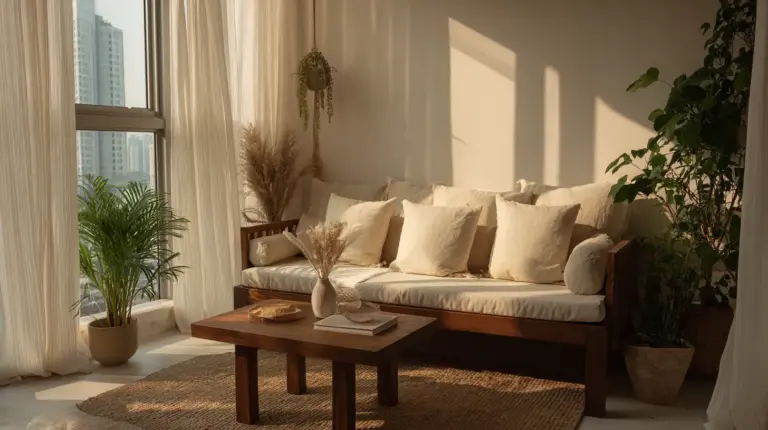
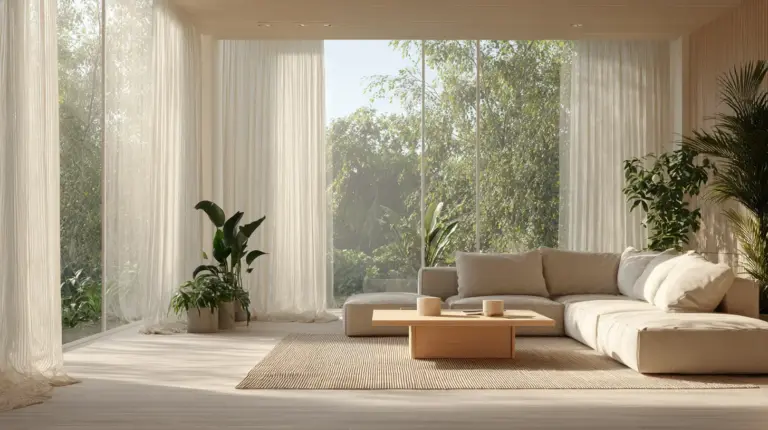
There’s something quietly powerful about a room that feels both grounded and light. A space where minimalism meets warmth, where every accessory has purpose but nothing feels cold or untouchable. This is the essence of Japandi style—a marriage of Japanese simplicity and Scandinavian coziness that transforms living rooms into sanctuaries.
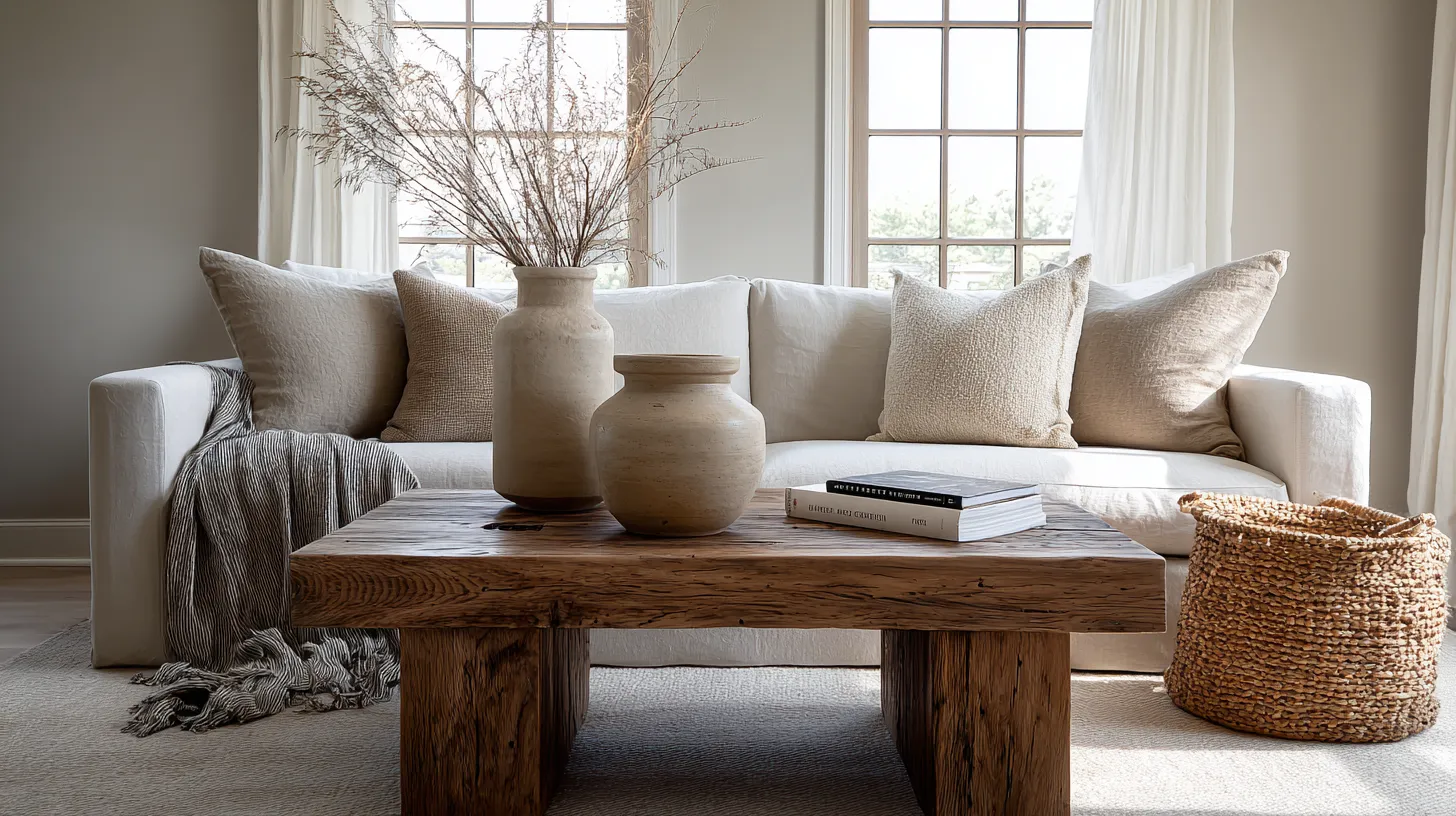
Choosing the right accessories for your Japandi living room isn’t about filling space. It’s about curating moments—a handmade ceramic vase catching afternoon light, a linen throw draped just so over natural wood furniture, a single bonsai tree commanding attention through restraint. These pieces whisper rather than shout.
In this guide, we’ll walk through the essential Japandi living room accessories that bring this aesthetic to life. You’ll discover how to layer textures, embrace wabi-sabi imperfection, and source sustainable pieces that honor both your space and the planet. Whether you’re working with a sprawling room or a compact apartment, these principles adapt beautifully.
Let’s create a living room that feels like a deep breath—calm, intentional, and undeniably yours.
Understanding Japandi Style Accessories
Japandi decor merges Japanese minimalism with Scandinavian hygge, creating what designers call “warm minimalism.” Unlike stark contemporary spaces, Japandi living rooms embrace natural materials and organic forms. The style celebrates function without sacrificing soul.
The foundation lies in neutral palettes—think earthy tones like beige, taupe, warm gray, and soft cream. These colors create a canvas where textures become the story. Wood, bamboo, rattan, linen, and stone work together in layered harmony.
Every accessory serves dual purposes: practical function and aesthetic beauty. A ceramic bowl isn’t just decorative; it holds keys or dried botanicals. This intentionality distinguishes Japandi from other minimalist approaches—nothing is arbitrary, yet nothing feels precious or untouchable.
Essential Japandi Living Room Accessories
Ceramics and Pottery
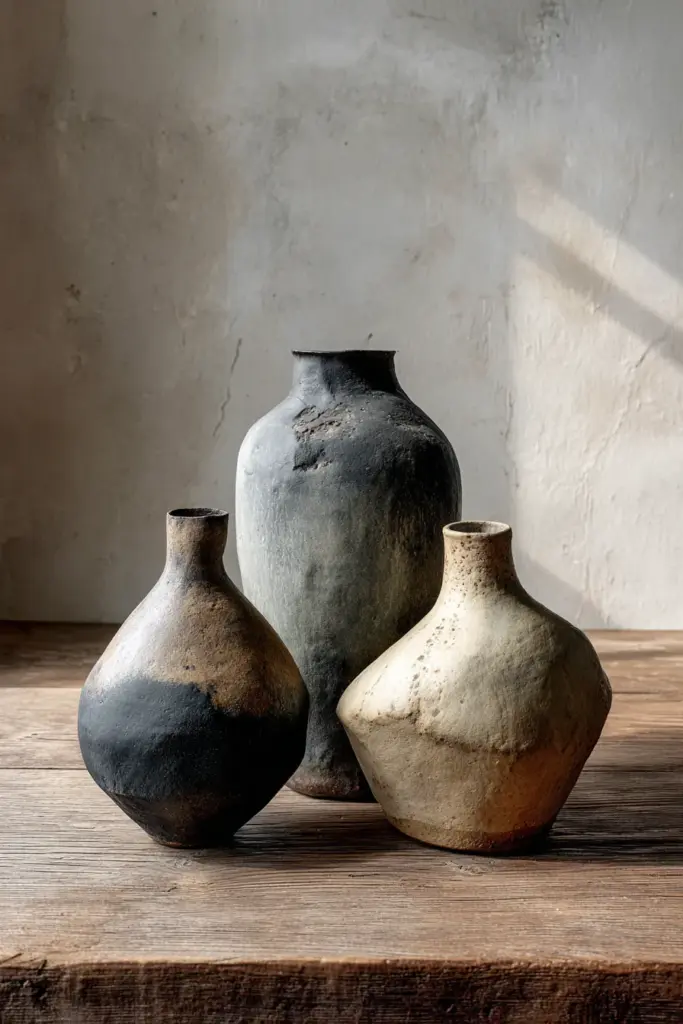
Handmade ceramics embody wabi-sabi philosophy—the beauty of imperfection. Look for vessels with visible throwing marks, irregular glazes, or asymmetrical forms. These pieces tell stories of human hands and natural processes.
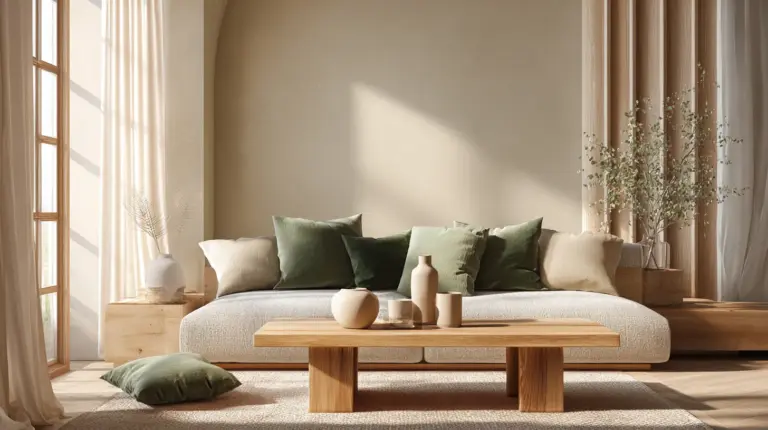
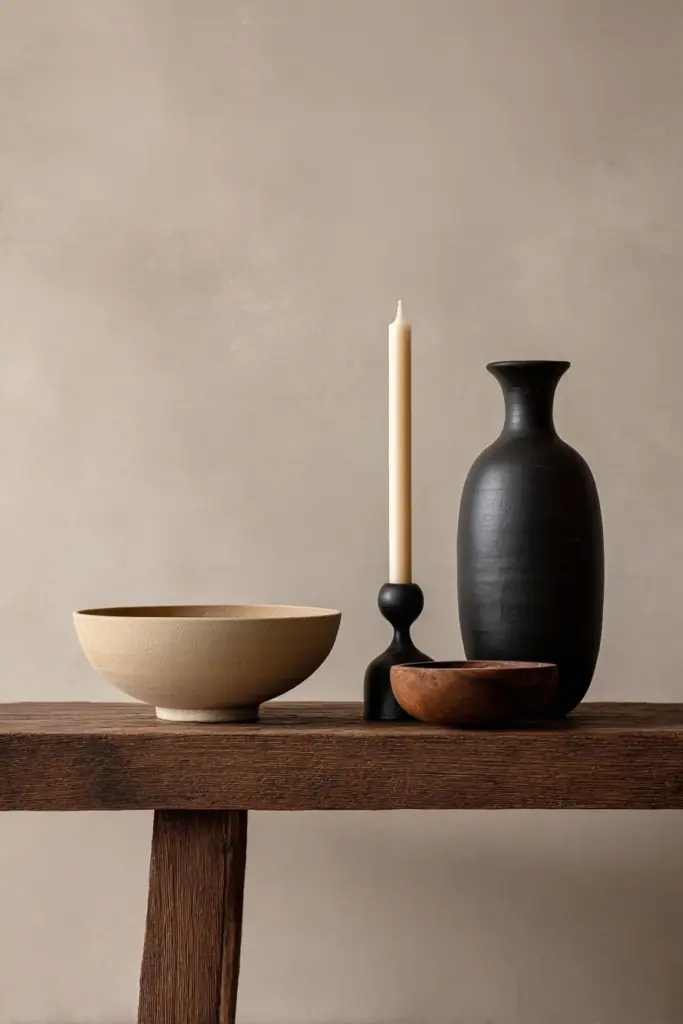
Place a rustic ceramic vase on your coffee table or console. Choose pieces in muted tones—matte charcoal, soft beige, or unglazed clay. Group three vases of varying heights for visual rhythm, or let a single statement piece stand alone. The key is restraint; one beautiful vessel outshines a crowded collection.
Japanese raku pottery or Scandinavian stoneware fits perfectly here. Visit local artisan markets or explore sustainable sources that prioritize craftsmanship over mass production. Each piece becomes an investment in both beauty and mindful living.
Natural Textiles and Throws
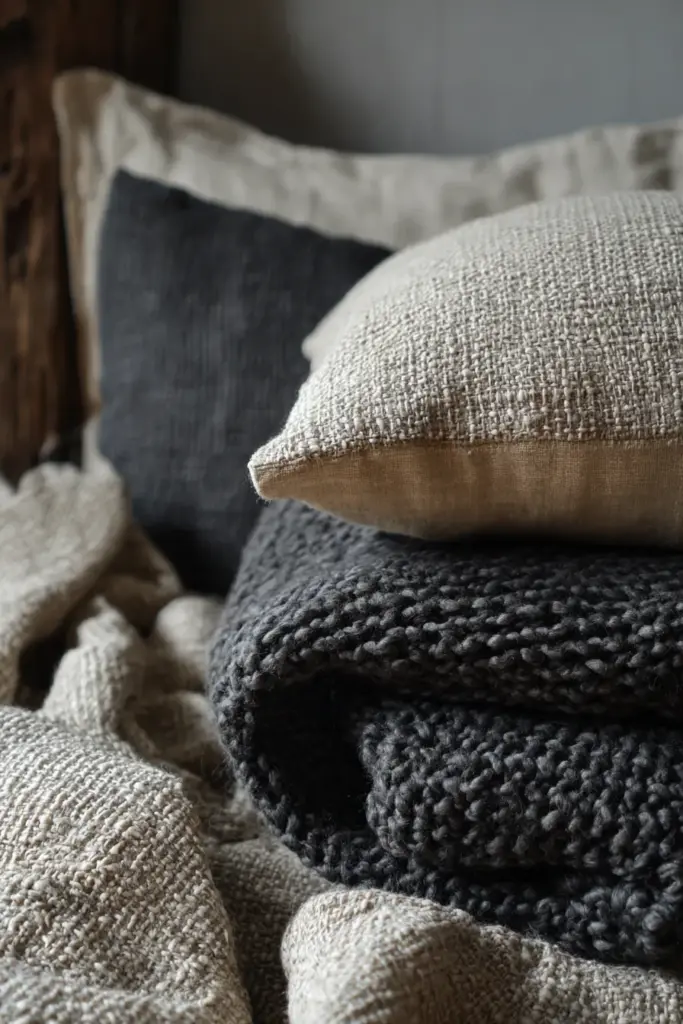
Texture brings warmth to Japandi’s minimalist foundation. Linen throw blankets in oatmeal, charcoal, or natural beige soften the clean lines of your furniture. Drape them casually over armrests or fold them neatly at sofa ends—both approaches work depending on your energy that day.
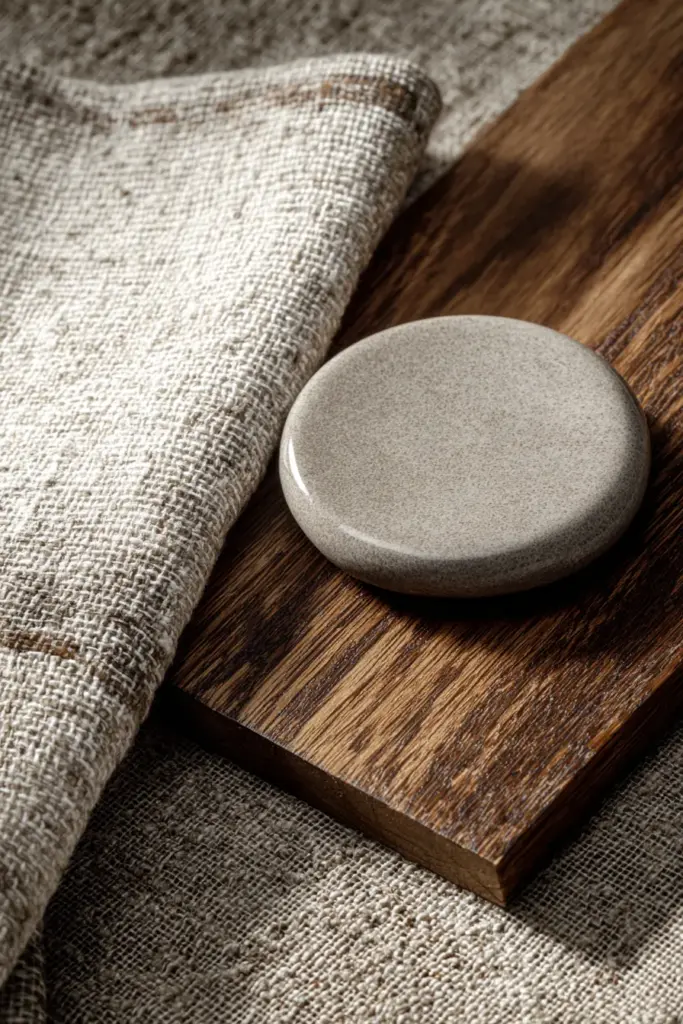
Choose fabrics with visible weaves—the slight irregularity adds character. Organic cotton, hemp, or Belgian linen offers breathability and ages beautifully. Avoid synthetic fibers; they lack the tactile honesty Japandi style craves.
Layer different textures: a chunky knit throw over smooth linen cushions creates depth without visual chaos. Stick to your neutral palette but vary the weights and weaves. This subtle complexity makes spaces feel lived-in and inviting.
Plants and Greenery
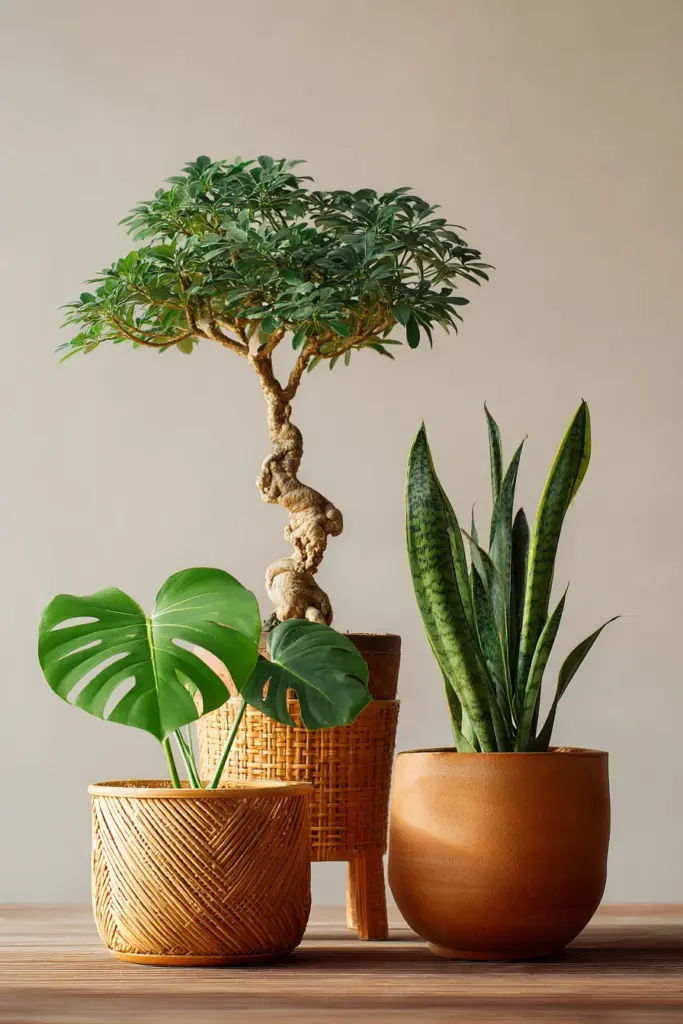
Greenery connects indoor spaces to nature—a cornerstone of both Japanese and Scandinavian design. However, Japandi style favors restraint over jungle vibes. Select a few statement plants rather than filling every surface.
Best plants for Japandi living rooms:
- Bonsai trees (traditional Japanese artistry)
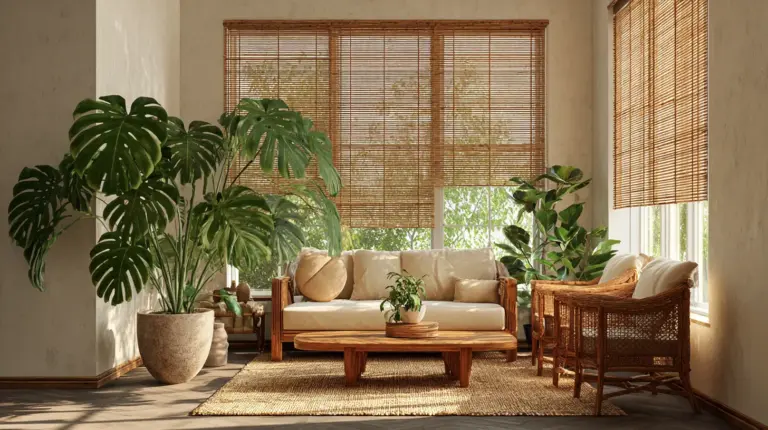
- Monstera deliciosa (sculptural leaves)
- Snake plants (vertical drama, low maintenance)
- Fiddle leaf figs (bold presence)
- Peace lilies (soft, organic forms)
Place plants at varying heights: a large floor plant in a woven basket, a mid-sized pothos on a plant stand, a small succulent arrangement on shelving. This creates visual layers without clutter.
Choose planters in natural materials—terracotta, concrete, woven rattan, or matte ceramic. Skip bright colors or busy patterns. The plant itself provides all the interest needed.
Wooden Accessories
Wood grounds Japandi spaces with organic warmth. Look for accessories in light woods like oak, ash, or pine—these reflect Scandinavian influences. Darker woods like walnut add depth when used sparingly.
Wooden trays organize coffee table items while adding texture. Use them to corral remote controls, candles, or a small book stack. Wooden bowls work beautifully on consoles or sideboards, empty or filled with river stones or dried botanicals.
Consider wooden wall art—geometric panels, carved reliefs, or simple floating shelves in raw wood. These pieces add dimension without overwhelming your walls. Ensure wood tones coordinate: mixing too many finishes creates visual noise.
Ambient Lighting Accessories
Lighting transforms Japandi living rooms from simple to sublime. Natural light is ideal, but thoughtful artificial lighting creates evening ambiance that feels equally serene.
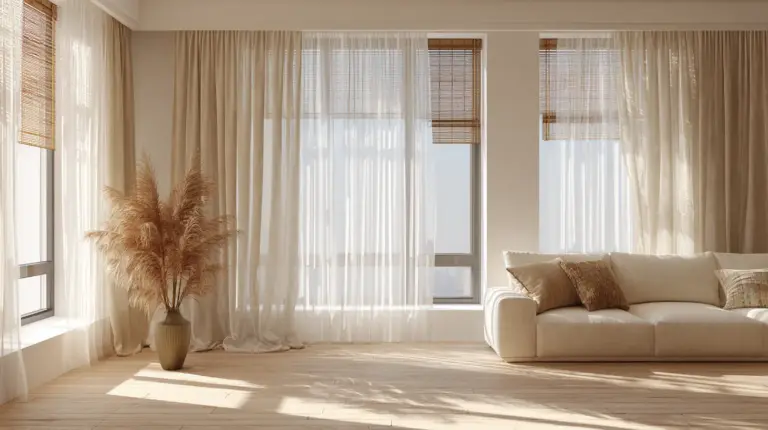
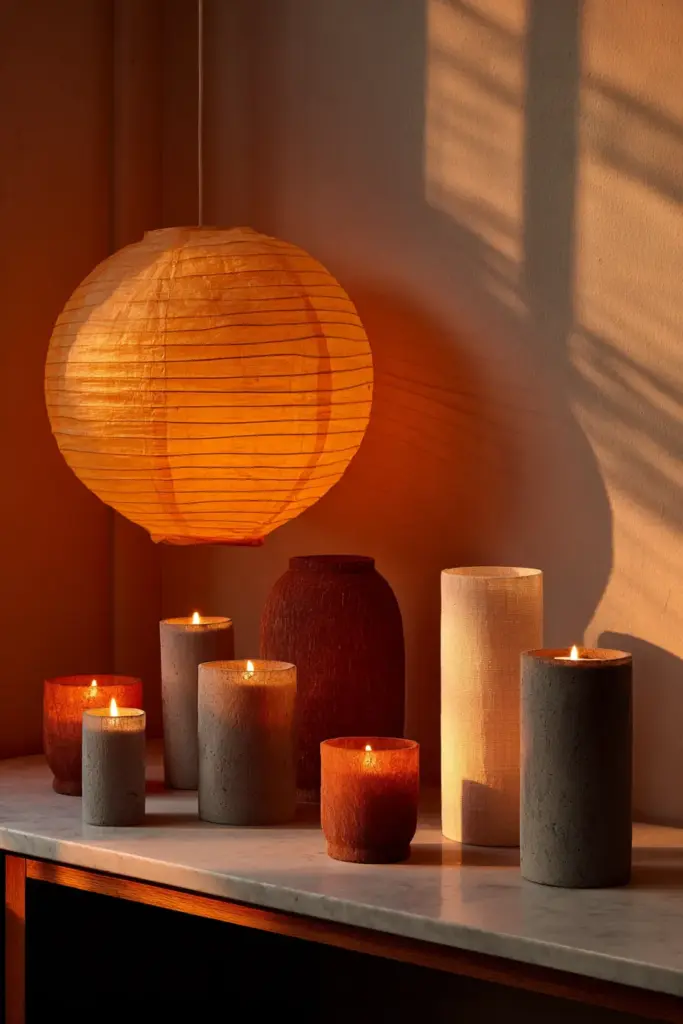
Paper lanterns or rice paper pendant shades diffuse light softly—a nod to Japanese shoji screens. Place them where they cast gentle shadows on walls. Avoid harsh overhead lighting; it flattens the textures you’ve carefully layered.
Japandi lighting accessories include:
- Ceramic table lamps with linen shades
- Wooden floor lamps with adjustable arms
- Candles in concrete or ceramic holders
- Himalayan salt lamps for warm, natural glow
- LED strips behind floating shelves (subtle, not disco)
Layer your lighting: task lighting for reading, ambient lighting for mood, accent lighting to highlight artwork or plants. Dimmers let you adjust intensity throughout the day, mimicking natural light cycles.
Woven Elements
Rattan, bamboo, and wicker bring textural warmth that’s distinctly earthy. These materials bridge the gap between Japanese craft traditions and Scandinavian comfort.
Woven baskets serve double duty: storage solutions that look intentional. Use large baskets for blanket storage, medium ones for magazines, small ones for remotes. Stack them in corners or tuck them under console tables.
Consider rattan accessories like trays, coasters, or mirror frames. A woven wall hanging adds softness without color disruption. These pieces age gracefully, developing patina that enhances their wabi-sabi appeal.
Look for quality weaving with consistent patterns and sturdy construction. Cheap synthetics unravel quickly and lack the authentic texture that makes Japandi style feel premium.
Styling Your Japandi Accessories
The Rule of Three and Height Variation
Designers use odd numbers to create visual interest without symmetry. When grouping accessories, use three or five pieces rather than two or four. This feels more organic and less staged.
Vary heights to guide the eye. On a console table: place a tall vase (15-18 inches), a medium bowl (8-10 inches), and a low candle holder (3-5 inches). This creates a pleasing visual rhythm that feels balanced but not matchy.
Leave negative space between groupings. Not every surface needs decoration—empty space lets your carefully chosen pieces breathe and claim attention.
Color Psychology in Japandi Palettes
Colors affect mood, and Japandi style leverages this scientifically. Taupe and beige promote calmness and focus—ideal for living rooms meant for conversation and relaxation. Warm grays add sophistication without coldness.
Introduce accent colors through accessories, but keep them earthy: terracotta, sage green, soft rust, or muted navy. These tones complement rather than compete with your neutral base.
Avoid pure white; it feels sterile. Cream, ivory, or warm off-white maintains brightness while feeling more inviting. Similarly, skip true black in favor of charcoal or deep brown for depth.
Layering Textures Without Clutter
Japandi’s magic happens when multiple textures coexist in harmony. Smooth ceramics, rough linen, polished wood, matte stone—each material tells part of the story.
Start with larger textural elements: a leather sofa or linen armchair. Layer throws and cushions in varying fabrics. Add wooden trays and ceramic vases. Finish with woven baskets or rattan accents.
Keep quantities minimal. Five well-chosen textures feel luxurious; ten feel chaotic. Edit ruthlessly—if something doesn’t contribute to the calm, remove it.
Budget-Friendly Japandi Accessories
DIY and Upcycling Ideas
Creating Japandi style doesn’t require designer budgets. Thrift stores offer treasures waiting for simple transformations.
Upcycling projects:
- Sand and refinish old wooden trays in natural oil
- Paint glass vases with matte spray paint in neutral tones
- Wrap plain pots in jute rope for instant texture
- Frame pressed leaves or botanical prints in simple wooden frames
- Create concrete planters using DIY molds and quick-set cement
Local markets in places like Divisoria offer affordable rattan baskets and bamboo accessories. Online platforms like Shopee Philippines stock ceramic vases and linen textiles at accessible price points. Filter searches by “natural materials” and “neutral colors.”
Quality matters more than quantity. One beautiful handmade bowl outweighs five cheap imports. Save for pieces you’ll treasure rather than filling space quickly.
Shopping Smart for Sustainable Japandi Decor
Sustainability aligns perfectly with Japandi philosophy—both prize longevity and respect for materials. Seek out low-VOC ceramics, recycled rattan, and organic textiles.
Support local artisans when possible. Filipino craftspeople create stunning bamboo and rattan work that rivals expensive imports. These purchases support communities while reducing shipping emissions.
Check materials before buying: solid wood over veneer, natural fibers over polyester, hand-thrown pottery over mass-produced ceramics. These items last decades, not seasons, ultimately saving money and resources.
Small-Space Japandi Styling
Apartment-Friendly Accessories
Compact living rooms demand even more thoughtful curation. Every accessory must justify its presence through function or profound beauty—ideally both.
Choose dual-purpose pieces: ottomans with hidden storage, nesting tables that expand when needed, wall-mounted shelves that free floor space. A beautiful basket stores extra pillows while adding texture.
Vertical space becomes crucial. Wall-mounted planters, floating shelves, and tall floor lamps draw eyes upward, making rooms feel larger. Keep low surfaces mostly clear—visual breathing room creates the illusion of space.
Maintaining Minimalism in Tight Quarters
The “one in, one out” rule prevents accumulation. When adding a new accessory, remove something else. This discipline maintains the serene quality Japandi spaces require.
Regular editing sessions help. Monthly, assess each accessory: Does it serve a purpose? Does it spark joy? If neither, remove it. Store seasonal items and rotate them—dried branches in autumn, flowering branches in spring.
Transparent or reflective accessories help: glass vases, mirrors with wooden frames, acrylic trays. These add function without visual weight, perfect for smaller rooms.
Maintenance Tips for Japandi Accessories
Natural materials need proper care to maintain their beauty. These simple practices extend the life of your investment pieces.
Wood care:
- Dust bamboo and rattan with soft, dry cloths
- Avoid water on untreated wood; use wood oil periodically
- Keep wooden accessories away from direct sunlight to prevent fading
Ceramic maintenance:
- Hand-wash unglazed pottery; dishwashers damage surfaces
- Remove water rings promptly with gentle rubbing
- Store carefully to prevent chips—wabi-sabi celebrates age, not carelessness
Textile care:
- Wash linen throws in cold water, air dry to prevent shrinkage
- Vacuum woven baskets to remove dust from crevices
- Rotate cushions and throws seasonally for even wear
Plants require attention too. Wipe large leaves with damp cloths, rotate pots for even growth, and check soil moisture weekly. Healthy plants elevate the entire space.
2026 Japandi Trends
Upcycled and Reclaimed Accessories
Sustainability moves from trend to standard. Expect more accessories made from reclaimed wood, recycled glass, and repurposed metals. These pieces carry history—perfectly aligned with wabi-sabi principles.
Artisans increasingly offer “made-to-order” ceramics using local clay and natural glazes. This slow design movement prioritizes craftsmanship and reduces waste.
Biophilic Enhancements
Biophilic design—connecting humans to nature—deepens in Japandi spaces. Beyond plants, look for accessories incorporating natural imagery: leaf-printed cushions, stone-inspired ceramics, wood grain wall art.
Living walls or moss art bring greenery without floor space. Water features—small tabletop fountains—add soothing sound while maintaining minimalist aesthetics.
Darker Japandi Palettes
While beige and taupe dominate, 2026 sees richer tones emerging: deep terracotta, charcoal, warm espresso. These add drama while maintaining earthiness. Use darker accessories as accents: a black ceramic vase against beige walls, charcoal cushions on natural linen sofas.
This evolution adds depth without abandoning Japandi’s calm foundation. The key is balance—darker tones ground lighter spaces rather than overwhelming them.
Essential Japandi Accessories Checklist
Before shopping, assess what you truly need. This checklist guides intentional purchases:
Foundation pieces:
- 2-3 ceramic vases in varying heights
- Wooden tray for coffee table organization
- Large woven basket for blanket storage
- Quality linen or cotton throw blanket
Living elements:
- One statement floor plant with appropriate planter
- Small succulent or bonsai for tabletop
- Natural fiber rug (jute, sisal, or wool)
Lighting:
- Adjustable floor lamp with natural materials
- 3-5 candles in neutral holders
- Paper lantern or fabric pendant shade
Textural accents:
- 4-6 cushions in mixed natural fabrics
- Wooden bowl or decorative object
- Rattan or bamboo accessory (tray, coaster set, or mirror)
Personal touches:
- Simple framed art or botanical prints
- Coffee table book on design or nature
- Small ceramic dish for keys or jewelry
This list prevents impulse purchases that clutter rather than enhance. Acquire pieces gradually, ensuring each addition feels intentional.
Bringing It All Together
Creating a Japandi living room isn’t about following rigid rules—it’s about cultivating a feeling. That feeling is calm, grounded, and effortlessly beautiful.
Start with the accessories that speak to you most. Maybe it’s a handmade vase you discovered at a local market, or linen throw in perfect oatmeal beige. Build slowly around these anchor pieces, letting your space evolve organically.
Remember that Japandi style celebrates imperfection and personal connection. Your living room should reflect your life, not a magazine spread. The coffee table book you actually read, the plant you’ve nurtured for years, the wooden bowl inherited from family—these authentic pieces create spaces that feel truly lived in.
Trust the process of curation. You’ll know when your living room reaches that sweet spot between minimal and warm, between Japanese restraint and Scandinavian coziness. It’s when you walk into the room and feel your shoulders drop, your breath slow, your mind quiet.
That’s the gift of thoughtful Japandi accessorizing—a living room that doesn’t just look beautiful but makes you feel beautifully, peacefully yourself.
Frequently Asked Questions
What are the must-have Japandi living room accessories?
Essential Japandi accessories include ceramic or pottery vases in neutral tones, natural fiber textiles like linen throws and cotton cushions, wooden decorative pieces such as trays and bowls, woven rattan or bamboo baskets, and carefully selected greenery in simple planters. Ambient lighting accessories—paper lanterns, ceramic lamps, or quality candles—complete the foundation. Focus on quality over quantity, choosing handmade or artisan pieces that showcase natural materials and embrace wabi-sabi imperfection.
How do I style Japandi accessories on a budget?
Budget Japandi styling succeeds through smart sourcing and DIY creativity. Shop local markets like Divisoria for affordable rattan and bamboo pieces, browse Shopee Philippines for neutral ceramics and textiles, and visit thrift stores for items you can upcycle. Transform glass jars into vases with matte spray paint, refinish wooden trays with natural oil, or create concrete planters using inexpensive molds. Invest in one or two statement pieces—a quality throw or handmade vase—while filling gaps with budget finds in coordinating neutral tones.
What colors work best for Japandi living room accessories?
Japandi color palettes center on warm neutrals: beige, taupe, cream, soft gray, and warm white. Wood tones should lean lighter (oak, ash, pine) with occasional darker accents (walnut, charcoal). Earth-toned accents add subtle interest: terracotta, sage green, muted rust, or soft navy. Avoid pure white, which feels stark, and bright colors, which disrupt the calm aesthetic. Black appears sparingly as charcoal or deep brown. This restrained palette allows textures and natural materials to provide visual interest without color competition.
How do I incorporate plants in a Japandi living room?
Select a few statement plants rather than creating a jungle. Ideal choices include bonsai trees for traditional Japanese influence, sculptural plants like monstera or fiddle leaf fig, and low-maintenance options like snake plants or peace lilies. Place plants at varying heights: large floor plants in woven baskets, medium plants on simple stands, small succulents on shelving. Choose planters in natural materials—terracotta, concrete, matte ceramic, or woven rattan—in neutral colors. Leave space between plants; Japandi style prizes restraint over abundance.
How do I maintain natural Japandi accessories?
Care for wood and bamboo by dusting with soft, dry cloths and periodically treating with natural wood oil; keep them away from direct sunlight to prevent fading. Hand-wash unglazed ceramics gently and dry promptly to avoid water stains. Wash linen textiles in cold water and air dry to maintain texture and prevent shrinkage. Vacuum woven baskets to remove dust from crevices. For plants, wipe large leaves monthly, rotate pots for even light exposure, and check soil moisture weekly. Regular gentle maintenance preserves the natural beauty of materials while honoring their inevitable aging—perfectly aligned with wabi-sabi philosophy.
Where can I buy authentic Japandi accessories in the Philippines?
Find Japandi accessories through multiple channels in the Philippines. Online platforms like Shopee and Lazada offer ceramic vases, linen textiles, and bamboo pieces—filter by u0022natural materialsu0022 and read reviews carefully. Local markets such as Divisoria and Dapitan provide affordable rattan baskets and wooden accessories. Support Filipino artisans through craft fairs and local maker communities for handmade ceramics and woven goods. International retailers like IKEA stock Japandi-aligned basics. For premium pieces, explore boutique home décor stores in BGC or Makati. Prioritize sellers emphasizing sustainable sourcing and craftsmanship over mass production.