
Table of Contents
There’s something quietly transformative about the way light moves through a room. Not the harsh, clinical kind that flattens everything into sameness, but the soft, shifting glow that makes shadows dance and textures whisper. That’s the heart of Japandi lighting—a delicate balance between Japanese wabi-sabi and Scandinavian hygge, where every beam serves a purpose and every shadow tells a story.
If you’ve ever walked into a space and felt instantly calmer, chances are the lighting had everything to do with it. Japandi living rooms understand this instinctively. They layer warmth and simplicity, blending natural materials with thoughtful illumination to create an atmosphere that feels both grounded and elevated.
In this guide, we’ll walk through exactly how to craft that mood in your own home. From choosing the right color temperature to layering ambient, task, and accent lighting, you’ll discover how light becomes the invisible thread that ties minimalism to comfort. Whether you’re working with a sun-drenched space or a Manila apartment with limited natural light, these principles will help you create a living room that breathes calm into every corner.
Let’s dim the overhead, light a few candles, and explore the art of Japandi lighting together.
Understanding the Japandi Lighting Philosophy
Japandi isn’t about perfection—it’s about intention. This design approach marries the Japanese appreciation for imperfection and natural aging with Scandinavia’s love of cozy, functional simplicity. When it comes to lighting, that translates to fixtures and bulbs that feel organic, unforced, and deeply human.
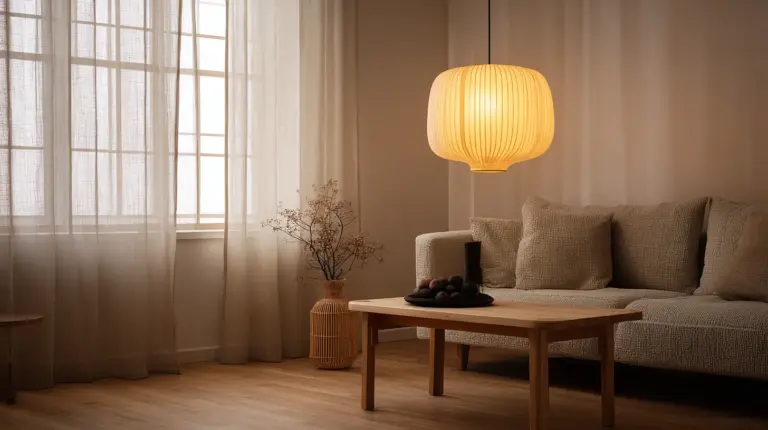
The goal is never to flood a room with brightness. Instead, you’re painting with light, creating pockets of warmth that invite you to settle in. Think diffused glows through washi paper, the gentle amber of a 2700K bulb, the sculptural presence of a handwoven rattan pendant.
Every lighting choice should answer a simple question: Does this make the space feel more alive, or more sterile? If it’s the latter, it doesn’t belong in a Japandi living room.
The Three Layers of Japandi Living Room Lighting
Creating the perfect Japandi mood starts with understanding how professional designers think about light. It’s not one fixture doing all the work—it’s a symphony of three distinct layers working in harmony.
Ambient Lighting: The Foundation of Calm
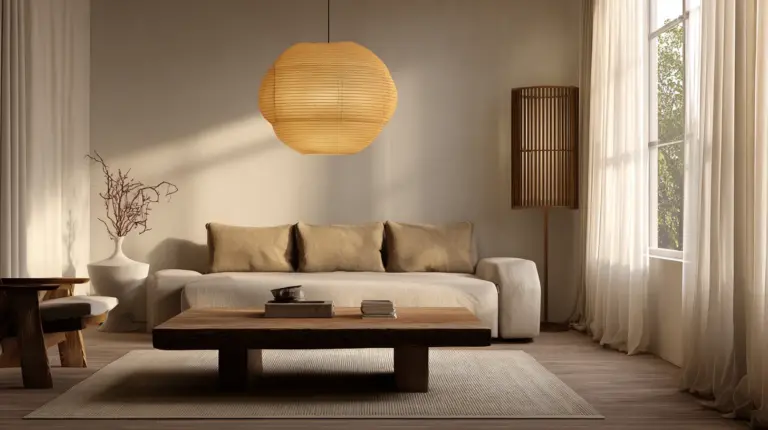
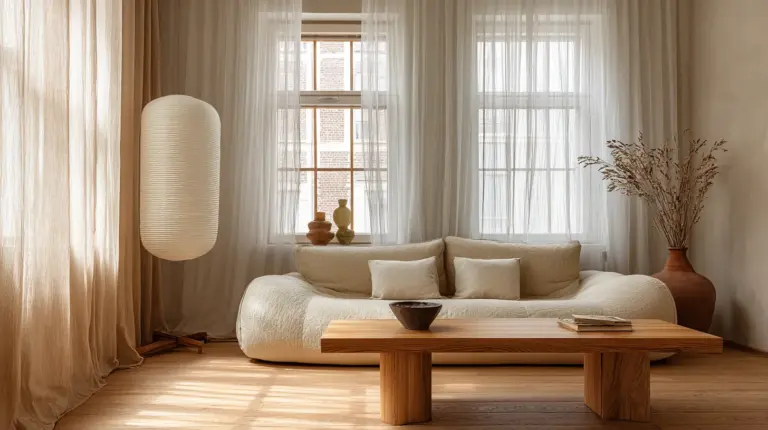
Ambient lighting is your base layer, the soft overall glow that fills the room without demanding attention. In Japandi spaces, this often comes from recessed ceiling lights with warm bulbs, hidden LED strips along cove moldings, or even a simple paper lantern suspended at the center.
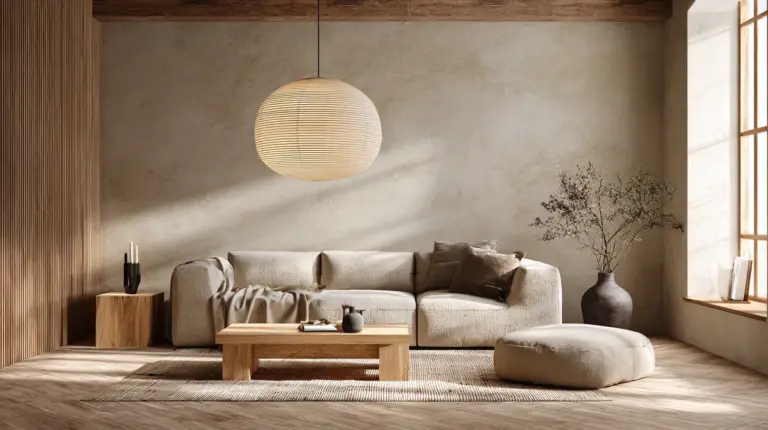
The key is diffusion. Bare bulbs feel too exposed, too honest in a way that disrupts serenity. Instead, choose fixtures with natural shades—bamboo drums, rice paper globes, or frosted glass—that scatter light gently across walls and ceilings.
For Manila apartments where natural light may be limited, consider installing dimmable LED panels behind sheer curtains or wall-mounted uplights that bounce illumination off neutral-toned ceilings. This creates the illusion of daylight even on overcast days.
Task Lighting: Purposeful Illumination
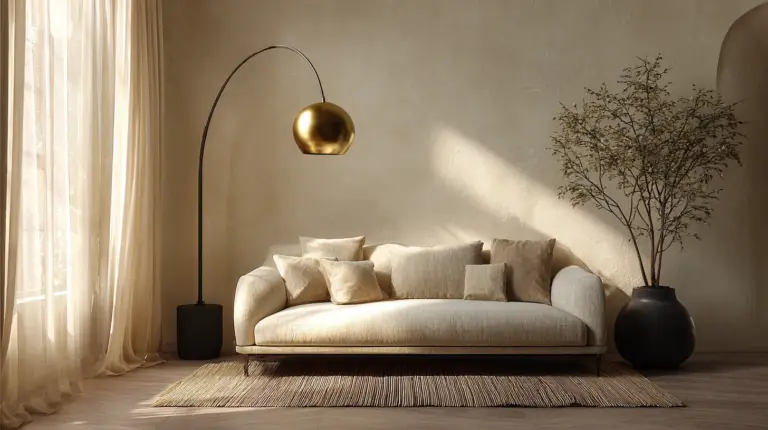
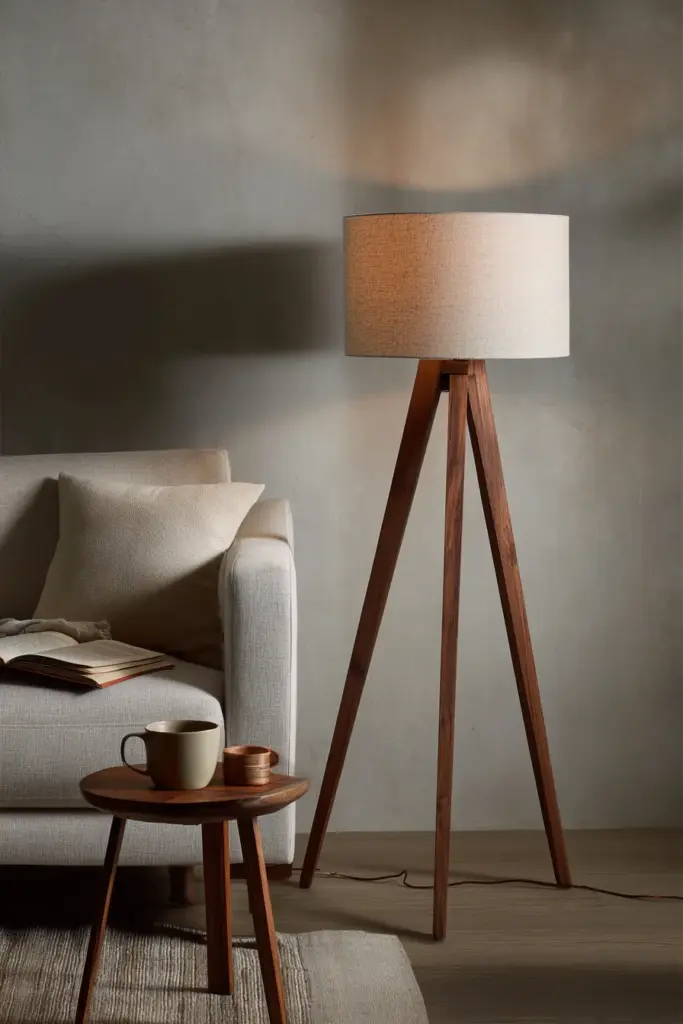
Task lighting serves the practical moments—reading on the sofa, working at a side table, or enjoying a quiet evening with tea. Floor lamps with linen shades, adjustable arc lamps in matte black or walnut, and minimalist desk lamps all fit beautifully into the Japandi aesthetic.
Position these strategically near seating areas or workspaces. A slender floor lamp next to your favorite chair not only provides focused light but also acts as a sculptural element, its vertical line adding visual interest without clutter.
Choose fixtures with clean lines and natural materials. A bamboo tripod lamp or a ceramic base with a neutral fabric shade feels infinitely more grounded than chrome or glossy finishes.
Accent Lighting: Sculpting Shadows and Depth
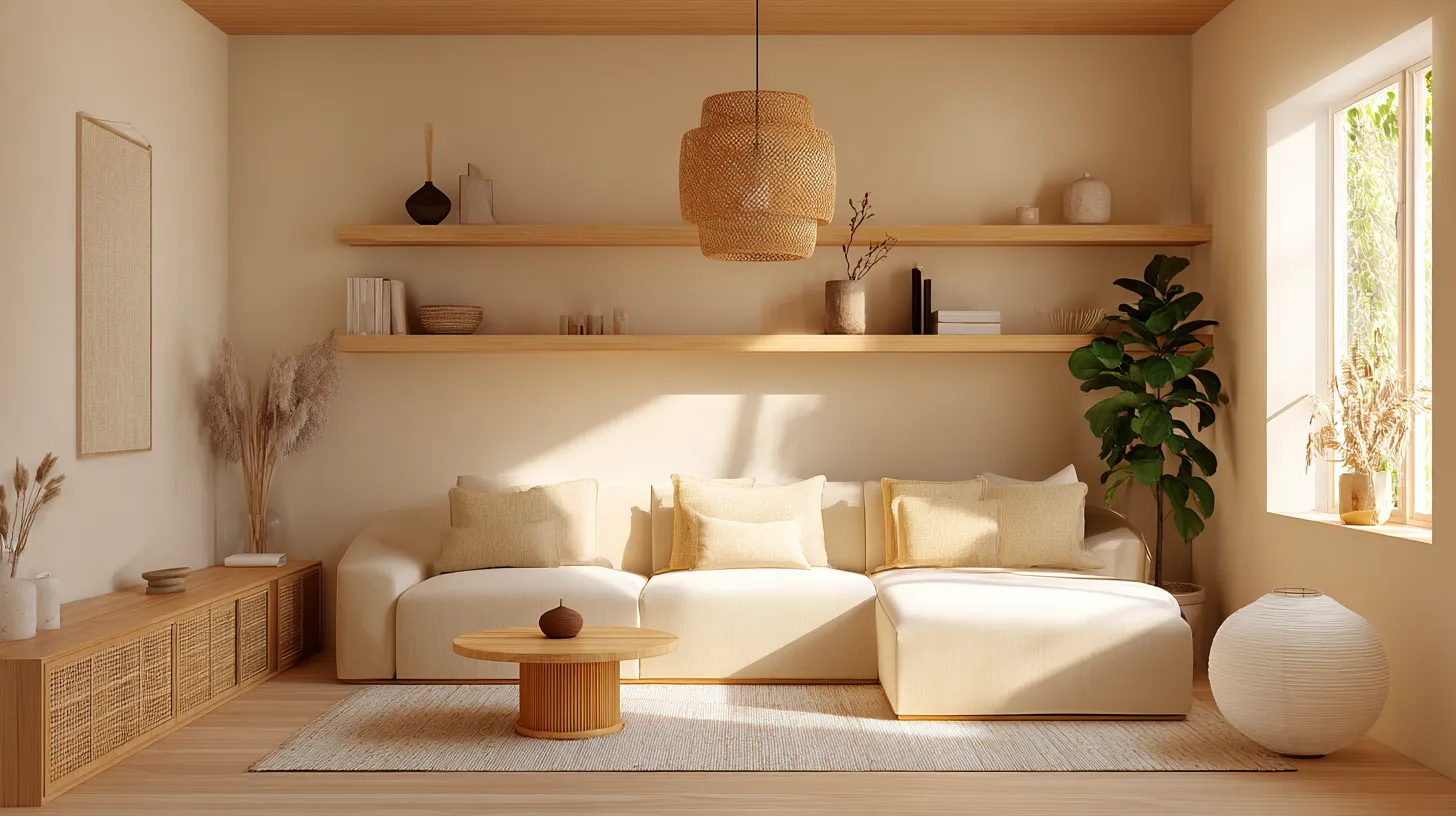
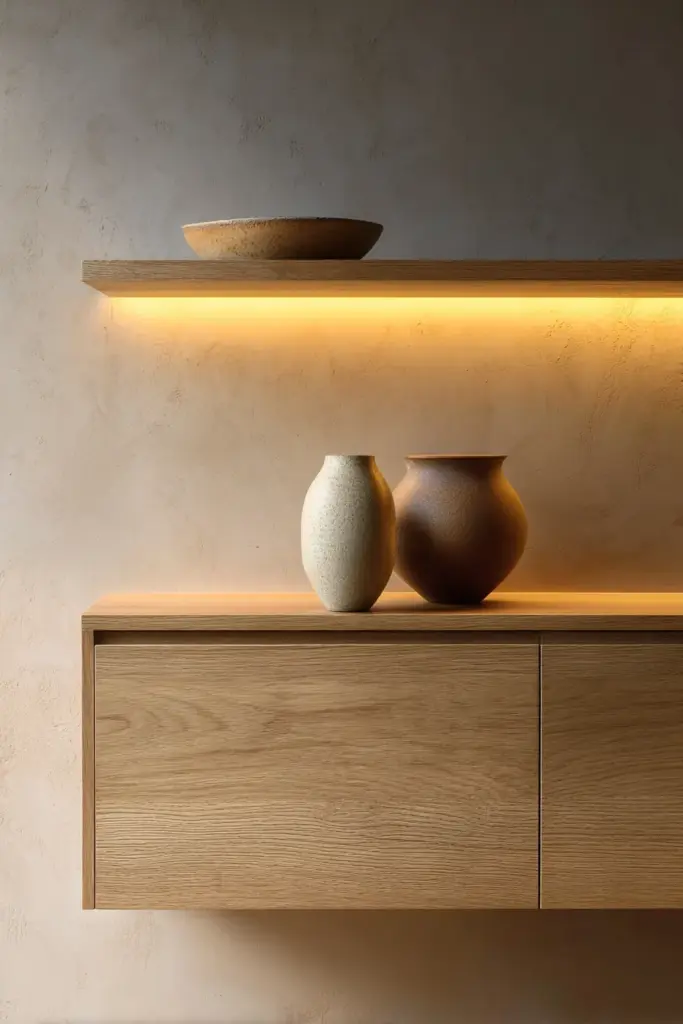
This is where Japandi lighting becomes truly poetic. Accent lights highlight textures, create depth, and draw the eye to carefully curated details—a floating shelf with handmade ceramics, a wall-hung textile, or a cluster of indoor plants.
LED strip lights hidden beneath floating credenzas, picture lights above minimalist artwork, or small uplights positioned behind a fiddle-leaf fig all add drama without theatricality. The goal is subtle emphasis, not spotlight intensity.
In Japandi design, shadows are as important as light itself. They reveal the grain of wood, the weave of rattan, the organic irregularity of handmade objects. Don’t fear darkness—embrace it as part of the composition.
Choosing the Right Color Temperature for Japandi Serenity
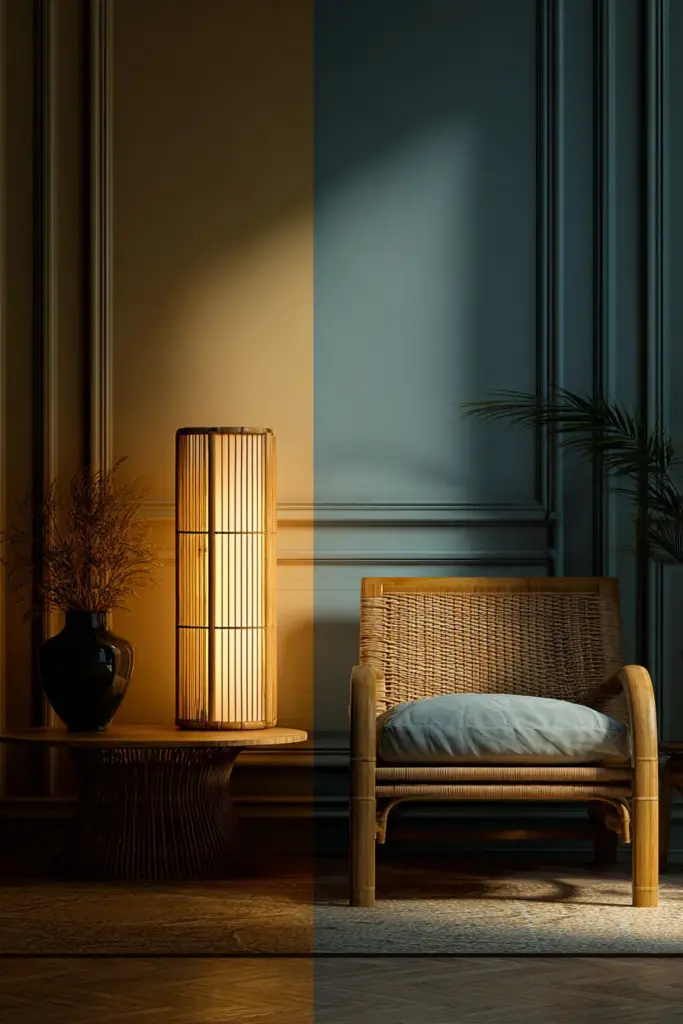
Color temperature might sound technical, but it’s one of the most powerful tools in your lighting arsenal. Measured in Kelvin (K), it determines whether your space feels warm and inviting or cold and clinical.
For authentic Japandi mood, stick to the 2700K-3000K range. This warm white mimics the golden glow of sunset or candlelight, creating an atmosphere that encourages relaxation and presence. Research suggests that warm lighting in this range can actually boost serotonin levels, especially valuable in spaces with limited natural light—a common reality in urban Manila apartments.
Avoid anything above 3500K, which veers into cool, bluish territory. Those tones belong in offices and hospitals, not living rooms designed for unwinding. If you’re unsure, err on the warmer side—your nervous system will thank you.
Dimmable bulbs offer even more control, allowing you to adjust brightness throughout the day. Bright enough for morning coffee and yoga, soft enough for evening conversations and meditation.
Natural Materials That Define Japandi Lighting Fixtures
Materials matter deeply in Japandi design. They ground a space in the physical world, connecting you to nature even when you’re several floors above the city streets.
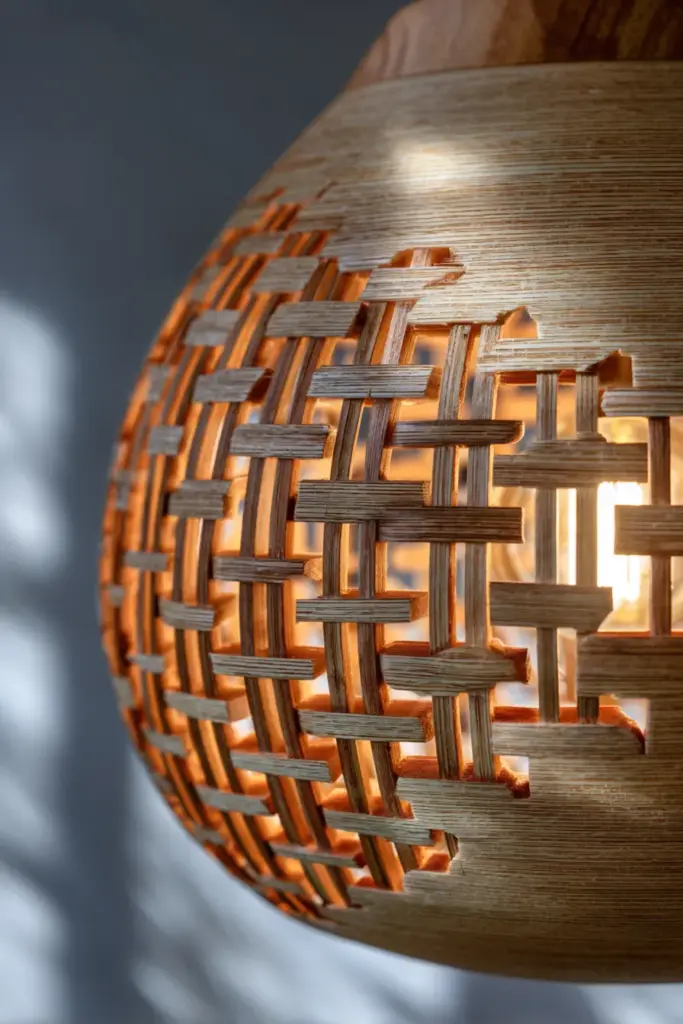
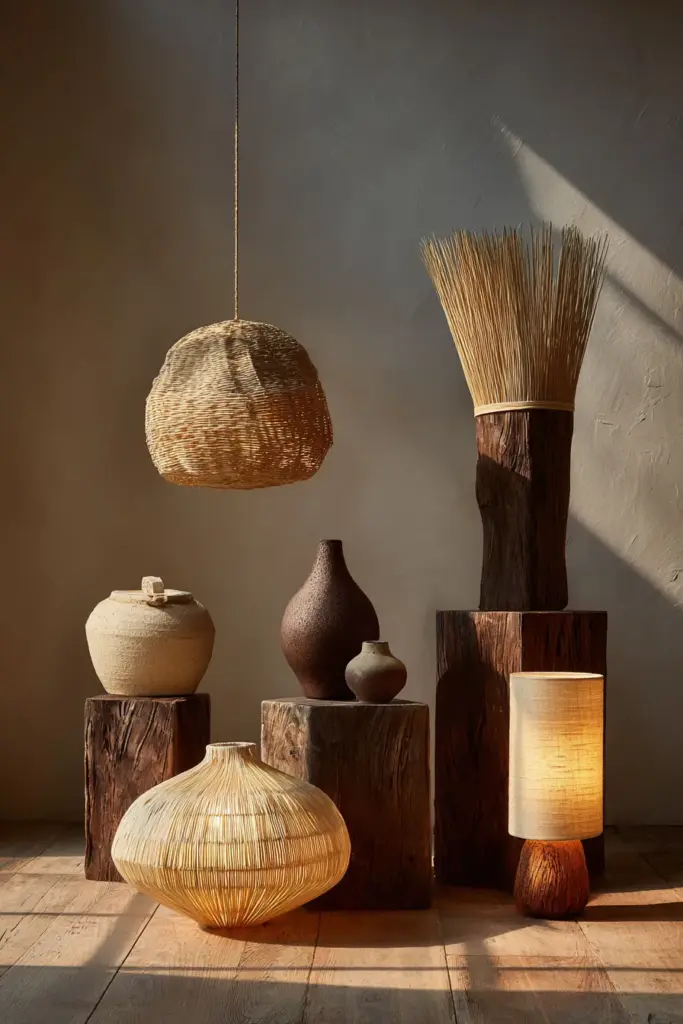
Bamboo brings warmth and sustainability. Pendant shades woven from bamboo strips cast intricate patterns on walls, transforming plain surfaces into living art. Look for locally sourced bamboo fixtures from artisans in Divisoria or sustainable brands that prioritize FSC-certified materials.
Rattan and wicker offer similar organic appeal with slightly more texture. A rattan floor lamp or wicker pendant feels handcrafted and human, the opposite of mass-produced uniformity. These materials age beautifully, developing character over time in true wabi-sabi fashion.
Wood—especially light oak, ash, or walnut—works perfectly for lamp bases and frames. The grain becomes part of the design, visible and celebrated rather than hidden under paint. Pair wooden fixtures with linen or cotton shades for maximum warmth.
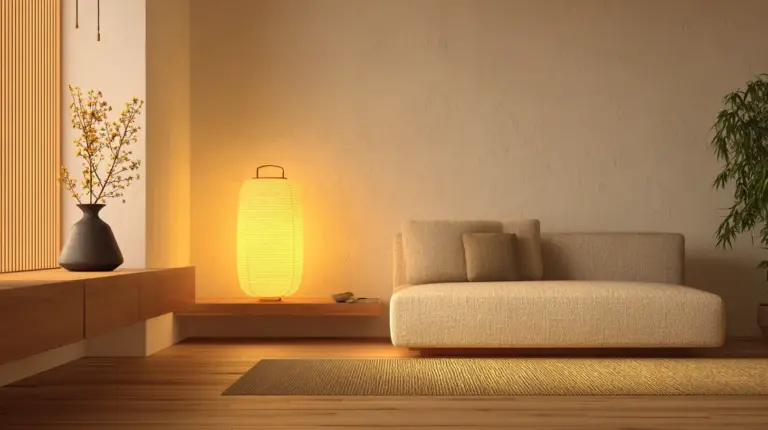
Washi paper and rice paper bring Japanese tradition directly into the space. Shoji-inspired lanterns or paper globe pendants diffuse light with unmatched softness, creating a glow that feels almost ethereal.
Ceramic and stoneware bases add subtle weight and earthiness. Choose matte finishes in cream, terracotta, or charcoal rather than glossy glazes.
Smart Lighting Integration for Modern Japandi Wellness
Traditional Japandi aesthetics meet contemporary technology beautifully when done thoughtfully. Smart lighting doesn’t have to mean sleek chrome or futuristic designs—it can serve the Japandi mood while offering unprecedented control.
Dimmable smart bulbs like Philips Hue in warm white (2700K) fit standard fixtures and allow you to adjust brightness via smartphone or voice assistant. Create preset “scenes”—bright for morning energy, medium for afternoon work, dim amber for evening relaxation.
More advanced systems can sync with circadian rhythms, automatically shifting color temperature throughout the day to support your body’s natural sleep-wake cycle. In spaces with little natural light, this feature becomes genuinely wellness-enhancing rather than merely convenient.
Set up voice commands through Alexa or Google Home for hands-free adjustments: “Set living room to meditation mode” dims lights to 20% warm amber instantly. The technology disappears into the background, which is exactly how Japandi design prefers it.
Motion sensors for accent lighting—like LED strips under floating shelves—add convenience without visual clutter. The lights activate as you enter, creating welcome without requiring switches or apps.
Budget-Friendly Japandi Lighting for Manila Homes
Creating Japandi ambiance doesn’t require luxury budgets. With thoughtful sourcing and a bit of DIY spirit, you can achieve the same serene mood for under ₱5,000.
Bamboo pendant transformation: Purchase a simple bamboo shade from Divisoria (₱800-1,200), pair it with a warm LED bulb (₱150-300), and a basic pendant cord kit (₱350-500). Total investment under ₱2,000 for a statement piece that rivals high-end imports.
LED strip accent lighting: Shopee PH offers quality warm white LED strips (2700K) for ₱800-1,500 per 5-meter roll. Install beneath floating shelves, behind the TV console, or along baseboards for instant depth and warmth.
Upcycled floor lamp: Find a sturdy wooden branch or driftwood (free from nature), mount it as a sculptural base, and top with an IKEA linen shade (₱500-800). Spray the metal parts matte black for ₱200. You’ve created a one-of-a-kind piece for under ₱1,500.
Washi paper DIY lanterns: Purchase rice paper from craft stores (₱150-250), create simple geometric frames from bamboo skewers (₱50), and insert a warm LED bulb. These work beautifully clustered at varying heights.
Local suppliers like SM Home, Wilcon Depot, and online marketplaces offer surprisingly good minimalist fixtures. Filter by “natural materials,” “bamboo,” or “rattan,” and you’ll discover affordable options that respect the Japandi aesthetic.
Pairing Plants with Lighting for Biophilic Japandi Design
One overlooked aspect of Japandi lighting is its relationship with indoor plants. Strategic illumination doesn’t just showcase greenery—it creates a symbiotic relationship between light, air quality, and visual serenity.
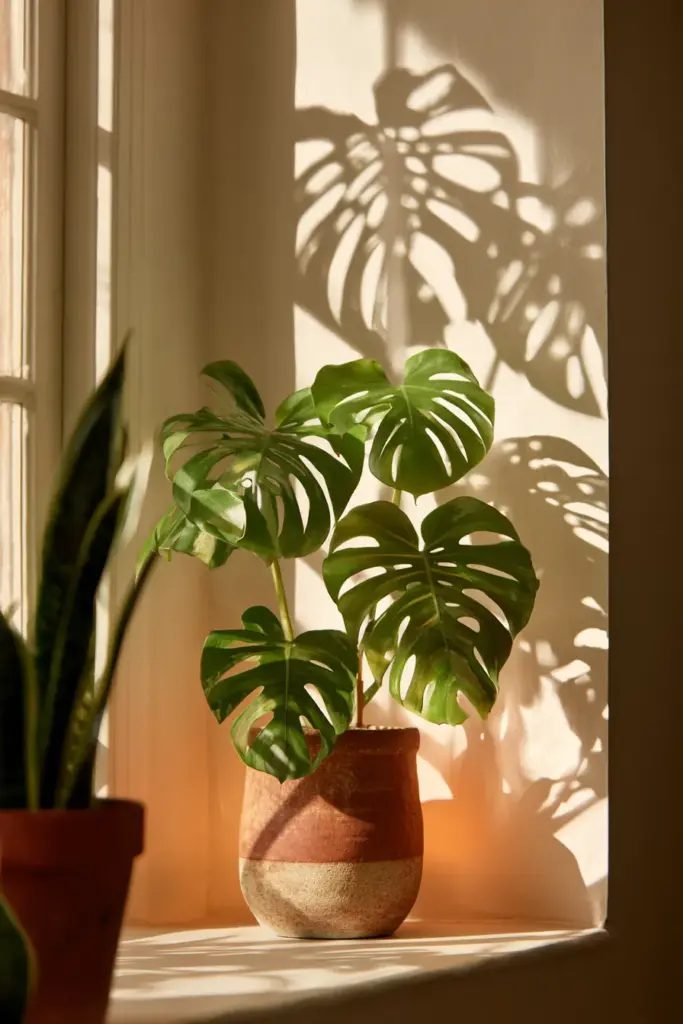
Place Sansevieria (snake plants) near accent uplights. The dramatic shadows cast by their architectural leaves add depth, while the plants purify air naturally—a practical expression of wabi-sabi’s imperfect functionality.
Pothos trailing from high shelves looks ethereal when backlit by hidden LED strips. The vines become living curtains of green, softening hard edges while improving indoor air quality.
Monstera deliciosa positioned near floor lamps creates bold, sculptural shadows on walls during evening hours. The fenestrations in mature leaves cast intricate patterns that shift as you move through the space.
For low-light apartments, choose plants that thrive in indirect illumination—ZZ plants, peace lilies, or ferns—and supplement with grow-light LED bulbs disguised as regular warm whites. This way, your plants flourish while maintaining the Japandi aesthetic.
The combination of natural materials, living plants, and warm lighting creates what designers call “biophilic design”—spaces that reconnect humans with nature even in urban environments.
Color Psychology and Mood Enhancement Through Lighting
The warmth of 2700K-3000K lighting isn’t just aesthetically pleasing—it’s psychologically grounding. This color temperature mimics firelight and sunset, triggering relaxation responses hardwired into human biology.
In Manila’s tropical climate where natural light can be intense and harsh, or conversely blocked by neighboring buildings, controlling interior light quality becomes crucial for mental wellness. Warm artificial lighting helps regulate stress hormones, encouraging the body to transition from active to restful states.
Create mood charts for different times of day:
- Morning (7-10am): 100% brightness at 3000K for alertness
- Midday (10am-4pm): 80% brightness, rely more on natural light when available
- Evening (4-8pm): 60% brightness at 2800K for gentle transition
- Night (8pm+): 30-40% brightness at 2700K to support melatonin production
This graduated approach helps your living room serve multiple purposes without feeling like different spaces. The furniture stays the same; the mood transforms through light alone.
Sustainability in Japandi Lighting Choices
True Japandi design considers lifecycle and environmental impact. Every material choice should honor the earth as much as it honors your aesthetic vision.
Bamboo’s rapid regrowth (3-5 years versus 30-50 for hardwoods) makes it the most sustainable fixture material. Verify that suppliers harvest responsibly and don’t damage root systems.
Rattan certification: Look for FSC (Forest Stewardship Council) certified rattan, which ensures sustainable harvesting practices. Uncertified rattan often comes from endangered forest ecosystems.
LED efficiency: LEDs use 75% less energy than incandescent bulbs and last 25 times longer. A quality LED bulb might cost ₱300-500 versus ₱50 for incandescent, but saves thousands in electricity and replacements over its 15-20 year lifespan.
Zero-waste installation: When installing fixtures, plan carefully to avoid unnecessary holes, excessive wire cuts, or discarded materials. Measure twice, drill once. Save packaging for potential returns or future moves.
Second-hand sourcing: Vintage floor lamps, mid-century pendants, and ceramic bases from thrift stores or online marketplaces often surpass new products in quality and character. They arrive with wabi-sabi patina already built in.
Common Japandi Lighting Mistakes to Avoid
Even with good intentions, certain pitfalls can disrupt the serene mood you’re trying to create.
Overhead-only lighting flattens a space, eliminating the depth and shadow play essential to Japandi design. Always layer multiple light sources at different heights.
Cool-toned bulbs (4000K and above) inject clinical harshness that contradicts the entire philosophy. These belong in kitchens and bathrooms, not living rooms designed for calm.
Too many fixtures creates visual noise. Japandi embraces minimalism—three to five well-chosen light sources typically suffice for a standard living room. Quality and placement matter more than quantity.
Ignoring dimmer switches removes control over mood. Fixed brightness can’t adapt to different activities, times of day, or emotional needs. Dimmers cost ₱500-1,200 and transform a space’s versatility.
Mismatched color temperatures across fixtures creates subtle dissonance. Stick to the same Kelvin range (ideally within 200K of each other) for cohesive warmth.
Harsh direct lighting from bare bulbs or narrow spotlight beams feels aggressive rather than welcoming. Always diffuse through shades, deflect off walls, or hide behind objects.
Checklist: Essential Elements for Japandi Living Room Lighting Mood
Before you shop or install, ensure your plan includes these core elements:
- Warm white bulbs in the 2700K-3000K range for all fixtures
- Dimmable switches or smart bulbs for brightness control throughout the day
- At least three lighting layers: ambient (overhead or ceiling), task (floor/table lamps), and accent (hidden LEDs or uplights)
- Natural material fixtures: bamboo, rattan, wood, washi paper, or ceramic
- Diffused light sources: shades, frosted glass, or indirect positioning to avoid harsh glare
- Strategic accent lighting to highlight textures, plants, or architectural features
- Minimal fixture count: quality over quantity, typically 3-5 sources total
- Sustainable choices: LED efficiency, FSC-certified materials, or second-hand finds
- Plant-lighting integration: accent lights positioned to showcase and support indoor greenery
- Smart home compatibility (optional): voice control and circadian rhythm syncing for wellness
Bringing It All Together: Your Japandi Lighting Journey
Creating the perfect Japandi living room lighting mood isn’t about following rigid rules. It’s about understanding principles—warmth, layering, natural materials, intentionality—and adapting them to your unique space and rhythms.
Start with one change. Maybe it’s swapping your cold overhead bulbs for warm 2700K LEDs. Perhaps it’s adding a bamboo floor lamp next to your reading chair. Or installing LED strips beneath your floating credenza to create that first layer of ambient glow.
Notice how each adjustment shifts the energy. Pay attention to how your body responds at different times of day, which corners draw you in, where shadows create mystery rather than darkness.
The beauty of Japandi lighting is that it grows with you. As your collection of handmade ceramics expands, you’ll add accent lights to showcase them. When you bring home a new monstera, you’ll reposition a lamp to cast its shadows just so. The space becomes a living composition, never quite finished, always evolving—wabi-sabi in practice.
Your living room should feel like an exhale at the end of a long day. With thoughtful lighting that layers warmth, celebrates natural materials, and honors both function and beauty, it will.
Frequently Asked Questions
What type of lighting is best for a Japandi living room?
Layered lighting works best for Japandi spaces—combining ambient ceiling lights or pendants, task lighting like floor lamps near seating, and accent lights to highlight textures and plants. Choose fixtures made from natural materials like bamboo, rattan, or wood with warm 2700K-3000K LED bulbs. Avoid relying solely on overhead lighting, which creates flatness rather than the depth and shadow play essential to Japandi mood.
How can I create a Japandi lighting mood on a budget?
Focus on warm bulb temperature (2700K LEDs cost ₱150-300 each) and DIY natural material fixtures. Transform affordable bamboo shades from local markets (₱800-1,200) with simple pendant kits. Add LED strips from Shopee PH (₱800-1,500) beneath shelves for instant depth. Install dimmer switches (₱500-1,200) to control existing fixtures. Upcycle wooden branches as sculptural lamp bases or shop second-hand for vintage pieces with wabi-sabi character already built in.
What color temperature should I use for Japandi lighting?
Stick to warm white bulbs between 2700K-3000K. This range mimics sunset and firelight, creating the cozy, serene atmosphere central to both hygge and wabi-sabi philosophies. Avoid anything above 3500K, which produces cool, bluish tones that feel clinical. The 2700K-3000K range has been shown to support relaxation and serotonin production—especially valuable in Manila apartments with limited natural light.
Can I use smart bulbs in Japandi design?
Absolutely. Smart bulbs enhance Japandi living when chosen thoughtfully—opt for warm white dimmable LEDs (2700K) from brands like Philips Hue that fit standard fixtures. The technology should disappear into the aesthetic. Use smart features to create circadian-syncing scenes or voice-activated mood adjustments while maintaining the minimalist, natural material fixtures that define Japandi style. The goal is seamless function that supports wellness without visual clutter.
How do I incorporate plants with Japandi lighting?
Position accent uplights near architectural plants like Sansevieria or Monstera to cast dramatic shadows on walls. Use hidden LED strips to backlight trailing pothos on high shelves. Choose plants that thrive in indirect light—ZZ plants, peace lilies, ferns—and supplement with warm-toned grow-light LEDs disguised as regular bulbs. This creates biophilic design where lighting serves both aesthetic beauty and plant health, purifying air while softening hard edges with organic forms.