
Table of Contents
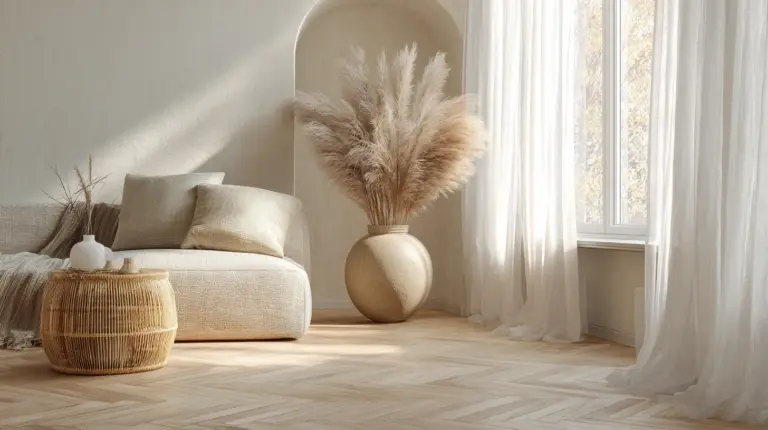
There is a particular stillness that settles over a room when everything feels exactly right. The light falls softly. The textures invite touch. The floor beneath your feet is warm, continuous, and quietly beautiful. That is the promise of Japandi design — and wide plank flooring is where that promise begins.
Japandi is the graceful meeting of Japanese wabi-sabi and Scandinavian hygge. It asks for simplicity, honesty, and a deep respect for natural materials. And nothing anchors that philosophy more powerfully than the floor you choose.
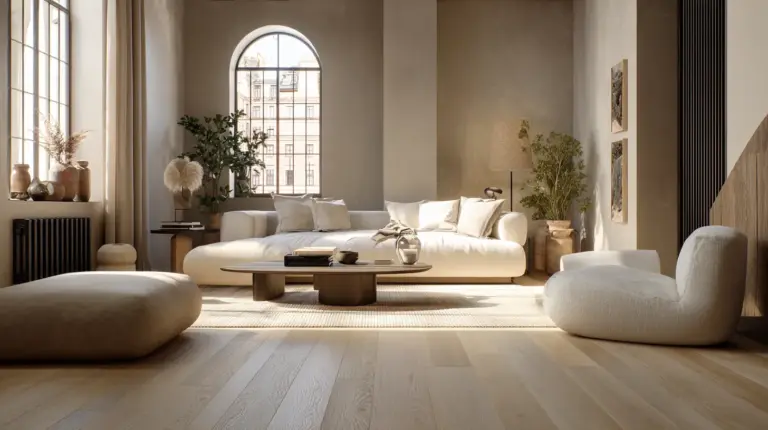
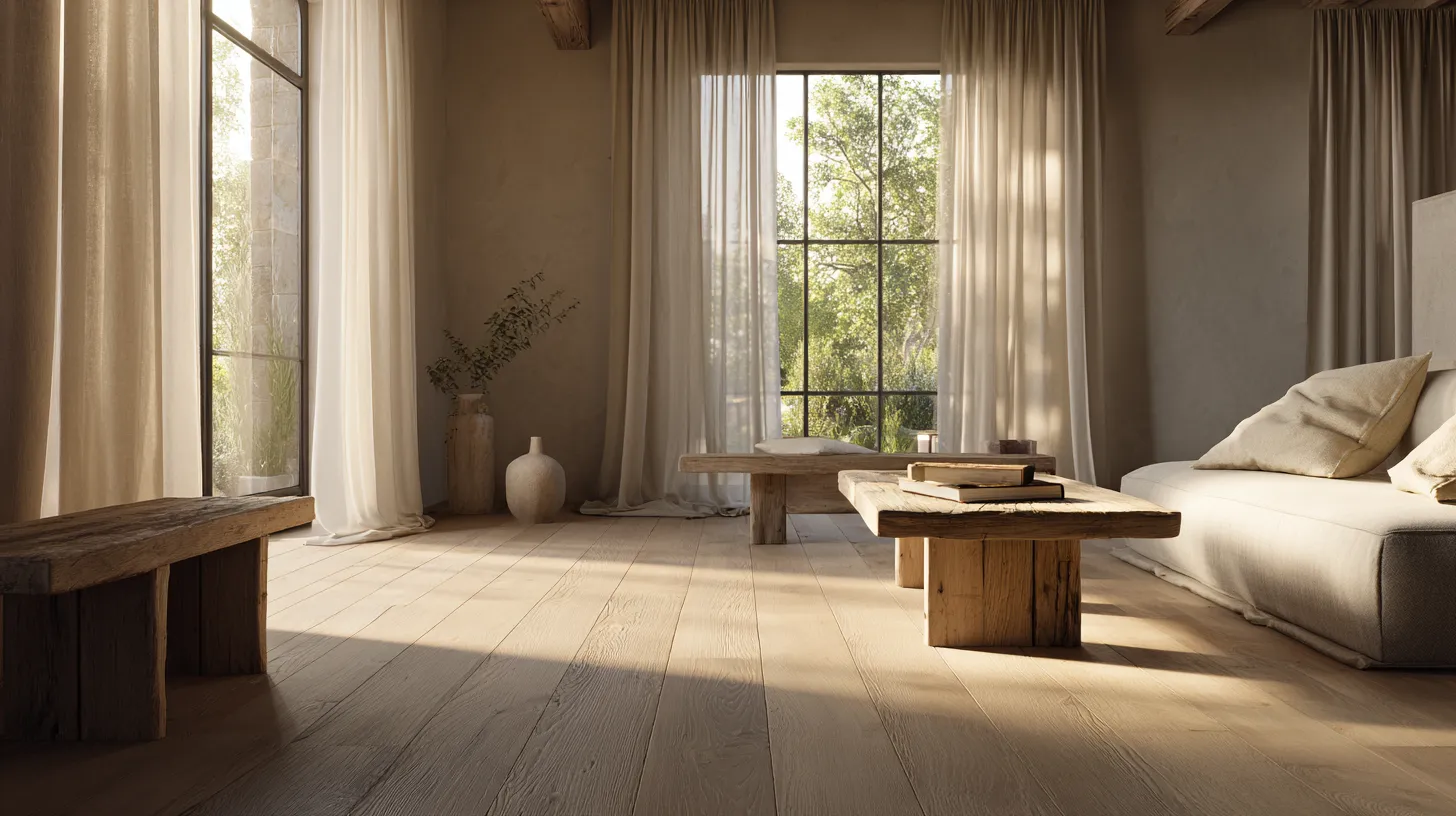
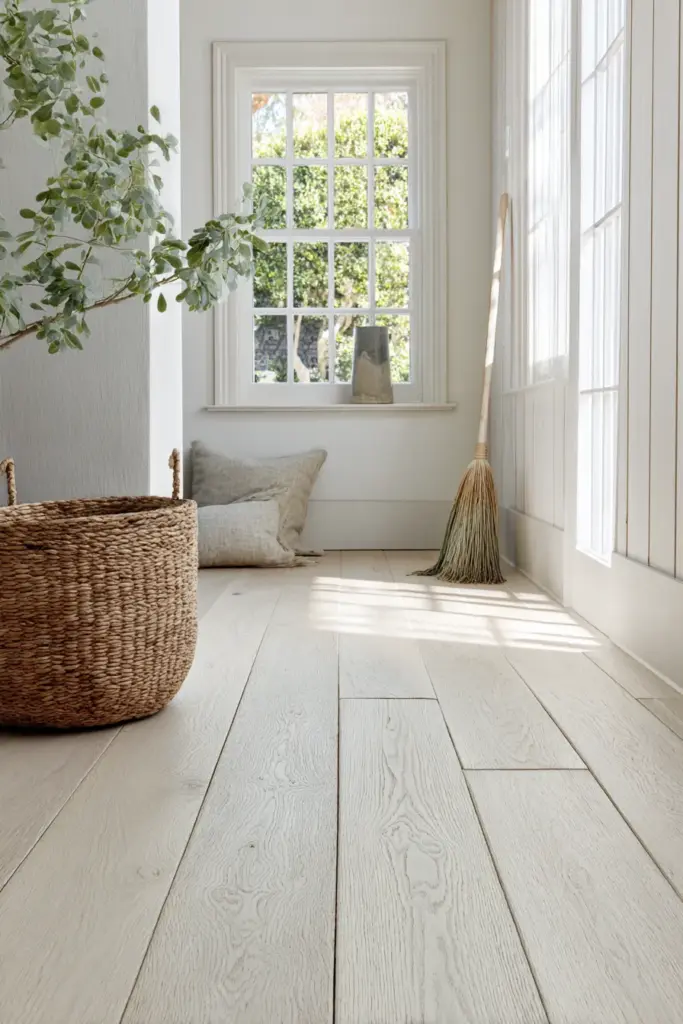
Wide plank flooring brings a sense of openness and organic rhythm to a living room. Each broad board tells a story — the grain of the wood, the subtle variation in tone, the gentle matte surface that absorbs afternoon light rather than bouncing it. In a Japandi space, that story matters.
Whether you’re redesigning a Manila condo or reimagining a mid-century home, this guide will walk you through everything you need to know about choosing, styling, and living with Japandi living room wide plank flooring.
What Makes Wide Plank Flooring So Right for Japandi Style
The Philosophy of the Wide Board
Japandi design values what is essential. Wide planks — typically 5 inches or broader, often reaching 8 to 12 inches — reduce visual noise. Where narrow strips create a busy, repetitive pattern, wide boards create calm. The eye rests. The room breathes.
In a Japandi living room, that sense of visual quiet is everything. Your flooring becomes a field of stillness beneath curated furniture, soft textiles, and a single meaningful piece of art.
Natural Wood as a Living Material
Wide plank flooring in oak, walnut, or bamboo behaves like the natural material it is. It moves slightly with humidity. It develops character over time. It holds the memory of where it came from — a quality the Japanese call mono no aware, the bittersweet beauty of impermanence.
For a Japandi space, this imperfection is not a flaw. It is the point.
Choosing the Right Wood Species for Your Japandi Floor
The species you choose shapes the entire mood of your living room. Here is how the three most popular options compare:
| Wood Species | Tone | Grain Character | Best For |
|---|---|---|---|
| White Oak | Warm beige to honey | Subtle, even grain | Light, airy Japandi rooms |
| Walnut | Deep chocolate brown | Rich, dramatic grain | Moody, cocooning interiors |
| Bamboo | Pale blonde to caramel | Fine, linear texture | Eco-conscious, minimalist spaces |
Oak: The Japandi Classic
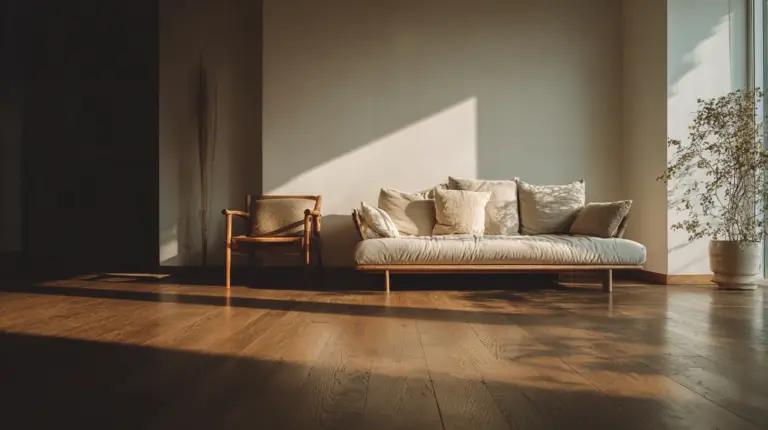
White oak is the most beloved choice for Japandi wide plank flooring — and for good reason. Its warm, neutral tone complements the linen, stone, and matte ceramic textures that define this aesthetic. A matte or satin finish keeps it understated.
Look for FSC-certified oak to align with Japandi’s deep respect for sustainability and conscious consumption.
Walnut: Drama in the Details
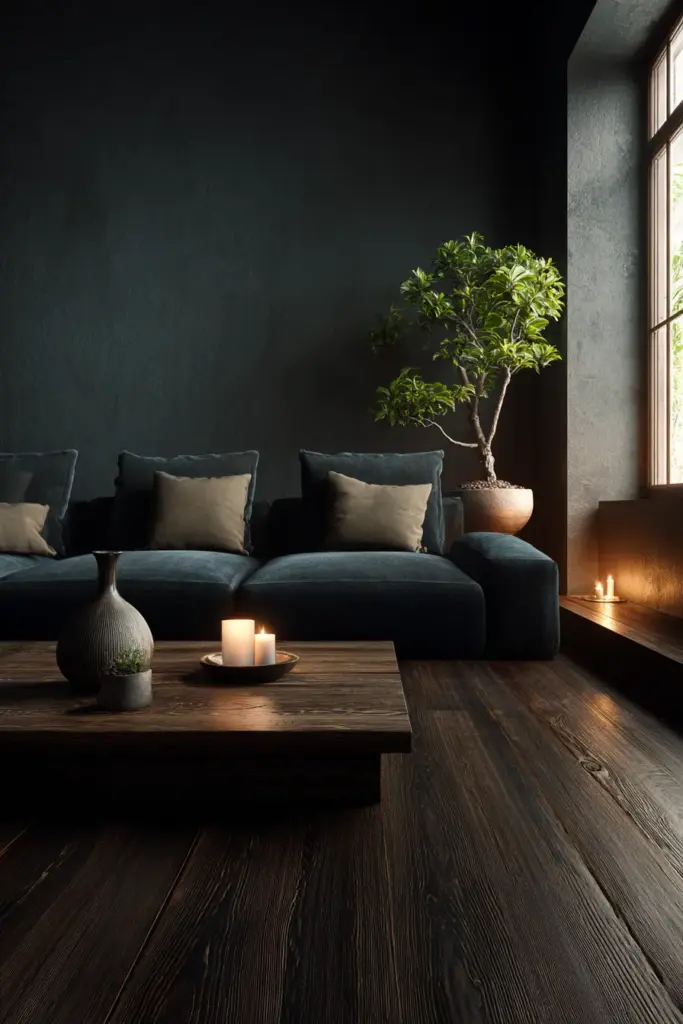
For those drawn to the Japanese side of Japandi — darker, moodier, more contemplative — wide plank walnut flooring creates a profound foundation. Pair it with paper lanterns, low seating, and a single bonsai for a space that feels like a quiet ceremony.
Walnut is denser and slightly more scratch-resistant than oak, making it a practical choice for high-traffic living areas.
Bamboo: The Sustainable Choice
Bamboo grows back in five years. Oak takes decades. If sustainability is central to your values (and in Japandi design, it often is), wide plank bamboo flooring is worth serious consideration. Modern engineered bamboo achieves a plank width and finish quality that rivals traditional hardwood.
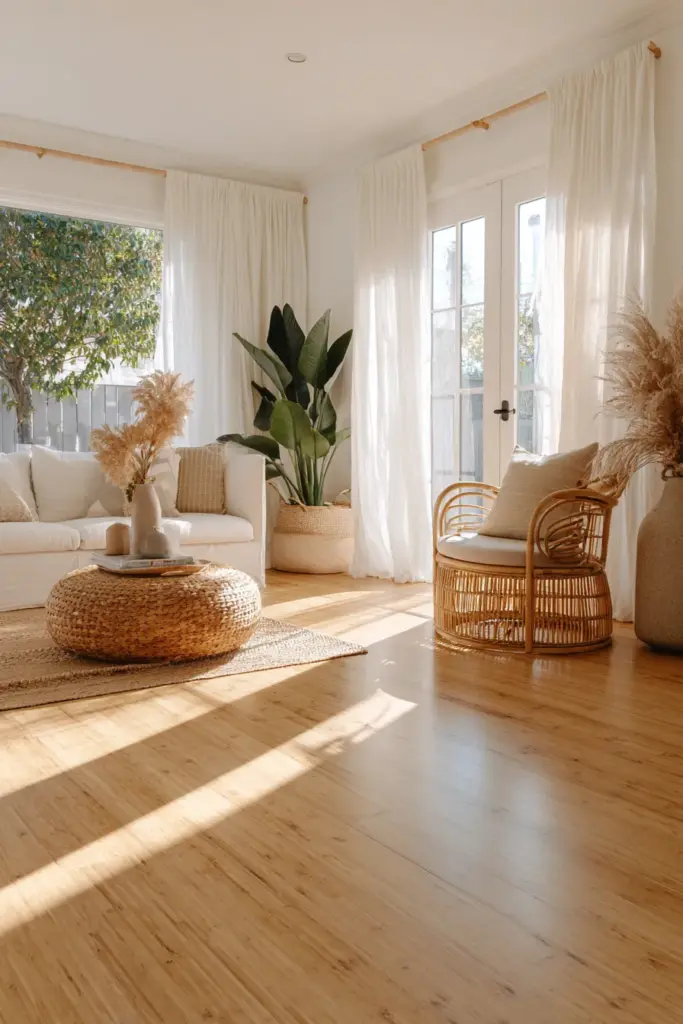
Plank Width, Room Size, and the Visual Magic of Scale
Small Spaces: Go Wider, Not Narrower
This surprises many people — but for compact living rooms, wider planks actually make the space feel larger. Fewer seams mean fewer visual interruptions. The eye travels further before it stops.
In Manila condos and smaller apartments, wide plank flooring in 6-to-8-inch widths can visually expand a narrow living room by reducing the “busy” effect of many narrow strips. Lay the planks horizontally along the longest wall to extend the perceived length of the room.
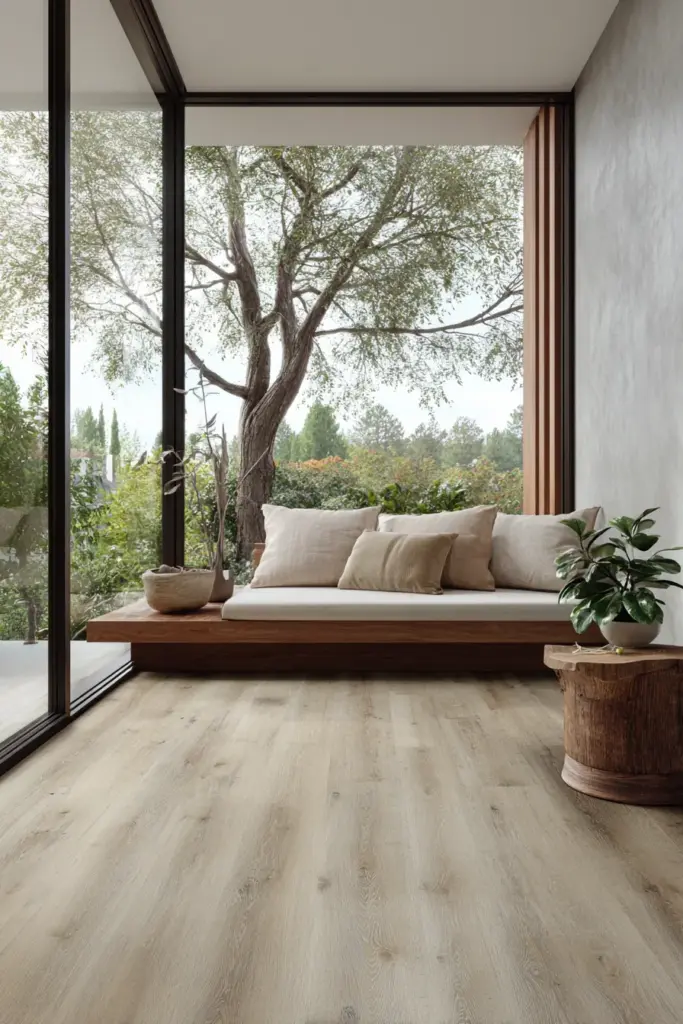
Larger Rooms: Room for the Full Statement
In a spacious living room, you can go up to 12 inches wide and truly let the wood speak. The wide surface area showcases the grain beautifully. It feels almost like a single continuous canvas beneath your furniture.
Finish and Texture: The Soul of a Japandi Floor
The Case for Matte
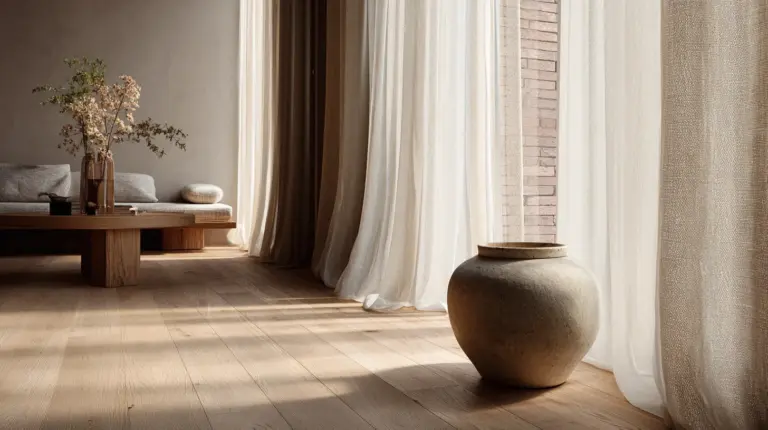
High-gloss flooring feels at odds with Japandi’s commitment to softness and nature. A matte or low-sheen finish absorbs light rather than reflecting it, creating a more grounded, intimate atmosphere.
In 2026, textured wide planks in caramel and warm greige tones are leading the trend. The slight surface texture adds tactile depth — you can almost feel the wood’s origin underfoot.
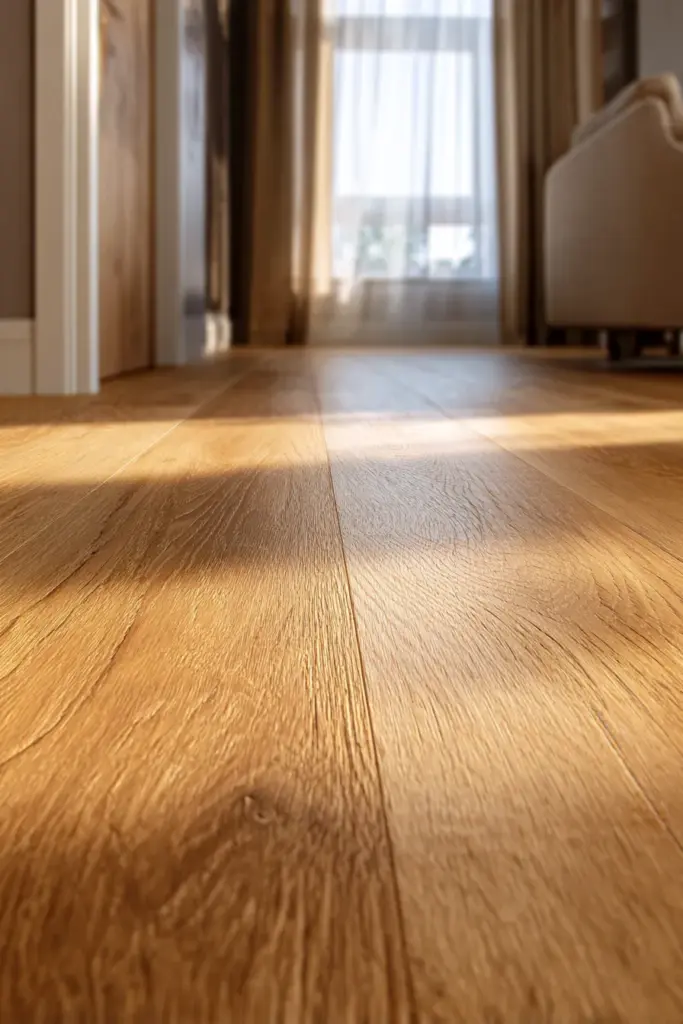
Wire-Brushed and Hand-Scraped Surfaces
Wire-brushed oak planks have a gently rough surface that catches the light in a way that feels ancient and alive. Hand-scraped finishes add subtle undulation, like the floor has been worn softly by generations of quiet living. Both are perfect for a Japandi aesthetic.
Color Palette: Grounding Your Japandi Living Room
Wide plank flooring anchors your color story. Here are the tones that sing in Japandi interiors:
- Warm greige and white oak — the most versatile foundation; pairs with every neutral
- Honey and amber tones — adds warmth without visual weight
- Caramel and golden oak — the emerging 2026 trend; rich but still soft
- Deep walnut and smoked oak — for moody, restorative spaces
The key principle: let the floor be the quiet ground from which everything else rises. Avoid floors that compete with your furniture.
Pairing Wide Plank Floors with Japandi Furniture and Textiles
Low, Grounded Furniture
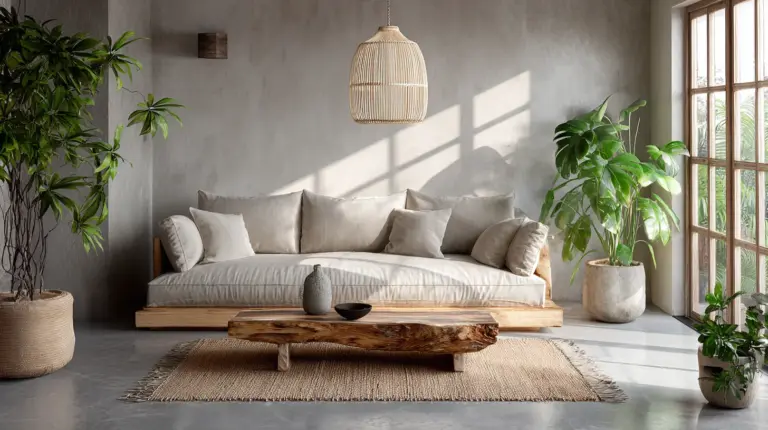
Japandi furniture sits close to the floor. Low sofas, platform beds, and floor-level cushions keep the visual weight low — which makes your wide plank flooring more visible and more impactful. Think natural linen upholstery, raw wood frames, and minimal hardware.
Rugs That Respect the Floor
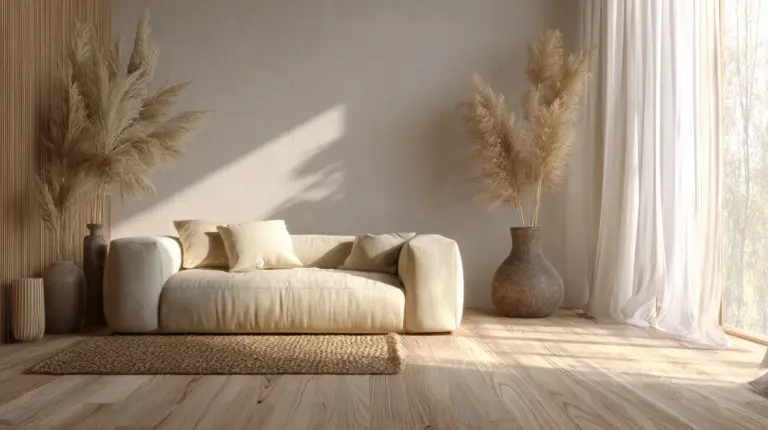
A low-pile jute or seagrass rug is the perfect companion to wide plank flooring. It adds tactile contrast without hiding the beauty beneath. Keep it understated — natural fibers, neutral tones, no bold patterns. The floor is the statement; the rug simply softens the moment.
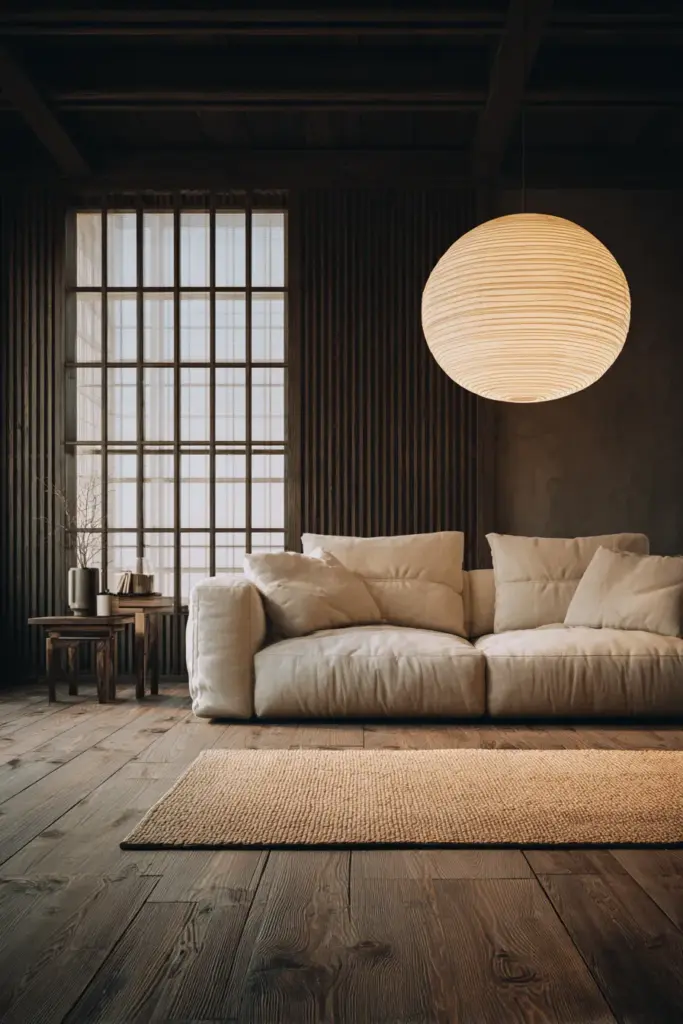
Lighting That Loves Wood
Warm, low-positioned lighting is essential. Floor lamps with paper or linen shades cast a glow across wide plank boards that makes the grain dance. In the evening, your floor becomes part of the atmosphere — a warm, living surface that holds the light.
Practicality: Durability, Humidity, and Cleaning
Humidity Resistance — Especially in Tropical Climates
Real hardwood breathes with the seasons, expanding and contracting with humidity. In tropical climates like the Philippines, this can cause warping over time. For Manila homes and Southeast Asian apartments, we recommend sealed wide plank Luxury Vinyl Tile (LVT) that replicates the look of oak or walnut with far greater humidity resistance.
Engineered hardwood with a stable core is another excellent option — it offers the beauty of real wood with improved dimensional stability.
Underfloor Heating Compatibility
Wide plank engineered oak is compatible with most underfloor heating systems. If you’re designing with radiant heat in mind, keep the wood thickness under 18mm and ensure the moisture content of the planks is well-acclimated before installation. The warmth rising gently through the floor is one of the purest Japandi sensory experiences imaginable.
Cleaning Routine for High-Traffic Living Rooms
A wide plank Japandi floor is not precious — it is meant to be lived on. Keep it beautiful with a simple routine:
- Daily: Soft dry microfiber mop to lift dust without scratching the matte finish
- Weekly: Slightly damp mop with a pH-neutral wood cleaner
- Monthly: Inspect for surface wear; spot-apply floor refresher as needed
- Annually: Consider a light re-coat if the finish shows significant wear in high-traffic zones
Avoid steam mops, harsh chemicals, and anything that introduces excess moisture.
Budget Guide: Wide Plank Flooring Cost in the Philippine Market
For those designing on a budget, local Philippine oak alternatives and engineered hardwood options can deliver beautiful results. Here is a rough cost guide:
| Option | Approximate Cost (PHP/sqm) | Best For |
|---|---|---|
| Local engineered oak (PH-sourced) | PHP 1,800 – 3,000 | Budget-conscious redesigns |
| Imported wide plank LVT | PHP 2,500 – 4,500 | Humidity-prone condos |
| Engineered European oak | PHP 4,500 – 8,000 | Mid-range Japandi interiors |
| Solid wide plank oak (FSC) | PHP 8,000 – 15,000+ | Investment-grade installs |
A typical 20 sqm Manila living room can be transformed with wide plank LVT flooring for under PHP 90,000 installed — and with careful furniture curation, the result is indistinguishable from much higher-end installs.
Quick Reference: Japandi Wide Plank Flooring Checklist
Use this as your guide before making any decisions:
- Choose white oak or bamboo for a light, airy Japandi feel
- Choose walnut or smoked oak for a moody, contemplative atmosphere
- Opt for matte or low-sheen finish over high gloss
- Select plank widths of 5 inches or more — wider is better for small rooms
- In tropical climates, prioritize sealed LVT or engineered hardwood over solid wood
- Pair with low-pile jute or seagrass rugs in neutral tones
- Use warm, low-positioned lighting to bring out the wood grain
- Verify FSC certification for sustainably sourced flooring
- Ensure underfloor heating compatibility if relevant to your design
- Follow a gentle weekly cleaning routine to preserve the matte finish
Conclusion: The Floor That Holds Everything
A well-chosen floor does something quiet and profound — it makes every other element in the room feel right.
When you lay wide plank flooring in a Japandi living room, you are not just choosing a surface. You are choosing a feeling. The feeling of morning light across warm oak grain. The soft sound of bare feet on a slightly textured board. The way the room settles into itself at the end of a long day, every element grounded and still.
At ERYLIN, we believe that beautiful living begins beneath your feet. Choose your floor with care, with intention, and with a respect for the natural world that made it possible.
The room you’ve been imagining? It starts here.
Frequently Asked Questions
What is the best flooring for a Japandi living room?
Wide plank hardwood or engineered oak in a matte or low-sheen finish is the best choice for a Japandi living room. The broad boards reduce visual noise and let the natural grain tell its story. For tropical climates, sealed wide plank LVT offers the same beautiful aesthetic with far greater humidity resistance. Look for warm, neutral tones — white oak, honey, or caramel — and pair with natural fiber rugs and low furniture for the full Japandi effect.
How do you style wide plank flooring in Japandi design?
Let the floor breathe — avoid covering it entirely with rugs. Layer a low-pile jute or seagrass rug in the center of your seating area, leaving the perimeter of the wide plank boards visible. Use low-profile furniture with natural wood frames and linen upholstery. Add warm, indirect lighting that grazes the floor surface and reveals the grain. Keep the palette neutral and let the wood’s organic texture do the work.
Is oak or walnut better for Japandi wide plank floors?
Both are excellent — the choice depends on the mood you want to create. White oak is warmer and lighter, making it ideal for bright, airy Japandi spaces that lean Scandinavian. Walnut is richer and deeper, better suited to contemplative, moody interiors that lean more Japanese. If you’re unsure, white oak is the more versatile foundation and the most popular choice for Japandi living rooms globally.
What plank width works best for small Japandi living rooms?
Counterintuitively, wider planks work better in small spaces. A plank width of 6 to 8 inches reduces the number of seams and visual interruptions in a compact living room, making the space feel larger and calmer. In Manila condos and studio apartments, laying wide planks horizontally along the longest wall further extends the visual depth of the room.
Are wide plank floors durable for high-traffic living areas?
Yes — especially engineered wide plank hardwood and LVT options, which are built for daily life. Walnut is naturally denser than oak and resists surface scratching well. For families with children or pets, choose a medium-hardness species with a textured, wire-brushed finish that hides minor wear beautifully. A simple weekly cleaning routine and an annual finish refresh will keep your wide plank Japandi floor looking its best for decades.