
Table of Contents
By ERYLIN — Your calm corner of design wisdom.
There is something quietly revolutionary about Japandi style. It does not ask you to spend more. It asks you to choose better.
This philosophy — rooted in Japanese wabi-sabi and Scandinavian lagom — was practically built for the budget-conscious decorator. It celebrates imperfection, simplicity, and natural materials. That means a worn bamboo tray, a secondhand ceramic bowl, or a linen cushion from a local market can carry just as much beauty as anything from a designer boutique.
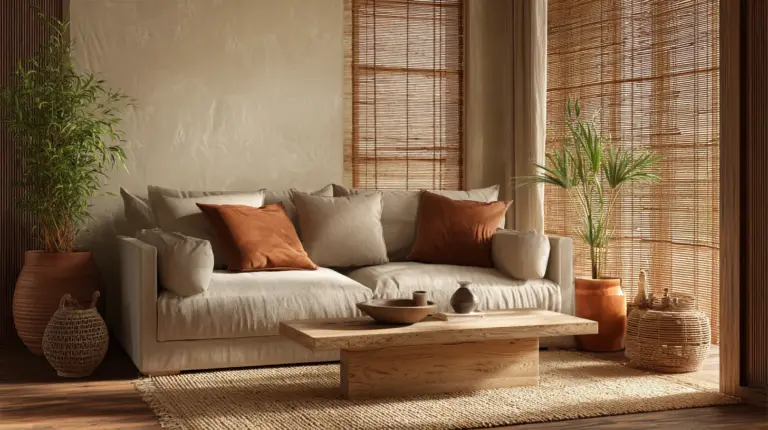
The secret most people miss? You don’t need new furniture to transform a room. The right Japandi accessories — placed with intention — can shift the entire feeling of a space. We’re talking textures that ground you, light that softens everything, and quiet objects that simply belong.
This guide is your step-by-step companion for building a Japandi-inspired home using budget Japandi accessories. Whether you’re in a rented apartment in Cavite, a studio in Manila, or a small home anywhere in the Philippines, these ideas are designed for your real life — your real budget, your real space.
Why Accessories (Not Furniture) Are Your Best Budget Move
Most decorating guides start with furniture. We’re going to start somewhere better.
Furniture is expensive, heavy, and hard to change. Accessories are flexible, affordable, and deeply personal. A new sofa won’t transform a cluttered room — but a set of neutral linen cushions, a bamboo tray, and a single low plant absolutely will.
The 30-20-50 Budget Rule for Japandi Decorating
Before you spend a single peso, think in ratios:
| Budget Category | Allocation | What It Covers |
|---|---|---|
| Big furniture & anchor pieces | 30% | Sofa, bed frame, storage unit (buy once, buy well) |
| Key Japandi accessories | 20% | Cushions, trays, lamp, ceramics, rug |
| DIY, thrifted & plants | 50% | Market finds, repurposed items, greenery |
This ratio keeps you anchored. It stops impulse buying and helps you prioritize the pieces with the most visual impact.
Accessories That Make the Biggest Difference
When your budget is limited, focus your 20% on these high-impact categories first:
- Texture layers — linen cushions, jute or woven rugs
- Warm light — a single paper or rattan lamp changes everything
- Natural vessels — ceramic vases, bamboo trays, wooden bowls
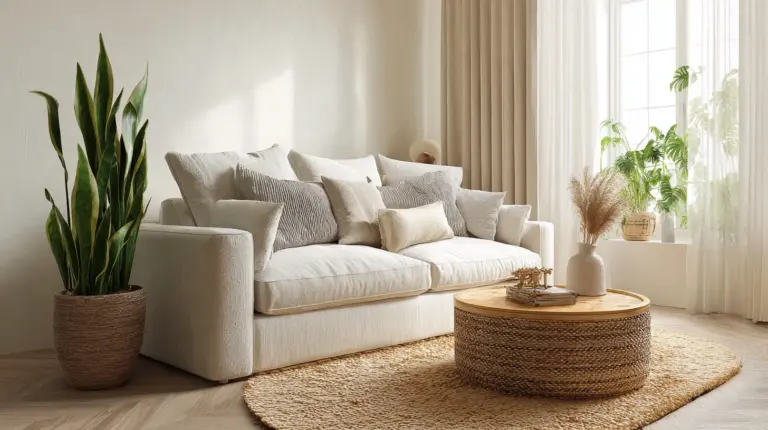
- Living greenery — even one plant in a simple pot reads as Japandi
The Japandi Budget Mindset: Simplicity Is the Point
Here’s what makes Japandi so beautifully budget-friendly: less is the aesthetic.
You are not decorating around scarcity. You are decorating with intention. Wabi-sabi — the Japanese acceptance of imperfection — means a slightly uneven handmade bowl is more Japandi than a perfect store-bought one. A weathered bamboo basket holds more soul than a brand-new plastic bin.
Buy vs. DIY vs. Skip — A Decision Filter
Use this before every purchase:
| Accessory Type | Buy | DIY | Skip |
|---|---|---|---|
| Linen cushion covers | ✓ (thrift or local) | If you sew | Synthetic, printed patterns |
| Ceramic vase | ✓ (secondhand) | Paint a plain bottle | Colorful or novelty shapes |
| Bamboo tray | ✓ (local market) | Rarely needed | Plastic trays |
| Scented candle | ✓ (beeswax, simple jar) | Yes, with soy wax | Heavy floral or synthetic scents |
| Wall art | ✓ (minimal prints) | Dried botanicals, framed fabric | Large, bold, graphic prints |
| Woven basket | ✓ (palengke or ukay) | If you weave | Metal or plastic bins |
| Plants | ✓ (cuttings or seedlings) | Propagate from cuttings | Artificial plants |
If an item makes you hesitate — skip it. Japandi thrives on restraint.
Where to Find Budget Japandi Accessories in the Philippines
This is where Philippine decorators have a genuine advantage. Our local materials — capiz, bamboo, rattan, abaca, nipa — are naturally Japandi. You just need to know where to look.
Local Markets and Ukay-Ukay
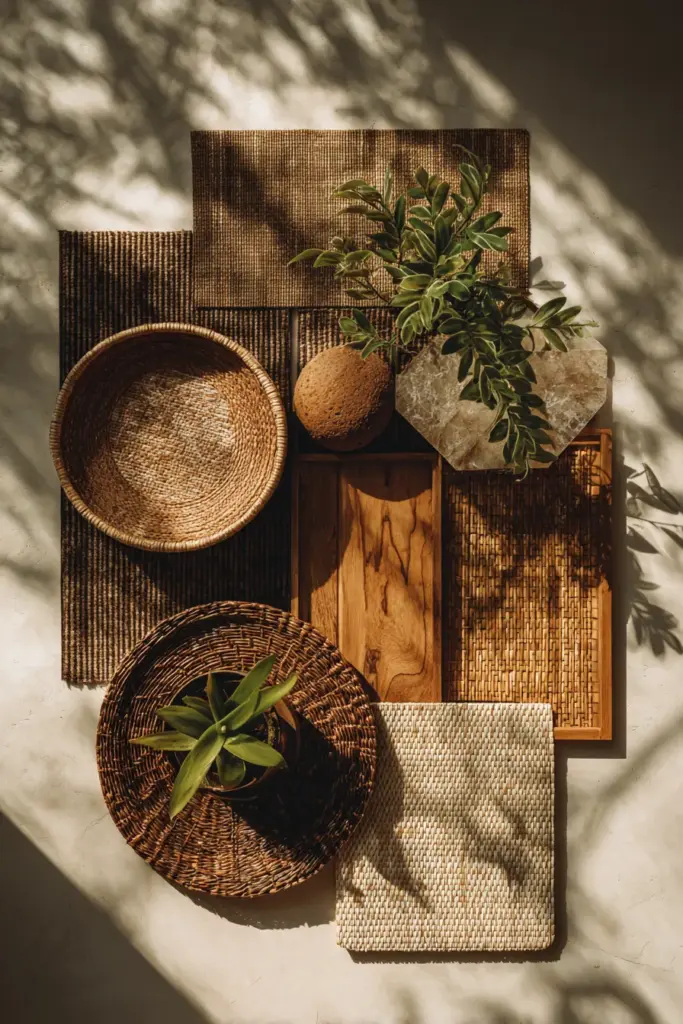
The palengke, tiangge, and ukay-ukay circuit is a treasure trove for budget Japandi accessories. Look for:
- Bamboo and rattan baskets — laundry baskets, fruit trays, and storage bins
- Ceramic mugs and bowls — local pottery markets in Vigan, Burnay, or even SM Homeworld’s clearance section
- Woven mats and runners — banig in neutral beige or brown tones work beautifully as table runners or wall hangings
- Wooden trays and boards — often found at palengkes near furniture-making towns in Calabarzon
Pro tip: Visit the Pasay tiangge, Divisoria home section, or Taytay ukay markets for linen-look fabrics you can turn into cushion covers at a fraction of the retail price.
Local Artisans and Social Commerce
Filipino artisans on Facebook Marketplace, Carousell, and Instagram sell handmade ceramics, woven pieces, and wooden home accessories that are perfectly Japandi in spirit. Search for:
- “Handmade ceramic vase Philippines”
- “Rattan home decor Cebu”
- “Bamboo decor Laguna”
- “Abaca basket home”
These pieces are affordable, sustainable, and they carry a story — the most Japandi thing of all.
Online Budget Stores (PH-Friendly)
- Shopee PH and Lazada — search “minimalist home decor,” “Japandi vase,” “rattan lamp,” or “linen cushion cover.” Filter by ratings and local sellers.
- IKEA Philippines — their SINNERLIG, KNIXHULT, and FEJKA lines are very Japandi at accessible price points.
- Saizen / Japan Home — affordable Japanese-inspired ceramics, wooden organizers, and simple candles.
Japandi Accessories by Category: What to Buy, What to Skip, What to Make
Cushions and Textiles — Texture You Can Feel
Nothing changes a room faster than fabric.
Look for cushion covers in natural linen, cotton slub, or raw muslin in tones of oat, warm grey, sage, or terracotta. Avoid polyester blends — they reflect light in a way that reads cheap even when they’re not.
Emotional effect: Warmth, softness, groundedness
Functional use: Comfort, noise-dampening, layering visual depth
- Budget range: ₱150–₱500 per cover (thrifted or Shopee)
- DIY option: Buy plain muslin fabric from Divisoria and sew simple envelope-style covers
- Skip: Anything with bold prints, slogans, or metallic thread
Trays and Organizers — The Art of Containment
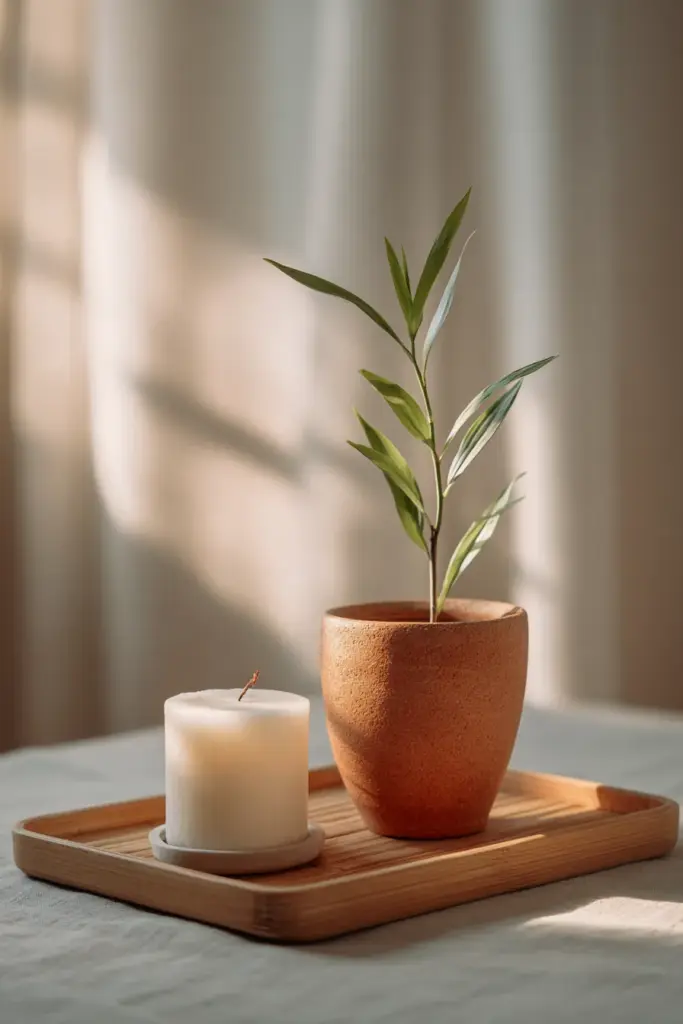
A bamboo or wooden tray is one of the most transformative Japandi accessories you can own. It corrals objects — a candle, a small plant, a ceramic cup — and turns them into a deliberate vignette.
Emotional effect: Order, calm, intentionality
Functional use: Surface organization, displaying small objects
| Material | Cost (Approx.) | Mood | Durability |
|---|---|---|---|
| Bamboo tray | ₱80–₱250 | Warm, natural | High |
| Rattan tray | ₱150–₱400 | Earthy, textured | Medium |
| Ceramic tray | ₱200–₱600 | Cool, refined | High |
| Wood (acacia/mango) | ₱200–₱500 | Rich, grounding | Very High |
Lighting — The Softest Investment
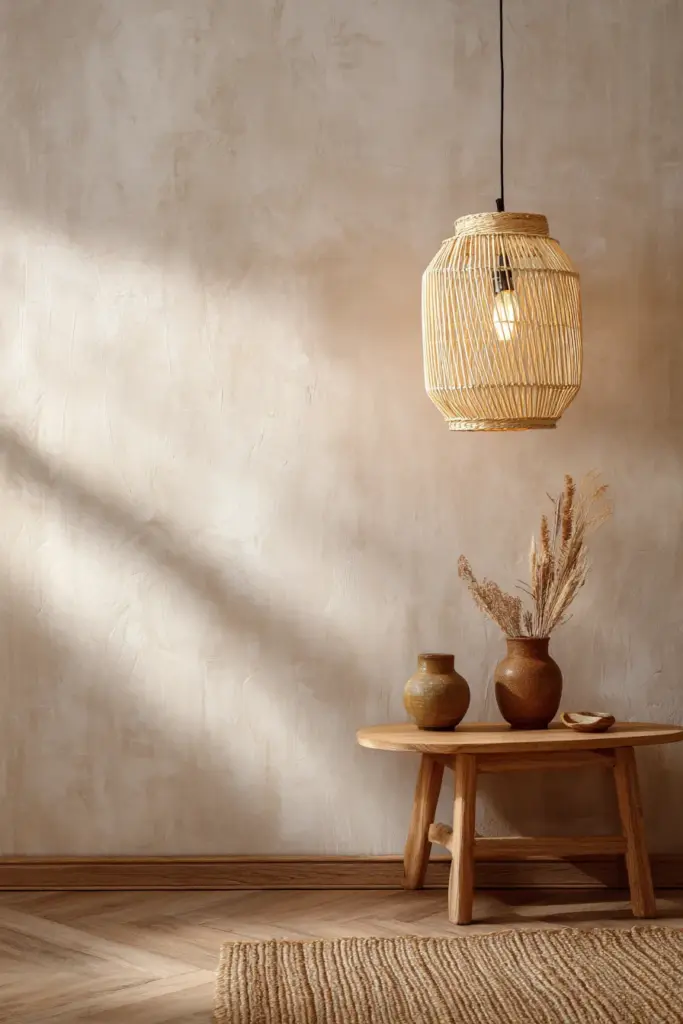
A single paper lantern, rattan pendant, or bamboo table lamp can replace the cold glare of a bare bulb and give your room the golden-hour quality that makes every Japandi photo look effortless.
Emotional effect: Warmth, intimacy, expansiveness
Functional use: Ambient light, focal point, spatial softening
- Paper lanterns: ₱80–₱200 at Divisoria or online
- Rattan lampshades: ₱300–₱800 on Shopee
- DIY option: Wrap a plain white lamp in natural twine or place a rattan basket over a standing bulb holder
Always use warm-white LED bulbs (2700K–3000K). They are the single cheapest upgrade that will make your home feel immediately more Japandi.
Plants and Planters — Living Accessories
Plants are non-negotiable in a Japandi space. They breathe life into stillness.
Choose simple, sculptural plants — a pothos, a snake plant, a pandan in a plain terracotta pot, or a small bonsai-style cutting in a ceramic bowl. The plant matters less than the planter.
Emotional effect: Calm, renewal, connection to nature
Functional use: Air quality, vertical interest, softening hard edges
- Best budget planters: Terracotta pots (₱30–₱150), cement pots (₱100–₱300), repurposed palayok
- DIY option: Paint a plain plastic pot with cement-textured spray paint for a minimal look
- Philippine tip: Salago, kawayan (bamboo) cuttings, or bangkal seedlings from local nurseries are almost free and deeply Japandi in character
Ceramics and Vessels — Objects of Quiet Beauty
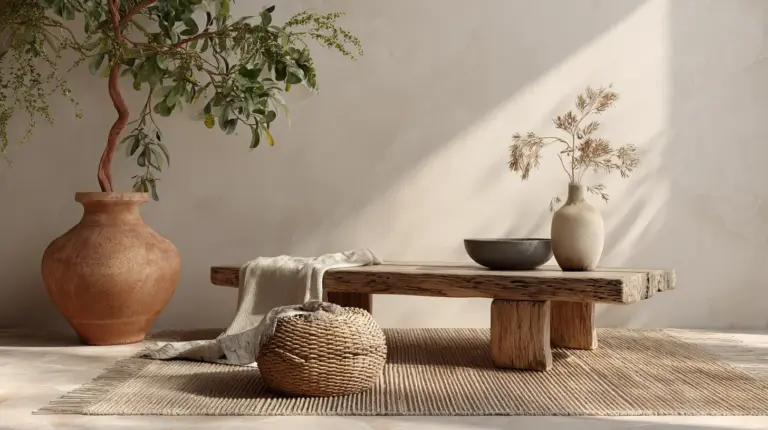
A single handmade ceramic vase, a set of stoneware mugs, or a burnay pot from Vigan can anchor an entire shelf or dining table.
Emotional effect: Groundedness, artisanal warmth, slow living
Functional use: Display, storage, daily use
- Look for matte, earthy tones — beige, warm grey, dusty green, clay, off-white
- Avoid anything glossy, bright, or with decorative painting
- Thrift stores and ukay-ukay often carry mismatched ceramics that become beautiful together in neutral tones
Rugs and Mats — The Floor Is Furniture
A woven jute rug, a banig mat, or a natural sisal runner adds texture to a bare floor and defines a seating or dining area without furniture changes.
Emotional effect: Warmth, definition, sensory richness underfoot
Functional use: Noise reduction, zone definition, visual anchor
- Budget jute rugs: ₱500–₱2,000 depending on size (Shopee or Divisoria)
- Philippine hack: Use a large banig (woven mat) in natural beige as a rug in a small room — utterly Japandi and deeply Filipino
Japandi Accessories for Small Spaces and Rented Apartments
Renting doesn’t mean waiting. A Japandi refresh is commitment-free and fully reversible.
Vertical Japandi: When Floor Space Is Limited
When your floor plan is small, go up:
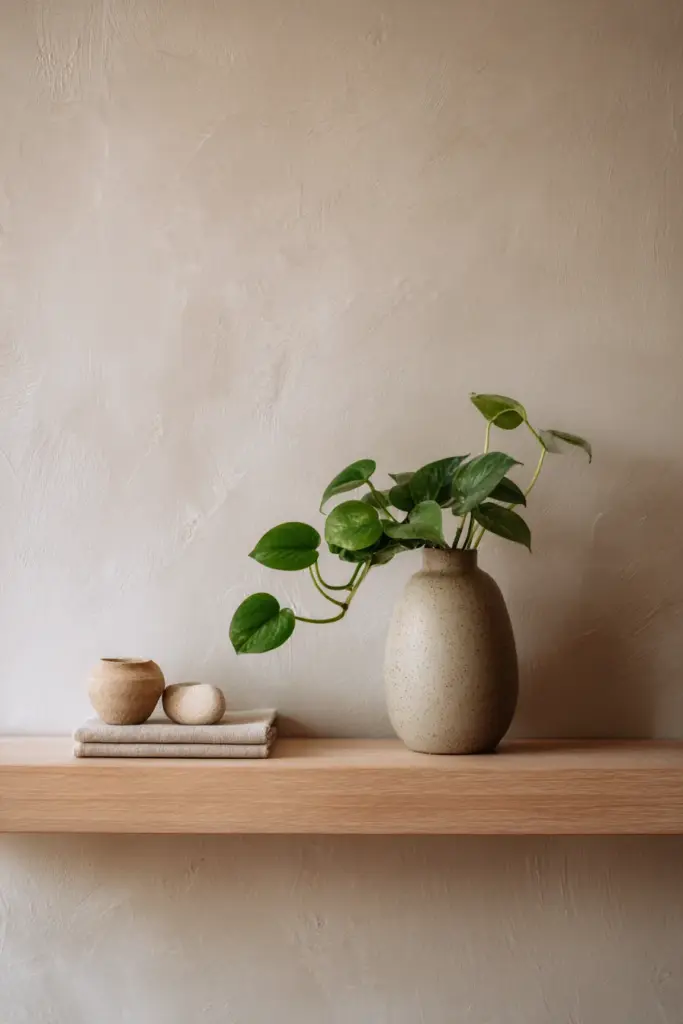
- Wall-mounted floating shelves in light wood — display a plant, a candle, and one small ceramic
- Hanging planters in macramé or rattan
- Tall, slender planters (bamboo poles, tall terracotta) that draw the eye upward
- Framed dried botanicals or a single piece of simple calligraphy as wall art
Accessories That Hide Clutter (The Japandi Way)
Japandi is not just about what you show — it’s about what you conceal beautifully:
- Lidded woven baskets for blankets, remotes, or shoes by the door
- Linen storage bins for toys, cables, or laundry
- Bamboo magazine holders or wooden desktop organizers for work-from-home setups
The rule: if it lives on a surface, it should earn its place. If it doesn’t, give it a beautiful home inside something woven.
Seasonal Japandi Accessory Swaps on a Budget
One of the smartest things you can do is swap, not add. Seasonal refreshes cost almost nothing if you rotate rather than accumulate.
| Season / Mood | Swap In | Swap Out |
|---|---|---|
| Rainy season (cold, cosy) | Thicker knit cushions, bamboo mats, warm candles | Lighter linen, thin cotton throws |
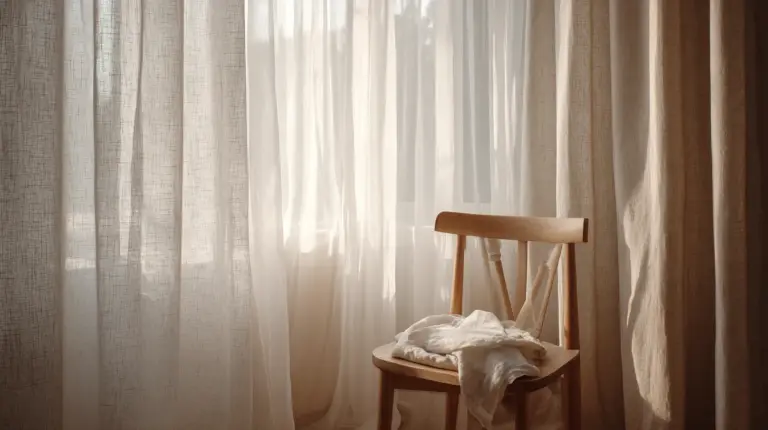
| Summer (airy, bright) | Lighter rattan pieces, fresh green plants, sheer curtains | Heavy textiles, dark ceramics |
| Holidays (warm, grounded) | Dried botanicals, beeswax candles, terracotta accents | Anything synthetic or sparkly |
Store off-season accessories in labeled linen bins — that way swapping takes ten minutes, not a whole weekend.
Your 5-Step Budget Japandi Accessory Plan
Here is your simple, repeatable system:
- Step 1 — Plan your palette. Choose three tones: a warm neutral (oat, sand, cream), a natural accent (sage, terracotta, dusty blue), and a dark anchor (charcoal, deep brown, black). Stick to these.
- Step 2 — Purge first. Remove anything that doesn’t fit your palette or feels visually busy. Decluttering costs nothing and is the most Japandi thing you can do.
- Step 3 — Buy three key pieces. One lamp, one textile (cushion or rug), one natural vessel. These anchor everything.
- Step 4 — Add one plant. Just one, in the right pot, in the right spot. Let it breathe.
- Step 5 — Edit relentlessly. After placing everything, remove one more thing. The empty space is part of the design.
A Final Word from ERYLIN
Beauty does not wait for the right budget. It waits for the right attention.
Japandi has always been a philosophy of enough — of finding the exact right thing and stopping there. A handwoven basket from a local market. A ceramic mug with a small crack that catches the light. A pandan plant in a terracotta pot by the window. These are not compromises. They are the whole point.
Start where you are. Use what is around you. Choose one beautiful, honest thing.
And let the room breathe.
Frequently Asked Questions
How can I achieve Japandi style on a very small budget?
Start with what you already own. Remove clutter, add one plant in a plain pot, swap one cushion cover for something neutral and textured, and place a candle on a tray. These four moves cost under ₱500 and immediately read as Japandi. Accessories — not furniture — are your most affordable path to this aesthetic.
Where can I buy Japandi accessories on a budget in the Philippines?
Your best sources are ukay-ukay and tiangge markets for ceramics and textiles, local palengkes for bamboo and rattan pieces, and Shopee or Lazada for affordable finds from local sellers. Japan Home and Saizen carry very Japandi-aligned items at low price points. For handmade pieces, check Instagram and Carousell for local Filipino artisans.
What Japandi accessories make the biggest impact for the least money?
In order of visual impact per peso spent: warm-white LED bulbs, a woven or linen cushion cover, a bamboo tray, a single plant in a terracotta pot, and a paper or rattan lampshade. These five items together can cost under ₱1,500 and transform a room completely.
Can I use Filipino materials like capiz, banig, or bamboo for Japandi decor?
Absolutely — and this is one of the most beautiful expressions of Japandi in a Philippine home. Capiz shell panels diffuse light in a way that is deeply Zen. Banig mats in natural tones work as rugs, table runners, or wall hangings. Bamboo and rattan are core Japandi materials. Filipino craft and Japandi philosophy are natural partners.
What colors should I use for Japandi accessories on a budget?
Stay within a muted, natural palette: warm whites, sand, oat, warm grey, sage green, dusty terracotta, and deep brown or charcoal as an anchor. Avoid bright colors, high contrast patterns, and anything glossy or metallic. The goal is a palette that feels like it came from the earth — because in Japandi, it did.