
Table of Contents
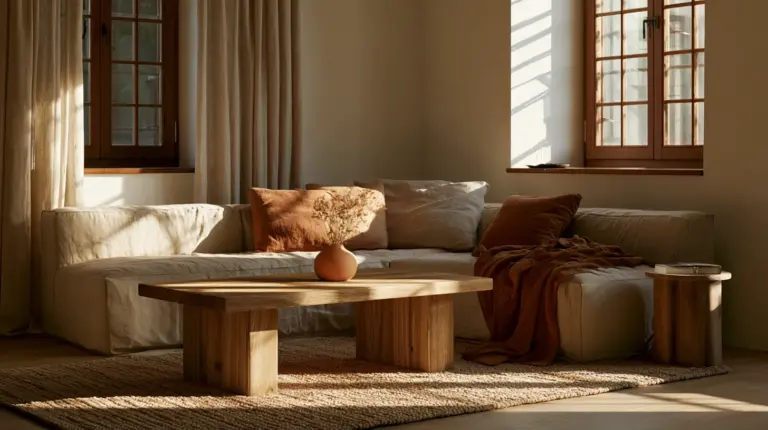
There’s a quiet confidence in a room that knows its colors. Not scattered, not shy — just placed, with intention, the way light falls across a wall at four in the afternoon.
That’s the heart of color blocking. It isn’t about painting everything at once. It’s about choosing where color lives, and letting the rest of the room breathe around it.
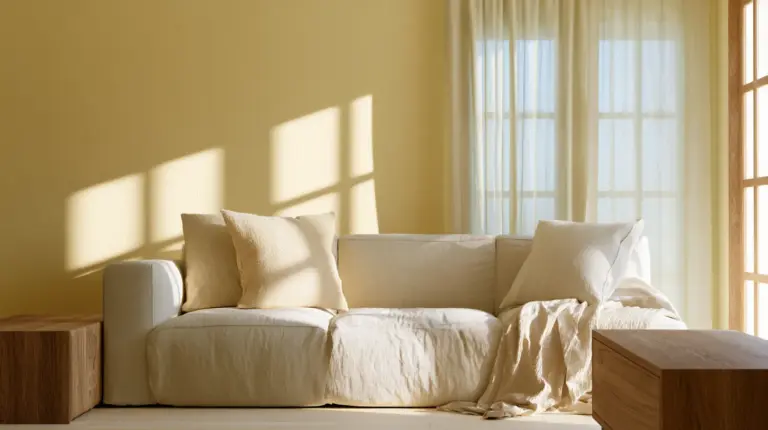
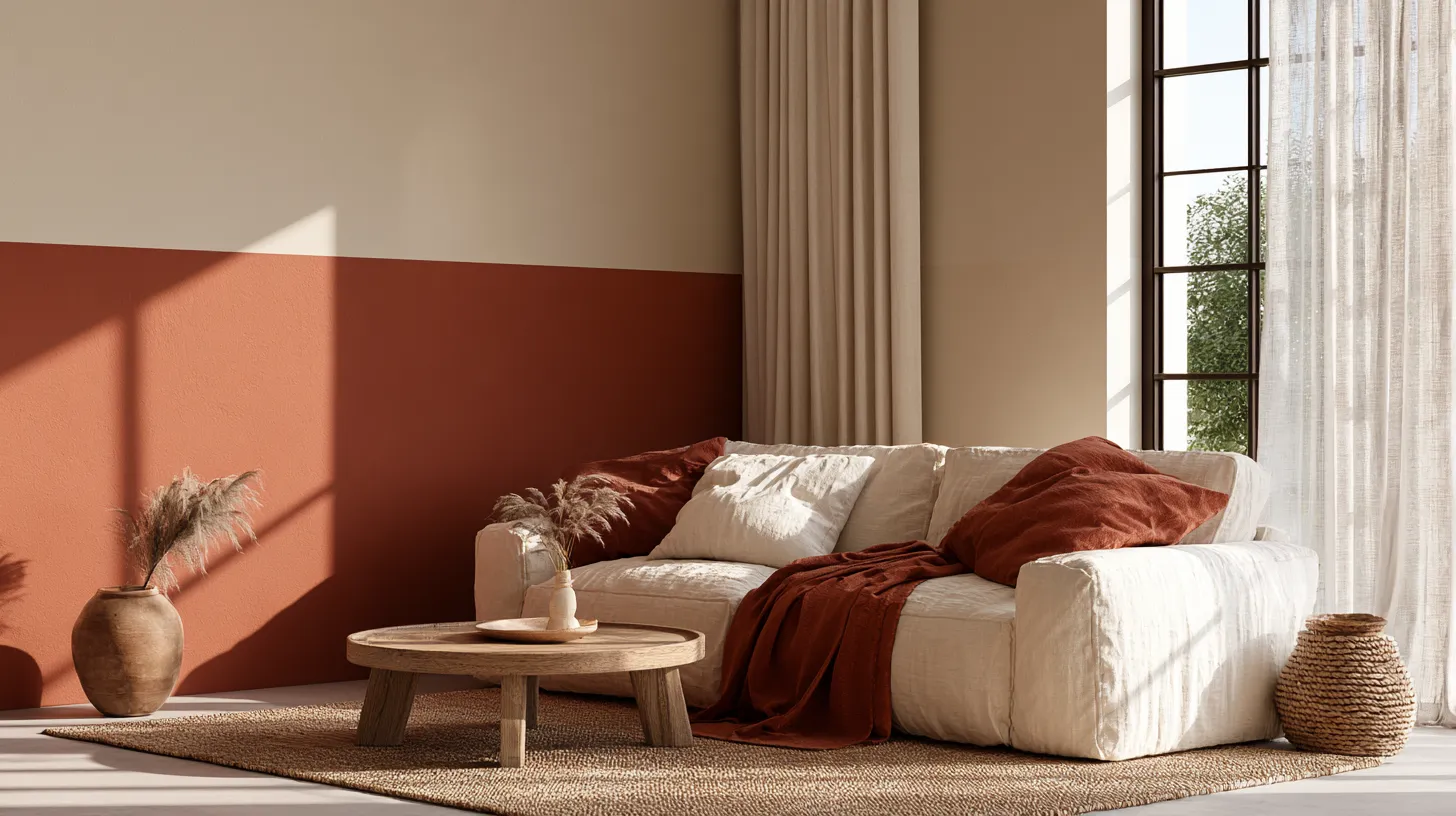
At ERYLIN, we think of color blocking as a kind of architecture for feeling. A terracotta wall behind a linen sofa. A soft olive panel that frames the window seat. Each block becomes a quiet anchor for the eye.
This guide walks you through it slowly — the palettes, the layouts, the small furnishings that count as color too. No overwhelm, just a clear path to a living room that feels curated and lived-in at once.
What Is Color Blocking in a Living Room?
Color blocking means dividing a wall or space into distinct sections of solid color, rather than painting everything one shade. Each section — or “block” — sits beside another in a clean, deliberate way.
Think of it as editing a room rather than decorating it. A horizontal band of clay across the lower half of a wall. A vertical stripe of sage behind a bookshelf. The lines stay crisp, the colors stay confident.
Unlike an accent wall, which uses one bold surface, color blocking layers two or more tones in relationship to each other. It’s a conversation between colors, not a single statement.
How to Choose Colors for Living Room Color Blocking
Start with what already exists in the room. Your sofa, your rug, even the warmth of your flooring — these are your anchor colors, and everything else should answer to them.
From there, build outward using tone rather than trend. A living room reads as calm when its blocks share warmth or coolness; it reads as alive when you introduce contrast with intention, not chance.
The Anchor-and-Support Method
Pick one anchor color first — often the largest surface, like your main wall or your sofa. Then choose one or two supporting blocks that either soften or sharpen it.
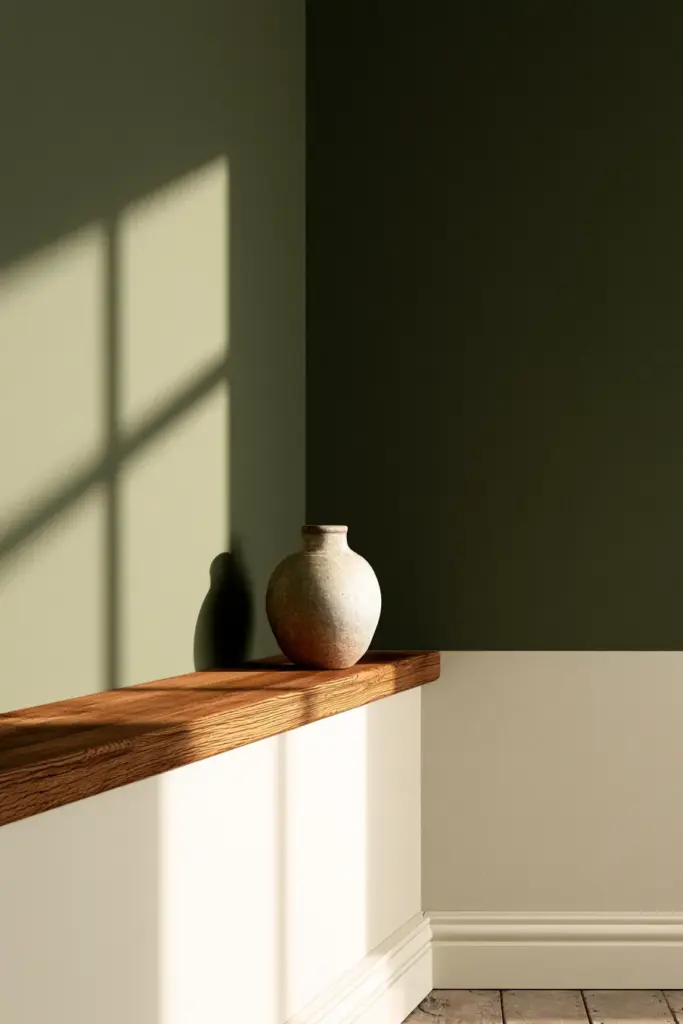
- Anchor: warm terracotta or deep olive
- Supporting block: soft cream or bone white for contrast and light
- Accent block: a muted rust or ink blue, used sparingly on trim or a nook
This keeps the palette grounded even when the colors themselves are bold.
A Quick Reference for Color Pairing
| Anchor Color | Supporting Block | Mood Created |
|---|---|---|
| Terracotta | Warm cream | Cozy, sun-washed |
| Olive green | Soft beige | Grounded, earthy |
| Charcoal | Warm white | Modern, quietly dramatic |
| Dusty rose | Sage green | Gentle, romantic |
| Ink blue | Sandstone | Elevated, moody |
How Many Colors Should You Use?
This is where most living rooms go wrong — not from choosing bad colors, but from choosing too many at once.
- Small living rooms: two to three blocks, kept close in tone
- Medium rooms: three blocks, with one used as a clear focal point
- Large or open-plan rooms: up to four or five, introduced gradually through tonal shifts rather than hard contrast
A simple rule: if you can’t name each block’s purpose — anchor, support, or accent — you likely have one too many.
Color Blocking Ideas for Small Living Rooms
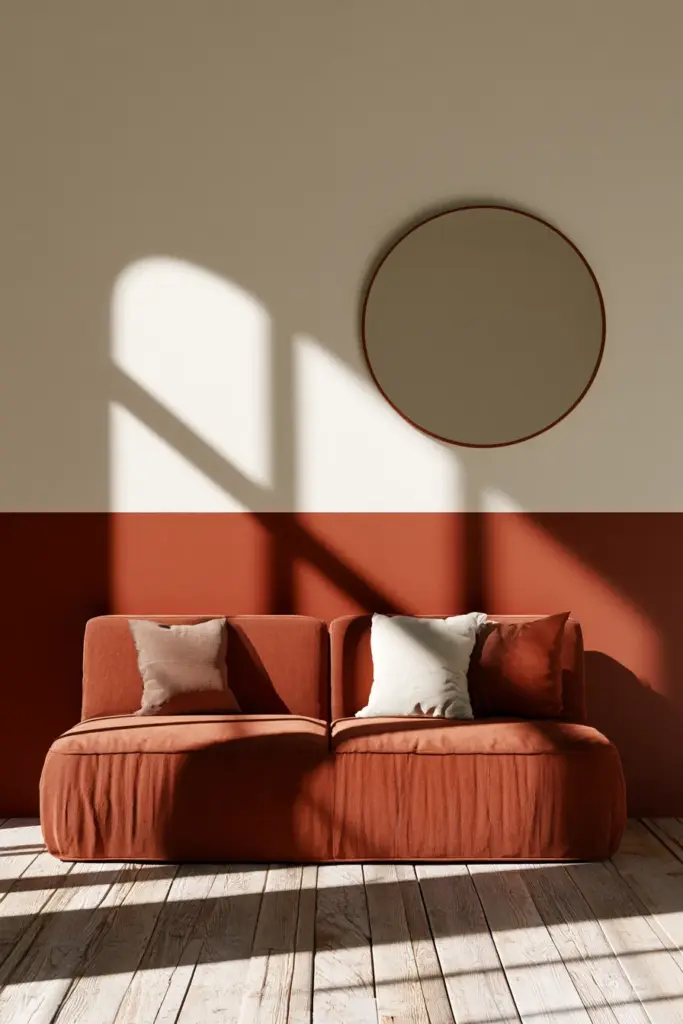
Small rooms need blocks that open the space up, not close it in. Horizontal bands tend to widen a room visually, while a lighter block on top with a deeper tone below keeps the ceiling feeling tall.
Try painting the lower third of the wall in a warm, grounded shade — think soft clay or muted forest — and leaving the upper wall in a gentle off-white. It reads like a wainscoting effect without the woodwork, and it keeps the eye moving upward and out.
Mirrors and lighting ideas placed near the color break do quiet, important work here too — they catch the transition of tone and make the whole wall feel intentional rather than accidental.
Color Blocking for Open-Plan Living and Dining
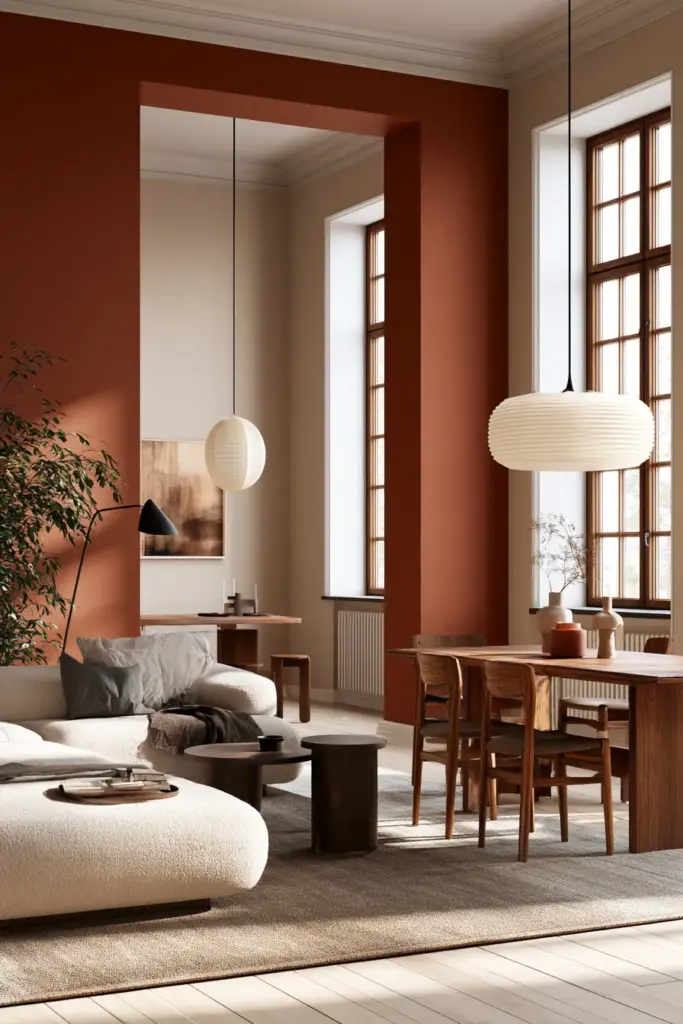
Open-plan spaces ask color to do a job walls usually do: define where one room ends and another begins.
Use one block to signal the lounging zone — perhaps a warm, enveloping tone behind the sofa — and a second, distinct block to mark the dining area, often a shade lighter or cooler. The floor plan stays open, but the eye always knows where it is.
A large-scale rug can echo the lounge-zone color, pulling the block down from the wall and into the furniture, so the whole seating area feels wrapped rather than just painted.
Color Blocking by Style: Japandi, Modern, and Eclectic
Color blocking flexes beautifully across styles — the trick is matching the palette’s intensity to the mood you’re after.
Japandi Color Blocking
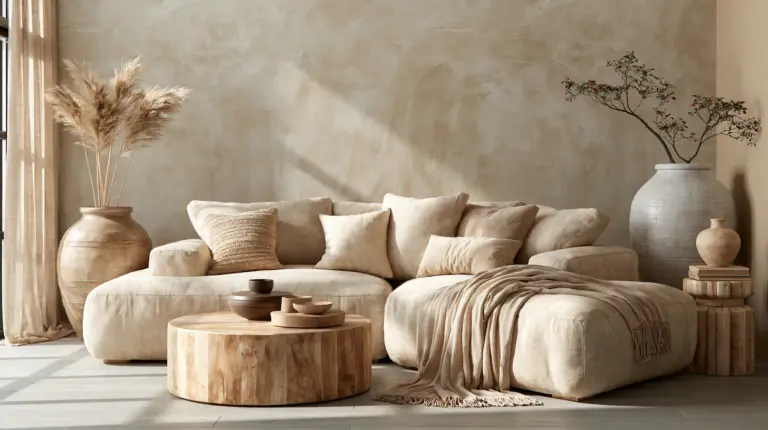
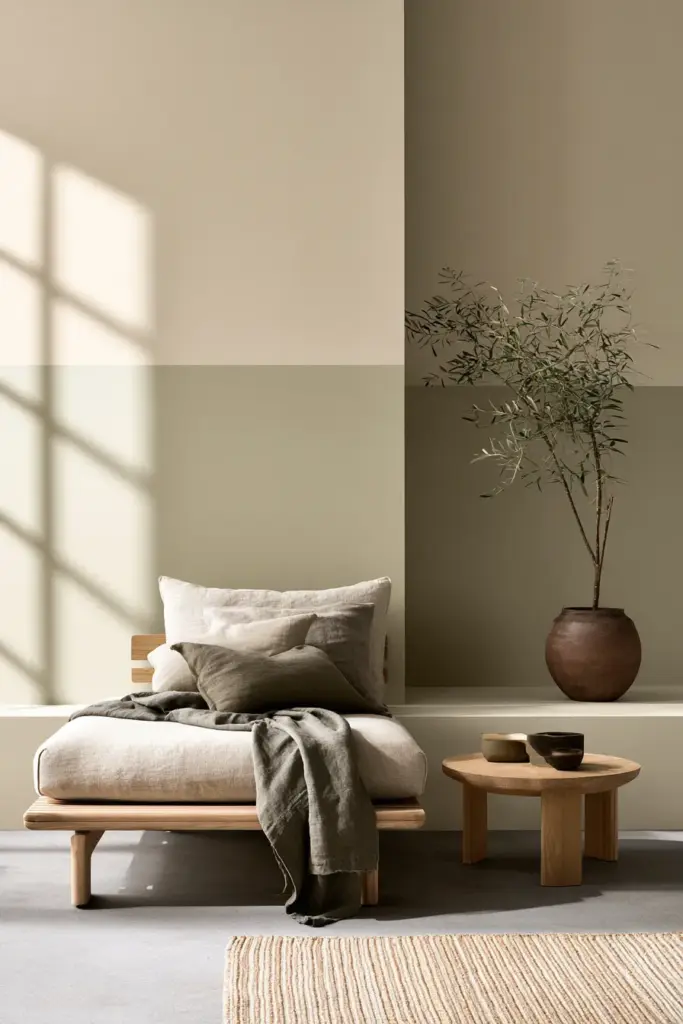
Japandi leans into restraint. Choose muted, earthy blocks — warm beige, soft olive, gentle terracotta — with tonal shifts instead of sharp contrast. The transitions should feel like they were shaped by weather, not a ruler.
Modern Minimal Color Blocking
Modern spaces thrive on precision. Stick to two or three strong blocks — charcoal, warm white, and perhaps one saturated tone like deep rust — with clean lines and generous negative space between them.
Eclectic Color Blocking
Eclectic rooms welcome more color and irregular shapes. Mix jewel tones with warm neutrals, let blocks overlap in unexpected corners, and pair painted geometry with patterned textiles for a layered, collected feel.
Color Blocking Beyond Paint: Sofa, Rugs, Curtains, Shelving
Paint isn’t the only way to block color — and honestly, it shouldn’t be the only tool in your kit.
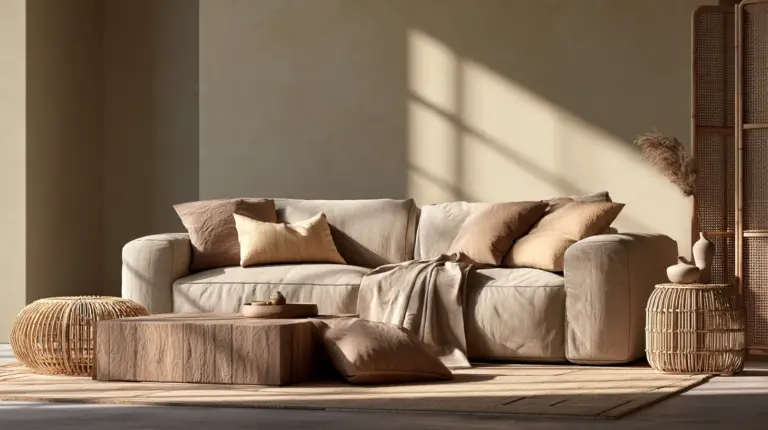
- Sofa as a block: a deep-toned sofa against a lighter wall becomes its own color block, no paint required
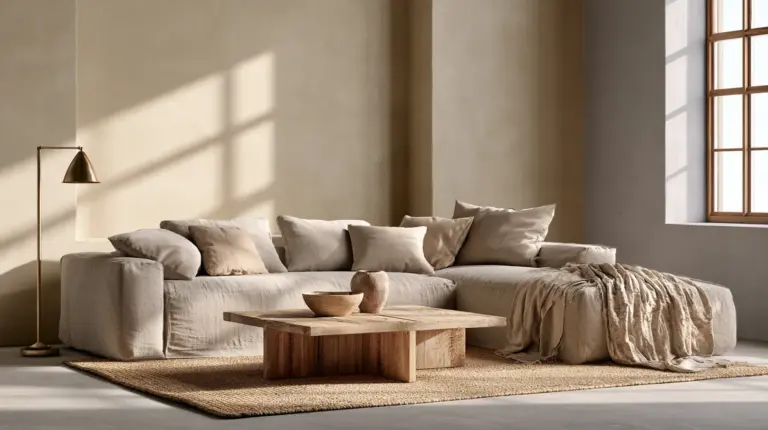
- Rug as a ground block: a large, richly colored rug anchors the floor the way a wall color anchors a room
- Curtains as vertical blocks: floor-length drapery in a saturated hue reads like a soft, moving stripe of color beside your cozy furniture
- Painted shelving: the interior back panel of a bookshelf, painted in a contrasting tone, creates a contained block within a block
This approach is especially kind to renters, or anyone not ready to commit to paint just yet.
Color Blocking Without Painting
If painting isn’t an option, removable wallpaper panels can mimic a color-blocked wall with almost no commitment. Fabric panels stretched over lightweight frames offer the same effect, and can be swapped seasonally.
Layering textiles — a bold throw, a patterned cushion, a richly dyed curtain — lets you test a color relationship before it becomes permanent. Live with it for a season, then decide.
The Mood Behind the Blocks
Color blocking isn’t only visual — it shapes how a room feels to sit in.
Soft, tonal shifts between close colors create calm; they’re gentle on the eye and slow the pace of a room. High-contrast jewel tones, on the other hand, bring energy and drama, ideal for a conversation-focused corner rather than a whole-room treatment.
A light block placed above a darker one tends to make ceilings feel taller and rooms feel more open. Reverse the order, and a room feels more intimate, cocooned — lovely for a reading nook or a window seat alcove.
Common Color Blocking Mistakes and How to Fix Them
Even simple ideas can go sideways without a little care.
- Bleeding tape lines: press painter’s tape firmly and seal the edge with a thin coat of the base color before your block color, so any seepage matches the wall rather than the new shade
- Uneven edges: use a laser level or long straightedge rather than eyeballing your line — a slightly crooked block reads as a mistake, not a style choice
- Too many colors at once: if a room feels busy rather than curated, remove one block and let the remaining two or three carry the space
- Wrong drying time: rushing the tape removal before paint fully cures often pulls color away with it — patience here saves a repaint
Budget Notes for a DIY Color Blocking Project
A single accent wall typically needs one to two liters of paint, a roll of painter’s tape, a small tray, and an afternoon. Removable wallpaper panels cost more upfront but require no drying time and no cleanup.
If you’re testing a bold pairing, sample pots go a long way — paint a large paper panel and move it around the room before committing to the wall itself.
Your Color Blocking Checklist
- Choose one anchor color from an existing piece — sofa, rug, or floor tone
- Add one or two supporting blocks in a related or gently contrasting hue
- Decide which surface deserves the most intensity, such as a TV wall or sofa-back wall
- Match your block count to your room size: two to three for small spaces, up to five for large or open-plan rooms
- Let furniture, rugs, and curtains count as blocks, not just paint
- Test with sample panels before committing to a full wall
- Keep tonal shifts for calm spaces, save high contrast for focal corners
A Softer Kind of Boldness
A well-blocked living room doesn’t shout. It settles into itself, color by color, the way a good afternoon settles into evening.
Start small if that feels right — one wall, one warm tone, one honest decision. The rest of the room will follow its lead, the way it always does when the first choice is made with care.
Frequently Asked Questions
What is color blocking in a living room?
It’s the practice of dividing walls or spaces into distinct sections of solid color, using clean lines to create a layered, intentional look rather than one uniform wall color.
How do I do color blocking on living room walls?
Choose an anchor color, add one or two supporting tones, mark clean lines with painter’s tape or a straightedge, and paint each block separately, letting each dry fully before taping the next section.
What colors work best for living room color blocking?
Warm, tonal pairings like terracotta and cream, or olive and beige, tend to feel the most cohesive, while charcoal and warm white offer a more modern, contrast-driven look.
Is color blocking suitable for small living rooms?
Yes — horizontal blocks with a lighter tone on top and a deeper tone below can actually make a small room feel taller and more open, as long as the palette stays close in tone.
Can I try color blocking without painting?
Absolutely. Rugs, curtains, sofas, and even painted shelving interiors can all act as color blocks, making it easy to test the look before committing to paint.