
Table of Contents
Every living room tells a story before a single word is spoken. The wall color sets the mood, and the furniture answers it back — in wood grain, linen weave, and the quiet gleam of a brass lamp.
At ERYLIN, we believe living room colors and furniture should never be chosen separately. A perfect wall shade can fall flat against the wrong sofa, and a beautiful chair can disappear into a wall that fights it.
This guide answers the question our readers ask most: which living room colors work with which furniture types and styles? We’ll walk through pairings by furniture color, by design style, by room size, and even by climate — because a sunlit room in Baguio behaves differently than a shaded one in Manila.
Pour some tea, settle in, and let’s find the palette your living room has been waiting for.
How Living Room Wall Colors Affect Furniture Perception
Color doesn’t work alone. It bounces off fabric, sinks into wood, and shifts under different bulbs, so the same paint can look entirely different by 6 p.m.
Wall Color and Furniture Material Interaction
Warm wall tones make oak and walnut glow honey-gold, while cool grays can pull the same wood toward a flatter, ashier finish. Notice how your furniture already leans warm or cool before you commit to a wall shade.
Metal and glass furniture read as sharp and modern against saturated or matte walls, but they soften beautifully against a warm, chalky neutral. Fabric pieces respond too — linen and bouclé absorb color into their weave, so a sofa in oatmeal linen will pick up whispers of whatever wall color surrounds it.
The Floor + Wall + Furniture Color System
Most color guides stop at two variables. We think in three: floor, wall, and furniture, because your flooring is already a fixed color decision in the room.
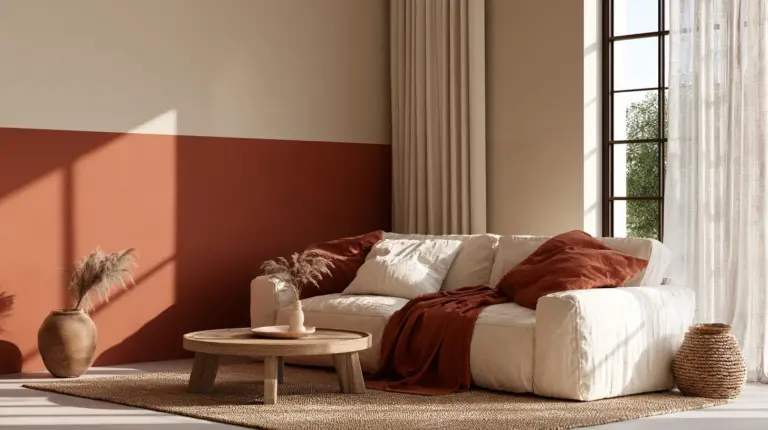
- Light wood floors pair beautifully with soft greens, warm whites, and terracotta walls.
- Dark wood or tiled floors ground bolder wall colors like deep teal or charcoal without feeling heavy.
- Neutral floors (light tile, polished concrete) give you the most freedom — they let both wall and furniture take center stage.
Think of your floor as the quiet base note, your walls as the melody, and your furniture as the harmony that ties the room together.
Top Living Room Color and Furniture Pairings by Furniture Tone
Choosing paint often starts with the furniture you already own. Here’s how to build around it.
Best Wall Colors for Brown Furniture
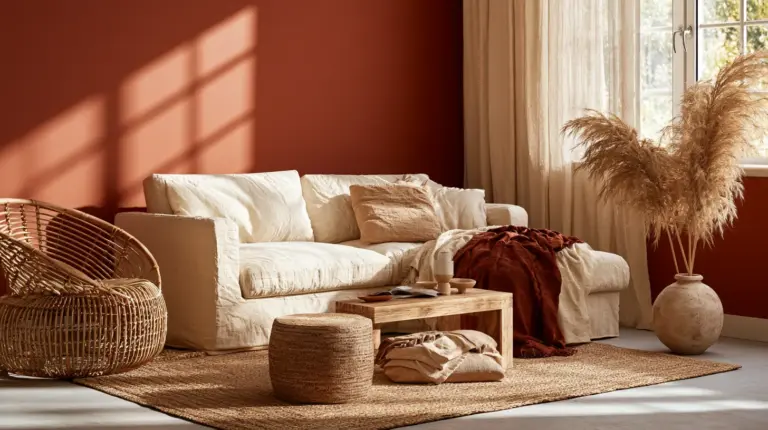
Brown furniture — leather sofas, rattan chairs, wooden consoles — glows against warm, earthy walls. Sage green, terracotta, and soft cream all let brown wood feel rich rather than dated.
Avoid stark white walls with brown furniture if you want warmth; they can make the wood look dull by contrast. Instead, try a warm greige or muted olive for a grounded, natural living room.
Best Wall Colors for Gray Furniture
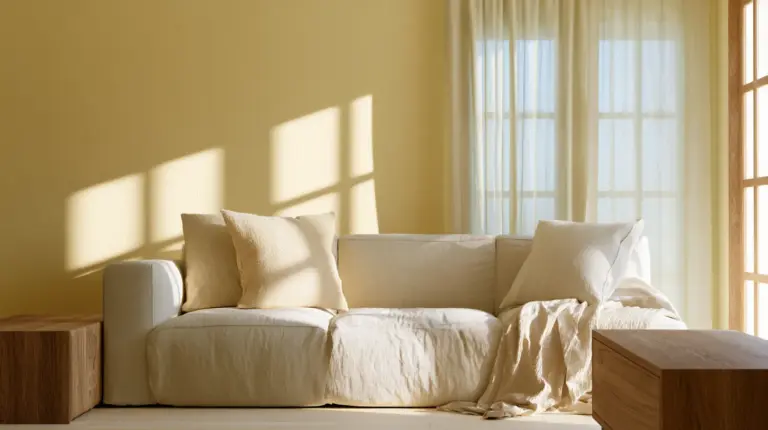
Gray furniture is endlessly flexible, but it needs a wall color with a little soul so the room doesn’t feel cold. Dusty blue, warm blush, and buttery yellow all bring gray sofas to life.
For a moodier feel, a deep charcoal or navy wall behind a light gray sofa creates quiet, sophisticated contrast. This pairing feels especially at home in evening lighting, when lamps replace daylight.
Best Neutral Living Room Colors for Any Furniture
If you’re not ready to commit to a bold hue, these neutrals flatter almost any furniture color and finish:
- Warm white (soft, not stark)
- Greige (a gray-beige hybrid)
- Soft taupe
- Pale oat or wheat tones
These shades act as a gentle canvas, letting your cozy furniture choices — textured throws, woven baskets, a well-loved armchair — do the talking.
Living Room Color and Furniture Style Guides
Your design style should guide the palette as much as your furniture color does. Here’s how three of our favorite aesthetics come together.
Japandi Living Room Colors and Furniture
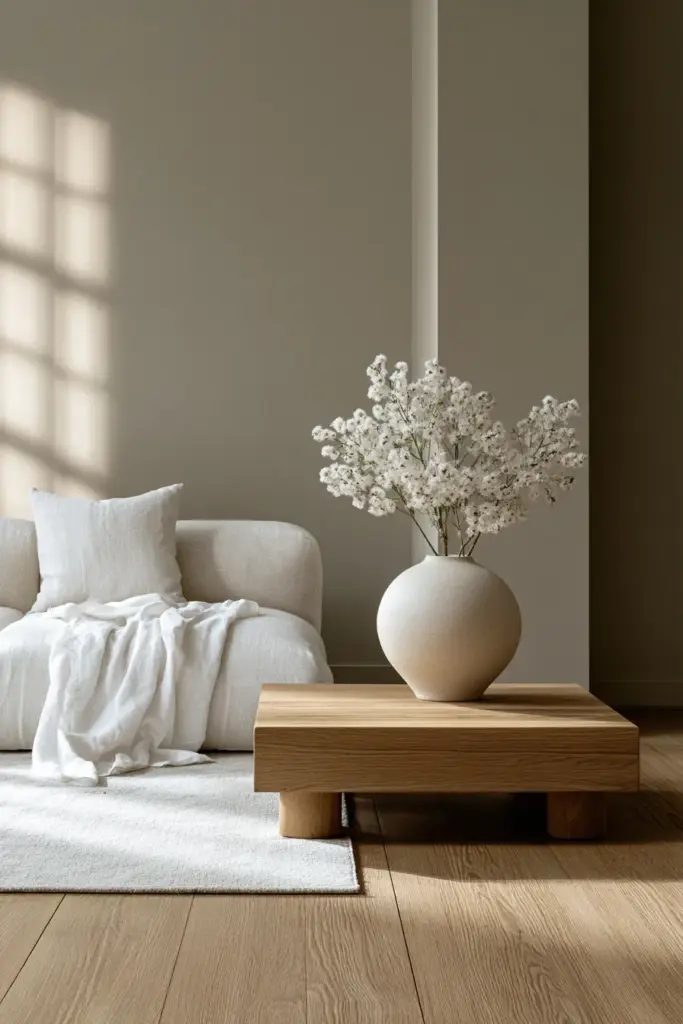
Japandi pairs Japanese restraint with Scandinavian warmth, and the palette follows suit: muted, quiet, and deeply calming. Think gray-beige walls, natural oak or bamboo furniture, and white linen textiles.
Keep furniture low-profile and matte — no glossy finishes here. A single ceramic vase or a woven rug is enough decoration; the room breathes through negative space.
Modern Minimalist Living Room Colors and Furniture
Modern living rooms lean on strong neutrals as a backdrop for one statement piece — often the sofa itself. Charcoal, warm white, or soft greige walls let a bold-shaped sofa or a sculptural coffee table shine.
Metal and glass accents (a black-framed mirror, a smoked-glass side table) add just enough edge. The goal is restraint with one moment of drama.
Eclectic Living Room Colors and Furniture
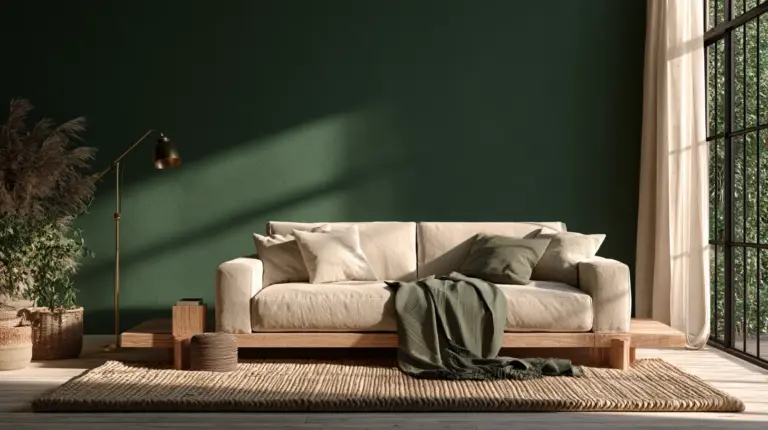
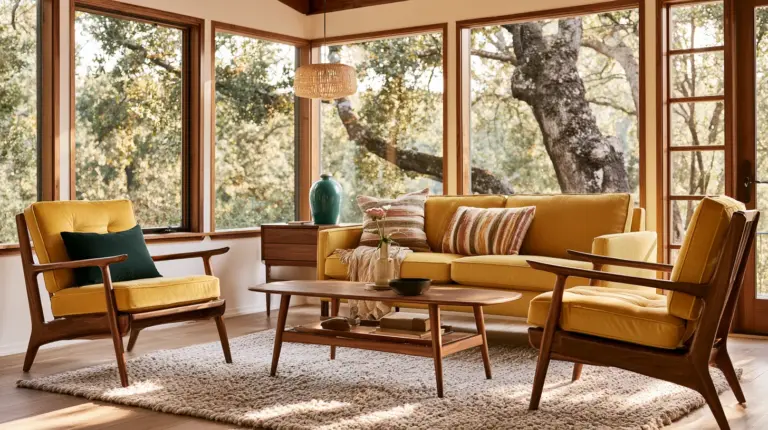
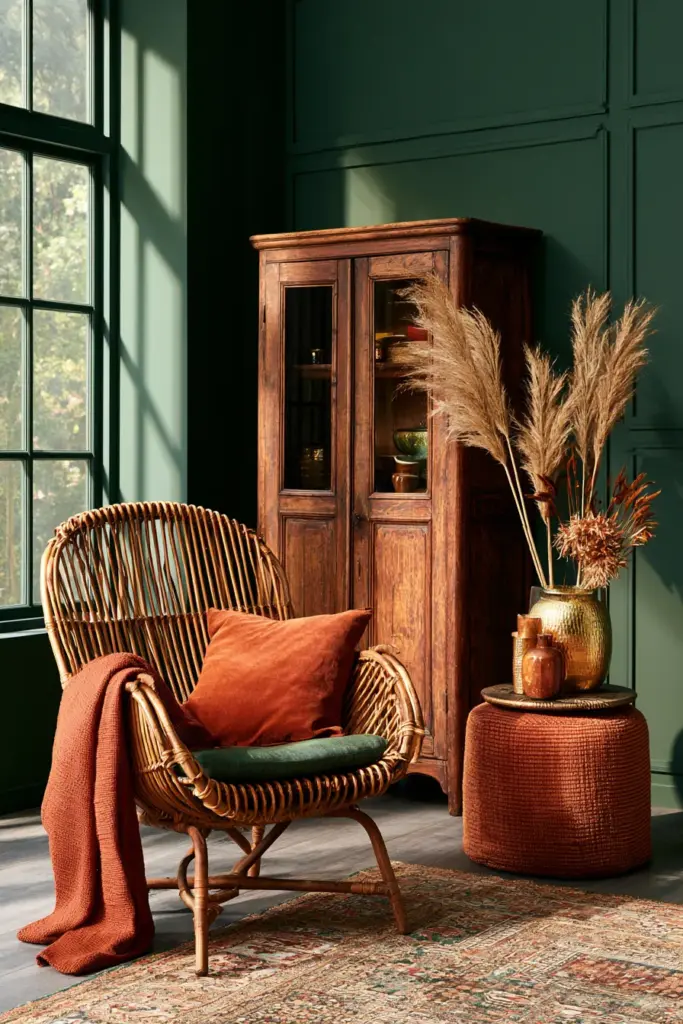
Eclectic spaces thrive on colorful walls and mixed-era furniture — a vintage rattan chair beside a modern boucle sofa, tied together by a pattern-rich rug. Deep green, terracotta, or ochre walls give this style room to play.
Layer in gold accents, mismatched textures, and one or two heirloom pieces. This is the style for readers who collect rather than curate — and it rewards a little fearlessness.
Small Living Room: Colors and Furniture That Feel Bigger
Small rooms need color and furniture to work together, not compete. The goal is visual continuity — fewer hard stops for the eye.
- Keep walls and large furniture in the same tonal family (soft white walls with a light oak console, for example) so the room reads as one continuous space.
- Choose furniture with visible legs rather than skirted bases; the extra sliver of floor makes the room feel more open.
- Use one lighter wall color with light furniture to bounce daylight further into the room.
- Save bold color for one accent wall or textile, not the whole space, so the room doesn’t shrink visually.
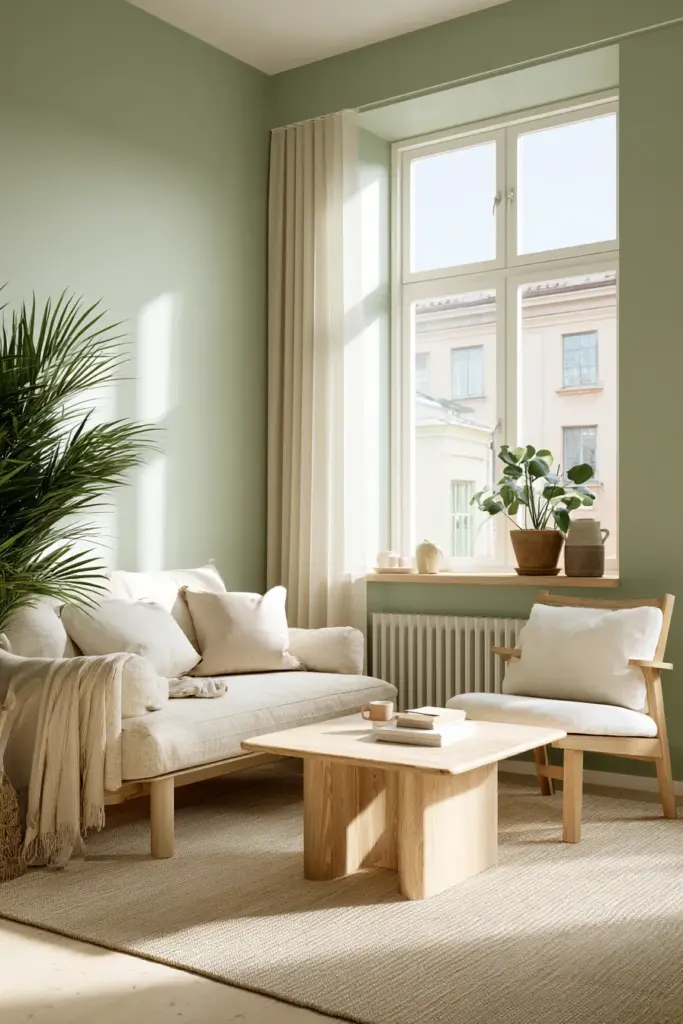
A small room in soft sage with light rattan furniture can feel as airy as a room twice its size, simply because nothing interrupts the eye.
Color Psychology: Choosing Colors That Match Your Lifestyle
Color isn’t only decoration — it shapes how a room feels to live in. Choosing with intention means asking how you want to feel in that space, not just what looks good in photos.
| Color Family | Mood It Creates | Best Paired Furniture |
|---|---|---|
| Soft blue, sage green | Calm, restful | Light wood, linen upholstery |
| Warm white, cream | Open, airy | Natural wood, rattan |
| Terracotta, ochre | Energetic, grounded | Wood, leather, woven textures |
| Charcoal, deep navy | Cozy, dramatic | Light or metallic accents for contrast |
| Blush, dusty pink | Gentle, welcoming | Gray or walnut furniture |
If your living room doubles as a home office or a space for hosting, lean toward tones that feel alert but not overstimulating — soft greens and warm neutrals tend to serve both purposes well.
Philippine Living Rooms: Practical Color and Furniture Tips for Humid, Low-Light Spaces
Tropical light behaves differently than the cooler daylight most global color guides assume. Here’s how to adjust for it.
Working With Natural Light and Humidity
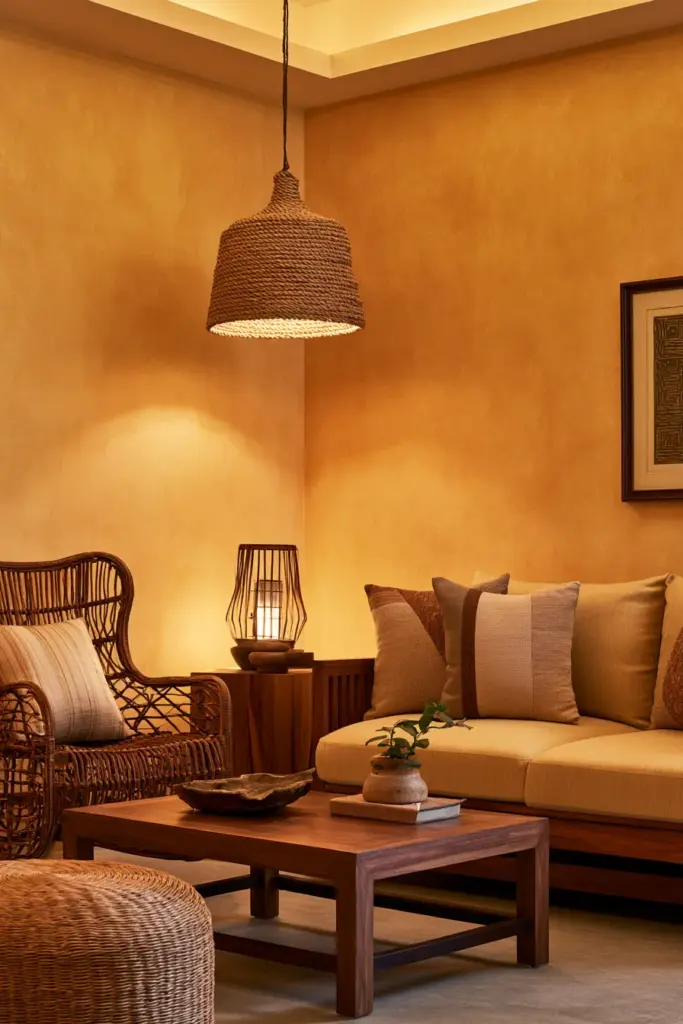
North-facing and low-light rooms in humid climates benefit from warmer whites and soft ochres, which prevent the space from reading as gray or flat under overcast skies. Matte finishes also resist glare better than glossy ones under strong tropical sun.
For furniture, choose finishes that handle humidity gracefully — sealed rattan, teak, and performance fabrics resist warping and mildew far better than raw wood or delicate linen.
A Silang Small Living Room, in Practice
Picture a modest Silang living room with warm beige walls and a light wood Japandi-style sofa. The pairing keeps the space feeling open even with limited natural light, while the wood tone stays warm rather than sallow under LED bulbs.
An Eclectic Philippine Living Room, in Practice
Now picture the same room reimagined in deep green walls, rattan furniture, and one vintage wooden cabinet. The green grounds the humidity-friendly rattan, and warm lighting ideas — think rope-shade pendants or a rattan floor lamp — keep the room glowing after sunset.
Lighting Type Changes Everything
Warm LED bulbs (2700K–3000K) deepen earthy wall colors and flatter wood furniture, while cooler bulbs (4000K+) can wash out warm tones and make gray furniture feel sterile. If you’re unsure, test your paint swatch under your actual evening lighting before committing.
Budget-Friendly Living Room Color and Furniture Combos
A beautiful room doesn’t require a full furniture overhaul. Small, intentional changes go a long way.
- Paint one accent wall instead of the whole room to test a bolder color commitment-free.
- Pair a thrifted wooden chair with a bold wall color — the contrast reads as intentional, not mismatched.
- Swap throw pillows and a rug before replacing furniture; texture changes the room’s feel almost as much as paint does.
- Choose one statement piece (a vintage cabinet, a colorful armchair) and keep everything else neutral around it.
Before You Paint or Buy: A Quick Checklist
- Note whether your room faces north, south, east, or west, and at what time you use it most.
- Identify whether your existing furniture leans warm or cool in undertone.
- Test paint swatches under both daylight and your evening lighting.
- Decide whether you want walls lighter or darker than your furniture for contrast.
- Consider your floor color as the third variable, not an afterthought.
- Choose furniture finishes suited to your climate, especially in humid regions.
- Pick one accent color or texture to repeat at least twice in the room for cohesion.
A Soft Closing Thought
A living room is never really about color or furniture alone. It’s about the way afternoon light settles across a linen sofa, the way a wall color makes a well-worn armchair feel like it belongs.
Choose your palette the way you’d choose a favorite sweater — for how it feels against the day, not just how it photographs. That’s the quiet magic ERYLIN hopes you find in your own home.

Frequently Asked Questions
What color should I paint my living room with my furniture?
Start with your furniture’s undertone. Warm wood or leather pairs best with warm neutrals or earthy tones, while gray or black furniture pairs well with soft blues, blush, or a rich charcoal for contrast.
What colors go well with brown furniture in the living room?
Sage green, terracotta, warm cream, and muted olive all complement brown wood and leather furniture without competing with its natural warmth.
Should living room walls be lighter or darker than the furniture?
Both work, but they create different effects. Lighter walls with darker furniture add grounded contrast, while darker walls with lighter furniture create a cozy, dramatic feel — choose based on the mood you want.
How does lighting affect living room color and furniture choices?
Warm bulbs deepen earthy tones and flatter wood, while cool bulbs can wash out warm colors and make furniture feel sterile. Always test paint swatches under your room’s actual lighting before deciding.
What are the best neutral living room colors for any furniture?
Warm white, greige, soft taupe, and pale oat tones flatter nearly any furniture color and finish, making them a safe, flexible starting point.