
Table of Contents
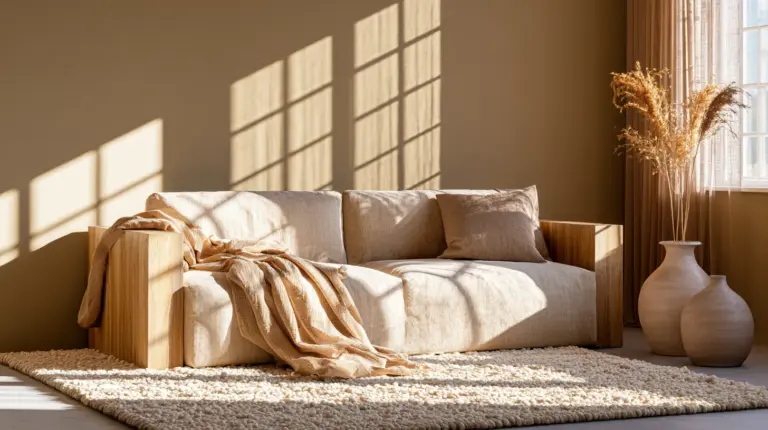
There’s a particular kind of light that pink loves. It’s the soft gold of a late afternoon, spilling across a linen sofa and catching the edge of a clay vase. That’s the mood we’re chasing.
Pink has outgrown its old reputation. It’s no longer just a nursery color or a nod to nostalgia. Today it reads as warm, grounded, and quietly confident — a color that can hold its own in a modern living room.
At ERYLIN, we think of pink the way we think of a good throw blanket: it should feel like it belongs, not like it’s trying too hard. This guide will show you exactly how to get there.
We’ll walk through undertones, light direction, small-space tricks, and full color recipes — walls, trim, furniture, and accents — so you leave with a system, not just a swatch.
What Colors Go With Pink in a Living Room?
Pink is one of the most flexible neutrals in disguise. It sits comfortably next to cool tones, earthy tones, and metallics alike, which is exactly why designers keep reaching for it.
| Pink Shade | Best Combos | Style Fit |
|---|---|---|
| Blush Pink | White, sage green, light oak | Japandi, modern minimalist |
| Dusty Rose | Charcoal gray, brass, walnut | Contemporary, transitional |
| Mauve | Warm gray, olive, terracotta | Eclectic, boho |
| Setting Plaster | Off-white, taupe, rattan | Modern rustic, cottage |
| Sulking Room Pink | Deep green, black metal, oak | Moody modern, classic |
| Tissue Pink | Cream, gold, soft gray | Soft romantic, transitional |
| Redend Point | Warm white, terracotta, brass | Earthy modern, warm minimalism |
| Intimate White (pink-adjacent) | Sage, walnut, linen | Quiet luxury, Japandi |
Think of these pairings as starting points, not rules. The undertone in your pink should always speak to the undertone in your wood, metal, or neutral — warm with warm, cool with cool.
Best Pink Paint Colors for a Living Room (By Light & Style)
Before you fall in love with a swatch on a screen, think about your window. Light direction changes a pink more than almost any other factor.
Cool, North-Facing Light
Rooms with cooler daylight tend to pull gray or blue undertones out of pink, which can feel a little flat or cold by afternoon. Lean into softer, cooler pinks like blush or pink shadow tones to keep the room feeling airy rather than dull.
Pair these with warm textures — a wool rug, a wood coffee table, linen curtains — so the coolness of the light doesn’t leave the room feeling sterile.
Warm, South-Facing Light
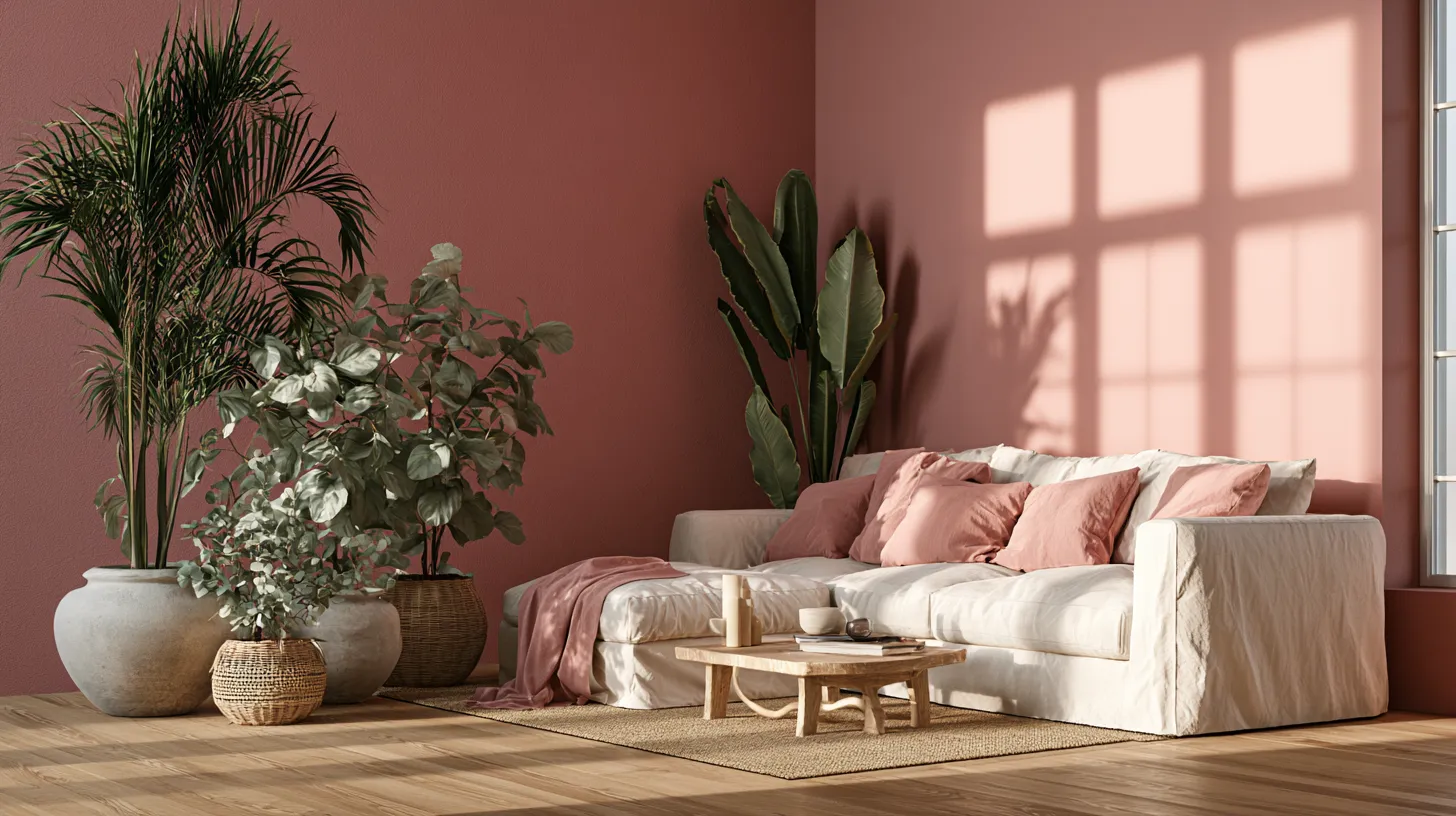
If your living room gets golden, sun-drenched afternoons, you can go deeper and earthier. Setting plaster, redend point, or a muddy rose will glow rather than overwhelm in this kind of warm light.
These shades also hold up beautifully under warm LED bulbs in the evening, deepening into something cozy instead of washing out.
A Simple Testing Rule
Always sample a large swatch — at least a poster-sized piece of paper or board — and move it around the room across a full day. Watch it under morning light, midday light, and warm evening lighting ideas before committing to a full wall.
Exact Pink Color Recipes for Living Rooms
A single pink paint chip rarely tells the whole story. Here are complete recipes that pull the whole room together.
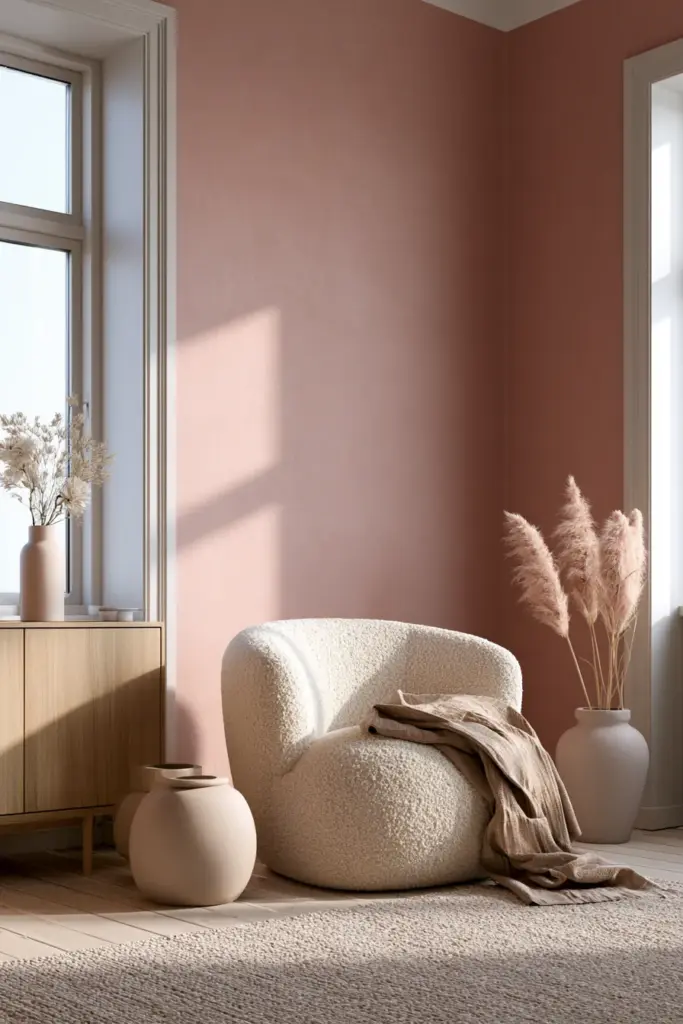
Recipe 1: Soft Japandi Blush
- Walls: Blush pink with a warm undertone
- Trim: Warm white
- Furniture: Light oak, cream boucle
- Accents: Sage green plants, natural linen, matte ceramics
This palette feels like a slow morning. It’s calm, uncluttered, and never sweet.
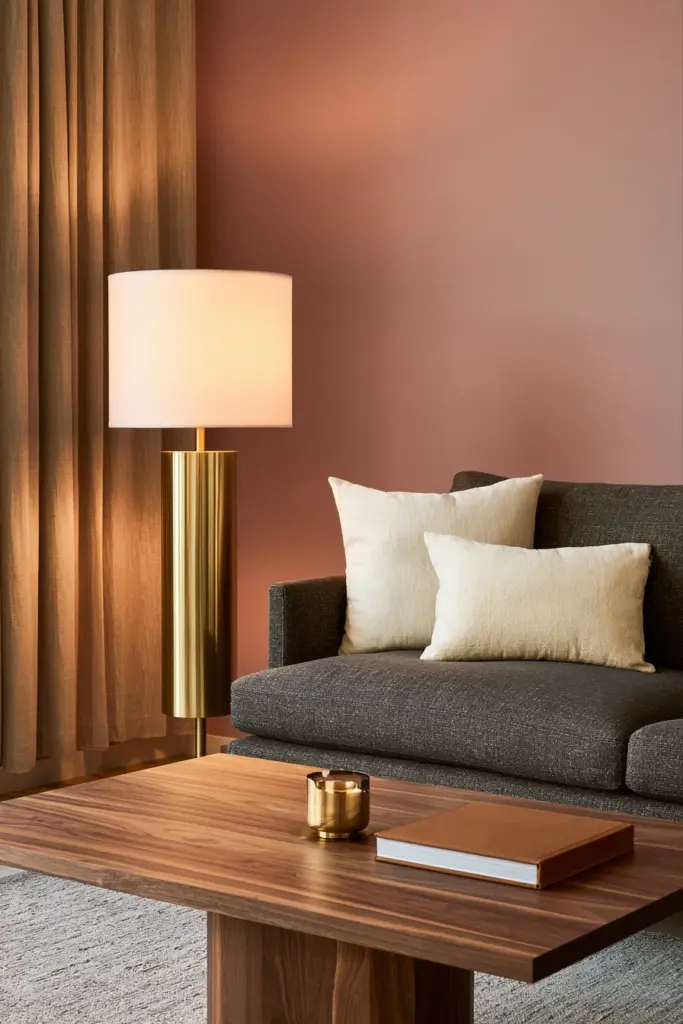
Recipe 2: Dusty Rose & Charcoal
- Walls: Dusty rose
- Trim: Soft white
- Furniture: Charcoal gray sofa, walnut coffee table
- Accents: Brass lamps, ivory throw pillows
The charcoal grounds the pink instantly, giving it a grown-up, tailored feel that works beautifully in modern cozy furniture layouts.
Recipe 3: Earthy Terracotta & Setting Plaster
- Walls: Setting plaster or a similarly muddy pink
- Trim: Warm off-white
- Furniture: Rattan, warm oak, olive-green accent chair
- Accents: Terracotta pots, woven textures, brass hardware
This one leans into modern rustic elegance completely — the pink almost disappears into the earth tones around it, acting as a whisper rather than a statement.
Is Pink a Good Color for a Living Room?
Yes — with a little intention. Pink brings warmth, softness, and a sense of calm that few colors can match, which makes it genuinely well-suited to a room built for rest and gathering.
The right pink can make a living room feel more inviting at night, especially under warm lighting, and more social during the day. It works across modern, Japandi, cottage, and transitional styles without much effort.
Where it can go wrong: very small, dark rooms with limited natural light and no warm accents can feel a little flat or overly saturated if the wrong shade is chosen. The fix is almost always about undertone and light, not about avoiding pink altogether.
Pink and Gray Living Room: Which Shades Work Best?
Pink and gray remain one of the most requested combinations, and for good reason — the pairing feels soft but never fussy.
- Soft blush + charcoal gray: crisp, modern, high contrast
- Dusty rose + light gray: gentle, airy, great for smaller rooms
- Mauve + warm gray: cozy and slightly vintage in feeling
Keep your gray warm rather than cool if your pink leans warm, and vice versa. Mismatched undertones are the most common reason a pink-and-gray room feels slightly “off.”
Pink in Small Living Rooms: How to Use It Without Overcrowding
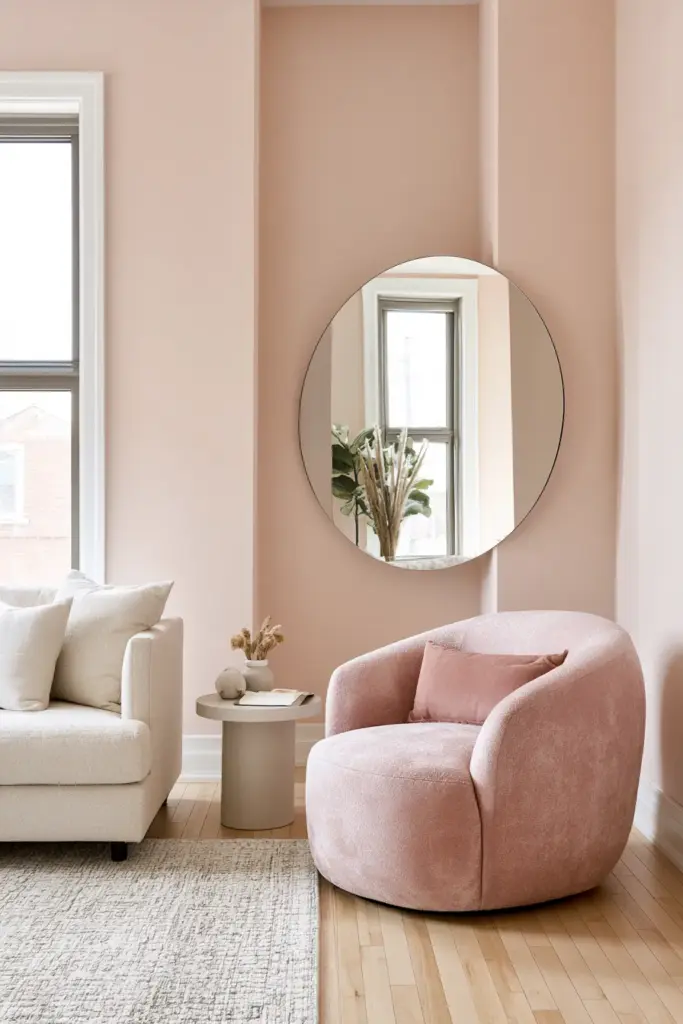
Small rooms can absolutely wear pink — they just need a lighter hand. The goal is depth without visual weight.
- Use a light blush or pale pink on the walls to keep the room feeling open and bright
- Save deeper pinks — dusty rose, mauve — for a single accent chair, cushions, or a piece of art
- Keep trim, ceiling, and large furniture in soft neutrals so the eye has somewhere to rest
- Add a mirror opposite the window to bounce natural light around the pink walls
- In multifunctional rooms — guest space, home office, play area — limit pink to walls or soft textiles only, keeping desks and storage neutral for visual calm
Pink Ceilings & Trim: When and How to Use Them
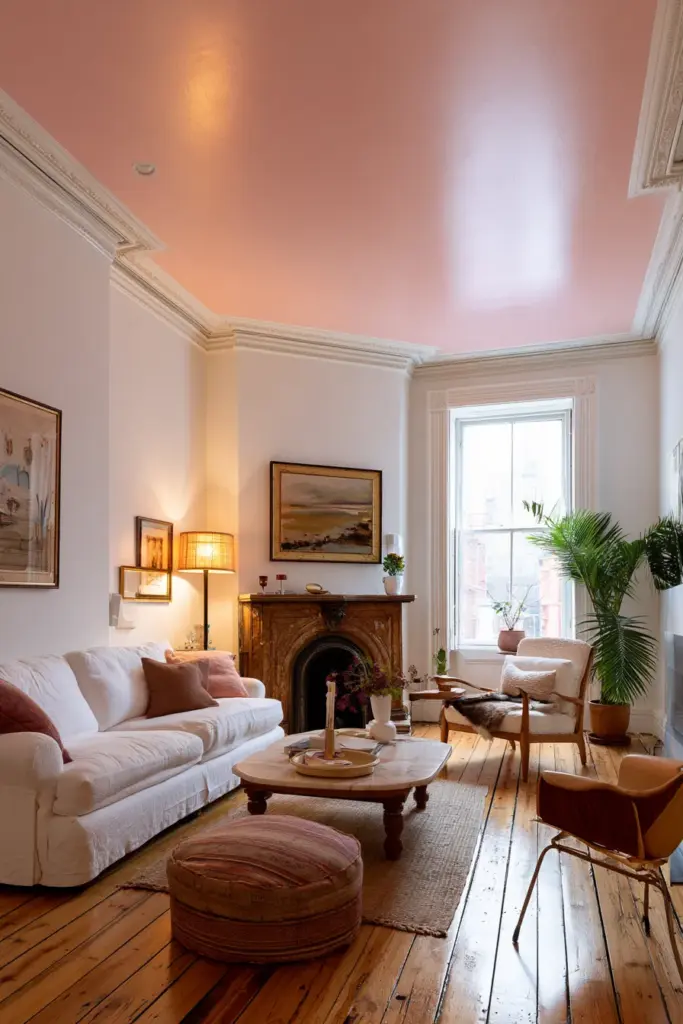
A painted ceiling is one of the easiest ways to make a room feel intentional, and pink is a surprisingly soft choice for it.
A pale pink ceiling lowers the visual height of a room slightly, which can make a large living room feel more intimate and enveloping — perfect for evening gatherings. In smaller rooms, keep the ceiling lighter than the walls to avoid a closed-in feeling.
Pink trim against white or light gray walls is a quieter option. It outlines the architecture of the room with a whisper of color, adding personality without committing to full pink walls.
Pink in Japandi & Modern Living Rooms
Japandi Pink
Japandi pairs blush or muted pink with natural oak, white plaster walls, linen textiles, and a few well-placed green plants. The key is restraint — one pink element, whether it’s a wall or a sofa, surrounded by quiet, natural materials.
To keep it from feeling “girly,” avoid pattern and shine. Matte finishes, raw wood, and simple silhouettes keep the palette feeling calm and adult.
Modern & Industrial Pink
In a more industrial space, dusty rose becomes a soft neutral rather than a focal color. Pair it with black metal shelving, polished concrete or dark flooring, and warm wood furniture.
Here, pink softens harder materials instead of competing with them — it’s the warmth that keeps an industrial room from feeling cold.
Budget & DIY Ways to Bring In Pink
You don’t need a full repaint to try this palette. Start small and build confidence in the shade before committing.
- Test with large peel-and-stick paint samples on your actual wall
- Add pink through slipcovers, cushions, or a lightweight throw
- Introduce a pink rug as a grounding, low-commitment layer
- Look for thrifted furniture — a chair or cabinet — and paint it in your chosen pink as a focal piece
- Swap in pink-toned art or ceramics before touching a single wall
The Psychology & Mood of Pink
Soft, muted pinks like blush and dusty rose tend to feel calming — they’re associated with comfort, warmth, and gentle social ease, which is exactly the mood most living rooms are built for.
More vibrant or saturated pinks lean energizing rather than restful, so they work best as small accents rather than an entire wall in a room meant for winding down.
At night, under warm lighting, most pinks deepen and soften further, adding a sense of intimacy that cooler colors simply can’t replicate.
Lighting & Time-of-Day: How Pink Behaves
- Under warm LED (2700K): pinks deepen, glow, and feel cozier, especially earthy shades
- Under cool daylight bulbs (4000K+): pinks can look flatter or slightly gray, so choose warmer pink undertones to compensate
- Morning light: tends to be cooler and clearer, showing the truest version of your paint color
- Evening light: warms everything, making even a cool blush feel soft and golden
Always test your shade at both ends of the day before you commit to the full room.
Quick Checklist: If You Only Read This, Do This
- Match your pink’s undertone to your room’s light direction — cool light, cooler pink; warm light, earthier pink
- Choose one full recipe (wall, trim, furniture, accent) rather than mixing shades at random
- In small rooms, keep pink pale on walls and save depth for accents
- Consider a pink ceiling for a cozy, lowered feel in larger rooms
- Test swatches across a full day before painting the whole wall
- Start with textiles or a single furniture piece if you’re not ready to commit to paint
A Soft Place to Land
A living room isn’t just a color palette — it’s the room where the day finally slows down. Pink, chosen with a little care, has a way of making that slowing-down feel effortless.
Let your walls hold the warmth of afternoon light. Let your furniture feel lived-in, not staged. That’s the quiet, elevated comfort ERYLIN believes every home deserves.
FAQs
What colors go with pink in a living room?
Neutrals like white, gray, and beige, earth tones like sage and terracotta, and metallics like brass or gold all pair beautifully with pink, depending on the mood you want.
What pink paint color is best for a living room?
It depends on your light. Cooler rooms suit soft blush tones, while warmer, sunlit rooms suit earthier shades like setting plaster or dusty rose.
Is pink a good color for a living room?
Yes. It brings warmth and calm to a space and works across modern, Japandi, and cottage styles, as long as the undertone matches your room’s light.
What shade of pink works with gray in a living room?
Soft blush with charcoal gray offers contrast, while dusty rose with light gray feels gentler and more relaxed.
How do I use pink in a small living room without it feeling crowded?
Keep walls in a pale pink, reserve deeper shades for accents like cushions or a single chair, and keep large furniture and trim neutral.