
Table of Contents
There’s a particular kind of magic in a small room done right. Sunlight pools on a warm wall. A soft rug catches the last light of afternoon. The whole space feels like a held breath — cozy, unhurried, beautifully whole.
At ERYLIN, we believe small living rooms don’t need to apologize for their size. They need the right color, chosen with intention, not guesswork.
Most guides hand you a list of pretty swatches and call it a day. We want to give you something more useful: a way to choose. Because the right color for your room depends on your light, your furniture, and the mood you’re chasing.
Let’s find yours.
Fast Answer: Best Colors by Lighting and Style
Before the details, here’s your shortcut. Match your room’s light and style to a color family below, then read the section that fits.
| Room Condition | Best Color Family | Example Shades |
|---|---|---|
| North-facing (cool light) | Warm neutrals | Warm greige, soft ivory, buttery beige |
| South-facing (warm light) | Cool or soft neutrals | Soft sage, dove gray, warm white |
| Low natural light | Light-reflecting whites | Warm white, pale oat, soft cream |
| Bright, well-lit | Deeper, moody tones | Charcoal, deep terracotta, forest green |
| Japandi style | Muted earth neutrals | Clay, warm taupe, stone gray |
| Modern minimalist | Crisp warm whites | Chalk white, linen, soft greige |
| Rental or budget repaint | Flexible light neutrals | Warm white, soft beige (easy to reverse) |
This is your starting point. Now let’s talk about why.
How Light Shapes Your Color Choice
Light is the real decision-maker in any small room. The same paint chip can look completely different depending on when — and how — the sun visits your space.
North-Facing Rooms
North light stays cool and flat throughout the day, which can make colors feel a little gray or muted. Warm is your friend here.
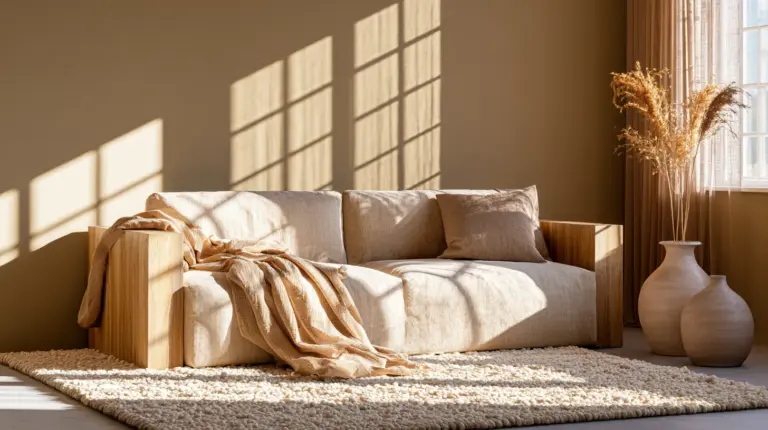
- Choose warm greige, honeyed beige, or soft ivory to counteract the coolness.
- Avoid icy blues or cool grays — they can feel sterile in this light.
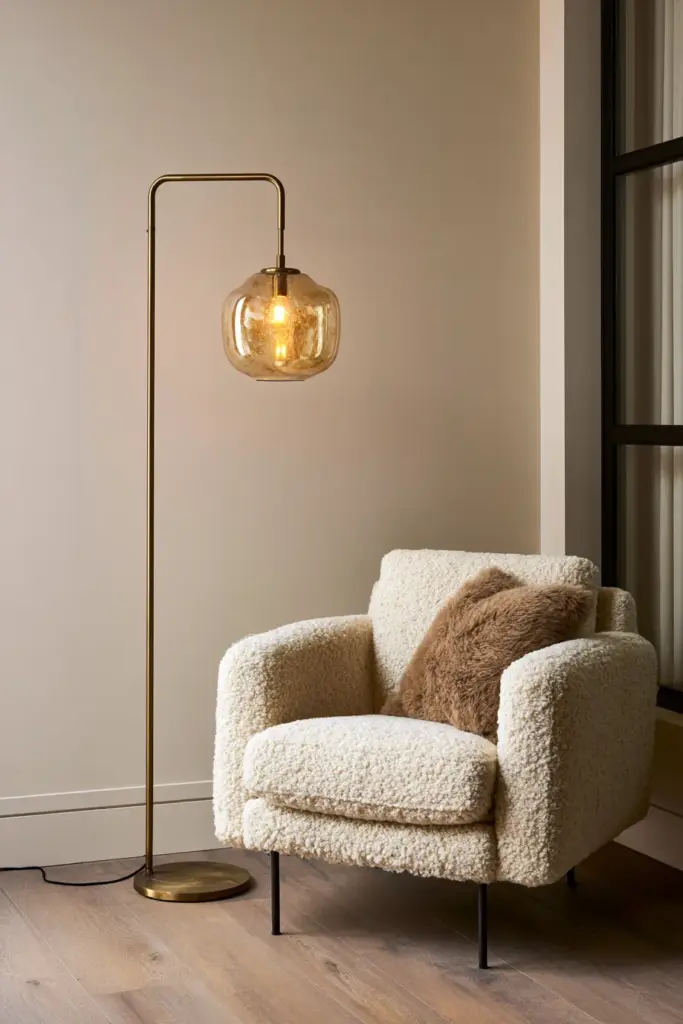
- Pair with warm-toned lighting ideas like brass floor lamps and amber-hued bulbs to add glow.
South-Facing Rooms
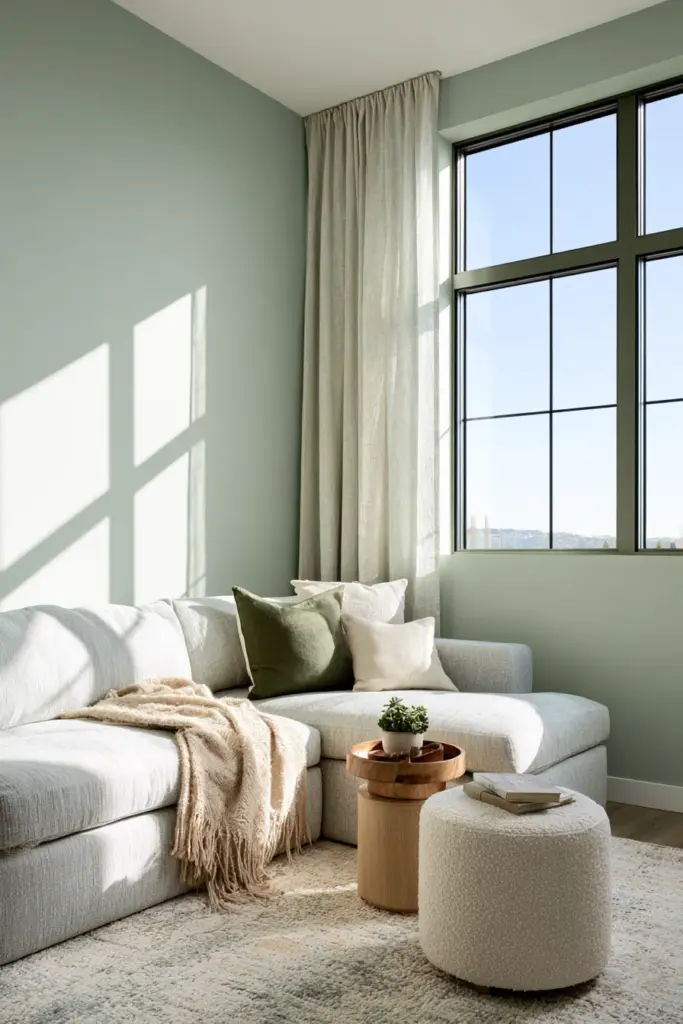
South-facing rooms get generous, warm sunlight for much of the day. This gives you room to breathe with cooler or more neutral tones.
- Soft sage, dove gray, or warm white all feel balanced here.
- The natural warmth of the light keeps cool colors from feeling cold.
- A linen curtain filters the light beautifully, softening shadows across the wall.
Low-Light Rooms
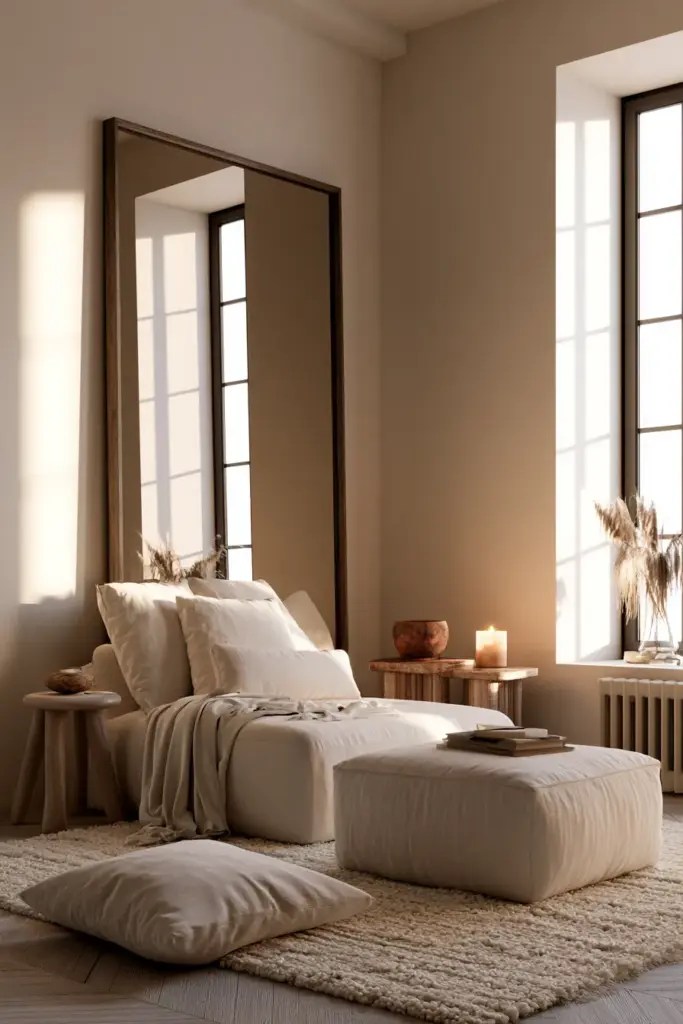
If your living room barely sees direct sun, lean on colors with a high LRV (Light Reflectance Value) — simply put, colors that bounce light back into the room.
- Warm white, pale oat, and soft cream reflect what little light you have.
- Avoid deep, saturated colors on all four walls; they can swallow light entirely.
- A single mirror opposite your main window doubles the brightness instantly.
Bright, Well-Lit Rooms
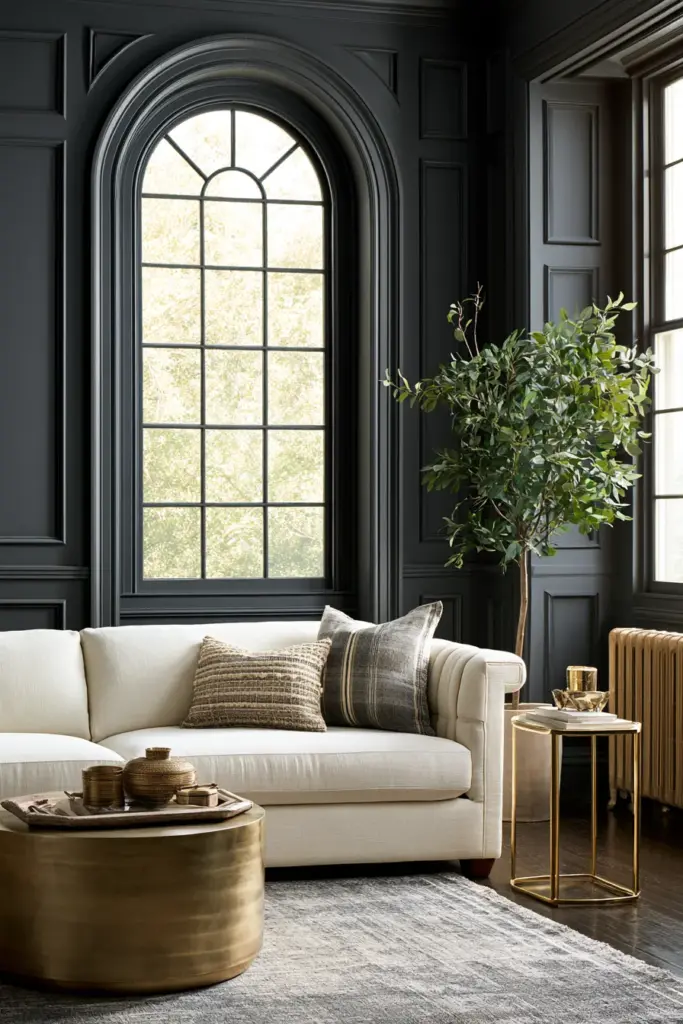
Here’s a secret most lists skip: bright rooms can absolutely handle dark colors. When a room already has strong natural light, a moody wall doesn’t shrink it — it grounds it.
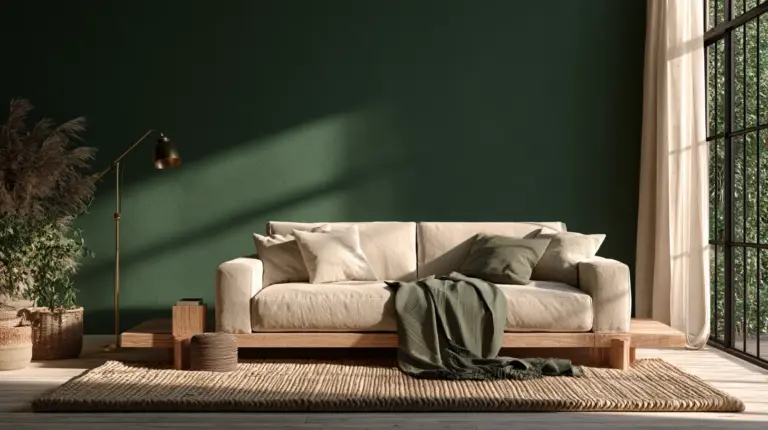
- Charcoal, deep terracotta, or forest green can make a bright small room feel intimate and elevated, not smaller.
- Balance dark walls with light furniture and metallic accents to keep the eye moving.
- This is where a small room becomes genuinely dramatic, in the best way.
Can Dark Colors Work in a Small Living Room?
Yes — and this is where most color guides get too cautious. Dark colors don’t automatically shrink a room. They can, if used carelessly, but with the right light and contrast, they add depth instead.
- Use them when: your room gets strong natural light, or you want a cocooning, intimate feel.
- Avoid them when: the room is genuinely dark all day with no artificial light plan.
- Balance them with: pale flooring, sheer curtains, and warm brass or wood tones to keep the space feeling grounded, not closed in.
A charcoal accent wall behind a cream sofa, for instance, reads as elegant rather than cramped. The contrast does the work.
Matching Wall Color to Your Furniture
This is the step most articles skip entirely — and it’s the one that actually prevents costly repainting mistakes.
Brown Sofa
Warm neutrals are your best match. Think soft caramel, warm taupe, or oatmeal walls that echo the sofa’s warmth rather than fight it.
Beige Sofa
Lean slightly cooler to avoid a flat, monochrome look. A soft dove gray or muted sage adds gentle contrast while staying calm.
Gray Sofa
Gray furniture pairs beautifully with warm whites or soft greige walls. This prevents the “all one temperature” effect that can make a room feel cold.
Wood Furniture
Let the wood’s undertone guide you. Honey-toned wood loves warm ivory or clay walls; darker walnut pairs elegantly with soft sage or warm gray.
Paint Finish: The Detail Everyone Forgets
Color gets all the attention, but finish changes everything about how that color behaves in a small space.
- Eggshell is the most forgiving all-purpose finish — soft sheen, easy to clean, minimal glare.
- Satin reflects a touch more light, which can help brighten a low-light room.
- Matte absorbs light and hides wall imperfections, ideal for a moody accent wall.
- Avoid high-gloss on full walls in small rooms; it can highlight every bump and dent.
Ceiling, Trim, and Accent Wall Strategy
Where you place color matters as much as which color you pick.
- Ceiling color: Painting the ceiling a shade lighter than your walls lifts the eye and makes the room feel taller.
- Trim coordination: A soft white trim against a warm wall keeps edges crisp without stark contrast.
- Accent wall vs. full wrap: One accent wall adds interest without commitment; a full color wrap creates a cozy, enveloping feel — best in rooms with good natural light.
- Open-concept flow: If your living room connects to a kitchen or hallway, keep undertones consistent room to room so the color story feels intentional, not accidental.
Japandi and Modern Minimalist Palettes
For a Japandi-inspired small living room, think of color as texture’s quiet partner.
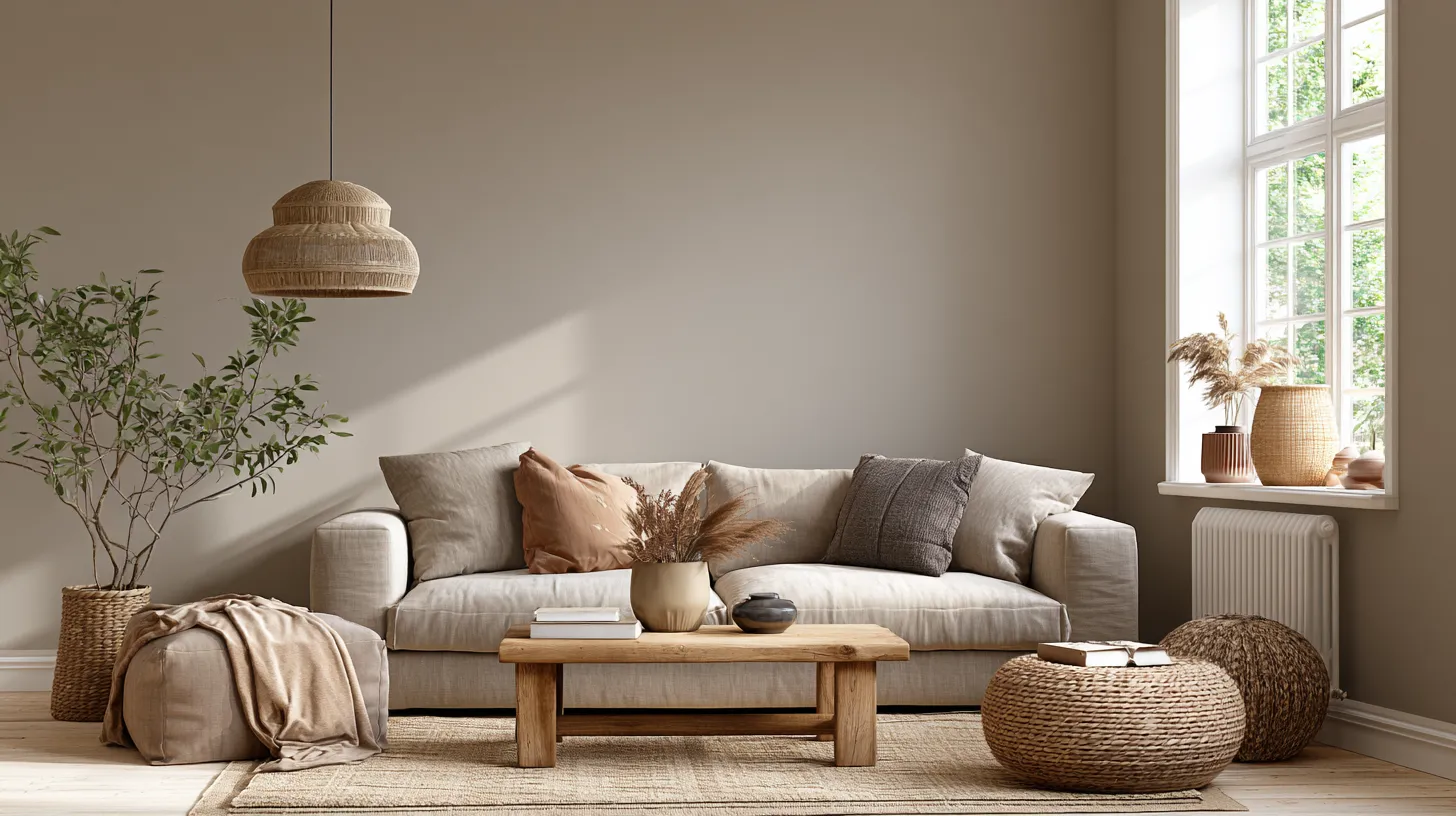
- Clay, warm taupe, and soft stone gray create that grounded, natural calm.
- Pair with cozy furniture in raw wood, linen, and woven textures for full effect.
- Keep contrast gentle — this palette whispers rather than announces.
Modern minimalist spaces favor crisp warm whites and soft greige, letting furniture silhouettes and natural materials carry the visual interest.
Color Psychology for Compact Spaces
Every color carries a mood. Choosing with intention means choosing the feeling you want to walk into.
- Calming: soft sage, dusty blue, warm gray
- Airy: warm white, pale oat, soft linen
- Cozy: terracotta, warm taupe, soft clay
- Refined: charcoal, deep forest green, warm greige
- Larger-looking: light-reflecting neutrals with matching trim
- Stylish: a confident accent wall paired with warm metallics
Renting or on a Budget? Choose Flexible Colors
If you’re repainting a rental or working with a tight budget, prioritize colors that are easy to live with and easy to reverse.
- Warm white and soft beige require the fewest coats to cover later.
- Avoid deeply saturated colors that may need primer to undo.
- A single accent wall is a low-cost way to test a bolder color before committing further.
Common Mistakes to Avoid
A few small missteps cause most small-room color regrets.
- Ignoring undertones — testing a swatch in a shop, not in your actual light.
- Trim clash — pairing warm walls with a stark cool-white trim.
- Overusing cool gray — it can flatten a small room instead of opening it up.
- Painting without a sample — always test a swatch on the wall for a full day before committing.
Your Small Living Room Color Checklist
- Identify your room’s light direction: north, south, or low-light.
- Match wall color to your sofa’s undertone, not just its shade.
- Choose eggshell or satin for most walls; matte for moody accents.
- Consider a lighter ceiling to lift the room visually.
- Test any color on the wall for a full day before painting.
- Don’t fear dark colors in bright rooms — they add depth, not size loss.
- Keep open-concept spaces consistent in undertone.
A Final, Soft Word
A small living room isn’t a limitation to work around. It’s an invitation to choose with care — the kind of care that turns a wall into something you feel every time you walk in.
Let your color choice hold the light of your mornings and the quiet of your evenings. That’s the real work of a beautiful room: not size, but soul.
FAQs
What are the best paint colors for a small living room?
Warm neutrals like greige, soft ivory, and warm white tend to work best, though the right choice depends on your room’s light direction and furniture tones.
What color makes a small living room look bigger?
Light-reflecting neutrals with a matching or lighter ceiling color create the strongest sense of openness and height.
Can I use dark colors in a small living room?
Yes, especially in rooms with strong natural light. Dark colors add depth and coziness rather than shrinking the space, as long as they’re balanced with light furniture and metallic accents.
How do I choose a color scheme for a small living room?
Start with your room’s lighting direction, then match wall color to your sofa and flooring undertones before considering accent walls or ceiling color.
What paint finish is best for a small living room?
Eggshell is the most versatile choice for most walls, while matte suits moody accent walls and satin helps brighten low-light rooms.