
Table of Contents
Gray is never just gray. Hold two swatches side by side and you’ll see it — one leans toward driftwood and honey, the other toward stone and rain. That quiet difference is everything.
At ERYLIN, we think of gray as a canvas, not a compromise. It’s the color that lets morning light, linen texture, and the smell of cedar and clean cotton actually breathe in a room.
This guide skips the generic color-chip lists. Instead, we’ll help you find your exact gray, match it to your light, and build a living room palette that feels calm, layered, and completely yours.
By the end, you’ll know which warm or cool gray suits your walls, which accents bring it to life, and how to avoid the flat, cold gray box so many living rooms fall into.
Step 1: Find Your Gray Undertone First
Every gray carries a hidden color underneath — a whisper of blue, green, violet, or beige. That undertone decides whether your room feels serene or sterile.
Warm Gray vs Cool Gray vs Greige vs Charcoal
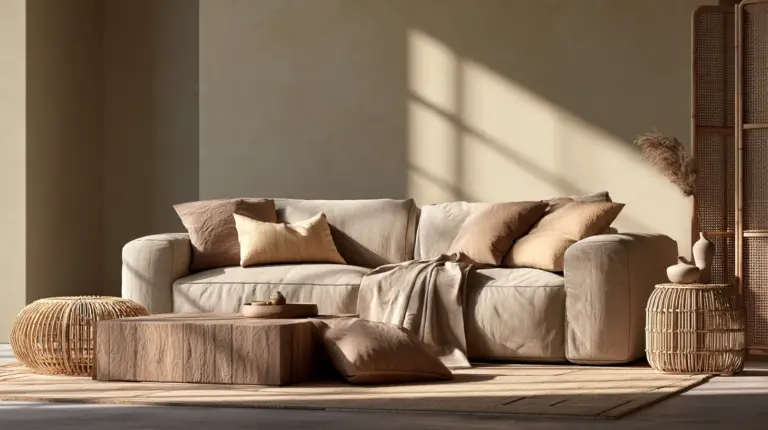
Warm gray carries beige or taupe undertones. It feels like a linen sofa in late afternoon sun — soft, grounded, forgiving.
Cool gray leans blue or green. It suits bright, sun-drenched rooms where you want a crisper, more architectural feel.
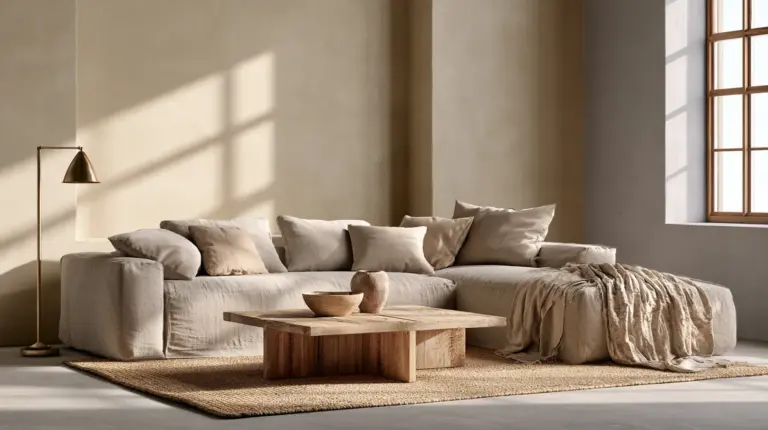
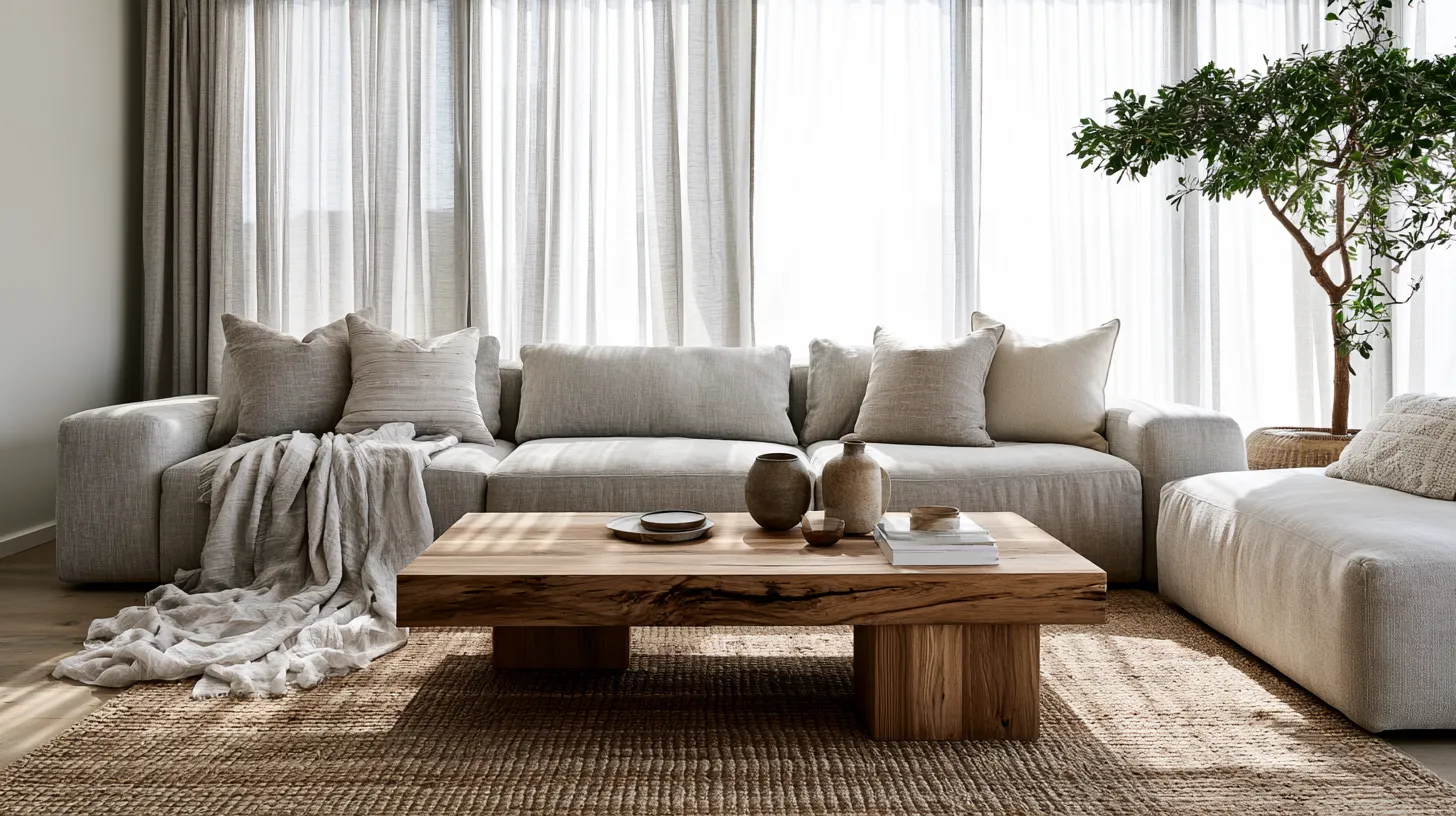
Greige blends gray and beige almost evenly. It’s the easiest gray to live with, pairing effortlessly with natural wood and woven textures.
Charcoal is gray pushed to its deepest edge. Used well, it adds drama and depth without swallowing the room’s light.
How Light Changes Everything
A gray that looks silvery at noon can turn faintly lavender by evening lamplight. This isn’t your imagination — it’s undertone reacting to color temperature.
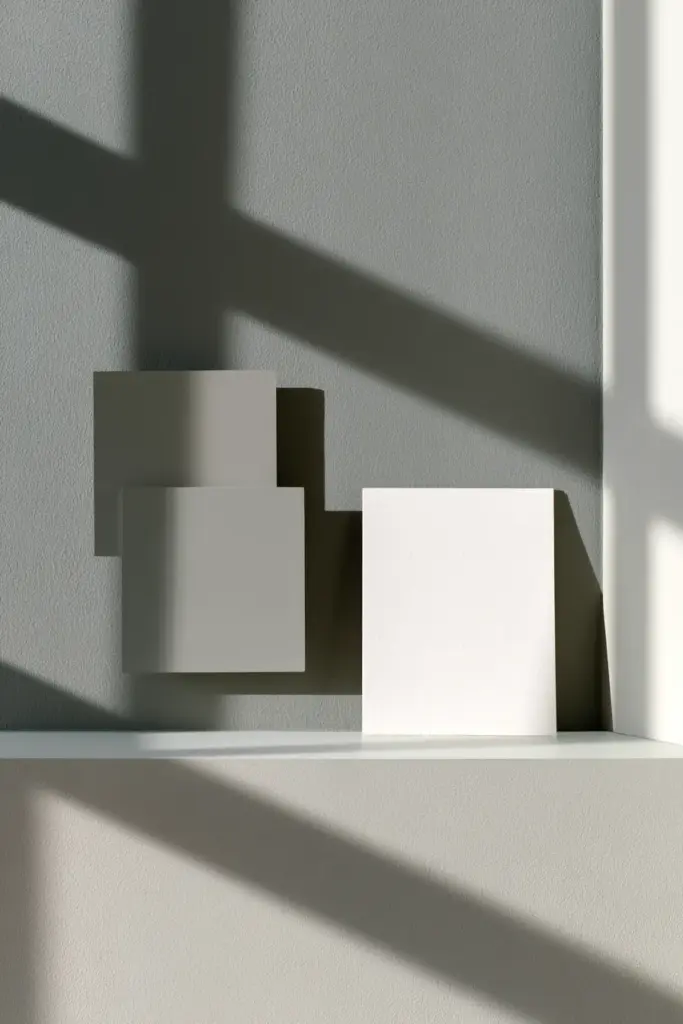
Try this simple test before committing: paint a one-meter swatch on your wall and photograph it in morning light, midday light, and evening lamp glow. Hold a plain white card beside it — the undertone will reveal itself instantly.
Warm bulbs (2700K) intensify beige and gold undertones in gray. Cooler bulbs (4000K) sharpen blue and green ones. Choose your bulb temperature with your gray, not after.
Step 2: Choose Your Living Room Vibe
Once you know your gray’s undertone, match it to the feeling you want the room to hold.
Japandi & Modern Minimalist
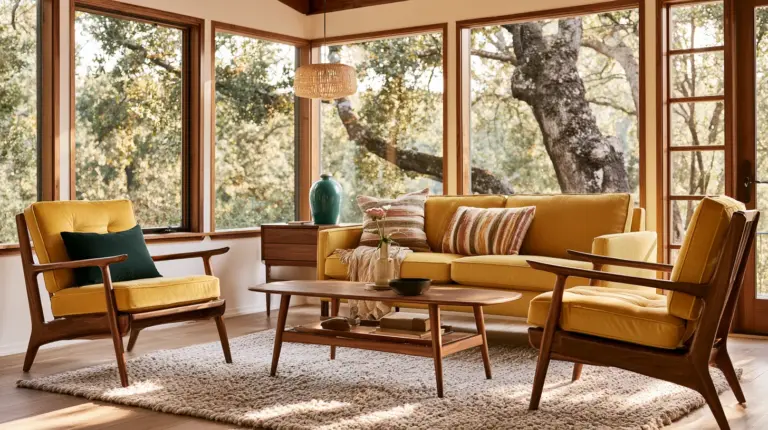
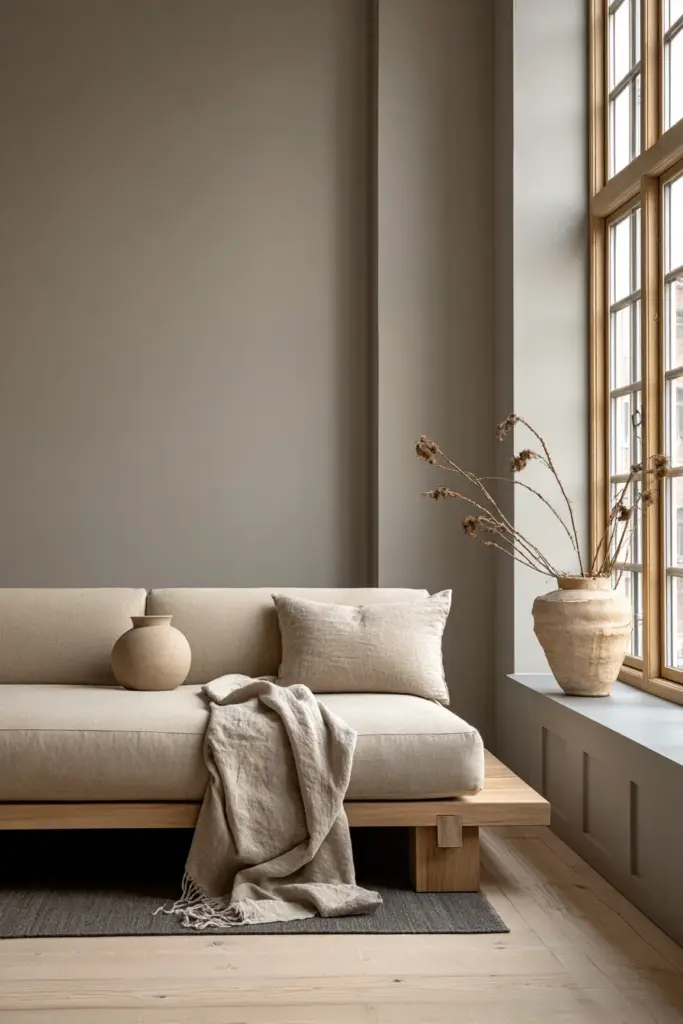
This vibe asks for soft greige or warm light gray walls with almost no visual noise. Think raw oak, matte ceramics, and a single linen throw folded with intention.
Keep contrast low. A pale gray wall beside a blonde-wood console and a stone-colored rug creates that hushed, breathing-room quality Japandi is known for.
Cozy Traditional
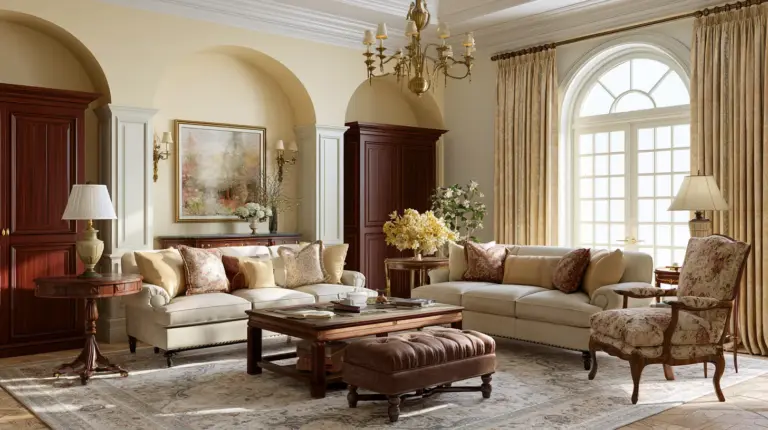
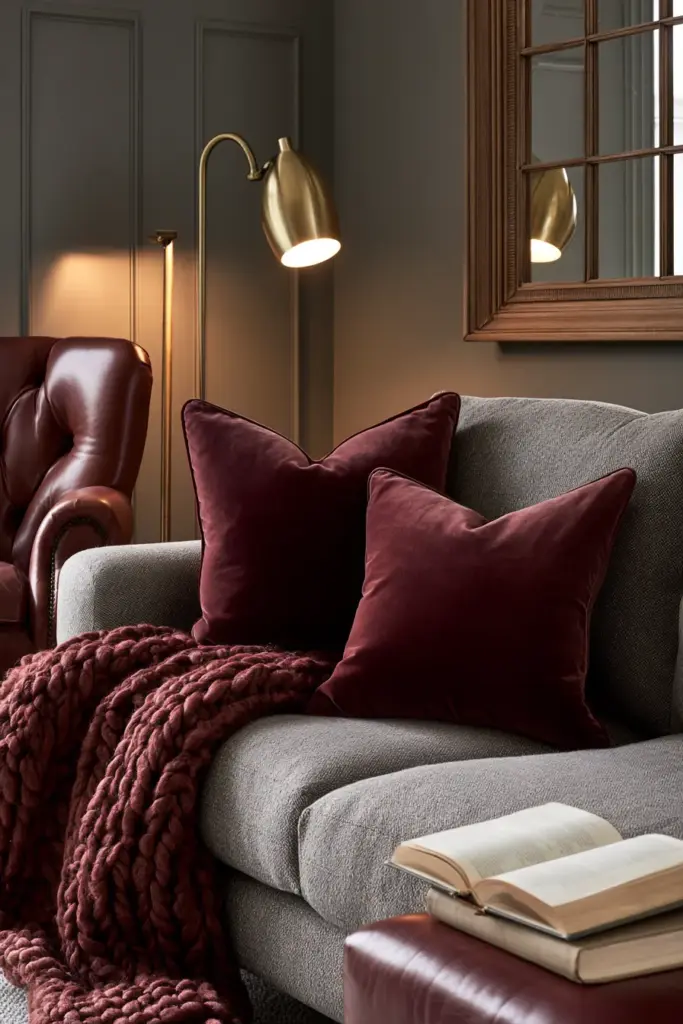
Warm gray walls become the backdrop here, layered with deep burgundy cushions, brass lamp fittings, and a chunky knit throw. It’s the living room equivalent of a wool sweater.
Add a wood-framed mirror and a leather armchair. The warmth of the materials keeps the gray from ever feeling cold.
Bright & Airy
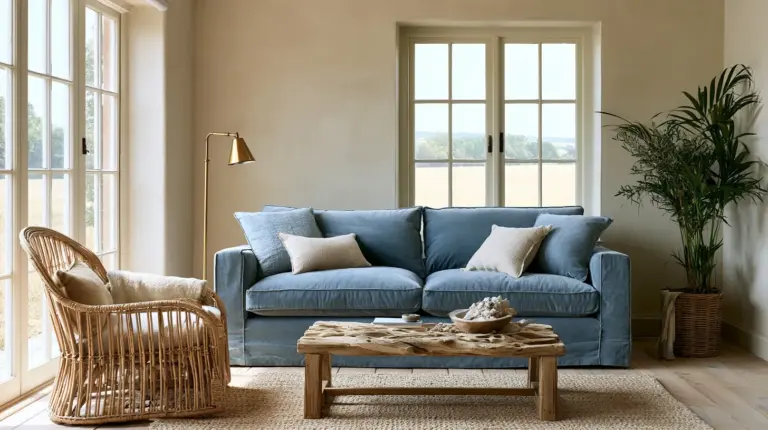
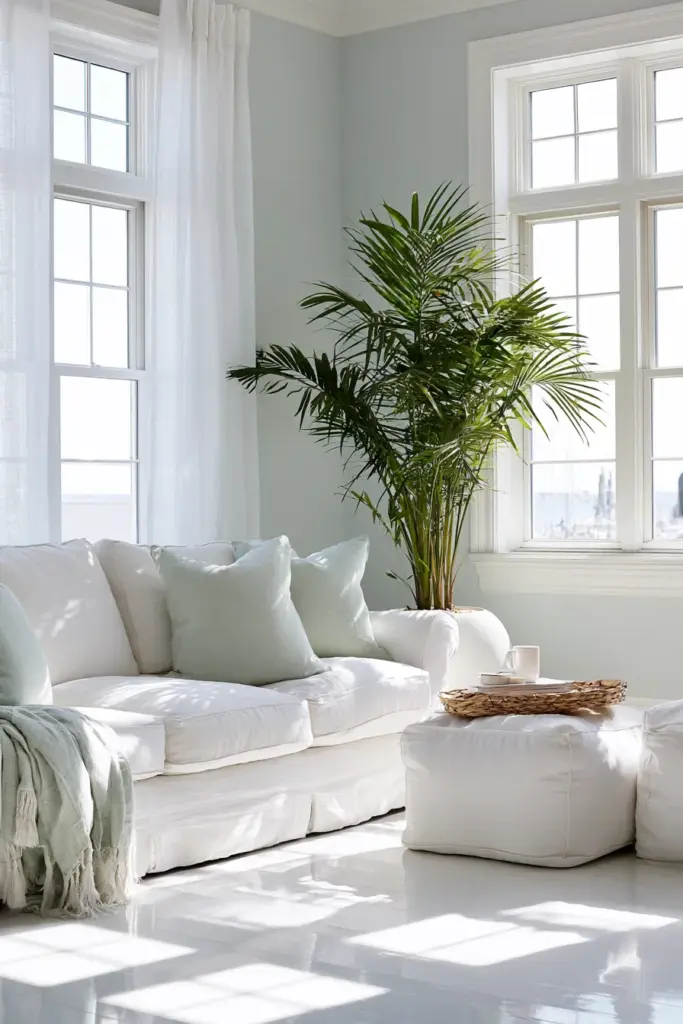
Choose a cool, high-LRV gray — something reflective enough to bounce daylight around the room. Pair it with white trim, sheer linen curtains, and pale sage or dusty blue accents.
This combination feels like a seaside morning: light, unhurried, easy to breathe in.
Moody & Dramatic
Charcoal or deep slate gray walls paired with brass, black metal, and jewel-toned velvet cushions create quiet intensity. It’s a living room that feels like candlelight even at noon.
Balance the darkness with one large mirror or a pale rug, so the room still feels grounded rather than closed in.
Step 3: Gray + Color Combinations by Style
Use this table as a quick decision guide when you’re standing in the paint aisle, unsure where to start.
| Gray Type | Best Accent Colors | Materials to Pair | Ideal Style |
|---|---|---|---|
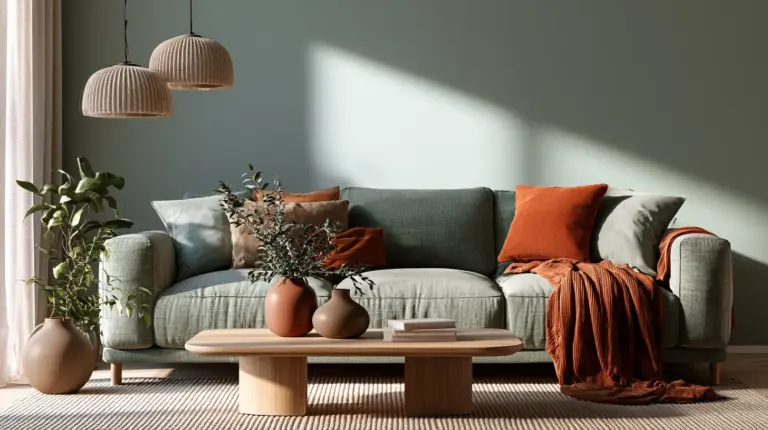
| Warm Gray | Terra-cotta, mustard, forest green | Oak, rattan, boucle | Cozy Traditional, Rustic |
| Cool Gray | Dusty blue, sage, blush pink | Linen, brushed steel, glass | Bright & Airy, Contemporary |
| Greige | Cream, camel, olive | Woven jute, walnut, wool | Japandi, Minimalist |
| Charcoal | Gold, burgundy, emerald | Velvet, brass, dark leather | Moody & Dramatic |
Notice how every pairing leans on texture as much as color. A gray wall alone is a backdrop — the cozy furniture and fabrics are what give it a pulse.
Gray and Light: A Room-by-Room Guide
Your window direction changes how any gray behaves, sometimes more than the paint chip itself.
North-Facing Rooms
North light is cool and flat, so it can make gray feel colder than expected. Choose a warm gray or greige here, and let lighting ideas like brass floor lamps and warm-toned bulbs soften the effect further.
South-Facing Rooms
South light is generous and warm, which lets cool grays shine without feeling icy. This is the ideal light for a crisp charcoal accent wall or a cool dove-gray palette.
Mixed Artificial Light
If your room mixes daylight with lamps of different temperatures, keep your bulbs consistent — all 2700K or all 3000K — so your gray doesn’t shift tone from corner to corner.
Small Living Rooms: Light Gray or Dark Gray?
Small spaces don’t automatically need pale walls. What matters more is light reflectance value — how much light a color bounces back.
Light grays with a higher LRV (around 60–75) will open a small room visually, especially with sheer curtains and a mirror opposite the window. This is the safer default for compact spaces.
Dark grays can still work beautifully in a small room if there’s strong natural light and minimal furniture clutter — the walls seem to recede rather than close in, especially with warm wood tones grounding the space.
Bringing It Together: Texture, Scent, and Comfort
A gray living room only feels finished when it engages more than sight. Add a wool throw you actually want to touch, a stoneware vessel with dried eucalyptus, a candle warming the air with cedar or fig.
Layer at least three textures — smooth, woven, and soft — against your gray wall. This is what turns “neutral” into “inviting.”
Let one surface catch the light: a brushed brass lamp, a glazed ceramic bowl, a glass vase. Gray needs a little shimmer to stay alive after sunset.
Checklist: Your Gray Living Room, Simplified
- Identify your undertone first — warm, cool, greige, or charcoal
- Test swatches in morning, midday, and evening light
- Match your bulb temperature to your gray’s undertone
- Choose accents based on your desired vibe, not trends alone
- Layer in wood, linen, wool, or velvet for warmth and depth
- Consider LRV, not just shade name, in small rooms
- Add one reflective or scented detail to finish the space
A Soft Place to Land
A living room in gray isn’t about restraint — it’s about giving every other element room to speak. The wood grain, the woven throw, the low afternoon light through linen curtains.
Choose your gray the way you’d choose a favorite sweater: for how it feels against the everyday, not just how it photographs. That’s when a room stops looking styled and starts feeling like home.
FAQs
What is the best gray for a living room with little natural light?
Choose a warm gray with a higher LRV (around 55–65) and pair it with warm-toned bulbs to prevent the space from feeling flat or cold.
Does gray make a small living room look bigger?
Light, high-LRV grays can visually expand a small room, especially when paired with mirrors and sheer curtains that bounce daylight around.
What colors go best with gray walls in a living room?
Warm grays pair beautifully with terra-cotta, mustard, and forest green, while cool grays suit dusty blue, sage, and blush pink.
Is charcoal gray too dark for a living room?
Not if the room has strong natural light or brass and wood accents to balance it — charcoal creates a cozy, intimate feel rather than a heavy one.
How do I know if my gray paint has a warm or cool undertone?
Hold a plain white card next to a painted swatch in natural daylight — any beige, green, or blue tint will become clearly visible against it.