
Table of Contents
There’s a reason blue keeps finding its way into living rooms we love. It holds light the way the sky does — softly, endlessly, without ever asking for attention.
At ERYLIN, we think of living room colors with blue as a mood you choose, not just a paint swatch you pick. The right blue can cool a sun-drenched room, wrap a reading corner in quiet, or make a small space feel like it’s breathing.
But blue is tricky in a way most articles don’t admit. The same shade that looks dreamy in a Pinterest photo can turn flat, cold, or strangely grey once it’s on your own wall, under your own light.
This guide walks you through it properly — by goal, by room, by style — so you choose a blue that actually belongs in your home, not just in someone else’s gallery.
What’s Your Goal? Choosing Blue by Mood
Before you touch a swatch, decide what you want the room to feel like. Blue can do very different emotional work depending on how you use it.
Calm and Relaxing
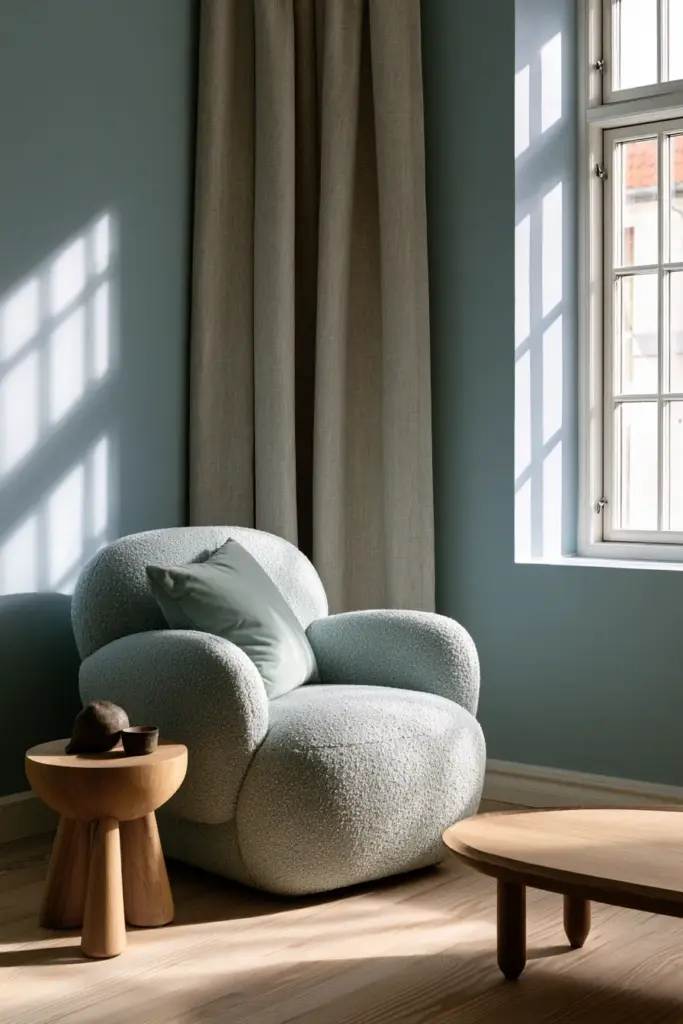
Soft, dusty blues with grey undertones create a hush the moment you walk in. Pair them with linen curtains, a bouclé armchair, and a low wooden coffee table for that settled, exhale-worthy feeling.
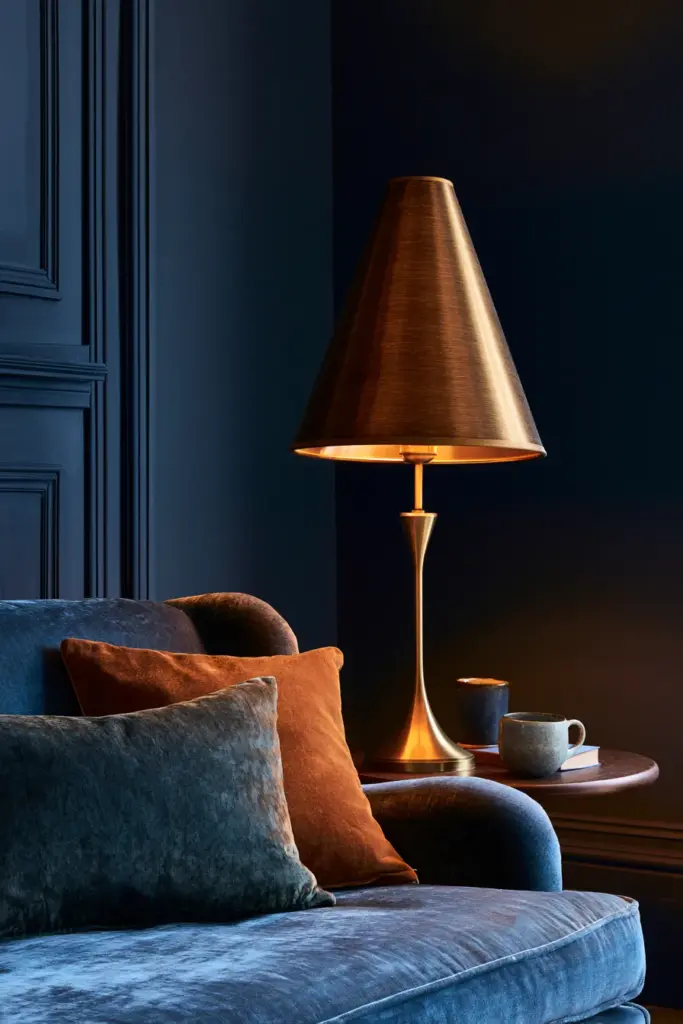
Dramatic and Moody
Deep navy walls turn a living room into a cocoon, especially with brass lamps and a leather or velvet sofa. Reserve this for rooms with good natural light or strong evening lighting, since deep blue needs contrast to stay rich instead of heavy.
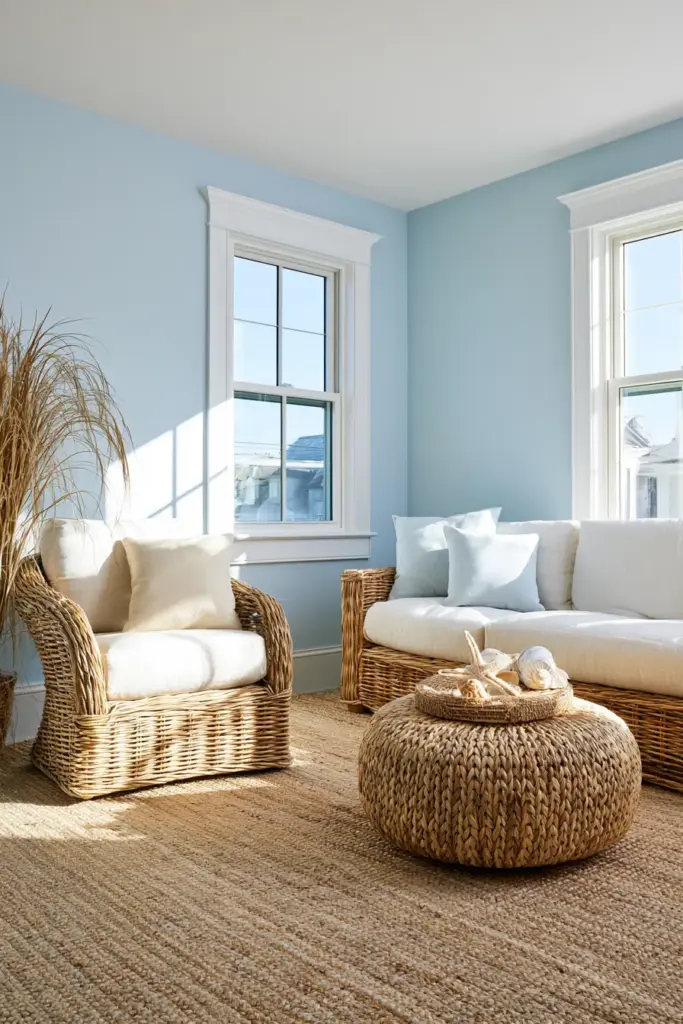
Airy and Coastal
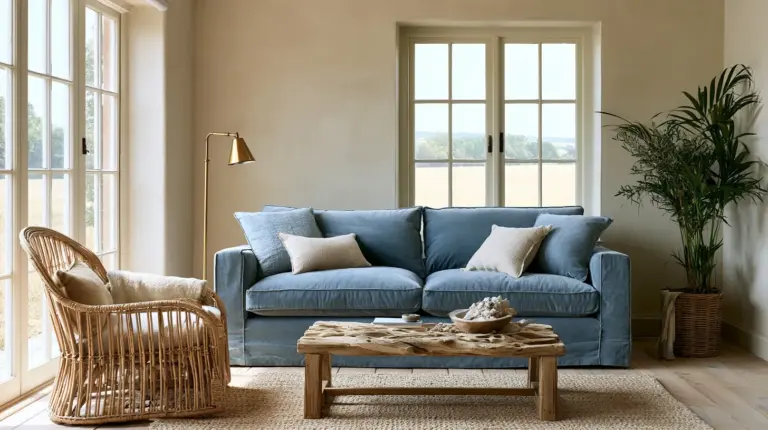
Pale, watery blues paired with white trim and natural fiber rugs bring a breezy, seaside softness indoors. Add rattan or woven textures and the room starts to feel like it has its own weather.
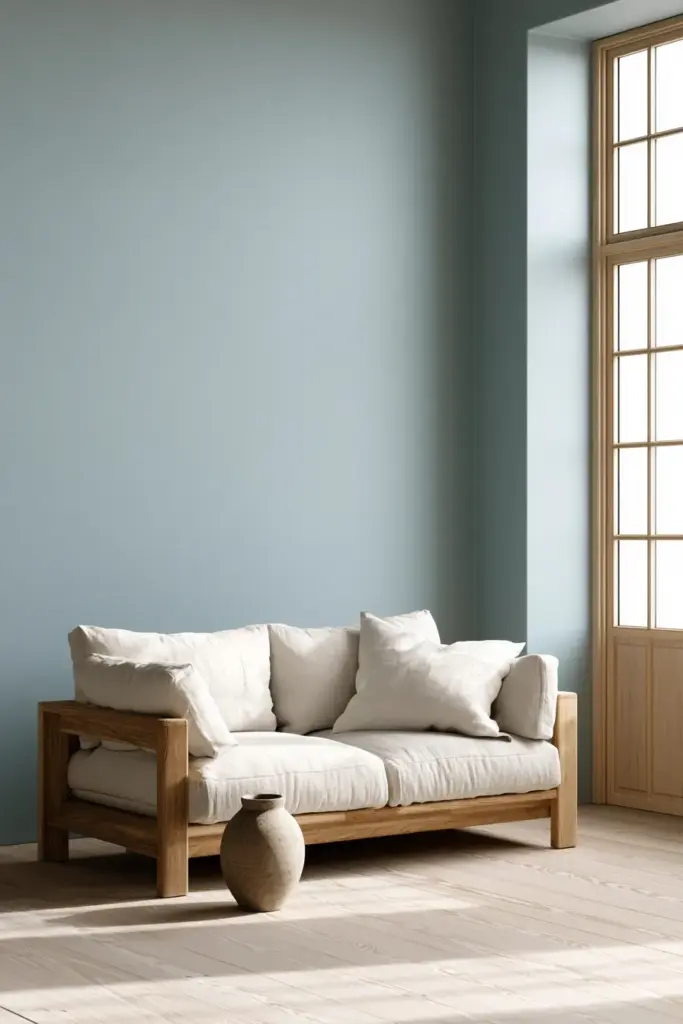
Japandi and Modern Minimalist
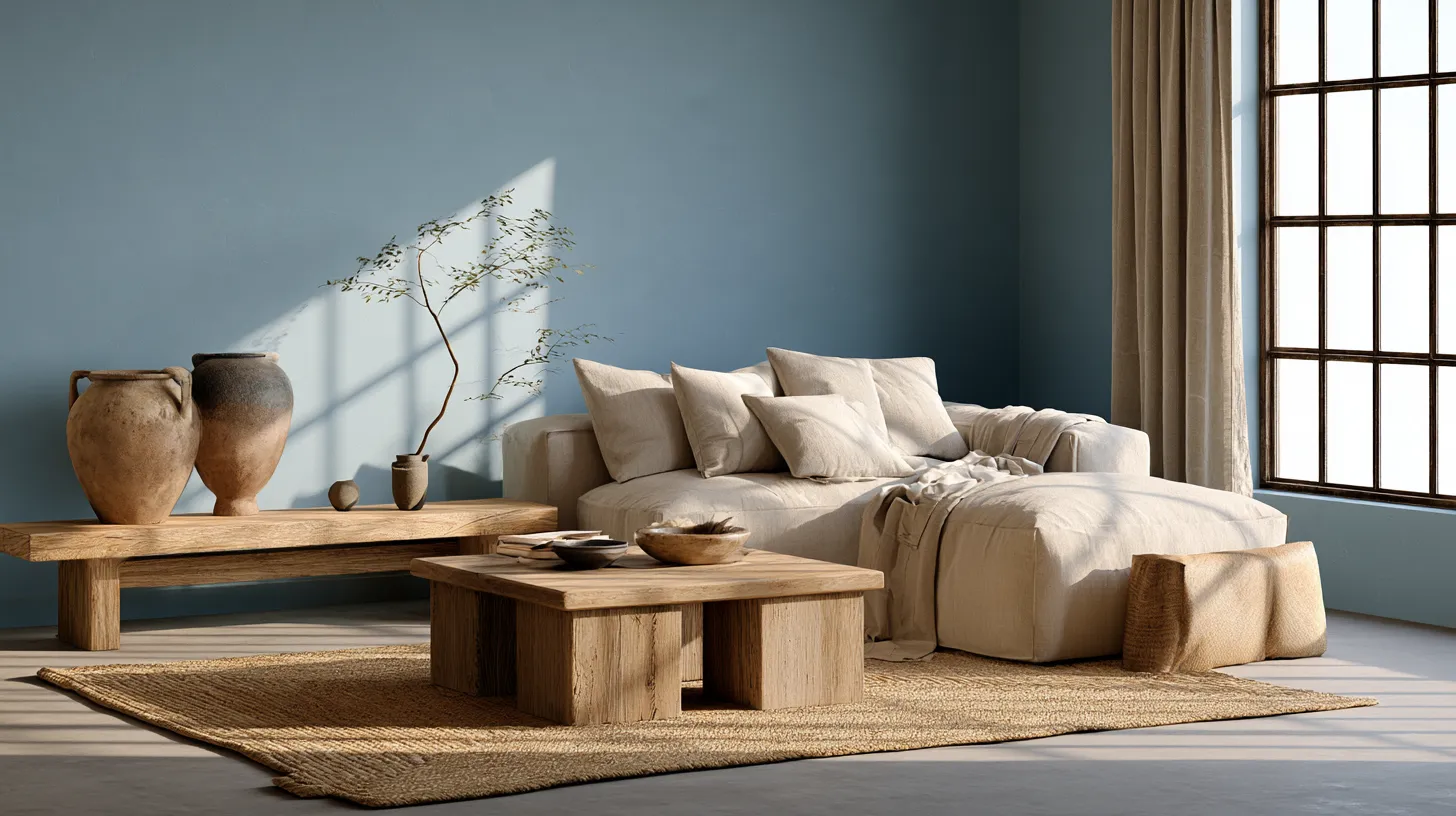
This is where blue gets quietly sophisticated — muted, almost powdery, and never shouting for attention. Think pale blue walls with light oak furniture, white linen upholstery, and a single ceramic vase left unstyled on purpose.
What’s Your Room Like? Matching Blue to Space and Light
A blue that glows in one living room can feel dull or oppressive in another. Your room’s size and orientation matter just as much as the shade itself.
Small and Dark Rooms
Choose a pale, warm-leaning blue with a high light reflectance value, and keep trim and ceiling in soft white to bounce light around. Avoid deep navy on all four walls here — it will shrink the room rather than flatter it.
Small and Bright Rooms
Bright, sun-filled small rooms can actually handle a slightly deeper blue-green without feeling cramped. The sunlight does the work of keeping the color lively instead of murky.
Large, North-Facing Rooms
North light is cool and flat, so blue can turn grey and lifeless without help. Lean toward a blue with a warm undertone, and balance it with warm wood furniture, brass fixtures, and cream textiles.
Large, South-Facing Rooms
South-facing rooms get generous, warm light, which lets you play with true blues or even blue-green without the room feeling cold. This is also where deeper, more saturated blues perform beautifully on an accent wall.
Blue by Undertone and Mood: A Quick Reference
Not all blues behave the same way, and undertone is the detail most guides skip entirely.
| Undertone | Mood | Best For | Pair With |
|---|---|---|---|
| Blue-grey | Calm, sophisticated | North-facing, small rooms | Warm wood, beige, cream |
| Blue-green | Fresh, tropical | South-facing, sunny rooms | White, rattan, terracotta |
| True blue | Energetic, crisp | Large rooms, bright spaces | White, navy, brass |
| Deep navy | Dramatic, cocooning | Accent walls, reading corners | Gold, camel, ivory |
Once you know the undertone, the rest of your color scheme almost chooses itself.
What Colors Go With Blue in a Living Room?
Blue is one of the most generous colors to design around, because it plays well with both warm and cool companions. The trick is choosing pairings that match the mood you’re after.
- Warm wood tones — oak, walnut, or teak soften blue and keep it from feeling sterile
- Terracotta and rust — bring an earthy warmth that balances cooler blues beautifully
- Blush pink — adds a gentle, romantic contrast without competing for attention
- Brass and gold accents — lift navy and deep blues into something rich rather than heavy
- Cream and ivory — the easiest, most timeless partner for almost any blue
If you’re building out a full palette, our lighting ideas guide pairs nicely with these color decisions, since light changes how every one of these combinations reads in real life.
Light Blue vs. Dark Blue: Which Is Better for Your Living Room?
This depends entirely on your room’s light and size, not personal preference alone. Light blue expands a room and suits smaller or darker spaces, while dark blue adds depth and drama but needs generous light or a strong accent role to avoid feeling closed in.
A good rule: if your room already feels a little dim or boxy, start light. If it’s spacious and bright, a deep navy accent wall can be the most elegant decision you make all year.
What Neutral Colors Work With Blue in a Living Room?
Neutrals are what keep a blue living room feeling grounded instead of themed. Warm white, oatmeal, and soft grey all let blue take center stage without fighting it for space.
- Blue and white — crisp, classic, endlessly livable
- Blue and warm grey — quiet and architectural, especially in Japandi spaces
- Blue and beige — cozy and forgiving, ideal for family living rooms
Layer in natural textures — a jute rug, a linen throw — and the neutral palette starts to feel intentional rather than safe.
Is Blue a Good Color for a Small Living Room?
Yes, when you choose the right shade and use it thoughtfully. Pale, warm-leaning blues can make a small room feel airy rather than boxed in, especially when the ceiling and trim stay a shade lighter.
One Wall or the Whole Room?
In tight spaces, painting a single accent wall in a richer blue often works better than covering all four walls. It gives you the color’s mood without shrinking the sense of space.
Blue Without Repainting
If painting feels like too much commitment, bring blue in through a sofa, an area rug, or a set of cozy furniture pieces instead. This is a gentle way to test whether you’ll love living with the color before you pick up a roller.
Lighting and Time of Day: Why Your Blue Looks Different at Night
Paint chips lie a little, because they never show you how a color shifts from morning to evening. Warm bulbs around 2700K pull blue toward a soft, muted grey-green in the evening, while cooler 4000K bulbs keep it crisp and true throughout the day.
If your living room doubles as a space for both relaxing evenings and bright daytime gatherings, test your chosen blue under both lighting conditions before committing. Place a lamp in the corner where blue tends to look coldest, and let warm light soften that edge.
Blue in Warm, Humid Climates
In tropical light, blue behaves differently than it does in cooler, greyer climates. Strong sunlight can make cool blues feel almost icy against skin and warm wood, so leaning toward blue-green or blue with a touch of warmth keeps the room feeling inviting rather than stark.
Natural materials like narra, rattan, and woven capiz do a beautiful job of grounding blue in this kind of light. The contrast between cool wall color and warm, textured material is what makes a tropical living room feel both fresh and lived-in.
Budget and DIY Ways to Bring Blue Into Your Living Room
You don’t need a full repaint to enjoy the calm that blue brings into a space. Small, intentional additions can shift the entire mood of a room in an afternoon.
- Add blue throw pillows or a textured area rug for an instant mood shift
- Paint a single piece of furniture, like a console or bookshelf, in a rich blue
- Refresh window frames or shutters with a soft blue for a subtle architectural accent
- Bring in blue ceramics, glassware, or artwork to test a shade before repainting walls
If a blue you’ve already painted feels too dark or too cold, try softening it with warm-toned lighting and cream textiles before reaching for the paint roller again.
Quick Checklist: Choosing Your Living Room Blue
- Decide your mood first — calm, dramatic, coastal, or Japandi
- Match your blue’s undertone to your room’s light direction
- Use the undertone and mood table to narrow your shade
- Test your color under both daytime and evening light
- In small rooms, consider one accent wall instead of four
- Balance cool blue with warm wood, brass, or terracotta
- Start with furniture or textiles if you’re not ready to repaint
A Soft Place to Land
Blue, done thoughtfully, doesn’t just decorate a room — it changes how you feel the moment you sit down in it. It’s the color of quiet mornings, unhurried evenings, and the kind of home that feels like it was never trying too hard.
Choose your shade the way you’d choose a favorite sweater: for how it feels against your life, not just how it photographs. That’s the ERYLIN way — calm, considered, and quietly beautiful.
FAQs
What colors go with blue in a living room?
Warm wood, terracotta, blush pink, brass, and cream all pair beautifully with blue, depending on the mood you want to create.
What is the best blue paint color for a living room?
The best shade depends on your room’s light direction and size — warm-leaning blues suit north-facing or small rooms, while true blues and navy work well in bright, spacious rooms.
Should I use light blue or dark blue in my living room?
Light blue is safer for small or dim rooms, while dark blue adds drama and works best in larger, well-lit spaces or as an accent wall.
Is blue a good color for a small living room?
Yes, especially pale, warm-leaning blues, which can make a small room feel more open when paired with a lighter ceiling and trim.
Does blue make a living room look bigger or smaller?
Light, warm-toned blues tend to open up a room visually, while deep, cool navy can make a space feel smaller unless it’s balanced with good lighting and warm materials.