
Table of Contents
There’s something magnetic about Art Deco—the way it captures light on a brass edge, the confidence of a geometric pattern sweeping across velvet, the unapologetic luxury of a mirrored surface catching your reflection. This isn’t just a design style. It’s a feeling, a mood, a whispered promise of elegance that never quite left us.
Born in the glamorous 1920s, Art Deco gave us permission to dream in gold and emerald, to build rooms that felt like they belonged in a Gatsby novel. Today, that dream is experiencing a beautiful revival, but with a modern soul—one that understands restraint, celebrates craftsmanship, and knows that true luxury is about how a space makes you feel.
If you’ve been craving a living room that feels both timeless and fresh, bold yet balanced, you’re in the right place. Let’s explore how to bring Art Deco’s signature sophistication into your home, with warmth, wisdom, and a touch of that irreplaceable 1920s magic.
Understanding Art Deco: More Than Just Geometric Patterns
Art Deco isn’t simply about throwing gold accents into a room and calling it glamorous. It’s a design philosophy rooted in optimism, craftsmanship, and the belief that everyday spaces deserve beauty. Born between World Wars as a celebration of progress and modernity, it married industrial precision with handcrafted artistry.
The style embraces symmetry like a gentle obsession—everything balanced, everything intentional. You’ll notice stepped forms, sunburst motifs, and chevron patterns that create visual rhythm. These aren’t random decorative choices; they’re architectural elements that guide your eye and create harmony.
What makes Art Deco so compelling for modern living rooms is its inherent sophistication without stuffiness. It invites luxury while maintaining livability, which is precisely what ERYLIN believes every home deserves.
The Color Palette: Rich, Bold, and Unapologetically Dramatic
Deep Jewel Tones as Your Foundation
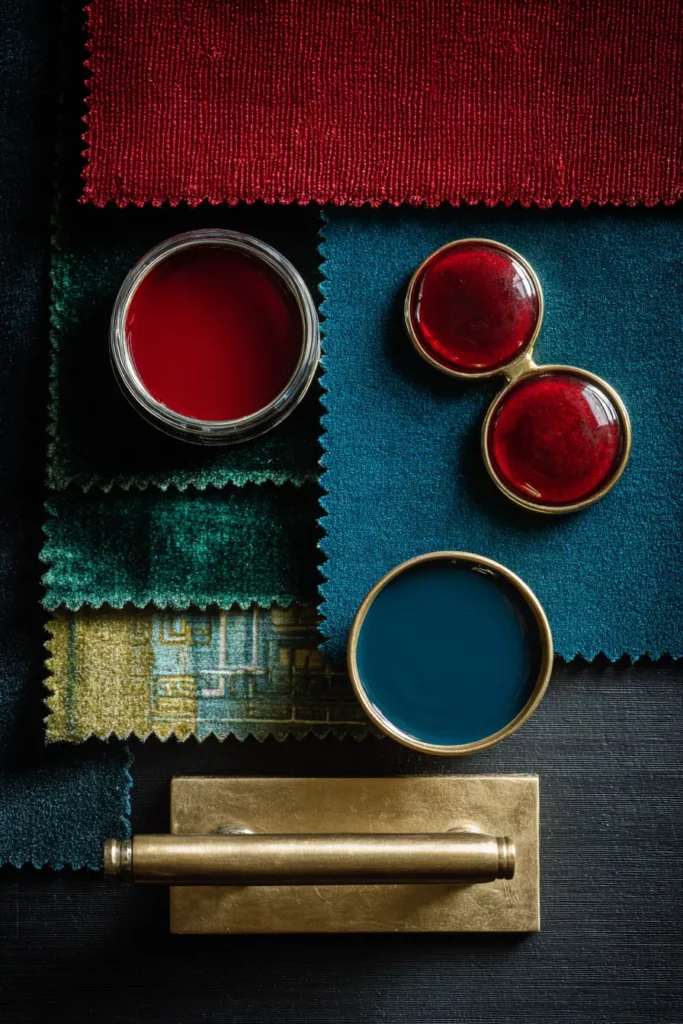
Art Deco color schemes aren’t shy. Think emerald green velvet catching afternoon light, sapphire blue walls that deepen as evening falls, ruby red accents that pulse with warmth. These jewel tones create instant drama while maintaining elegance.
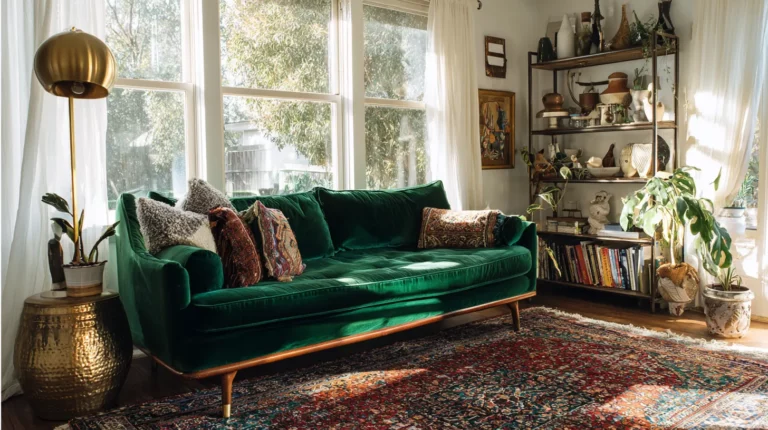
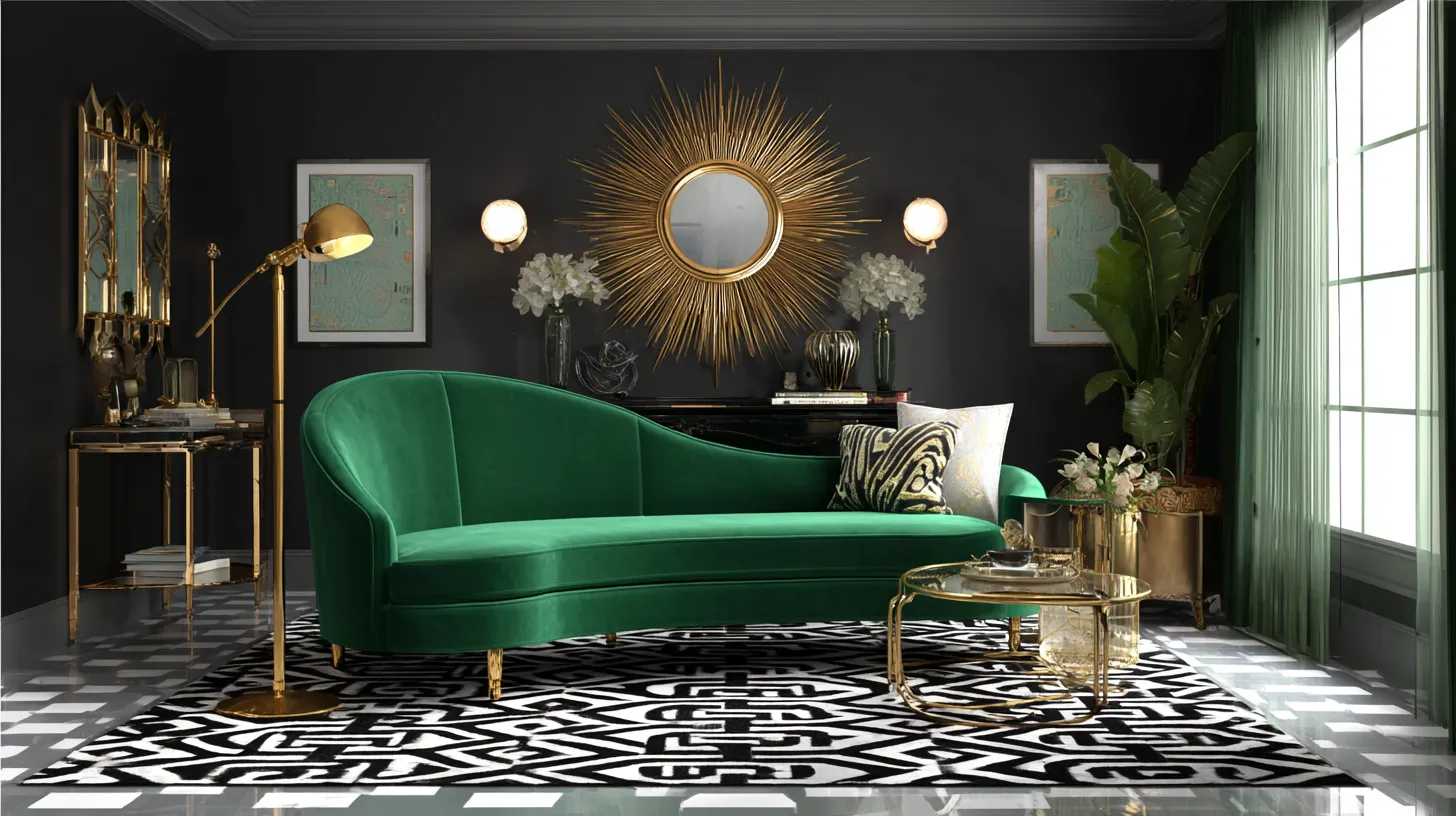
Pair these rich colors with metallic accents—polished brass, gleaming chrome, or warm gold. The metals don’t just decorate; they amplify light and create depth. A brass floor lamp beside a emerald sofa becomes a conversation in contrast and complement.
The Power of Black, White, and Metallics
If jewel tones feel too bold for your space, the classic Art Deco combination of black and white offers timeless sophistication. High-contrast patterns—think black and white chevron rugs or geometric wallpaper—create visual interest without color commitment.
Layer in metallic elements through mirror frames, side table legs, or lighting fixtures to add that signature Art Deco shimmer. Gold and silver aren’t competing; they’re collaborating to catch and reflect every source of light in your room.
Materials That Speak Luxury: Choosing Textures Wisely
Velvet: The Touchstone of Art Deco Comfort
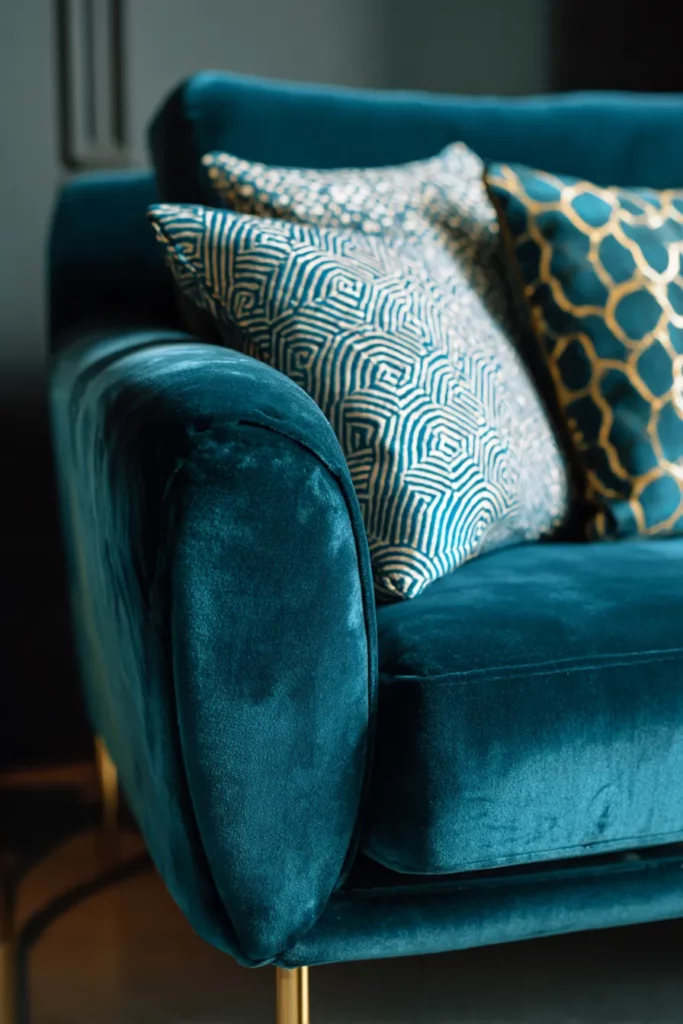
Nothing says Art Deco quite like velvet. Its light-catching quality changes throughout the day—luminous in morning sun, moody under evening lamps. A velvet sofa in deep teal or midnight blue becomes your room’s anchor piece.
But velvet isn’t just for upholstery. Consider velvet throw pillows with geometric embroidery, velvet curtains that pool slightly on the floor, or even a velvet-covered ottoman. The texture adds warmth that prevents Art Deco spaces from feeling cold or museum-like.
Exotic Woods and Veneers
Art Deco celebrated rare and exotic materials—zebrawood, macassar ebony, burl walnut. Today, you can achieve similar richness through quality veneers or sustainably sourced wood pieces. Look for furniture with bookmatched grain patterns that create natural symmetry.
A console table in dark walnut with brass inlay, or a coffee table with geometric wood parquetry, brings authenticity without the vintage price tag. These pieces become heirlooms in their own right.
Marble and Stone: Grounding Elegance
Marble appears throughout Art Deco interiors—tabletops, fireplace surrounds, decorative accessories. Its natural veining provides organic movement that balances the style’s geometric precision. White Carrara, black marquina, or green Guatemala marble each bring distinct character.
On a budget, marble-look ceramics or engineered stone offer similar visual impact. A marble-topped side table or a marble tray styling your coffee table adds instant refinement.
Furniture Selection: Icons of the Era, Reimagined
The Curved Sofa: Softening Strong Lines
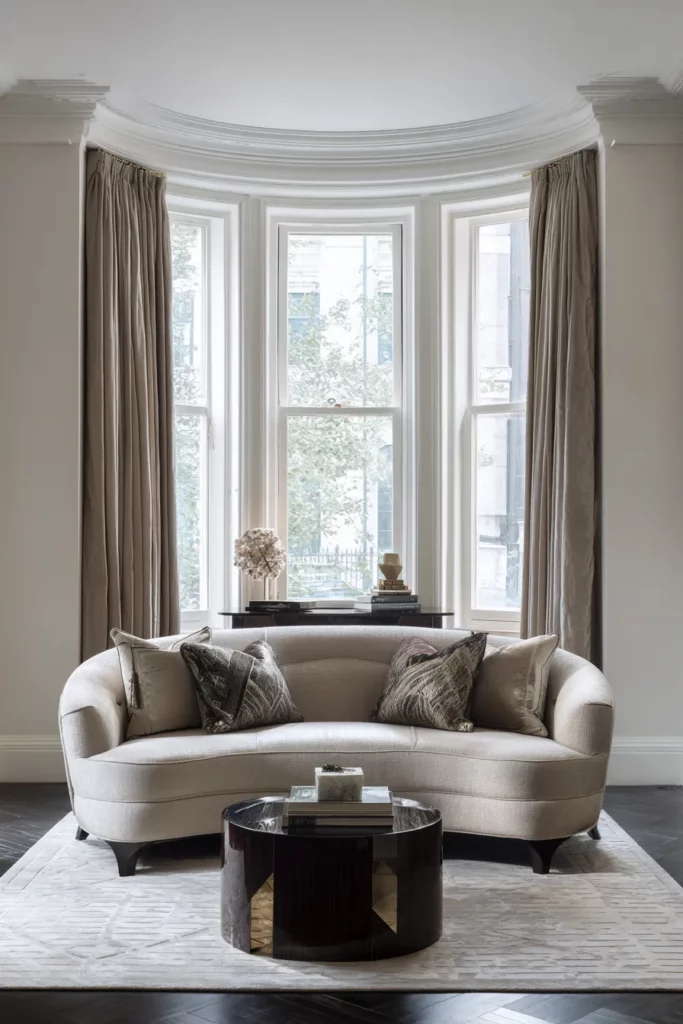
Art Deco loved curves—not the casual slouch of contemporary furniture, but deliberate, architectural curves. A curved velvet sofa or settee becomes sculptural art that also happens to be incredibly comfortable.
Position your curved sofa to create conversation areas that feel intimate yet grand. The curve naturally draws people together while maintaining that formal elegance Art Deco is known for.
Statement Pieces That Command Attention
Every Art Deco living room needs at least one showstopper. This might be a mirrored bar cart with stepped geometric details, a lacquered console with brass hardware, or a pair of club chairs in rich leather with chrome frames.
These pieces shouldn’t match perfectly—Art Deco celebrated collected glamour. What matters is that each piece holds its own while contributing to the room’s overall symmetry and balance.
Essential Furniture for Your Art Deco Revival
| Furniture Piece | Art Deco Characteristics | Modern Alternative |
|---|---|---|
| Sofa | Curved silhouette, velvet upholstery, low profile | Contemporary curved sectional in luxe fabrics |
| Coffee Table | Geometric base, marble or mirrored top, metallic accents | Nesting tables with brass finish and glass tops |
| Accent Chairs | Club style, leather or velvet, chrome or wood details | Wingback chairs with clean lines and rich upholstery |
| Console Table | Stepped design, exotic wood or lacquer, symmetrical | Modern console with geometric metal base |
| Bar Cart | Mirrored shelves, brass or chrome frame, wheels | Multi-tier serving cart with metallic finish |
Geometric Patterns: Creating Visual Rhythm
Wallpaper and Wall Treatments
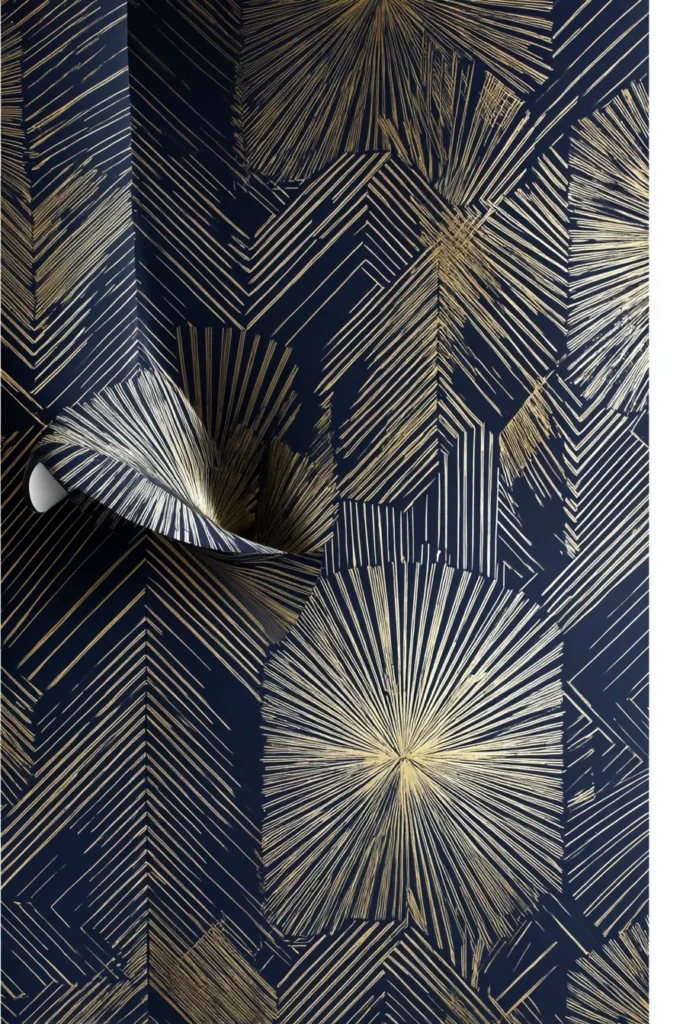
Art Deco patterns are unmistakable—sunbursts, zigzags, chevrons, stylized florals, and overlapping circles. A single accent wall in Art Deco wallpaper can transform your entire living room without overwhelming the space.
Choose patterns with metallic elements that catch light. Gold foil on navy, silver on charcoal, or bronze on deep green creates dimension that flat color can’t achieve. The pattern becomes living art that shifts with natural light throughout the day.
Rugs That Anchor Your Design
An Art Deco rug grounds your furniture arrangement while introducing pattern at foot level. Look for geometric designs with strong borders, sunburst medallions, or stylized floral patterns in your chosen color palette.
The rug should be large enough that front furniture legs rest on it, creating visual cohesion. This isn’t a timid accent—it’s a foundational piece that sets your room’s tone.
Subtle Pattern Layering
Don’t limit patterns to one area. Layer them thoughtfully—a geometric rug, patterned throw pillows, a wallpapered accent wall. The key is maintaining a consistent color palette and scale variation. Pair large patterns with smaller ones, always returning to your jewel tones and metallics.
Lighting: The Secret to Art Deco Atmosphere
Layered Lighting for Maximum Drama
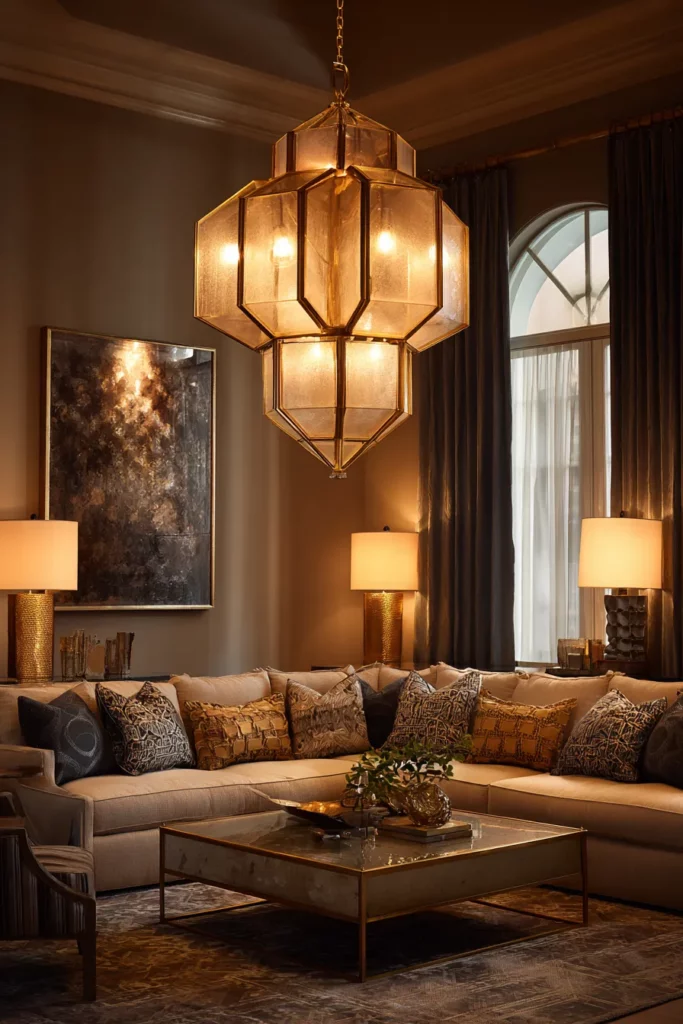
Art Deco lighting isn’t functional—it’s theatrical. You need multiple light sources at different heights to create the glamorous ambiance this style demands. Start with a statement chandelier or pendant as your anchor piece.
Look for fixtures with geometric shapes—stepped cylinders, sunburst designs, or frosted glass globes in metal frames. Brass and chrome finishes are period-appropriate, but don’t shy from black metal if it suits your palette.
The Essential Lighting Formula
Every Art Deco living room needs four types of lighting: ambient (overhead fixtures), task (reading lamps), accent (highlighting art or architectural features), and decorative (pieces chosen purely for visual impact).
Table lamps with sculptural bases become decorative objects even when unlit. Floor lamps with adjustable arms serve practical purposes while adding vertical interest. Wall sconces flanking a mirror or artwork create symmetry while amplifying light through reflection.
Maximizing Natural Light
Art Deco spaces love natural light, but they control it with intention. Heavy curtains in velvet or silk provide privacy and drama, but should be paired with sheer panels underneath. This allows you to modulate light throughout the day—full drama for evenings, filtered glow for mornings.
Window treatments should feel architectural. Think floor-to-ceiling drapes with geometric tiebacks, or structured Roman shades in bold patterns. The window itself becomes a framed view, another design element in your composed space.
Mirrors and Reflective Surfaces: Multiplying Light and Space
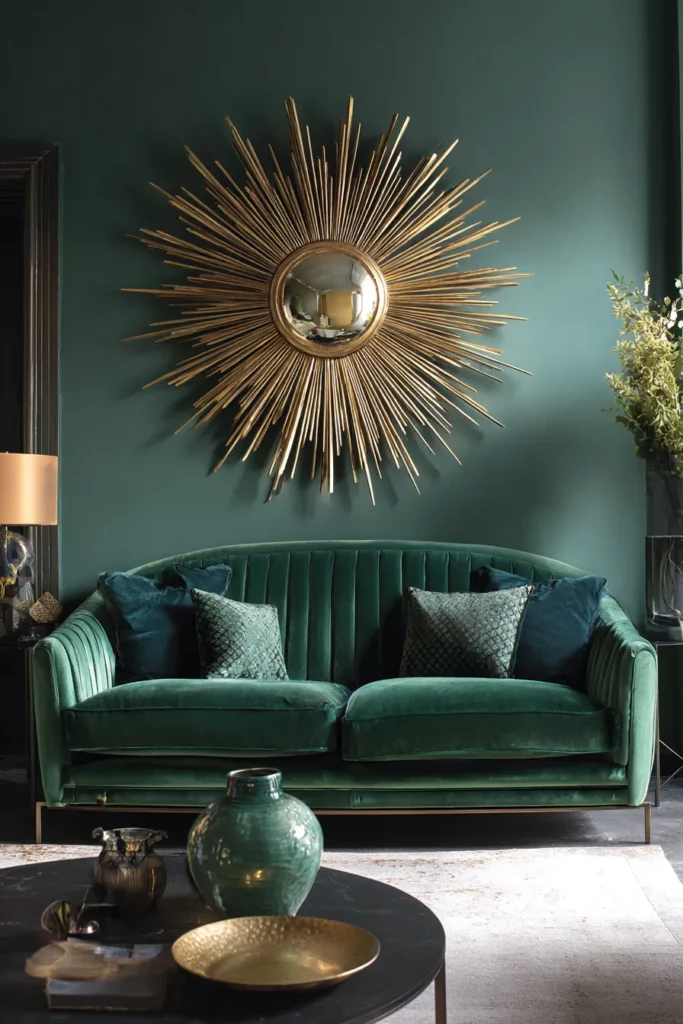
Mirrors aren’t just functional in Art Deco design—they’re essential. A large sunburst mirror above your fireplace or sofa creates a focal point while bouncing light throughout the room. Mirrored furniture pieces—side tables, console tables, cabinet doors—add glamour without visual weight.
Position mirrors strategically to reflect your best views, whether that’s a window, your statement chandelier, or a beautiful furniture vignette. The goal is creating infinite visual interest, spaces that reveal new details as you move through them.
Consider antiqued or smoked mirrors for a more sophisticated, less harsh reflection. These softer mirrors feel collected rather than newly purchased, adding instant history to your revival space.
Budget-Friendly Art Deco: Luxury Looks Without the Price Tag
Strategic Splurges and Smart Saves
You don’t need a 1920s budget to achieve Art Deco glamour. Invest in one or two statement pieces—perhaps a quality velvet sofa or an authentic vintage mirror—then fill in with inspired alternatives.
Thrift stores and estate sales often harbor Art Deco gems overlooked by shoppers seeking farmhouse or mid-century pieces. A tarnished brass lamp needs only polish. A worn velvet chair wants new fabric and suddenly it’s perfect.
DIY Glamour That Works
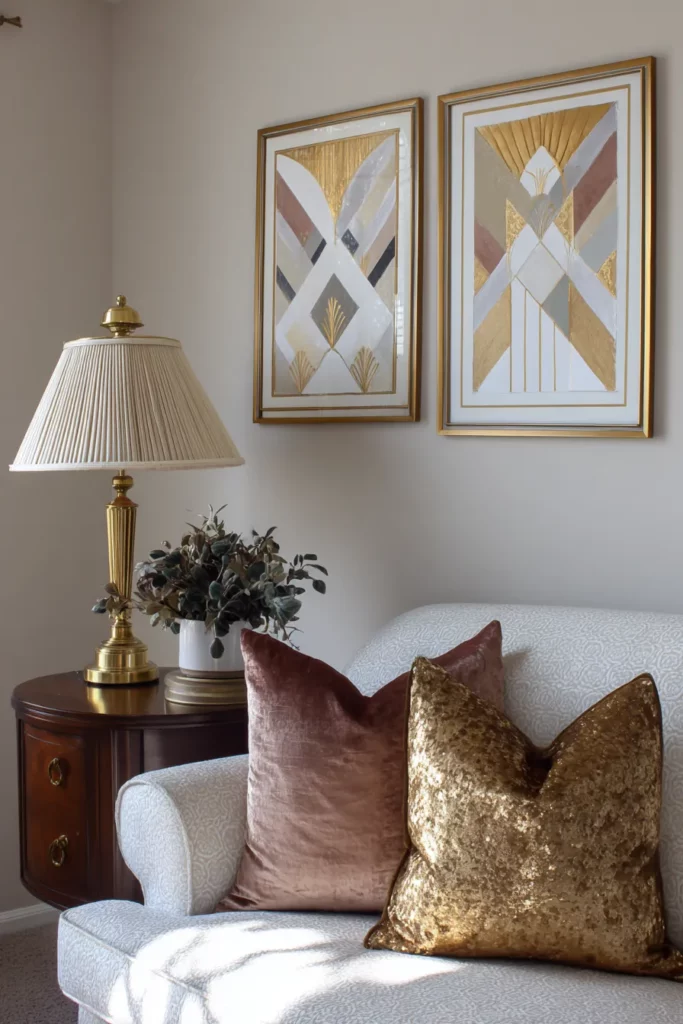
Create your own Art Deco art by framing geometric fabric samples or wallpaper in thrift-store frames spray-painted gold. Make a sunburst mirror using wooden dowels, gold paint, and a round mirror from a craft store. Layer inexpensive mirrors in geometric arrangements for custom wall art.
Paint existing furniture in Art Deco colors—lacquer black, emerald green, or navy blue—and add new brass hardware. A basic bookshelf becomes period-appropriate with the right finish and styling.
Material Substitutions That Maintain Integrity
| Expensive Material | Budget-Friendly Alternative | Visual Impact |
|---|---|---|
| Brass fixtures | Spray-painted gold hardware | Nearly identical when done well |
| Velvet upholstery | Velvet pillows and throws | Adds texture without reupholstering |
| Marble tabletops | Marble-look vinyl or ceramic tiles | Convincing from normal viewing distance |
| Exotic wood | Stained common wood with rich finish | Achieves depth and sophistication |
| Vintage Art Deco furniture | New pieces with Art Deco lines | Authentic style, modern pricing |
Spatial Arrangement: Symmetry as Your Guide
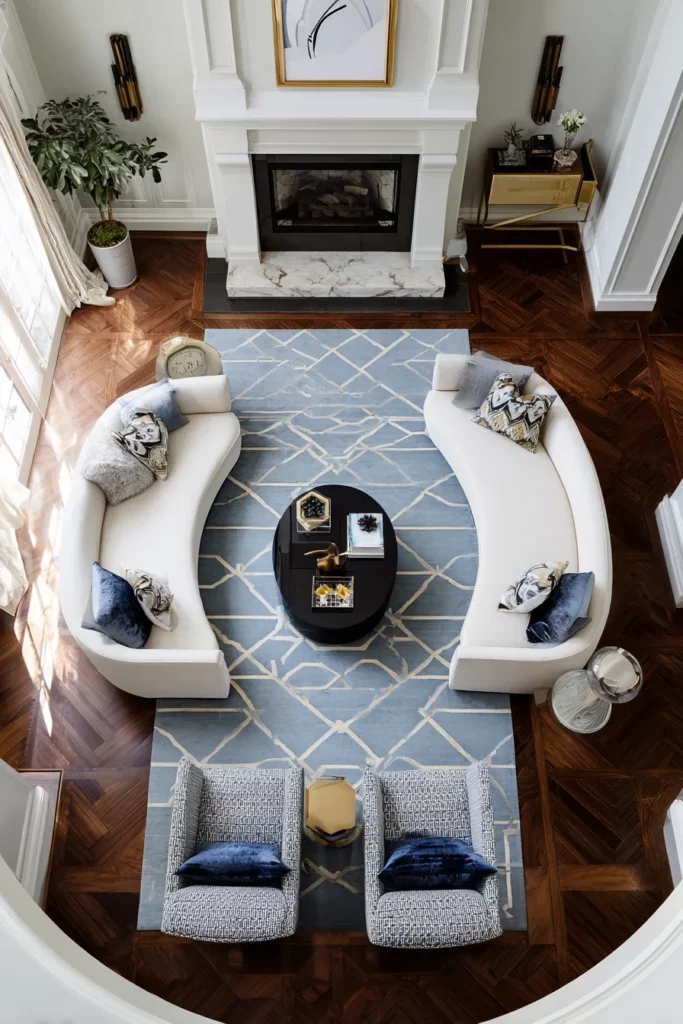
Art Deco spaces breathe symmetry. Arrange furniture in balanced pairs when possible—matching chairs flanking a fireplace, identical lamps on either end of a sofa, symmetrical art arrangements on walls.
Create clear pathways through your living room. Art Deco appreciates circulation space—rooms should feel gracious, never cramped. Position your sofa and chairs to encourage conversation while maintaining visual balance.
Use your room’s architectural features as symmetry anchors. Center furniture arrangements on fireplaces, windows, or doorways. This intentional alignment creates the formal elegance Art Deco is known for, even in casual, lived-in spaces.
Accessories and Art: Finishing Touches That Matter
Sculptural Objects as Art
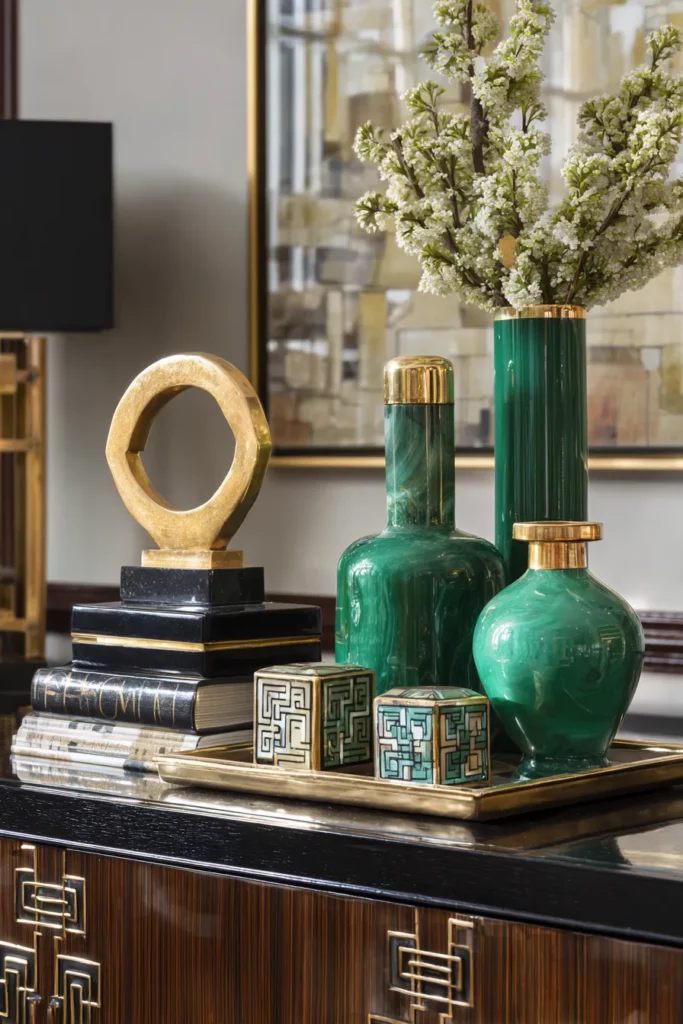
Art Deco celebrated industrial materials shaped into art. Look for chrome or brass sculptures—abstract figures, stylized animals, geometric forms. These sit beautifully on mantels, bookcases, or console tables.
Decorative objects in onyx, jade, or colored glass add jewel-tone accents without pattern. A collection of emerald glass vases, varying in height, creates a cohesive vignette that catches and colors light.
Art Selection for Art Deco Walls
Frame vintage Art Deco posters—travel advertisements, fashion illustrations, architectural drawings. Their period typography and stylized graphics are authentic and accessible. Geometric abstract art in your color palette works equally well.
Consider scale carefully. Art Deco appreciates statement pieces rather than small scattered frames. One large piece above the sofa or a gallery wall with consistent framing makes more impact than random arrangement.
Textiles That Add Warmth
Balance Art Deco’s hard surfaces—metal, glass, marble—with luxurious textiles. Faux fur throws, silk pillows with geometric embroidery, and wool rugs with bold patterns soften spaces without diminishing glamour.
These textiles make Art Deco interiors livable for modern families. You can curl up on that velvet sofa under a soft throw while still feeling surrounded by elegance.
Blending Art Deco with Contemporary Minimalism
Art Deco revival doesn’t mean period recreation. The most successful modern interpretations blend 1920s glamour with contemporary restraint—fewer pieces, but each one meaningful and beautiful.
Choose furniture with clean Art Deco-inspired lines rather than ornate reproductions. A sofa with a subtle curve and brass legs nods to the era without costume. Pair bold Art Deco patterns with areas of visual rest—solid colors, simple textures, empty wall space.
This blend creates rooms that feel collected over time rather than decorated in a theme. It’s Art Deco’s spirit—confident, luxurious, optimistic—expressed through a modern lens.
Maintaining Your Art Deco Living Room
Care for Delicate Materials
Brass and chrome need regular polishing to maintain their luster. Use appropriate metal cleaners and soft cloths, establishing a monthly maintenance routine. Velvet benefits from regular vacuuming with an upholstery attachment to prevent dust settlement.
Marble surfaces require coasters and prompt spill cleanup to prevent staining. Seal marble annually to protect against moisture and acids. These small maintenance habits preserve your investment and keep spaces looking fresh.
Updating Without Starting Over
Art Deco’s timeless nature means you won’t need frequent overhauls. Refresh seasonally with new throw pillows, different art arrangements, or swapped accessories. Change curtains from heavy winter velvets to lighter summer silks while maintaining your color palette.
Add contemporary elements gradually—a modern abstract painting, a sculptural side table, updated lighting. These careful additions keep your space feeling current without abandoning its Art Deco foundation.
Quick Reference: Your Art Deco Living Room Checklist
- Color palette: Deep jewel tones (emerald, sapphire, ruby) with black, white, and metallics
- Essential materials: Velvet upholstery, exotic wood or veneer, marble accents, brass and chrome
- Key patterns: Geometric (chevron, zigzag, sunburst), always with metallic elements
- Lighting layers: Statement chandelier, sculptural table lamps, accent wall sconces, natural light control
- Furniture must-haves: Curved or low-profile sofa, pair of accent chairs, geometric coffee table, mirrored or lacquered console
- Mirror placement: Large statement piece plus functional reflective surfaces throughout
- Symmetry: Balance furniture arrangements around architectural focal points
- Textiles: Luxurious fabrics (silk, velvet, faux fur) to soften hard surfaces
- Accessories: Sculptural objects, period-appropriate art, decorative objects in glass or stone
- Modern blend: Mix authentic Art Deco elements with contemporary restraint
Embracing the Revival: Your Personal Art Deco Journey
Creating an Art Deco living room isn’t about perfection—it’s about capturing a feeling. That moment when light hits brass just right. The satisfaction of a perfectly balanced room arrangement. The comfort of sinking into velvet after a long day, surrounded by beauty you’ve carefully collected.
Start with what calls to you. Maybe it’s a single emerald velvet chair, or a geometric rug that makes your heart skip. Build from there, trusting your instincts and the principles we’ve explored. Art Deco is forgiving—its love of collected glamour means nothing needs to match perfectly.
Your living room should tell your story while honoring this incredible design legacy. Let it be bold where you’re bold, restrained where you need calm, always beautiful in ways that matter to you. That’s the true Art Deco revival—not copying the past, but translating its confidence and joy into spaces we actually live in today.
Welcome home to your own version of 1920s glamour. Make it yours.
Frequently Asked Questions
What defines Art Deco living room style?
Art Deco style is defined by geometric patterns, symmetrical arrangements, luxurious materials like velvet and brass, rich jewel-tone colors, and streamlined furniture with bold curves. It balances ornamental glamour with functional modernism, creating spaces that feel both sophisticated and livable. The style emphasizes craftsmanship, high-contrast palettes, and the interplay of light through mirrors and metallic finishes.
How can you achieve a glamorous Art Deco look on a budget?
Focus on strategic investments like one quality velvet piece or a statement mirror, then supplement with thrifted finds and DIY projects. Paint existing furniture in Art Deco colors with new brass hardware, use spray paint to transform basic items into gold accents, and create geometric wall art from framed fabric or wallpaper samples. Prioritize a few authentic pieces over many mediocre ones, letting material substitutions like marble-look tiles or velvet pillows provide luxury touches affordably.
What lighting works best for Art Deco interiors?
Art Deco spaces thrive on layered lighting including a geometric statement chandelier or pendant, sculptural table and floor lamps with brass or chrome finishes, and wall sconces positioned symmetrically. Choose fixtures with frosted glass, sunburst patterns, or stepped cylindrical shapes. Include dimmer switches to adjust ambiance, and maximize natural light with strategic mirror placement that reflects both artificial and natural sources throughout the room.
How do you mix Art Deco style with contemporary decor?
Select furniture with subtle Art Deco-inspired lines rather than ornate reproductions, pair bold geometric patterns with solid-color areas for visual rest, and limit your color palette to avoid overwhelming the space. Incorporate contemporary abstract art alongside period pieces, use modern lighting with Art Deco forms, and embrace negative space to prevent the room from feeling too themed. The goal is capturing Art Deco’s confident spirit through a restrained, modern lens.
What furniture pieces are essential for an Art Deco living room?
Essential pieces include a curved or low-profile velvet sofa as your anchor, a geometric coffee table with marble or mirrored top, a pair of accent chairs in rich upholstery with metallic details, a lacquered or exotic wood console table, and a mirrored bar cart or side table. Focus on symmetrical arrangements and pieces with architectural presence—each item should make a statement while contributing to the room’s overall balance and sophisticated atmosphere.