
Table of Contents
There is something almost meditative about a beautifully floored room. The way morning light skims across pale oak. The soft give of cork beneath bare feet. The cool, grounding solidity of stone on a warm afternoon. Your floor is the first thing you feel when you walk into a room — and in a Japandi living space, it sets the entire emotional tone.
Japandi is more than a design trend. It is a philosophy — the marriage of Japanese wabi-sabi (the beauty of imperfection) and Scandinavian hygge (warmth, coziness, belonging). When these two worlds meet underfoot, the result is a floor that feels intentional, honest, and deeply liveable.
At ERYLIN, we believe your floor is your foundation — not just structurally, but emotionally. The right Japandi flooring anchors your furniture, softens your light, and creates the kind of quiet you can actually breathe in.
Whether you are starting from scratch, renting a space, or refreshing a small living room in a warm and humid climate, this guide walks you through every beautiful, practical option — with real costs, honest tradeoffs, and ideas your space will thank you for.
What Is the Best Flooring for a Japandi Living Room?
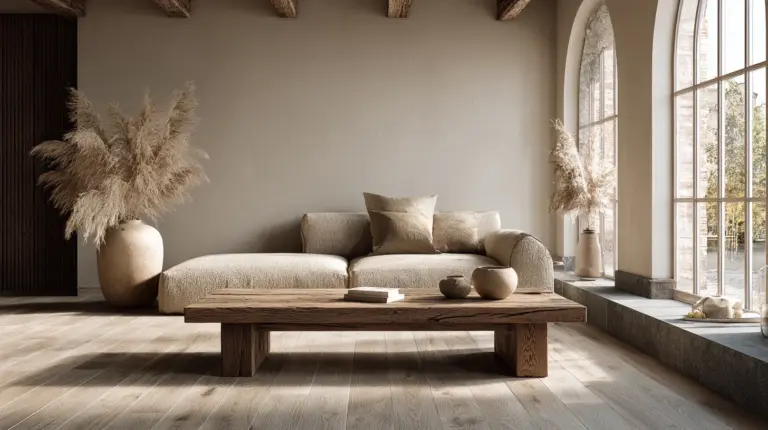
The best Japandi flooring feels natural, understated, and enduring. It should look like it belongs to the earth — never synthetic, never flashy. Think light oak, pale bamboo, matte concrete, or soft cork. The finish matters as much as the material: always choose matte or satin over gloss, which disrupts the calm Japandi aesthetic.
For most living rooms, engineered hardwood or bamboo strikes the best balance of beauty, durability, and authenticity. For humid climates or budget-conscious spaces, luxury vinyl plank (LVP) or cork are excellent alternatives.
Here is a quick-reference comparison to guide your choice:
| Flooring Type | Estimated Cost (₱/sqm) | Humidity Resistance | Best For |
|---|---|---|---|
| Solid Hardwood (Light Oak) | ₱4,500–₱7,000 | Low | Dry climates, premium builds |
| Engineered Hardwood | ₱2,800–₱4,500 | Moderate | Most living rooms |
| Bamboo (Strand-woven) | ₱2,000–₱3,500 | Moderate-High | Eco-conscious, tropical homes |
| Cork Flooring | ₱1,800–₱3,000 | Moderate | Noise reduction, families |
| Luxury Vinyl Plank (LVP) | ₱900–₱1,800 | Very High | Renters, humid climates, budgets |
| Concrete / Micro-cement | ₱2,500–₱5,000 | High | Minimalist, open-plan spaces |
| Wood-Look Porcelain Tile | ₱1,500–₱3,000 | Very High | PH tropical homes |
Prices are approximate Philippine market estimates (2025–2026). Always request quotes from your local supplier.
Japandi Flooring Ideas for Every Style and Space
1. Light Oak and Blonde Wood: The Quintessential Japandi Floor
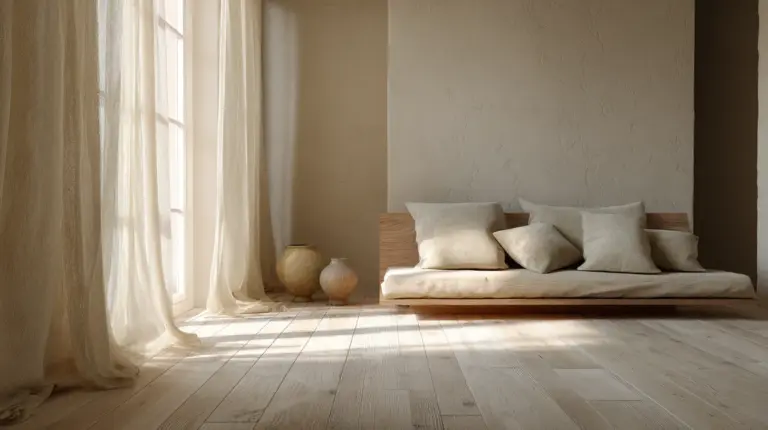
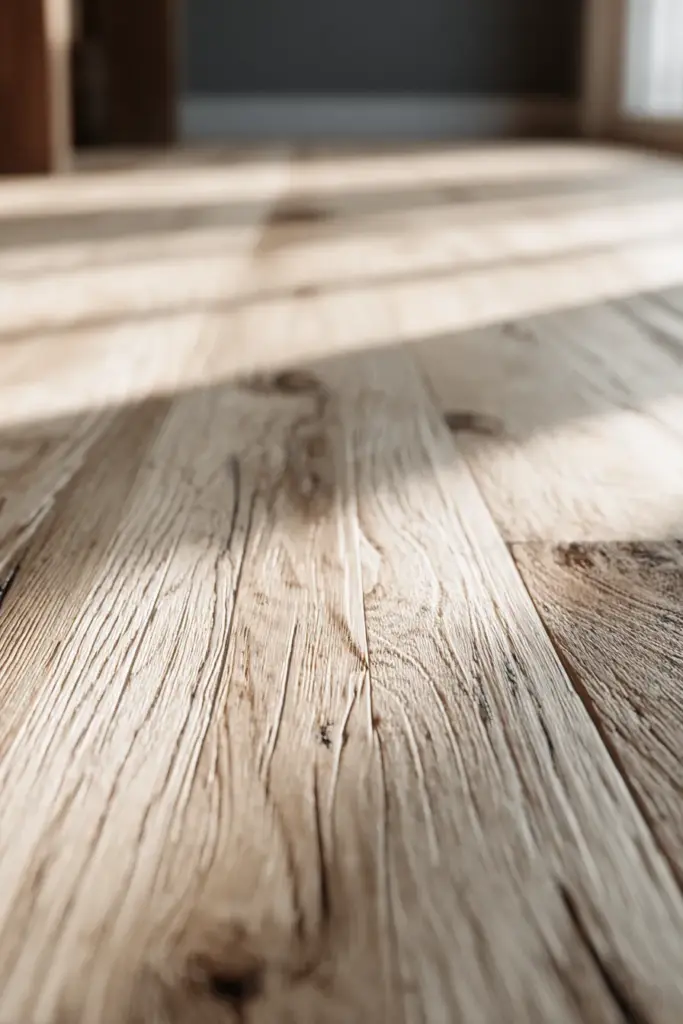
If Japandi had a signature wood tone, it would be ash blonde or light oak — the color of afternoon sun filtered through linen curtains.
Light-toned hardwood floors open up a room visually, reflecting natural light in a way that dark floors simply cannot. They pair effortlessly with the white-and-warm-grey palette Japandi favors, and they age beautifully — picking up character without losing elegance.
What to Look For
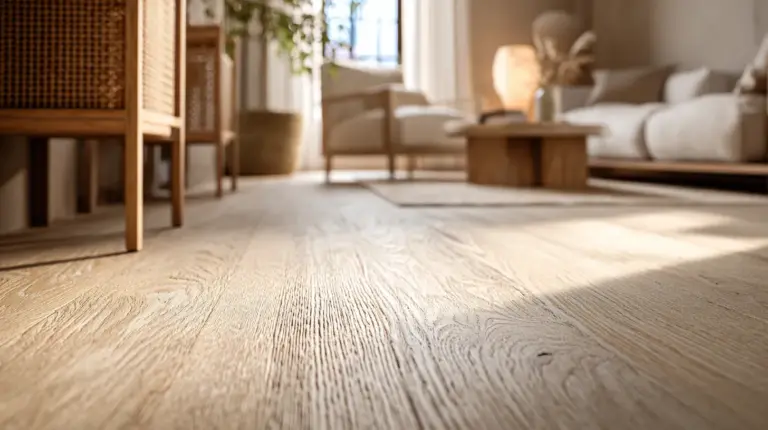
Choose wide planks (at least 150mm wide, ideally 200mm+). The wider the board, the fewer seams, and the more expansive your floor feels — a crucial trick for small living rooms. Look for a wire-brushed or hand-scraped texture, which adds subtle depth and hides everyday wear.
Recommended finish: Matte or natural oil finish. Skip the high-gloss polyurethane — it reads as synthetic and disrupts the wabi-sabi spirit.
Small Space Hack: Wide Planks for Visual Expansion
In living rooms under 20 sqm, extra-long wide planks installed parallel to the longest wall visually stretch the room. This is one of the most effective small-space Japandi flooring tricks — no demolition required, just intentional planning.
2. Bamboo Flooring: The Sustainable Japandi Choice
Bamboo is not just beautiful — it is one of the most responsible flooring materials you can choose. It regenerates in three to five years (versus decades for hardwood), requires fewer pesticides, and offers remarkable durability when strand-woven.
In the Philippines, locally sourced bamboo brings the added advantage of significantly lower transport emissions and cost. Strand-woven bamboo — where bamboo fibres are compressed under high pressure — is denser than most hardwoods, scoring 3,000+ on the Janka hardness scale.
Bamboo in Humid PH Climates
Humidity is a genuine concern in tropical homes. Choose bamboo that has been kiln-dried and sealed with a moisture-resistant finish. Ask your supplier about the moisture content rating (ideally under 9%) and ensure installation includes a vapor barrier underlayment. Avoid floating bamboo installations in rooms with direct outdoor airflow without proper acclimatization.
Look for: Carbonized or natural bamboo in horizontal or vertical grain. Carbonized bamboo has a warmer, slightly darker tone that deepens over time — perfect for cozy Japandi layering.
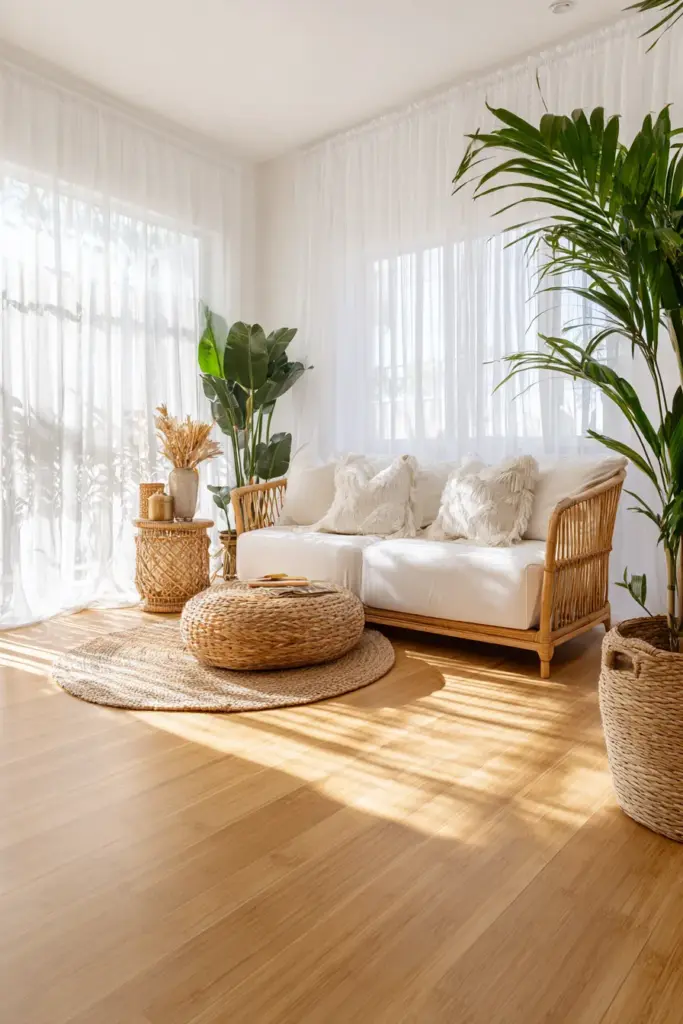
3. Cork Flooring: Quiet, Warm, and Wonderfully Underrated
Cork is the floor that feels like a hug. Soft underfoot, naturally insulating, and acoustically absorbing — cork reduces sound transmission by 20–30% compared to hardwood, making it ideal for open-plan living rooms or homes with children and pets.
Its muted, organic texture in warm greige and sandy brown tones aligns perfectly with Japandi’s love of natural imperfection. No two cork floors look exactly alike — each has its own quiet variation of pattern, which is precisely the wabi-sabi point.

Cork Care in Warm Climates
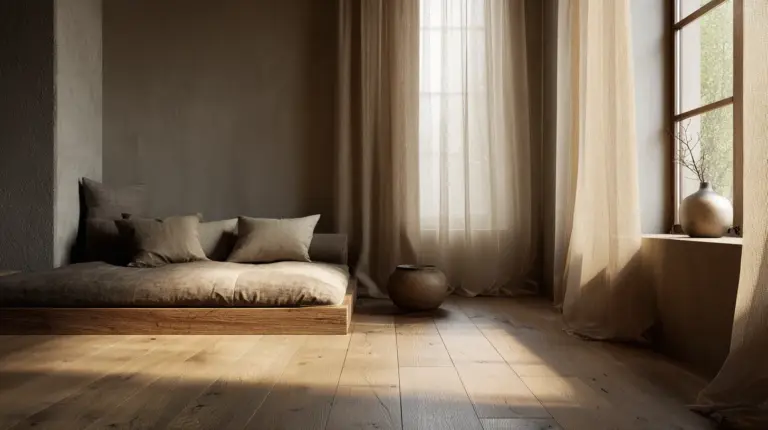
Seal cork floors with a water-based polyurethane every few years and avoid prolonged exposure to direct sunlight without UV-filtering window coverings. In the Philippines, this means pairing cork with sheer linen curtains — beautiful and functional.
4. Concrete and Micro-Cement: The Minimalist Foundation
Poured concrete or micro-cement flooring has become a defining element of modern Japandi interiors — and for good reason. Its seamless, matte surface creates a neutral canvas that lets furniture, textiles, and natural light do the storytelling.
Micro-cement is particularly suited to Philippine tropical homes: it is moisture-resistant, easy to clean, and can be applied over existing tile without demolition — a major advantage for renters or renovation-shy homeowners.
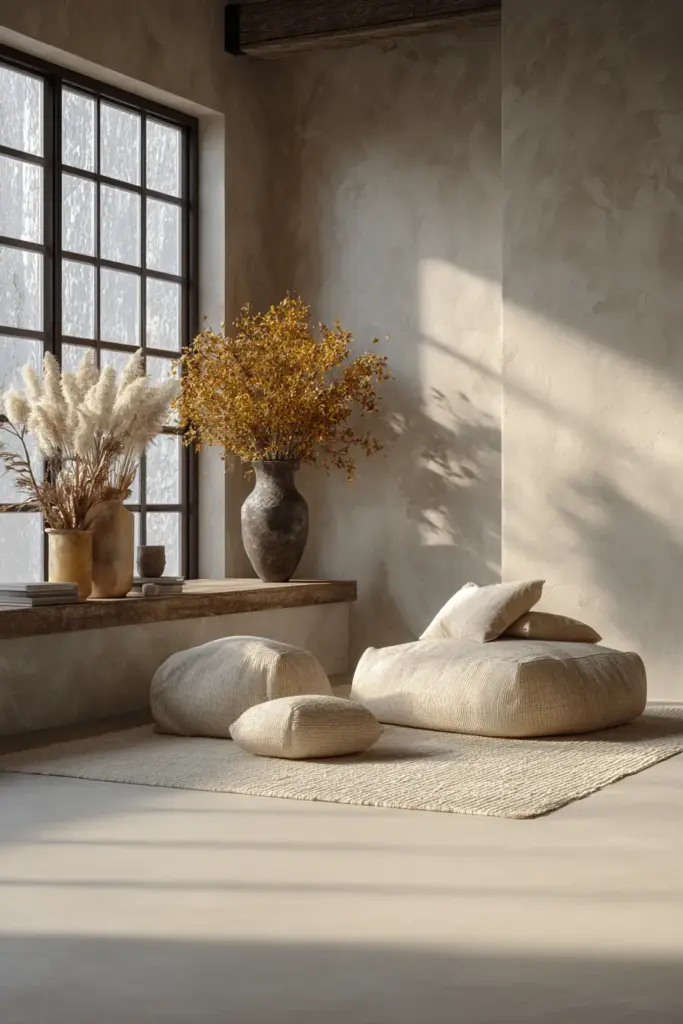
Warming Up Concrete Floors
The risk with concrete is coldness — visually and literally. Counter this with layered natural fiber rugs (jute, sisal, or wool), low-slung wooden furniture with organic shapes, and warm-toned pendant lighting. The contrast between cool floor and warm textile is deeply Japandi — tension resolved into harmony.
5. Wood-Look Porcelain Tile: Durable Beauty for Tropical Homes
For living rooms in humid, high-traffic Philippine settings, wood-look porcelain tile offers the best of both worlds: the warmth of wood grain aesthetics with the near-indestructible durability of ceramic.
Modern manufacturing has made these tiles remarkably convincing. Choose large-format tiles (600mm x 1200mm or larger) with a low-sheen, textured surface — the effect reads as genuine plank flooring, especially when installed with minimal grout lines in a matching tone.
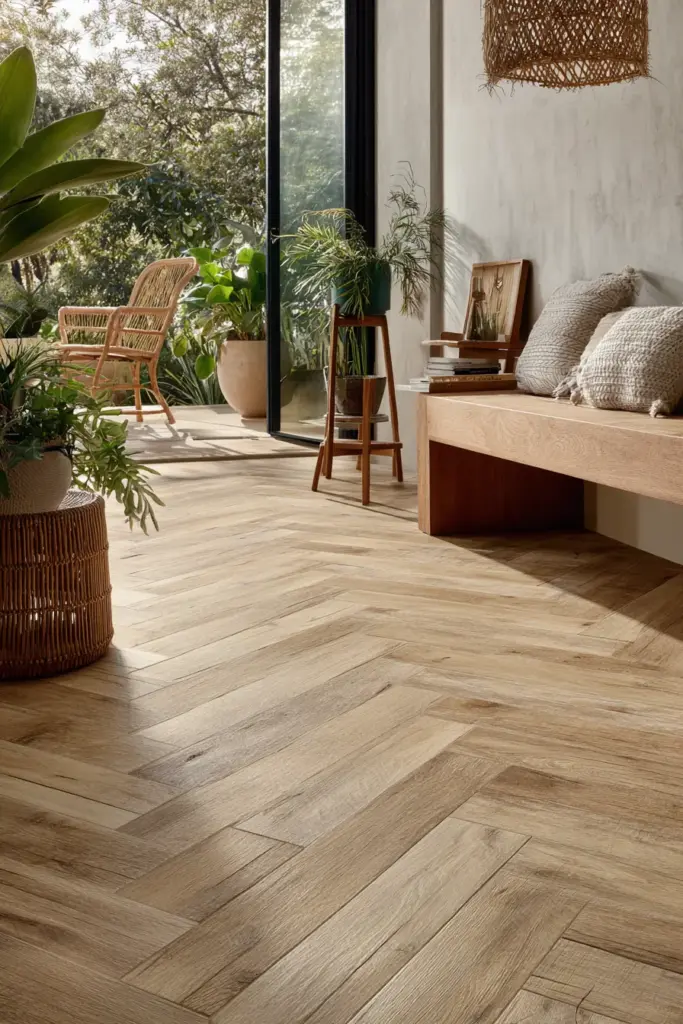
Installation Tips for Japandi Authenticity
Lay tiles in a staggered brick pattern or herringbone for visual interest without busyness. Avoid bright white grout, which creates a grid effect that disrupts the flow. Instead, match grout closely to the tile tone or go slightly warmer — think sand, putty, or warm grey.
6. Luxury Vinyl Plank (LVP): The Smart Choice for Renters and Budgets
LVP has come a very long way. Today’s premium vinyl planks offer realistic wood grain textures, flexible installation over existing floors, and waterproof cores that laugh at tropical humidity. For renters or those working with tighter budgets, LVP is the most practical path to Japandi style.
At ₱900–₱1,800 per sqm, it is also the most accessible. Look for SPC (Stone Plastic Composite) core planks — denser and more temperature-stable than WPC cores, which matters in warm Philippine interiors.

What Makes LVP Feel Japandi (and Not Cheap)
Choose a matte embossed finish with a realistic texture. Plank widths of 180mm+ make a visible difference. Install with a sound-dampening underlayment for that soft, quiet quality that characterizes well-designed spaces. Pair with natural materials — rattan, linen, raw wood furniture — and no one will question whether the floor is real wood.
How to Choose Japandi Floor Colors
Color in Japandi flooring is never bold, never stark. It lives in the gentle range between cream and driftwood grey — the tones of sand, bleached cedar, aged linen, and early morning mist.
The most Japandi-aligned floor palettes include:
- Ash blonde / light oak — the warmest, most inviting choice
- Greige (grey-beige) — cool and calm, pairs beautifully with white walls
- Natural bamboo / honey tone — organic warmth with an Eastern quality
- Pale concrete / light grey — modern, minimal, and grounding
- Driftwood / weathered grey — muted, coastal, deeply serene
Avoid: Dark espresso, high-contrast black, orange-toned cherry, or anything with a strong red or yellow undertone. These interrupt the visual quietude Japandi spaces depend on.
Japandi Flooring Maintenance in Humid Climates
Humidity is the single biggest challenge for flooring in Philippine tropical homes — and the topic most flooring guides conveniently ignore. Here is what you actually need to know.
For wood and bamboo: Maintain indoor humidity between 45–65% using a dehumidifier or air conditioning. Clean with a barely-damp mop — never wet. Use a pH-neutral wood cleaner, and reseal with a mold-resistant sealant every 2–3 years. Inspect expansion gaps annually.
For cork: Apply a refresher coat of water-based sealant every 3–4 years. Keep rugs lifted periodically to allow airflow underneath.
For concrete/micro-cement: Seal annually with a breathable, anti-fungal penetrating sealer designed for tropical climates. Wipe spills immediately — sealed concrete is forgiving, but standing water is not.
For LVP and porcelain tile: Both are inherently humidity-resistant. Simply clean with a damp mop and a neutral cleaner. Check for lifted edges near exterior walls, which can indicate moisture migration from the subfloor.
Japandi Flooring for Small Living Rooms: Design Hacks That Actually Work
Small rooms need flooring that works as hard as it looks beautiful. Here are the most effective strategies:
- Wide planks make small rooms larger. Aim for 180–220mm widths, installed lengthwise along the longest axis of the room.
- Minimal grout lines and seamless finishes (micro-cement, LVP) eliminate visual interruptions that make spaces feel choppy.
- Light floor tones reflect light upward, creating the perception of height and airiness.
- A single large area rug centered under the coffee table creates a room-within-a-room effect without closing the space down.
- Consistent flooring throughout (no transitions between hallway and living room) visually expands both areas.
Japandi Flooring Checklist: Key Takeaways
Before you choose your floor, run through this:
- Material: Natural or nature-inspired (wood, bamboo, cork, concrete, wood-look tile)
- Finish: Always matte or satin — never gloss
- Tone: Ash blonde, greige, pale honey, light grey — no warm reds or dark browns
- Width: Wider planks (180mm+) for visual expansion, especially in small spaces
- Humidity: Sealed, moisture-rated, and underlaid correctly for your climate
- Feel: Soft underfoot where possible — cork or LVP with underlayment adds warmth
- Maintenance: Realistic for your lifestyle — pets, children, and bare feet all considered
- Cost: Set your sqm budget early; factor in underlayment, adhesive, and installation labor
A Soft Conclusion
The floor beneath your feet is the first conversation your home has with your body. It is where mornings begin in bare feet, where children sit cross-legged during stories, where evening light lands and pools. In Japandi design, the floor is never an afterthought — it is the quiet foundation from which everything else rises.
Choose something that feels honest. Something natural, something that will age gracefully, something that asks nothing of you except presence. Whether it is the gentle warmth of blonde oak, the whisper-soft give of cork, or the serene blankness of micro-cement, the right Japandi floor will make your whole home exhale.
At ERYLIN, we believe beautiful living begins at the ground level. Explore our full Japandi series — from Japandi lighting ideas to cozy Japandi furniture guides — and let your home become the calm, soulful space it was always meant to be.
Frequently Asked Questions
What is the best flooring for a Japandi living room?
Engineered hardwood in light oak or ash blonde is the most authentic Japandi choice — it is warm, durable, and visually grounding. For humid climates like the Philippines, strand-woven bamboo or wood-look porcelain tile offer excellent durability with the same aesthetic warmth.
What are cheap Japandi flooring options?
Luxury vinyl plank (LVP) is the most budget-friendly Japandi flooring, available from approximately ₱900–₱1,800 per sqm. Cork (₱1,800–₱3,000/sqm) is another affordable option with the bonus of natural sound absorption. Both are renter-friendly and humidity-tolerant.
How do I choose the right Japandi floor color?
Stay within the ash blonde, greige, pale honey, and light grey range. These tones reflect natural light and maintain the visual quietude that defines Japandi spaces. Avoid anything with strong orange, red, or dark brown undertones — they disrupt the calm palette.
What Japandi flooring works best for small living rooms?
Wide-plank flooring (180–220mm) installed parallel to the longest wall visually expands small spaces. Light-toned LVP or engineered wood with seamless micro-cement transitions work beautifully in living rooms under 20 sqm. Pair with a single large natural-fiber rug to anchor the seating area.
How do I maintain Japandi flooring in a humid Philippine climate?
For wood and bamboo, maintain indoor humidity between 45–65%, clean with a barely-damp mop, and reseal with a mold-resistant sealant every 2–3 years. For concrete and micro-cement, use a breathable anti-fungal penetrating sealer annually. LVP and porcelain tile require only routine damp mopping and are naturally humidity-resistant.