
Table of Contents
There is something quietly magnetic about a wall dressed in greenery — the way leaves catch soft morning light, the way a trailing vine softens a bare corner, the way your whole body exhales the moment you walk into the room. That feeling has a name. It has an aesthetic. It is the Japandi plant wall.
Japandi design is the gentle marriage of Japanese wabi-sabi and Scandinavian hygge. It finds beauty in imperfection, warmth in simplicity, and meaning in natural materials. When you introduce a living plant wall into this philosophy, something extraordinary happens: the space stops feeling decorated and starts feeling alive.
Whether you have a sun-drenched apartment or a compact living room with one north-facing window, a Japandi plant wall is entirely within reach. You do not need a designer. You do not need a big budget. You need intention — and a little guidance from us here at ERYLIN.
This guide walks you through everything: the best plants to choose, how to build your own vertical installation from sustainable materials, how to style it to complement your Japandi furniture and lighting, and how to care for it season by season. Let us begin.
What Is Japandi Plant Decor?
Japandi plant decor is the art of bringing nature indoors with restraint and purpose. It blends wabi-sabi’s embrace of organic imperfection with hygge’s love of cozy, lived-in warmth.
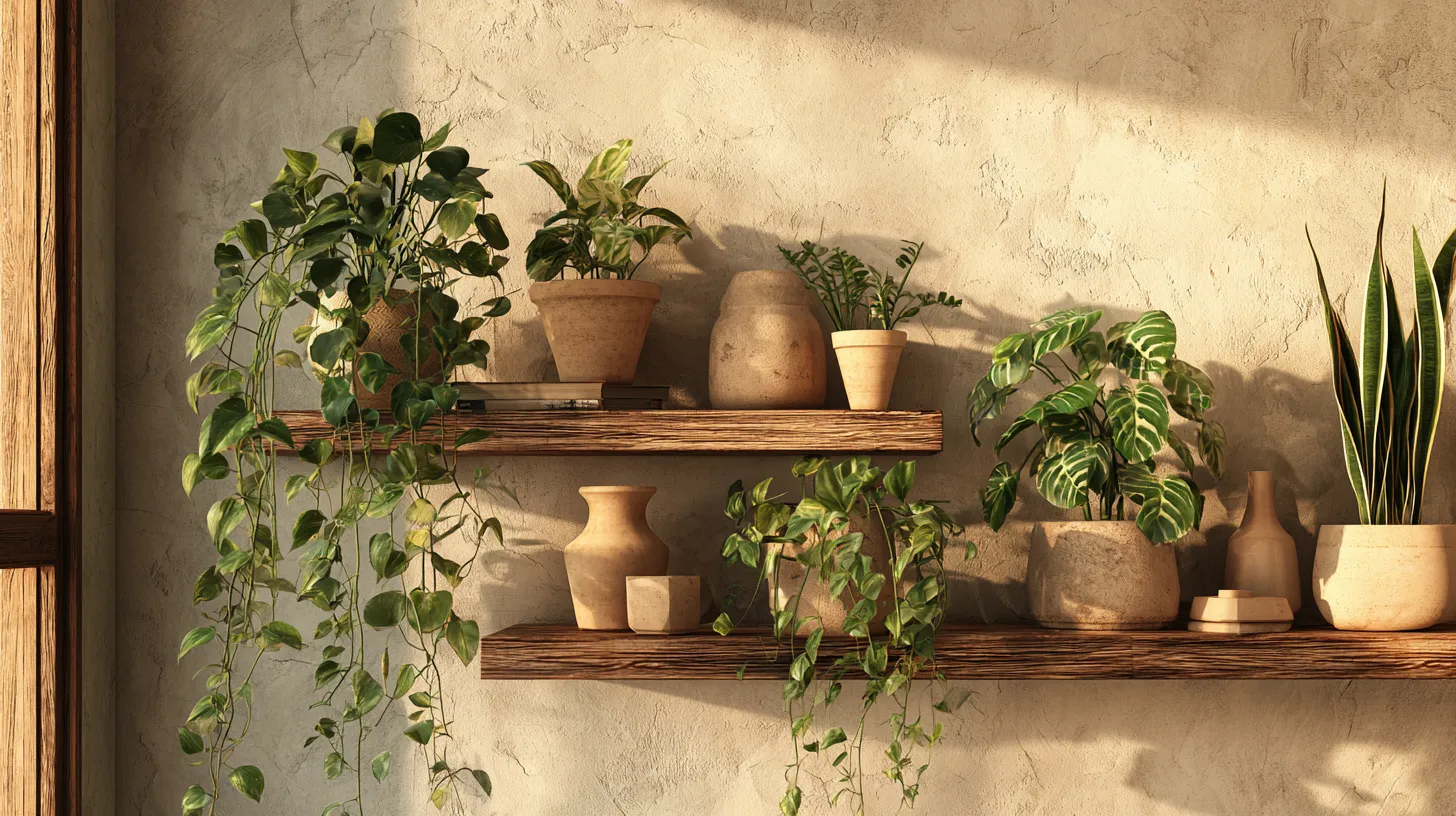
In practice, this means choosing plants with sculptural silhouettes — not for maximalist jungle drama, but for deliberate, breathing negative space. A single snake plant in a matte clay pot. A trailing pothos spilling softly over the edge of a reclaimed wood shelf. A moss kokedama suspended from a natural fiber cord.
The goal is never abundance for its own sake. Every plant earns its place on the wall.
What Plants Are Best for a Japandi Plant Wall?
Choosing the right plants is the foundation of everything. The best Japandi plants are low-maintenance, air-purifying, and visually sculptural — they bring calm, not chaos.
Top Plant Picks for Your Japandi Wall
| Plant | Why It Works | Light Needs | Maintenance |
|---|---|---|---|
| Snake Plant (Sansevieria) | Tall, architectural, deeply textural | Low to bright indirect | Very low |
| ZZ Plant | Glossy, dramatic, thrives on neglect | Low light | Very low |
| Pothos | Trailing, lush, forgiving | Low to medium | Low |
| Fiddle Leaf Fig | Statement silhouette, broad leaves | Bright indirect | Moderate |
| Peace Lily | Soft blooms, air-purifying | Low to medium | Low |
| Rubber Plant | Deep burgundy tones, bold shape | Medium indirect | Low |
| Parlor Palm | Feathery, graceful, compact | Low to medium | Low |
| Philodendron | Heart-leaf trailing, fast growing | Medium indirect | Low |
| Air Plants (Tillandsia) | Soil-free, minimal, otherworldly | Bright indirect | Low |
| Ficus Benjamina | Delicate canopy, wabi-sabi elegance | Bright indirect | Moderate |
For walls specifically, prioritize trailing varieties like pothos and philodendron — they cascade naturally and fill vertical space with organic movement. Snake plants and ZZ plants anchor the lower or central sections with architectural strength.
What About Bonsai and Kokedama?
Yes — and enthusiastically. A small bonsai mounted at eye level adds instant wabi-sabi meditation energy. Kokedama (plants wrapped in moss balls and suspended with cord) are perhaps the most poetic addition to a Japandi plant wall: living sculptures that blur the line between art and nature.
How to Build a DIY Japandi Vertical Plant Wall
This is where most guides stop. We are not stopping here. Building a Japandi plant wall yourself is one of the most rewarding design projects you will ever undertake — and it costs far less than you might expect.
What You Will Need
For a reclaimed wood frame wall panel (approx. 60 x 90 cm):
- 2–3 reclaimed wood planks or bamboo lengths (sourced locally if possible)
- Sandpaper (120 grit, then 220 grit for a smooth finish)
- Natural jute twine or macramé cord
- Small terracotta or ceramic pots (10–15 cm diameter)
- Wall anchors and screws rated for your wall type
- Optional: felt pocket panels for trailing plants
- Optional: a drip tray or self-watering insert
Estimated cost: under ₱2,500 / under $45 USD
Step-by-Step Build Guide
Step 1: Choose your wall and measure.
Pick a wall that receives soft, indirect light for at least four to six hours daily. North- or east-facing walls work well for low-light plants. Measure your space and sketch a rough layout — staggered shelves feel more organic than rigid grid arrangements.
Step 2: Prepare your wood panels.
Sand your reclaimed planks smooth. Leave the natural grain visible and embrace any knots or imperfections — this is wabi-sabi in action. If you prefer a warm tone, apply a light coat of natural beeswax or tung oil. Avoid synthetic varnishes; they fight against the earthy palette.
Step 3: Install your mounting hardware.
Use a stud finder to locate wall anchors. For heavier shelves, always mount into studs or use appropriate hollow-wall anchors. Screw in L-brackets at your chosen heights. Stagger the shelves slightly — offset placements look intentional and leave room for trailing plants to cascade freely.
Step 4: Lay the shelves and secure them.
Rest your wood planks onto the L-brackets and secure with small screws from below. Test the weight capacity before loading with pots.
Step 5: Add your pots and plants.
Begin with your largest, most architectural plants at the bottom or center. Build upward and outward with trailing varieties. Leave deliberate empty spaces — negative space is not emptiness in Japandi design; it is breathing room.
Step 6: Add hanging elements.
Use jute twine or macramé cord to suspend air plants, kokedama, or small pots from the top shelf or ceiling hooks above the installation. Vary the hanging lengths for a layered, organic silhouette.
Step 7: Finish with felt pockets (optional).
Felt wall pockets are ideal for trailing plants in small apartments. They are lightweight, affordable, and look beautiful in warm terracotta or sage tones. Stagger them between your shelves for a mixed-texture installation.
Small Space Japandi Plant Wall Ideas
Do not let square footage stop you. A modular Japandi plant wall — even just two shelves and three hanging plants — transforms a studio apartment corner into a sanctuary.
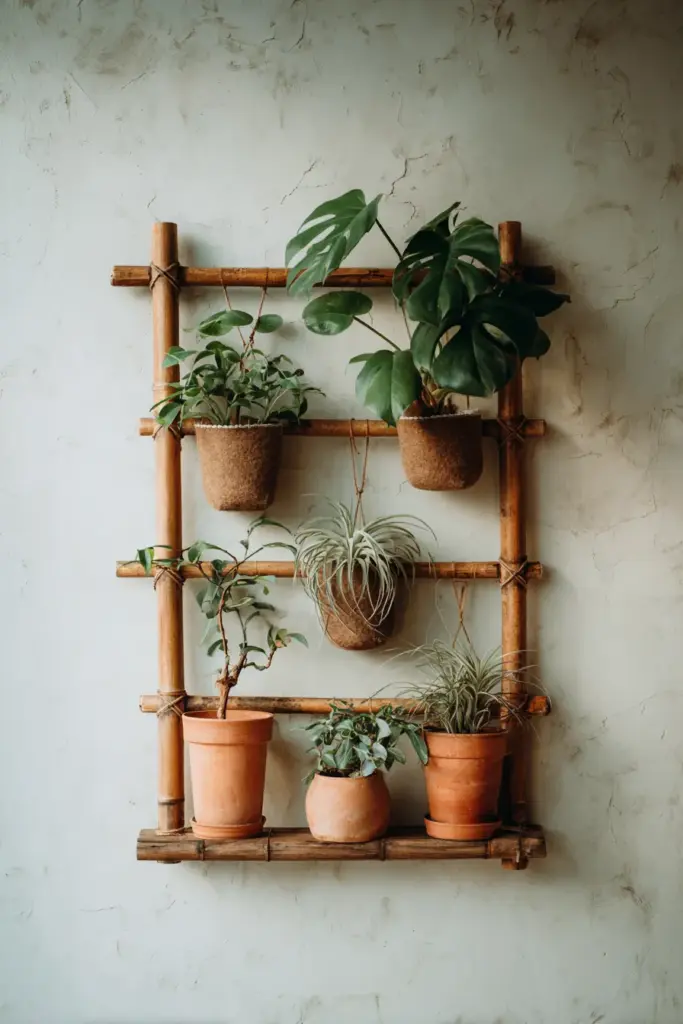
For compact living rooms, try a vertical ladder frame leaned against the wall (no drilling needed). Style it with trailing pothos on the upper rungs and a snake plant in a tall pot at the base. Finish with a single kokedama hung from the top rail.
For rental apartments, command strip hooks and lightweight air plants create a no-damage Japandi plant display that still feels intentional and designed.
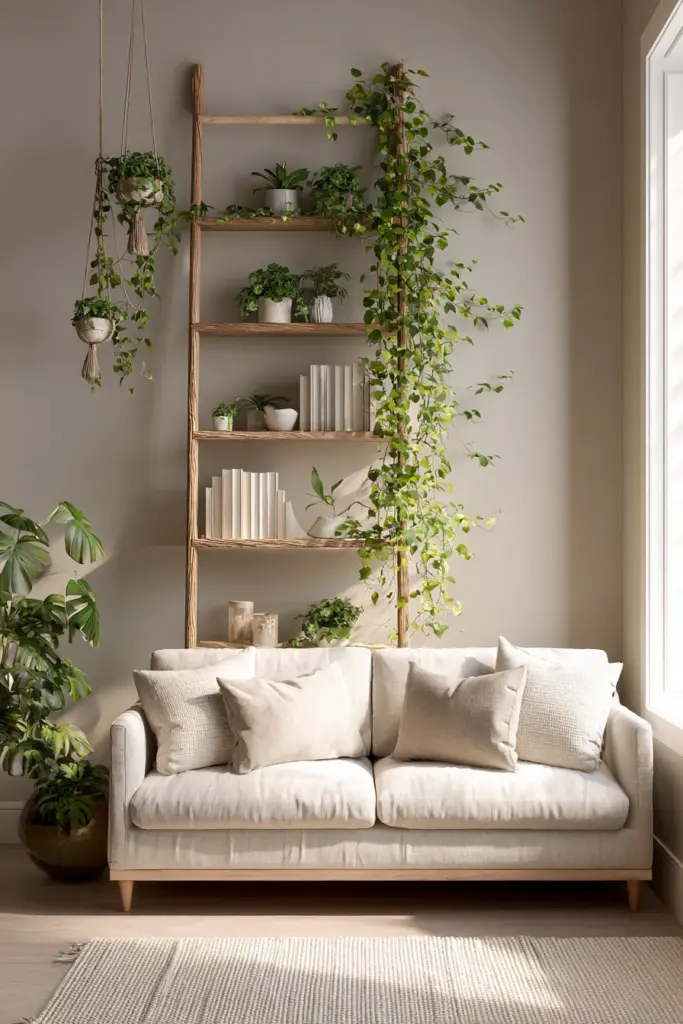
How to Style Plants in a Japandi Interior
The plants are only half of the story. How you style them — the pots, the light, the surrounding furniture — is what pulls the whole room together.
Choose the Right Pots
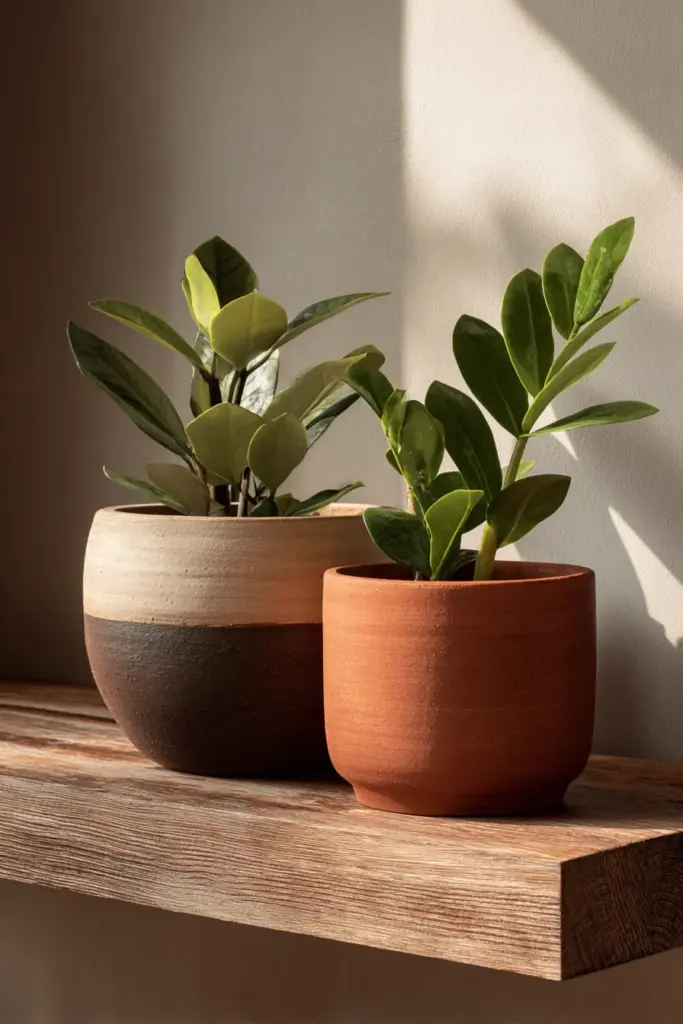
Terracotta is the soul of Japandi plant styling. Its warm, matte surface breathes with the plant, regulates moisture, and pairs effortlessly with linen, rattan, and raw wood. Look for unglazed or lightly textured versions for the most authentic feel.
Matte ceramic pots in cream, warm grey, or sage are equally at home. Avoid anything with high-gloss finishes or busy patterns — they compete with the plants rather than framing them.
Pair with Natural Materials
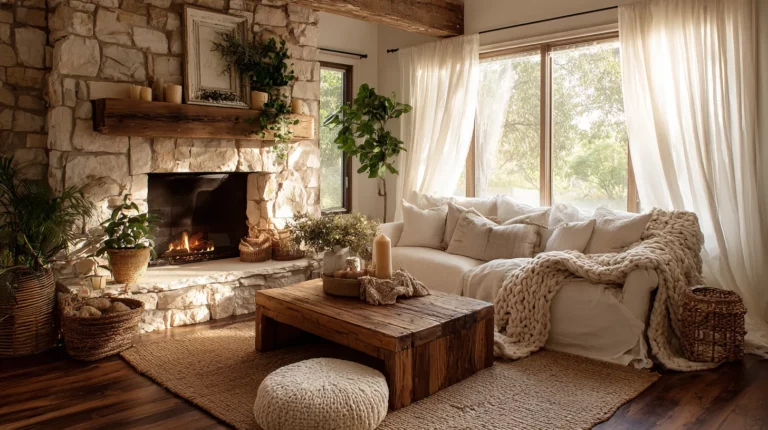
Your Japandi plant wall will look most cohesive when the surrounding space speaks the same material language. Think linen curtains that filter the light softly. A rattan side table beneath the installation. A wool throw draped over a low-profile sofa in oat or sand.
Natural materials ground the greenery and keep the whole composition from feeling clinical. The wall becomes part of the room, not a feature bolted onto it.
Use Light Intentionally
Lighting is everything in Japandi design. During the day, position your plant wall where it can receive soft natural light — morning eastern light is ideal and gentle on most indoor plants. In the evenings, a warm-toned pendant light or small LED spotlights directed at the wall create depth and drama without breaking the calm palette.
Avoid cold white LED lighting near your plants. It shifts the mood from cozy warmth to clinical harshness — the exact opposite of what we are going for.
Embrace Negative Space
This bears repeating because it runs counter to every maximalist decorating instinct. Leave gaps. A Japandi plant wall with deliberate empty sections feels more elegant and more intentional than one packed end to end with pots. Trust the space between the leaves as much as you trust the leaves themselves.
Caring for Your Japandi Plant Wall
A living wall rewards attention — but not obsession. Most Japandi-friendly plants are chosen precisely because they thrive with minimal fuss.
Seasonal Care Calendar
| Season | Care Focus |
|---|---|
| Spring | Resume regular watering, begin light fertilizing with organic liquid fertilizer |
| Summer | Monitor for pests, increase humidity if needed, prune trailing stems for fullness |
| Autumn | Reduce watering frequency, propagate cuttings for new growth |
| Winter | Shift plants toward better light sources, water sparingly, mist air plants weekly |
Smart Watering Hacks for Vertical Walls
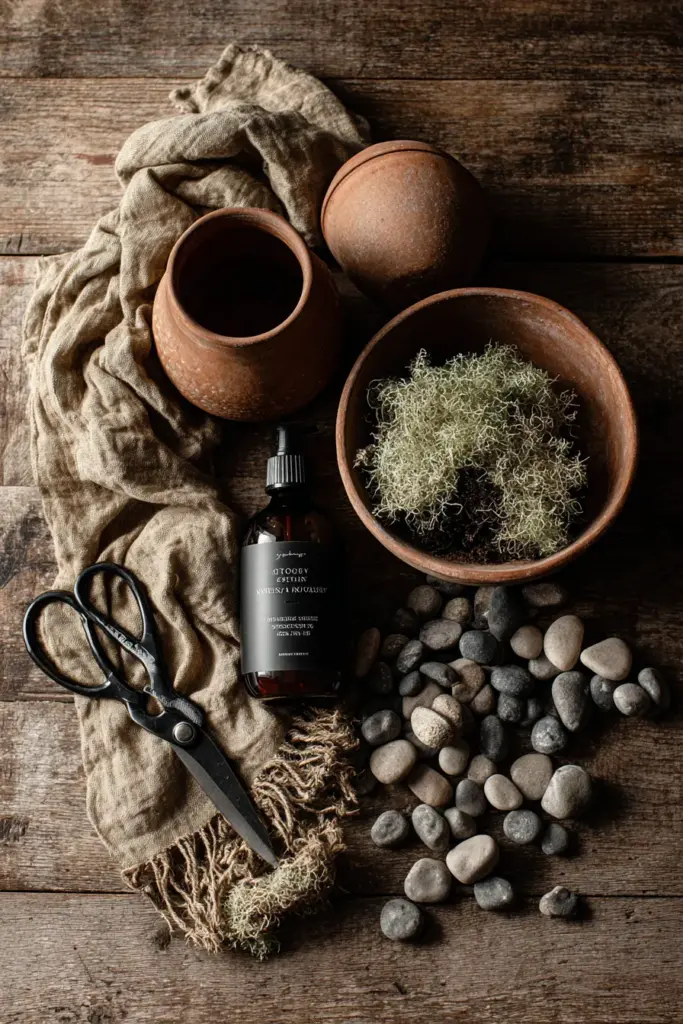
Watering a vertical installation requires a little strategy. A drip-free watering can with a long spout gives you precision without splash. For felt pocket installations, insert self-watering inserts or use ceramic moisture stakes — they release water slowly and keep your wall looking tidy.
For a more hands-off approach, group your pots in a shallow tray on the lowest shelf and use bottom-watering: pour water into the tray and let the pots drink from below. This is particularly effective for terracotta, which wicks moisture upward naturally.
Propagation: Growing Your Wall for Free
One of the quiet joys of a Japandi plant wall is that it can grow itself. Pothos, philodendron, and rubber plants propagate easily from stem cuttings placed in a glass of water on a windowsill. Within two to four weeks, you have new plants ready for new pots — and your wall expands without any additional cost.
Are There Japandi Wall Planters? Sourcing and Shopping Guide
Japandi wall planters exist across a range of price points and styles. Here is what to look for:
- Hanging wooden planter sets with natural rope — ideal for air plants and small trailing varieties
- Minimalist ceramic wall-mounted holders in matte white or warm grey — perfect for single stems or small succulents
- Macramé wall hangers in natural cotton or jute — they add texture and warmth while holding medium pots
- Bamboo wall shelves — particularly beautiful for a Japandi plant wall with a more Japanese-inspired character
For locally sourced options in the Philippines, bamboo suppliers in Calabarzon offer raw material for DIY builds at a fraction of imported shelf costs. Pairing local bamboo with terracotta pots from your nearest palengke creates a Japandi plant wall that is both beautiful and deeply rooted in place.
Quick-Reference Checklist: Your Japandi Plant Wall Essentials
- Choose low-maintenance, sculptural plants: snake plant, ZZ plant, pothos, peace lily, philodendron
- Use terracotta or matte ceramic pots in neutral tones — no gloss, no busy patterns
- Build with sustainable materials: reclaimed wood, bamboo, natural cord, felt pockets
- Stagger shelf heights and leave deliberate negative space
- Pair with warm indirect lighting and natural textiles
- Water with intention: drip-free cans, self-watering inserts, or bottom-watering trays
- Propagate for abundance — grow your wall for free
- Incorporate kokedama or air plants for wabi-sabi texture
- Style with cozy Japandi furniture in warm neutrals below or beside the wall
- Revisit your wall seasonally — rotate plants, refresh pots, let it evolve
Conclusion
A Japandi plant wall is not just a design choice. It is a daily act of slowing down. It is the soft exhale of morning light through a pothos leaf. It is the earthy scent of damp terracotta after watering. It is the quiet pride of having built something with your hands from reclaimed wood and natural cord and seeds of patience.
At ERYLIN, we believe that the most beautiful homes are not the most expensive ones — they are the most felt ones. The spaces where materials speak honestly, where nature is invited in without performance, and where every corner holds some small, unhurried beauty.
Build your wall slowly. Let it grow at its own pace. And let it remind you every morning that calm is not something you find. It is something you create.
FAQs
What plants are best for a Japandi plant wall?
The best plants for a Japandi plant wall are low-maintenance and sculptural. Top choices include the snake plant, ZZ plant, pothos, peace lily, rubber plant, and parlor palm. For hanging elements, air plants and kokedama moss balls add beautiful wabi-sabi texture without requiring soil.
How do I style plants in a Japandi interior?
Style Japandi plants in terracotta or matte ceramic pots in neutral tones. Pair them with natural materials like rattan, linen, and raw wood. Use soft indirect lighting and always leave deliberate negative space between plants — restraint is the essence of Japandi style.
Can I build a DIY Japandi vertical plant wall on a budget?
Absolutely. A reclaimed wood frame with felt pockets, jute cord, and locally sourced terracotta pots can be built for under ₱2,500 or approximately $45 USD. In the Philippines, bamboo from Calabarzon is an affordable and beautiful alternative to imported wood shelving.
Are there Japandi wall planters available to buy?
Yes — hanging wooden planter sets, macramé wall hangers, matte ceramic holders, and bamboo wall shelves all work beautifully in a Japandi plant wall. Look for pieces in natural materials with minimal ornamentation. Etsy, local craft markets, and home décor stores carry a wide range of options at varying price points.
Which indoor plants fit a Japandi living room with low light?
For low-light living rooms, choose the ZZ plant, snake plant, peace lily, pothos, or parlor palm. These plants thrive with minimal sunlight and maintain the calm, sculptural quality that Japandi interiors call for. Avoid flowering or brightly coloured plants — they disrupt the neutral, nature-grounded palette.