
Table of Contents
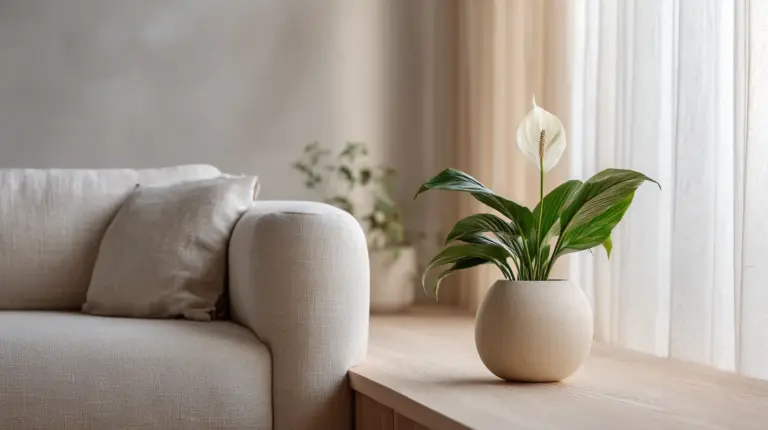
There is a particular kind of stillness that lives in a well-tended room. The light falls softly. A single plant sits on a pale shelf, its rosette of leaves catching the morning glow. Nothing shouts for your attention — and yet everything feels considered, alive, and deeply calm.
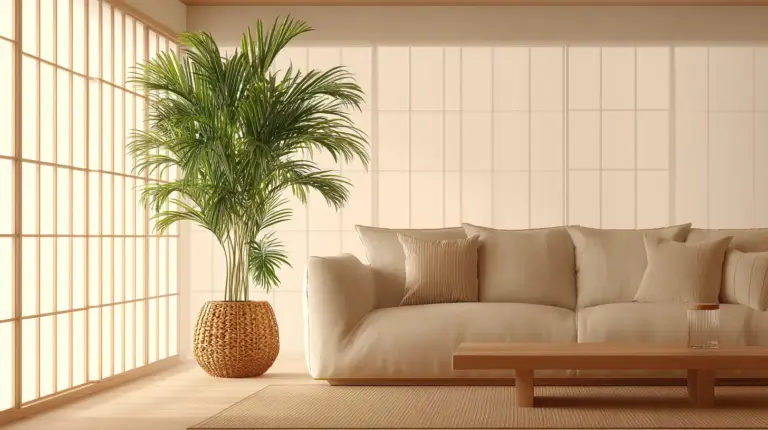
That is the feeling at the heart of Japandi — the seamless marriage of Japanese minimalism and Scandinavian warmth. And succulents, with their sculptural forms and quiet resilience, are one of the most effortless ways to bring that feeling home.
Whether you have a sun-drenched windowsill in Silang or a compact apartment corner in Manila, Japandi succulents offer texture, life, and beauty without demanding much in return. They suit the philosophy perfectly: intentional, enduring, and never excessive.
In this guide, we’ll walk you through everything — from choosing the right varieties and pots, to arranging them with purpose and caring for them through the seasons. Let’s begin.
What Makes a Plant “Japandi”?
Not every plant belongs in a Japandi space, and that’s intentional. The Japandi aesthetic prizes restraint. A plant earns its place not through abundance or drama, but through form.
Japandi plants share a few key qualities: clean silhouettes, neutral or muted coloring, and a quiet architectural presence. They tend to look deliberate — like a sculptor placed them there.
Succulents check every box. Their geometry is precise. Their colors — dusty rose, slate blue, sage green, powdery grey — align naturally with the warm beige, cream, and muted earth tones of a Japandi palette. And their low-maintenance nature embodies wabi-sabi, the Japanese appreciation for imperfect, unhurried beauty.
The Philosophy Behind the Plant
In Japanese design, nature is never decoration. It is presence. A single branch, a smooth stone, a carefully chosen plant — each one holds meaning. Succulents, in their self-sufficiency and slow growth, mirror this mindfulness beautifully.
Scandinavian design adds the layer of practicality. A plant that thrives with minimal fuss, survives cooler light, and looks effortlessly composed fits the Nordic principle of hygge — cozy, unpretentious, real.
Together, Japandi succulents become more than pretty objects. They become small anchors of calm in your everyday space.
The Best Succulents for Japandi Interiors
Choosing the right variety matters. Not all succulents carry that quiet, sculptural energy — some feel too spiky, too tropical, or too fussy. Here are the ones that belong in a Japandi home.
Echeveria — The Classic Rosette
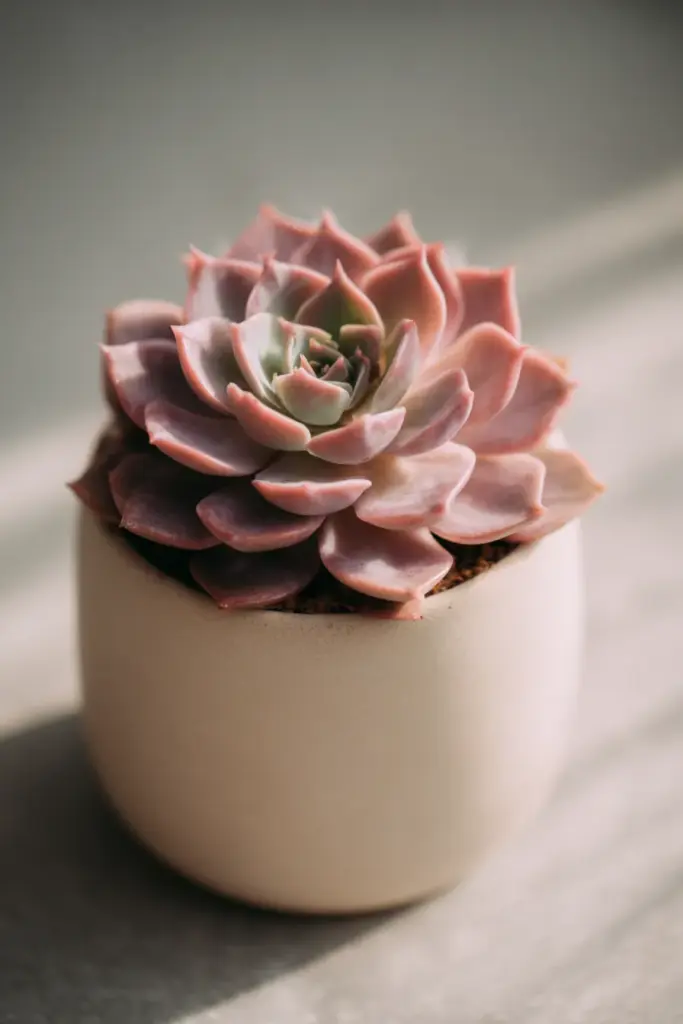
Echeveria is perhaps the most Japandi succulent in existence. Its symmetrical rosette — ringed layers of soft petals in lavender, blush, or grey-green — looks like it was designed for a minimalist shelf.
It thrives in bright, indirect light and asks for very little water. Place it in a shallow matte ceramic bowl and let it breathe.
Haworthia — The Low-Light Companion
If your space leans toward softer, north-facing light, Haworthia is your answer. Its upright, striped form has a quiet graphic quality — precise but never cold.
Haworthia tolerates lower light better than most succulents, making it ideal for shelves away from windows, bathroom ledges, or study corners. It pairs beautifully with dark, unglazed pottery.
Jade Plant (Crassula ovata) — Living, Breathing Sculpture
The jade plant grows slowly into something that looks genuinely ancient. Its thick, rounded leaves and woody stem give it the presence of a miniature tree — deeply wabi-sabi in spirit.
In the Philippines, jade plants thrive in warm, humid climates. Give it a terracotta pot and a bright spot, and it will reward you for years.
Sedum — Texture in Multiples
Sedum varieties (like the trailing Sedum morganianum or the compact Sedum rubrotinctum) offer soft visual texture without chaos. Their small, bead-like leaves create a gentle rhythm when grouped together.
Use sedum in hanging planters or cascading over the edge of a shelf for organic movement — always purposeful, never cluttered.
Aloe Vera — Form and Function
Aloe vera is the rare plant that is both beautiful and useful. Its spiky, upright form adds sculptural height, its silvery-green tones pair with linen and wood, and its gel soothes skin after sun exposure.
It also purifies the air, quietly improving the quality of the room around it — a practical touch that Japandi design always welcomes.
| Succulent | Light Needs | Water Frequency | Best Placement | Japandi Quality |
|---|---|---|---|---|
| Echeveria | Bright indirect | Every 10–14 days | Windowsill, shelf | Soft rosette geometry |
| Haworthia | Low to medium | Every 14–21 days | Shelf, desk, bathroom | Graphic, upright form |
| Jade Plant | Bright indirect | Every 10–14 days | Table, floor corner | Tree-like, wabi-sabi |
| Sedum | Bright indirect | Every 7–10 days | Hanging, shelf edge | Textured, trailing |
| Aloe Vera | Bright direct | Every 14–21 days | Near window | Architectural, useful |
How to Pot Your Japandi Succulents
The container is as important as the plant. In a Japandi space, the pot carries the same visual weight as the succulent itself.
Materials That Belong
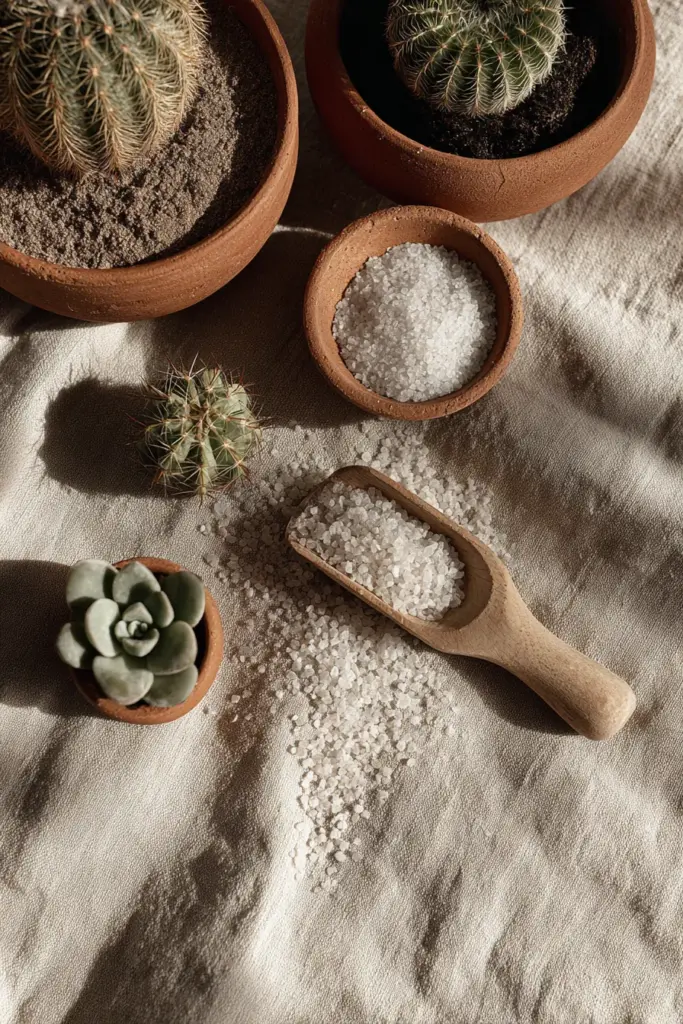
Choose matte, unglazed terracotta for warmth and breathability — the rough texture grounds even the most delicate rosette. Neutral ceramics in cream, stone, or charcoal bring the right stillness. Natural materials like concrete, raw wood, or woven rattan add organic texture without competing with the plant.
Avoid bright colors, glossy finishes, or overly decorative patterns. The pot should whisper, not shout.
Soil Mix for Success
Succulents need excellent drainage. A simple, reliable mix: 50% cactus soil + 50% perlite. This keeps roots airy, prevents waterlogging, and suits the warm, humid climate of the Philippines particularly well.
Add a thin layer of fine gravel or sand on top for a polished, minimal finish that also discourages overwatering.
Budget-Friendly Potting Ideas
- Upcycle small wooden boxes or trays lined with plastic for a rustic, Japandi-feel planter
- Source terracotta pots from local markets or Shopee for under PHP 150
- IKEA’s CHIAFRÖN or similar bamboo trays make excellent plant staging platforms
- Group three small terracotta pots of varying heights for an effortless arrangement under PHP 500
Styling Japandi Succulents in Your Space
Placement is everything. A succulent placed thoughtlessly becomes clutter. A succulent placed with intention becomes a focal point.
The Rule of Three (and Odd Numbers)
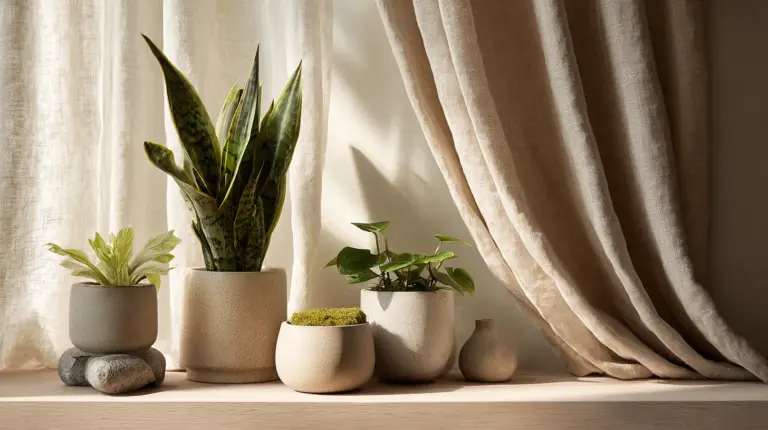
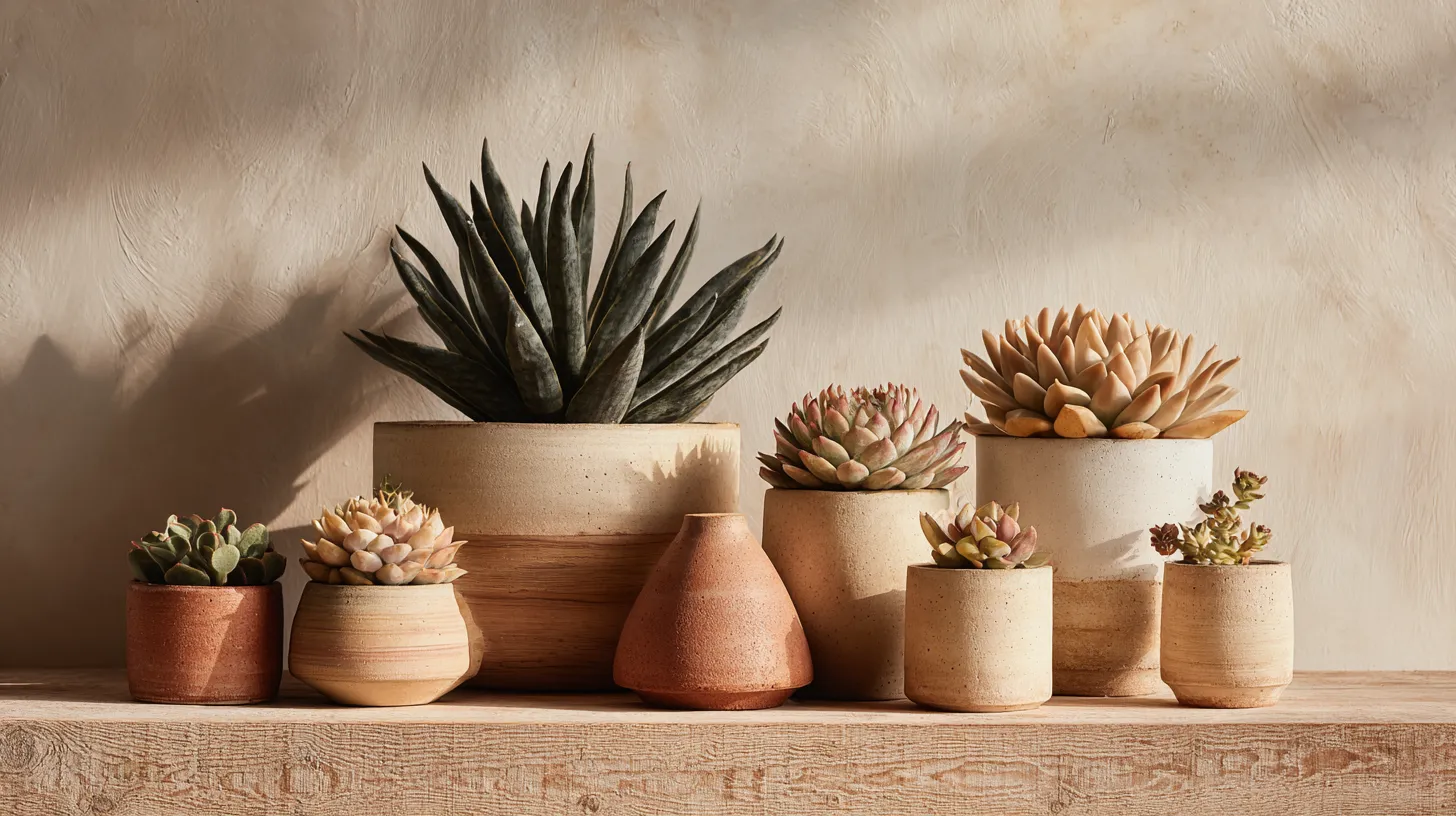
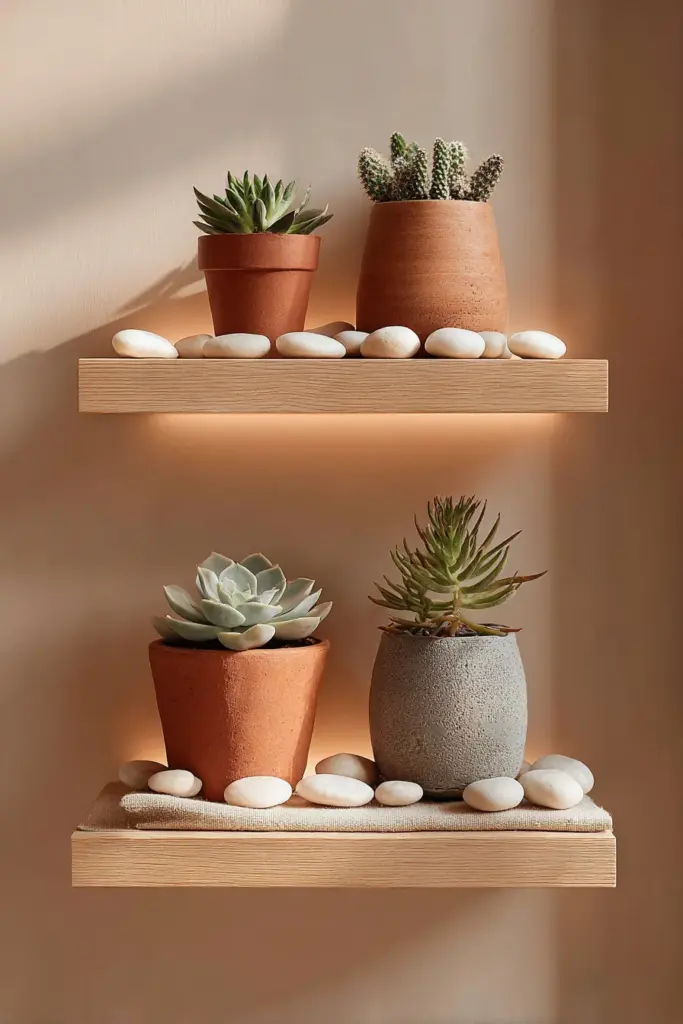
Odd-numbered groupings feel more natural than even ones. Three succulents on a shelf — one tall, one mid-height, one low — create a gentle visual rhythm. Leave breathing space between each. Empty space is not wasted in Japandi; it is part of the design.
Vertical and Layered Arrangements
In small spaces — a studio apartment, a compact living room — think vertically. Floating shelves in light wood or white hold succulents at different heights, drawing the eye upward and making the room feel taller, more expansive.
Pair your succulents with other Japandi-friendly accents: a smooth river stone, a small ceramic vessel, a folded linen cloth. Let each object have room to be seen.
Where to Place Them
- Living room: A jade plant on a low wooden side table, beside a warm reading lamp
- Bedroom: Two small haworthia on a floating shelf flanking a wooden frame
- Bathroom: A sedum in a concrete pot on the ledge — humidity suits it well
- Home office: An echeveria on your desk, a quiet companion during long work hours
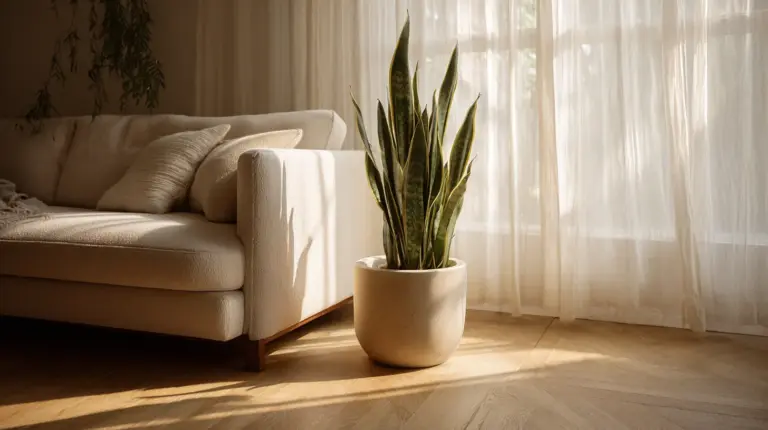
- Entryway: A tall aloe vera in a stone pot beside the door — welcoming and sculptural
Lighting Pairings
Natural light is always best. But when it fades, warm LED lighting (2700K–3000K) cast over succulents creates a soft golden glow that enhances their dusty, muted tones beautifully. Avoid cool white light, which flattens their natural warmth.
Caring for Japandi Succulents: A Seasonal Guide
Succulents are forgiving, but they thrive with a little rhythm.
The Golden Rule: Less Water Than You Think
Overwatering is the most common mistake. In a Japandi home, restraint extends to the watering can too. Always allow the soil to dry completely between waterings. In the Philippine climate — warm and humid — this may mean watering even less frequently than standard guides suggest.
Press your finger an inch into the soil. If it feels damp, wait. If it’s completely dry, water deeply until it drains from the bottom, then leave it alone.
Seasonal Care Calendar
| Season | Care Focus |
|---|---|
| Dry Season (Nov–Apr) | Water every 10–14 days; maximum light |
| Wet Season (May–Oct) | Reduce watering; move pots away from rain exposure |
| Year-round | Wipe leaves gently with a damp cloth to remove dust |
Propagation: Growing Your Collection for Free
One of the quiet joys of succulents is how generously they multiply. Leaf propagation — gently twisting a healthy leaf from an echeveria or sedum and laying it on dry soil — produces new rosettes within weeks. No cost. No waste. A deeply satisfying, slow process that fits the Japandi spirit beautifully.
Key Takeaways
- Choose sculptural varieties like echeveria, haworthia, jade plant, sedum, and aloe vera for authentic Japandi styling
- Use neutral, matte pots in terracotta, concrete, or ceramic — the container is part of the composition
- Mix 50% cactus soil + 50% perlite for healthy, well-draining roots
- Group in odd numbers with intentional breathing space between plants
- Water less than you think — let soil dry completely before watering again
- Pair with warm lighting (2700K–3000K) to enhance the natural warmth of the plants
- Propagate from leaves to grow your collection sustainably and affordably
- Budget PHP 300–500 for a complete small Japandi succulent setup using local sources
Conclusion
There is something quietly revolutionary about choosing simplicity. About placing one perfectly formed echeveria on a bare wooden shelf and deciding that is enough — more than enough.
Japandi succulents don’t fill a room. They settle it. They invite you to slow down, to notice the way light moves across a rosette in the afternoon, to appreciate the texture of raw clay against a pale wall.
Your home doesn’t need to be a showroom. It needs to feel like you — calm, considered, and alive with small, beautiful things. Start with one plant. Find the right pot. Give it space to breathe.
That is where Japandi begins.
Frequently Asked Questions
Are succulents suitable for Japandi interiors?
Yes — succulents are among the most naturally Japandi plants available. Their clean geometric forms, muted coloring, and minimal care requirements align perfectly with the Japandi philosophy of beauty through restraint. Pair them with neutral ceramic or terracotta pots for an authentic look.
What plants look best in a Japandi-style home?
Echeveria, haworthia, jade plant, ZZ plant, snake plant, and aloe vera all suit Japandi spaces well. The key is choosing plants with a sculptural, architectural quality — clean lines, subdued color, and a calm presence.
What is Japandi houseplant styling?
Japandi houseplant styling means arranging low-maintenance, visually intentional plants in natural, neutral containers with deliberate spacing. It borrows from Japanese wabi-sabi — embracing imperfect, organic beauty — and Scandinavian practicality. Less is always more.
How do I choose the right succulents for a small space?
For small spaces, choose compact varieties like haworthia or echeveria and group them vertically on floating shelves. Odd-numbered clusters in graduating heights create visual interest without crowding. Keep pots small and neutral so they recede gracefully into the overall composition.
What are the best low-maintenance plants for a Japandi living room?
Succulents like echeveria and jade plant top the list, alongside the ZZ plant and snake plant for lower-light areas. All thrive with infrequent watering, suit neutral pots, and require minimal attention — perfect for a living room that prioritizes calm over constant upkeep.