
Table of Contents
By ERYLIN — Your Guide to Calm, Considered Living
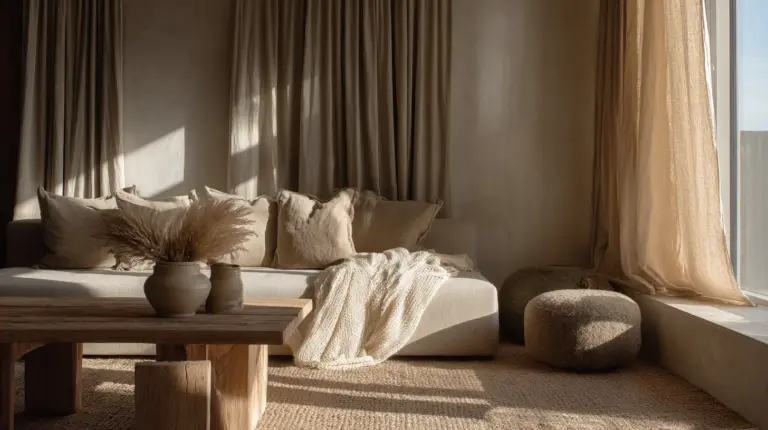
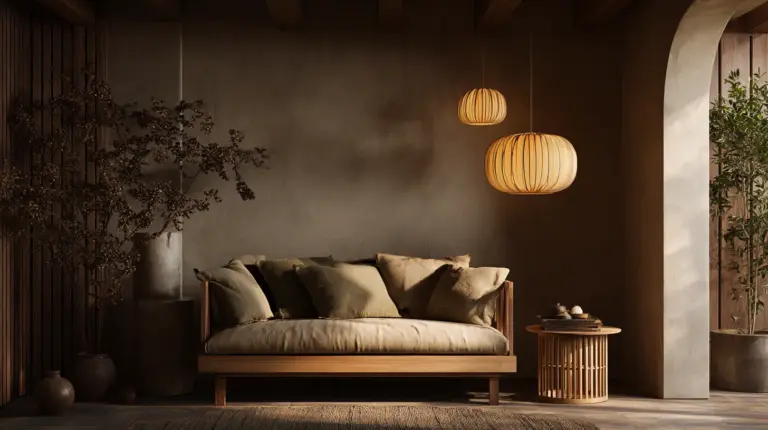
There is a kind of room that exhales when you walk into it. No clutter reaching for your attention. No noise competing for your gaze. Just light, texture, and a gentle invitation to slow down. That room has a name — and it’s been quietly reshaping the way the world thinks about home.
Japandi is not a trend. It is a philosophy — a way of seeing your space as an extension of your inner life. It asks you to choose less, but choose beautifully. To find comfort not in excess, but in intention.
At ERYLIN, we believe your living room should feel like a breath of fresh air — one that grounds you, restores you, and reflects who you truly are. And Japandi, at its core, is exactly that. A design language built for people who crave calm.
This is your guide to understanding the Japandi living room philosophy — and bringing it gently, authentically, into your home.
What Is the Philosophy Behind Japandi Living Rooms?
Japandi is the union of two ancient traditions: Japanese wabi-sabi and Scandinavian hygge.
Wabi-sabi is the Japanese art of finding beauty in imperfection and impermanence. A handthrown ceramic with an uneven rim. A linen cushion that softens with each wash. A wooden shelf that bears the gentle marks of time. It teaches us that nothing needs to be perfect to be beautiful.
Hygge (pronounced hoo-gah) is the Danish and Norwegian practice of cultivating coziness and warmth — not through luxury, but through presence. A candle on a low table. A wool throw draped just so. The feeling that you are, right now, exactly where you need to be.
Together, these two traditions create something greater than either alone. Japandi is warmth without clutter. Simplicity without coldness. It is the living room that feels like a sanctuary.
How Does Japandi Differ From Japanese or Scandinavian Design Alone?
This is a question worth sitting with, because the difference is subtle but meaningful.
Japanese minimalism tends toward the austere — sparse interiors, structured silences, a near-ceremonial relationship with each object. It can feel transcendent, but sometimes cool.
Scandinavian design leans warmer, with its love of candlelight, cozy textiles, and functional beauty. But it can occasionally veer into the overly casual or the decoratively busy.
Japandi finds the middle path. It takes Japanese restraint and fills it with Scandinavian warmth. It takes Scandinavian coziness and sharpens it with Japanese intentionality. The result is a room that feels both serene and liveable — elevated, yet deeply human.
| Design Style | Strengths | What Japandi Adds |
|---|---|---|
| Japanese Minimalism | Serenity, restraint, wabi-sabi | Warmth, softness, approachability |
| Scandinavian | Coziness, functionality, hygge | Discipline, visual quietude, craftsmanship |
| Japandi | Both — balanced and grounded | The best of two design worlds |
The 10 Core Principles of Japandi Living Room Design
1. Embrace Negative Space
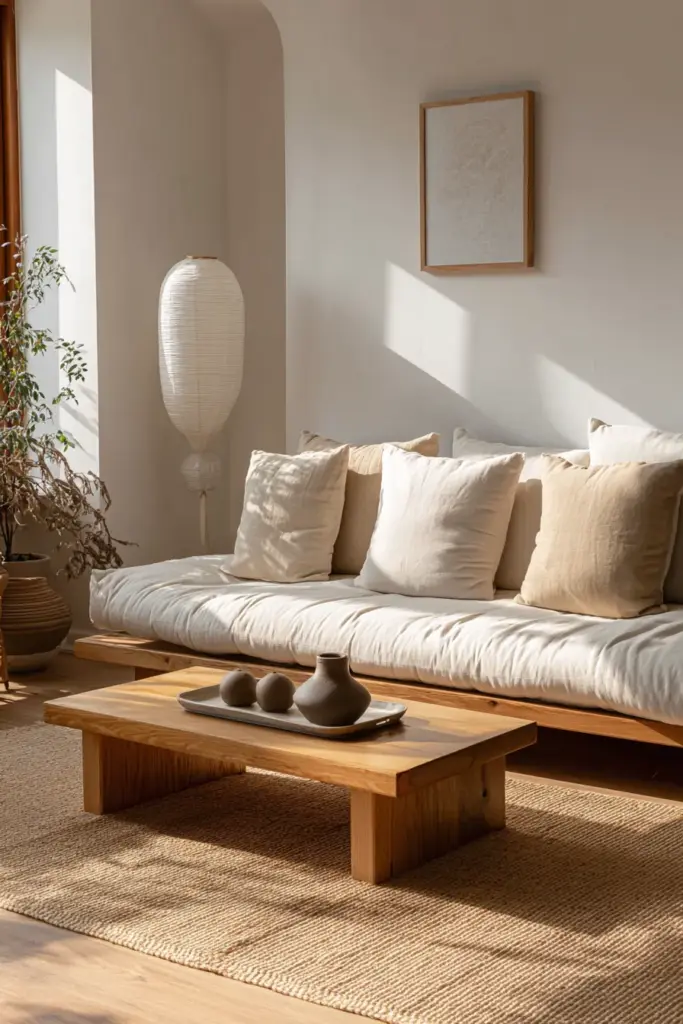
In Japandi philosophy, empty space is not emptiness — it is breathing room. Let your walls rest. Let surfaces stay clear. The space between objects is as important as the objects themselves.
2. Choose Natural Materials
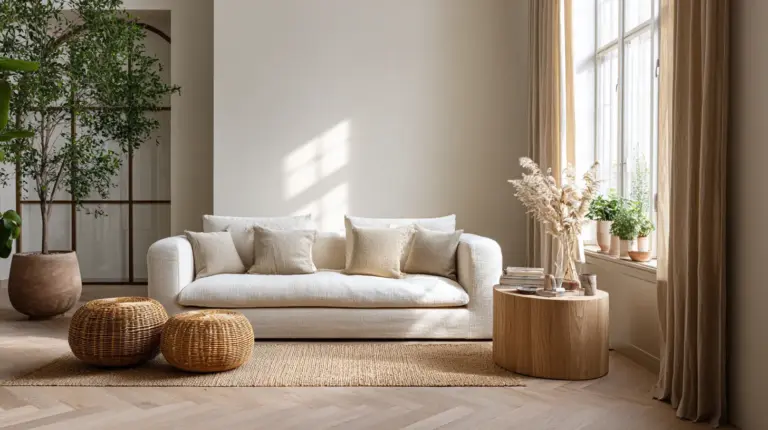
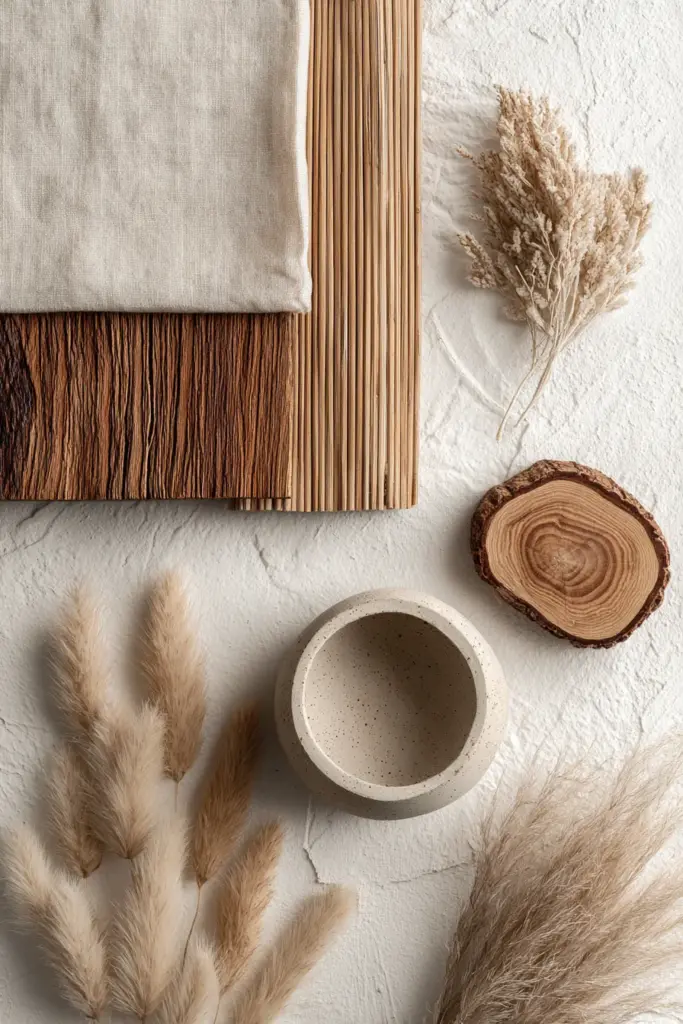
Touch matters in Japandi. Reach for light oak, rattan, linen, bamboo, and raw clay. These materials carry a warmth that manufactured surfaces cannot replicate — they feel honest, grounded, and alive beneath your fingertips.
3. Stay Within an Earthy Neutral Palette
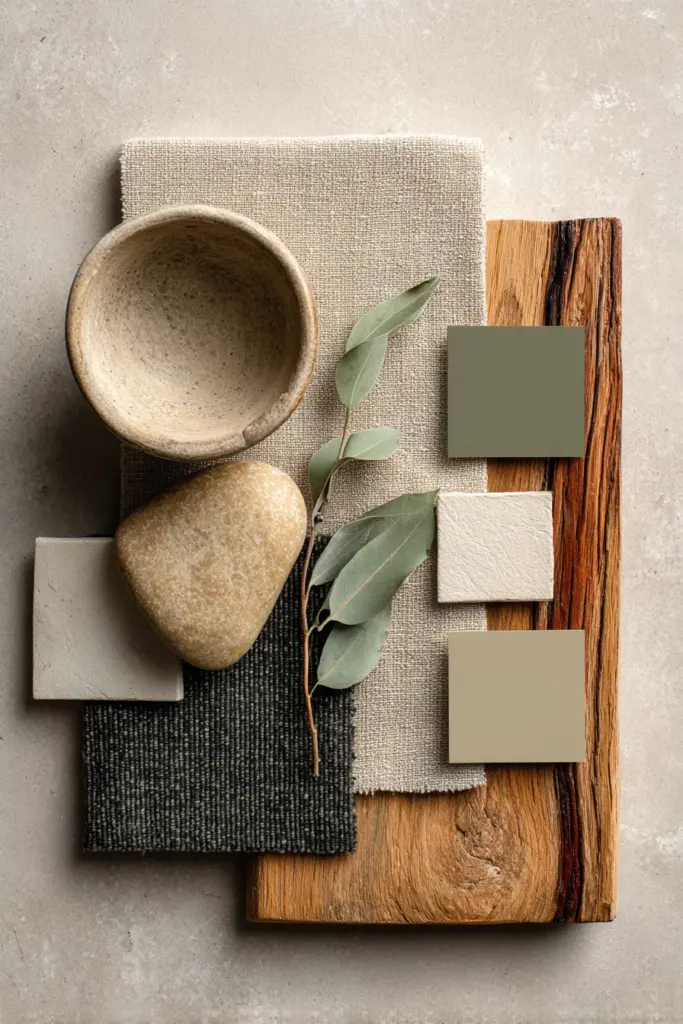
Build your colour story around nature. Think warm whites, soft beige, clay, charcoal, warm grey, and muted sage. These tones shift gently with the light throughout the day, keeping the room feeling fresh from morning to evening.
4. Keep Furniture Low-Profile
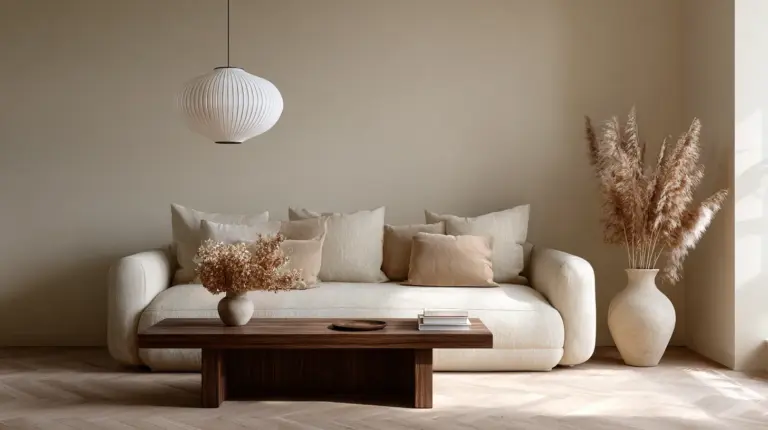
Japandi rooms stay close to the ground. Low sofas, floor cushions, and platform beds draw the eye downward, creating a sense of rootedness and calm. Look for clean-lined, low-profile furniture with legs in natural wood finishes.
5. Let in Natural Light
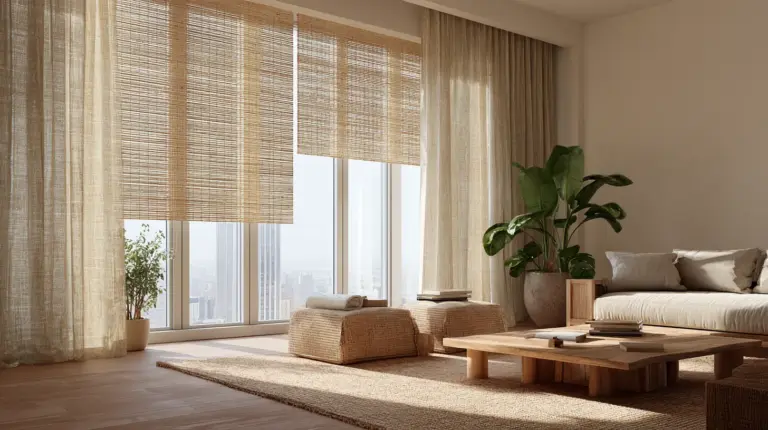
Light is a living element in Japandi design. Favour sheer linen curtains that filter sunlight softly rather than blocking it. Position mirrors intentionally to reflect garden views or the gentle movement of branches outside.
6. Curate, Don’t Collect
Every object in a Japandi room earns its place. A single ceramic vase. Three books, stacked. One textured throw. Decoration is chosen with care — and that restraint is what gives each piece meaning.
7. Layer Texture Instead of Colour
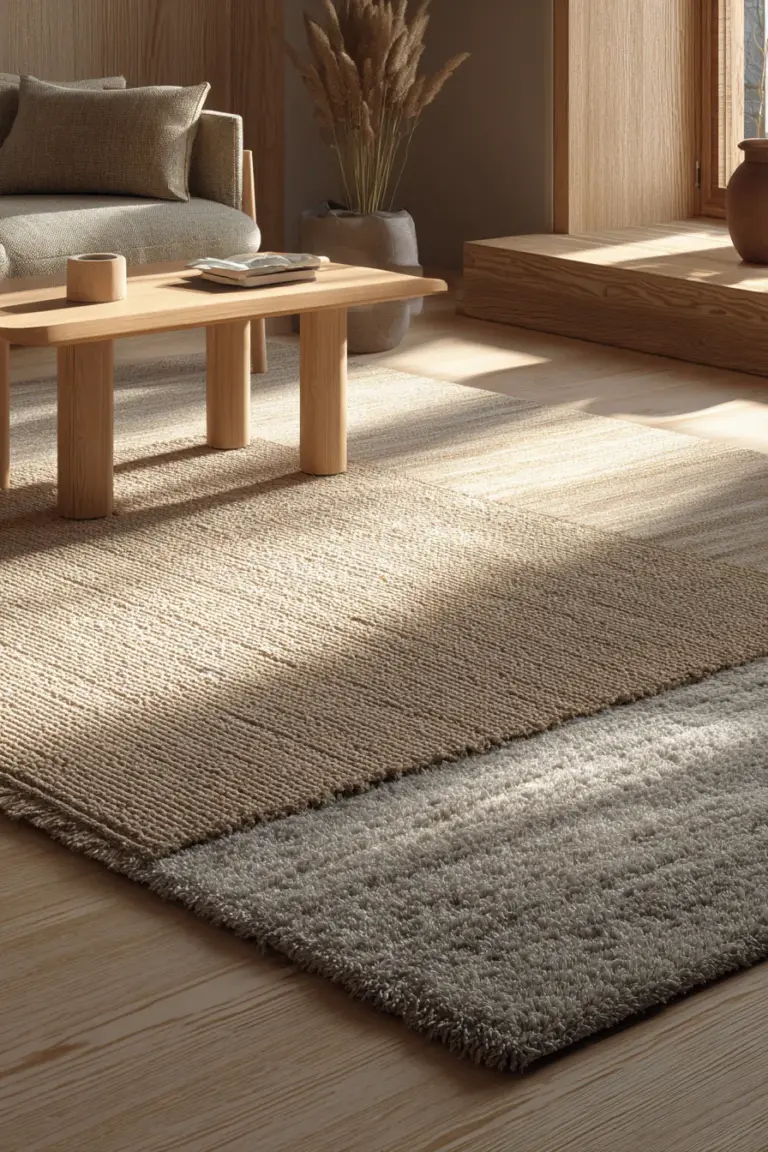
When colour stays quiet, texture speaks. A jute rug beneath a linen sofa. A boucle cushion against a matte clay wall. Woven baskets beside smooth wood shelving. Contrast textures to create visual depth without visual noise.
8. Integrate Biophilic Design
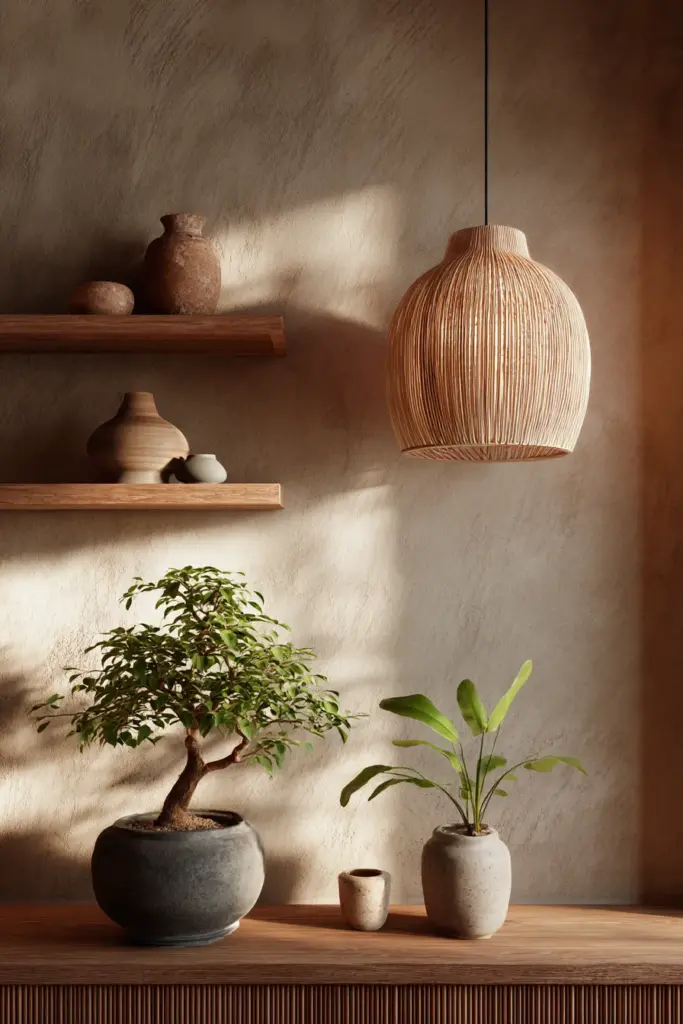
Japandi has always understood that nature heals. Beyond generic plant placement, think specifically: a bonsai on a low shelf as a living sculpture, peace lilies for both beauty and air quality, or snake plants that thrive in the warmth and humidity of Philippine homes. Position your seating to face a window with a garden view — nature as a design feature, not an afterthought.
9. Prioritise Functional, Multifunctional Pieces
Every item should serve a purpose — ideally more than one. A low bench that doubles as a coffee table. A rattan side table with hidden storage. In smaller Filipino homes where space is precious, multifunctional furniture is not a compromise — it is Japandi at its most practical.
10. Let Warmth Come From Light
Lighting in Japandi is layered and gentle — never harsh, never clinical. Warm-toned bulbs (2700K to 3000K), washi paper pendants, and dimmer-controlled floor lamps create a glow that shifts from bright and airy in the afternoon to intimate and amber in the evening.
What Colors and Materials Define Japandi Living Room Philosophy?
The Japandi palette is grounded in the earth. Think of the colour of sand at dusk, of dried clay, of the underside of a leaf — warm, muted, and natural.
Signature Japandi Colours:
- Warm white and off-white
- Stone and pebble grey
- Warm beige and clay
- Charcoal and slate
- Muted moss or sage green (used sparingly as an accent)
Signature Japandi Materials:
| Material | Feel | Best Used For |
|---|---|---|
| Light oak / ash wood | Warm, grain-forward | Shelving, coffee tables, flooring |
| Linen | Soft, breathable | Curtains, cushion covers, throws |
| Bamboo | Light, sustainable | Blinds, decorative trays, plant stands |
| Rattan | Woven, natural | Side tables, pendant shades, baskets |
| Raw clay / ceramic | Matte, tactile | Vases, bowls, decorative objects |
| Jute | Earthy, textured | Rugs, woven wall accents |
How to Create a Japandi Living Room on a Budget
The good news: Japandi is inherently an anti-excess philosophy. You are not buying more — you are buying better, and sometimes buying less.
Budget Japandi: Starting From PHP 50,000
Here is a practical framework for a Japandi transformation:
| Item | Budget Range (PHP) |
|---|---|
| Linen sofa cover or slipcover | 1,500 – 4,000 |
| Jute or wool area rug | 3,000 – 8,000 |
| Washi or rattan pendant light | 1,500 – 5,000 |
| Low wooden coffee table | 4,000 – 12,000 |
| Ceramic or clay vases (set of 2–3) | 800 – 2,500 |
| Linen or cotton throw | 600 – 2,000 |
| Indoor plants (bonsai, peace lily) | 500 – 3,000 |
| Low-VOC neutral wall paint | 2,000 – 5,000 |
| Estimated Total | ~14,000 – 41,500 |
DIY Japandi Ideas
IKEA hacks with soul. A basic IKEA KALLAX unit, stained with a warm walnut wood finish, becomes a grounded, Japandi-worthy shelving piece. Add woven baskets and a single trailing plant, and it feels intentional, not flat-pack.
Custom low bench. A simple low bench built from reclaimed wood — sanded smooth, left unfinished or treated with raw linseed oil — serves as a coffee table, extra seating, or a quiet display surface.
String art wall accent. Geometric string art in natural jute or linen cord adds warmth and texture to a bare wall without overpowering the room’s calm.
Sustainability and Japandi: A Natural Pairing
Japandi philosophy and sustainable living are not separate conversations — they are the same conversation.
Buy less, but choose well. A Japandi room resists the impulse to fill space. This means fewer purchases, less waste, and a slower, more considered relationship with consumption.
Seek renewable materials. Bamboo grows back. Linen is biodegradable. Rattan is naturally fast-growing. Philippine-sourced woods like acacia and molave offer local, sustainable alternatives to imported timber.
Upcycle with intention. A worn wooden chair, sanded and re-oiled, fits a Japandi room better than a mass-produced replacement. Wabi-sabi celebrates this — the mark of use is the mark of a life lived.
Choose low-VOC paints. The soft matte neutrals that define Japandi walls should also be gentle on your air quality. Low-VOC and zero-VOC paints are widely available in the Philippines and serve both your health and the environment.
Japandi and Wellness: The Room as Sanctuary
There is science behind why Japandi spaces feel the way they do.
Studies in environmental psychology consistently link negative space and visual order with reduced cortisol levels — the body’s primary stress hormone. Clutter, by contrast, signals unfinished work to the brain, keeping it in a low-level state of alert.
A Japandi living room, by design, quiets that signal. It says: there is nothing urgent here. Rest.
Plants deepen this effect. Bonsai trees, when tended, also offer a meditative practice — the slow, mindful act of pruning and shaping, a ritual of patience. Peace lilies and snake plants remove indoor air pollutants and thrive in tropical humidity, making them ideal for Philippine homes. Pothos and philodendrons, placed near natural light, bring movement and softness to a still room.
Japandi Living Room Checklist
Use this as your room audit — a gentle guide to where you are, and where you might gently go next.
Space and Layout
- Negative space is protected — surfaces are clear or deliberately curated
- Furniture is low-profile and arranged for flow, not for filling space
- The room feels open, not sparse — airy, not empty
Materials and Texture
- Natural materials dominate: wood, linen, rattan, clay, jute
- Textures are layered thoughtfully — soft against smooth, woven against matte
- Synthetic or highly reflective materials are minimised
Colour and Light
- Palette stays within warm neutrals and earthy tones
- Natural light is maximised through sheer or unlined curtains
- Lighting is warm-toned, dimmable, and layered
Objects and Decor
- Each decorative object is chosen with purpose
- No surface is filled for the sake of filling it
- Plants are present — specific species, thoughtfully placed
Sustainability
- Materials are natural, renewable, or upcycled where possible
- Paints and finishes are low-VOC
- Furniture is built to last, not to trend
Conclusion
A Japandi living room is not built in a weekend. It is grown, slowly, through the practice of choosing better — better light, better materials, better silence.
It is the scent of linen warmed by afternoon sun. The cool smoothness of a ceramic bowl on a wooden tray. The stillness of a room that asks nothing of you, and gives everything in return.
At ERYLIN, we design for people who believe that a home should restore you — not exhaust you. That beauty is not loudness, but depth. That the most elegant spaces are the ones that know when to be quiet.
Start with one corner. One material. One breath. The rest will follow.
Welcome home.
Frequently Asked Questions
What is the core philosophy of a Japandi living room?
Japandi living rooms are built on the fusion of Japanese wabi-sabi — the beauty of imperfection and impermanence — and Scandinavian hygge — the cultivation of warmth and coziness. Together, they create spaces that are minimalist but never cold, serene but never sterile. Every element is chosen with intention, and nothing occupies space without earning it.
How is Japandi different from plain minimalism?
Minimalism can sometimes tip into severity. Japandi adds warmth — through natural textures like linen and rattan, through soft candlelight and washi lamp shades, through the deliberate presence of living plants. It is minimalism with a heartbeat.
What are the best plants for a Japandi living room in the Philippines?
In a tropical climate, peace lilies, snake plants, pothos, and bonsai all thrive well. Peace lilies tolerate indirect light and high humidity. Snake plants are near indestructible and purify the air. Bonsai, while requiring more care, doubles as a meditative practice and a living sculpture in the Japandi tradition.
Can I create a Japandi living room in a small space?
Absolutely — and in many ways, Japandi is made for smaller homes. Its emphasis on negative space, low-profile furniture, and multifunctional pieces means it adapts beautifully to compact layouts. A convertible sofa, a low bench with hidden storage, and a decluttered palette can transform even a modest room into a place of calm.
Do I need to repaint my walls to achieve a Japandi look?
Not necessarily. If your walls are a neutral tone — white, soft grey, or warm beige — you may already have a strong Japandi foundation. Focus first on textures, lighting, and decluttering. If you do paint, choose a warm matte finish in a natural earthy tone, and opt for a low-VOC formula for both your health and the environment.