
Table of Contents
There is something quietly powerful about a well-dressed window. It holds light, softens edges, and tells the room what kind of place it wants to be. In a small living room, that power is amplified — the wrong treatment can close a space in, while the right one can make it breathe.
At ERYLIN, we believe every room deserves to feel considered, no matter its size. A compact living room is not a limitation. It is an invitation to be intentional — about fabric, scale, color, and the way natural light moves through your day.
This guide walks you through everything: the styles that work, the mistakes that shrink, the tricks that stretch, and the specific scenarios that most guides forget to address. Whether you live in a cozy condo, a rental with awkward windows, or a vintage flat with low ceilings, there is a treatment here that will make your space feel exactly as it should — calm, open, and deeply livable.
Let us find it together.
Why Window Treatments Matter More in Small Living Rooms
In a large room, a bulky curtain panel is a style choice. In a small one, it is a spatial decision. Every inch of visual weight counts when square footage is limited.
The right window treatment does three things at once: it manages light, offers privacy, and visually expands the room. When it does all three with restraint and beauty, the entire space shifts. Walls seem to recede. Ceilings seem to lift. The room exhales.
That is the goal — and it is entirely achievable, even on a modest budget.
Choosing the Right Style: A Quick-Glance Guide
Before diving deeper, use this at-a-glance table to match your primary concern to the best treatment type.
| Your Priority | Best Treatment Option |
|---|---|
| Make the room feel larger | Sheer curtains hung ceiling-to-floor |
| Maximum light + privacy | Solar shades or sheer roller shades |
| Clean, minimal look | Roller shades in a wall-matching tone |
| Rental-safe install | Tension rods or no-drill cellular shades |
| Low ceiling fix | Floor-to-ceiling drapery panels |
| Street-facing privacy | Top-down bottom-up cellular shades |
| Warmth and texture | Roman shades in linen or cotton |
| Budget-friendly elegance | Sheer curtain panels on a simple rod |
The Styles That Work Best
Sheer Curtains: Light, Air, and Visual Space
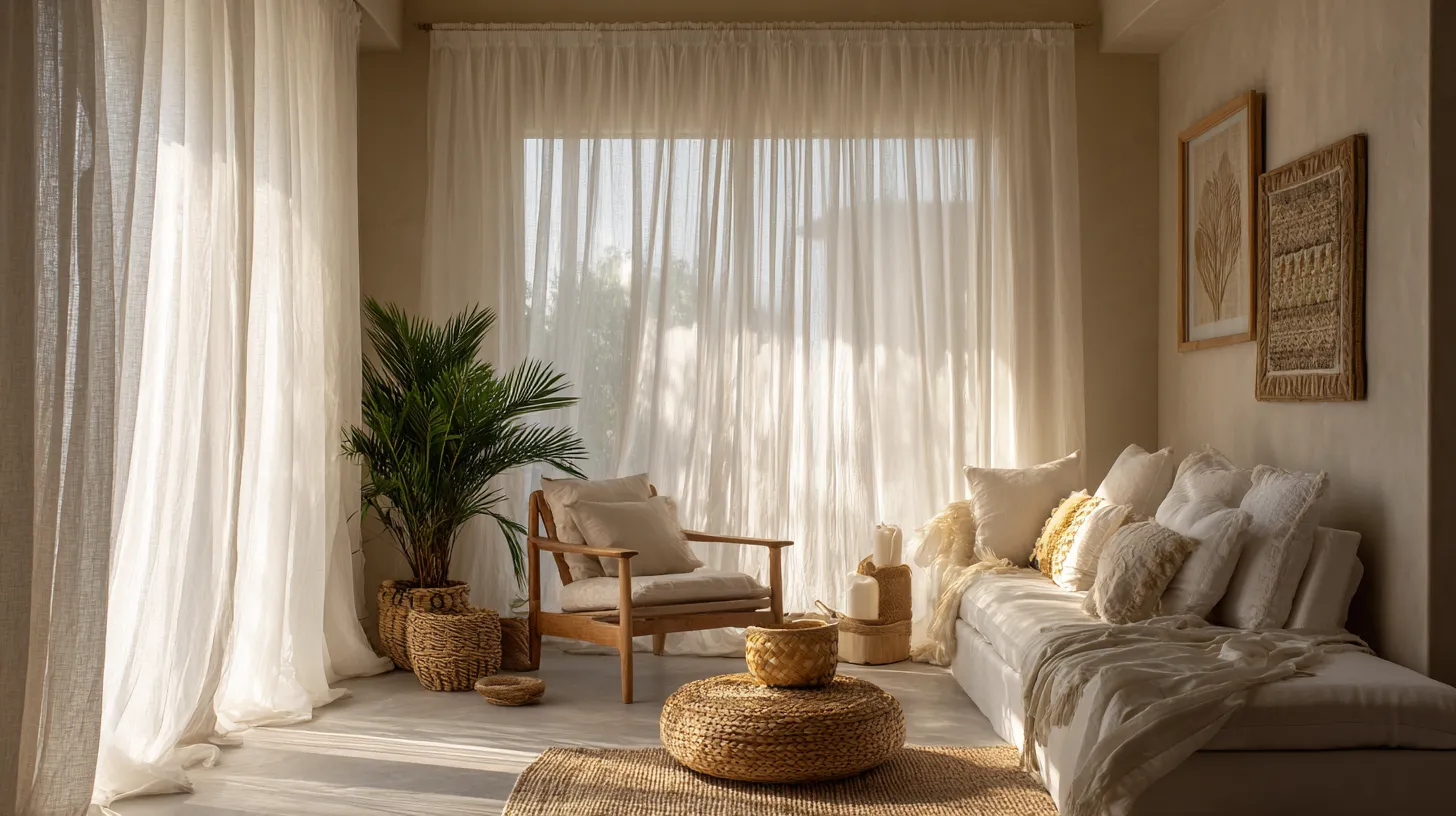
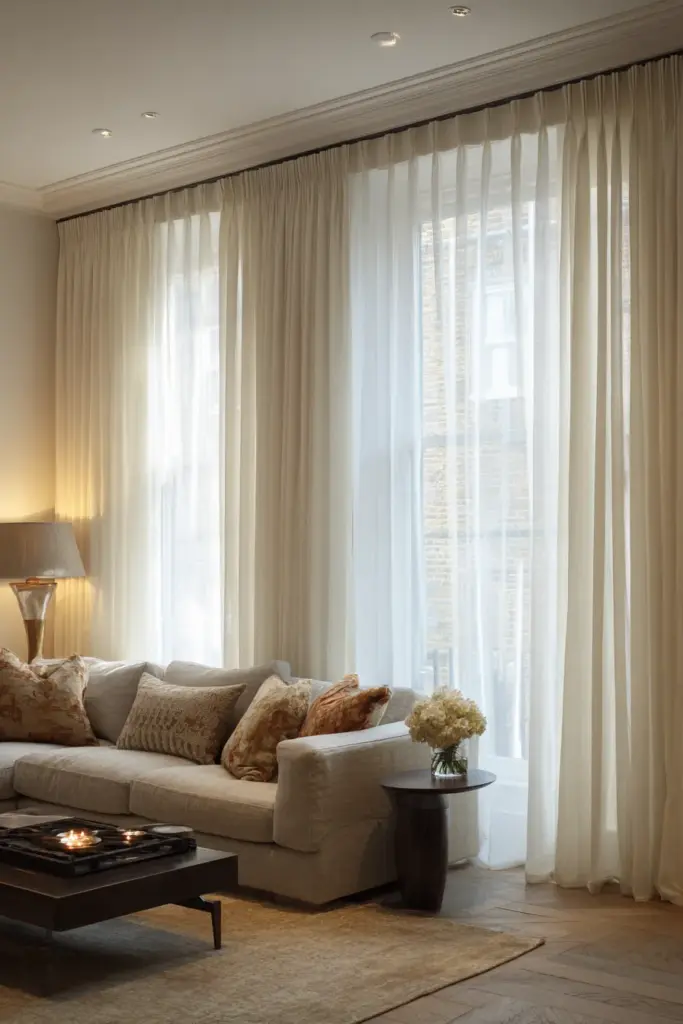
Few things transform a small room as effortlessly as sheer curtains. They filter light into something soft and golden, blur the hard line of the window frame, and create the illusion of a wall that continues rather than stops.
Choose sheers in white, ivory, or the palest sand. Hang them close to the ceiling — ideally just a few inches below the crown molding — and let them pool very slightly on the floor. This single trick creates the sense of height and continuity that small rooms crave.
Sheer curtains are especially effective in street-facing living rooms where you want filtered privacy without sacrificing daylight. Pair them with a simple matte black or brushed brass rod for that modern rustic edge.
Roller Shades: The Streamlined Essential
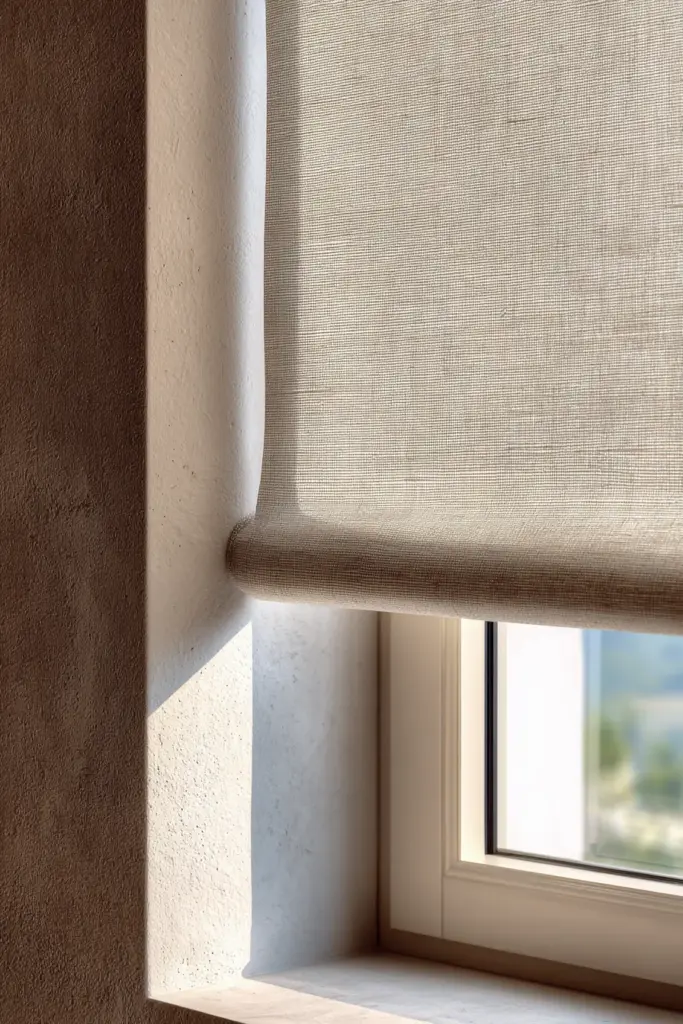
Roller shades are the quiet workhorse of small-space design. When rolled up, they nearly disappear — leaving the window clean, the view open, and the room feeling larger. When down, they provide a smooth, uninterrupted plane of color or texture.
Choose a shade tone that closely matches your wall color. This is one of the most effective visual tricks in small-room design: when the treatment reads as part of the wall rather than a separate element, the eye moves through the space without interruption, creating a sense of expansion.
Solar shades are a particularly elegant variation. Made from an open-weave mesh, they reduce glare and UV exposure while preserving your view entirely — ideal for south- or west-facing windows that flood with afternoon light.
Roman Shades: Softness with Structure
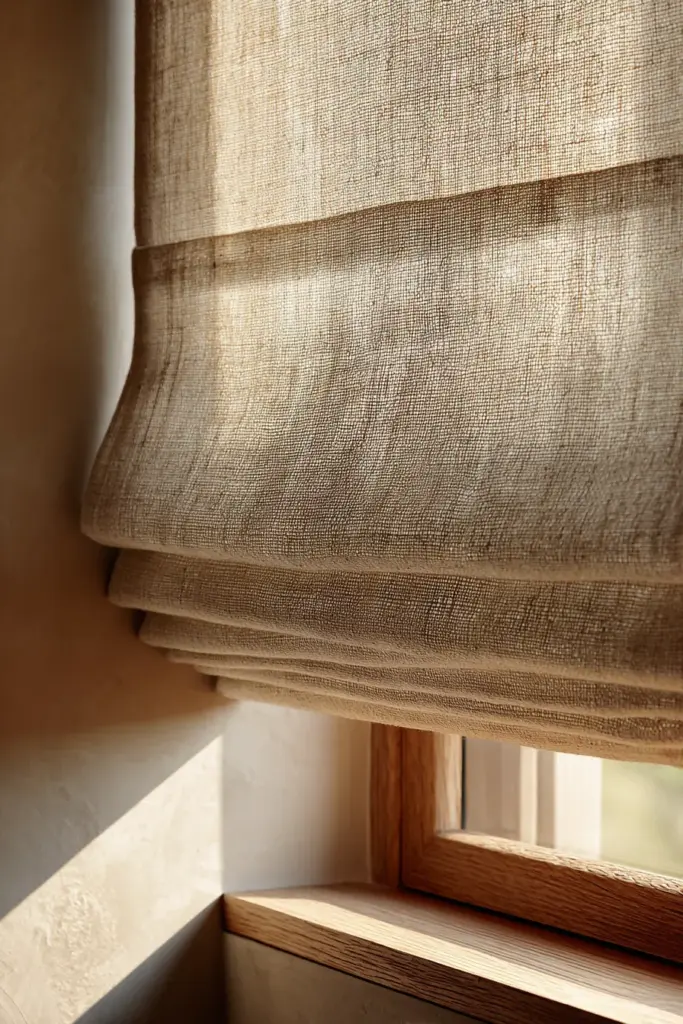
Roman shades bring something roller shades cannot: warmth. When raised, they stack into soft, sculptural folds that feel handcrafted and unhurried. When lowered, they offer complete coverage with a quietly tailored look.
For small living rooms, choose a flat Roman shade rather than a hobbled or looped style — the flat fold is cleaner, less visually heavy, and more at home in modern rustic interiors. Linen, cotton, and textured weaves are ideal; they hold the light beautifully and add tactile richness without overpowering the space.
Roman shades work especially well on narrower windows, where a full curtain panel might feel like too much. They also layer beautifully beneath a sheer curtain panel if you want the option of both privacy and softness.
When Roman Shades Beat Roller Shades
- When you want fabric warmth and visible texture
- On narrower windows where curtain panels feel overwhelming
- In rooms with natural materials like wood, rattan, or stone
- When you want a custom, considered look without custom pricing
When Roller Shades Beat Roman Shades
- When total visual minimalism is the goal
- In rooms that tend toward humidity (kitchens adjacent to living areas)
- When motorization and ease of use are priorities
- For very wide windows where Roman shade fabric can sag
Cellular Shades: The Practical Elevation
Cellular shades (also called honeycomb shades) offer something the more decorative options cannot: genuine insulation. Their cellular structure traps air, regulating temperature and reducing outside noise — both valuable in compact urban living rooms.
They are also available in a top-down bottom-up configuration, which allows you to lower from the top while keeping the lower portion raised for privacy. For street-level apartments or ground-floor condos, this is quietly life-changing.
The aesthetic is clean and considered rather than expressive — they work best in rooms where simplicity is the point.
Fixing Common Small-Room Window Problems
Low Ceilings
Hang your treatment as high as possible — ideally at the ceiling line or just below crown molding. This is the single most effective visual trick for making a room feel taller. Use a floor-length panel even if your window stops at mid-wall; the unbroken vertical line pulls the eye upward.
Narrow or Awkward Windows
Extend your rod several inches beyond the window frame on each side. This makes the window appear wider and allows more natural light to enter when the treatment is open. For very narrow windows, a single centered Roman shade can look more intentional than a set of panels that barely part.
Glare from South- or West-Facing Windows
Solar roller shades are your best answer here. They filter intense afternoon light without dimming the room, preserve your outward view, and have a clean, modern profile that suits smaller spaces beautifully.
Street-Facing Privacy Without Darkness
Top-down bottom-up cellular or Roman shades let you block the eye-level view from the street while keeping the upper portion of the window completely open. You keep the sky, you keep the light — and you keep your privacy.
Rental Apartments
No-drill mounting brackets and tension rods have improved enormously. Many cellular shade brands now offer pressure-fit systems that leave no wall damage and hold beautifully. Sheer panels on a tension rod are another clean option — they look intentional, install in minutes, and come down just as easily when you move.
The Height and Width Rules That Change Everything
Rule one: always hang higher than the window. For small living rooms, the treatment should begin at or very near the ceiling, not at the window frame. Every inch of wall you expose above the curtain rod shortens the perceived room height.
Rule two: always extend wider than the window. Your rod should extend at least 6–10 inches beyond the window frame on each side. This allows the panels to stack off the glass entirely when open, maximizing light and making the window appear significantly larger.
Rule three: let your treatments touch the floor. Even if you choose roller shades for your primary treatment, adding floor-length sheer panels on the sides creates a sense of groundedness and elegance that short treatments simply cannot achieve.
What to Avoid: Mistakes That Shrink Small Living Rooms
- Heavy, dark fabrics — velvet, blackout weaves, and rich jewel tones absorb light and add visual mass. Save them for bedrooms.
- Short curtain panels — panels that hang to the sill or just below it make ceilings feel lower. Always go floor-length.
- Short curtain rods — a rod that barely clears the window frame misses the opportunity to widen and elevate the whole wall.
- Too many layers — a sheer beneath a blackout beneath a valance creates visual noise that tightens a small room. Choose one or two layers at most.
- High-contrast colors — a bold, dark treatment against a pale wall creates a visual stop that fragments the space. Match the treatment tone to the wall for seamless expansion.
- Oversized patterns — large-scale prints draw attention to the treatment rather than the room. If you love pattern, keep it subtle and tonal.
Budget Tiers: What to Expect at Every Price Point
| Budget | Best Options | What You Get |
|---|---|---|
| Under ₱1,500 / $25 | Sheer tension-rod panels, basic roller shades | Simple, rental-safe, light and airy |
| ₱1,500–5,000 / $25–90 | Cellular shades, linen Roman shades, quality sheers | Better fabric, cleaner finish, more function |
| ₱5,000–15,000 / $90–275 | Custom Roman shades, motorized rollers, layered panels | Precision fit, elevated texture, design cohesion |
| ₱15,000+ / $275+ | Fully custom, motorized, designer fabric | Bespoke fit, premium material, complete integration |
Even at the most modest tier, the hanging rules and color principles above will do more for your room than the price tag on the treatment itself.
Quick Checklist: Small Living Room Window Treatment Essentials
- Hang your rod at or near the ceiling — not at the window frame
- Extend your rod 6–10 inches beyond the window on each side
- Choose a treatment color that closely matches your wall
- Opt for floor-length panels, even behind a shade
- Avoid heavy fabrics, bold contrasts, and excessive layering
- Use sheer panels to add light, softness, and the sense of space
- Consider top-down bottom-up shades for street-level privacy
- Explore no-drill options if you rent
- Let the treatment disappear when open — the view is the point
Conclusion
A small living room does not need more space. It needs more intention. The right window treatment — hung at the right height, in the right tone, with the right fabric — does not just dress a window. It quietly reshapes the entire room around it.
At ERYLIN, we believe beauty and practicality are never in opposition. They simply require each other. Choose a treatment that serves the light, respects the scale, and reflects the calm, elevated life you are building — one considered detail at a time.
Your windows are ready. Let the light in.
Frequently Asked Questions
What are the best window treatments for a small living room?
The most effective treatments for small living rooms are sheer curtains, roller shades, and flat Roman shades. All three keep visual weight low, manage light beautifully, and allow the room to feel open. The key is choosing a tone close to your wall color and hanging the treatment as high as possible.
Should curtains or blinds be used in a small living room?
Both can work well, but the choice depends on your priorities. Sheer curtain panels add softness and visual height. Roller or cellular blinds offer a cleaner, more streamlined profile. For a small room, either works beautifully as long as you follow the height and width rules — hang high, extend wide, and go floor-length.
What window treatment makes a room look bigger?
Floor-to-ceiling sheer curtains hung at or near the ceiling line are the single most effective treatment for making a small room feel larger. The unbroken vertical line draws the eye upward, and the soft, light-filtering fabric keeps the room bright and open. Matching the treatment tone to the wall color amplifies the effect.
Are Roman shades good for small living rooms?
Yes — especially flat Roman shades in natural fabrics like linen or cotton. They offer warmth and texture without the visual bulk of heavy curtain panels, and they work particularly well on narrower windows. Keep the fabric tone light and close to your wall color for the most expansive effect.
How high should you hang curtains in a small living room?
As high as possible — ideally just below the ceiling or crown molding, regardless of where the window frame actually sits. This is one of the most impactful tricks in small-space design: the higher the rod, the taller the room feels. Pair this with floor-length panels for the full effect.