
Table of Contents
By ERYLIN — Your Guide to Calm, Considered Living
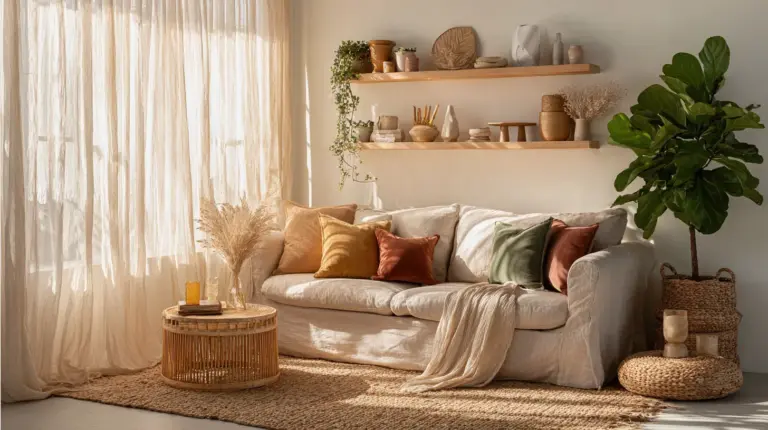
There is something quietly powerful about a well-styled bookshelf. It holds the stories you love, the objects that mean something, and the small beautiful things that make a house feel like yours.
In a small living room, a bookshelf does even more. It anchors the space, draws the eye upward, and whispers a kind of warmth that no blank wall ever could. It tells a story before a single word is read.
But getting it right — especially when square footage is limited — takes a little thought and a lot of intention. The wrong shelf crowds a room. The right one opens it.
Whether you’re working with 100 square feet or 300, renting or owning, decorating on a budget or ready to invest, these small living room bookshelf ideas will help you find your version of beautiful.
What Bookshelf Is Best for a Small Living Room?
The best bookshelf for a small living room is tall, narrow, and purposeful. Vertical shelves draw the eye upward, creating the illusion of height without eating into precious floor space. A unit 12–14 inches deep and no wider than 30–36 inches works beautifully in tight rooms under 150 square feet.
Ladder shelves, floating wall shelves, and slim freestanding bookcases are the most space-efficient options. If you’re renting, no-drill alternatives like adhesive floating shelves or tension rod units preserve your walls while still delivering that styled, intentional look.
How to Fit a Bookcase Into a Small Living Room
Use Vertical Space, Not Horizontal
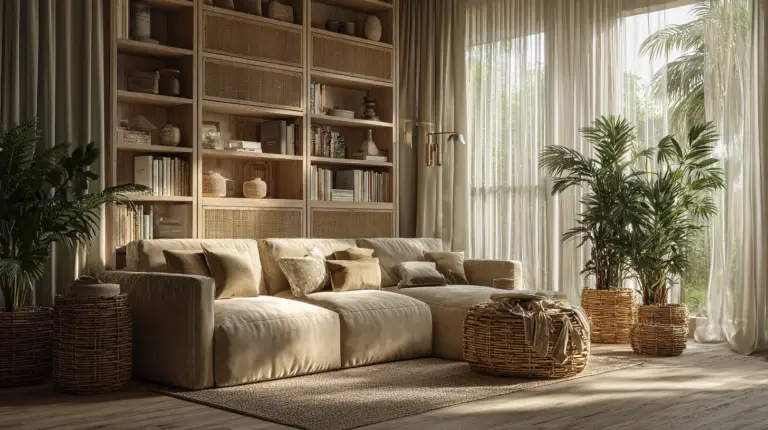
Think up, not out. In rooms where every inch counts, a floor-to-ceiling bookcase transforms a wall into a living feature. It creates visual drama without consuming square footage — and the height draws the eye away from the room’s footprint.
A Billy bookcase from IKEA ($60–$90) is a timeless starting point. Pair two units side by side, add a height extension, and suddenly you have a built-in feel at a fraction of the custom price.
Respect Your Walkway Clearance
One often-overlooked detail: keep at least 30 inches of clear walking path around any freestanding unit. A bookcase that blocks movement — even subtly — makes a small room feel cramped rather than cozy. Position shelves along the longest wall, or tuck them into a corner where they anchor rather than intrude.
Consider Corner Placement
Corners are the most underused real estate in a small living room. A corner bookshelf or two slim units angled into an L-shape creates a reading nook effect that feels intentional and intimate. Add a small lamp and a folded throw, and the corner becomes the best seat in the house.
Where to Put a Bookshelf in a Small Living Room
Placement shapes the entire feel of a room. Here are the most effective spots:
- Along the longest wall — creates a gallery-like effect and anchors the room
- Behind the sofa — low slab-style shelves behind a couch work beautifully in open-plan spaces; keep units under 30 inches tall so sight lines stay open
- Flanking a window or TV — symmetrical placement adds architectural interest without adding bulk
- In a corner — maximizes unused space and creates a natural reading zone
- Above a doorway — floating shelves above doorframes use vertical space that’s otherwise ignored; ideal for lighter objects and trailing plants
Avoid placing a tall bookcase in front of a window. Natural light is your most valuable design tool in a small room — protect it.
Space-Saving Bookshelf Ideas for Small Living Rooms
Floating Shelves: The Renter’s Best Friend
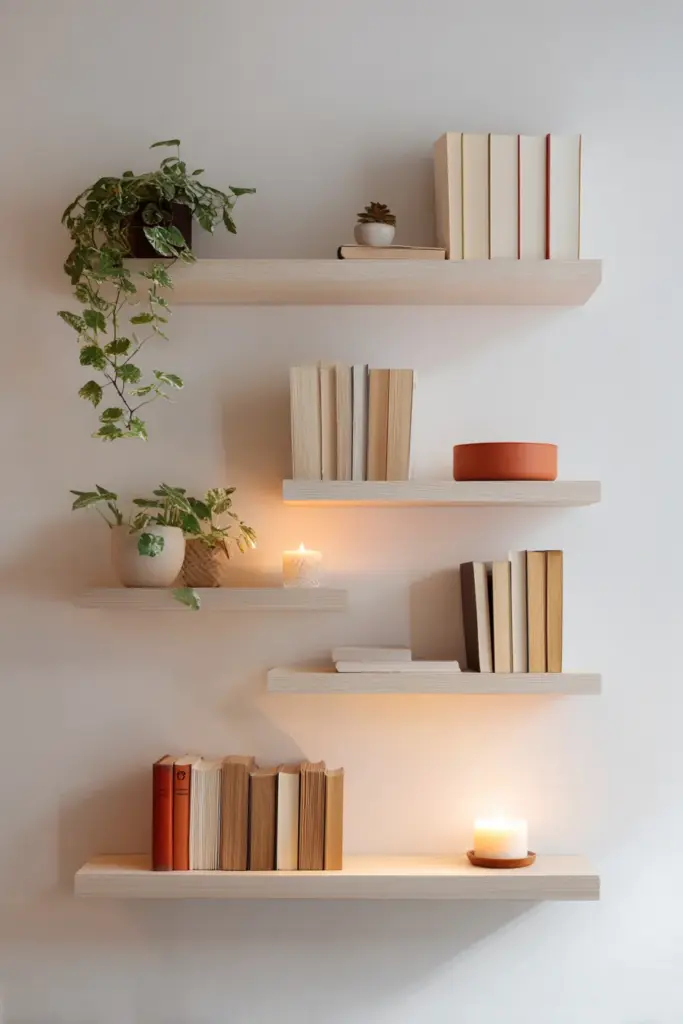
Floating shelves are the most versatile tool in a small-space stylist’s kit. Mounted at staggered heights, they add rhythm and personality to a bare wall without touching the floor. Keep shelves 6–8 inches deep in rooms under 150 square feet — anything deeper starts to feel like it’s reaching into the room.
For renters who can’t drill, adhesive floating shelves (like those from Command or Umbra) now hold up to 15–20 lbs — enough for a curated collection of books, a small plant, and a candle or two. Tension rod bookcases are another no-drill option: slim vertical units that press between floor and ceiling without a single hole.
Ladder Shelves: Lean-In Style
A ladder bookshelf leans against the wall, taking up almost no floor space while offering generous display surface. Its angled profile creates visual lightness — it feels airy rather than heavy. Choose one in natural oak, pale ash, or matte black for a look that complements almost any palette.
Ladder units work especially well in Japandi and minimalist interiors, where the raw grain of wood and the simplicity of the silhouette feel right at home.
Bench Storage: Double Duty by Design
A storage bench with open shelving below serves as both seating and a bookshelf — a genuinely clever solution for small living rooms. Place it along an entryway wall or beneath a window. The open lower shelves display books or baskets; the top provides a perch, a landing spot, or extra seating for guests.
This kind of multi-tasking furniture is the quiet hero of small-space design. Every piece should earn its place.
What Depth Should a Small Living Room Bookshelf Be?
This is a question that matters more than most people realise. The ideal bookshelf depth for a small living room is 10–11 inches — deep enough to hold standard paperbacks and hardcovers, shallow enough to avoid crowding the room.
For floating shelves in very tight spaces (under 100 sq ft), go even shallower: 6–8 inches is enough for most books and decorative objects. The visual lightness of a shallow shelf keeps the room feeling open.
Avoid deep shelving (12+ inches) unless it’s built into a wall recess or used as a room divider — in a small room, excessive depth reads as bulk.
Japandi Bookshelf Styling for Minimalist Small Spaces
Japandi is the design language of quiet confidence — and it translates beautifully to small living rooms.
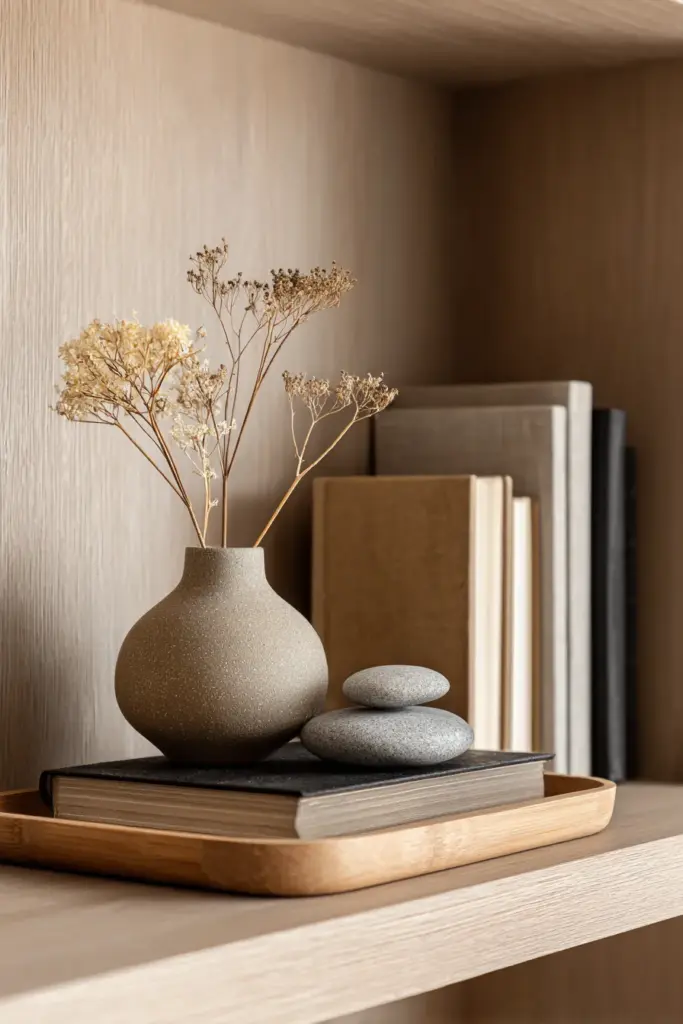
The Principles
Japandi combines Japanese wabi-sabi (the beauty of imperfection) with Scandinavian hygge (the warmth of simplicity). Applied to bookshelf styling, it means: less on every shelf, more breathing room between objects.
Choose shelves in light oak, birch, or pale ash. Let natural grain show. Avoid painted or lacquered finishes — the texture of real wood is part of the story.
The Palette
Stick to a palette of warm neutrals and natural tones: cream, linen, sand, dusty sage, soft charcoal. Books with plain or neutral spines feel at home here. If your collection is colourful, consider turning some books spine-in for a calm, tonal effect.
The Objects
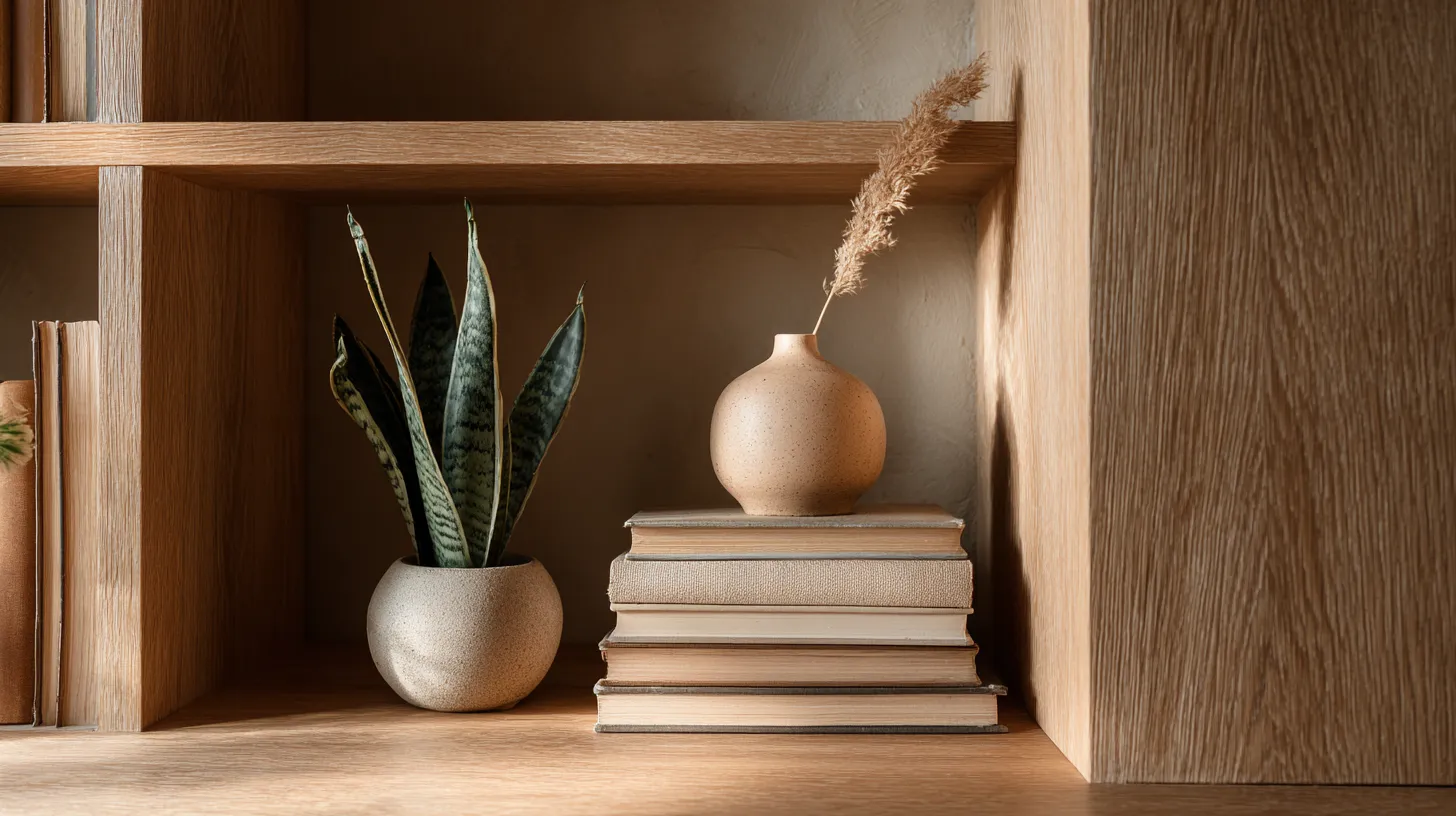
In Japandi styling, every object earns its place. A small ceramic vessel. A smooth river stone. A single dried stem in a bud vase. A stack of two or three books topped with a sprig of eucalyptus.
Bamboo accents — a small tray, a woven basket — bring texture without weight. Negative space is not emptiness. It is the shelf breathing.
How to Style a Bookshelf in a Small Living Room
The Triangle Method
Emily Henderson’s triangle method works beautifully in small spaces. Place objects of varying heights in a loose triangular arrangement on each shelf: a tall item at one end, a medium item in the middle, a low item at the other. The eye travels naturally, and the shelf feels curated rather than crowded.
Horizontal Stacking
Not every book needs to stand upright. Lay two or three books flat and use the stack as a plinth for a small sculpture, a candle, or a plant. Horizontal stacking breaks the visual monotony of a shelf and adds depth.
Colour Coordinate Your Books
Grouping books by colour transforms a bookshelf from a storage unit into a visual feature. Warm whites and creams together. Terracotta and rust tones in a cluster. Deep navy and forest green as an accent. The result feels intentional — like someone made it with care.
Books + Plants: A Living Combination
Plants belong on bookshelves. A trailing pothos softens the edge of an upper shelf. A small snake plant beside a stack of books adds life and a little wildness. Choose humidity-safe materials for shelves near plants — sealed wood or powder-coated metal holds up better than unsealed particleboard.
A spider plant, a pothos, or a small peace lily adds oxygen, texture, and that particular green that makes a room feel genuinely alive.
Bookshelf Lighting Ideas for Small Living Rooms
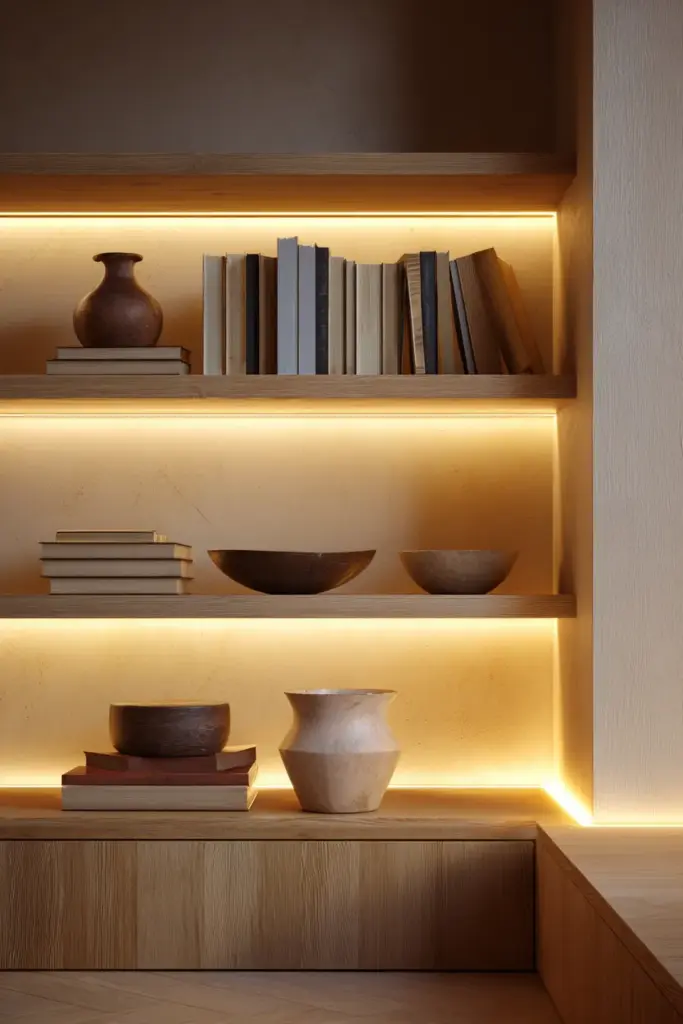
Light changes everything. A bookshelf that sits in shadow disappears. A bookshelf lit from within becomes a focal point.
- USB LED strip lights tucked under each shelf cast a warm ambient glow that makes the entire unit feel intentional
- Battery-powered puck lights sit discreetly on shelf surfaces and require no wiring — perfect for renters
- Plug-in sconces mounted above or beside a bookcase add a warm directional light that mimics the feel of a reading lamp
Choose bulbs or strips in warm white (2700K–3000K). Cool white light flattens a shelf; warm light deepens it, making objects glow softly and wood tones come alive.
Budget Breakdown: Finding Your Right Fit
You don’t need to spend a lot to create something beautiful. Here is a clear view of what different budgets can achieve:
| Option | Approximate Cost | Best For |
|---|---|---|
| DIY floating shelves (brackets + plank) | Under $50 | Renters, minimalists, small accent walls |
| IKEA LACK floating shelves | $10–$20 per shelf | Budget styling, starter apartments |
| IKEA Billy bookcase | $60–$90 | Vertical storage, customisable height |
| Ladder shelf (mid-range) | $80–$150 | Lean aesthetic, Japandi, renter-friendly |
| Custom built-in bookcase | $400–$2,000+ | Permanent homes, investment pieces |
The sweet spot for most small living rooms is the $60–$150 range: a quality freestanding unit or a combination of floating shelves that can be styled and restyled as your taste evolves.
How to Make a Small Living Room Bookshelf Look Bigger
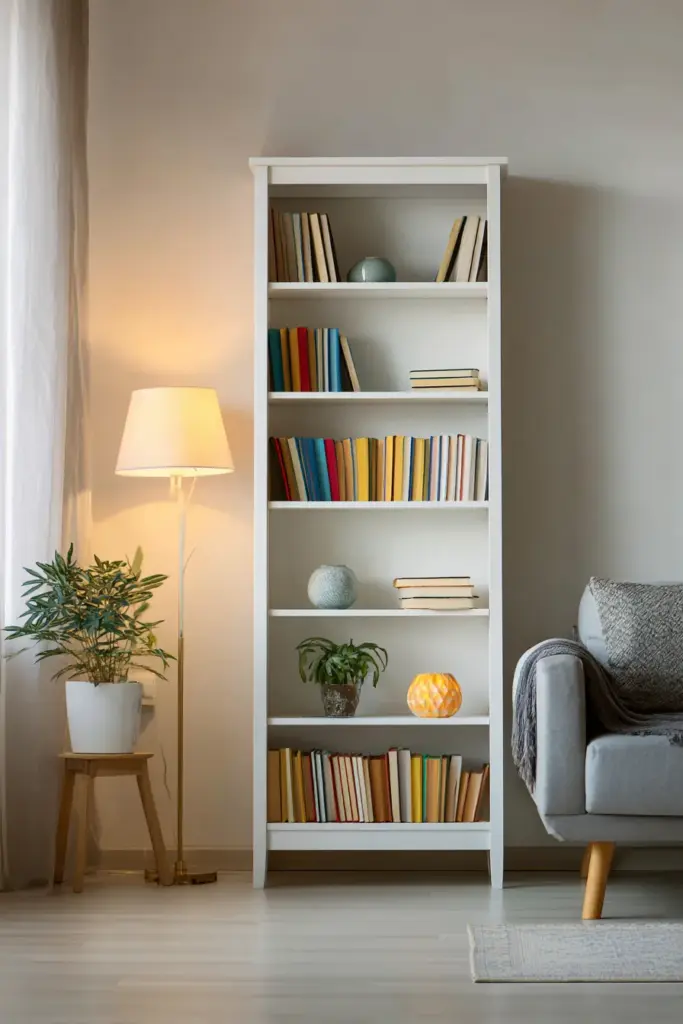
A few intentional choices make a modest bookshelf feel expansive:
- Paint the back panel of the bookcase in a deep tone — navy, charcoal, or forest green. The contrast makes objects pop and the shelf appear more substantial
- Use light-coloured objects on darker shelves to create depth
- Embrace negative space — leave some shelves partially empty. A shelf that breathes reads as abundant, not sparse
- Mount shelves higher on the wall — eye-level and above draws the gaze upward and makes ceilings feel taller
- Mirror backing panels reflect light and visually double the depth of the shelf
Are Floating Shelves Good for Small Living Rooms?
Floating shelves are arguably the best option for small living rooms — with one important caveat. They are ideal when used with restraint and intention. Too many floating shelves create visual noise; too few feel incomplete.
The ideal approach: three to five floating shelves arranged at staggered heights, no more than 6–8 inches deep, styled with a mix of books, objects, and negative space. This creates a curated wall feature that adds personality without reducing floor space.
For renters, adhesive or tension-mounted options mean no drilling and no damage deposits at risk.
Can You Put a Bookshelf Behind a Couch?
Yes — and it can be one of the most elegant arrangements in a small living room. The key is proportion.
A low slab-style bookcase (24–30 inches tall) directly behind a sofa creates a layered, architectural feel. It also gives the sofa a visual anchor, which makes a floating sofa in the middle of a room feel grounded.
Avoid tall units directly behind a sofa unless they are flush against the wall and well-secured. Always anchor tall bookcases to the wall — this is non-negotiable for safety, especially in homes with children or pets.
Quick-Start Checklist: Small Living Room Bookshelf Essentials
- Choose shelves 10–11 inches deep for standard books; 6–8 inches for floating shelves in tight rooms
- Keep at least 30 inches of walkway clearance around freestanding units
- Anchor tall bookcases to the wall — always
- Use the triangle method to arrange objects on each shelf
- Include at least one plant per bookcase — trailing or upright
- Add warm LED lighting (2700K–3000K) under or above shelves
- Leave 20–30% of each shelf empty to allow breathing room
- Group books by colour or size for a cohesive, styled look
- For renters: consider adhesive shelves, ladder units, or tension rod bookcases
- Mix horizontal and vertical stacking to add rhythm and depth
A Final Note from ERYLIN
A bookshelf is more than storage. It is a self-portrait — an arrangement of everything you love, everything you’re curious about, everything that makes your home yours.
In a small living room, it becomes even more meaningful. It is the thing your eye returns to. The corner that holds warmth on a grey afternoon. The place where a candle glows softly beside a novel you haven’t finished yet.
You don’t need more space to make something beautiful. You need intention, a little patience, and the willingness to let your home tell the truth about who you are.
Start with one shelf. Style it slowly. See what it says.
Frequently Asked Questions
What bookshelf is best for a small living room?
A tall, narrow unit 10–11 inches deep works best in most small living rooms. IKEA Billy bookcases ($60–$90) are a reliable starting point. For renters or very tight spaces, a ladder shelf or adhesive floating shelves offer flexibility without sacrificing style.
How do I fit a bookcase into a small living room?
Choose a vertical unit and place it along the longest wall or in a corner. Keep at least 30 inches of walkway clearance around any freestanding unit. Avoid blocking windows — natural light is essential in small spaces.
Where should I put a bookshelf in a small living room?
The most effective placements are along the longest wall, flanking a TV or window, in a corner, or as a low unit behind a sofa. Above-doorway floating shelves are a clever use of ignored vertical space.
What are the best renter-friendly bookshelf ideas for a small living room?
No-drill options include adhesive floating shelves (Command, Umbra), tension rod freestanding bookcases, and ladder shelves that lean without wall attachment. These preserve walls and can be taken with you when you move.
What depth should a bookshelf be for a small living room?
The ideal depth is 10–11 inches for standard shelving. For floating shelves in rooms under 150 square feet, 6–8 inches keeps the room from feeling crowded while still accommodating most books and decorative objects.
How do I make a small bookshelf look more expensive?
Paint the back panel a deep tone, group books by colour, use the triangle method to arrange objects, and add warm LED lighting underneath each shelf. Negative space — leaving some areas intentionally empty — signals restraint and elevates the whole look.
Can I put a bookshelf behind my sofa in a small living room?
Yes. A low unit (24–30 inches tall) directly behind a sofa grounds the seating area beautifully. Keep taller units flush against the wall and always anchor them securely, especially in homes with children or pets.