
Table of Contents
The best living room colors with yellow are soft butter, warm ochre, and muted mustard, paired with gray, white, sage green, or navy. For small and Japandi spaces, choose pale, creamy yellows on the walls and keep your furniture neutral so the room breathes.
There is something about yellow that feels like sunlight caught mid-fall. It softens a room the way afternoon light softens a window ledge, warm, unhurried, alive.
At ERYLIN, we believe color should feel like a mood, not a trend. Yellow, done with intention, brings the kind of quiet joy that makes a living room feel lived-in rather than staged.
This guide walks you through the exact shades, pairings, and layouts that work, whether you are styling a small condo in Calabarzon, a Japandi-inspired space, or a sun-drenched family room. No fluff. Just palettes you can actually use.
Best Yellow Shades By Room Style
Not every yellow suits every space. The right undertone changes everything, from how airy a room feels to how it photographs at golden hour.
Modern Living Rooms
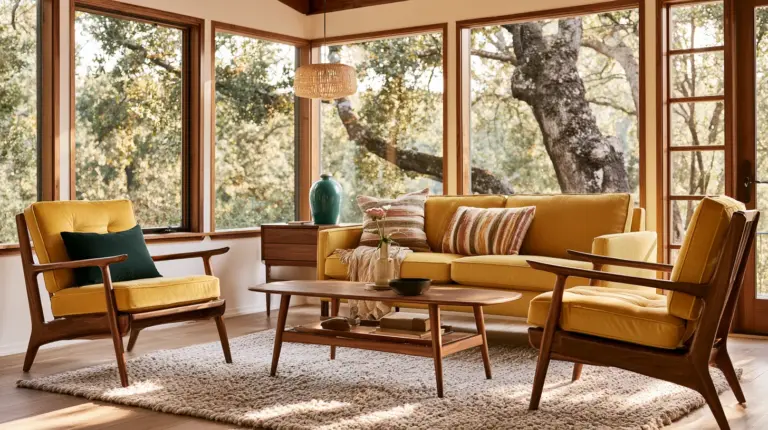
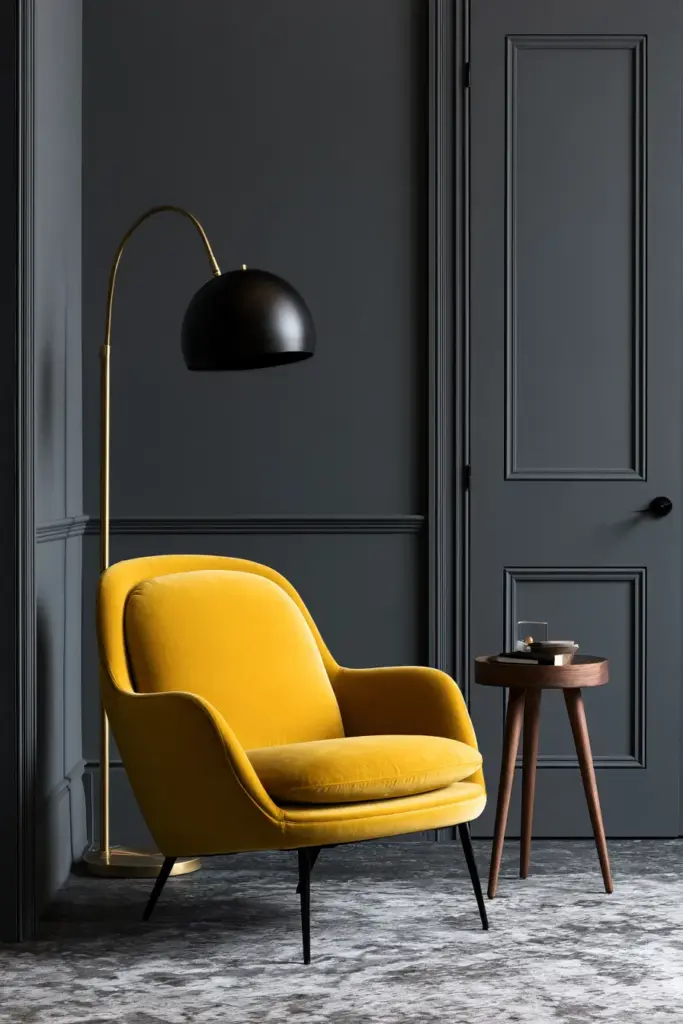
Modern spaces love a confident yellow. Think mustard or ochre used as a single statement, an accent chair, a bold cushion, a piece of art, against crisp white or charcoal walls.
- Mustard Yellow (#C9A227) paired with charcoal gray and matte black hardware
- Golden Ochre (#CC9A3A) against warm white walls and brass lighting fixtures
- Deep Amber (#B8860B) on a single accent wall with walnut furniture
Japandi & Minimalist Living Rooms
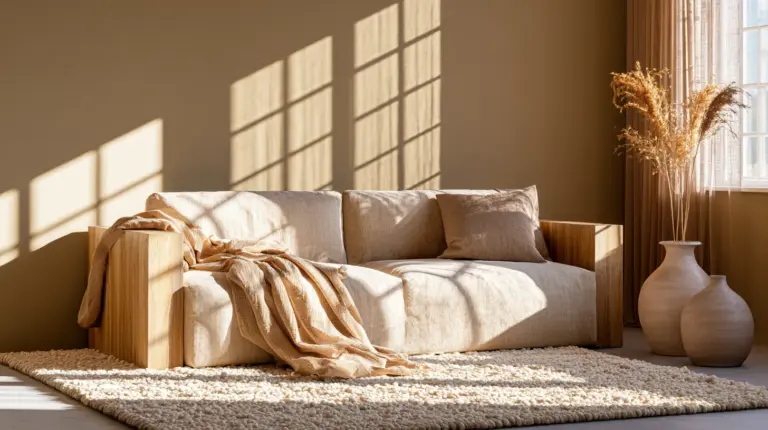
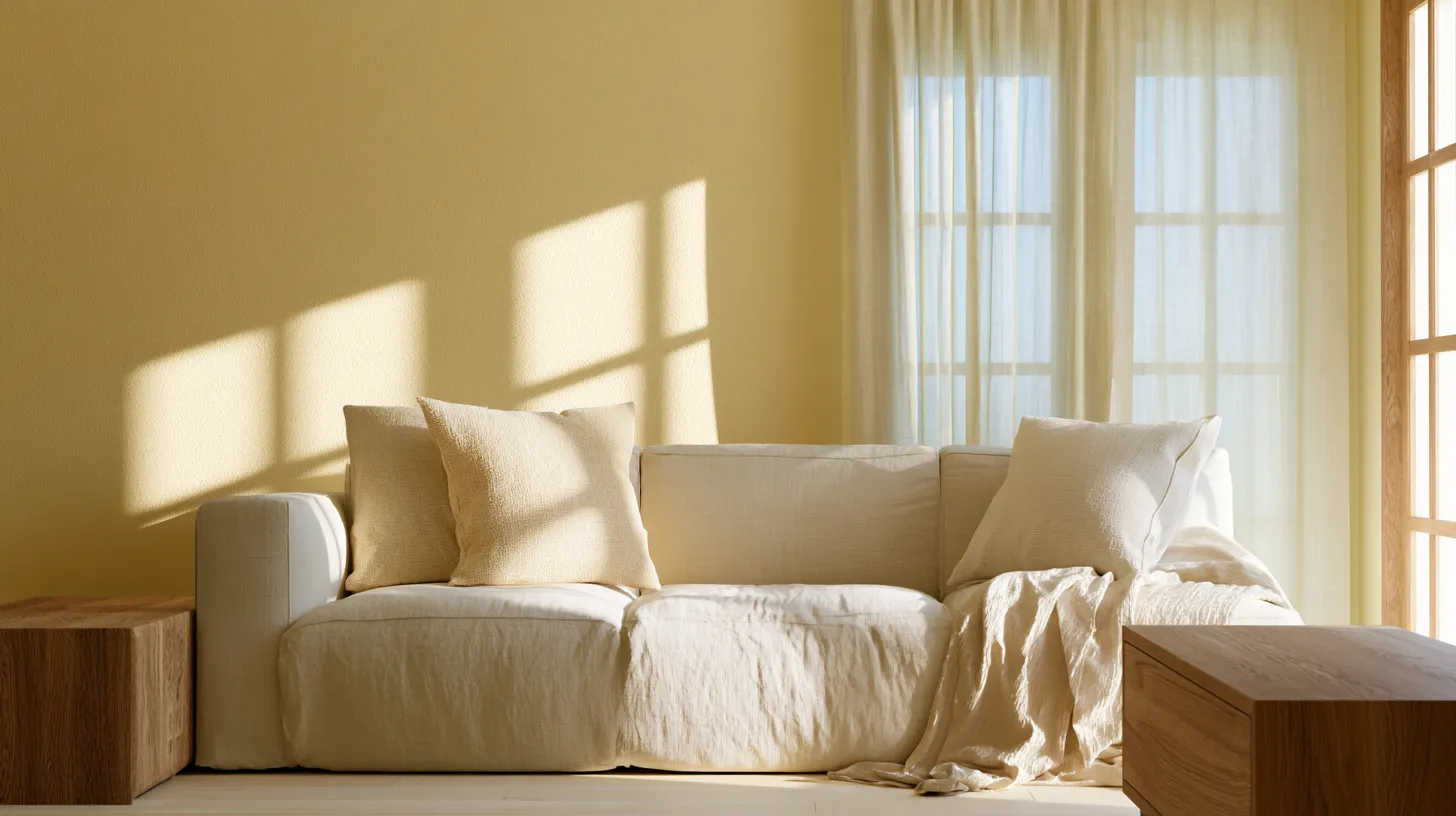
Japandi asks for restraint, and muted yellows answer beautifully. Skip anything saturated. Instead, lean into buttery, chalky tones that feel almost sun-bleached.
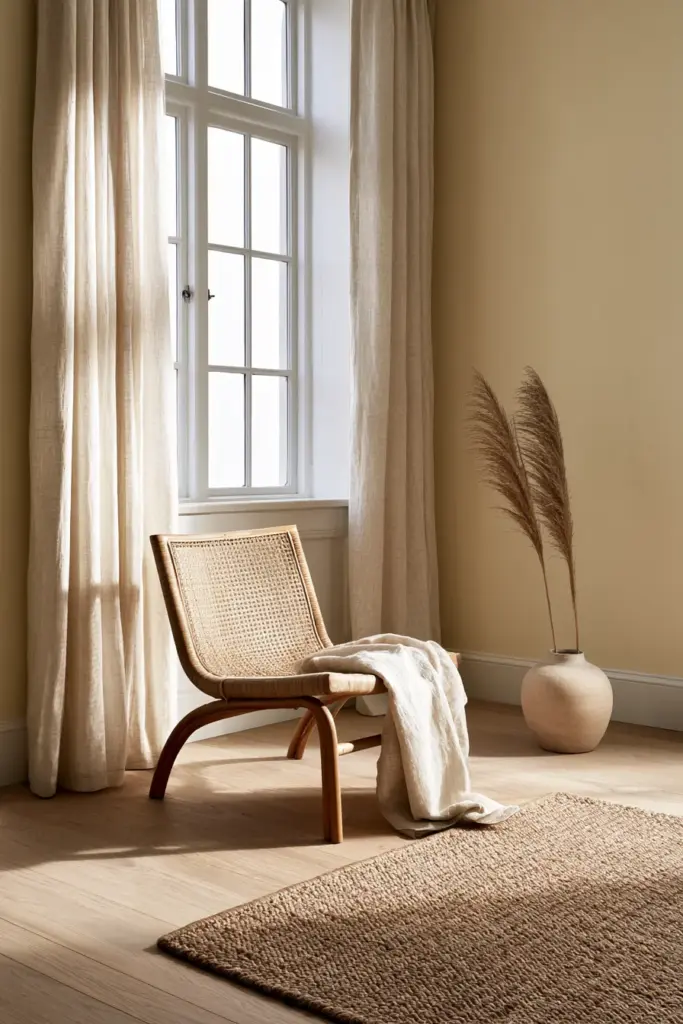
Pair pale yellow with untreated wood, linen upholstery, and natural stone for a palette that feels grounded rather than decorative. A low wooden bench, a woven rug, a single ceramic vase in soft ochre, that is the whole story.
- Butter Cream (#F3E5AB) walls with oak flooring and linen curtains
- Soft Wheat (#E8D8A0) as a textile accent against plaster-white walls
- Muted Straw (#D9C98E) on cushions, paired with rattan and bamboo furniture
This palette translates especially well in small Southeast Asian apartments, where natural materials already dominate the room. Yellow simply warms what is already there.
Traditional & Cozy Living Rooms
Traditional interiors can handle richer, more saturated yellow, especially in rooms with high ceilings, deep moldings, or vintage furniture.
- Antique Gold (#C5A028) walls with cream trim and brass sconces
- Warm Honey (#D4A94A) upholstery against forest green drapery
Top Color Combinations With Yellow
Yellow rarely stands alone. It needs a partner to soften its brightness or sharpen its warmth. Here are the pairings that consistently work.
| Combination | Mood | Best For |
|---|---|---|
| Yellow + Gray | Calm, contemporary | Modern condos, apartments |
| Yellow + White | Airy, fresh | Small or low-light rooms |
| Yellow + Navy Blue | Bold, classic | Statement living rooms |
| Yellow + Sage Green | Earthy, Japandi | Minimalist, nature-inspired spaces |
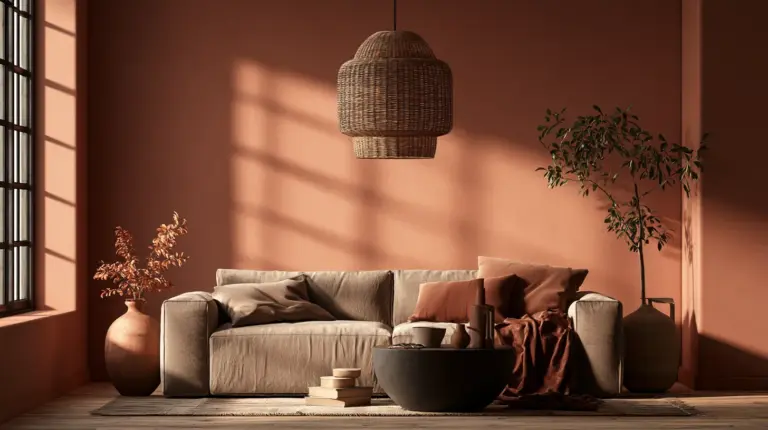
| Yellow + Terracotta | Warm, tropical | Rustic or Filipino-style homes |
Yellow and Gray Living Room
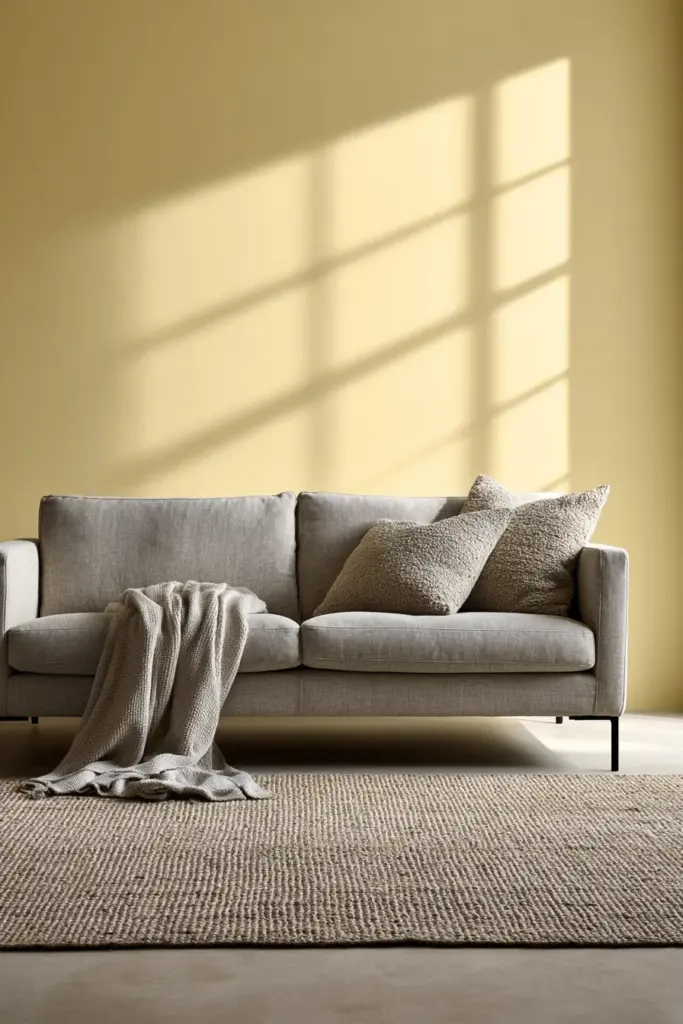
Gray gives yellow somewhere to rest. Use a soft dove gray sofa against a pale yellow wall, then layer in cozy furniture with texture, boucle cushions, a knit throw, a jute rug.
Yellow and Sage Green Japandi Living Room
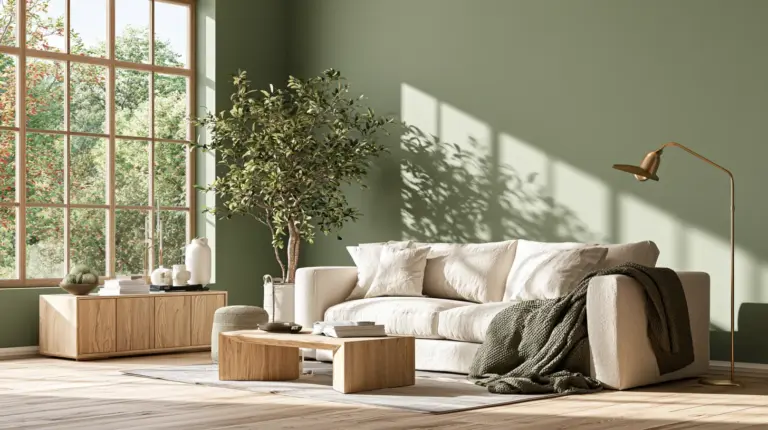
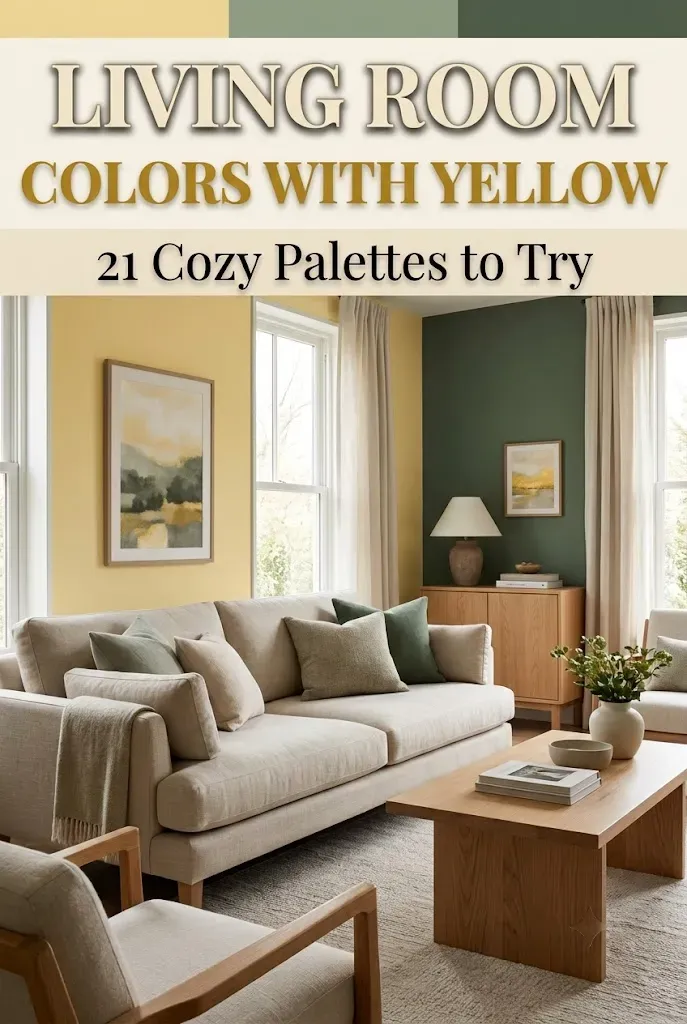
This pairing feels like a walk through a quiet garden. Sage green anchors the room while soft yellow keeps it from feeling too cool.
- Walls: chalky sage green
- Accent: butter yellow cushions or a single upholstered chair
- Materials: linen, oak, unglazed ceramics
Yellow and Navy Living Room
Navy brings depth and drama, while yellow keeps the room from feeling heavy. This combination suits larger living rooms with strong natural light.
Yellow For Small & Multifunctional Living Rooms
Small spaces need yellow to work harder without shouting louder. The goal is warmth without visual clutter.
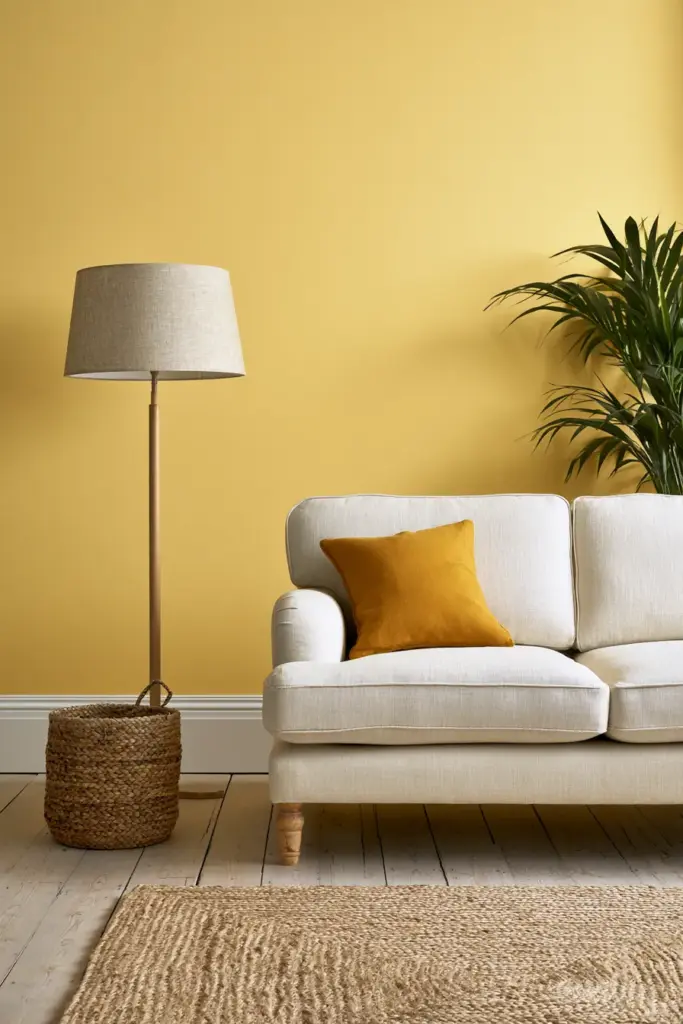
Use yellow in layers rather than blocks. A pale yellow wall, a single mustard cushion, and a woven basket say more than a room painted floor to ceiling in bright yellow.
Do:
- Use yellow on one wall or a textile layer, not every surface
- Keep furniture neutral so the eye has somewhere to rest
- Use yellow to define a seating zone in open-plan spaces
Don’t:
- Combine yellow with too many other bold colors in a small room
- Choose glossy or neon yellow finishes, which amplify visual noise
- Paint all four walls yellow in a room under 15 square meters
For compact condo living rooms, a soft butter accent wall behind the sofa, paired with warm lighting ideas like a linen-shade floor lamp, creates depth without adding furniture.
Yellow By Lighting & Wall Orientation
Light changes how yellow behaves more than any other color. What glows in a showroom photo can look chalky or dull on your actual wall.
North-Facing Rooms
North light is cool and consistent, which can make pale yellows look washed out. Avoid chalky, cool-toned yellows here. Choose a warmer, slightly deeper tone like golden ochre to compensate.
South-Facing Rooms
South-facing rooms get warm, direct sun, so they can handle deeper, richer yellows like mustard or amber without feeling overwhelming.
Low Natural Light Rooms
If your living room barely sees direct sun, reach for soft butter or creamy yellow. These tones reflect available light rather than absorbing it, keeping the room from feeling dim.
A quiet note on bulbs: warm white LED lighting deepens yellow into something golden and cozy, while cool white LED can flatten it into a muddier, less inviting tone. Choose warm white whenever yellow is the star.
Budget & DIY Guide
You do not need a full renovation to bring yellow into your living room. Small, intentional changes go a long way.
How to paint a yellow accent wall for under ₱5,000:
- Choose a local paint brand such as Rheocraft, Nippon, or Harley in a butter or ochre shade
- Prime the wall if it was previously dark or glossy
- Apply two coats with a roller for even coverage
- Add trim or baseboard touch-ups in white for a clean finish
Other low-cost ways to add yellow:
- Paint an old shelf or side table in muted mustard
- Thrift a yellow accent chair and reupholster if needed
- Swap in yellow throw pillows or a woven yellow-toned rug
- Add a single ceramic vase or lamp base in soft ochre
Color Psychology: When and How Much Yellow to Use
Yellow carries energy. It is associated with warmth, optimism, and social connection, which makes it a natural fit for a living room, a space built for gathering.
But yellow has a tipping point. Too much of it, especially in bright or saturated tones, can feel restless rather than relaxing, particularly in smaller rooms.
Use yellow generously in rooms meant for conversation and light activity. Use it sparingly, as an accent only, in rooms where you also want to unwind and slow down.
In tropical climates, warm yellows can occasionally feel like an extension of the heat outside. Balancing yellow with cooler materials like rattan, capiz shell, or marine wood keeps the palette feeling fresh rather than heavy.
Checklist: Is Yellow Right for Your Living Room?
- Your room gets moderate to strong natural light during the day
- You want a living room that feels warm and social, not strictly minimal
- You already have or plan to use natural materials like wood, linen, or rattan
- You are comfortable using yellow as an accent, not necessarily a full wall
- Your existing furniture is neutral enough to let yellow stand out
- You have considered your room’s orientation before choosing a shade
A Soft Place to Land
A living room painted in the right yellow does not just look warm. It feels like it remembers the sun long after it has set.
Choose your shade the way you would choose a favorite sweater, something that fits the light you actually live in, not the light in a photograph. Let it sit quietly on one wall, one cushion, one worn ceramic bowl, and let the rest of the room breathe around it.
That is the quiet luxury ERYLIN believes in: rooms that feel golden, grounded, and entirely your own.
FAQs
What colors go well with yellow in a living room?
Gray, white, navy blue, and sage green are the most versatile companions. Gray and white keep yellow feeling calm, while navy adds drama and sage green leans Japandi and earthy.
Is yellow a good color for a living room?
Yes, yellow works well in living rooms because it brings warmth and energy to a space meant for gathering. It suits most room types when the shade and light exposure are matched thoughtfully.
What shade of yellow is best for a living room?
Soft butter and pale lemon suit small or low-light rooms, while ochre and mustard suit larger, sun-filled spaces. Bright neon yellows generally overwhelm a living room and are best avoided as a main color.
How do I use yellow in a small living room without making it look crowded?
Limit yellow to one wall, a few textiles, or a single furniture piece rather than covering every surface. Keep the rest of the room neutral so yellow reads as a warm accent, not visual clutter.
How much yellow should I use in a living room?
Use yellow as a full wall only if the room has strong natural light and you want an energetic feel. Otherwise, keep it to accents like cushions, art, or a single chair so the space stays balanced.