
Table of Contents
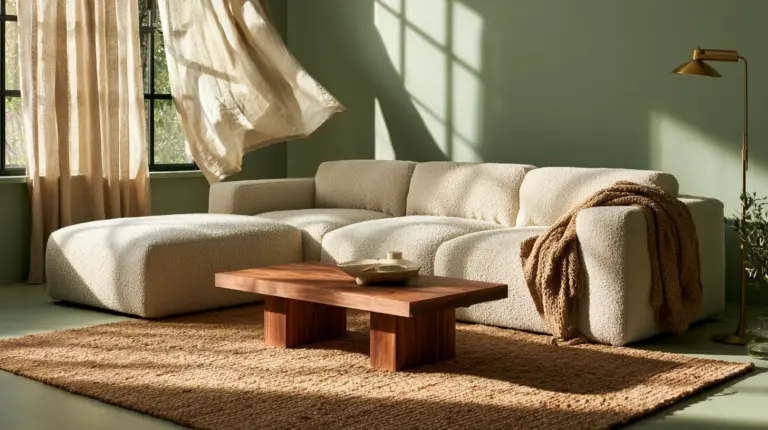
Green has a way of walking into a room and making it feel like it’s always belonged there. It’s the color of moss on stone, of morning light through leaves, of a quiet afternoon with nowhere to be. At ERYLIN, we think of green not as a trend but as a homecoming.
If you’re standing in your living room right now, paint swatches fanned out on the floor, we understand the hesitation. Green can feel bold. It can also feel wrong if the undertone clashes with your light or your furniture.
This guide skips the vague inspiration and gets specific. You’ll find real pairings, real ratios, and real answers for small spaces, tricky light, and everyday budgets.
By the end, you won’t just have pretty pictures. You’ll have a decision, and a palette you can actually commit to.
What Colors Go With Green in a Living Room?
Quick answer: green pairs beautifully with warm neutrals like cream, oatmeal, and warm gray, with natural materials like oak and rattan, and with soft accent colors like terracotta, blush, or mustard. The right combination depends on your room’s size, light, and the mood you want to create.
Use this decision grid before you commit to a single can of paint.
| Your Situation | Recommended Green | Best Pairings |
|---|---|---|
| Small, low-light room | Sage, oat green, soft mint | White trim, light oak, linen textiles |
| Bright, south-facing room | Forest, emerald, olive | Charcoal, black metal, warm white |
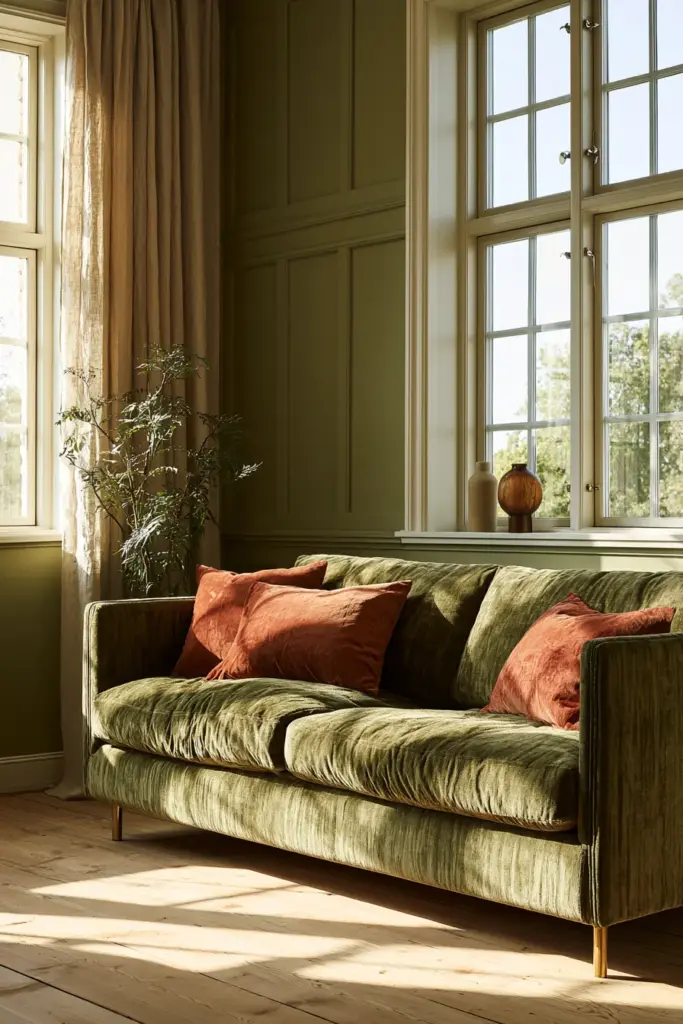
| North-facing, cool light | Olive, moss, warm sage | Cream, terracotta, brass accents |
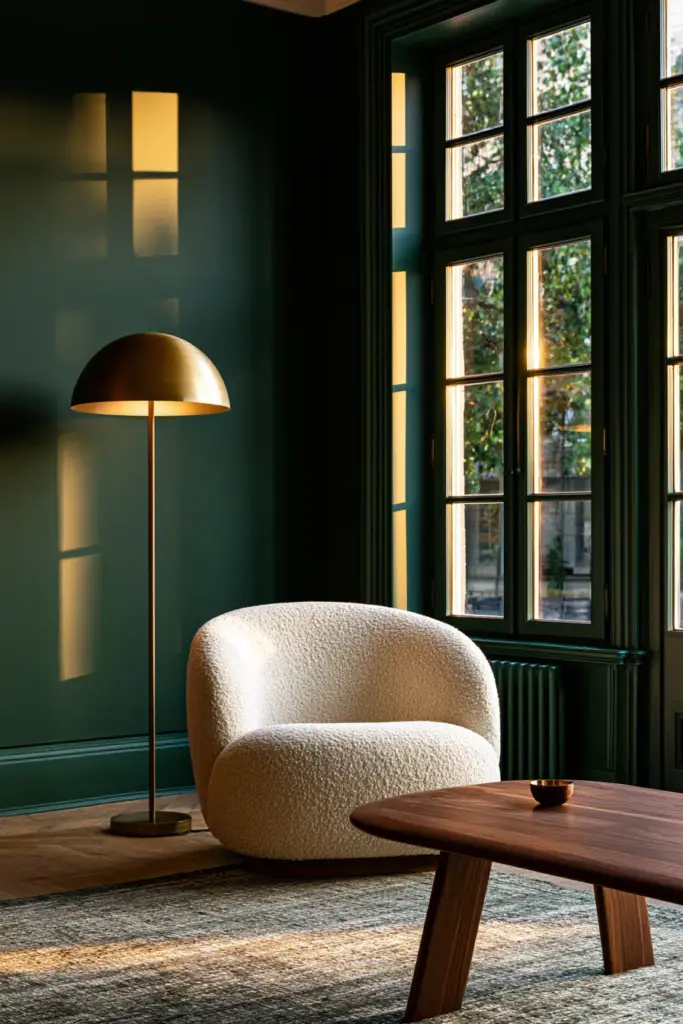
| Want a cocooning, moody feel | Deep forest, hunter green | Warm gray, walnut wood, gold accents |
| Japandi or minimalist style | Muted sage, oat, eucalyptus | Natural linen, light oak, stone |
Best Green Shades by Room Size
A room’s dimensions should guide your green before style preferences do. This one decision prevents most green living room regrets.
Small Living Rooms
Choose lighter, softer greens like sage, mint, or creamy pistachio to keep walls feeling like they breathe rather than close in. These tones bounce light instead of absorbing it.
Save deeper greens for a single accent wall, a velvet sofa, or a set of cushions. This keeps the drama without shrinking the room.
Large Living Rooms
Larger rooms can carry forest green, emerald, or deep olive across full walls without feeling heavy. The extra square footage gives dark tones room to settle rather than dominate.
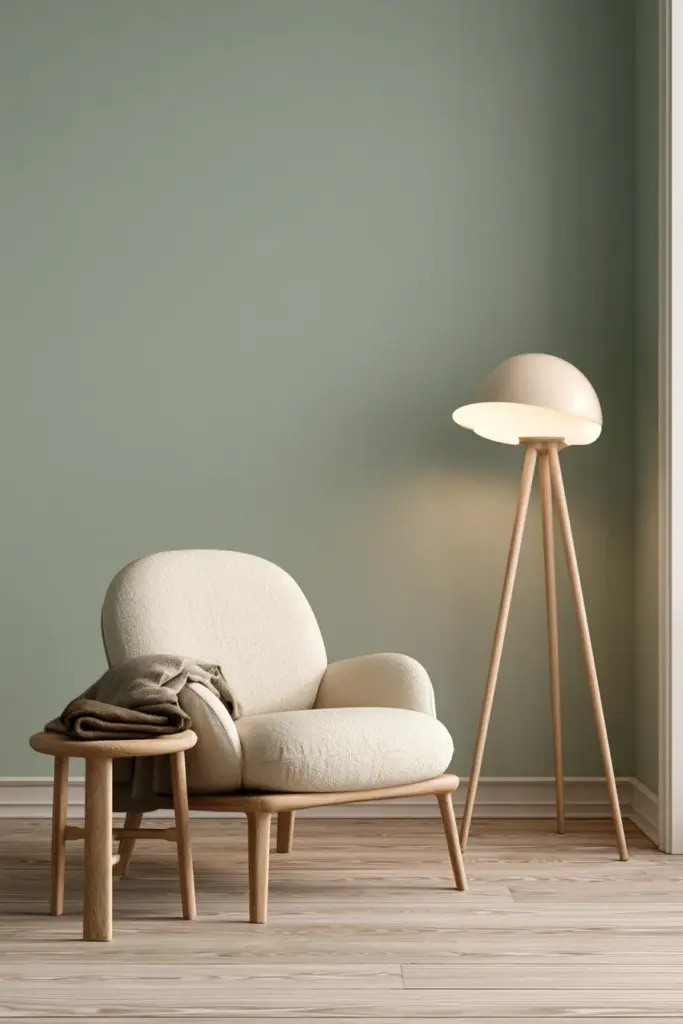
Balance the depth with generous natural light and light-toned cozy furniture like a bouclé armchair or a pale linen sectional.
Best Green Shades by Light Direction
The same green paint chip can look like three different colors depending on which way your windows face. This is the detail most articles skip, and it’s the one that saves you from a repaint.
North-Facing Rooms (Cool, Flat Light)
North light tends to cool everything down, so greens can read gray or muddy. Lean toward warmer greens like olive or moss, and pair them with brass, cream, and warm wood tones to counter the chill.
South-Facing Rooms (Warm, Bright Light)
South-facing rooms can handle almost any green, including saturated emerald or forest shades, because the light warms them naturally throughout the day. Cooler pairings like charcoal or black metal keep the space from feeling too warm overall.
East and West-Facing Rooms
Morning light (east) flatters cooler, fresher greens like mint or sage, while afternoon light (west) deepens warm greens like olive into something richer by evening. Watch your room at both times before deciding.
Green + Color Pairing Guides
Instead of vague advice like “pair with white,” use these tested formulas. Each one follows a simple ratio: roughly 70% neutral base, 20% green, 10% accent.
Green & Neutrals
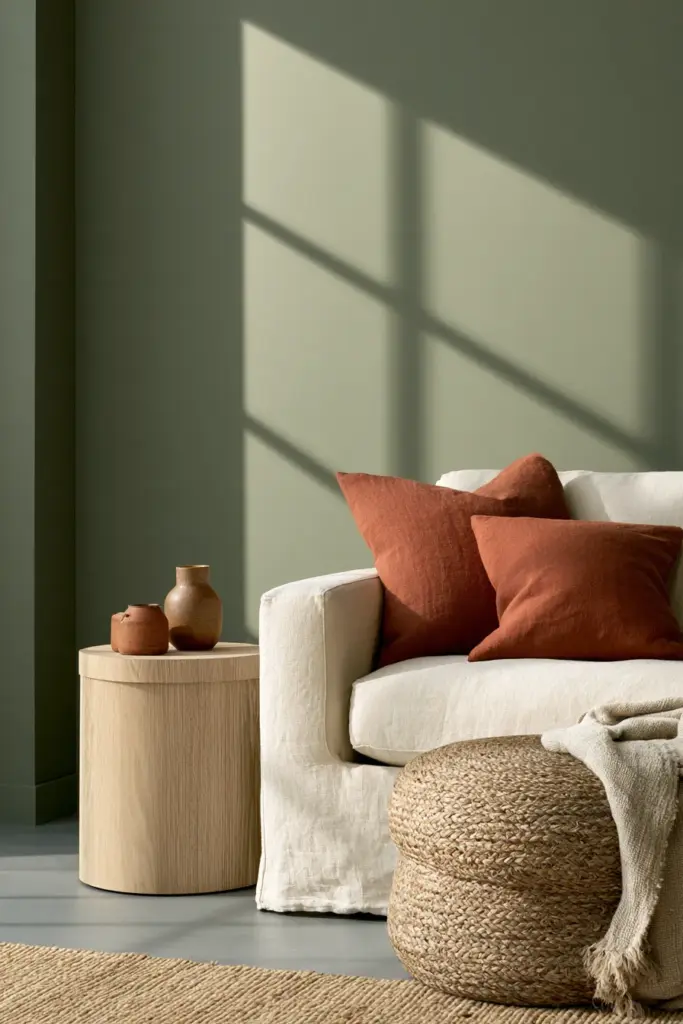
- Sage + warm white + oak — soft, calm, everyday livable
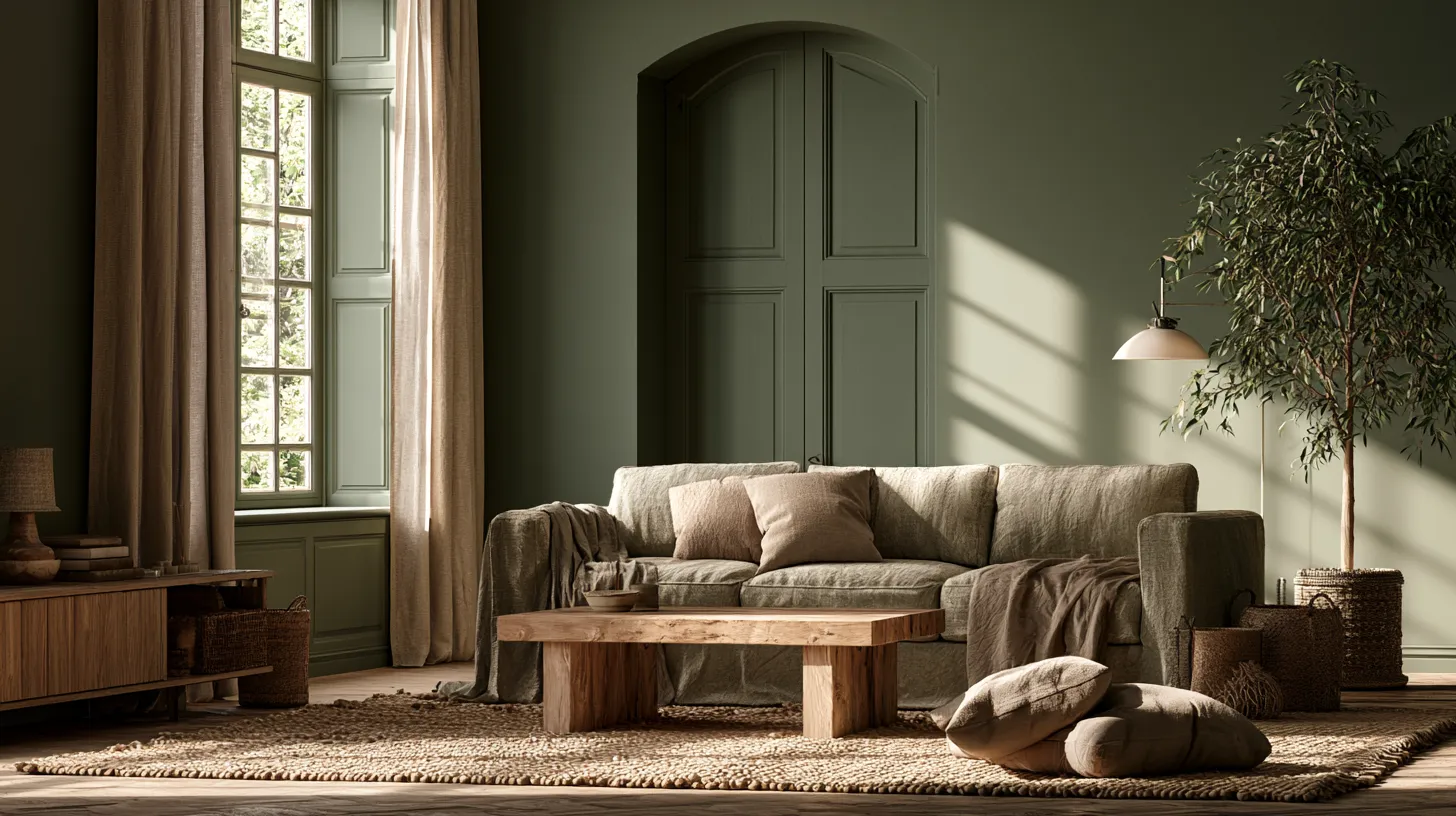
- Forest green + warm gray + walnut — grounded and quietly luxurious
- Olive + beige + rattan — earthy, relaxed, sun-warmed
Green & Warm Accents
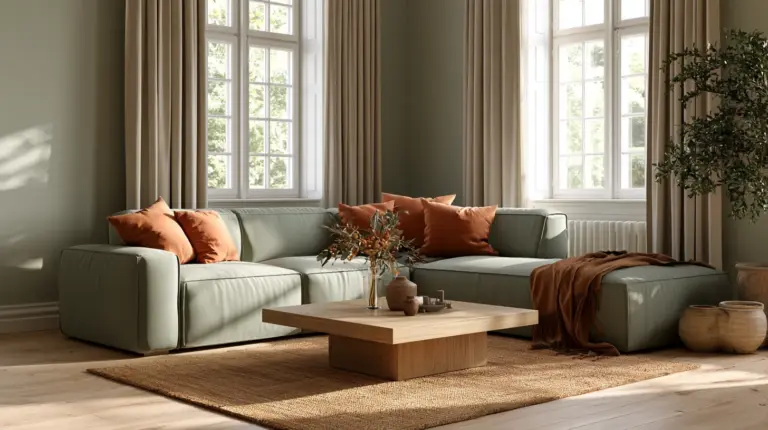
- Deep green sofa + cream walls + terracotta cushions + brass lamp
- Sage walls + oatmeal linen + mustard throw + oak coffee table
Green & Cool Accents
- Emerald accent wall + light gray sofa + black metal shelving + white rug
- Moss green + dusty blue cushions + white oak floors
Green Walls vs Green Furniture vs Green Accents: Which to Choose First
Start with the largest commitment first, then build outward. This order avoids the most common green living room mistake: buying a bold sofa and realizing the wall color fights it.
- Walls first if you want green to define the room’s mood from every angle
- Furniture first if you already own or love a specific green sofa or armchair
- Accents first if you’re testing whether green suits your space before committing further
A green sofa against neutral walls is the gentlest entry point. A full green wall is the boldest, most transformative choice.
Green in Japandi & Modern Minimalist Living Rooms
Japandi living rooms lean on quiet, muted tones, so choose sage, oat green, or eucalyptus rather than saturated emerald or kelly green. These softer shades sit comfortably beside pale wood and undyed linen.
Keep the palette restrained: one green tone, one wood tone, one neutral. This restraint is what gives Japandi rooms their sense of calm and lighting ideas that use warm, low-glare bulbs only deepen that feeling.
Biophilic Green Palette
Choose wall greens that echo real foliage rather than “painty” greens straight from a color wheel. Hold your swatch beside a live plant leaf in natural daylight; if it looks synthetic next to the leaf, it will look synthetic on the wall.
Fill the room with actual greenery, in varying leaf shapes and heights, to blur the line between painted color and living color.
Budget & DIY Green Living Room Ideas
You don’t need to repaint every wall to bring green into your living room. Small, deliberate moves often carry more charm than a full room overhaul.
- Paint only a built-in shelf, alcove, or single accent wall
- Add green through textiles: a rug, throw pillows, or curtains
- Thrift a wooden chair or side table and paint it in a soft olive or sage
- Choose affordable local paint brands and test small pots before buying full cans
Each of these lets you live with green before making a permanent decision.
Color Psychology: How Green Shapes Mood
Green is deeply tied to calm, restoration, and a sense of being grounded, which is part of why it feels so natural in living rooms. Different tones nudge the mood in slightly different directions.
| Green Tone | Emotional Effect | Best For |
|---|---|---|
| Sage / oat | Soft, restful, airy | Reading corners, quiet evenings |
| Olive / moss | Warm, grounding | Everyday family living rooms |
| Forest / hunter | Cocooning, intimate | Moody evening gatherings |
| Emerald | Energizing, rich | Statement rooms, entertaining spaces |
Before You Paint: A Simple Testing Checklist
A little patience here prevents most green living room regrets. Treat this as a non-negotiable step, not an optional one.
- Test 2–3 green shades on different walls, not just one
- Observe each swatch in morning, afternoon, and evening light
- Check the color under your actual light bulbs, warm or cool
- View the swatch beside your existing furniture and textiles
- Live with the samples for at least three full days before deciding
Summary: Key Takeaways
- Lighter greens like sage and mint suit small or low-light rooms; deeper greens suit larger, brighter spaces
- North-facing rooms need warmer greens; south-facing rooms can handle cooler, richer tones
- Follow a 70/20/10 ratio when pairing green with neutrals and accents
- Decide walls, furniture, or accents first based on your comfort with commitment
- Japandi and biophilic styles favor muted, foliage-like greens over saturated ones
- Small DIY touches can introduce green without a full repaint
- Always test paint swatches across light, time of day, and existing decor
A Soft Place to Land
A green living room isn’t about chasing a color trend. It’s about choosing a hue that feels like a deep breath every time you walk through the door.
Whether you land on a whisper of sage or a deep, enveloping forest, let the choice come from how you want to feel in that room, not just how it photographs. That’s the quiet difference between a decorated room and a truly lived-in one.
At ERYLIN, we believe the best rooms are the ones that hold you gently. Green, in the right shade, does exactly that.
FAQs
What colors go with green in a living room?
Warm neutrals like cream and oak, cool neutrals like charcoal and warm gray, and soft accents like terracotta or blush all pair well with green, depending on your desired mood.
What is the best green paint color for a living room?
Sage and oat greens suit small or low-light rooms, while forest, olive, and emerald work best in larger or brighter spaces.
Should my living room walls be green, or my furniture?
Choose walls first if you want green to shape the whole room, or start with furniture or accents if you’d rather ease into the color gradually.
What shades of green work best in small living rooms?
Light, muted greens such as sage, mint, or creamy pistachio keep small rooms feeling open and airy.
Is sage green or emerald green better for a living room?
Sage suits calm, Japandi-style, or smaller rooms, while emerald suits larger, brighter spaces where you want a bolder, more energizing statement.