
Table of Contents
There’s something deeply comforting about stepping into a room that feels like it holds stories. A vintage-inspired living room doesn’t just capture the aesthetic of another era—it creates a space where past and present dance together, where every piece whispers its own quiet history.
This isn’t about recreating a museum or freezing time in amber. It’s about curating a living room that breathes with character, warmth, and soul. Where a midcentury sideboard sits beneath contemporary art, where retro accent pieces meet clean lines, and where the patina of age becomes part of your home’s unique poetry.
Whether you’re drawn to the elegant curves of Art Deco, the honest simplicity of farmhouse charm, or the sleek sophistication of midcentury modern, a vintage-inspired space invites you to slow down. To touch velvet. To notice light pooling on aged wood. To live beautifully.
Let’s explore how to bring this timeless magic into your home.
Understanding Vintage-Inspired Design
Vintage-inspired living room decor isn’t about strict historical accuracy—it’s about capturing a feeling. True vintage pieces (typically 20-100 years old) carry authentic age and craftsmanship, but “vintage-inspired” gives you creative freedom to blend eras, mix reproductions with originals, and adapt the aesthetic to your modern life.
The beauty lies in the imperfection. The worn leather of a club chair tells stories. The brass hardware on a dresser-turned-media console catches afternoon light differently than anything new ever could. These textures and materials—solid wood, natural fibers, hammered metal—ground your space in something real and lasting.
This approach also embraces sustainability. Choosing vintage or vintage-style furniture means investing in pieces built to endure, reducing waste, and supporting a more thoughtful approach to consumption. Eco-friendly vintage decor isn’t just a trend; it’s a return to quality over quantity.
Mixing Vintage and Modern: The Art of Balance
The secret to a successful vintage modern interior design is proportion and intention. Too much vintage can feel like a time capsule; too much modern can strip away the warmth you’re seeking.
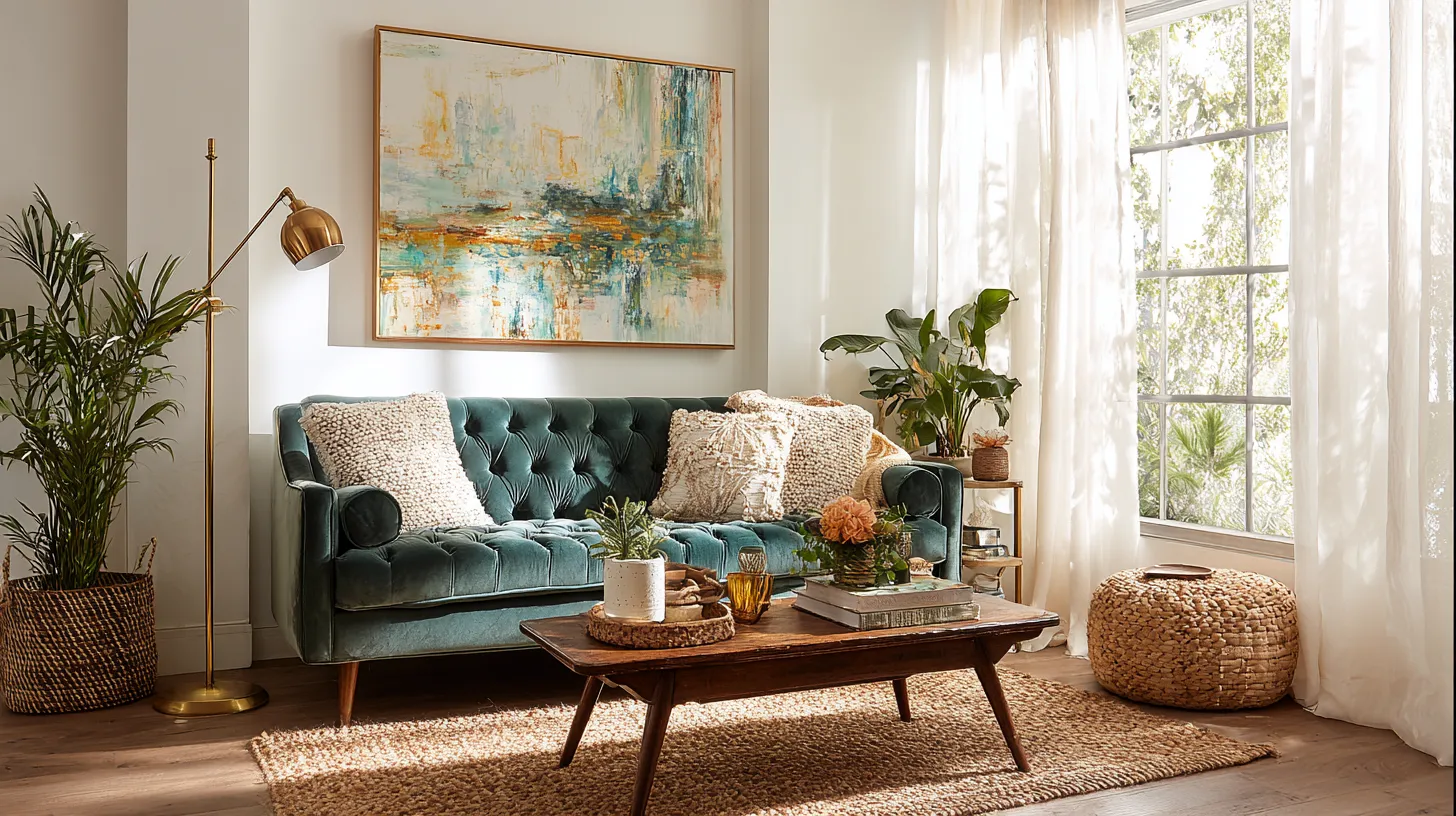
Start with a 60/40 or 70/30 rule. Let vintage pieces anchor the room—a tufted sofa, a carved wood coffee table, a brass floor lamp—then balance them with contemporary elements like a minimalist rug, clean-lined shelving, or modern artwork. This creates visual tension that feels curated rather than collected.
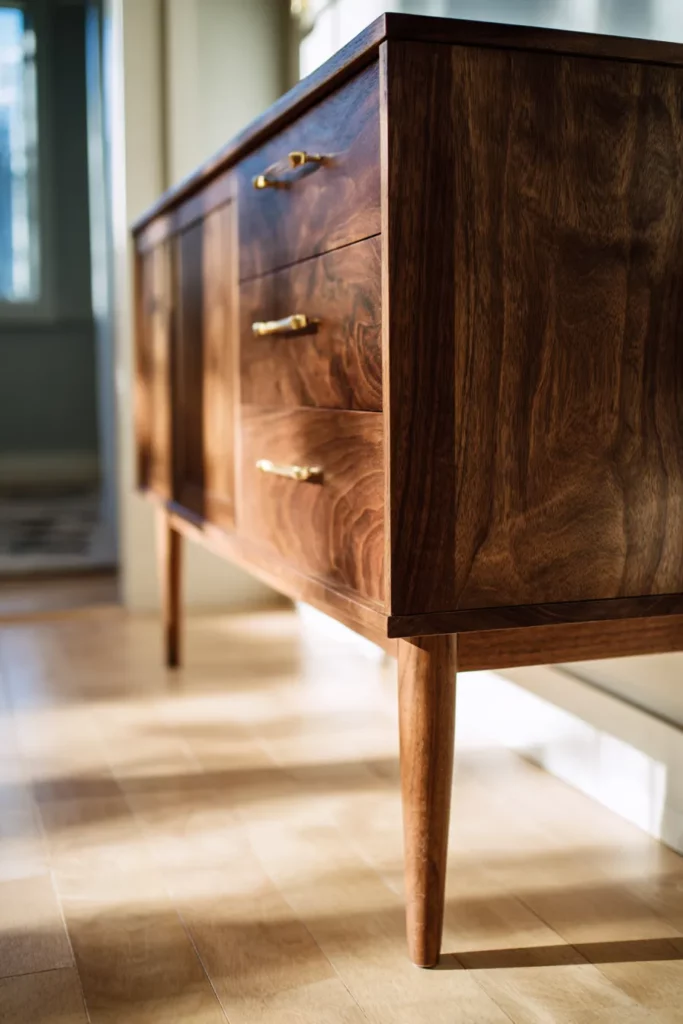
Statement vintage furniture should breathe. Give your grandmother’s velvet armchair space to shine by pairing it with a simple side table and uncluttered surroundings. Let a midcentury credenza stand against a white wall where its walnut grain and tapered legs become sculptural.
Repetition creates cohesion. If you choose brass hardware on one vintage piece, echo it in contemporary light fixtures or picture frames. If your vintage sofa features jewel tones, pull one of those colors into modern throw pillows. These subtle threads weave separate eras into one harmonious story.
Color Palettes That Bridge Time
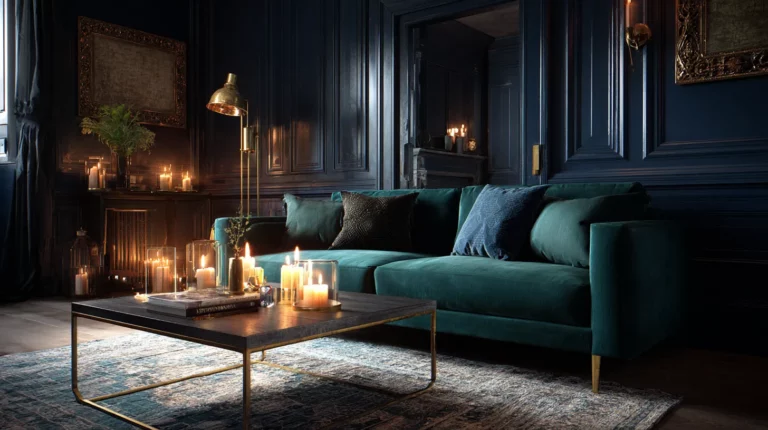
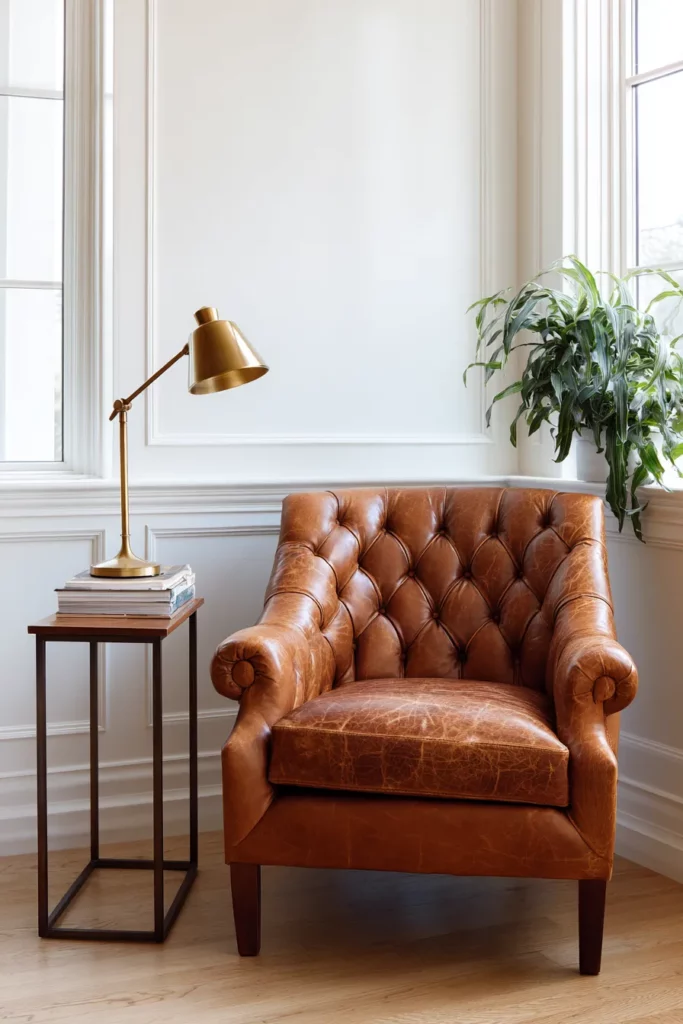
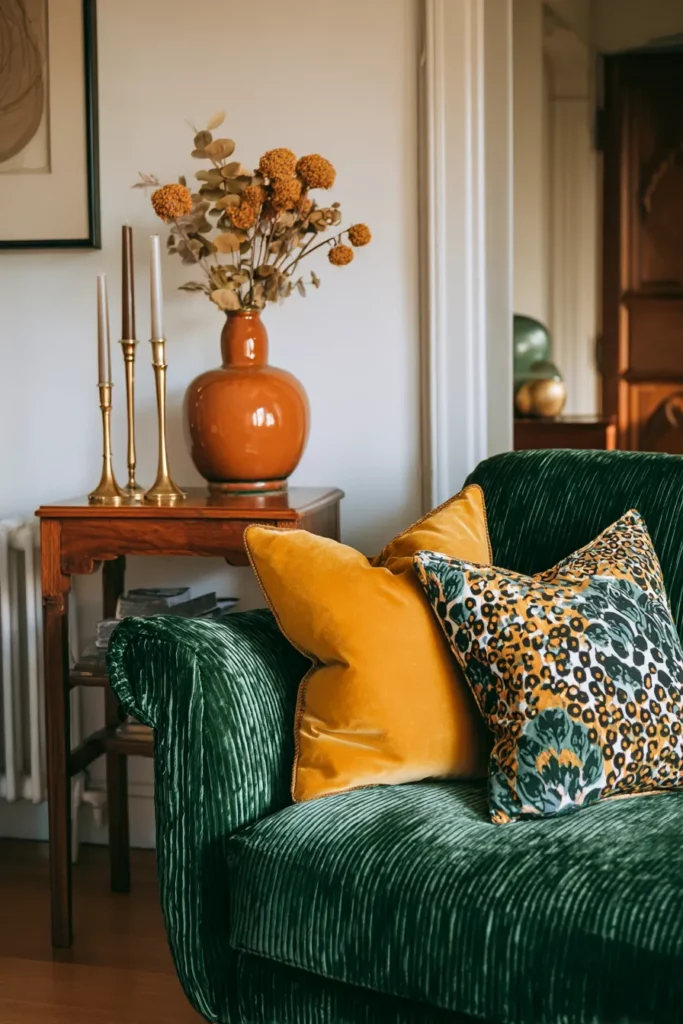
Bold colors in vintage decor often surprise people expecting only muted tones. While dusty rose, sage green, and cream certainly evoke vintage charm, don’t overlook the drama of emerald velvet, burnt orange accents, or deep navy walls.
Midcentury modern embraced optimism through color—think mustard yellow, avocado green, and warm terracotta. Art Deco leaned into luxury with black, gold, and jewel tones. Victorian styles loved rich burgundies and forest greens. Choose your era’s palette, then modernize it by using these colors more sparingly or pairing them with crisp white and natural wood.
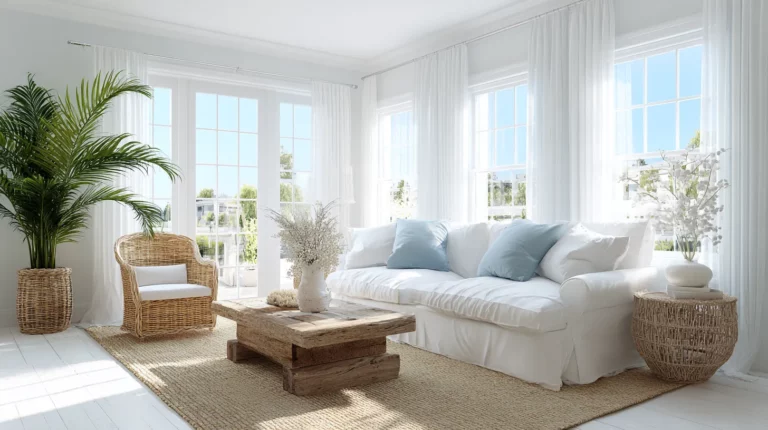
Neutrals serve as bridges. Warm whites, soft grays, and natural linen allow vintage pieces to pop while keeping the space feeling current. Layer in texture through these neutrals—a chunky knit throw, linen curtains, a jute rug—to add depth without visual noise.
Sourcing and Selecting Authentic Vintage Pieces
Finding authentic vintage treasures requires patience, but the hunt becomes part of the joy. Estate sales and antique shops offer the most genuine pieces, often with fascinating provenance. Online marketplaces have expanded access, though examine photos carefully for condition and authenticity.
Look for quality construction. Dovetail joints in drawers, solid wood frames, and metal hardware that still functions smoothly all indicate pieces worth investing in. Minor wear adds character, but structural damage may require costly repairs.
Midcentury furniture remains highly sought after—those clean lines, organic shapes, and quality craftsmanship translate beautifully into modern spaces. Brands like Lane, Broyhill, and Heywood-Wakefield offer excellent value compared to designer names like Eames or Knoll.
Don’t overlook reproduction pieces when authenticity isn’t essential. High-quality vintage-inspired furniture can capture the aesthetic at a fraction of the cost, and mixing reproductions with a few genuine vintage pieces creates the look without breaking your budget.
Refurbishing Vintage Furniture for Modern Living
How to refurbish vintage furniture for modern living starts with assessment. Can the piece serve its intended purpose, or does it need adaptation? That beautiful trunk might become a coffee table with added legs; a vintage dresser could transform into a media console with strategic interior modifications.
Preserve patina where possible—that aged finish is part of the charm. Clean with gentle, wood-appropriate products rather than harsh chemicals. For pieces that need refinishing, consider whether you want to restore them to original condition or update them with modern paint colors that help them integrate with contemporary elements.
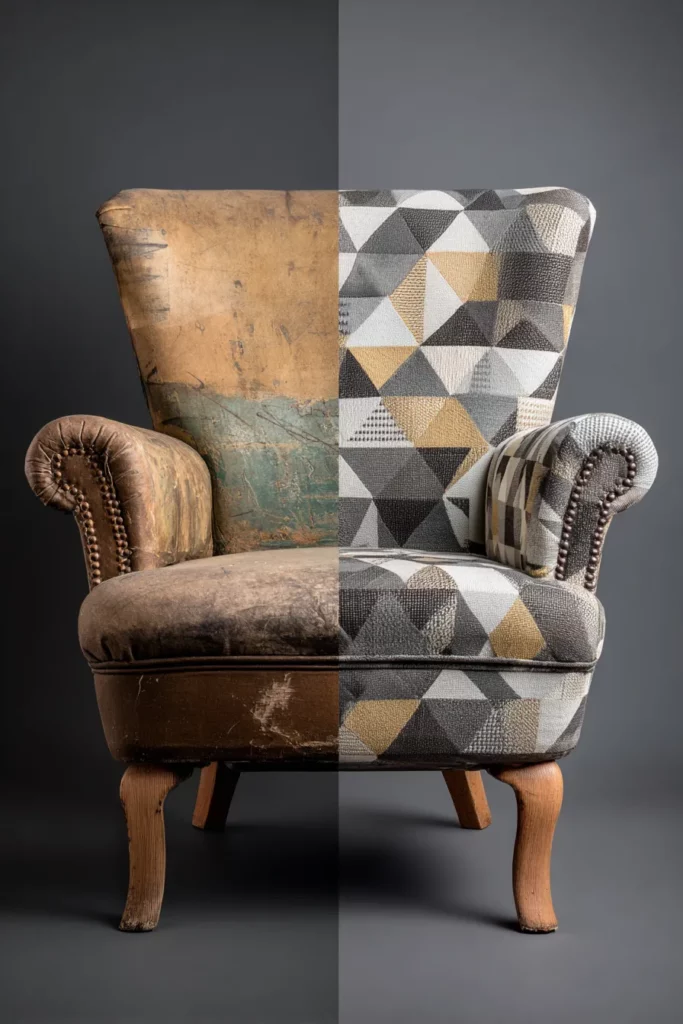
Reupholstering vintage seating breathes new life while maintaining the frame’s integrity. Choose durable, modern fabrics in colors that bridge your vintage and contemporary pieces. A 1960s chair gains fresh relevance in a bold geometric print or luxe velvet that nods to its era while feeling current.
Hardware updates can modernize without compromising vintage character. Replacing worn drawer pulls with brass or matte black options that complement the piece’s lines keeps functionality fresh while respecting its bones.
Lighting: Illuminating Vintage Ambiance
Contemporary lighting plays a crucial role in keeping vintage spaces from feeling dated. While vintage light fixtures add character, exclusively antique lighting can cast unflattering shadows and lack the functionality modern life requires.
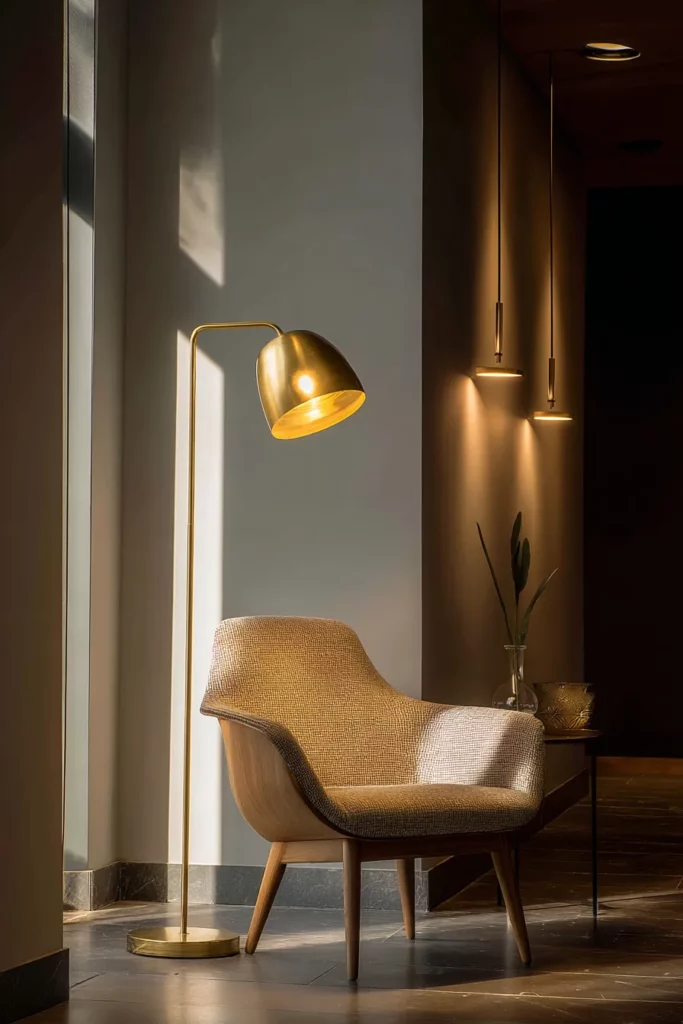
Layer your lighting intentionally. A vintage brass floor lamp provides ambient glow, while recessed LED ceiling lights offer clean, contemporary brightness for tasks. This combination honors the vintage aesthetic while ensuring the space serves real life.
Consider scale carefully. An oversized modern pendant lamp over a vintage dining table creates stunning contrast—the contemporary fixture’s bold presence highlights rather than competes with the vintage piece below. Similarly, sleek track lighting can spotlight your vintage furniture collection like gallery pieces.
Natural light enhances vintage materials beautifully. Position vintage leather chairs where afternoon sun will warm their surfaces. Let morning light illuminate the grain in your midcentury sideboard. Use sheer curtains that filter rather than block light, creating the soft, diffused quality that makes vintage spaces glow.
Creating Vintage-Inspired Spaces for Every Size
Small Living Room Solutions
How to decorate a small vintage-inspired living room requires strategic editing. Choose fewer, more impactful vintage pieces rather than cluttering the space with multiple small items. One stunning midcentury sofa makes more impact than several mediocre accent chairs.
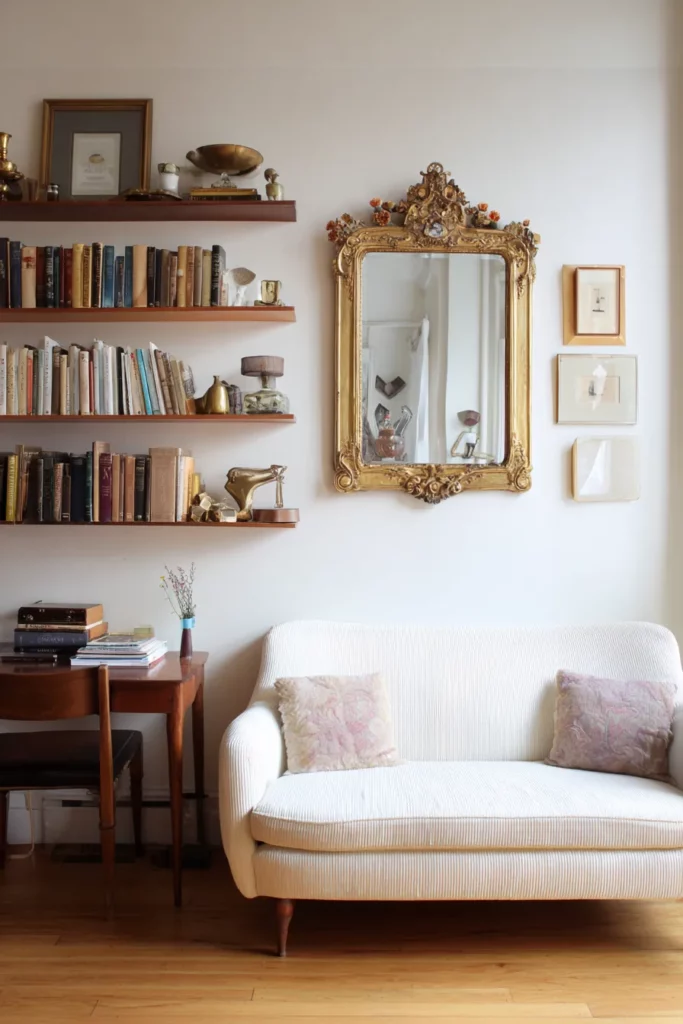
Vertical space becomes your friend. Float vintage shelving high on walls to display collections without consuming floor space. A tall, narrow vintage cabinet provides storage while drawing the eye upward, making ceilings feel higher.
Mirrors work double duty, reflecting light while visually expanding the room. Frame a vintage mirror in ornate gold for drama, or lean an oversized mirror against the wall for casual elegance. Both approaches honor vintage sensibility while keeping the space from feeling cramped.
Light colors on walls help small vintage-inspired rooms breathe. Save bold vintage colors for accents—pillows, artwork, a single accent wall—where they add punch without overwhelming limited square footage.
Large Living Room Opportunities
Spacious rooms allow for statement vintage furniture to truly shine. Create distinct conversation areas: a midcentury seating group near the fireplace, a vintage writing desk by the window, a reading nook with an antique wingback chair and brass floor lamp.
Anchor each zone with a vintage piece, then build around it with modern elements. This prevents the room from feeling like a furniture showroom while maximizing the space’s potential for different activities and moods.
Larger rooms can accommodate bolder color combinations and more dramatic vintage pieces. That ornate Victorian settee might overwhelm a small space but becomes a stunning focal point in a generous room. Grand vintage rugs can define areas without walls, creating intimacy within openness.
Must-Have Vintage Accessories and Accents
Retro accent pieces complete the vintage story without requiring major investment or commitment. These smaller touches layer in personality and can easily rotate with your mood or the seasons.
Essential vintage accessories include:
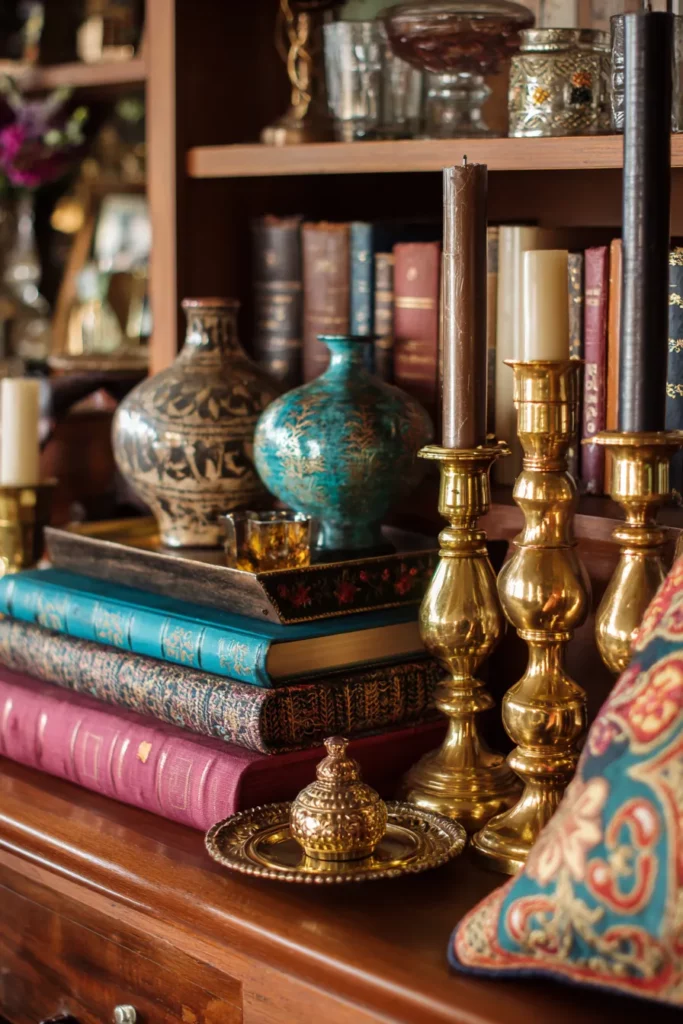
- Brass or copper candlesticks in varying heights
- Vintage books with beautiful spines arranged by color
- Ceramic or pottery vases in organic shapes
- Antique trays for corralling remotes and coasters
- Vintage textiles—quilts, embroidered pillows, woven throws
- Old maps, botanical prints, or vintage photography in vintage frames
- Retro barware or decorative glassware displayed on open shelving
- Aged wooden bowls and boxes for storage with character
Group accessories in odd numbers for visual interest. Three vintage brass candlesticks of different heights create more impact than two identical ones. Layer vintage textiles—a quilt over the sofa arm, embroidered pillows against linen cushions—to build texture and warmth.
Don’t forget the power of vintage-inspired plants and planters. Terracotta pots, brass planters, and ceramic vessels in retro colors bring life to vintage corners while connecting the past with nature’s timeless beauty.
Artwork and Wall Decor in Vintage Spaces
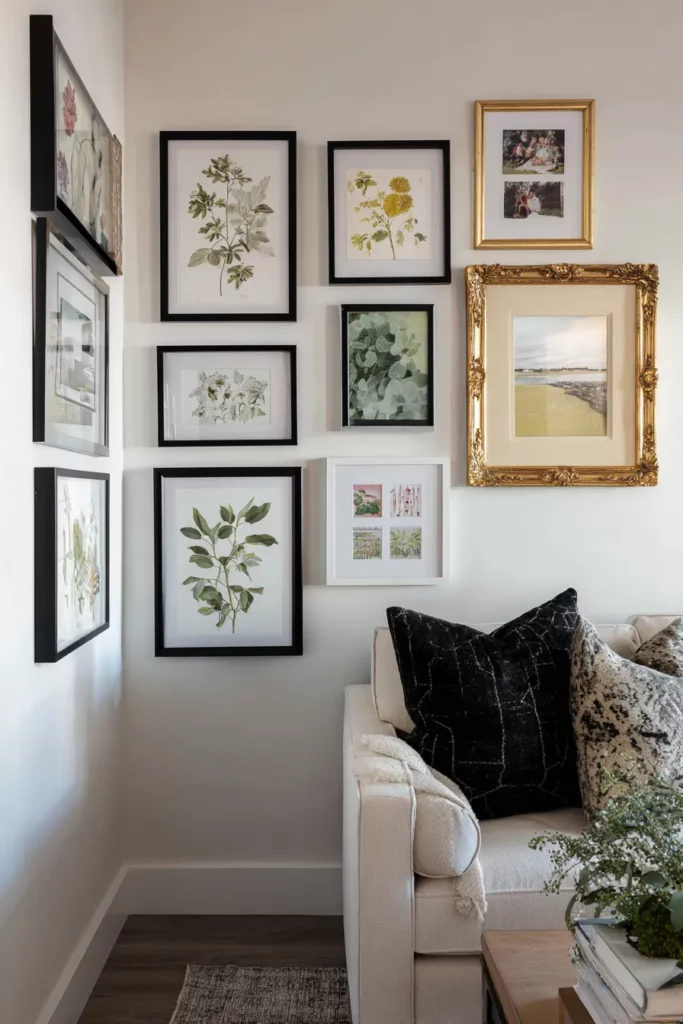
Art bridges eras beautifully. Hang contemporary pieces in vintage frames, or display vintage artwork in sleek modern frames. This mixing prevents your walls from feeling too literal while honoring both aesthetics.
Create a gallery wall that tells your story. Mix vintage family photographs, antique botanical prints, and contemporary art in a cohesive color palette. The variety creates interest while the unified colors maintain harmony.
Vintage mirrors serve double duty as art and light enhancers. An ornate gilded mirror above a modern console creates striking contrast. A collection of vintage hand mirrors displayed on a wall becomes sculptural art with practical origins.
Consider the negative space around your wall decor. Vintage pieces often feature intricate detail; giving them breathing room allows the eye to appreciate their craftsmanship without visual competition.
Textiles and Soft Furnishings
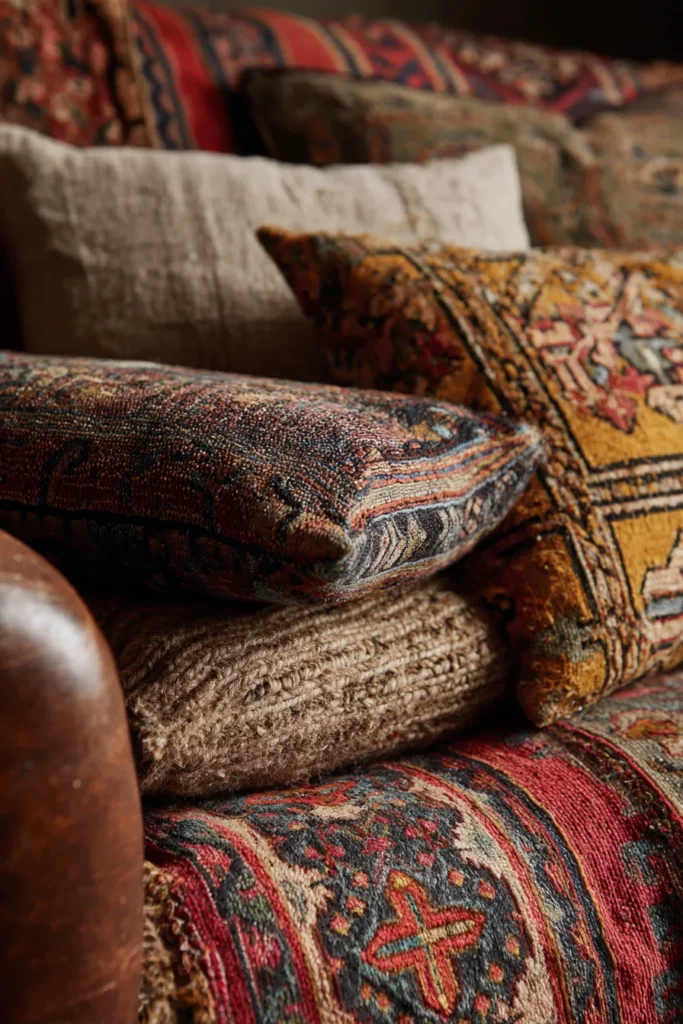
Vintage textiles add instant warmth and authenticity. A genuine Persian rug grounds modern furniture while telling stories of distant origins. Vintage quilts become throws or wall hangings, their stitched patterns adding handmade charm no new item can replicate.
Layer textures for depth. Velvet cushions against linen upholstery. A chunky knit throw over worn leather. Silk curtains framing cotton sheers. These combinations feel collected over time rather than purchased in one shopping trip.
Natural fibers align with vintage sensibility—wool, cotton, linen, silk all age beautifully and carry inherent texture. Choose them in both vintage pieces and new additions to create material continuity across eras.
Maintenance matters for preserving vintage textile beauty. Gentle cleaning, proper storage, and protecting fabrics from direct sunlight extends their life while allowing you to enjoy these treasures daily.
Maintaining Vintage Charm Over Time
Maintenance tips to preserve vintage charm center on respect for materials and gentle care. Dust vintage wood furniture with soft cloths, using appropriate wood cleaners sparingly. Polish brass and copper when tarnish begins to obscure detail, but remember that some patina adds character.
Rotate displayed vintage items occasionally. Sunlight fades fabrics and can damage finishes, so moving pieces prevents uneven wear. This also refreshes your space, allowing different vintage treasures to take center stage.
Address repairs promptly. A loose chair leg becomes a broken chair if ignored; a small tear in vintage upholstery expands with use. Find craftspeople who specialize in vintage furniture restoration for pieces that need professional attention.
Document your vintage pieces—their origin stories, any repairs or modifications, and their approximate age. This information increases their value and helps you care for them appropriately.
Quick Reference Checklist: Your Vintage-Inspired Living Room
- Foundation pieces: Start with 2-3 statement vintage furniture items (sofa, chairs, or storage pieces)
- Balance ratio: Maintain 60-70% vintage with 30-40% modern elements
- Color strategy: Choose one vintage era’s palette, modernize with restraint and neutrals
- Lighting layers: Combine vintage ambient lighting with contemporary task lighting
- Texture variety: Mix wood, metal, glass, and textiles for sensory richness
- Scale consideration: Match furniture size to room dimensions
- Authentic touches: Include at least a few genuine vintage pieces for soul
- Breathing room: Allow space around statement pieces
- Personal story: Display items with meaning, not just aesthetic appeal
- Flexibility: Keep some elements easy to change with seasons or mood
Bringing It All Home
Creating a vintage-inspired living room is an act of curation, not collection. It’s about choosing pieces that speak to you, that carry weight and meaning, that make your heart lift when you enter the room.
This is your space to honor what came before while living fully in the present. To wrap yourself in a velvet throw under a brass lamp’s warm glow. To run your hand along wood grain that remembers other hands, other homes, other stories.
Let your vintage-inspired living room be more than beautiful. Let it be yours—layered with memories you’re making now, anchored by pieces that have weathered time, elevated by modern touches that prove the past and present belong together.
Because the most timeless rooms aren’t those frozen in a single era, but those that gather the best of many moments into something entirely, wonderfully new.
Frequently Asked Questions
How do you create a vintage-inspired living room on a budget?
Start with one genuine vintage statement piece from estate sales or thrift stores, then build around it with affordable vintage-inspired reproductions. Focus on accessories—vintage frames, brass candlesticks, old books—which cost less than furniture but layer in authentic character. DIY refurbishing projects like painting thrifted furniture or reupholstering chairs with modern fabrics stretch budgets while adding personal touches.
What’s the difference between vintage, antique, and retro furniture?
Vintage furniture is typically 20-100 years old with authentic period construction. Antiques are over 100 years old and often more valuable. Retro describes new furniture made in vintage styles—reproductions that capture the aesthetic without the age. All three can work in a vintage-inspired living room, depending on your budget, preference for authenticity, and willingness to hunt for genuine pieces.
Can you mix different vintage eras in one living room?
Yes, mixing eras creates rich, collected-over-time appeal. The key is finding common threads—similar wood tones, complementary color palettes, or repeated materials like brass or velvet. A Victorian armchair can coexist with a midcentury credenza if both share warm wood tones and you balance them with neutral modern elements. Limit yourself to 2-3 distinct eras to maintain cohesion.
How do I know if vintage furniture is worth refurbishing?
Examine the frame construction—solid wood and quality joinery indicate pieces worth saving. Test stability by gently pushing on arms and legs. Check for wood damage beyond surface scratches; deep cracks or water damage may not be worth repairing. Consider the piece’s style and scale for your space. If the bones are good and the design speaks to you, refurbishing almost always costs less than buying comparable quality new.
What colors make a vintage living room feel modern instead of dated?
Use vintage colors as accents rather than overwhelming the space. Pair jewel-toned vintage furniture with crisp white walls and natural wood. Choose one or two bold vintage colors (emerald, mustard, burnt orange) and balance them with plenty of neutrals—gray, cream, warm white. Modern black accents through contemporary lighting or window frames also help vintage colors feel curated and current rather than stuck in time.