
Table of Contents
There’s a moment — maybe you’ve felt it — when you walk into a room and something inside you settles. The air feels quieter. The light lands softly. Everything around you seems to belong exactly where it is. That feeling has a name, and it lives at the intersection of two beautiful design philosophies: Japanese wabi-sabi and Scandinavian hygge.
Welcome to Japandi.
Japandi living room decor is more than a trend. It’s a return to what a home is really for: rest, breath, and meaning. It strips away the excess and invites in only what is beautiful, functional, or deeply loved. The result is a space that feels like an exhale.
At ERYLIN, we believe your living room should do more than look good in photographs. It should hold you. Whether you’re decorating a compact apartment in Metro Manila or styling a spacious sala in a suburban home, Japandi gives you a framework for a space that feels genuinely alive — unhurried, warm, and yours.
What Is Japandi Style in Living Rooms?
Japandi design blends the best of Japanese minimalism and Scandinavian warmth into one cohesive aesthetic. From Japan, it borrows wabi-sabi — the art of finding beauty in imperfection and impermanence. From Scandinavia, it takes hygge — the deep, cozy comfort of a well-lived home.
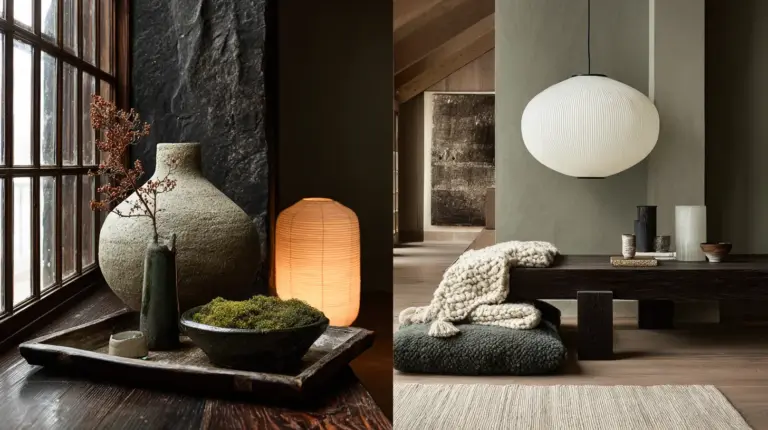
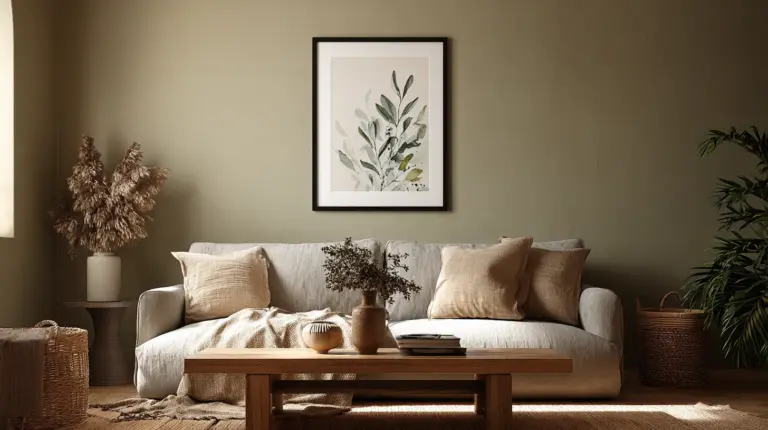
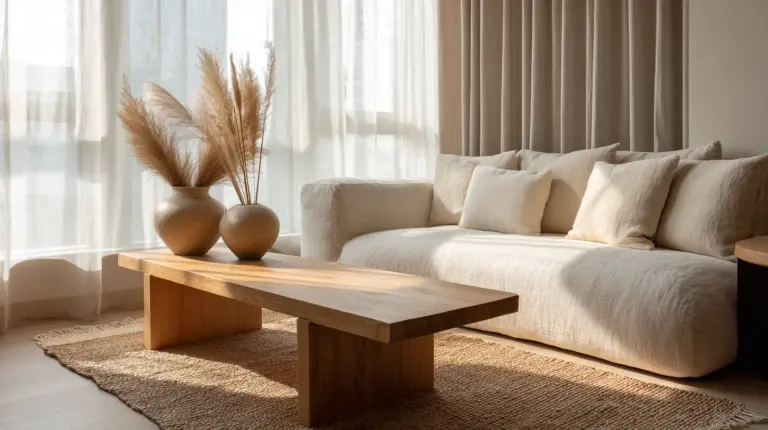
In a Japandi living room, you’ll find low-profile furniture with clean lines, a muted palette of earth and stone tones, natural materials like wood and linen, and intentional empty space. Nothing shouts. Everything breathes.
What makes Japandi feel so livable is its refusal to be cold. Unlike stark minimalism, it softens every clean line with texture — a woven throw, a rough ceramic vase, the grain of solid oak. The room feels curated, not clinical.
Japandi Color Palette: Tones That Calm the Mind
The first thing that defines a Japandi living room is its color story. These are not bold, attention-grabbing hues. They’re the colors of morning mist, river stones, and linen drying in the sun.
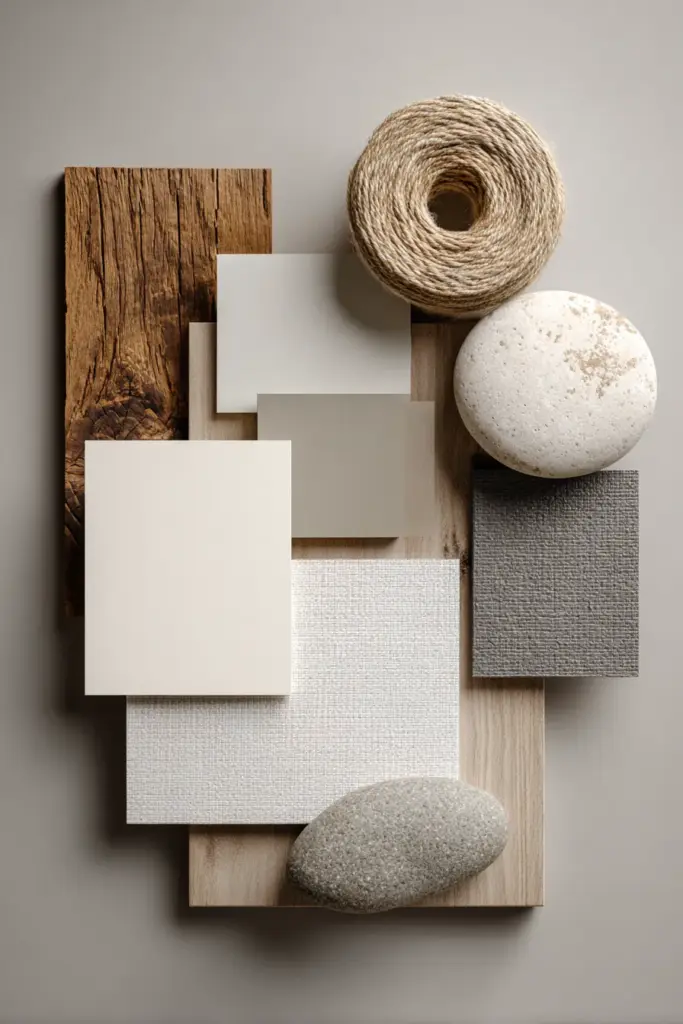
Core Japandi Colors
| Color | Mood | Where to Use |
|---|---|---|
| Warm White / Cream | Airy, open | Walls, ceiling, large sofas |
| Taupe | Grounded, focused | Rugs, accent walls, cabinetry |
| Soft Greige | Neutral warmth | Cushions, drapery |
| Charcoal / Matte Black | Quiet contrast | Furniture legs, frames, fixtures |
| Warm Beige | Inviting, earthy | Throws, upholstery |
| Dusty Sage | Organic calm | Accent pieces, plant pots |
Taupe is the quiet hero of Japandi design. Research in color psychology shows that taupe — a blend of grey and brown — encourages calm focus and reduces visual stress. It’s an ideal choice for living rooms where you want the mind to rest.
Avoid bright whites that feel sterile, and resist the pull of too many colors. The power of Japandi is in its restraint.
Natural Materials: The Soul of a Japandi Living Room
In Japandi spaces, materials are never decorative afterthoughts — they carry meaning. You choose wood because it was once alive. You choose linen because it breathes. Every material tells a story of origin and care.
Wood
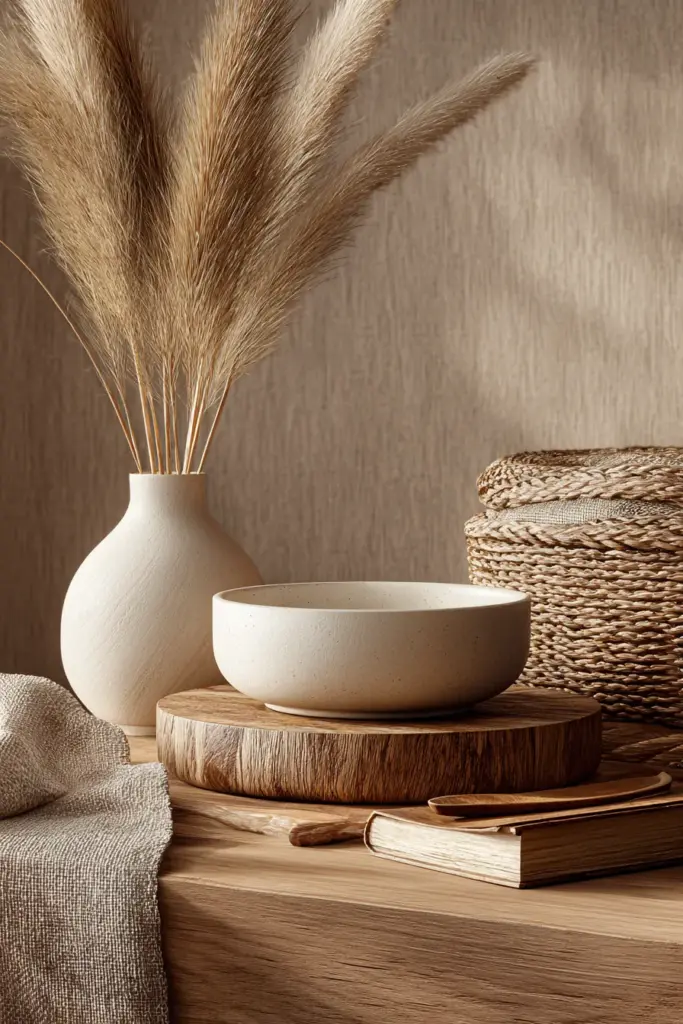
The most essential Japandi material is wood. Look for light to medium tones — oak, ash, beech, or local hardwoods with visible grain. In the Philippines, bamboo and locally sourced acacia are stunning Japandi-aligned choices, carrying both cultural resonance and eco-conscious values. Silang and the wider Calabarzon region offer craftspeople who work beautifully with these materials.
Matte or oil finishes are preferred over high gloss. The wood should feel like it belongs to the earth, not a showroom floor.
Linen and Natural Textiles
Linen sofa covers, jute rugs, cotton-knit throws — these are the textures that make a Japandi room feel touchable. Layer them thoughtfully: a chunky woven rug underfoot, a linen cushion against a smooth wooden frame.
Avoid synthetics where you can. The tactile difference between a natural linen cushion and a polyester one is immediate — and it matters.
Rattan and Woven Elements
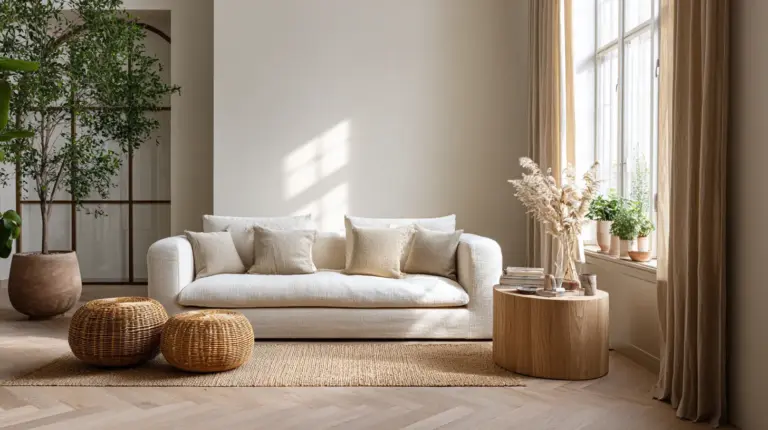
A rattan side table or woven pendant light adds the handmade quality central to both Japanese craft traditions and Scandinavian folk design. These pieces remind us that beautiful things were made by human hands.
Japandi Furniture: Low, Honest, and Built to Last
Japandi furniture follows a simple principle: close to the earth, honest in construction, useful in purpose.
Low-Profile Sofas and Seating
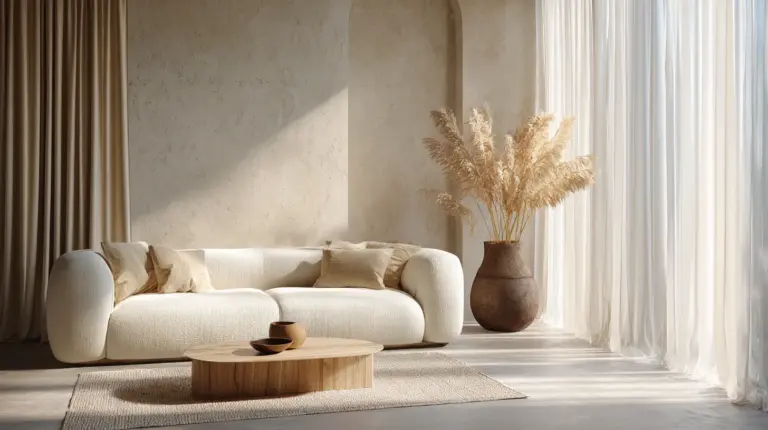
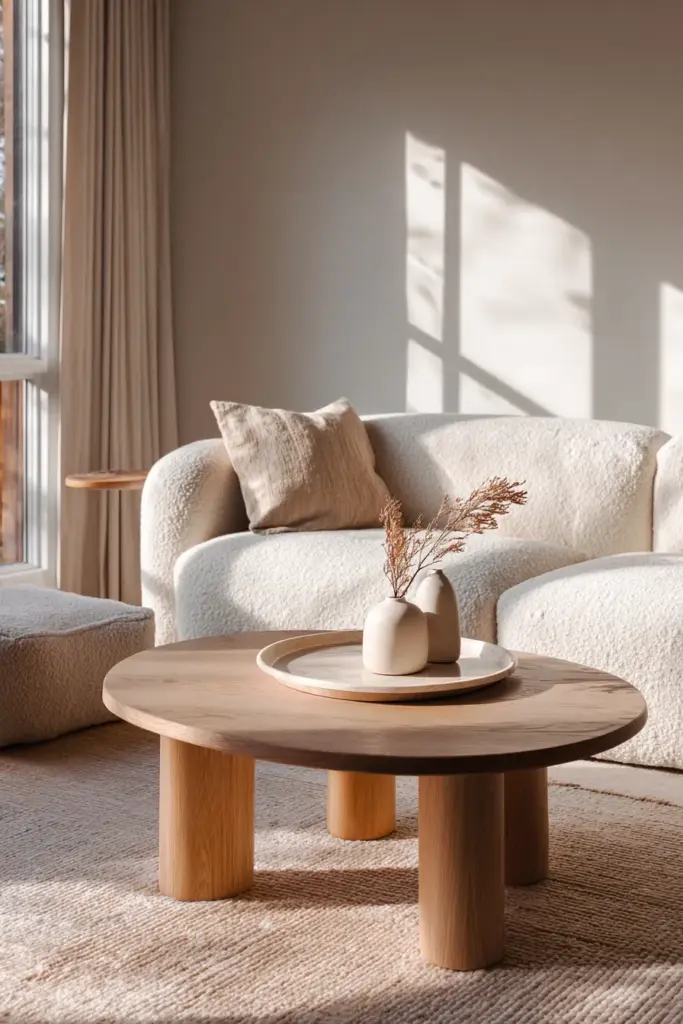
Choose a sofa that sits low — this lowers the visual center of gravity and makes a room feel expansive even when it’s small. Straight, clean lines are preferred over curved or ornate shapes. Linen or bouclé upholstery in warm white or oatmeal anchors the palette beautifully.
A floor cushion or two adds flexibility and layers the room with an unmistakably Japanese sensibility.
Coffee Tables and Side Tables
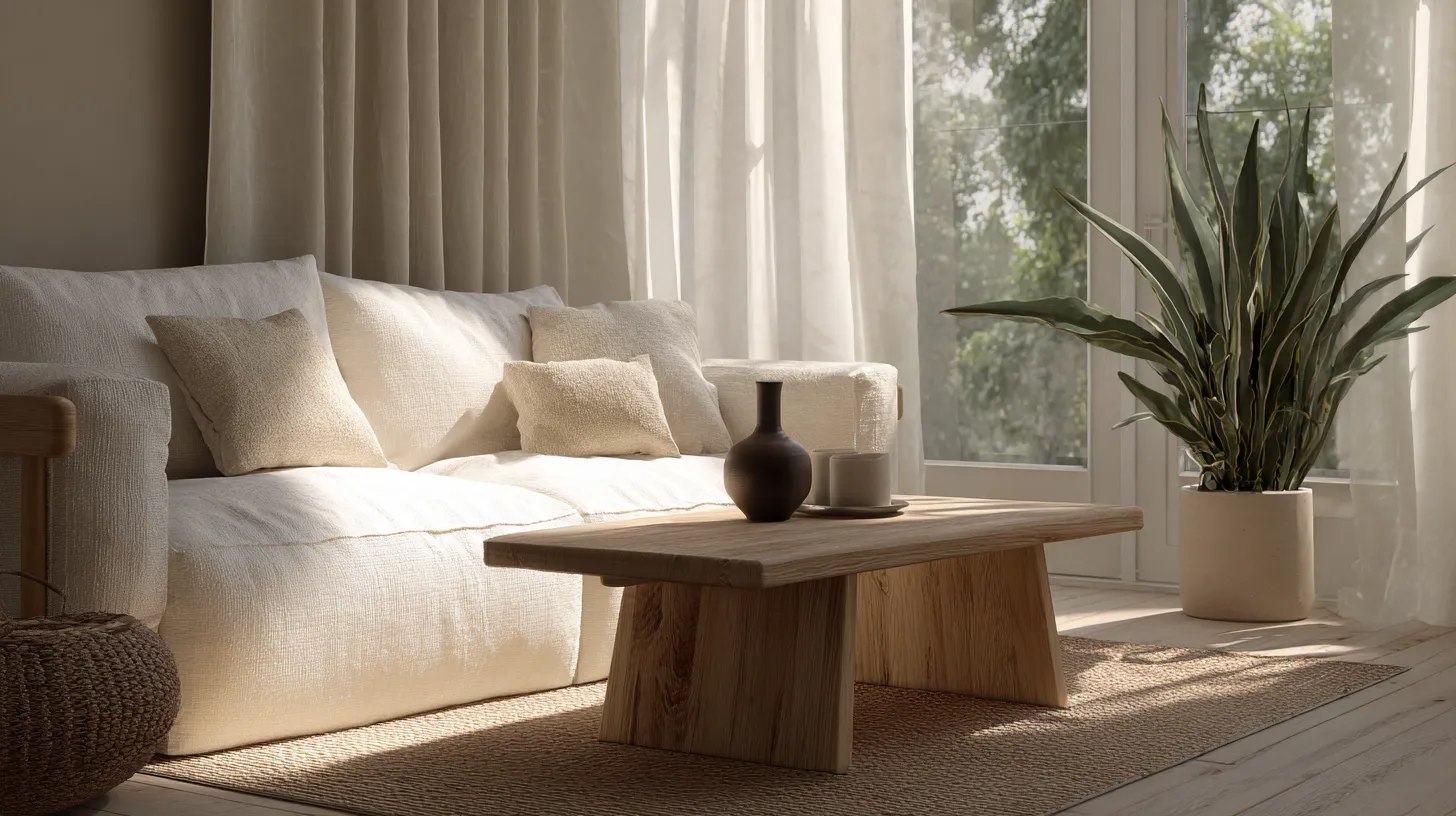
A solid wood coffee table with tapered legs is a Japandi icon. Keep surfaces clear — a single ceramic tray, a small plant, one book. The table is an object of beauty, not a landing pad for clutter.
For smaller living rooms, a nesting table set is a smart Japandi choice: functional, flexible, and visually light.
Multifunctional Furniture for Small Spaces
If you’re working with a compact Filipino living room, multifunctional furniture is your ally. A storage ottoman in natural linen does triple duty — seating, footrest, and hidden storage. A low wooden bench at the foot of a sofa can hold blankets, display plants, or offer extra seating for guests.
The Japandi philosophy of ma — the Japanese concept of negative space — reminds us that empty space is not wasted space. It is breathing room. Choose furniture thoughtfully, and resist the urge to fill every corner.
Lighting Ideas for a Japandi Living Room
Light in a Japandi room is never harsh. It’s warm, layered, and intentional — like candlelight at a dinner table or afternoon sun through sheer curtains.
Natural Light First
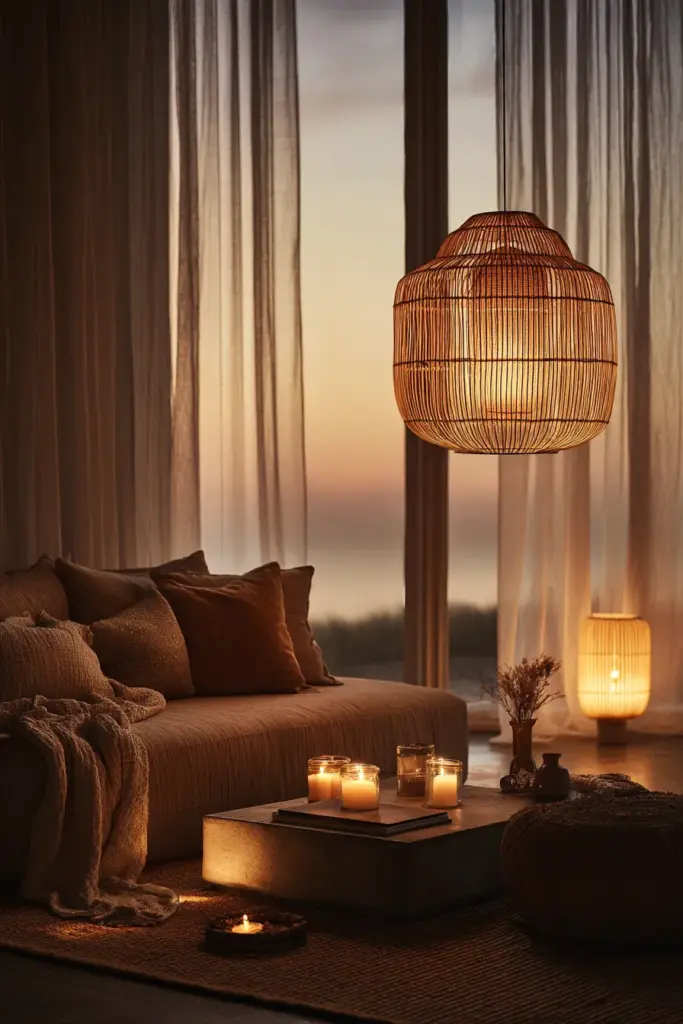
Position your furniture to maximize natural light. Use sheer linen curtains instead of heavy drapes — they diffuse sunlight into a golden, ambient glow while maintaining privacy. This simple swap transforms the quality of a room dramatically.
Layered Artificial Lighting
Avoid relying on a single ceiling fixture. Instead, layer your light:
- Floor lamps with a warm-toned bulb (2700K–3000K) for ambient softness
- Table lamps with washi paper or linen shades for a Japanese lantern feel
- Candles or tea lights during evening hours — the flicker adds life and warmth
Matte black or aged brass fixtures align beautifully with Japandi’s quiet palette. Pendant lights in woven rattan or frosted glass are particularly at home in this aesthetic.
2026 Trend: Smart Hygge Lighting
Tunable smart bulbs that shift from cool daylight to warm amber as the evening progresses are becoming a core Japandi upgrade. They support the body’s natural rhythms and give your living room an almost ceremonial quality at dusk — a moment of transition built into the design itself.
Bringing Nature Indoors: Plants in a Japandi Living Room
Biophilic design — the practice of connecting interiors with the natural world — is central to Japandi living. Plants are not accessories. They are living presences that soften hard lines, clean the air, and remind us that growth is always possible.
Best Plants for Japandi Living Rooms
| Plant | Light Need | Why It Works |
|---|---|---|
| Snake Plant | Low to medium | Sculptural, architectural, air-purifying |
| Fiddle Leaf Fig | Bright indirect | Statement height, beautiful silhouette |
| Pothos | Low | Trailing softness, incredibly forgiving |
| ZZ Plant | Low | Glossy leaves, thrives on neglect |
| Peace Lily | Low | White blooms, humidity-loving |
For Philippine homes in Calabarzon’s humid climate, low-light, humidity-tolerant plants like snake plants, pothos, and peace lilies are ideal. They require minimal intervention and resist the mold issues that can affect plants in tropical environments.
How to Style Plants in Japandi Spaces
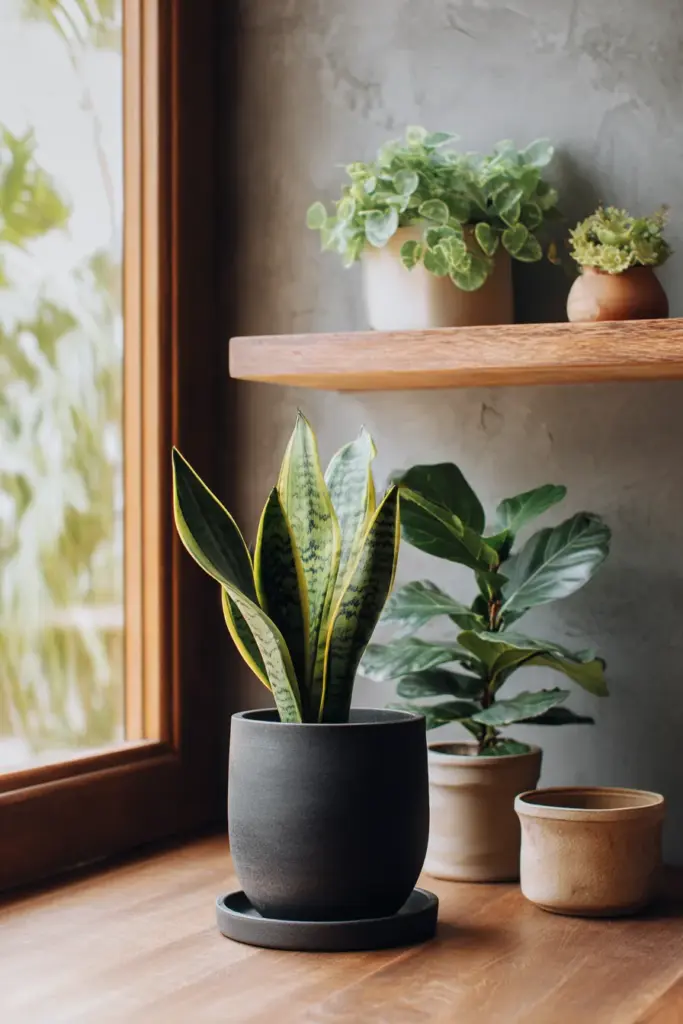
Display plants in matte ceramic pots in warm white, terracotta, or charcoal. Avoid plastic nursery pots. The container is part of the composition.
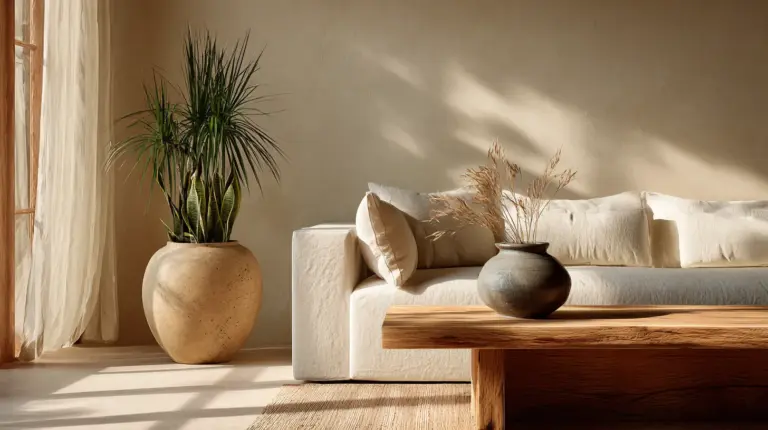
A single large plant — a fiddle leaf fig in a corner, a snake plant beside a low sofa — makes more visual impact than many small plants scattered around. Choose placement deliberately.
Texture and Layering: The Art of Tactile Warmth
Japandi rooms earn their warmth through texture. This is where the design comes alive — not in bold colors or statement furniture, but in the layered sensation of materials working together.
The Japandi Texture Palette
- Woven jute or sisal rugs — grounding, natural underfoot
- Chunky knit or linen throws — draped casually over a sofa arm
- Smooth matte ceramics — on coffee tables or shelving
- Rough-hewn wood — in furniture joints or decorative objects
- Shoji-inspired panels — for room dividers or window treatments
The play between rough and smooth, matte and slightly reflective, is what gives a Japandi room its sensory depth. Run your hand across a linen cushion and then a ceramic bowl beside it — that contrast is the texture conversation your room is having with itself.
Reading Nooks and Quiet Corners
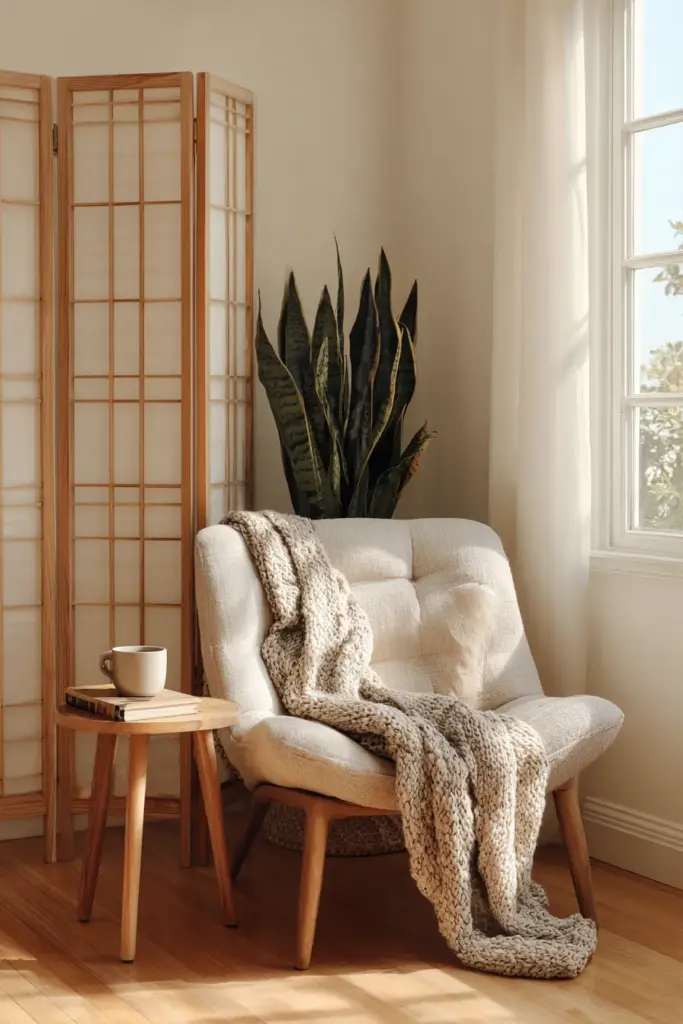
One of the most beloved expressions of Japandi design is the intentional quiet corner — a reading nook, a meditation spot, a window seat with a single cushion and a small plant.
Create yours with a low armchair or floor cushion near a window. Add a small side table for tea or a book. Keep the area uncluttered. This is your ma — your breathing space within the room.
A shoji-inspired floor screen nearby can define the nook without closing it off, maintaining the open flow of the room while creating a sense of intimate enclosure.
Shelving and Decor: The Japandi Edit
In Japandi design, less is genuinely more. Every object on a shelf earns its place through beauty, meaning, or function.
How to Style Japandi Shelves
- Leave at least 40% of shelf space empty
- Group objects in odd numbers (3 or 5 feels most natural)
- Mix heights: a tall ceramic vase, a small sculptural object, a single book
- Choose a limited palette — avoid rainbow arrangements of objects
- Include one organic element: a dried branch, a smooth river stone, a small plant
Avoid: decorative letters, overly graphic prints, shiny metallic finishes, and anything that feels mass-produced without character.
Japandi on a Budget: Practical Ideas Under PHP 50,000
Beautiful Japandi spaces don’t require luxury price tags. Many of the most compelling Japandi rooms are built slowly, thoughtfully, and affordably.
Budget-Friendly Japandi Strategies
- Repurpose local wood — reclaimed palochina or acacia from furniture makers in Laguna and Cavite can be transformed into coffee tables, shelves, and frames
- Shop secondhand — ukay-ukay finds and vintage markets often yield simple wooden furniture perfect for Japandi styling
- IKEA hacks — IKEA’s solid wood and simple-line pieces (LACK tables, KALLAX shelving) are natural Japandi canvases, especially when updated with wood stain or natural hardware
- DIY rattan accents — rattan placemats repurposed as wall art or cabinet inserts add texture at minimal cost
- Declutter first — the single most impactful Japandi transformation costs nothing
| Item | Approximate Cost (PHP) |
|---|---|
| Jute area rug (local market) | 800–2,500 |
| Ceramic plant pots (set of 3) | 500–1,200 |
| Linen throw or cushion covers | 400–900 each |
| Secondhand wooden coffee table | 1,500–4,000 |
| Woven pendant light | 1,200–3,500 |
| Snake plant with ceramic pot | 300–700 |
A Japandi-inspired living room transformation can absolutely be achieved under PHP 50,000 — especially when you lead with decluttering, invest in one or two quality anchor pieces, and build the rest gradually.
Your Japandi Living Room Checklist
Use this as your practical guide when pulling together your space:
Palette
- Walls in warm white, soft cream, or greige
- Accent tones in taupe, charcoal, or dusty sage
- No more than three primary colors in the palette
Furniture
- Low-profile sofa in linen or bouclé
- Solid wood coffee table (matte or oil finish)
- Minimal, purposeful side table
- One or two floor cushions for layered seating
Materials
- Natural wood with visible grain
- Linen, cotton, or jute textiles
- Matte ceramic accessories
- Rattan or woven accent pieces
Lighting
- Sheer linen curtains for natural light
- Layered: floor lamp + table lamp + candles
- Warm-toned bulbs (2700K–3000K)
Plants
- One to three plants, thoughtfully placed
- Matte ceramic pots in neutral tones
- Low-light species for Philippine humidity (snake plant, pothos, ZZ plant)
Decor
- Shelves 40% empty
- Objects grouped in threes or fives
- One intentional quiet corner or reading nook
- No excess — every object earns its place
Conclusion
A Japandi living room is not built in a weekend. It’s assembled over time, with attention and intention — one chosen object, one cleared surface, one moment of deciding what really belongs.
What you’re creating is not a showpiece. It’s a sanctuary. A room that holds the light differently in the morning. That feels different beneath your feet on a slow Sunday. That quiets the noise of a full week with nothing more than the honest beauty of wood, linen, and a plant in the corner doing exactly what it was made to do.
At ERYLIN, we believe that the most beautiful spaces are the most honest ones — rooms that reflect who you truly are, and who you’re becoming. Begin where you are. Begin with one breath, one cleared shelf, one thing that makes you feel at home.
Frequently Asked Questions
What is Japandi style in living rooms?
Japandi is a design aesthetic that fuses Japanese minimalism and Scandinavian warmth. In living rooms, it’s expressed through a neutral color palette, natural materials like wood and linen, low-profile furniture, and intentional empty space — creating a space that feels both calm and genuinely livable.
How do I style a Japandi living room on a budget?
Start by decluttering — it costs nothing and makes the biggest difference. Invest in one or two quality natural-material pieces (a jute rug, a solid wood table), repurpose local woods like acacia or reclaimed palochina, and use IKEA’s simple-line furniture as a Japandi base. In the Philippines, you can build a Japandi-inspired sala for under PHP 50,000 with thoughtful sourcing.
What colors are used in Japandi living rooms?
Japandi relies on a grounded, muted palette: warm white and cream for walls and large furniture, taupe and greige for textiles and accents, charcoal or matte black for contrast in furniture legs and fixtures, and dusty sage for plants and occasional accent pieces. The key is limiting your palette to two or three tones and allowing the natural colors of wood and linen to do much of the work.
What furniture fits Japandi living room decor?
Look for low-profile sofas with clean straight lines, solid wood coffee tables with tapered legs, and multifunctional storage pieces like linen ottomans. Furniture should have an honest, handcrafted quality — visible joinery, natural finishes, and a sense of permanence. Avoid ornate shapes, high-gloss finishes, and anything that feels purely decorative.
How do I add plants to a Japandi living room?
Choose one to three plants and place them deliberately — a large snake plant in a corner, a small pothos trailing from a shelf. Use matte ceramic pots in white, terracotta, or charcoal. For Philippine homes in humid climates like Calabarzon, prioritize low-light, humidity-tolerant species like snake plants, ZZ plants, pothos, and peace lilies. Let each plant be a considered presence, not filler.