
Table of Contents
There’s a particular stillness that settles into a well-designed room. You feel it the moment you step inside — the quiet hum of natural materials, the way light pools softly across the floor, the sense that everything belongs exactly where it is.
That feeling has a name, and it lives at the intersection of Japanese wabi-sabi and Scandinavian hygge. It’s called Japandi — and it begins, quite literally, from the ground up.
Your floor is the largest surface in the room. It sets the tone before a single piece of furniture is placed. Choose it thoughtfully, and everything else — your low-slung sofa, your raw linen cushions, your ceramic bowl catching afternoon light — will fall beautifully into place.
This guide will walk you through every flooring decision for a Japandi living room: the best materials, the right colors, the ideal finishes, and how to keep it all looking effortless for years to come.
What Makes Japandi Flooring Different
Japandi flooring isn’t just about looks. It’s about feeling.
The right floor should feel grounded underfoot — slightly warm, never slick, never loud. It should whisper of forests and stone, not shout for attention. Every material choice carries meaning in Japandi design: restraint, honesty, and a deep respect for nature.
The core qualities of a Japandi floor:
- Light to mid-tone natural palette (pale oak, soft ash, warm greige)
- Matte or low-sheen finish that absorbs rather than reflects
- Natural or nature-inspired materials: wood, bamboo, stone, or quality LVT
- Clean lines — no busy patterns, no high-contrast graining
- Tactile warmth, even in cooler-toned rooms
The Best Flooring Materials for a Japandi Living Room
Engineered Wood: The Quiet Gold Standard
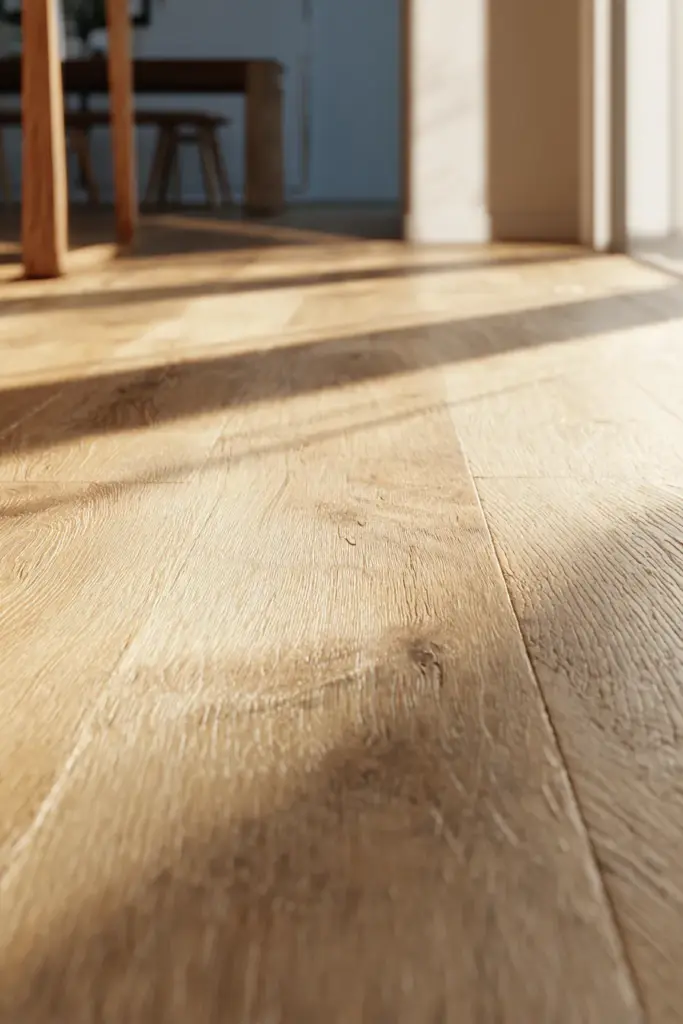
For most Japandi living rooms, light-tone matte engineered wood is the closest thing to a perfect answer.
It carries the organic warmth of real timber without the sensitivity of solid wood. Pale oak, whitewashed ash, and natural birch are all beautiful choices — they read as honest materials without demanding center stage.
The layered construction of engineered wood also makes it more stable in varying humidity, which matters if you live somewhere warm and wet (more on that below).
Tips for choosing engineered wood for Japandi:
- Choose wide planks (180mm and above) for a calm, unbroken visual flow
- Look for a brushed or wire-brushed surface texture — it softens the look and hides minor wear
- Stick to a matte or satin finish; gloss will break the spell entirely
Bamboo: The Sustainable Soulmate
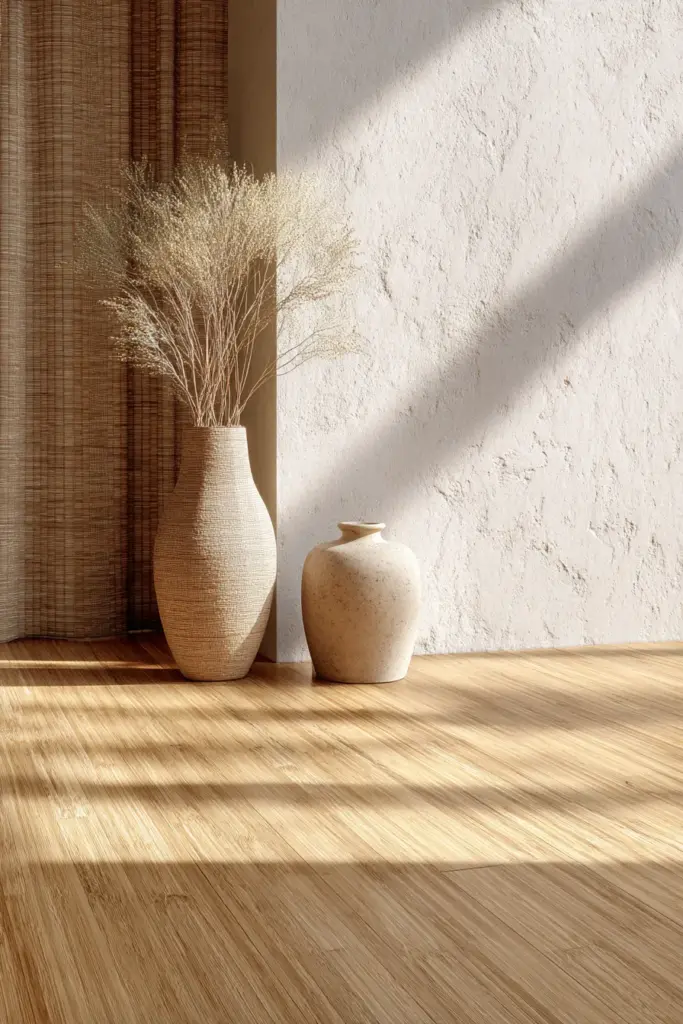
Bamboo is deeply at home in Japandi spaces. It carries the spirit of Japanese interiors — lightweight, renewable, quietly beautiful.
Strand-woven bamboo is especially durable and comes in warm blonde and pale caramel tones that layer effortlessly with linen, rattan, and soft ceramic textures. It feels slightly cooler underfoot than wood, which is a subtle pleasure in warmer climates.
What to look for:
- Horizontal or strand-woven cut for the most refined appearance
- Avoid carbonized bamboo if you want a lighter palette — it reads darker and warmer
- Pair with a natural bamboo or rattan accent piece to echo the material story
Light-Tone LVT and Vinyl Plank: The Practical Poet
Luxury vinyl tile (LVT) has come remarkably far. Today’s best options are nearly indistinguishable from real wood — and in a Japandi room lit by soft, diffused light, the difference melts away entirely.
LVT is ideal if you:
- Have underfloor heating (more on that below)
- Live in a high-humidity environment
- Want a budget-friendly but beautiful result
Choose a light oak, pale birch, or soft greige wood-look plank. Keep the embossing subtle. The goal is calm, not convincing — and with the right rug and furniture, the floor becomes atmosphere, not a focal point.
Concrete and Stone-Look Tile: The Minimalist’s Canvas
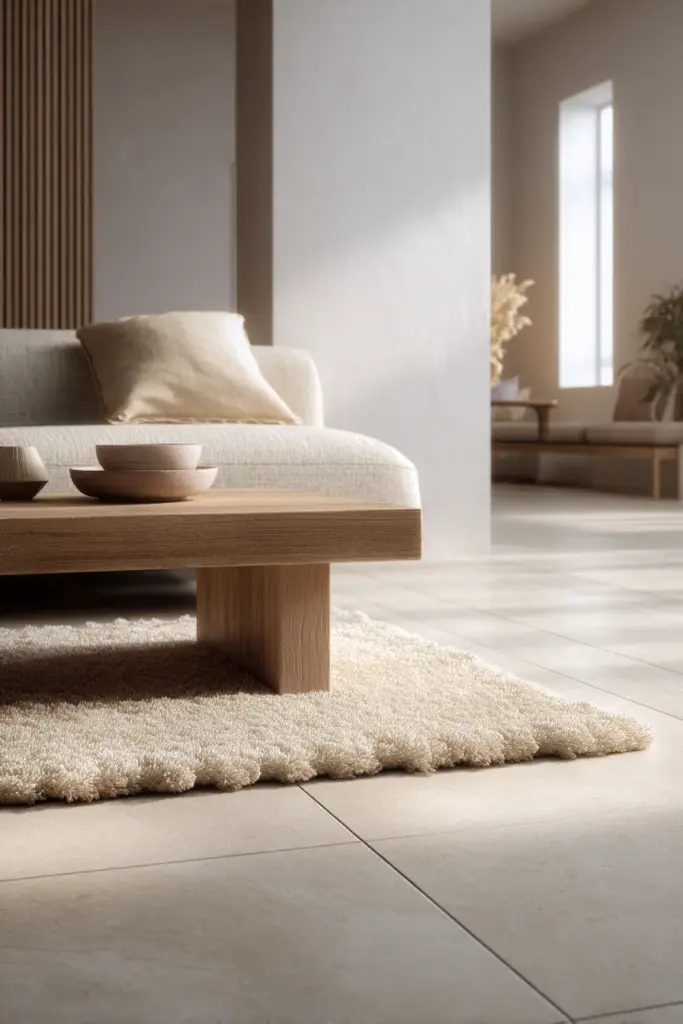
Poured concrete or large-format porcelain tiles in pale grey or warm sand bring the wabi-sabi rawness of Japanese design to any living room.
They feel cool, clean, and almost meditative underfoot. Pair them with soft area rugs and layered textiles to bring in warmth. A polished concrete floor with a chunky wool rug and low wooden furniture is one of the most quietly stunning Japandi combinations you can create.
Tips for tile in Japandi spaces:
- Choose large formats (600mm × 600mm or larger) — fewer grout lines mean fewer visual interruptions
- Go matte or semi-matte; gloss reflects light in ways that feel cold
- Warm the palette with creamy or greige tones rather than cool grey
What Color Should Japandi Flooring Be?
The Japandi palette lives in the space between ivory and driftwood.
The ideal Japandi floor colors:
- Pale oak — the most versatile choice; reads warm without feeling golden
- Whitewashed or limed wood — adds a soft, slightly bleached Scandinavian quality
- Warm sand or greige tile — pairs beautifully with darker furniture accents
- Light grey concrete-look — cool and serene; balance with warm textiles
Avoid deep espresso stains and high-contrast graining. They pull the eye too forcefully and interrupt the sense of calm that Japandi interiors work so hard to create.
What Finish Is Best for Japandi Flooring?
Matte, always.
A matte or low-sheen finish is the single most important technical decision you’ll make. High-gloss flooring reflects overhead lighting harshly, creates a clinical coldness, and makes every footprint and dust particle visible — the opposite of the effortless, serene aesthetic you’re after.
| Finish | Japandi Suitability | Notes |
|---|---|---|
| Matte | ✅ Ideal | Absorbs light, feels grounded and natural |
| Satin / Low-sheen | ✅ Good | Subtle warmth, still very calm |
| Semi-gloss | ⚠️ Use with caution | Can feel commercial |
| High-gloss | ❌ Avoid | Too reflective, breaks the calm |
A brushed or wire-brushed surface texture in matte enhances the tactile, handcrafted quality that makes Japandi spaces feel alive rather than staged.
How to Combine Different Flooring Materials in Japandi
Mixing materials can work beautifully in Japandi — if done with a quiet hand.
The key is tonal harmony. Transition from warm pale wood in the main living area to a large-format stone tile near a entryway or fireplace zone. Let the materials change, but keep the color temperature consistent throughout.
Rules for mixing Japandi flooring materials:
- Stay within the same light-neutral palette across all zones
- Use transition strips that are thin and minimal — brass or matte black work well
- Let area rugs do the work of zone-defining rather than jarring material changes
- Never mix more than two flooring types in one open-plan space
A tatami-inspired woven rug on a wood or LVT base is one of the most elegant zone-defining moves in a Japandi living room. It adds tactile texture, a Japanese reference point, and visual warmth all at once.
Are Tatami Mats Suitable for Japandi Living Rooms?
Traditional tatami brings a deeply Japanese sensibility to any space — the woven rush texture, the faint grassy scent, the subtle springiness underfoot.
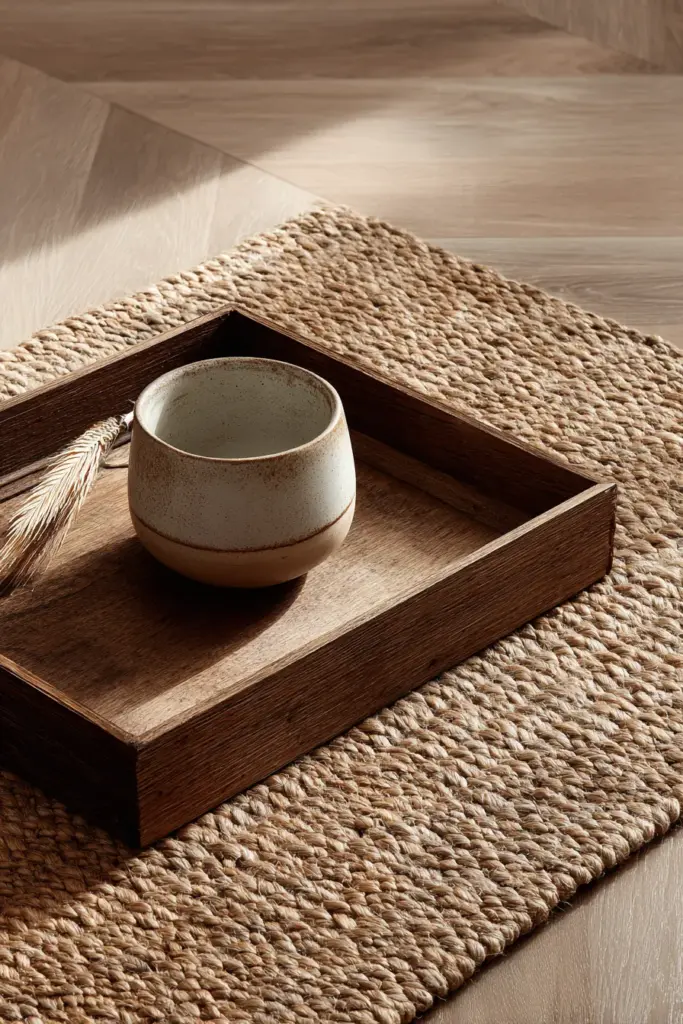
In a modern Japandi living room, full tatami panels can feel too formal or museum-like unless you have the architecture to support them. Instead, consider tatami-inspired area rugs — woven seagrass, jute, or sisal — placed over your base flooring to create a defined, grounded seating zone.
How to use tatami-inspired textures:
- Layer a flat-weave jute or seagrass rug over pale engineered wood for a quiet Japanese moment
- Use a tatami-style rug under a low coffee table and floor cushions for a meditation-inspired corner
- Keep surrounding textiles calm — undyed linen, soft moss green, or warm ivory
Which Flooring Is Best for Small Japandi Living Rooms?
Small spaces need floors that expand rather than contract the room.
The best approach for small Japandi living rooms:
- Choose light colors — pale oak or whitewashed wood bounces light and lifts ceilings visually
- Use wide planks — fewer seams mean a more spacious, uninterrupted visual field
- Lay planks lengthwise along the longest wall to draw the eye forward
- Keep the wall and floor tone close — high contrast between floor and wall shrinks a room
Avoid dark floors, busy tile patterns, or small-format tiles with prominent grout lines in compact spaces. The more unbroken and pale the floor, the more the room breathes.
Is Japandi Flooring Good for Underfloor Heating?
Radiant underfloor heating is a beautifully Japandi concept — warmth rising invisibly from the earth beneath your feet, no radiators interrupting clean walls.
Compatible flooring options for underfloor heating:
- LVT / vinyl plank — the most compatible; conducts heat efficiently and doesn’t expand
- Porcelain or stone tile — excellent heat conductors; ideal for concrete-look Japandi floors
- Engineered wood — compatible with gentle radiant systems; always check the manufacturer’s rating for maximum temperature
- Solid wood and bamboo — use with caution; lower heat settings and slow temperature changes to prevent warping
Whatever you choose, ensure your flooring has a low thermal resistance rating (TOG) if underfloor heating is part of your plan.
What Is the Cheapest Japandi Flooring Option?
A calm, beautiful floor doesn’t have to be expensive. It just has to be considered.
Budget-friendly Japandi flooring options:
| Option | Approx. Budget Level | Japandi Suitability |
|---|---|---|
| Light-tone LVT / vinyl plank | Low–Mid | ✅ Excellent |
| Pale laminate (matte finish) | Low | ✅ Good with right rug |
| Simple porcelain tile (large format) | Mid | ✅ Excellent |
| Painted concrete | Low | ✅ Great with textiles |
| Bamboo (entry-level) | Low–Mid | ✅ Good |
The secret weapon at any budget: a beautiful area rug. A well-chosen woven jute or flat-weave rug over budget-friendly LVT will elevate the entire space and become the emotional center of the room.
How to Maintain Japandi Flooring in Humid Climates
For readers in warm, tropical environments like the Philippines and Southeast Asia, humidity is the real design challenge — and it’s one worth planning for before you buy.
Wood and bamboo floors can swell, warp, and develop mold if humidity isn’t managed. The good news is that with the right material choices and habits, your floor will stay beautiful for years.
Flooring choices for humid climates:
- Prefer LVT or porcelain tile as your primary material — both are humidity-resistant
- If using engineered wood or bamboo, ensure the room is climate-controlled with air conditioning or dehumidifiers
- Avoid solid hardwood in rooms with high moisture fluctuation
- Seal grout lines in tile floors with a quality anti-mold grout sealant
Maintenance tips for humid environments:
- Wipe spills immediately — don’t let moisture sit
- Use a barely-damp mop rather than a wet one on wood or bamboo
- Run a dehumidifier during monsoon season if wood floors are installed
- Check under furniture and rugs for trapped moisture periodically
Japandi Flooring at a Glance
Your complete checklist:
- Choose pale, neutral tones — whitewashed oak, soft ash, warm greige, or light grey
- Prioritize a matte or low-sheen finish in all materials
- Use wide-plank formats for a calm, expansive feel
- Consider LVT or porcelain for humid climates or underfloor heating setups
- Layer tatami-inspired area rugs to define zones and add Japanese texture
- Keep material combinations to a maximum of two per open-plan space
- In small rooms: light floors, large planks, tonal walls
- Budget option: quality LVT + a beautiful woven rug — deceptively serene
Conclusion
A Japandi floor isn’t just a surface. It’s the first breath of the room — the foundation of every quiet morning, every slow afternoon, every moment of stillness you’ve been designing toward.
Choose it with patience. Run your hand along a sample plank. Notice how the light falls. Imagine it barefoot on a cool morning.
The right floor won’t demand your attention. It will simply make everything around it feel like it was always meant to be there.
That’s the ERYLIN way — beauty that settles, rather than shouts.
Frequently Asked Questions
What is the best flooring for Japandi style?
Light-tone matte engineered wood or bamboo is the top choice for most Japandi living rooms. Both offer natural warmth, organic texture, and a calm visual presence that anchors the whole design.u003cbru003ePale oak engineered wood is the most versatile optionu003cbru003eStrand-woven bamboo works beautifully in warmer climatesu003cbru003eLVT in a pale wood finish is the best budget alternative
What color should Japandi flooring be?
Japandi floors look best in pale, warm neutrals — pale oak, whitewashed ash, soft sand, or light grey concrete tones.u003cbru003eWarm greige reads beautifully with both warm and cool Japandi palettes. Avoid deep espresso or heavily grained woodsu003cbru003eKeep the floor tone within two shades of the wall color for maximum calm
Does Japandi flooring have to be wood?
No — tile, concrete, LVT, and even quality laminate can all achieve a beautiful Japandi look.u003cbru003eLarge-format matte porcelain in warm grey or sand is an excellent non-wood optionu003cbru003eLVT in a pale wood look is nearly indistinguishable from real timber in contextu003cbru003ePolished concrete with layered rugs and textiles creates a stunning wabi-sabi effect
What finish is best for Japandi flooring?
Matte or low-sheen finishes are always the right choice for Japandi spaces.u003cbru003eMatte absorbs light rather than reflecting it, creating depth and warmthu003cbru003eAvoid high-gloss finishes entirely — they feel cold and clinicalu003cbru003eA brushed surface texture in matte adds a handcrafted, artisanal quality
How do I maintain Japandi flooring in a humid climate?
Choose moisture-resistant materials like LVT or porcelain as your base, and if using wood or bamboo, keep the space climate-controlled.u003cbru003eWipe spills immediately and never use a soaking-wet mopu003cbru003eSeal grout lines in tile floors annuallyu003cbru003eUse a dehumidifier during high-humidity seasons to protect wood floors