
Table of Contents
There’s something profoundly comforting about a room that feels like a soft exhale. A space where the walls seem to whisper rather than shout, where every piece of furniture has a purpose, and where the colors mimic the earth itself—warm, muted, endlessly reassuring.
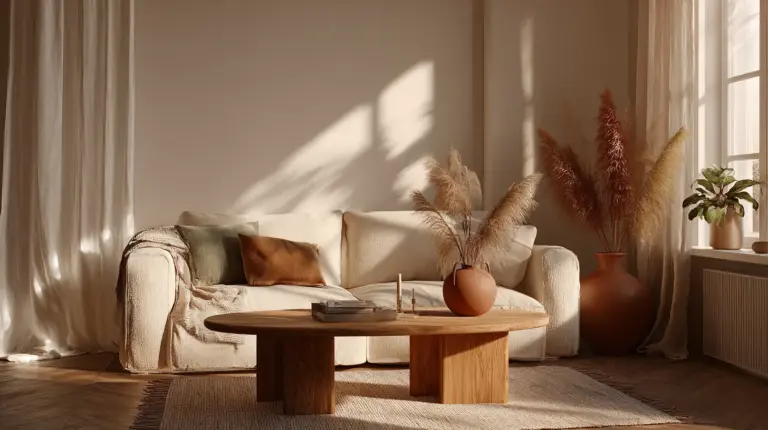
This is the heart of an earth tones Japandi living room. It’s where Scandinavian simplicity meets Japanese restraint, grounded in nature’s own palette. Think terracotta sunsets, sage shadows, and the quiet beige of linen left to dry in summer air.
If you’ve been craving a living room that feels like both sanctuary and statement, this guide will walk you through every tactile, visual, and emotional detail. From choosing the right ochre cushion to understanding why a low walnut coffee table changes everything, we’ll explore how earth tones transform Japandi design from beautiful to unforgettable.
Let’s begin where all good design does—with intention, warmth, and a deep respect for what makes us feel home.
What Makes Earth Tones Essential to Japandi Living Rooms
Japandi living room design thrives on balance. It’s the marriage of Scandinavian hygge—that cozy, candle-lit warmth—and Japanese wabi-sabi, the art of finding beauty in imperfection. When you introduce earth tones into this equation, you’re not just adding color; you’re adding soul.
Earth tones—those muted hues borrowed from clay, sand, stone, and wood—create a neutral palette that feels alive rather than sterile. Unlike stark whites or cool grays, colors like terracotta, taupe, ochre, and sage green bring warmth without overwhelming the senses.
These shades mirror the natural materials already central to Japandi aesthetics: raw oak, woven linen, ceramic vessels. They allow your space to feel connected to something larger—forests, deserts, the turning seasons. This isn’t decoration for decoration’s sake; it’s creating a serene atmosphere that nurtures rather than depletes.
The Japandi Color Palette: Understanding the 60-30-10 Rule
Creating a cohesive earth tones Japandi living room starts with understanding proportion. The 60-30-10 rule is your foundation, ensuring balance without overthinking.
60% Base Color: This is your dominant neutral—usually a soft beige, oatmeal, or warm taupe. It covers your walls, largest furniture pieces, and flooring. Think of it as the canvas, the breathing room that lets everything else shine.
30% Secondary Color: Here’s where earth tones really sing. Introduce sage green through a sofa, ochre via a woven area rug, or terracotta through curtains. This layer adds personality while maintaining the minimalist aesthetic that defines Japandi style.
10% Accent Color: Reserve this for smaller décor items—cushions in burnt umber, a clay vase in deep rust, or a chunky wool throw in forest green. These touches of deeper earth tones prevent the space from feeling too safe.
This formula creates visual harmony without feeling formulaic. It’s flexible enough for personal expression yet structured enough to maintain that clean lines aesthetic Japandi is known for.
Choosing Your Earth Tone Combinations
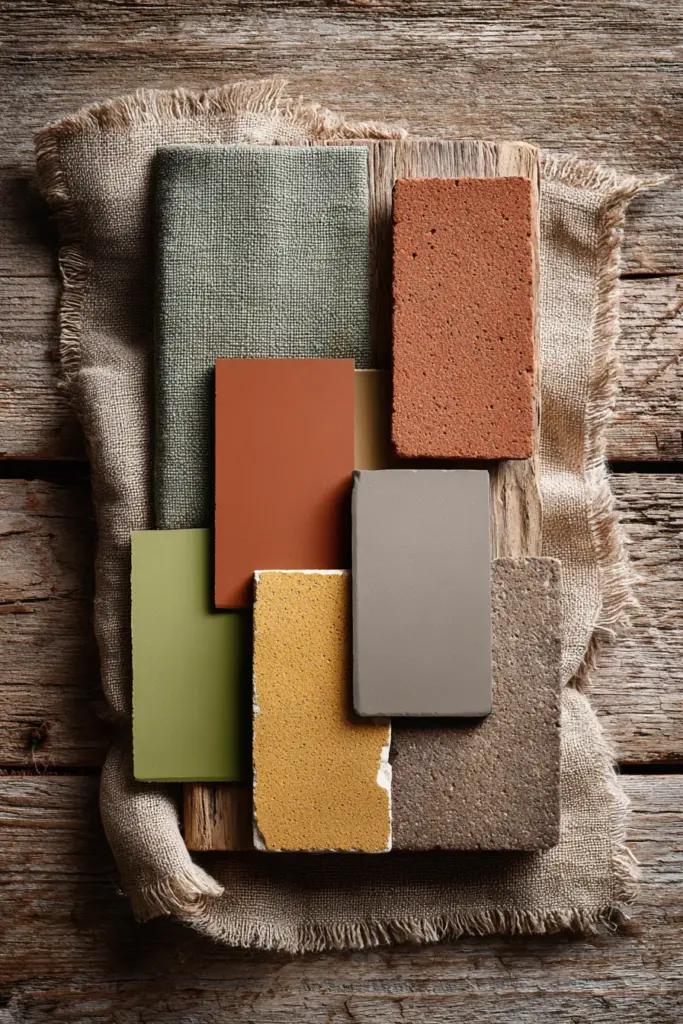
Not all earth tones play well together, and not all combinations suit every space. Consider your room’s natural light first—north-facing rooms benefit from warmer ochres and terracottas, while south-facing spaces can handle cooler sage and stone.
For a cohesive look, pair warm with warm and cool with cool. Terracotta and ochre are natural companions. Sage green loves taupe and soft gray-beige. Avoid mixing too many undertones—choose either warm earth tones or cool earth tones as your primary direction, then add one contrasting accent for depth.
The key is restraint. Three to four earth tones maximum, plus your neutrals. More than that, and you lose the serene atmosphere that makes Japandi living rooms so magnetic.
Essential Furniture for an Earth Tones Japandi Living Room
Furniture in Japandi design does double duty—it must be beautiful and functional. Every piece should feel intentional, never arbitrary.
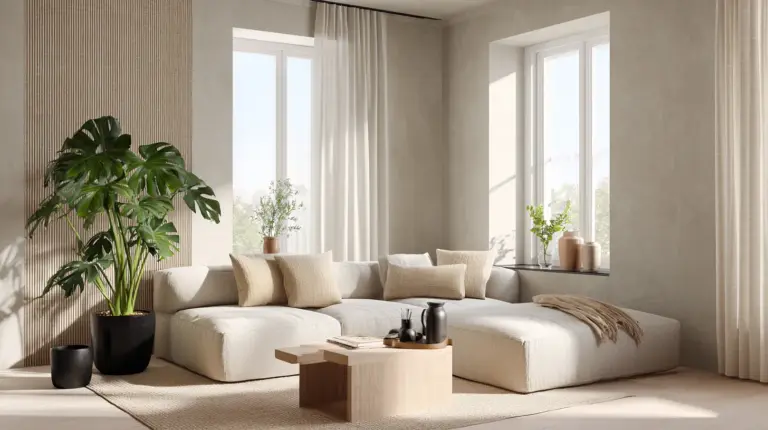
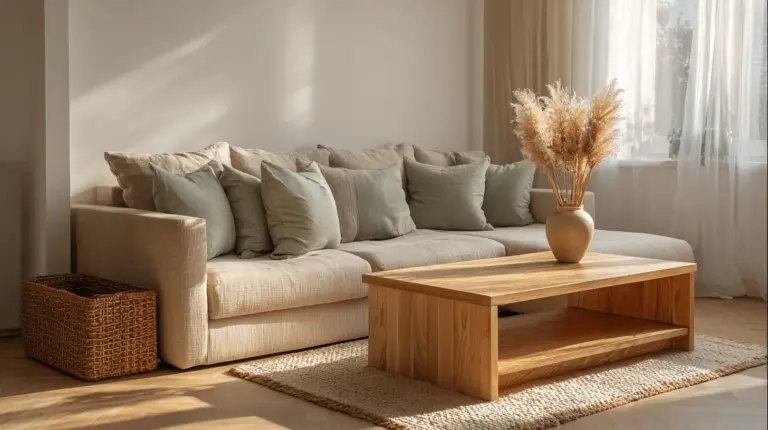
Low-Profile Sofas: A low sofa in earth tones—think caramel leather or oatmeal linen—grounds the entire room. Japanese aesthetics favor furniture that sits closer to the floor, creating horizontal lines that feel calm and expansive. Look for clean lines without excessive tufting or ornate details.
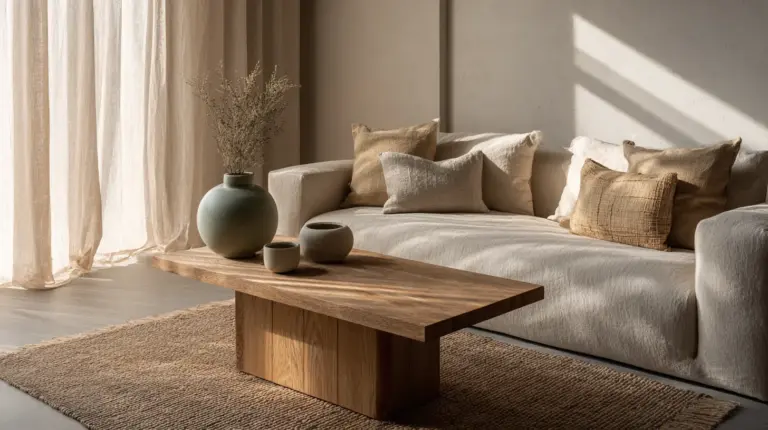
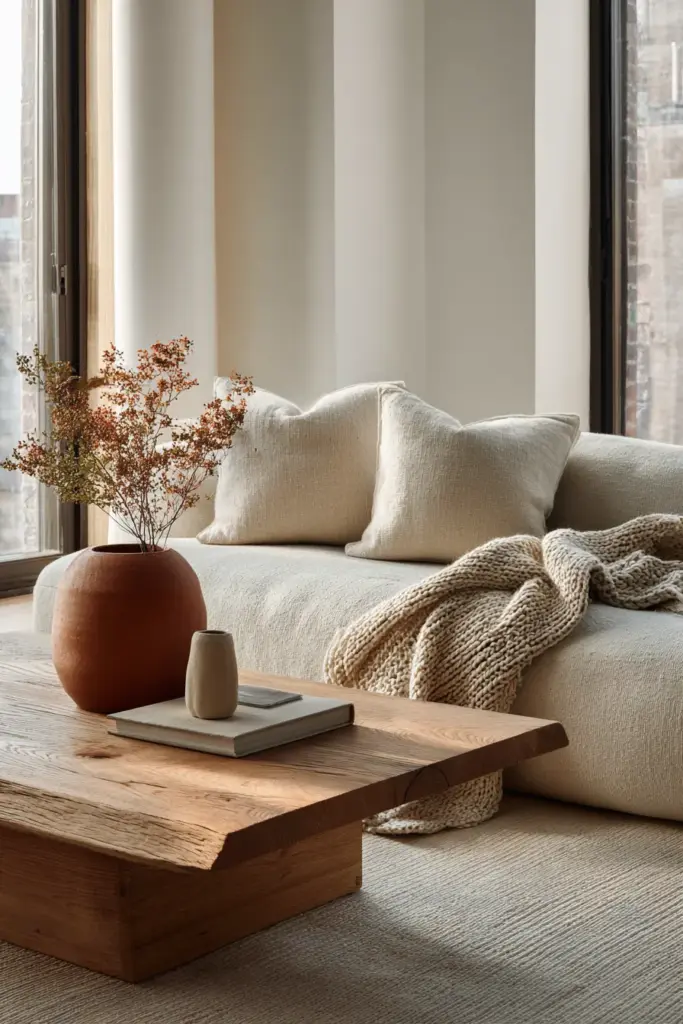
Organic Wood Pieces: A walnut coffee table with visible grain, an ash wood media console, or teak side tables bring warmth and texture. Natural materials are non-negotiable in Japandi style. Choose pieces that celebrate the wood’s imperfections—knots, variations in color, natural edges.
Multifunctional Storage: Clutter-free spaces require smart storage. Opt for low cabinets in warm wood tones, woven baskets in natural rattan, or floating shelves in oak. Everything should have a home, but the storage itself should be beautiful enough to remain visible.
Accent Seating: A single papasan chair in rattan, a wooden stool doubling as a side table, or a low ottoman in terracotta linen adds functionality without crowding the space. Japandi living rooms breathe—resist the urge to over-furnish.
Material Matters: Wood, Linen, and Wool
The materials you choose are as important as the colors themselves. Wood—especially light to medium tones like oak, ash, and beech—forms the backbone of any Japandi space. It should feel warm to the touch, with visible grain that tells a story.
Linen and wool bring softness without fuss. A chunky wool throw in oatmeal draped over your sofa, linen curtains in natural beige that filter afternoon light, or a jute area rug that anchors your seating area—these organic textures prevent earth tones from feeling flat.
Avoid synthetic materials when possible. Part of Japandi’s appeal is its connection to sustainable design and natural living. When every texture feels authentic, the entire room resonates differently.
Layering Earth Tones Through Décor and Accents
Once your major pieces are in place, décor brings your earth tones Japandi living room to life. This is where you add personality without sacrificing simplicity.
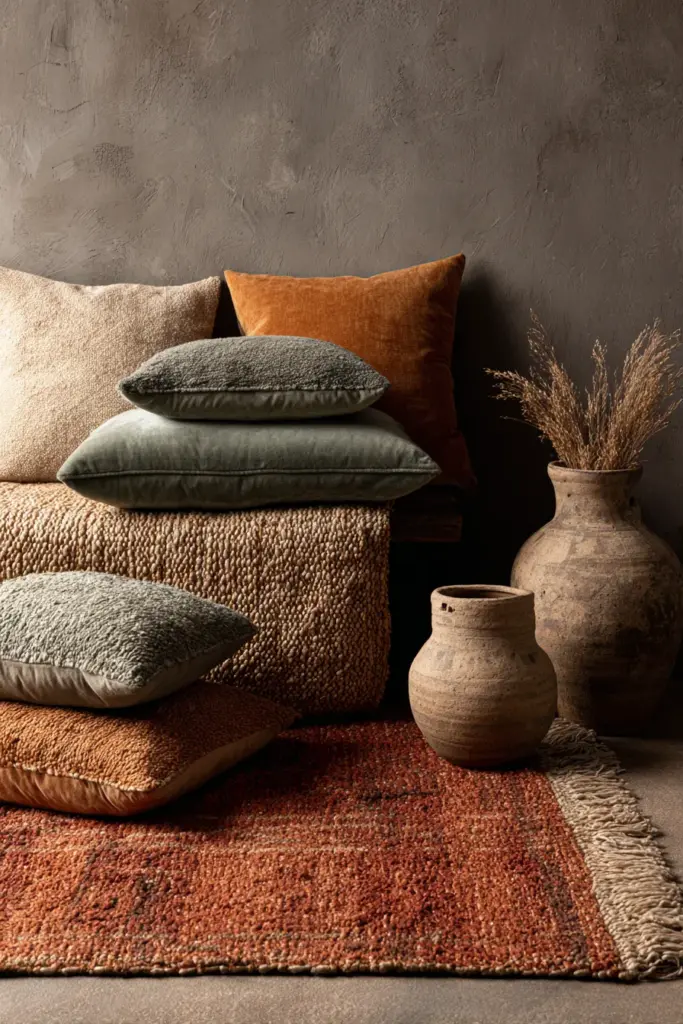
Rugs: A large jute or wool rug in natural beige or soft taupe defines your seating area. Layer a smaller kilim in terracotta or ochre on top for visual interest. The texture underfoot matters—choose something substantial that feels grounding.
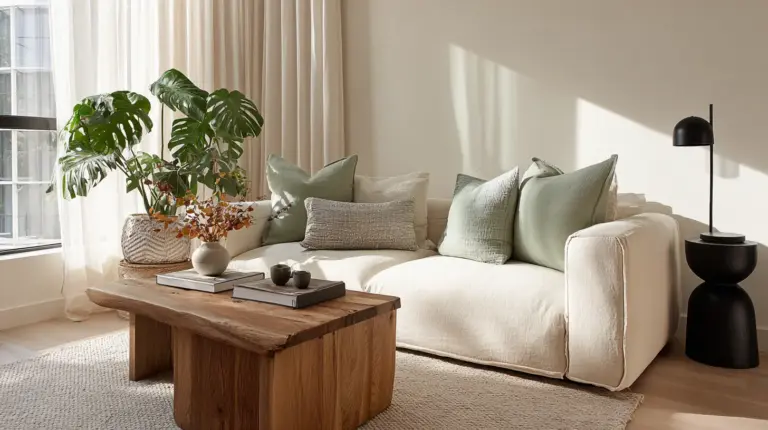
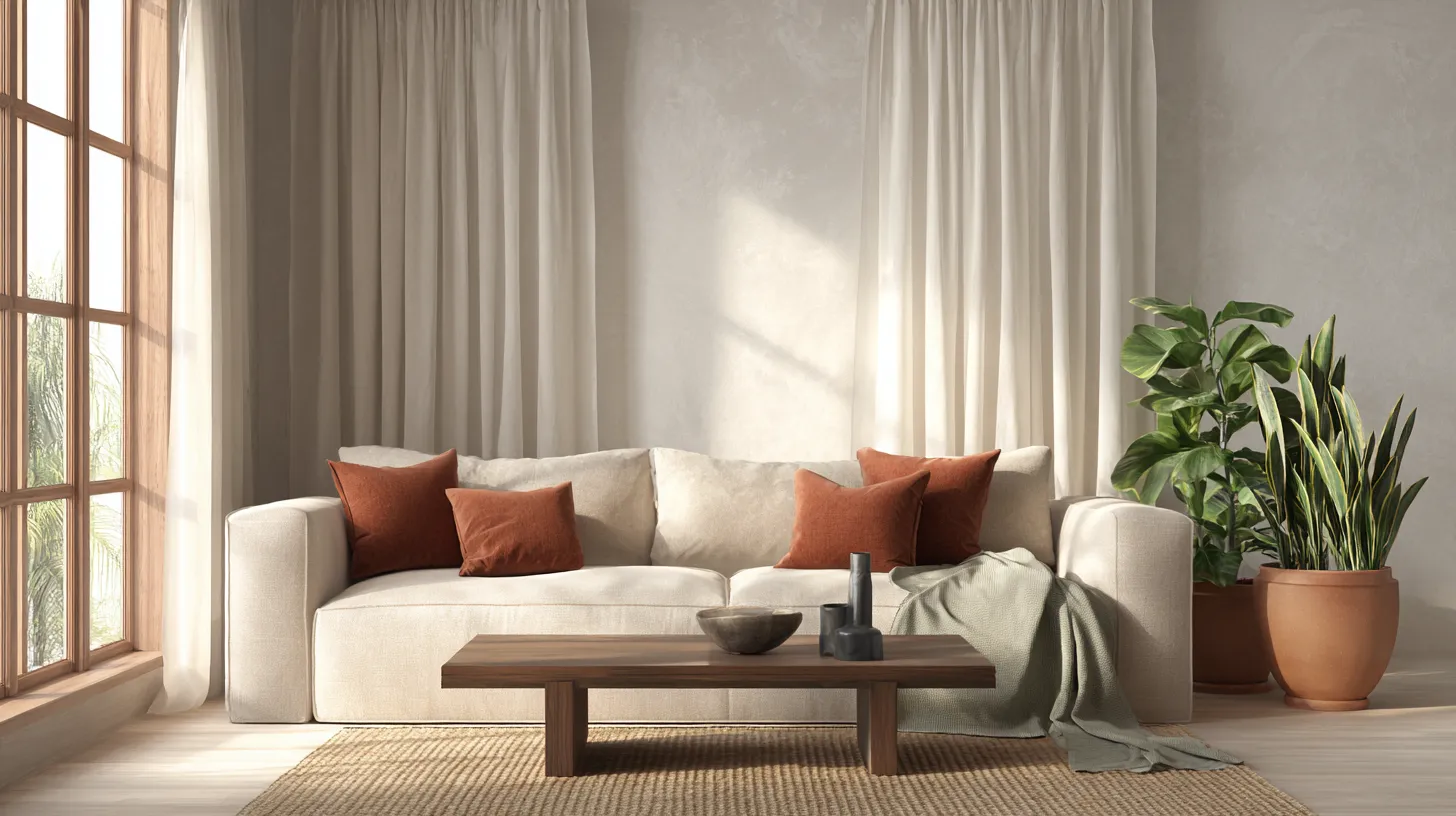
Cushions and Throws: Mix and match earth tones here, but stick to solid colors or subtle textures rather than busy patterns. A sage green velvet cushion beside a terracotta linen one, both resting against an oatmeal sofa—this is the kind of muted palette that feels sophisticated rather than boring.
Wall Art: Keep it minimal. One large piece in earth tones—an abstract print in ochre and beige, a photograph of sand dunes, or a simple line drawing in terracotta ink. Less is more; the art should complement, not compete with, your space.
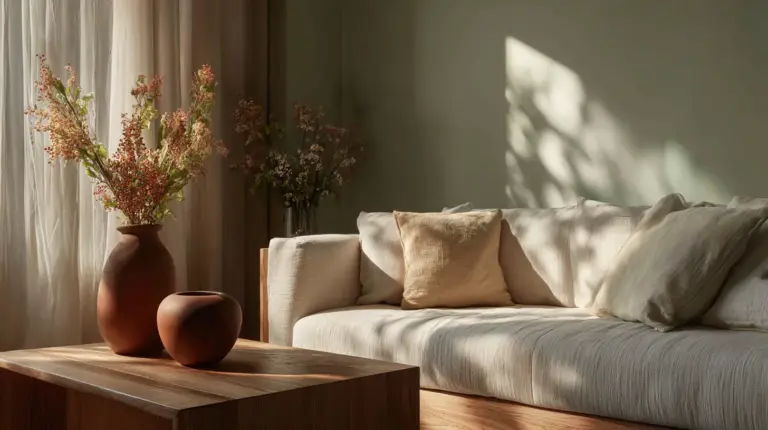
Ceramics and Vessels: Handmade pottery in natural clay, a terracotta planter for your snake plant, or a beige ceramic vase on your coffee table. These small touches reinforce the wabi-sabi appreciation for imperfection and handcrafted beauty.
The Role of Plants in Earth Tones Japandi Design
Plants aren’t optional—they’re essential. They bring life, oxygen, and that final connection to nature that earth tones promise but can’t deliver alone.
Choose low-maintenance varieties that suit the aesthetic: snake plants in terracotta pots, a fiddle leaf fig in a natural fiber basket, or a pothos trailing from a wooden shelf. The greenery adds a pop of organic color that complements sage, terracotta, and ochre beautifully.
Place them strategically—beside your sofa, on floating shelves, or in corners that need softening. The natural shapes of leaves and stems contrast beautifully with the clean lines of Japandi furniture, creating visual balance.
Lighting Your Earth Tones Japandi Living Room
Lighting can make or break your earth tones scheme. The wrong temperature will drain warmth; the right one will make every surface glow.
Natural Light: Maximize it. Keep window treatments minimal—opt for natural linen curtains in beige or light filtering blinds that soften rather than block sunlight. Natural light brings out the depth in earth tones, making terracotta blush and ochre shimmer.
Warm LED Bulbs: When the sun sets, switch to warm LED lighting (2700K-3000K). This temperature mimics candlelight, enhancing the cozy warmth of your earth tones rather than washing them out with harsh white light.
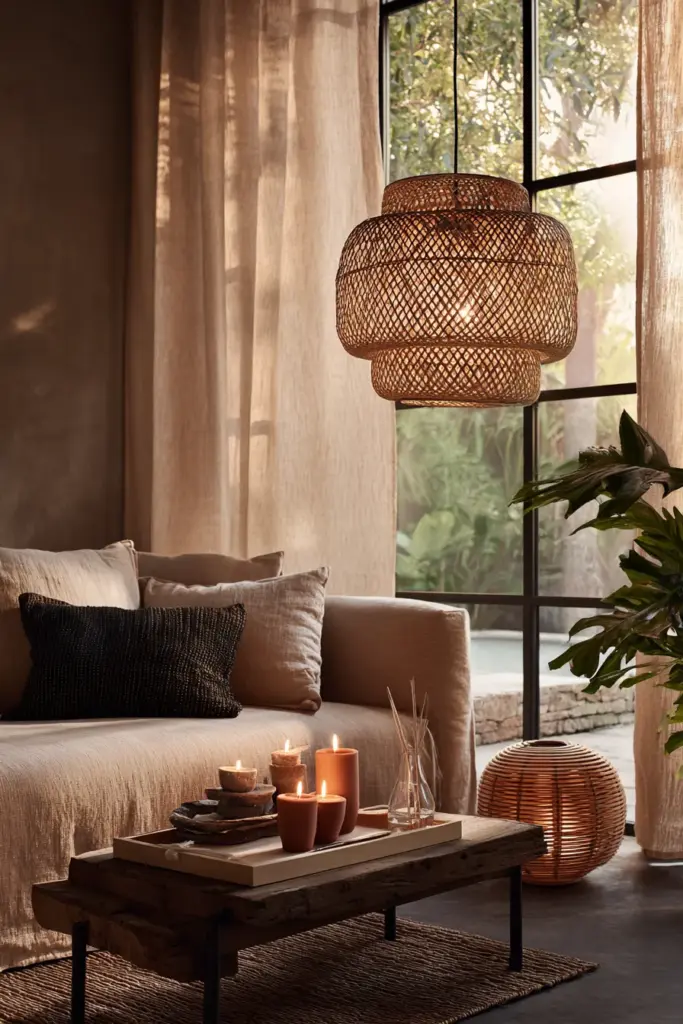
Natural Fiber Lamps: Choose lighting fixtures that reinforce your material palette—a rattan pendant lamp above your seating area, a linen table lamp on your side table, or paper lanterns that cast soft, diffused light. The fixtures themselves become part of your earth tones story.
Layered Lighting: Combine overhead lighting with task lamps and ambient glow from candles. Multiple light sources at different heights create depth and prevent the flat, lifeless feeling that comes from relying on a single overhead fixture.
Creating Ambiance with Candlelight
Never underestimate the power of candles in a Japandi living room. They add warmth, scent, and a sense of ritual to your space. Choose unscented or subtly scented varieties in natural wax, housed in simple terracotta or ceramic holders that echo your earth tones palette.
Group three or five candles on a wooden tray for your coffee table. Light them in the evening as you transition from day to night. This small act transforms your living room from functional to sanctuary.
Earth Tones Japandi Living Room Ideas for Small Spaces
Adapting Japandi design to apartments under 200 square feet requires strategy, but earth tones actually help. They create cohesion that makes small spaces feel intentional rather than cramped.
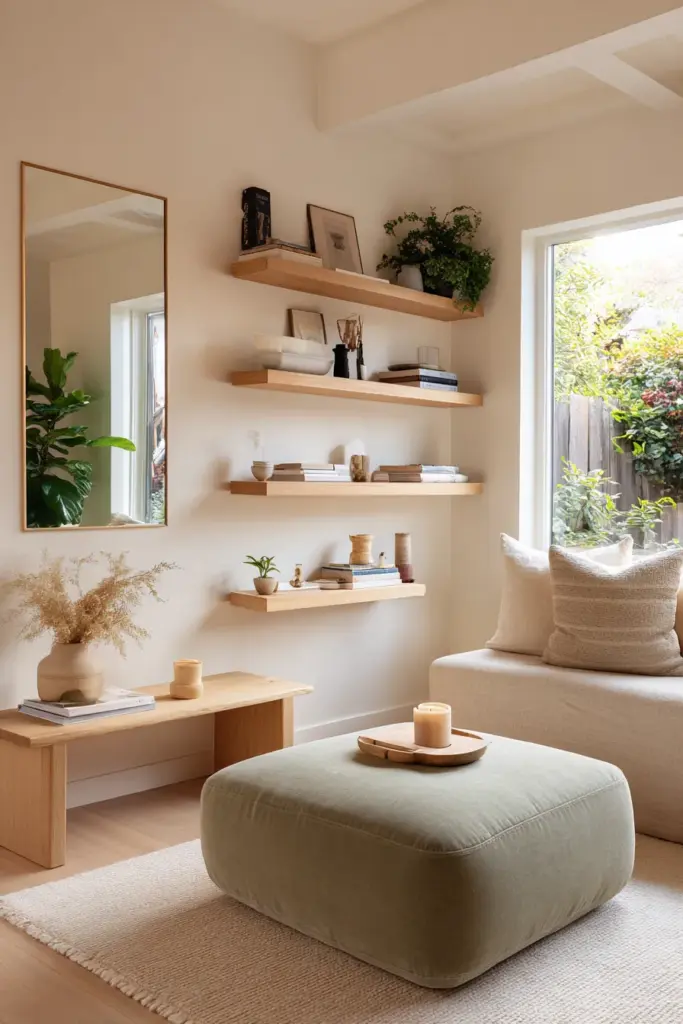
Choose Multi-Functional Furniture: A low ottoman in terracotta linen that serves as both seating and coffee table. A storage bench in light wood that holds blankets while providing extra seating. Every piece must earn its place.
Keep the Palette Tight: In small spaces, stick to two or three earth tones maximum. Too much variation fragments the eye. A base of beige, an accent of sage, and touches of terracotta—that’s enough.
Maximize Vertical Space: Floating shelves in light wood draw the eye upward, making ceilings feel higher. Style them minimally—a few ceramic pieces, a small plant, a single book. Negative space is your friend.
Use Mirrors Strategically: A large mirror in a simple wooden frame reflects natural light and makes your space feel twice as large. Position it opposite a window to maximize this effect.
Budget-Friendly Earth Tones Japandi Makeover
You don’t need thousands of dollars to achieve this aesthetic. Start with what matters most and build slowly.
$200-500 Budget:
- One statement earth tones rug (jute or wool blend)
- Four to six cushions in complementary earth tones
- Two terracotta planters with low-maintenance plants
- Warm LED bulbs for existing fixtures
- One secondhand wooden coffee table (refinish if needed)
$500-1000 Budget: Add to the above:
- A low-profile sofa in neutral linen or budget-friendly beige fabric
- Two floating wooden shelves
- Natural linen curtains
- A rattan pendant lamp
- Ceramic décor pieces and a chunky throw
The secret is patience. Thrift stores and online marketplaces often have solid wood furniture that just needs light sanding or oiling. DIY upcycling fits perfectly with wabi-sabi philosophy—imperfection isn’t just acceptable; it’s beautiful.
Seasonal Updates: Keeping Your Earth Tones Japandi Living Room Fresh
One of Japandi design’s greatest strengths is its adaptability. Your earth tones base remains constant, but seasonal shifts keep it feeling current.
Winter Earth Tones: Layer deeper, richer hues—rust, chocolate brown, forest green. Add a chunky wool throw in charcoal gray. Introduce more candles. The goal is warmth and cocoon-like coziness.
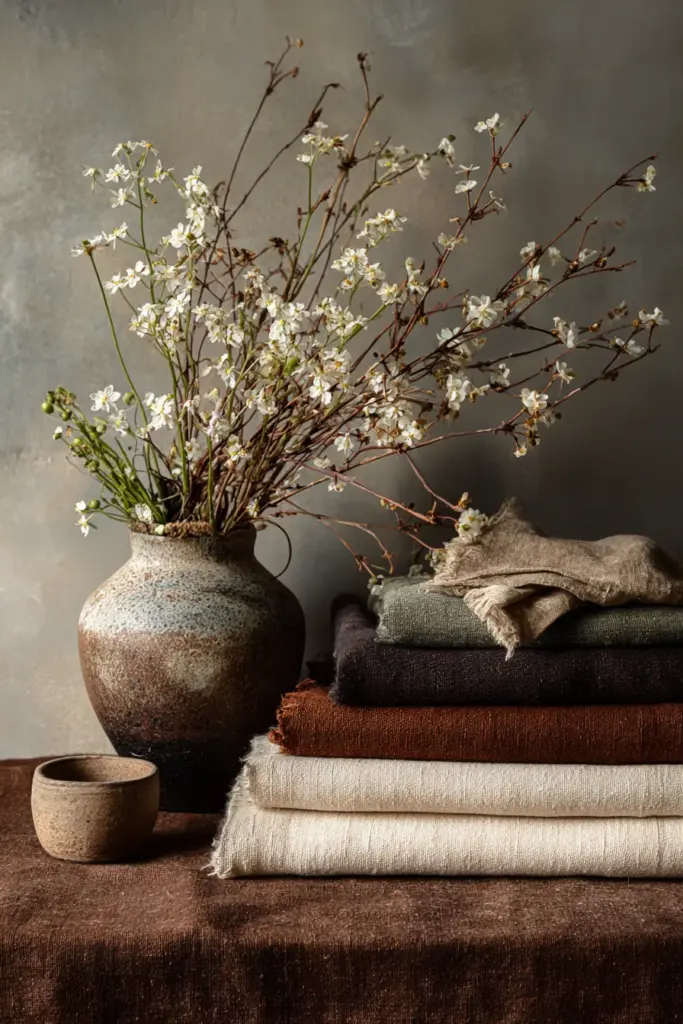
Spring/Summer Earth Tones: Lighten up with cream, pale sage, and soft terracotta. Swap heavy wool for breathable linen. Add fresh flowers—wildflowers in a simple ceramic vase feel perfectly Japandi. Open curtains wide to let in maximum natural light.
These subtle shifts prevent your space from feeling stagnant without requiring a complete redesign. You’re working with nature’s rhythms, not against them.
Key Takeaways for Your Earth Tones Japandi Living Room
Before we close, let’s distill everything into actionable steps:
- Start with the 60-30-10 rule: Base neutral (beige/oatmeal), secondary earth tone (sage/terracotta/ochre), accent earth tone (deeper rust/forest green)
- Prioritize natural materials: Wood (oak, walnut, ash), linen, wool, jute, rattan, ceramic
- Choose low-profile furniture: Sofas and tables that sit closer to the floor for that Japanese influence
- Layer textures, not patterns: Vary materials rather than introducing busy prints
- Maximize natural light: Keep window treatments minimal and use warm LED bulbs (2700K-3000K)
- Add plants strategically: Snake plants, pothos, or fiddle leaf figs in terracotta or natural fiber pots
- Edit ruthlessly: Every item should serve a purpose or bring genuine joy—clutter-free is non-negotiable
- Invest in quality over quantity: One beautiful wooden coffee table beats five mediocre pieces
- Embrace imperfection: Wabi-sabi philosophy means celebrating natural wood grain, handmade ceramics, and organic shapes
- Update seasonally: Subtle shifts in throw colors and textile weights keep the space feeling fresh
Bringing Feng Shui Harmony to Earth Tones Japandi Design
For those interested in layering Eastern philosophy into their space, feng shui principles align beautifully with Japandi aesthetics. Earth tones naturally support the earth element, which represents stability, nourishment, and grounding energy.
Position your main seating to face the room’s entrance—this “command position” creates a sense of security. Avoid placing your sofa directly beneath a beam, which can create oppressive energy. Balance is key: if one side of your room feels heavy with furniture, add a tall plant or floor lamp to the lighter side.
Earth tones in the center of your living room (where the earth element is strongest in feng shui) support health and relationships. Consider placing a terracotta piece or ochre rug in this area. The goal isn’t rigid rule-following but creating flow and harmony that feels right when you enter the space.
Conclusion: The Soul of Earth Tones Japandi
Creating an earth tones Japandi living room isn’t about following trends—it’s about building a space that holds you. It’s the room you sink into after a long day, where the colors don’t demand attention but offer comfort, where every texture invites touch, and where the very air seems calmer.
This is design that respects both form and function, beauty and practicality. It’s the terracotta cushion that catches afternoon light just so. The walnut coffee table with a story in every grain. The sage green throw that becomes your favorite companion on quiet Sunday mornings.
Earth tones give Japandi design its warmth. They transform minimalism from cold to cozy, from stark to soulful. And in a world that often feels too loud, too fast, too much, a living room like this becomes more than decoration.
It becomes refuge. It becomes home.
May your space be a soft place to land, a beautiful place to be, and a constant reminder that serenity isn’t found—it’s created, one intentional choice at a time.
Frequently Asked Question
What colors are used in earth tones Japandi living rooms?
Earth tones Japandi living rooms feature a neutral palette of beige, taupe, oatmeal, and warm grays as the base. Accent colors include sage green, terracotta, ochre, rust, and muted browns. These muted hues create a serene atmosphere while maintaining the warmth that pure white or gray spaces often lack. The key is choosing colors with similar undertones—either warm (ochre, terracotta) or cool (sage, stone)—to ensure cohesion.
How do I create a Japandi living room on a budget?
Start with affordable natural materials and prioritize quality over quantity. Thrift or source secondhand wooden furniture that you can refinish yourself—this aligns with wabi-sabi philosophy. Invest in a single statement piece like an earth tones area rug, then build around it with budget-friendly linen cushions, DIY floating shelves, and plants in terracotta pots. Focus on decluttering and editing what you already own before buying new items. Many Japandi essentials—like warm LED bulbs and secondhand ceramics—cost very little but make significant impact.
What furniture fits earth tones Japandi style?
Look for low-profile sofas in neutral linen or leather, organic wood pieces like walnut or oak coffee tables, and multifunctional storage in natural materials. Furniture should have clean lines without ornate details, sit lower to the ground (reflecting Japanese design principles), and celebrate natural wood grain rather than hiding it. Choose pieces made from sustainable materials when possible—rattan chairs, linen ottomans, and handcrafted wooden benches all fit the aesthetic beautifully.Look for low-profile sofas in neutral linen or leather, organic wood pieces like walnut or oak coffee tables, and multifunctional storage in natural materials. Furniture should have clean lines without ornate details, sit lower to the ground (reflecting Japanese design principles), and celebrate natural wood grain rather than hiding it. Choose pieces made from sustainable materials when possible—rattan chairs, linen ottomans, and handcrafted wooden benches all fit the aesthetic beautifully.
Are earth tones trending in Japandi design for 2025?
Yes, earth tones continue to dominate Japandi interiors as people seek grounding, nature-connected spaces. Colors like oatmeal, stone, terracotta, and sage green offer warmth without overwhelming minimalist aesthetics. The trend is moving toward slightly richer earth tones—deeper ochres and rust—while maintaining the muted palette that defines Japandi style. Sustainability also drives this trend, as earth tones pair naturally with eco-friendly materials like organic linen and reclaimed wood.
How can I adapt earth tones Japandi design for small apartments?
Small spaces thrive on cohesion and restraint. Stick to a tight color palette of two to three earth tones to avoid visual fragmentation. Choose multi-functional furniture like storage ottomans in terracotta or fold-down tables in light wood. Maximize vertical space with floating shelves and keep floor space clear to maintain that essential sense of breathing room. Use large mirrors to reflect natural light and make the space feel larger, and edit ruthlessly—every item must serve a purpose or bring joy.