
Table of Contents
There’s something about green that feels like coming home. Not the bright, energetic greens of summer lawns, but the softer ones—the sage that grows wild in forgotten gardens, the moss that cushions forest floors, the olive branches that sway in afternoon light.
In a Japandi living room, green isn’t just a color. It’s a breath, a pause, a gentle reminder that nature belongs indoors just as much as it does outside. When woven into the minimalist elegance of Japanese design and the cozy warmth of Scandinavian hygge, green becomes something more: a living, breathing element that transforms your space into a sanctuary.
This isn’t about filling every corner with emerald statements or turning your living room into a greenhouse. It’s about intention—choosing the right shade, the perfect placement, the precise balance that makes a room feel both grounded and elevated.
Let me show you how to bring these quiet, powerful hues into your home.
Understanding the Japandi Approach to Green
The Philosophy Behind the Palette
Japandi design rests on two pillars: wabi-sabi, the Japanese art of finding beauty in imperfection, and hygge, the Danish embrace of cozy contentment. Green fits naturally into both philosophies. It’s the color of growth, renewal, and life itself—perfectly imperfect in its organic variations.
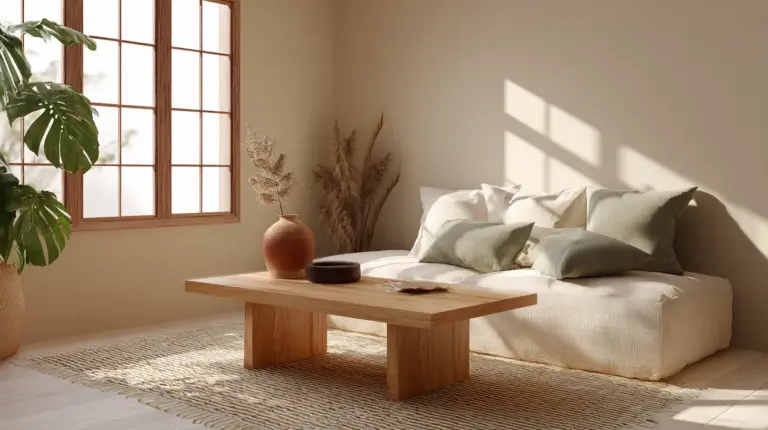
Think of green in Japandi spaces as nature’s signature. It doesn’t shout or demand attention. Instead, it whispers through sage-painted accent walls, peeks from ceramic planters, and softens the room through linen cushions dyed in earthy olive tones.
Why Green Works in Minimalist Spaces
The beauty of green in Japandi design lies in its versatility. Studies show that green environments can reduce stress levels by up to 20%, creating spaces that don’t just look peaceful—they feel peaceful. When you pair muted greens with the neutral foundation of Japandi interiors, you create visual harmony that soothes rather than stimulates.
Green also bridges the gap between cool and warm tones. A mossy sage (#A8B5A2) can warm up gray concrete floors, while a seafoam accent (#93C5C4) cools down honey-toned wood furniture. This adaptability makes green the perfect mediating color in Japandi’s carefully curated palette.
Choosing Your Green: A Palette Guide
Sage Green: The Foundation Shade
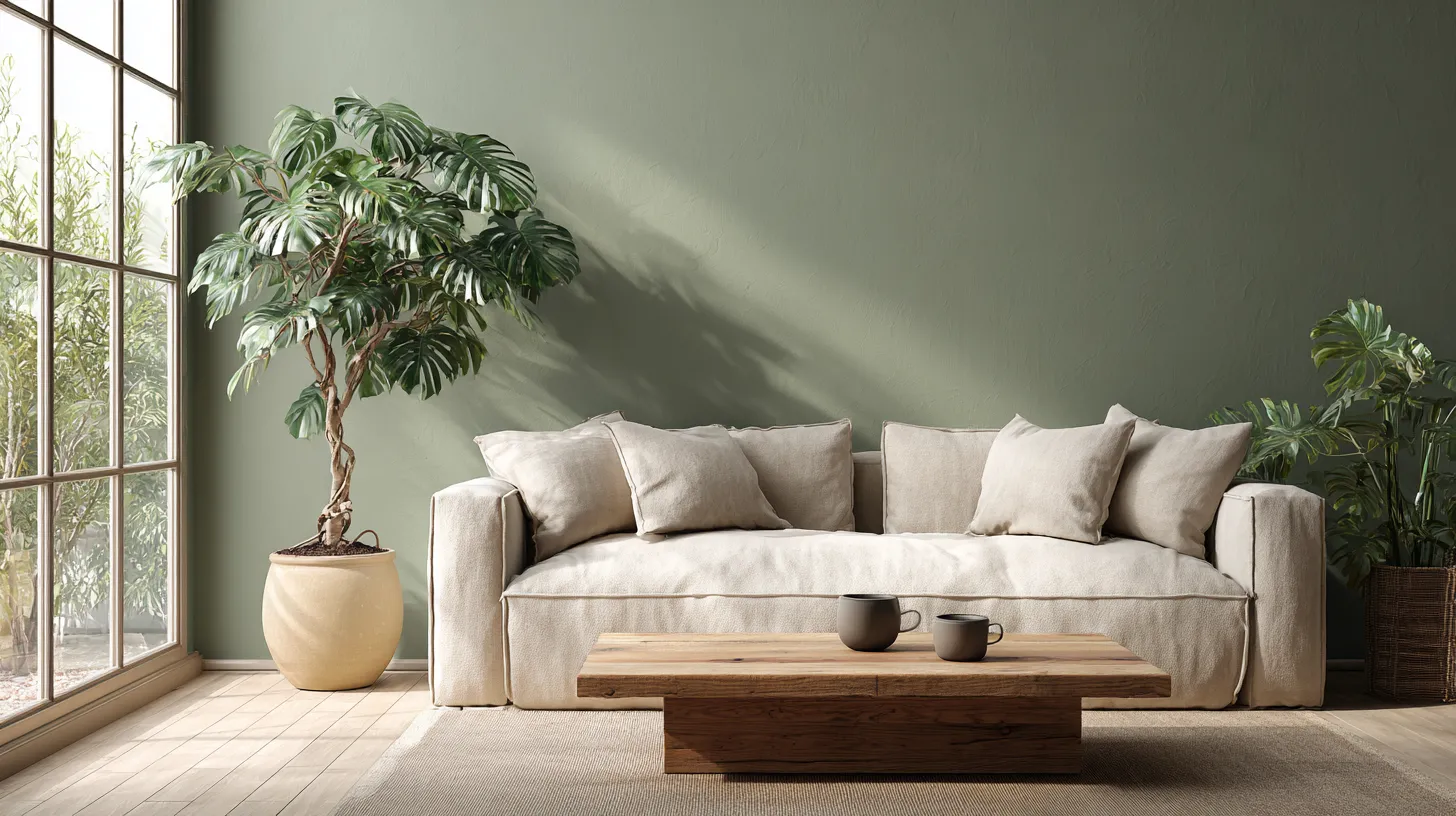
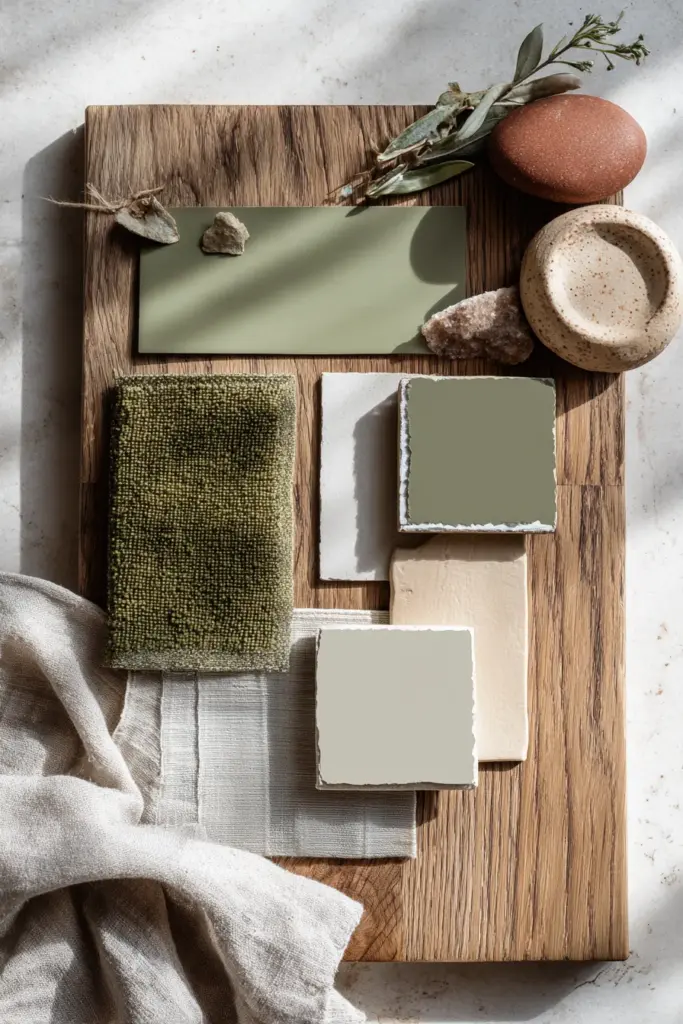
Sage green (#B2AC88) is Japandi’s most beloved green. It’s dusty, subdued, and endlessly sophisticated. This is the green that belongs on your largest surfaces—an accent wall behind your low-profile sofa, perhaps, or flowing through sheer linen curtains that filter afternoon light.
Sage pairs beautifully with warm beiges (#E8DCC4) and soft grays (#A9A9A9). The combination creates depth without drama, allowing each element to breathe while maintaining visual cohesion.
Olive and Moss: Adding Depth
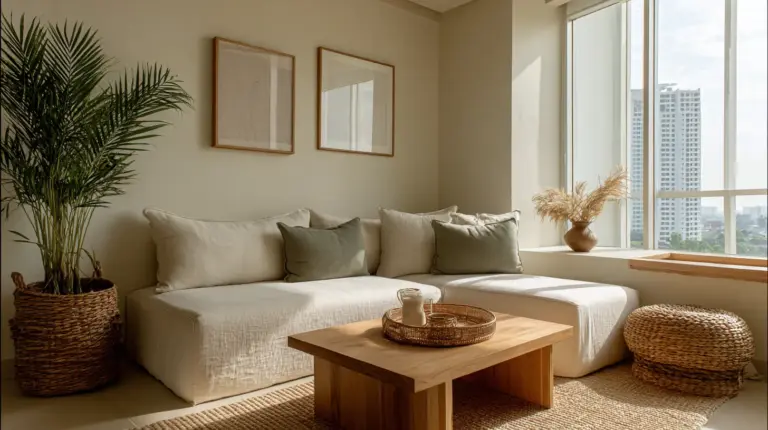
For spaces that need more grounding, reach for olive (#808000) and moss green (#8A9A5B). These deeper tones work best as accent pieces—think velvet throw pillows, ceramic vases, or a single statement chair that anchors your seating area.
The key is proportion. Keep 80% of your space in neutrals (whites, beiges, light woods) and let these richer greens occupy the remaining 20%. This ratio maintains Japandi’s minimalist integrity while adding personality and warmth.
Seafoam and Mint: Brightening Touch
Lighter greens like seafoam and mint (#98D8C8) bring freshness to small, darker living rooms. They reflect light beautifully and create an airy feeling without abandoning the natural palette. Use these shades sparingly—in artwork, small decorative objects, or as trim details on bamboo furniture.
Color Combination Table
| Primary Green | Best Paired With | Ratio | Mood Created |
|---|---|---|---|
| Sage (#A8B5A2) | Warm beige, soft gray | 20% green, 80% neutrals | Calm, grounded |
| Olive (#808000) | Charcoal, natural wood | 15% green, 85% neutrals | Sophisticated, cozy |
| Moss (#8A9A5B) | Terracotta, cream | 20% green, 80% neutrals | Earthy, warm |
| Seafoam (#93C5C4) | White oak, pale gray | 10% green, 90% neutrals | Fresh, airy |
Bringing Green Through Natural Materials
Living Plants: The Essential Element
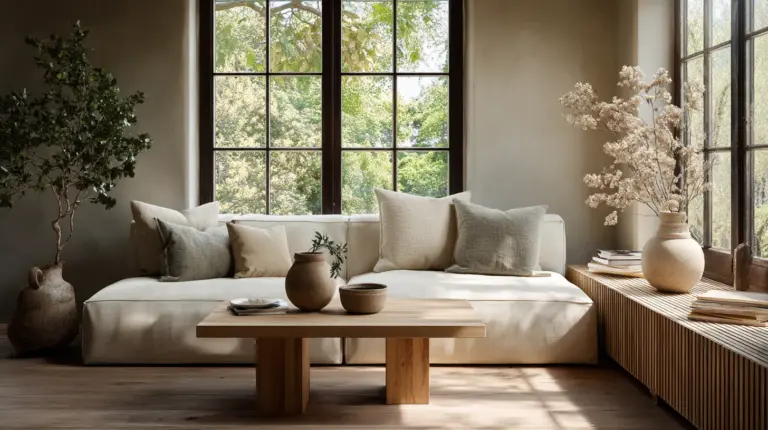
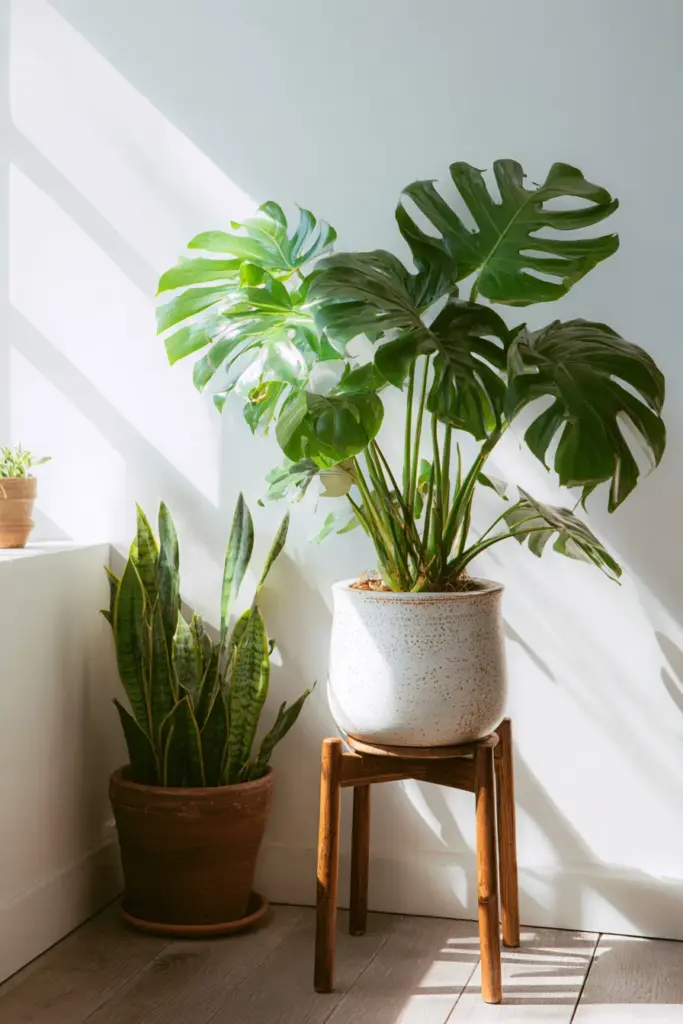
No Japandi living room feels complete without plants. But forget the jungle aesthetic—this is about intentional greenery. A single monstera in a hand-thrown ceramic pot brings more impact than a dozen small plants scattered randomly.
For Philippine homes with varying light conditions, choose resilient varieties. Snake plants thrive in low light and humid environments. Pothos vines cascade beautifully from floating bamboo shelves. A small bonsai on your coffee table becomes a meditation point, a living sculpture that changes subtly with each season.
Position plants where they interact with natural light. Morning sun through sheer curtains casting plant shadows on white walls creates moving art throughout the day.
Sustainable Wood with Green Undertones
Bamboo furniture naturally carries green undertones in its grain. A bamboo coffee table or side chair brings organic color into your space without artificial dyes. Look for FSC-certified wood pieces that show their environmental story through their subtle coloring.
In the Philippines, Divisoria markets offer affordable rattan and bamboo pieces perfect for Japandi styling. A weekend spent sanding and treating these finds with natural oils can yield beautiful, eco-friendly furniture under PHP 5,000.
Textiles That Whisper Green
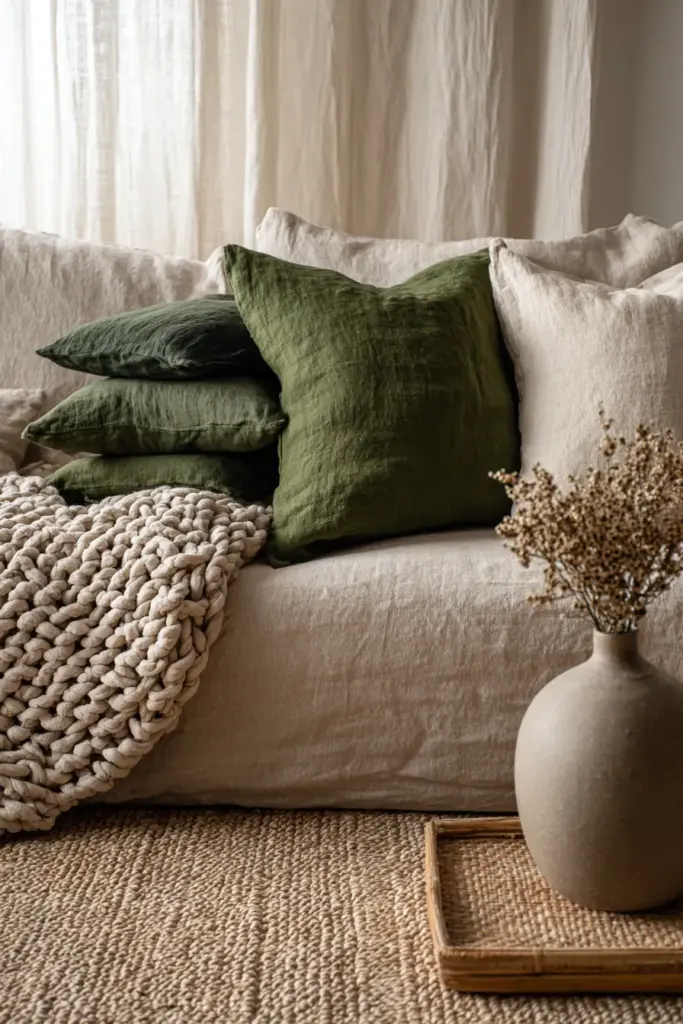
Linen naturally dyes beautifully in olive and sage tones. Invest in linen curtains that pool slightly on the floor—they’ll soften harsh sunlight while introducing gentle green hues. Hemp cushion covers in moss green add texture and sustainability to your seating area.
For budget-conscious styling, consider upcycling existing textiles. Natural dyes from avocado pits create lovely peachy-sage tones, while spinach yields a soft, muted green. The slight imperfections in hand-dyed fabrics perfectly embody wabi-sabi philosophy.
Strategic Placement: Where Green Lives
The Accent Wall Done Right
An accent wall in sage or olive transforms your living room without overwhelming it. Choose the wall that receives the most natural light—the color will shift beautifully from morning to evening, creating a dynamic backdrop for your minimalist furniture.
Prep is everything. In humid climates like the Philippines, start with anti-mold primer before applying your green paint. Two coats of low-VOC paint ensure even coverage while keeping your indoor air quality high.
Consider texture too. A matte finish in sage green creates a soft, chalky appearance that enhances Japandi’s organic aesthetic. Avoid glossy finishes—they fight against the style’s inherent warmth.
Furniture as Green Anchors
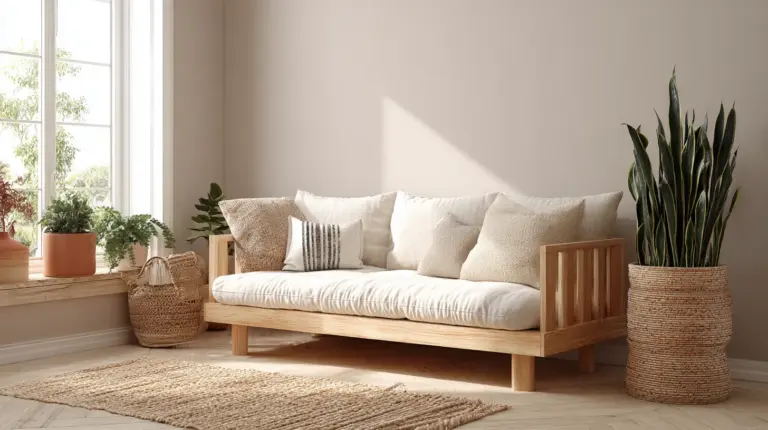
A low-profile sofa in olive green linen becomes your room’s focal point. Keep the lines clean and simple—tapered wooden legs, no ornate details, just honest construction that speaks to Japanese craftsmanship.
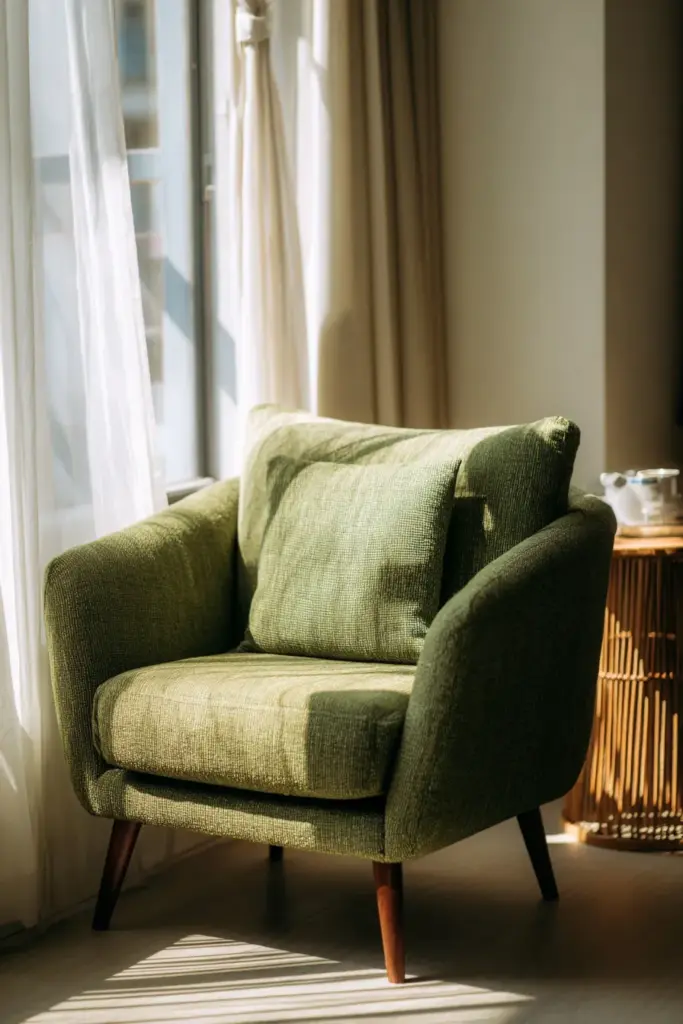
If a green sofa feels too committed, try a single accent chair instead. Place it near a window with a small side table and reading lamp, creating a cozy nook that draws you in with its inviting green embrace.
Decorative Accents with Purpose
Every green element should earn its place. A collection of three ceramic vases in varying shades of green (sage, olive, seafoam) creates visual interest through repetition and variation. Display them on a floating shelf made from reclaimed wood.
Handwoven baskets in natural seagrass bring green through their organic material. Use them for blanket storage or as planters for larger floor plants. Their texture adds depth while their subtle green tones maintain the color story.
Lighting Green Hues for Maximum Impact
Natural Light Considerations
Green’s appearance changes dramatically with light. Morning light makes sage appear cooler and more gray. Golden hour bathes olive tones in warmth, making them glow like burnished bronze. Position your green elements where they’ll catch this changing light.
For north-facing living rooms that receive cooler light, choose warmer greens like moss or olive to compensate. South-facing spaces with abundant warm light can handle cooler sages and seafoams beautifully.
Smart Artificial Lighting
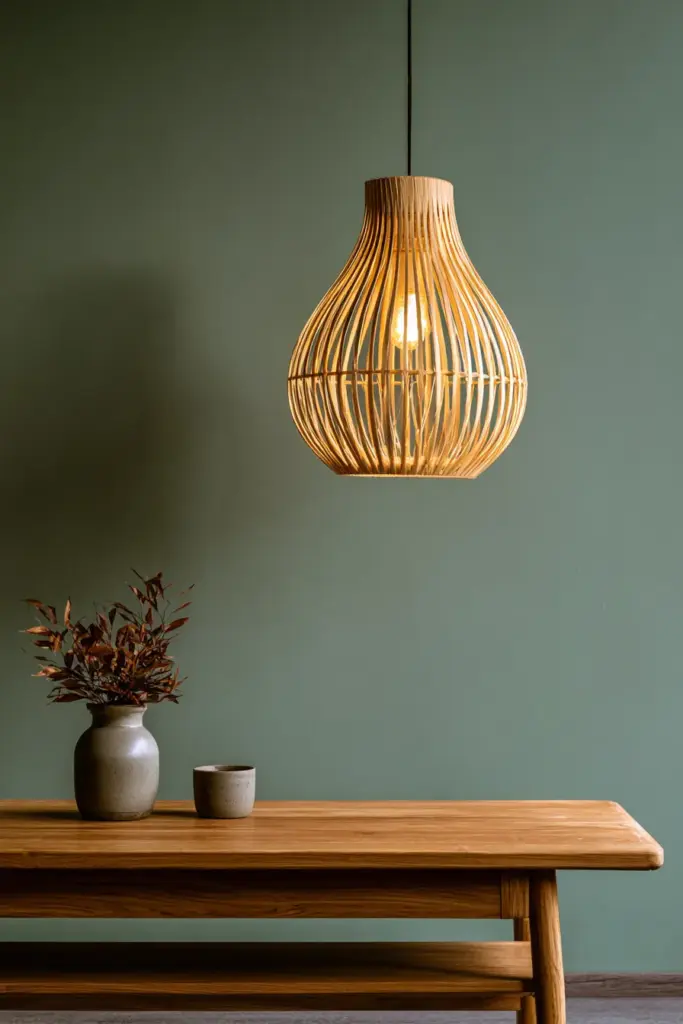
Philips Hue warm LED bulbs (2700K) enhance green hues without distorting them. Install them in bamboo pendant lights or ceramic table lamps for adjustable ambiance. Motion-sensor options work brilliantly in small spaces, providing light exactly when needed while conserving energy.
In the Philippines’ humid climate, energy-efficient LED strips under floating shelves create subtle uplighting that makes plants glow while keeping electricity costs low. A small investment in smart lighting pays dividends in both atmosphere and utility savings.
Layer Your Light Sources
Never rely on a single overhead fixture. Combine ambient lighting (ceiling fixtures), task lighting (reading lamps), and accent lighting (spotlights on plants or art). This layered approach lets you adjust the room’s mood from energizing morning brightness to evening serenity—all while ensuring your green elements remain visible and beautiful.
Budget-Friendly Green Integration (Under PHP 5,000)
DIY Painted Furniture Projects
Thrifted wooden side tables transform with a coat of moss green chalk paint. Sand lightly, apply primer, then two thin coats of paint, letting each dry completely. Finish with clear wax for protection. Total cost: PHP 800-1,200 including supplies.
Old picture frames painted in sage create an instant gallery wall. Fill them with pressed leaves, botanical prints, or simple line drawings. This project costs under PHP 500 but delivers significant visual impact.
Affordable Textile Swaps
Replace existing cushion covers with DIY versions sewn from affordable linen in olive or sage. Many fabric markets in Divisoria sell linen remnants for PHP 150-250 per meter. Two meters yields four cushion covers when sewn simply.
Dye existing white or cream textiles using natural methods. Avocado pits create peachy-sage tones, while spinach yields soft greens. The process costs almost nothing but requires patience as the colors develop.
Strategic Plant Additions
Start with affordable, resilient plants. A single large pothos costs PHP 150-300 and grows vigorously in Philippine conditions. Propagate cuttings to create multiple plants from one purchase. Display in simple terracotta pots (PHP 50-100 each) for authentic Japandi style.
Snake plants thrive on neglect, perfect for busy households. A medium specimen costs PHP 200-400 and needs minimal care while providing maximum green impact.
Small Space Solutions with Green
Vertical Green Integration
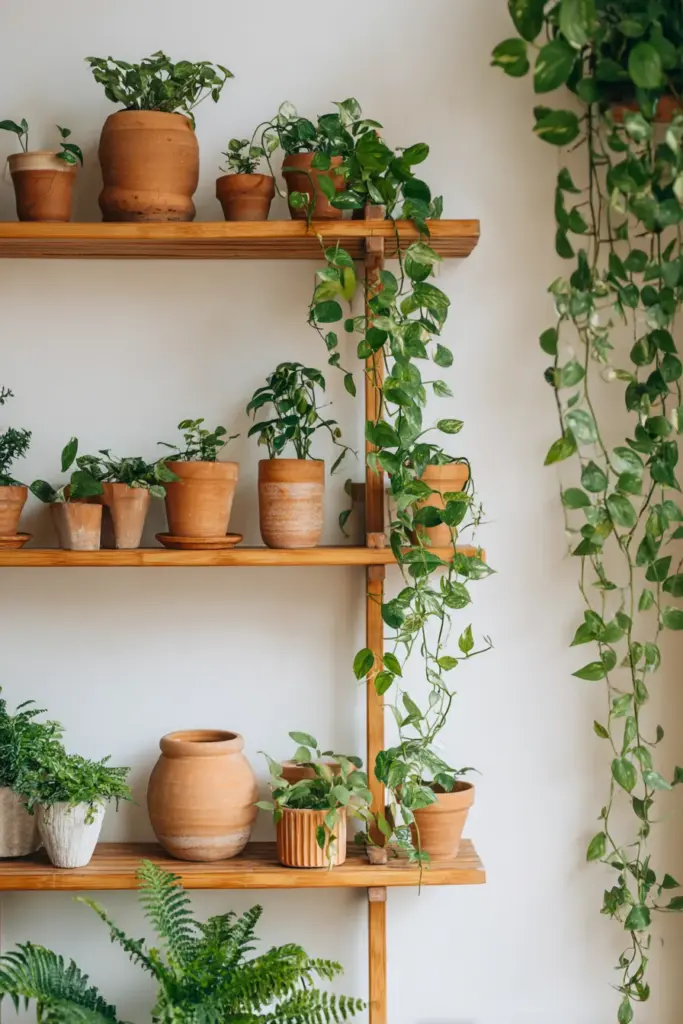
When floor space is limited, go vertical. Install simple bamboo floating shelves (PHP 500-800 for materials) and arrange trailing pothos or string of hearts plants. The vertical greenery draws eyes upward, making ceilings feel higher.
A DIY green wall costs under PHP 2,000 using recycled wooden frames, chicken wire, and sphagnum moss. Plant small ferns or peperomias in the pockets. This becomes both art and living element.
Multi-Functional Green Furniture
Choose pieces that serve multiple purposes. A storage ottoman upholstered in olive green linen (PHP 3,000-4,000) provides seating, storage, and color. A bamboo ladder shelf (PHP 1,500-2,500) displays plants while occupying minimal floor space.
Nesting tables in natural wood with green-painted tops offer flexibility. Use all three when entertaining, store two when you need space. This adaptability is essential in compact Filipino living rooms.
Mirror Magic with Green
Position a large mirror opposite your green accent wall or plant display. The reflection doubles your green elements visually without adding clutter. Frame the mirror in bamboo or natural wood to maintain material consistency.
Maintaining Balance: The 80/20 Rule
Understanding Proportion
The secret to successful green integration is restraint. Japandi design follows the 80/20 principle: 80% neutral foundation (whites, beiges, grays, natural wood) and 20% accent colors (your greens).
This ratio ensures your green elements feel intentional rather than overwhelming. They become focal points that draw attention without dominating the space.
Mixing Greens Thoughtfully
You can use multiple green shades, but stick to three maximum. A good combination: sage walls (primary green), olive accent chair (secondary green), and seafoam decorative objects (tertiary green). The variation creates interest while maintaining harmony.
Ensure your greens share similar undertones. Cool-toned greens (with blue undertones) should stay together, as should warm-toned greens (with yellow undertones). Mixing undertones creates visual discord.
Incorporating Contrast
Green needs contrast to shine. Pair your greens with charcoal gray (#36454F) or matte black for sophisticated edge. A black metal side table against a sage wall creates stunning definition. Dark picture frames around botanical prints pop against olive-painted trim.
But remember: even contrast follows the 80/20 rule. If green occupies 20% of your palette, black might occupy just 5%. The neutral base remains dominant.
Seasonal Green Transitions
Adapting to Philippine Climate
The Philippines doesn’t have traditional seasons, but you can create seasonal feelings through green variations. During the rainy months, embrace deeper olives and mosses that echo the lush outdoor greenery. As dry season approaches, lighten your palette with seafoams and mints.
Swap cushion covers, throws, and smaller decor items rather than repainting walls. This keeps your space feeling fresh without major investment or effort.
Plant Rotation for Year-Round Interest
Not all plants thrive year-round indoors. Rotate between shade-loving varieties during hot months and those needing brighter light when the sun shifts lower. This ensures your living green elements always look their best.
Sustainability Metrics for Green Choices
Eco-Impact Comparisons
Choosing sustainable materials matters. FSC-certified bamboo furniture produces 75% less CO2 than plastic alternatives during manufacturing. Recycled linen textiles use 80% less water than conventional cotton production.
When selecting green paints, opt for low-VOC or zero-VOC options. They cost slightly more (PHP 200-400 extra per gallon) but protect indoor air quality—crucial in homes with limited ventilation.
Supporting Local, Sustainable Sources
The Philippines offers incredible sustainable options. Abaca textiles from Bicol region provide natural fibers perfect for cushion covers and throws. Rattan from Mindanao supports traditional craftspeople while offering authentic Japandi materials.
Sourcing locally reduces transportation emissions and supports Filipino artisans. A locally-made bamboo coffee table might cost the same as an imported piece but carries significantly less environmental impact.
Troubleshooting Common Green Integration Challenges
When Green Feels Too Cold
If your green space feels chilly rather than calming, add warm wood tones and terracotta accents. A honey-colored oak coffee table or rust-colored ceramic pots will inject warmth. Consider warmer lighting (2700K instead of 3000K) to enhance golden tones.
Layer in textile warmth through chunky knit throws or wool rugs in cream or beige. These textures counterbalance green’s natural coolness.
When Green Overwhelms
Too much green turns Japandi into jungle. Pull back by replacing some green elements with neutrals. Perhaps your sage curtains and olive cushions are fine, but the green rug needs to go—replace it with natural jute.
Increase white and light wood surfaces to reset the balance. A fresh coat of white paint on trim work can significantly lighten an over-greened space.
When Green Looks Dated
Green can skew retro if not executed carefully. Avoid avocado green and seafoam together—that’s 1970s, not Japandi. Stick to sophisticated sages, olives, and mosses with gray or brown undertones.
Update your green choices every 2-3 years by monitoring current Japandi trends. For 2025-2026, biophilic greens with blue undertones are gaining popularity, reflecting increased focus on wellness and nature connection.
Your Japandi Green Living Room Checklist
Before you begin transforming your space, use this practical guide:
- Foundation First: Ensure 80% of your room is neutral (white walls, beige sofa, natural wood furniture)
- Choose Your Primary Green: Sage for walls, olive for furniture, or moss for accents
- Select Two Additional Green Shades: Keep them in the same tonal family
- Invest in Living Plants: Minimum three plants in varying sizes
- Light Correctly: Install warm LED bulbs (2700K) in all fixtures
- Add Natural Textures: Linen, bamboo, rattan, hemp, jute
- Include Contrast Elements: Charcoal gray or matte black accents (5-10% of palette)
- Layer Your Lighting: Ambient, task, and accent sources
- Source Sustainably: Prioritize FSC wood, recycled textiles, local artisans
- Maintain Minimalism: Every item should have purpose and breathing room
Key Takeaways
Transform your living room into a Japandi sanctuary with these essential principles:
- Green is a supporting actor, not the star: Let it enhance, not dominate
- Quality over quantity: One perfect sage wall beats ten random green accessories
- Embrace living greenery: Real plants bring authenticity no paint can match
- Balance warm and cool: Use lighting and wood tones to adjust temperature
- Sustainability matters: Choose eco-friendly materials that tell a story
- Respect the 80/20 rule: Maintain neutral foundation for true Japandi aesthetic
- Work with your light: Green shifts throughout the day—plan for it
- Invest in versatility: Choose pieces that adapt as your style evolves
Conclusion: Living Green, Living Well
Creating a Japandi living room with green hues isn’t about following rigid rules. It’s about listening—to your space, your needs, your intuition. It’s about understanding that the softest sage wall can change how you breathe in your own home. That a single monstera leaf catching morning light can become your daily meditation.
Green asks us to slow down, to notice, to honor the natural world even within our urban lives. In the Philippines, where nature surrounds us so abundantly, bringing green indoors feels less like decoration and more like homecoming.
Start small if you need to. Paint one wall. Bring home one plant. Swap one cushion cover for sage linen. Watch how your space shifts, how your mood lifts, how the room begins to breathe differently.
Your living room is waiting to become something more than just a place to sit. With green as your guide and Japandi’s gentle philosophy as your framework, it can become your sanctuary—a space where calm lives, where beauty breathes, where you can finally, truly rest.
Frequently Asked Questions
What colors define Japandi living room palettes with green accents?
Japandi green palettes center on muted, nature-inspired tones paired with soft neutrals. Core greens include sage (#A8B5A2), olive (#808000), and moss (#8A9A5B), always balanced with warm beiges (#E8DCC4), soft grays (#A9A9A9), and natural wood tones. The palette follows the 80/20 rule: 80% neutrals create the foundation while 20% green provides intentional accent. Small doses of charcoal gray or matte black add sophisticated contrast. This combination creates spaces that feel grounded yet elevated, natural yet refined—perfectly embodying both Japanese wabi-sabi and Scandinavian hygge principles.
How do you add green hues to a Japandi living room without overwhelming the minimalist vibe?
The secret is strategic restraint and natural integration. Start with one primary green element—an accent wall in sage, a single olive linen chair, or a collection of plants in terracotta pots. Keep surrounding surfaces neutral (white walls, light wood, beige textiles). Introduce green through natural materials first: living plants, bamboo furniture with green undertones, hand-dyed linen cushions. Avoid pattern and stick to solid colors. Layer in additional greens only after living with your initial choice for a few weeks. This gradual approach ensures each green element earns its place without cluttering your space’s minimalist integrity.
Which plants enhance green tones in Japandi spaces?
Low-maintenance plants with architectural presence work best. Monstera deliciosa offers bold, sculptural leaves that make a statement while requiring minimal care. Snake plants (Sansevieria) thrive in low light and humid Philippine conditions, providing vertical green interest. Pothos vines cascade beautifully from bamboo shelves, adding softness. Small bonsai trees serve as living sculptures on coffee tables. String of pearls creates unexpected texture in hanging planters. Display plants in simple terracotta or ceramic pots in neutral tones—no decorative glazes or bright colors. Group plants in odd numbers (three or five) for visual harmony, and ensure each has space to breathe.
Can you mix green with other Japandi colors like black or charcoal?
Absolutely—black and charcoal create essential contrast that makes green hues pop. Use dark elements sparingly, keeping them to about 5-10% of your overall palette. A matte black metal coffee table grounds a sage green accent wall beautifully. Charcoal gray throw pillows add sophistication against an olive linen sofa. Black picture frames containing botanical prints create definition. The key is maintaining the neutral foundation (80% whites, beiges, wood) while using both green (15-20%) and black/charcoal (5-10%) as intentional accents. This combination delivers depth and visual interest while preserving Japandi’s characteristic calm and balance.
What’s the best way to source green Japandi pieces in the Philippines on a budget?
Start local and think creatively. Divisoria and Dapitan markets offer affordable bamboo and rattan furniture (PHP 500-3,000) perfect for the Japandi aesthetic. Thrift stores yield wooden pieces you can upcycle with sage or olive chalk paint (under PHP 1,000 total). SM Home and True Value carry low-VOC paints in Japandi-appropriate greens (PHP 800-1,500 per gallon). For textiles, visit fabric markets in Divisoria for linen remnants (PHP 150-250 per meter). Buy resilient plants like pothos and snake plants from local nurseries (PHP 150-400 each) rather than expensive specialty shops. Natural dyes from kitchen scraps (avocado pits, spinach) create custom green tones for free. Focus on quality over quantity—one perfect piece beats five mediocre ones.