
Table of Contents
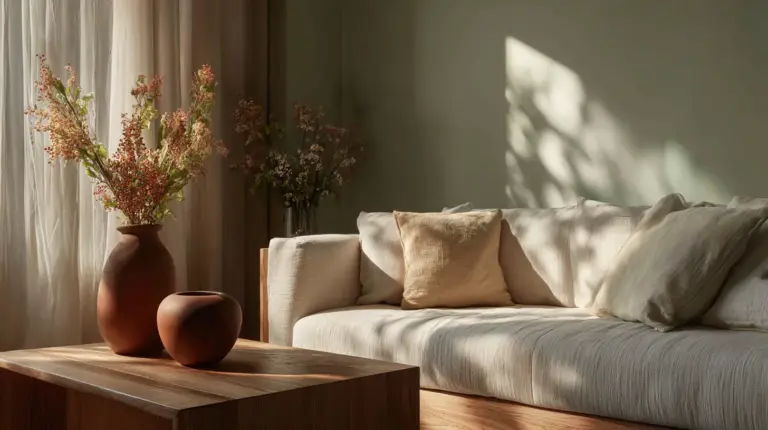
Light doesn’t just illuminate a room — it shapes how every color breathes, how shadows fall softly against linen cushions, how morning feels different from evening. In a Japandi living room, where simplicity meets warmth, lighting becomes the invisible hand that brings your carefully chosen palette to life.
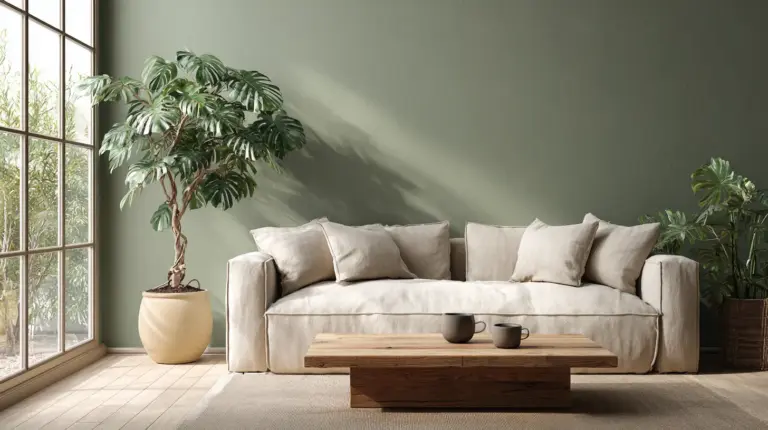
The marriage of Japanese minimalism and Scandinavian coziness depends on one crucial element: the quality of light touching every surface. A taupe wall shifts from muddy to sophisticated under the right glow. Sage green either recedes into shadow or blooms with quiet vitality.
Understanding how light interacts with your Japandi color palette isn’t just technical knowledge — it’s the difference between a room that feels like a magazine spread and one that truly invites you in. Let’s explore how to orchestrate this delicate dance between illumination and color, creating spaces that feel both serene and alive.
Why Lighting Defines Your Japandi Color Story
Your paint samples looked perfect at the store. But under your living room’s overhead fixture, that beautiful beige suddenly feels cold, almost clinical. This frustration happens because lighting is the lens through which we experience color — and in Japandi design, where palettes skew neutral and subtle, the stakes are even higher.
Warm lighting in the 2700K-3000K range doesn’t just brighten your space. It enriches earth tones, makes creams feel buttery rather than stark, and gives charcoal accents depth instead of flatness. Think of how candlelight transforms a room — that’s the principle we’re chasing, scaled up for everyday living.
The Japanese concept of ma (negative space) and the Scandinavian principle of hygge (cozy contentment) both rely on diffused, layered illumination rather than harsh overhead glare. When light moves gently through a room, your neutral palette gains dimension, texture becomes visible, and the space invites lingering.
The Science Behind Warm Light and Neutral Palettes
Color temperature measured in Kelvin determines whether your lighting feels like a sun-warmed afternoon or a dentist’s office. For Japandi living rooms, the sweet spot sits between 2700K and 3000K — warm enough to enhance your palette without skewing colors orange.
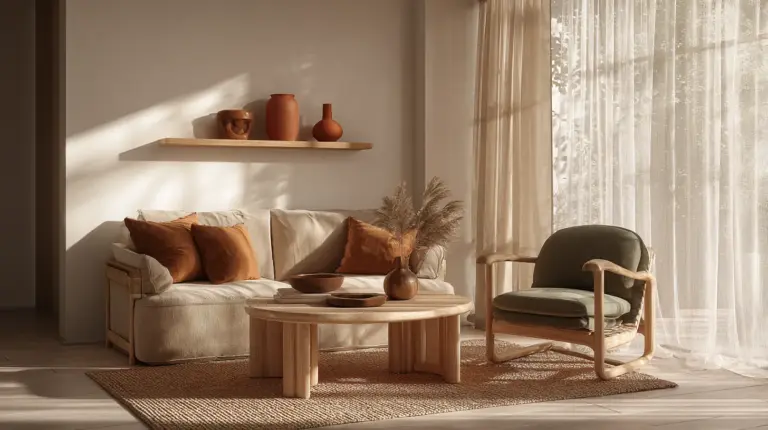
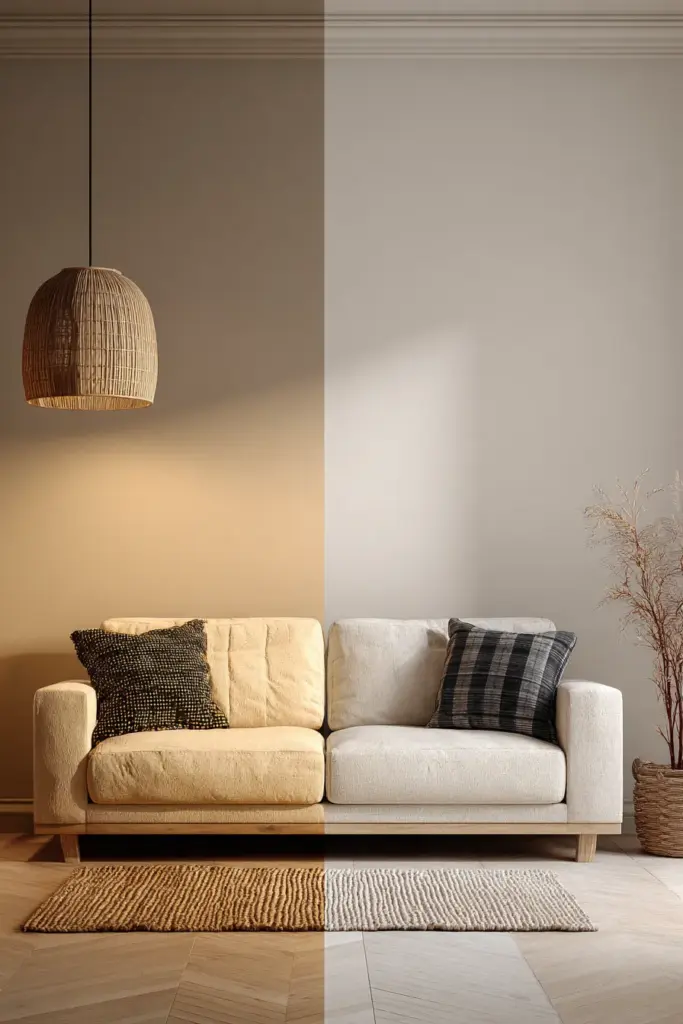
At 2700K, your beige sofa catches golden undertones that make the fabric look richer, more touchable. Taupe walls develop a soft glow reminiscent of late afternoon sun filtering through shoji screens. Even stark white trim softens into cream, losing its clinical edge.
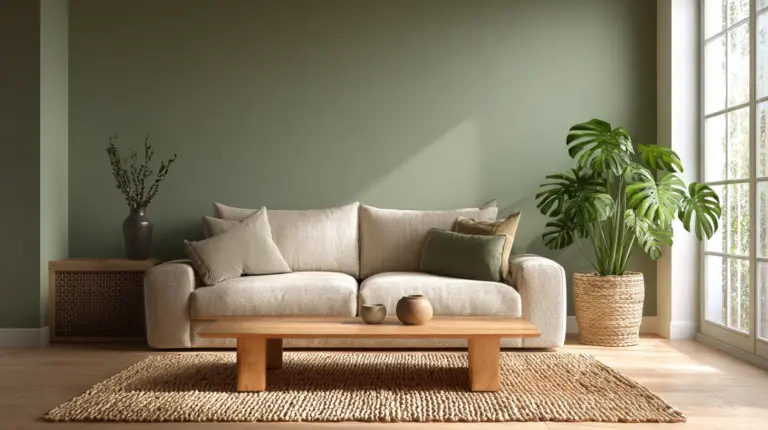
Research suggests warm lighting can boost feelings of calm by 20-30%, a psychological effect that aligns perfectly with Japandi’s philosophy. When your sage green accent wall meets 2800K light from a paper pendant, it doesn’t just look green — it feels alive, breathing with the room rather than sitting flatly against it.
How Different Temperatures Affect Japandi Colors
| Color Temperature | Effect on Beige/Taupe | Effect on Sage Green | Effect on Charcoal | Best Use |
|---|---|---|---|---|
| 2700K (Warm) | Rich, golden undertones; cozy depth | Vibrant yet muted; balanced earth tone | Soft shadows; dimensional warmth | Evening ambient lighting |
| 3000K (Soft White) | Clean neutrality; elegant clarity | Fresh, subtle brightness | Defined contrast without harshness | All-day versatility |
| 4000K+ (Cool) | Flat, grayish cast; loses warmth | Washed out; loses organic feel | Stark, cold appearance | Avoid in Japandi spaces |
The difference between 2700K and 3000K might seem subtle on paper. In practice, it’s the difference between a room that wraps you in warmth and one that simply looks nice in photos.
Layered Lighting: The Foundation of Japandi Ambiance
Overhead fixtures alone create flat, shadowless spaces that kill the dimensional quality essential to Japandi design. Layering three types of lighting — ambient, task, and accent — lets you sculpt how your color palette performs throughout the day.
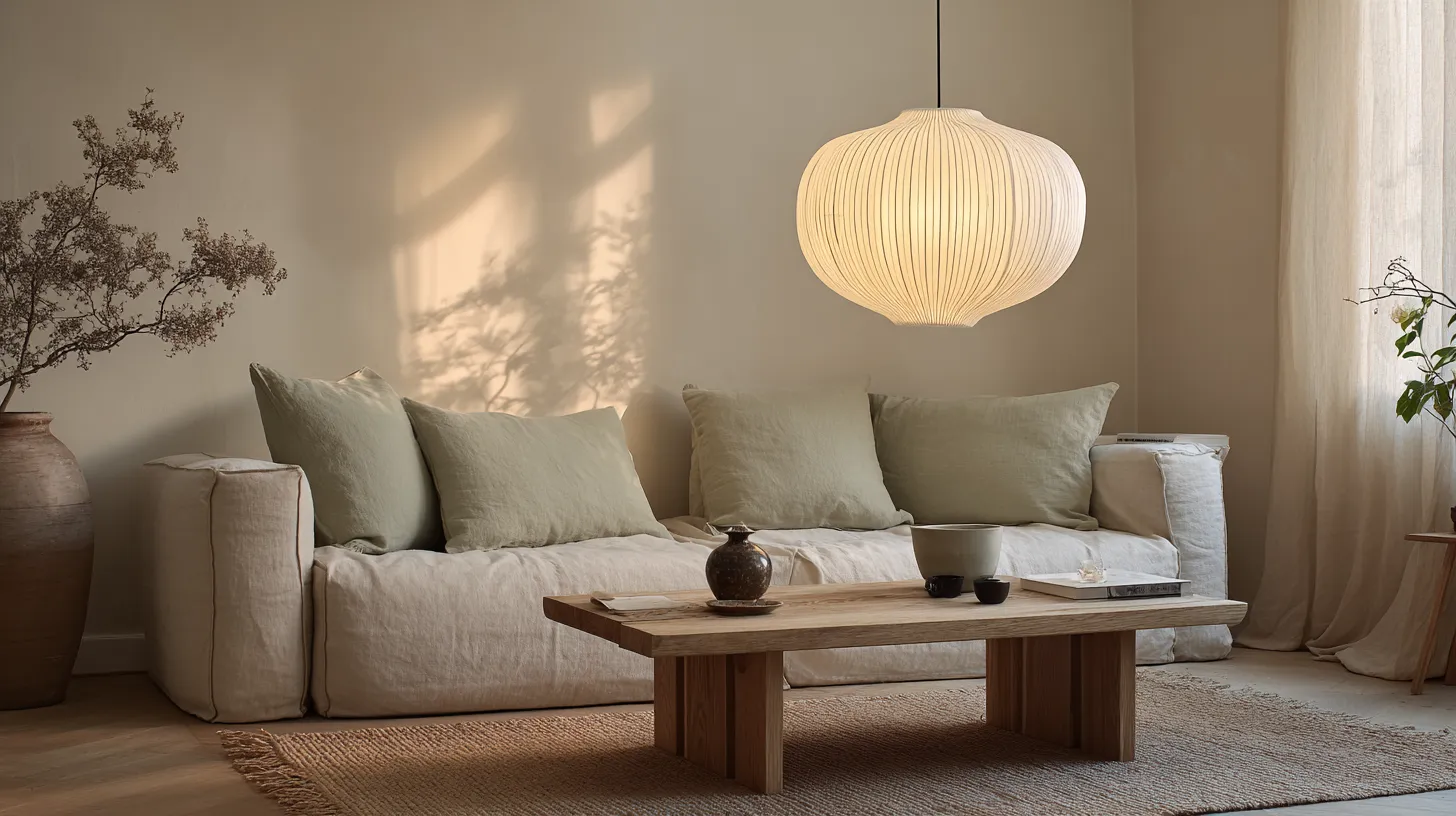
Ambient lighting forms your base layer. Think low-hanging pendant lamps with washi paper shades or natural linen drums that diffuse light softly across ceiling and walls. This foundational glow should honor your palette by spreading warmth evenly, making neutrals feel cohesive rather than disjointed.
Task lighting serves function without sacrificing beauty. A walnut floor lamp with a warm LED bulb beside your reading chair provides directed light that doesn’t compete with your color story. Arc lamps in matte black or brass bring light where you need it while adding sculptural interest.
Accent lighting is where magic happens. Position a simple ceramic table lamp to wash sage green textiles in gentle glow, or use recessed spotlights to highlight the grain of your oak coffee table. This layer creates depth, shadow, and the interplay that makes neutral palettes come alive.
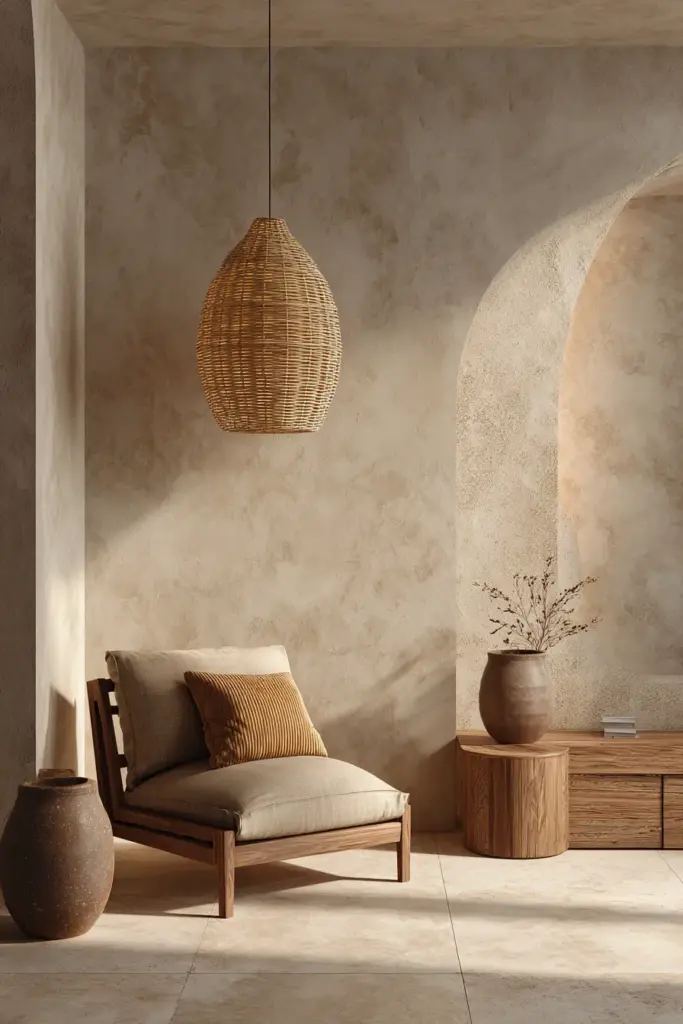
Creating Your Layered Lighting Plan
Start with ambient fixtures at eye level or below — nothing harsh beaming down from ceiling centers. Add task lighting at functional zones: reading corners, workspace areas, beside the sofa for evening activities.
Finish with accent pieces that draw the eye: a sculptural rattan pendant above your side table, LED strips behind floating shelves to backlight ceramic vessels, or a simple spotlight on textured wall art. Each layer should use dimmable LED bulbs so you can adjust intensity as natural light shifts.
The goal isn’t brightness overload. It’s creating pockets of illumination that let your palette breathe, allowing shadows to define spaces and light to reveal texture.
Natural Materials That Shape Light and Color Together
In Japandi design, your lighting fixtures aren’t separate from your color palette — they’re active participants in it. Materials like bamboo, rattan, paper, and wood don’t just hold bulbs; they filter and warm light while adding organic texture to your neutral scheme.
A pendant lamp crafted from natural rattan casts intricate shadow patterns across your off-white walls, adding visual complexity without introducing new colors. The woven structure diffuses 2700K light beautifully, preventing harsh spots while maintaining warmth.
Washi paper shades, inspired by traditional Japanese lanterns, create the softest glow imaginable. Light passes through the fibers like morning sun through rice paper, illuminating your taupe and beige palette without any glare. These fixtures become sculptural elements during the day, then transform into gentle light sources after dark.
Ceramic fixtures in matte finishes — cream, charcoal, sage — reinforce your color story while shaping light quality. A handmade ceramic pendant in soft gray doesn’t just match your palette; it diffuses light in a way that makes the entire room feel cohesive.
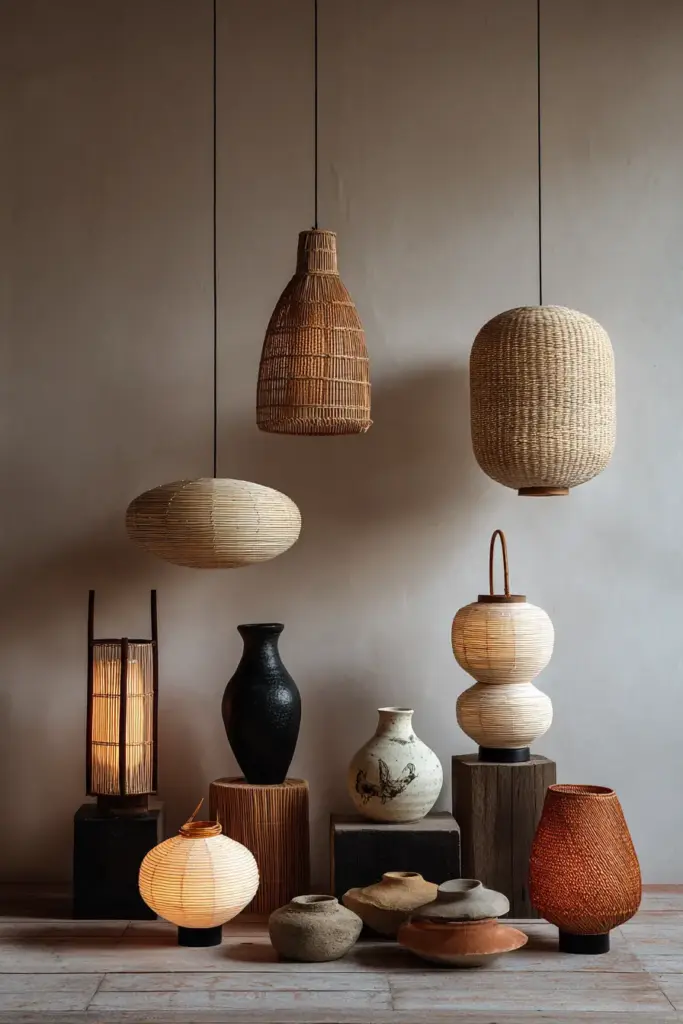
Budget-Friendly Natural Lighting Ideas
You don’t need designer fixtures to achieve this effect. Upcycle thrifted bamboo lanterns by rewiring them with warm LED bulbs — look for pendant kits at hardware stores for under $20. Swap standard shades on existing lamps for paper or linen versions that soften light instantly.
Philippine-sourced materials offer sustainable beauty at accessible prices. Search local markets for rattan or bamboo fixtures crafted by artisans, supporting communities while adding authentic texture to your space. Even simple rice paper lamp shades from craft stores can transform harsh lighting into Japandi-appropriate glow.
The key is choosing materials that filter rather than block light, creating that characteristic soft illumination that makes neutral palettes feel dimensional rather than flat.
Shadow and Contrast: The Hidden Players
Japandi design celebrates negative space and the beauty of imperfection — concepts that rely on shadow as much as light. When every corner blazes with illumination, you lose the interplay of light and dark that gives rooms soul.
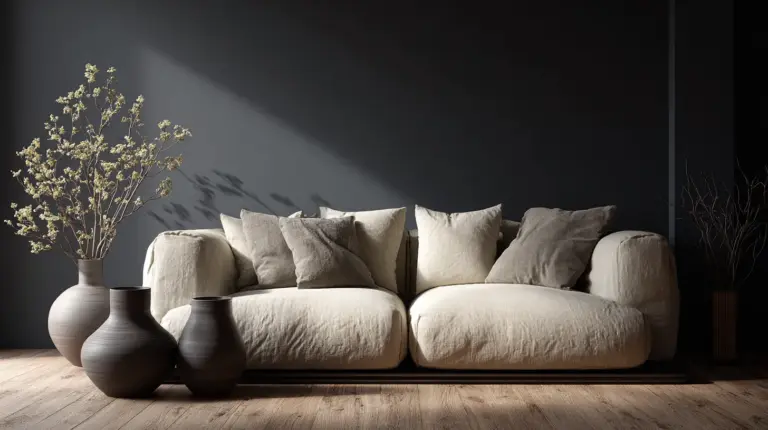
Let shadows pool in corners. Allow the space beneath your low-profile sofa to fade into gentle darkness. These shadowed areas make lit zones feel more inviting by contrast, creating natural zones without walls or dividers.
The Japanese aesthetic principle of wabi-sabi finds beauty in shadows, in the way light traces the edge of a ceramic bowl or catches on woven textile. Your charcoal accent pieces gain depth when side-lit rather than flooded with brightness, their subtle variations in tone becoming visible.
Position lighting to graze textured walls rather than blasting them head-on. This raking light reveals every irregularity in plaster, every thread in linen, every grain line in wood. Your neutral palette stops feeling monotonous and starts feeling richly layered.
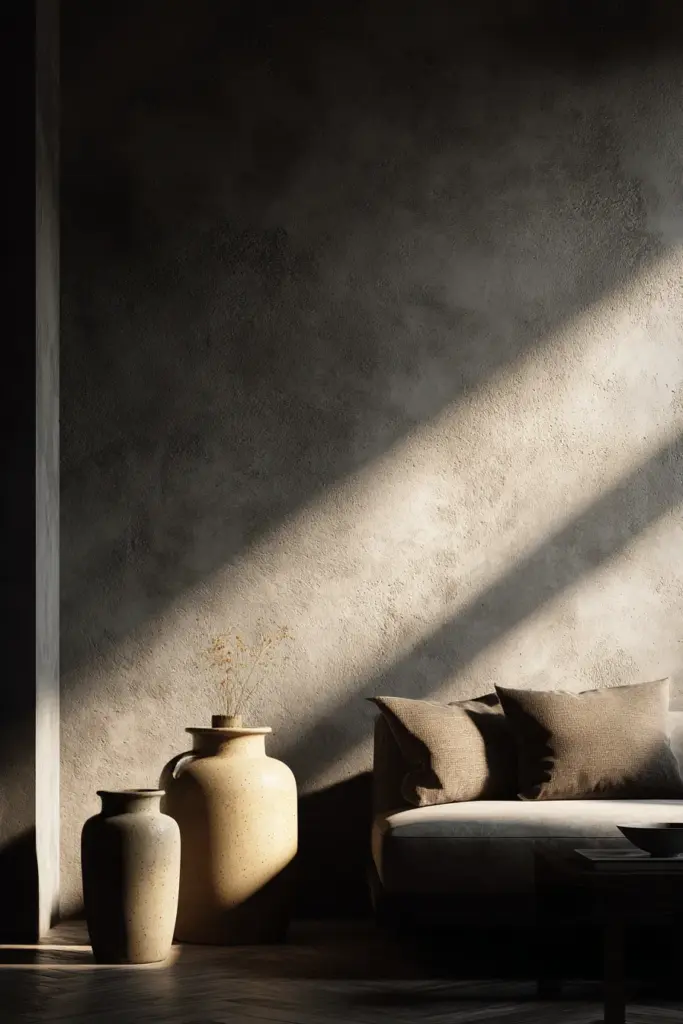
Practical Shadow Play Techniques
Use three-way bulbs or dimmers to control shadow intensity. In the evening, reduce overall brightness by 30-40% to let shadows deepen, creating hygge coziness that encourages unwinding.
Avoid recessed ceiling lights except as focused accents. These fixtures create unnatural shadows that flatten faces and make gathering spaces feel sterile. Instead, position lamps at multiple heights — some at floor level, others at table height, a few near ceiling level — to create natural shadow gradation.
Place lighting behind objects occasionally rather than always in front. A floor lamp behind a sage green plant creates a silhouette effect that adds drama without color, reinforcing your minimalist palette through form rather than hue.
Smart Lighting Technology for Mood Flexibility
Modern Japandi spaces can embrace technology without sacrificing philosophy. Dimmable smart bulbs let you adjust both brightness and color temperature throughout the day, supporting your natural circadian rhythm while honoring your palette.
Program your ambient lighting to start at 3000K during morning hours when you need alertness and clarity. Your beige and taupe palette appears fresh, clean, ready for the day. As afternoon transitions to evening, gradually warm to 2700K, cueing your body to wind down while enriching those same neutrals with golden depth.
Smart lighting systems like Philips Hue or LIFX offer warm LED options that maintain quality while providing app control. Set scenes for different activities: “Reading” mode with focused task lighting, “Gathering” mode with balanced ambient glow, “Evening Calm” with dimmed, warm illumination.
The investment pays off in flexibility. Rather than choosing between 2700K or 3000K permanently, you adjust based on season, activity, or mood. Winter evenings call for maximum warmth to counter darkness outside; summer afternoons can handle slightly cooler tones that feel fresh.
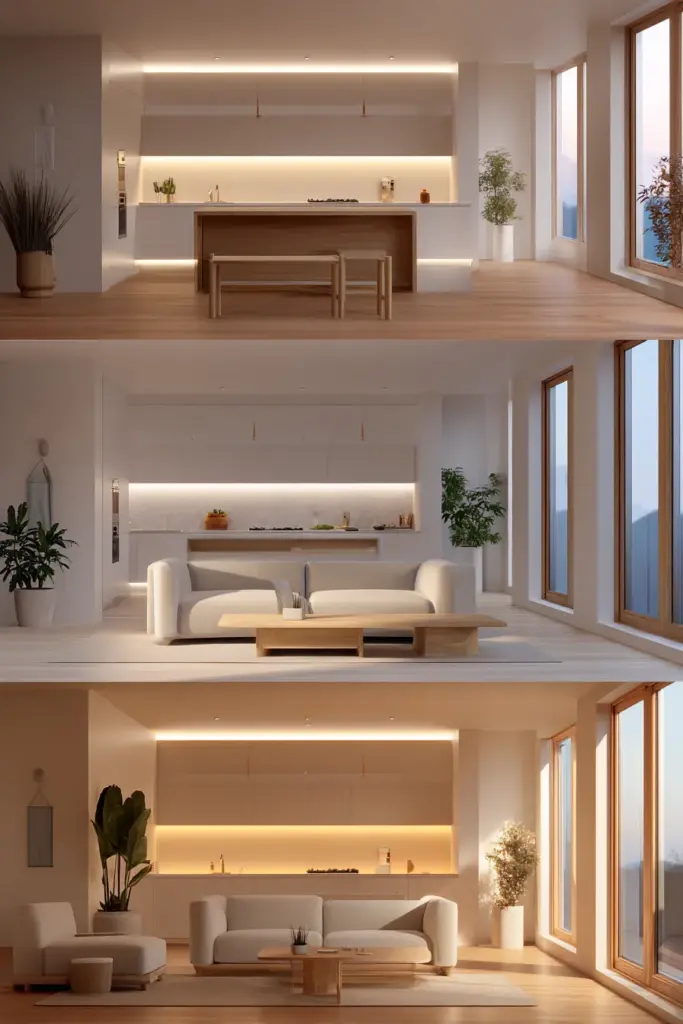
Setting Up Your Smart Lighting System
Start with your most-used fixtures: main ambient lighting and key task lamps. Replace standard bulbs with smart warm LEDs (ensure they reach 2700K at minimum, as some “warm” bulbs bottom out at 2900K).
Create presets rather than adjusting manually each time. Name them intuitively: “Morning,” “Work,” “Dinner,” “Unwind.” Include brightness levels — most Japandi evening scenes work best at 30-50% brightness rather than full blast.
Link systems to voice control if desired, but avoid making technology obtrusive. The goal is seamless adjustment that supports your space, not flashing notifications or complicated apps that conflict with Japandi’s simplicity.
Seasonal Palette Adjustments Through Light
Your Japandi living room doesn’t need repainting to shift with seasons. Strategic lighting changes can refresh your neutral palette subtly, acknowledging nature’s cycles without major renovation.
Winter calls for maximum warmth. Lower ambient lighting to 2700K exclusively, add more task lighting to create cozy pockets, and increase the number of illuminated zones to counter long darkness. Your beige and taupe palette will feel like cashmere wrapped around you.
Spring and summer allow slightly brighter, cooler options. Shift ambient lighting to 3000K, reduce the number of active fixtures to embrace longer daylight, and position lighting to enhance the fresh quality of sage green accents. Your neutrals feel airy rather than heavy.
Autumn sits between — 2800K offers balance, warm enough to acknowledge cooling weather while maintaining the clarity that celebrates harvest abundance. This is when your charcoal accents shine, creating elegant contrast against lighter tones.
Practical Seasonal Swaps
Keep a set of 2700K and 3000K bulbs on hand for your key fixtures. Swapping them seasonally takes minutes but transforms perception dramatically. Note which fixtures affect your space most — usually your primary ambient lighting — and prioritize those for seasonal changes.
Adjust lamp placement too. Summer might mean fewer active lamps to reduce heat and embrace natural light. Winter calls for more small light sources rather than fewer bright ones, creating layered warmth that feels inviting rather than clinical.
Consider adding seasonal accent lighting: string lights with warm LEDs tucked into winter greenery, or a single spotlight on autumn foliage. These temporary additions support your color palette seasonally without permanent commitment.
Plants and Lighting: A Color Partnership
Low-light plants like pothos, snake plants, and peace lilies thrive under the warm, diffused lighting that also flatters your Japandi palette. This isn’t coincidence — both plants and neutral colors prefer gentle, indirect illumination over harsh brightness.
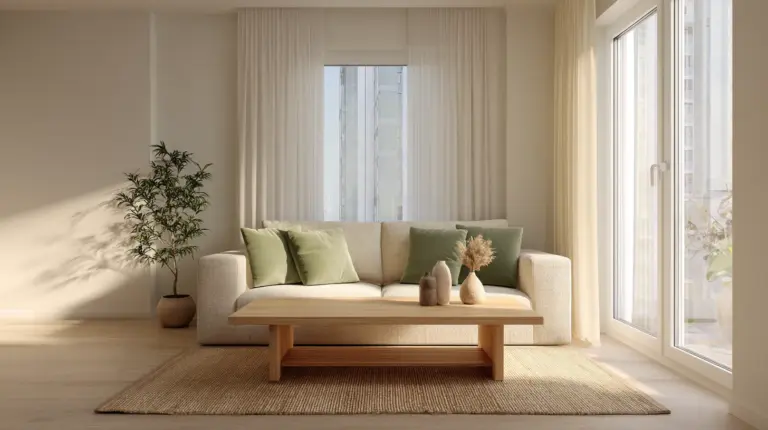
Position a floor lamp with a 3000K LED near your potted fiddle leaf fig. The plant receives adequate light for photosynthesis while the warm glow enhances the sage green of nearby textiles, creating visual harmony between organic and designed elements.
LED grow lights now come in warm tones rather than harsh purple or blue. Integrate these into your lighting plan for plants while maintaining color palette integrity. Your living room stays cohesive rather than looking like a laboratory.
The psychological boost works both ways. Research shows plants reduce stress by up to 15%, while warm lighting adds another 20-30% — combine them under the right illumination, and you’ve created a space that genuinely supports wellbeing while looking beautiful.
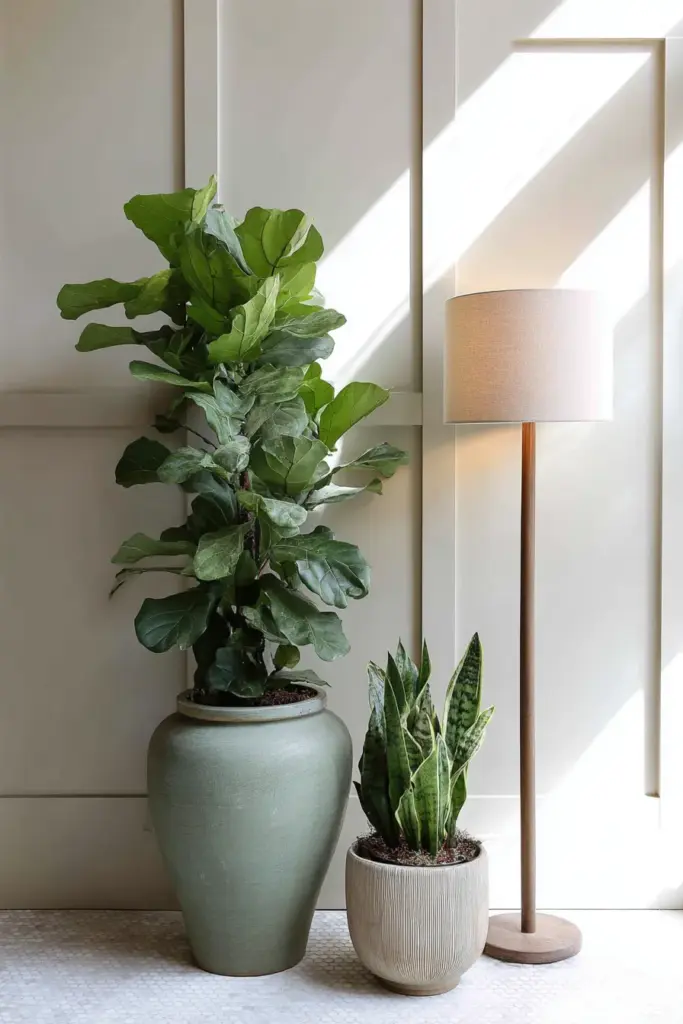
Best Plant-Lighting Combinations for Japandi Spaces
For low-light corners (under 200 lux): Snake plants, pothos, or ZZ plants paired with a single 2700K LED floor lamp positioned 3-4 feet away. These plants tolerate dimness while adding green that complements your neutral palette.
For medium-light zones (200-400 lux): Fiddle leaf figs, monstera, or rubber plants near windows with supplemental task lighting at 3000K. These plants make bold sculptural statements that honor minimalist principles.
For bright spots (400+ lux): Prayer plants, calatheas, or small palms in areas receiving layered lighting from multiple sources. Their varied foliage adds subtle pattern without disrupting color harmony.
Always use LED bulbs for plant proximity — they produce less heat than incandescent, protecting both plant health and your careful color choices from temperature damage.
Energy Efficiency Meets Design Philosophy
Japandi design respects resources, making energy-efficient LEDs a philosophical choice as much as a practical one. Modern warm LEDs consume 75% less energy than incandescent bulbs while lasting 25 times longer.
Look for LEDs rated for 25,000+ hours with CRI (Color Rendering Index) above 90. CRI determines how accurately colors appear under artificial light — anything below 90 can make your carefully chosen neutrals look muddy or false.
Bamboo LED fixtures combine sustainable materials with efficient technology. These aren’t compromises; they’re examples of design and ethics aligning. Your lighting choices reflect the same mindfulness as your color palette and furniture selection.
Smart LEDs add another efficiency layer by allowing you to use only the light you need, when you need it. Your dimmed evening setting uses fraction of full-brightness energy while creating more appropriate ambiance for your Japandi space.
Choosing Sustainable Bulbs
Prioritize brands with recyclable components and minimal packaging. Some LED manufacturers now offer buy-back programs for old bulbs, closing the loop on electronics waste.
For the Philippine market, check local availability of brands like Philips EcoVision or Osram LED Star — both offer warm options (2700K) with high CRI at reasonable prices. Support local retailers who provide proper disposal information.
Consider initial cost versus lifetime value. A $12 LED lasting 20+ years costs far less than replacing $2 incandescent bulbs every few months, while using a quarter of the electricity. This long-term thinking embodies Japandi principles.
Quick Checklist for Perfect Japandi Lighting
- Choose 2700K-3000K warm LEDs for all fixtures to enhance neutral palettes
- Layer three types: ambient (diffused ceiling/pendant), task (floor/table lamps), accent (spotlights/decorative)
- Use natural materials: rattan, bamboo, washi paper, linen, ceramic in muted tones
- Install dimmers or smart bulbs for flexibility throughout the day and seasons
- Embrace shadows — not every corner needs bright light; contrast creates depth
- Select high CRI (90+) bulbs so colors appear true to your intentions
- Position lights at varying heights — avoid relying solely on overhead fixtures
- Filter harsh light through natural materials rather than using bare bulbs
- Consider seasonal adjustments: warmer in winter (2700K), slightly brighter in summer (3000K)
- Pair lighting with plants to support both growth and visual harmony
- Prioritize energy efficiency with long-lasting LEDs that align with sustainable values
Bringing It All Together
The magic of Japandi living rooms lies in restraint — not doing too much, not forcing drama, not overwhelming the senses. Lighting shapes this restraint into something warm, something inviting, something that makes you want to sink into your sofa with tea and simply be.
Your neutral palette of beiges, taupes, soft grays, and sage greens provides the canvas. Warm, layered lighting is what brings that canvas to life, revealing texture in linen, depth in wood grain, subtle shifts in ceramic glazes.
Remember that lighting isn’t about brightness. It’s about quality, about how gently light moves through space, about the way shadows define without dominating. When you get it right, you won’t think about your lighting at all — you’ll just notice how good the room feels.
Start with one change. Swap a harsh overhead bulb for a 2700K LED. Add a paper pendant lamp. Install a dimmer on your main fixture. Each small adjustment brings your color palette closer to its full potential, transforming your living room from a space that looks Japandi into one that feels like coming home.
Frequently Asked Questions
What color temperature is best for Japandi lighting?
The ideal range is 2700K-3000K, with 2700K offering cozier warmth for evenings and 3000K providing fresher clarity for daytime. This warm light enhances the beige, taupe, and sage tones central to Japandi palettes, making them appear rich rather than flat. Avoid anything above 4000K, as cooler temperatures make neutral colors look washed out and conflict with the hygge warmth essential to the style.
How does lighting affect Japandi color palettes?
Lighting determines how colors appear and interact in your space. Warm, diffused light at 2700K-3000K enriches neutrals by adding golden undertones, creating depth and dimension that prevents beiges and taupes from looking dull. Harsh or cool lighting flattens these subtle colors, eliminating the texture and layering that make Japandi rooms feel inviting. Think of lighting as the difference between seeing your palette in candlelight versus fluorescent office lighting.
Can you use cool lighting in Japandi style?
Cool lighting (4000K and above) contradicts Japandi principles by creating stark, clinical environments that lack warmth and coziness. The blue-toned cast makes neutral palettes appear gray and lifeless while eliminating the hygge quality central to the style. Reserve cool lighting only for specialized task areas if absolutely necessary, and always balance with warm ambient lighting elsewhere in the room.
What are budget-friendly Japandi lighting ideas?
Start by replacing bulbs in existing fixtures with warm LEDs (2700K-3000K), which costs under $30 for an entire room. Upcycle thrifted bamboo or rattan lanterns with new wiring kits ($15-25 each). Swap standard lamp shades for paper or linen versions that diffuse light softly. Check local Philippine markets for artisan-made natural fixtures that support communities while staying budget-conscious. Even adding a $20 dimmer switch transforms how your existing lighting supports your palette.
How do I create layered lighting in a small Japandi living room?
Focus on quality over quantity. Use one low-hanging pendant with a paper or linen shade for ambient light, add a single floor lamp beside your seating area for task lighting, and include one small accent light (table lamp or LED strip) to highlight texture. Keep fixtures minimal and multi-functional — an adjustable arc lamp can serve both ambient and task needs. The key is creating different lighting zones at varying heights without cluttering your space, maintaining the minimalist clarity essential to Japandi design.