
Table of Contents
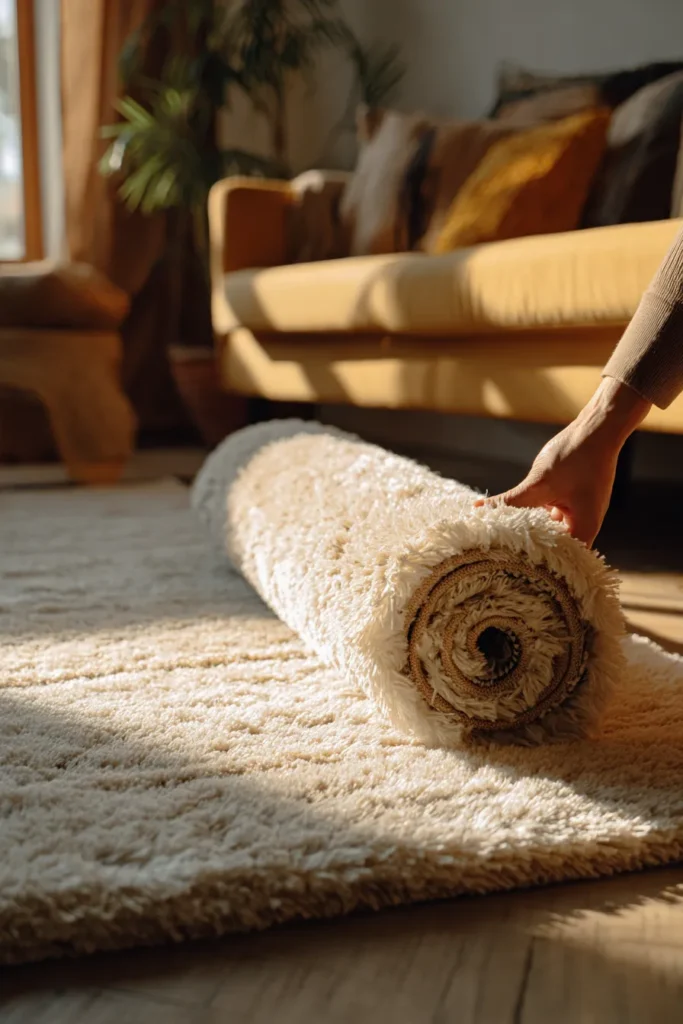
There’s something almost magical about the moment you roll out a new rug in your living room. The space shifts. Colors deepen. Textures invite you to slip off your shoes and sink your toes into something soft and grounding. A rug isn’t just a floor covering, it’s the foundation of your room’s entire personality, the anchor that holds your furniture, your family, and your design vision together.
Yet choosing the right rug can feel overwhelming. Should you go bold with pattern or keep it neutral? How do you know if that gorgeous vintage find will work with your modern sofa? What about size, material, placement, and all those unspoken rules that seem to change with every design magazine you flip through?
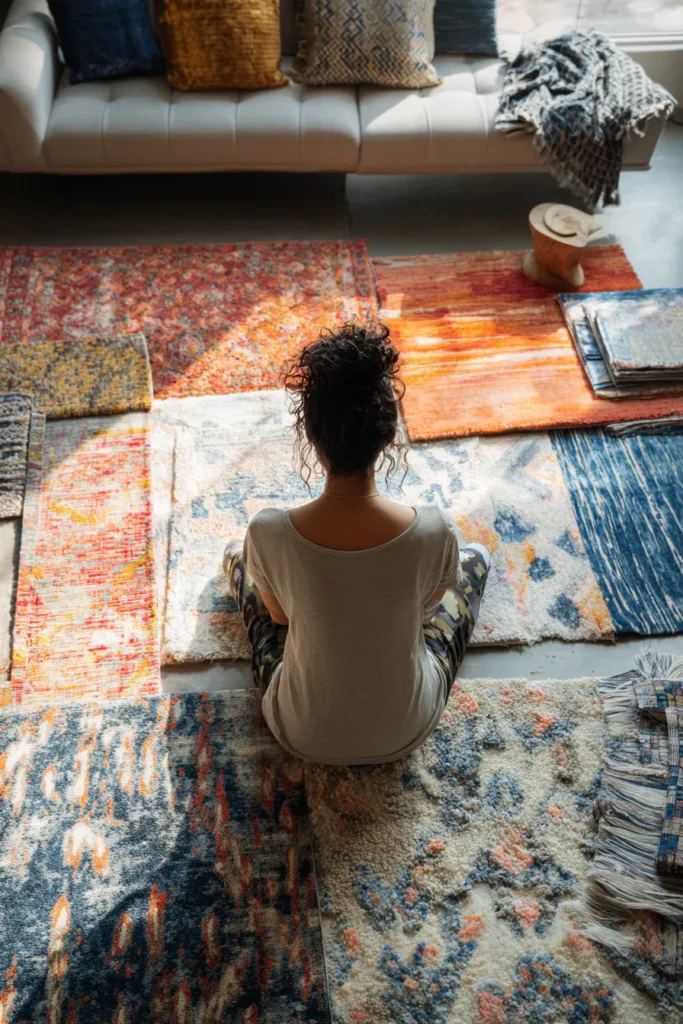
This guide walks you through everything you need to know about living room rugs, from foundational principles to inspired ideas that push boundaries. We’ll explore how to select the perfect size, layer textures like a pro, choose materials that stand up to real life, and discover colors that transform your mood the moment you walk through the door. Whether you’re drawn to the timeless elegance of vintage textiles or the clean lines of contemporary design, you’ll find practical wisdom and creative inspiration here.
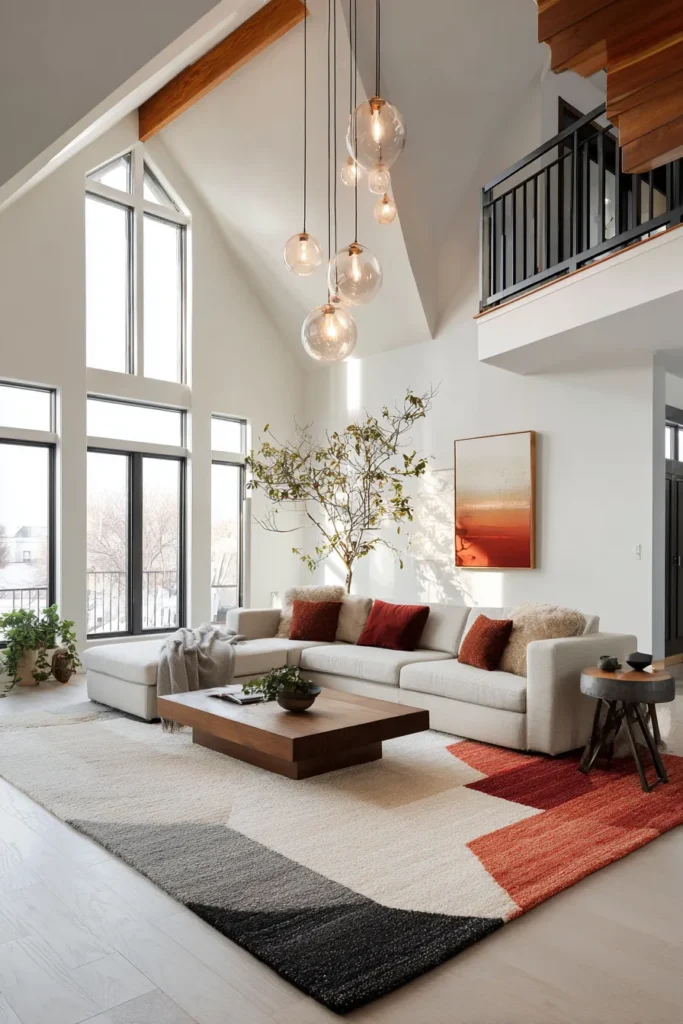
Consider this your invitation to rethink the floor beneath your feet. To see it not as an afterthought, but as the canvas upon which your entire living room comes alive.
Understanding Rug Size and Placement Fundamentals
The size of your rug determines whether your living room feels cohesive or disjointed, spacious or cramped. Get it right, and everything else falls into place. Get it wrong, and even the most beautiful rug will look like it wandered into the wrong room.
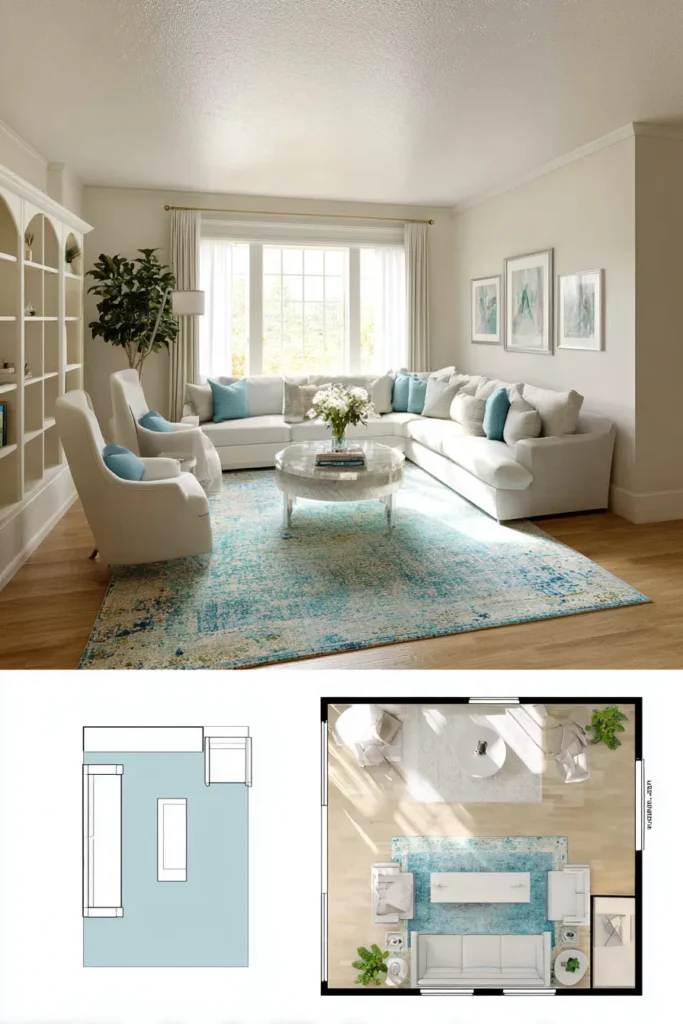
The golden rule is simple: your rug should be large enough to anchor your main seating area. This means at least the front legs of your sofa and chairs should rest on the rug, creating a unified conversation zone. When furniture floats on a too-small rug, the room feels fragmented and awkward, like puzzle pieces that don’t quite fit together.
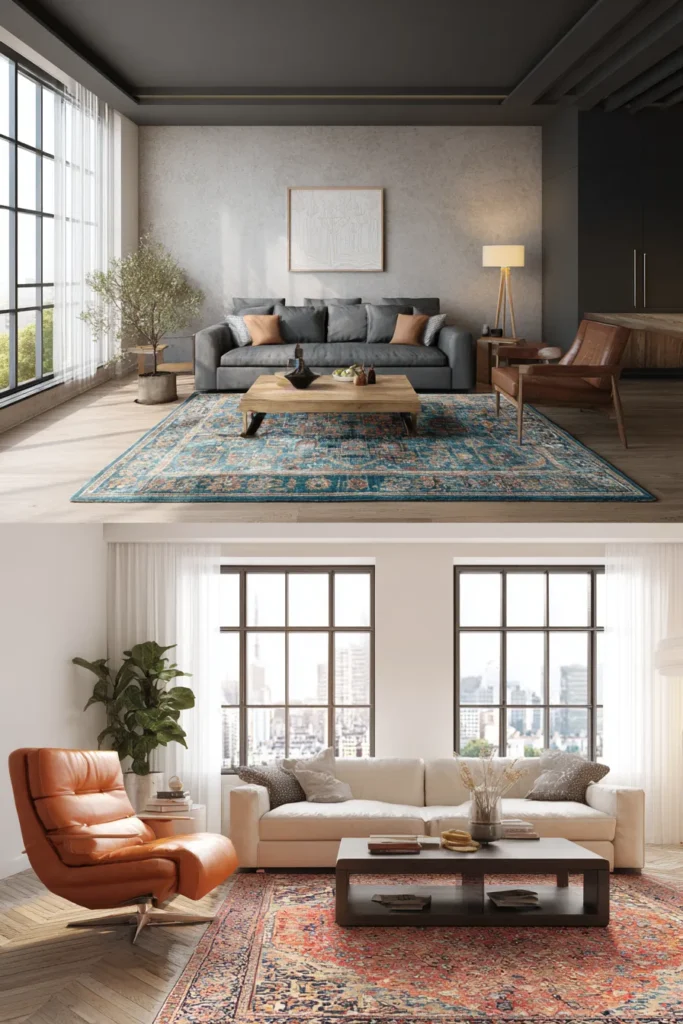
For most standard living rooms, an eight-by-ten foot rug works beautifully, allowing you to tuck all front furniture legs onto the textile while leaving a border of flooring visible around the room’s perimeter. Larger spaces often call for nine-by-twelve or even bigger rugs that can accommodate all furniture legs comfortably. If you’re working with a smaller room or a specific seating arrangement, understanding how to choose the right rug size for your living room will save you from costly mistakes and ensure your space feels intentionally designed rather than haphazardly decorated.
Placement matters just as much as size. A common mistake is pushing a rug too close to the wall or centering it under a coffee table alone. Instead, position your rug so it creates a clear boundary for your seating area while maintaining visual balance throughout the room. Leave approximately eighteen inches of bare floor between the rug’s edge and the walls to frame the space properly.
Common Layout Configurations
Different room shapes and furniture arrangements call for different rug approaches. In an open-concept space, your rug defines the living area and separates it from adjacent zones like dining or kitchen areas. Here, a larger rug makes a powerful statement and clearly delineates purpose.
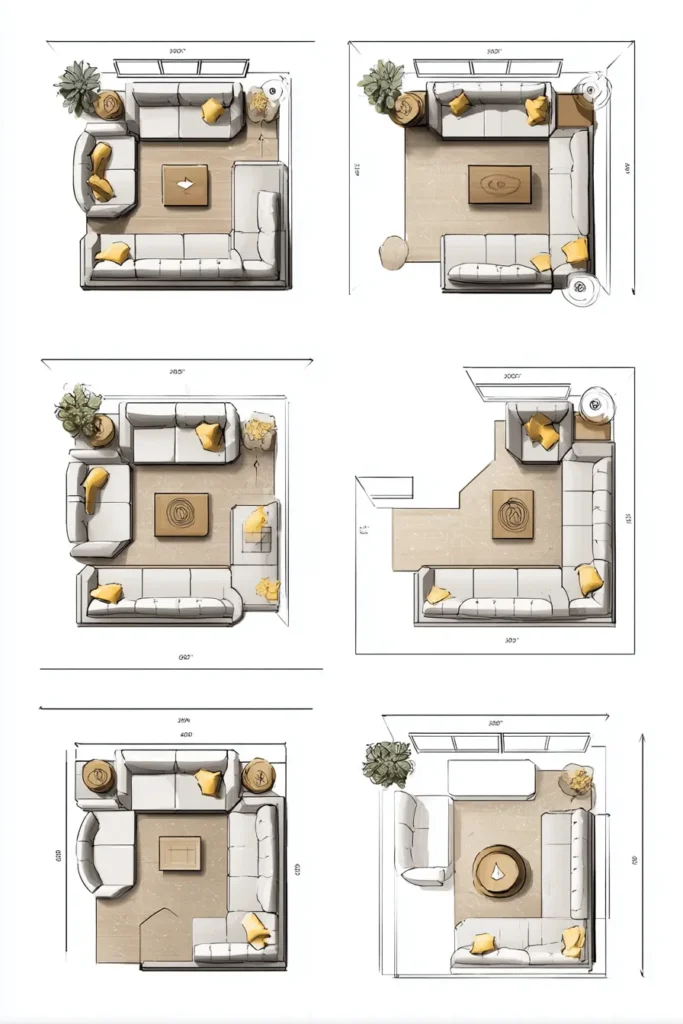
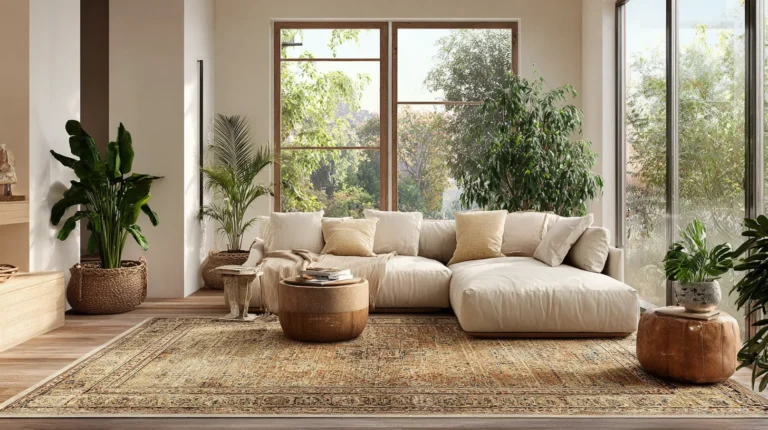
For L-shaped sectionals, choose a rug large enough that the entire sectional sits on it, or at minimum, ensure all front legs rest on the textile. This creates a grounded, intentional look that makes the sectional feel like a deliberate design choice rather than an afterthought. Corner seating arrangements benefit from square or nearly square rugs that echo the furniture’s geometry.
In rooms with multiple seating areas, like a sofa grouping and a separate reading nook, you might use two rugs to define each zone. Just make sure they share a common thread, whether that’s similar color tones, complementary patterns, or matching materials. The comprehensive guidance on rug placement rules offers room-by-room strategies that take the guesswork out of positioning your textiles for maximum impact.
Measuring Your Space Correctly
Before you fall in love with any rug, measure your room and furniture carefully. Use painter’s tape to outline potential rug dimensions on your floor, then live with it for a few days. Walk around it. Observe how it interacts with furniture placement and traffic flow.
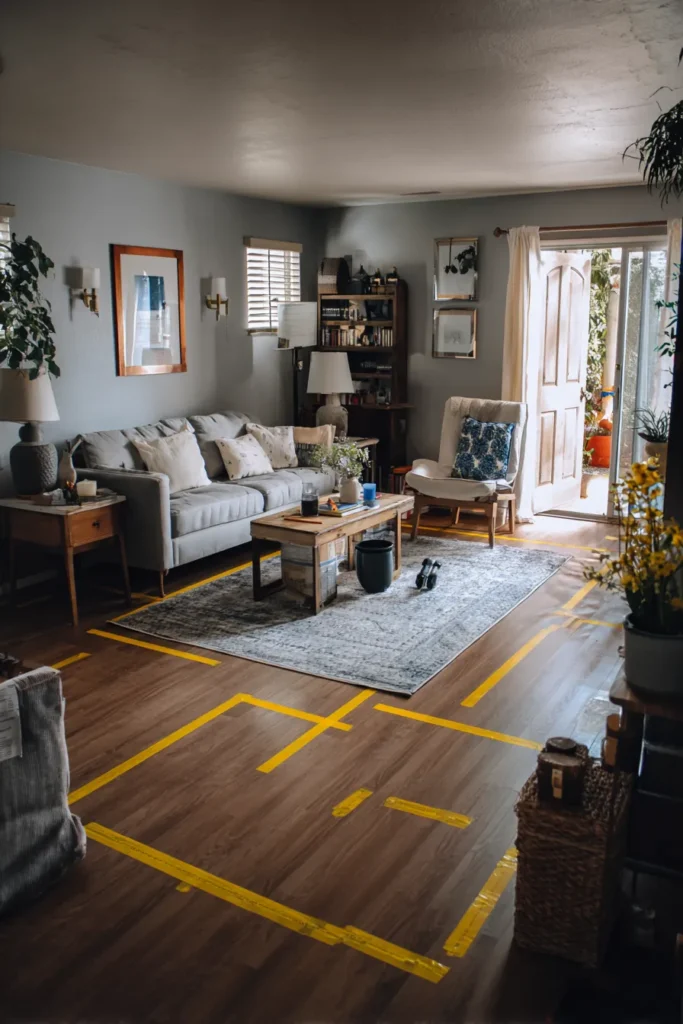
This simple exercise reveals whether your planned size truly works or if you need to adjust up or down. It’s far easier to reposition tape than to return an oversized or undersized rug. Pay attention to doorways and transitions between rooms, ensuring your rug doesn’t create tripping hazards or interfere with door swings.
Layering Rugs for Depth and Visual Interest
Once you’ve mastered the basics of rug placement, layering opens up an entirely new dimension of design possibility. Layering rugs adds depth, texture, and personality to your living room in ways a single rug simply cannot achieve. It’s one of those design techniques that looks effortlessly chic but requires thoughtful planning to pull off successfully.
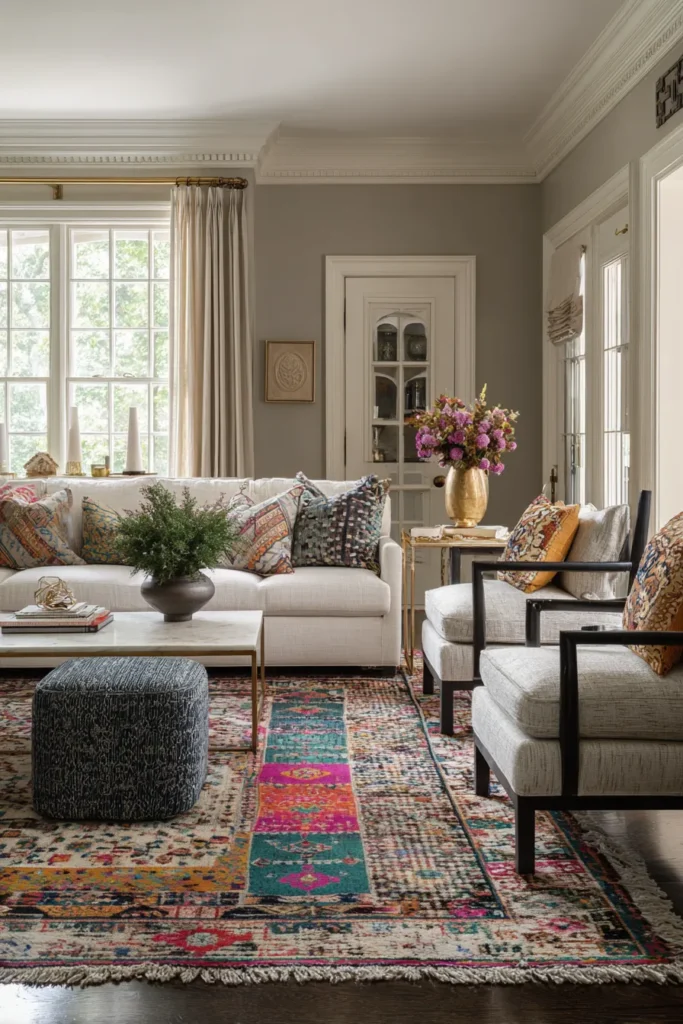
The concept is straightforward: place a smaller, more decorative rug on top of a larger, typically neutral base rug. The bottom layer grounds the space and defines the seating area, while the top layer introduces pattern, color, or texture that reflects your personal style. This approach works especially well in rooms where you want to make a bold statement without overwhelming the space.
Start with a substantial base rug in a neutral tone like cream, gray, taupe, or charcoal. Natural fiber rugs made from jute, sisal, or seagrass make excellent foundation layers because their organic texture adds warmth without competing for attention. Once your base is in place, layer a smaller rug with more personality on top, positioning it under your coffee table or in the center of your seating arrangement.
The art of layered rugs and how to mix textures and patterns lies in balancing contrast with cohesion. If your base rug is flat-woven and minimalist, try a plush, patterned rug on top. If your foundation features subtle texture, choose a top layer with bold geometric or organic motifs. The key is creating visual conversation between the layers without creating chaos.
Color and Pattern Coordination
When layering rugs, color coordination keeps the look intentional rather than accidental. Pull one or two colors from your top rug and ensure they appear in your room’s broader palette through throw pillows, artwork, or upholstery. This creates visual threads that tie the layered look into your overall design scheme.
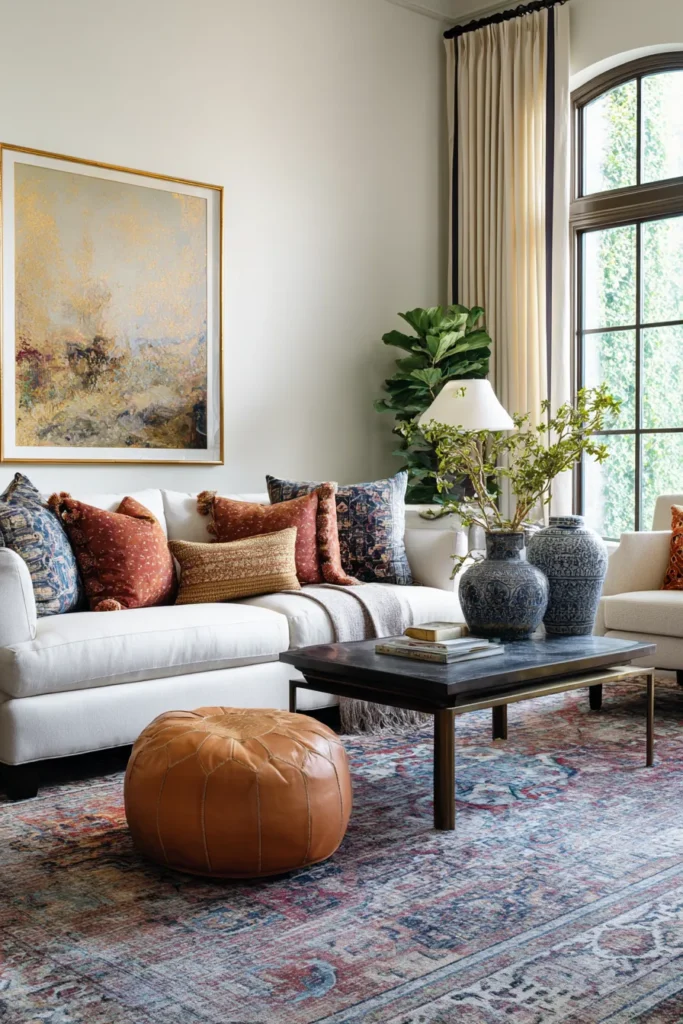
Pattern mixing requires a light touch. If your top rug features a busy pattern, keep your base rug solid or very subtly textured. Conversely, if both rugs have patterns, make sure they differ in scale. A large-scale geometric base can pair beautifully with a smaller-scale floral or tribal pattern on top, as long as they share a common color story.
Don’t be afraid to experiment with unexpected combinations. A vintage Persian rug layered over a natural jute base creates an eclectic, collected look. A cowhide or sheepskin layered over a neutral wool rug adds organic warmth and tactile appeal. A colorful kilim over a simple gray foundation brings global flair to modern spaces.
Practical Considerations for Layered Rugs
Beyond aesthetics, practical concerns matter when layering rugs. Use a quality rug pad between your floor and the base rug, and consider adding a thinner pad between the two rug layers to prevent shifting and bunching. This is especially important in high-traffic living rooms where rugs endure constant movement.
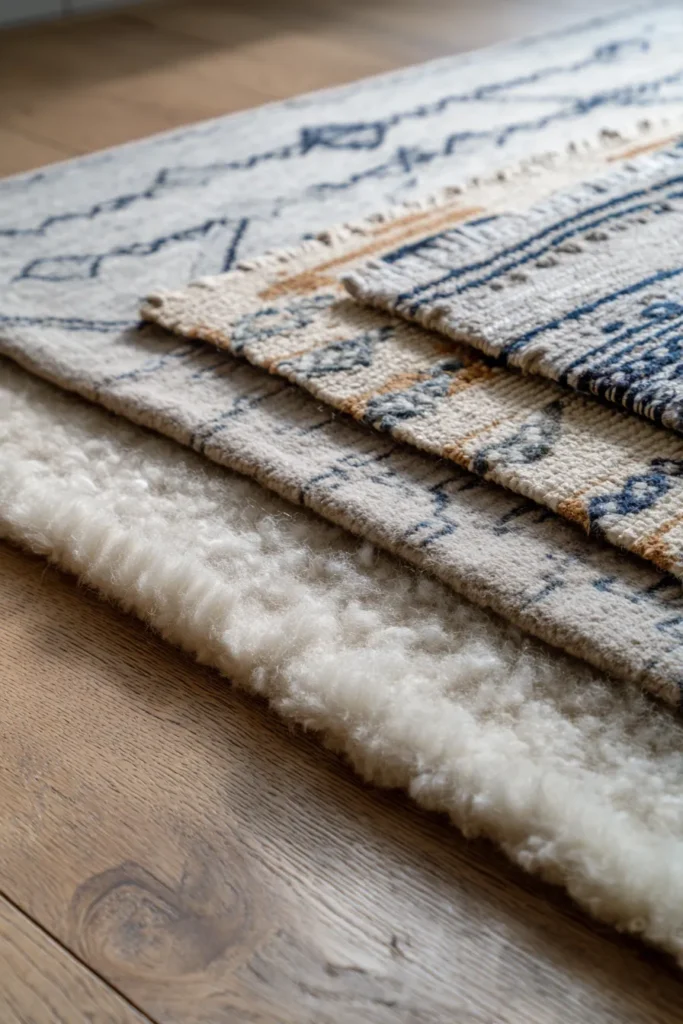
Make sure your layered rugs don’t create a tripping hazard. The edges of the top rug should lie completely flat against the base rug. If corners curl or edges lift, add double-sided rug tape or adjust your padding. Safety and function always trump aesthetics, no matter how beautiful the layered effect appears.
Choosing Materials That Match Your Lifestyle
The material of your living room rug determines not just how it looks, but how it performs under the daily demands of real life. A stunning silk rug might make your heart sing, but if you have kids who spill juice boxes or dogs who track in mud, that delicate beauty will quickly become a source of stress rather than joy.
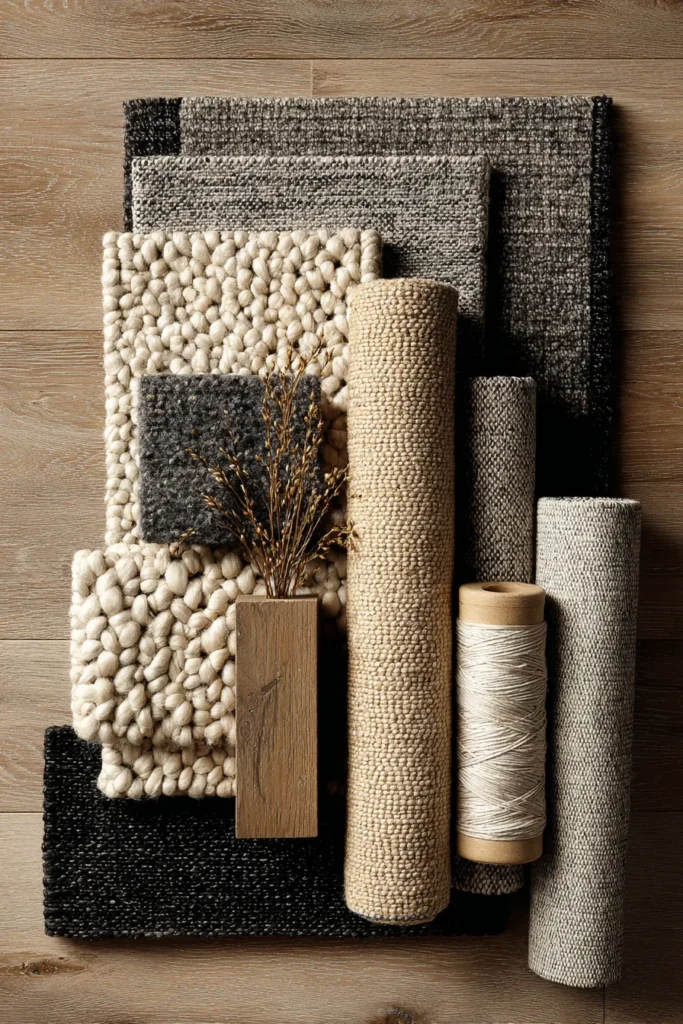
Understanding best rug materials where style meets unbreakable durability helps you make choices that balance beauty with practicality. The right material feels wonderful underfoot, withstands your household’s specific challenges, and ages gracefully rather than showing every mark and stain.
Wool remains the gold standard for living room rugs. It’s naturally stain-resistant, flame-retardant, and remarkably durable. Wool rugs soften with age, developing a beautiful patina that only enhances their character over time. They work in virtually any design style, from traditional to contemporary, and they handle high-traffic areas with grace.
Natural Fiber Options
Jute, sisal, and seagrass rugs bring organic texture and casual elegance to living spaces. These plant-based materials create a relaxed, coastal vibe that works beautifully in modern farmhouse, Scandinavian, and bohemian interiors. They’re affordable, eco-friendly, and add wonderful visual texture to neutral spaces.
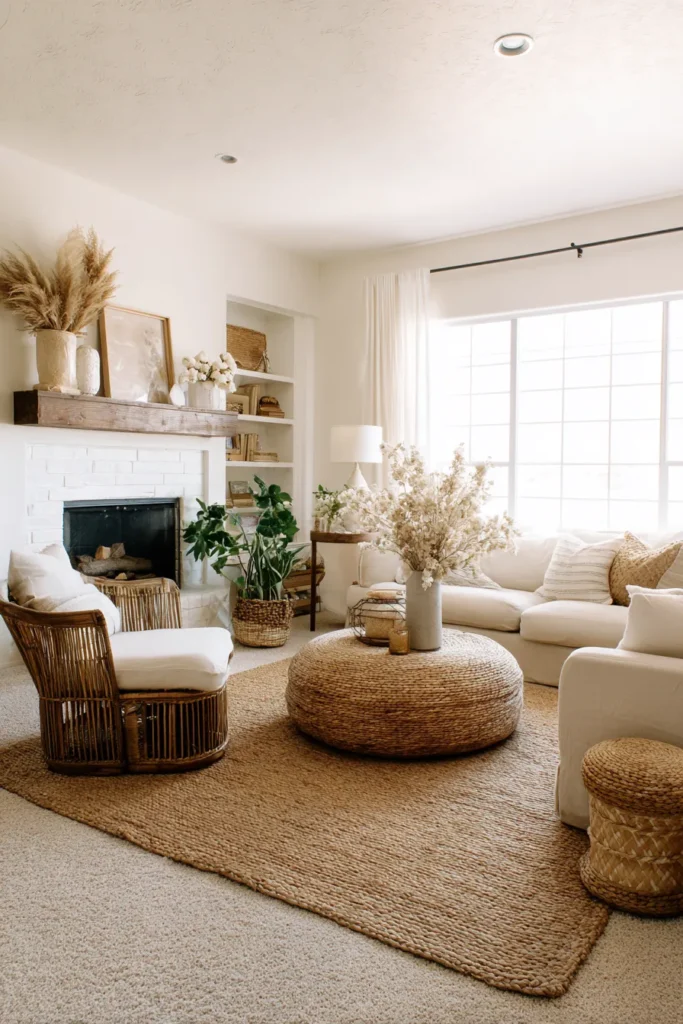
However, natural fiber rugs have limitations. They can feel rough underfoot compared to wool or synthetic options, making them less ideal if you like to lounge on the floor. They’re also more susceptible to staining and moisture damage, so they work best in low-spill households or as base layers in a layered rug arrangement.
Cotton rugs offer softness and washability, making them practical for casual family rooms. Many cotton rugs are machine-washable, a huge advantage for households with young children or pets. They come in endless colors and patterns, from classic stripes to bold contemporary designs. The trade-off is durability. Cotton rugs wear faster than wool and may need replacing more frequently in high-traffic areas.
Synthetic and Blended Materials
Modern synthetic rugs have come a long way from the cheap, plasticky options of decades past. High-quality polypropylene and polyester rugs now mimic the look and feel of natural fibers while offering superior stain resistance and easy cleaning. They’re particularly smart choices for living rooms that see heavy use, spills, or pet traffic.
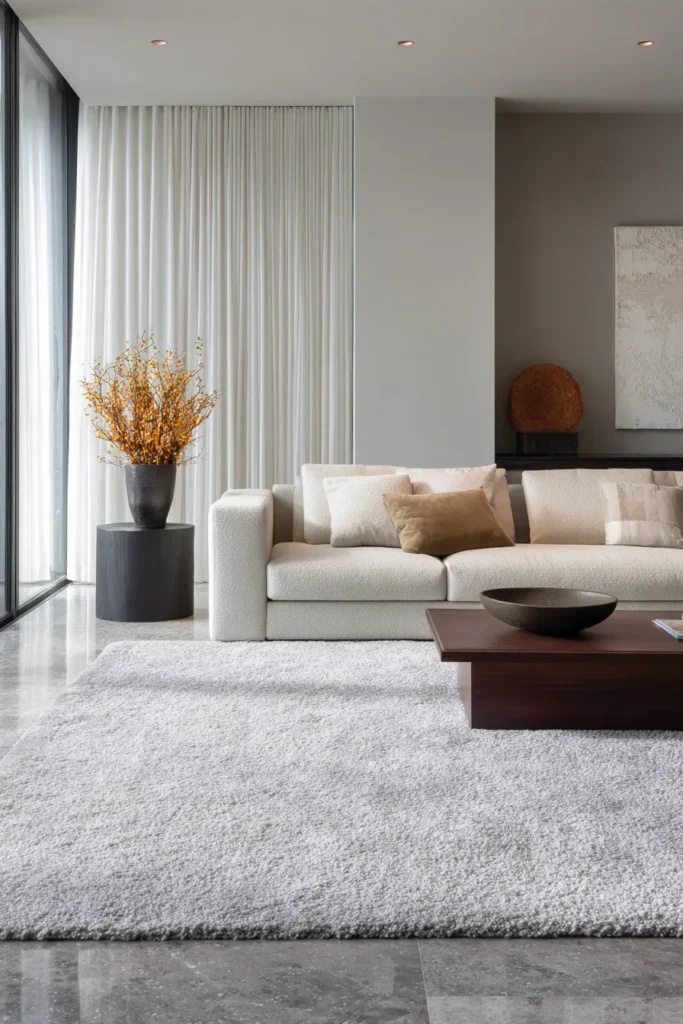
Nylon rugs rank among the most durable options available. They resist crushing, bounce back from furniture indentations, and handle high traffic without showing wear. Many commercial spaces use nylon for these exact reasons. While not as soft as wool, quality nylon rugs offer impressive performance at accessible price points.
Blended rugs combine natural and synthetic fibers to capture the best qualities of each. A wool-nylon blend, for example, gives you wool’s beauty and softness with nylon’s added durability and stain resistance. These compromise options work well for households that want natural aesthetics without sacrificing practicality.
Color Psychology and Mood Creation
The color of your living room rug does more than coordinate with your furniture. It influences mood, energy levels, and the entire emotional atmosphere of your space. Color psychology in interior design isn’t just design theory, it’s a practical tool for creating rooms that make you feel exactly how you want to feel when you’re home.
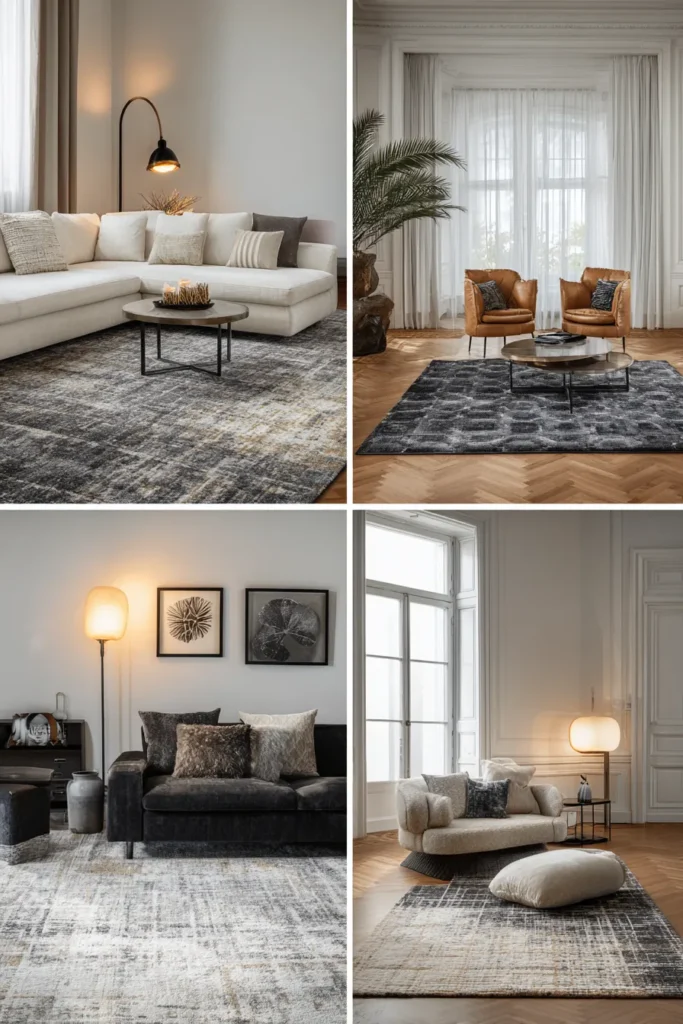
Warm colors like red, orange, terracotta, and golden yellow energize spaces and create feelings of warmth and intimacy. A rust-colored rug or warm terracotta textile makes a living room feel cozy and inviting, perfect for spaces where you gather with family and friends. These hues advance visually, making large rooms feel more intimate and conversation-friendly.
Cool colors such as blue, green, and purple create calm, serene atmospheres. A soft blue-gray rug brings tranquility to a living room, while sage green introduces natural harmony and balance. Cool tones recede visually, making small rooms feel more spacious and open. They’re ideal for living rooms that double as meditation spaces or quiet retreats from busy lives.
The fascinating world of color psychology in living room rugs reveals how different shades affect our subconscious responses to space. Neutral colors like beige, gray, and cream create versatile foundations that let other design elements shine. They’re calming without being boring, sophisticated without demanding attention.
Creating Color Harmony
When selecting a rug color, consider your room’s existing palette and the mood you want to establish. If your living room already features bold wall colors or vibrant furniture, a neutral rug provides visual rest and prevents overwhelm. Conversely, if your space skews neutral, a colorful rug becomes a statement piece that injects personality and energy.
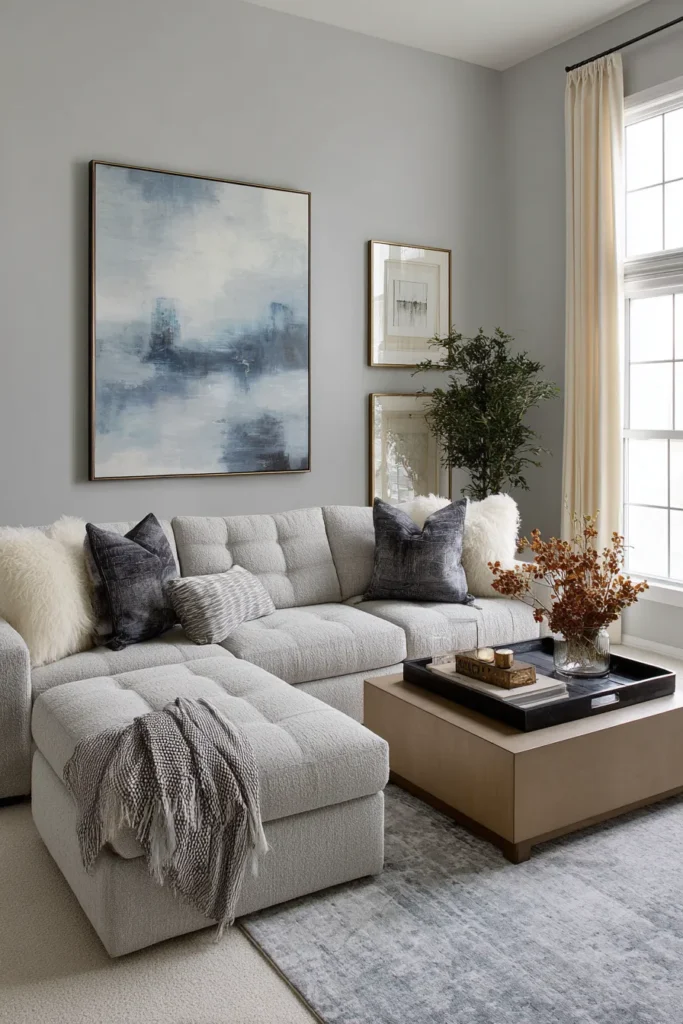
Look at your room’s natural light throughout the day. North-facing rooms receive cooler light, so warm-colored rugs help counterbalance that coolness. South-facing rooms bask in warm, bright light, making them perfect candidates for cool-toned rugs that won’t feel overly warm or stuffy.
Don’t forget about undertones. A gray rug with blue undertones creates a completely different effect than gray with warm beige undertones. Bring rug samples home and observe them in your actual space at different times of day before committing. Colors shift dramatically depending on surrounding elements and lighting conditions.
Pattern and Color Complexity
Patterned rugs introduce multiple colors into your space, creating opportunities for creative coordination throughout the room. Pull the rug’s secondary or accent colors into throw pillows, artwork, or accessories to create visual flow. This technique makes bold rugs feel intentional rather than random.
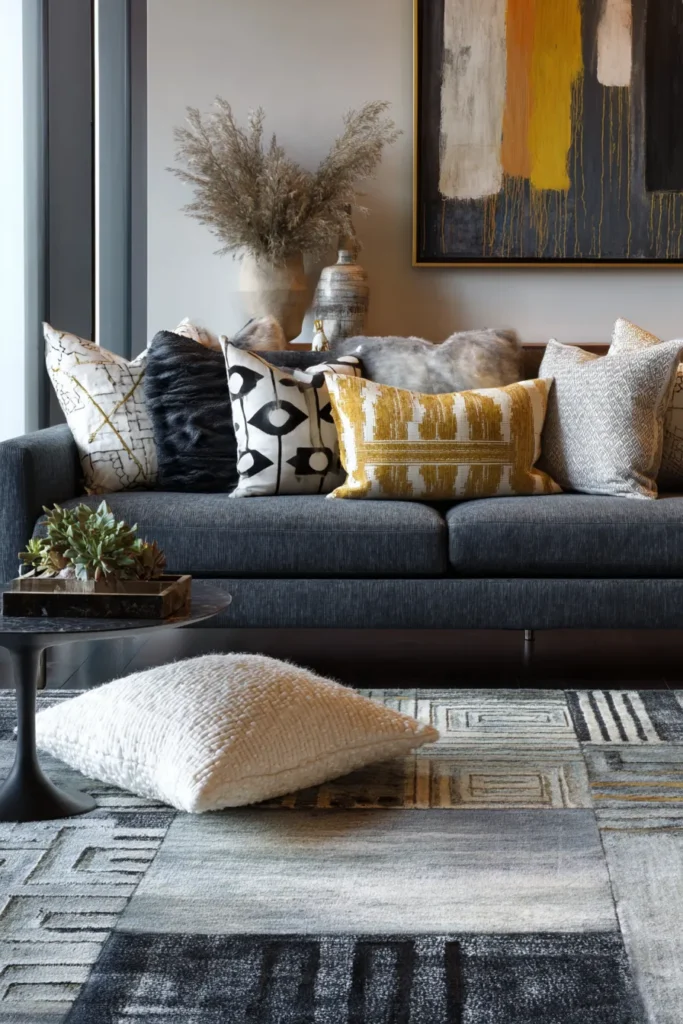
High-contrast patterns featuring sharp color differences create drama and energy. They work beautifully in modern and contemporary spaces where bold statements feel at home. Subtle, low-contrast patterns with colors that gently blend offer sophistication and understated elegance, perfect for traditional or transitional rooms.
Remember that busy patterns hide stains and wear better than solid colors, a practical consideration for high-use living rooms. If you’re torn between bold pattern and solid color, consider your household’s lifestyle realities alongside your aesthetic preferences.
Vintage Versus Modern Rug Aesthetics
The debate between vintage and modern rugs isn’t about which is better, it’s about which resonates with your personal style and complements your living room’s design direction. Both approaches offer distinct advantages and create markedly different atmospheres in your space.
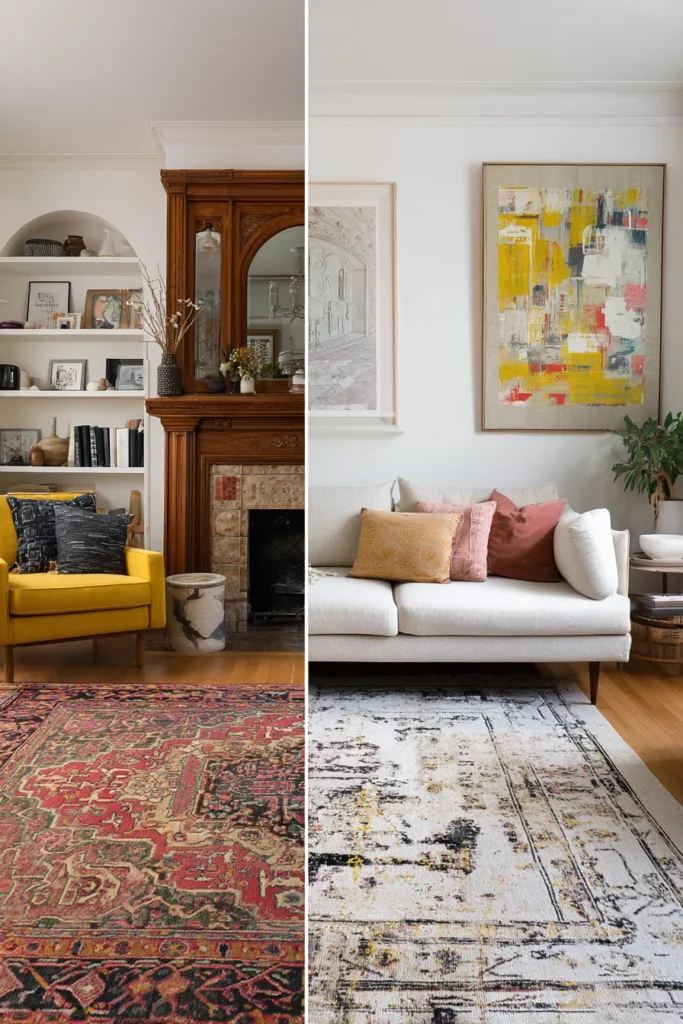
Vintage rugs carry history, craftsmanship, and soul. An authentic Persian or Turkish rug tells a story through its hand-knotted construction, natural dyes, and traditional motifs passed down through generations. These rugs develop character over time, their colors mellowing into sophisticated patinas that new rugs simply cannot replicate. They bring instant warmth and depth to contemporary spaces, creating beautiful contrast between old and new.
Modern rugs embrace clean lines, bold graphics, and contemporary color palettes. They reflect current design sensibilities and often feature abstract patterns, geometric shapes, or minimalist aesthetics. Modern rugs complement modern furniture seamlessly and create cohesive looks in spaces with strong contemporary or Scandinavian influences.
The thoughtful comparison of vintage versus modern rugs helps you understand which style serves your space best. Vintage rugs work beautifully in eclectic, bohemian, or transitional interiors where mixing old and new creates visual interest. Modern rugs excel in minimalist, industrial, or mid-century modern spaces where clean aesthetics reign.
Investment and Value Considerations
Authentic vintage rugs represent significant investments, but they also hold and often increase in value over time. A well-maintained antique rug can become a family heirloom, passed down through generations. Quality vintage pieces are crafted with techniques and materials rarely found in modern production, making them truly irreplaceable.
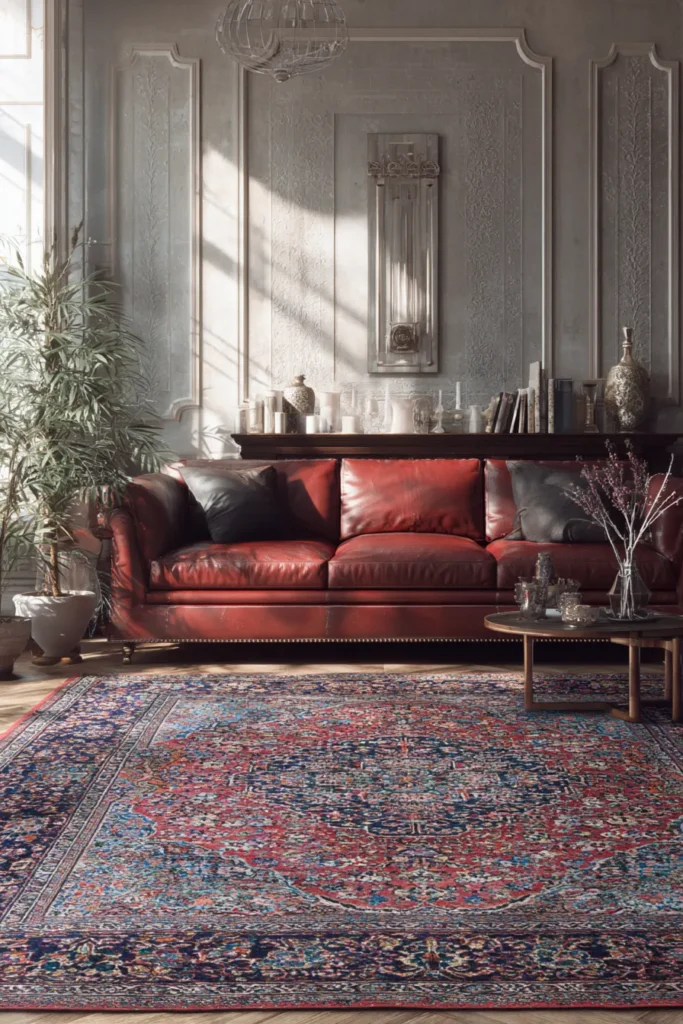
Modern rugs offer more accessible price points and immediate availability. You’re not hunting for the perfect vintage piece or competing at auctions. Modern rugs also come in standardized sizes, making it easier to find exactly the dimensions your space requires. Many are machine-washable or highly stain-resistant, practical advantages that vintage textiles cannot match.
Consider starting with modern rugs if you’re still developing your design aesthetic or if your style evolves frequently. As your taste solidifies and your budget allows, invest in vintage pieces that truly speak to you. These aren’t mutually exclusive choices. Many of the most compelling living rooms feature both vintage and modern rugs, sometimes even layered together for maximum impact.
Authenticity and Quality Markers
When shopping for vintage rugs, learn to identify quality and authenticity. Hand-knotted rugs feel more substantial and feature irregular backs, while machine-made versions look perfectly uniform. Natural dyes create colors that shift subtly in different light, while synthetic dyes appear flat and unchanging.
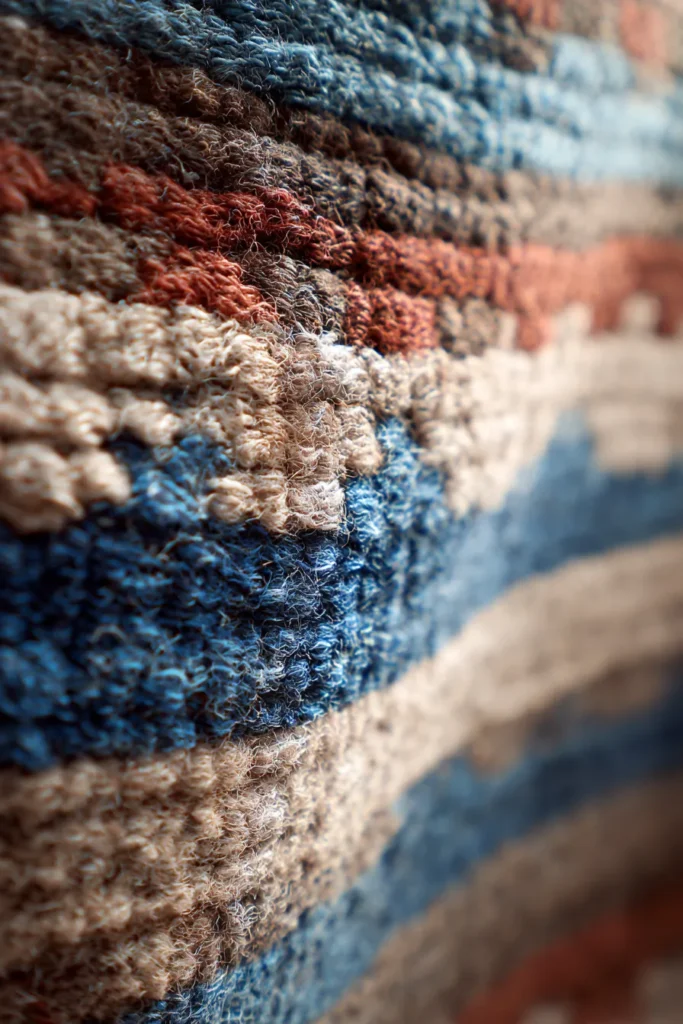
Examine the rug’s condition carefully. Some wear adds character, but significant damage affects both value and usability. Look for even wear patterns, secure edges, and minimal repairs. Reputable dealers provide detailed provenance and condition reports, helping you make informed investment decisions.
For modern rugs, quality varies dramatically across price points. Higher-end modern rugs feature superior construction, better materials, and more sophisticated design. Budget options serve short-term needs but may need replacement within a few years. Consider cost per year of use rather than upfront price alone when evaluating value.
Incorporating Texture for Sensory Appeal
Texture transforms a living room from visually pleasing to truly immersive. When you introduce varied textures through rugs and complementary elements, you create spaces that invite touch, that feel as good as they look. This multisensory approach to design makes your living room a place where people want to linger, to sink into comfort and stay awhile.
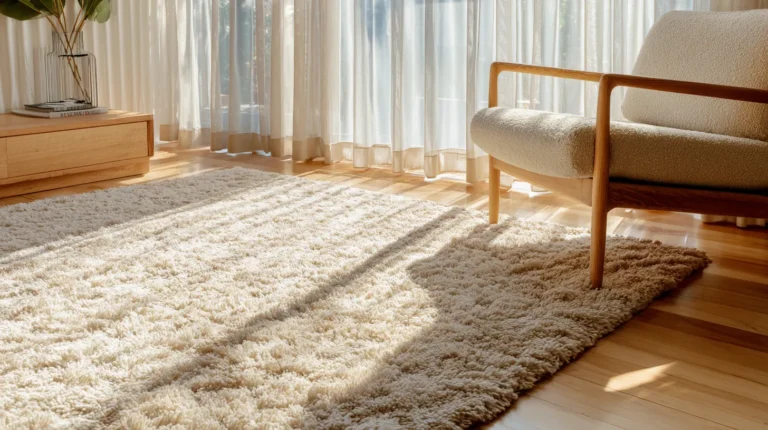
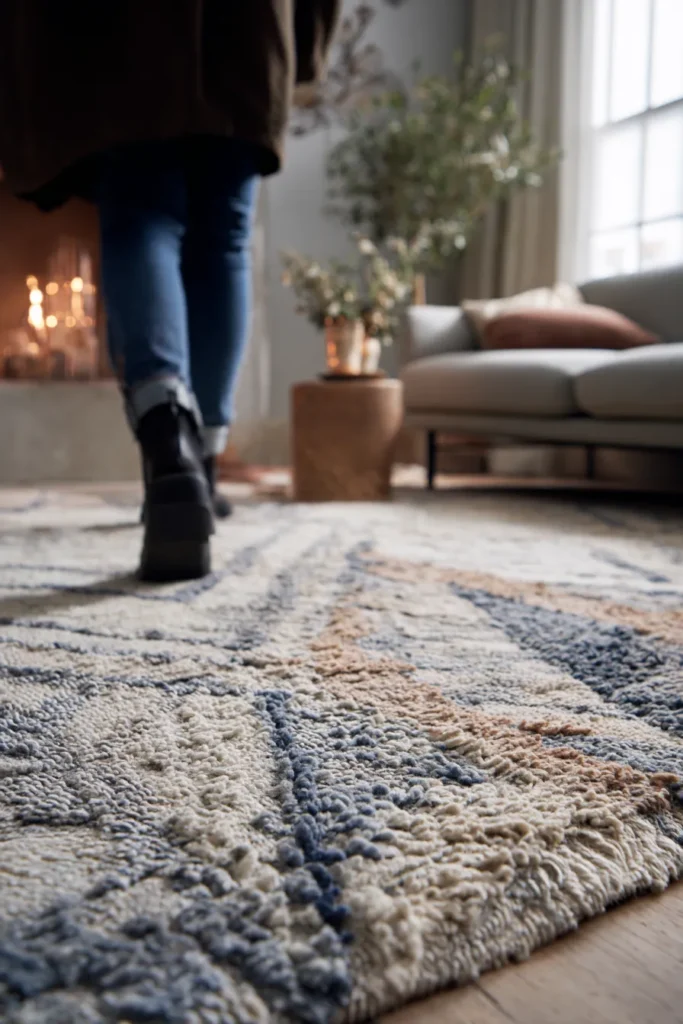
Your rug’s texture sets the foundation for the entire room’s tactile experience. A plush, high-pile rug in soft wool or shag creates immediate coziness, perfect for lounging on the floor with a good book or gathering kids for game night. The deep pile muffles sound and feels luxurious underfoot, though it requires more maintenance than flatter weaves.
Flat-weave rugs like dhurries, kilims, or hand-woven textiles offer firm, supportive surfaces ideal for furniture placement. They’re easier to clean and maintain than high-pile options, making them smart choices for dining areas or high-traffic living rooms. Their smooth surfaces show patterns beautifully and work well under furniture that might crush deeper piles.
Exploring textured living room walls and ceilings reveals how carrying textural interest beyond the floor creates dimensional, engaging spaces. When your rug features rich texture, balance it with smoother walls or vice versa. Too much texture everywhere creates visual chaos, while thoughtfully distributed texture creates sophisticated depth.
Mixing Textures Throughout Your Space
The most compelling living rooms feature a deliberate mix of textures across all elements. Pair a chunky knit throw with a smooth leather sofa. Place a rough-hewn wooden coffee table on a silky rug. Combine matte ceramic vessels with glossy metallic accents. These contrasts create visual interest and invite interaction.
Natural materials bring inherent texture that feels grounding and organic. Jute, linen, raw wood, stone, and unglazed ceramics add tactile variety that makes spaces feel collected and authentic rather than showroom-perfect. When your rug features natural texture, echo it through other organic elements scattered throughout the room.
Don’t overlook the role of lighting in highlighting texture. Side-lighting from table lamps or floor lamps casts shadows that emphasize your rug’s weave and pile. This dimensional quality changes throughout the day as natural light shifts, creating ever-evolving visual interest in your living room.
Seasonal Texture Rotation
Consider rotating rugs seasonally to refresh your space and adapt to changing weather and mood. A lightweight cotton or flat-weave rug keeps things cool and breezy in summer months, while a plush wool or shag rug brings cozy warmth when temperatures drop. This rotation also extends the life of your rugs by distributing wear across multiple pieces.
If seasonal rotation feels excessive, simply layer differently throughout the year. Add a sheepskin or plush throw rug on top of your primary rug in winter for extra warmth and softness. Remove these layers in summer to keep things light and airy. This approach offers seasonal variety without requiring storage space for large rugs.
Budget Strategies for High-End Looks
Creating a beautifully styled living room doesn’t require unlimited funds. Strategic shopping, smart styling, and knowing where to invest versus where to save helps you achieve luxury aesthetics at accessible price points. The goal isn’t to buy the cheapest options available, it’s to maximize value and impact from every dollar spent.
Start by identifying which rug characteristics matter most for your specific situation. If you have young children and pets, prioritize durability and cleanability over rare materials or artisan craftsmanship. Save the investment-grade vintage Persian for later years when spills become less frequent. Instead, seek out budget-friendly rugs that look luxurious through smart design and quality construction at accessible prices.
Natural fiber rugs like jute and sisal offer organic texture and visual appeal at fraction of wool costs. While they lack wool’s softness and stain resistance, they create beautiful foundations in living rooms where spills are manageable. Layer a smaller, more luxurious rug on top to combine budget-friendly base with high-end accent.
Shopping Strategies for Maximum Value
Timing your purchases strategically yields significant savings. Major retailers run substantial sales around holidays, end-of-season clearances, and during annual home goods events. Sign up for email lists from your favorite rug retailers to receive notifications about upcoming sales and exclusive discounts. Patience pays when you can wait for the right sale rather than buying at full price.
Consider slightly smaller sizes than originally planned if budget constraints tighten. An eight-by-ten rug often costs significantly less than a nine-by-twelve, and with smart furniture arrangement, the smaller size can work beautifully. Remember that exposing more floor around your rug actually makes spaces feel larger and more intentional.
Explore online retailers alongside traditional brick-and-mortar stores. Online-only brands often offer lower prices due to reduced overhead costs. Many provide generous return policies that let you try rugs in your space before committing. Just factor in return shipping costs when comparing overall value.
DIY and Alternative Approaches
For creative souls, making your own rug opens possibilities limited only by imagination and effort. Tufting, weaving, and braiding techniques create unique pieces at material costs alone. Numerous online tutorials guide beginners through various rug-making methods. While time-intensive, handmade rugs carry special meaning and perfectly match your exact color and size requirements.
Remnant carpeting offers another budget-friendly option. Carpet stores sell remnants and discontinued samples at steep discounts. Have edges professionally bound to create custom rugs at a fraction of new rug costs. This approach works especially well for oddly shaped spaces or specific color requirements that standard rugs don’t satisfy.
Don’t overlook secondhand options. Estate sales, online marketplaces, and consignment shops occasionally offer quality rugs at bargain prices. Vintage rugs in particular can be found for less than retail modern equivalents, though condition varies. Inspect carefully and factor in professional cleaning costs when evaluating true value.
[Visual suggestion: Infographic comparing rug material durability, maintenance needs, and price points across different fiber types]
Staying Current with Rug Design Trends
Design trends ebb and flow, but understanding current movements helps you create spaces that feel fresh and contemporary rather than dated. The key is identifying which trends align with your personal aesthetic and which are fleeting fads best avoided in permanent purchases like rugs.
Current rug design embraces several distinct directions. Organic, nature-inspired patterns featuring botanical motifs, abstract landscapes, and earthy color palettes reflect our collective desire to bring the outside in. These designs work beautifully in biophilic interiors focused on wellness and connection to nature.
Bold geometric patterns in striking colorways make powerful statements in contemporary spaces. Oversized shapes, asymmetrical designs, and unexpected color combinations push traditional boundaries. These rugs work best in minimally furnished rooms where they can command attention without competing with busy decor.
Staying informed about top rug trends for 2025 helps you make purchases that feel current without dating quickly. The most enduring trend-forward choices balance contemporary aesthetics with timeless appeal, ensuring your investment remains relevant for years to come.
Sustainable and Ethical Production
Sustainability has moved from niche concern to mainstream priority in home furnishings. Consumers increasingly seek rugs produced with environmental responsibility and fair labor practices. This shift influences both materials and manufacturing methods across the industry.
Natural, renewable fibers like wool, cotton, jute, and hemp dominate sustainable rug production. These materials biodegrade naturally and require fewer chemical treatments than synthetic alternatives. Many manufacturers now offer sustainable handcrafted rug options that support artisan communities while minimizing environmental impact.
Look for certifications indicating responsible production practices. GoodWeave certification ensures rugs are made without child labor, while OEKO-TEX certification verifies textiles are free from harmful chemicals. These third-party verifications provide assurance that your purchase aligns with ethical values.
Vintage and Antique Revival
Interest in vintage and antique rugs continues growing as people seek unique pieces with history and character. This trend goes beyond traditional Persian and Turkish rugs to include mid-century modern textiles, vintage kilims, and even faded or distressed looks in new production.
The appeal lies partly in sustainability. Buying vintage keeps existing textiles in circulation rather than creating demand for new production. It also offers access to craftsmanship and materials increasingly rare in modern manufacturing. Each vintage rug is genuinely one-of-a-kind, impossible to replicate exactly.
Modern manufacturers now produce new rugs with vintage aesthetics, offering the look without the hunt. These pieces feature deliberately faded colors, distressed patterns, and worn appearances that mimic decades of use. They work beautifully in farmhouse, industrial, and eclectic interiors seeking that collected-over-time aesthetic.
Maintaining Your Living Room Rug Investment
Even the most beautiful rug loses its appeal when dirt, stains, and wear diminish its appearance. Proper maintenance preserves your investment and keeps your living room looking fresh and inviting. The good news is that most rug care involves simple, regular habits rather than elaborate routines.
Vacuum your rug weekly, or more frequently in high-traffic areas. Use a vacuum without a beater bar on delicate or vintage rugs to avoid damaging fibers. Rotate your rug every few months to distribute wear evenly and prevent traffic patterns from becoming permanent. This simple habit dramatically extends rug life and maintains appearance.
Address spills immediately to prevent stains from setting. Blot rather than rub, working from the outside of the spill toward the center to avoid spreading. Use clean white cloths to avoid color transfer. For water-based spills, blot with plain water. For oil-based stains, consult professional cleaners rather than risking DIY damage.
Following comprehensive rug care and maintenance tips protects your investment and keeps your textiles looking their best through years of daily use. Professional cleaning every one to two years removes deep-set dirt and refreshes fibers that regular vacuuming cannot reach. Choose cleaners experienced with your specific rug type, as different materials require different approaches.
Preventing Damage and Wear
Prevention proves easier than repair when it comes to rug maintenance. Use quality rug pads to prevent slipping, protect floors, and cushion your rug against wear. Pads also improve the rug’s feel underfoot and can extend its life significantly. Choose pads specifically designed for your floor type to avoid discoloration or damage.
Keep rugs out of direct sunlight as much as possible. UV rays fade colors over time, particularly in natural fiber rugs with natural dyes. Use window treatments to filter harsh afternoon sun, or rotate rugs periodically to distribute fading evenly. Some fading adds vintage character, but excessive sun damage creates permanent, uneven color loss.
Trim loose threads rather than pulling them, which can unravel weaving. For fringe damage, consult professional repair services before the problem worsens. Early intervention prevents minor issues from becoming major repairs. Many quality rug dealers offer or recommend repair services for their products.
Seasonal Deep Cleaning
Beyond regular vacuuming, rugs benefit from occasional deep cleaning. For durable synthetic or wool rugs, you can rent carpet cleaning machines for DIY deep cleaning. Always test any cleaning solution on an inconspicuous corner first to ensure it won’t damage fibers or colors.
Natural fiber rugs like jute and sisal don’t tolerate wet cleaning well. Spot clean with minimal moisture and allow thorough drying to prevent mildew. For these materials, professional dry cleaning offers the safest deep-cleaning option.
Before deep cleaning, take your rug outside and beat it to remove embedded dirt that vacuuming misses. Hang it over a railing or clothesline and use a broom or rug beater to dislodge dust and debris. This old-fashioned technique works remarkably well and requires no special equipment.
Integrating Lighting with Your Rug Choice
Lighting and rugs exist in constant conversation. The way light falls across your rug affects its color, highlights its texture, and determines how it interacts with surrounding elements. Understanding this relationship helps you make choices that shine, literally and figuratively, in your specific space.
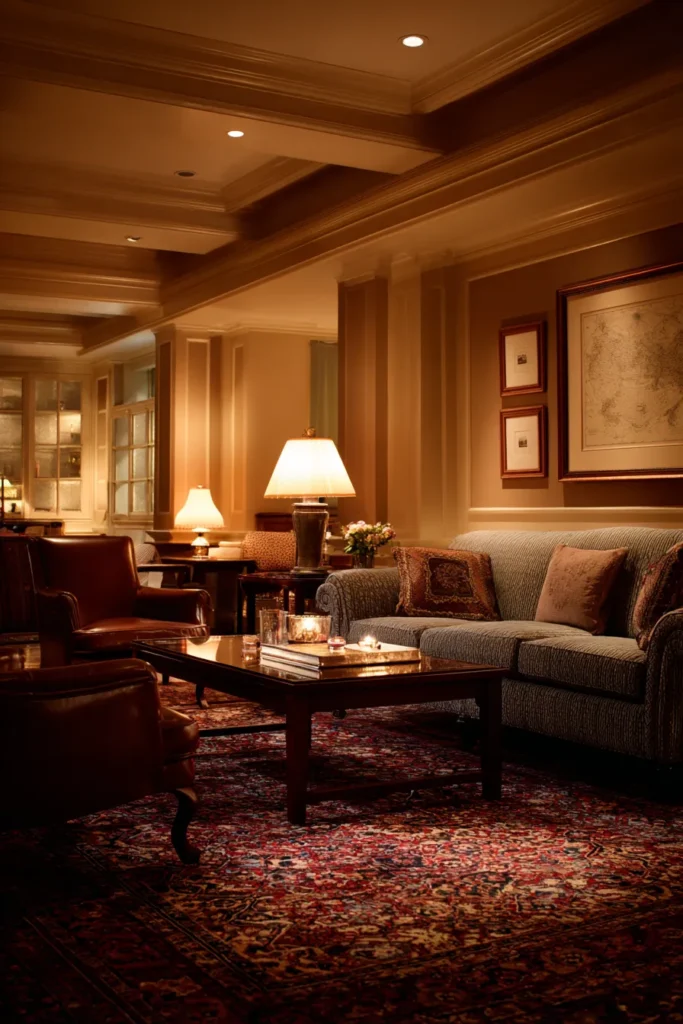
Natural light changes throughout the day, dramatically altering how rug colors appear. Morning light tends cooler and softer, while afternoon sun blazes warm and bright. Evening light fades to amber and gold. Observe how your rug looks at different times before making final styling decisions around it. A rug that looks perfect in morning light might feel completely different by evening.
Artificial lighting offers more control and consistency. Layer different light sources at various heights to create dimensional, flattering illumination. Table lamps and floor lamps provide ambient warmth, while overhead fixtures offer general visibility. The thoughtful approach to living room lighting ideas shows how strategic placement enhances every design element, including your floor covering.
Using Light to Highlight Rug Features
Directional lighting emphasizes texture beautifully. Side light from lamps casts shadows that accentuate pile depth and weave patterns. If your rug features interesting texture, position a floor lamp or table lamp where its light skims across the surface at an angle rather than shining directly down from above.
Accent lighting can showcase a particularly beautiful rug as a focal point. While you wouldn’t typically install spotlights specifically for a rug, existing accent lights positioned to highlight artwork or architectural features often illuminate floor areas as a happy side effect. Consider this relationship when planning your lighting layout.
Dimmable lighting offers flexibility for different moods and times of day. Bright light showcases your rug’s colors and patterns clearly, perfect for daytime activities. Dimmed lighting creates cozy ambiance in the evening, softening colors and creating intimate atmosphere. This versatility lets one rug serve multiple aesthetic purposes depending on lighting conditions.
Color Temperature Considerations
The color temperature of your light bulbs affects how rug colors appear. Warm white bulbs around 2700K to 3000K create cozy, inviting light that flatters warm-colored rugs in reds, oranges, and yellows. Cool white bulbs above 4000K create crisp, energizing light that complements cool blues, grays, and greens.
Many modern LED bulbs offer adjustable color temperature, letting you shift from warm to cool light depending on time of day or desired mood. This flexibility helps your rug work beautifully under various lighting conditions. Test your rug under your actual lighting before finalizing your choice, ideally viewing it at different times throughout the day.
Expert Tips for Rug Selection and Styling
After exploring the fundamentals, these professional insights help you refine your choices and avoid common pitfalls that trip up even design-savvy homeowners.
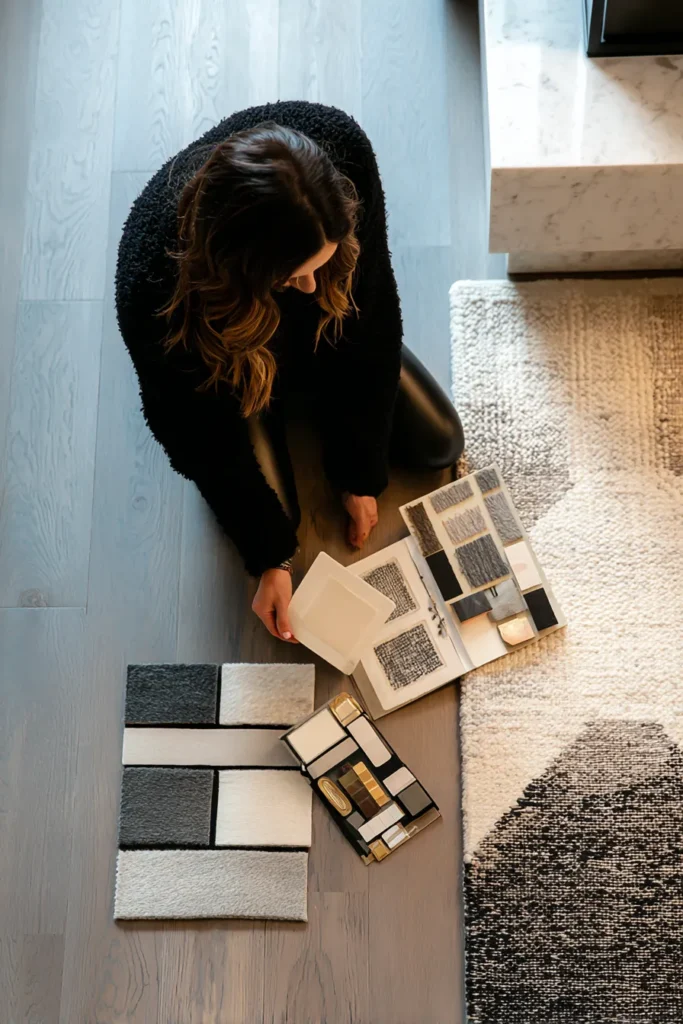
Always bring home samples before committing to large rug purchases. Colors and textures that look perfect in showroom lighting may appear completely different in your space. Most retailers offer sample programs or generous return policies specifically because they understand how dramatically environment affects perception. Take advantage of these offerings.
Consider your room’s architecture and existing design elements before selecting rug style. Rooms with ornate moldings, detailed trim work, or busy wallpaper benefit from simpler rugs that don’t compete for attention. Minimalist spaces with clean lines can handle bolder rug statements. Your rug should complement rather than clash with your room’s existing personality.
Don’t default to matching your rug perfectly to your furniture or walls. Exact matches often feel flat and uninspired. Instead, pull accent colors from existing elements or introduce complementary shades that create visual interest. A gray sofa doesn’t require a gray rug. Consider cream, blue, rust, or even patterned options that include gray among other colors.
Common Mistakes to Avoid
Choosing too-small rugs ranks among the most frequent errors. When in doubt, size up rather than down. A rug that’s too large can be managed, but a rug that’s too small makes your entire room feel disjointed and awkward. Remember that rugs should anchor furniture groupings, not float in the middle of empty floor space.
Forgetting about rug pad importance is another costly mistake. A quality pad prevents slipping, protects your floor, extends rug life, and improves comfort underfoot. Spending a bit more on proper padding protects your larger rug investment and prevents injuries from slips and falls. Never skip this essential foundation.
Buying rugs in isolation without considering your complete design vision leads to disconnected spaces. Before purchasing, photograph your room from multiple angles. Print or view these images while rug shopping to ensure your choice works with your actual space rather than an idealized version in your imagination.
Quick Wins for Immediate Impact
Angle your rug slightly off-square to create dynamic, unexpected energy in traditional rectangular rooms. This works particularly well with vintage or patterned rugs in eclectic spaces. The unconventional placement draws the eye and makes spaces feel more collected and less rigid.
Use your rug as the starting point for refreshing your entire living room. Pull colors from the rug into new throw pillows, artwork, or accessories. This approach creates cohesive, professionally styled looks without replacing major furniture pieces. A new rug can completely transform a space through thoughtful accessorizing.
Embrace imperfection, especially with vintage or handmade rugs. Slight irregularities, color variations, and signs of age add character and authenticity that machine-made perfection cannot replicate. These “flaws” often become favorite features that give your space soul and story.
Conclusion
Your living room rug is so much more than a practical floor covering. It’s the foundation of comfort, the anchor of style, and often the first design element that welcomes you home. The right rug transforms your space from a collection of furniture into a cohesive, intentional room that reflects your personality and supports how you actually live.
Remember that rules exist to guide, not restrict. While understanding proper sizing, material selection, and color coordination provides a solid foundation, your personal taste should ultimately drive your decisions. The most beautiful living rooms balance design principles with individual expression, creating spaces that feel both professionally styled and authentically yours.
Take your time with this decision. Bring home samples, live with them for a few days, and observe how they interact with your space throughout different lighting conditions and times of day. Trust your instincts alongside the practical knowledge you’ve gained here. The perfect rug for your living room exists, it just might take patience to find it.
As you continue refining your living room’s design, explore more inspiration and detailed guidance throughout our collection. Discover the artistry behind different approaches, learn maintenance secrets that preserve beauty, and find creative ideas that push your style forward.
Ready to dive deeper? Explore these essential guides:
- Layered Rugs: How to Mix Textures and Patterns
- Color Psychology in Living Room Rugs
- Sustainable Handcrafted Rug Options
Frequently Asked Questions
What size rug should I use in a small living room?
In small living rooms, use the largest rug that fits while leaving a border of floor visible around the room’s perimeter. An eight-by-ten rug works well in most small spaces, with at least the front furniture legs resting on the rug. Avoid tiny rugs that float in the middle of the floor, as these make small rooms feel even smaller and more disjointed.
Can I use multiple rugs in one living room?
Yes, multiple rugs can define separate functional zones within open-concept living rooms. Ensure the rugs share a common design thread such as similar color palettes, complementary patterns, or matching materials. This creates visual cohesion rather than making the space feel disconnected or chaotic.
How often should I replace my living room rug?
Quality rugs can last decades with proper care. Replace your rug when it shows significant wear, permanent staining, or no longer suits your evolving style. For budget rugs in high-traffic areas, expect five to seven years of good performance. Investment-grade wool or vintage rugs often improve with age and rarely need replacement.
Are expensive rugs worth the investment?
Higher-priced rugs typically offer superior materials, construction, and longevity. A quality wool rug might cost more initially but can last twenty years or more, while budget alternatives need replacement every few years. Calculate cost per year of use rather than upfront expense alone. For low-traffic guest rooms, budget options work fine. For primary living spaces, investing in quality pays long-term dividends.
What’s the best rug material for pets and kids?
Polypropylene and nylon synthetic rugs offer the best performance for households with pets and children. These materials resist stains, clean easily, and withstand heavy wear. If you prefer natural fibers, choose tightly woven wool rather than delicate silk or loosely woven natural fibers. Darker colors and busy patterns hide stains better than light solids.
Should my rug match my sofa?
Your rug doesn’t need to match your sofa exactly. In fact, matching too closely often creates flat, uninspired looks. Instead, choose complementary colors or pull accent shades from your sofa’s pattern. A gray sofa pairs beautifully with cream, blue, rust, or patterned rugs that include gray among other colors.
How do I keep my rug from sliding on hardwood floors?
Always use a quality rug pad designed for hardwood floors. These pads grip both the floor and the rug, preventing slipping while protecting your floor from scratches. Avoid cheap rubber pads that can leave marks on wood. For temporary solutions, double-sided carpet tape provides slip resistance, though it’s not as effective as proper padding.
Can I layer rugs on carpet?
Yes, layering rugs on carpet adds texture and defines spaces within rooms. Use a thinner rug pad between the carpet and your new rug to prevent shifting. This technique works especially well for updating rental spaces with existing carpet you cannot change. Choose rugs with enough visual weight to stand out against the carpet beneath.
What’s the difference between hand-knotted and machine-made rugs?
Hand-knotted rugs are individually crafted with each knot tied by hand, creating durable, unique pieces that often increase in value. Machine-made rugs are manufactured quickly and uniformly, offering lower prices and immediate availability. Hand-knotted rugs feature irregular backs and substantial weight, while machine-made versions look perfectly uniform on the back.
How do I choose between patterned and solid rugs?
If your room features busy wallpaper, bold upholstery, or lots of competing patterns, choose a solid or subtly patterned rug to create visual rest. In minimalist spaces with clean lines and neutral furnishings, patterned rugs add energy and personality. Consider your lifestyle too, as patterns hide stains and wear better than solid colors.
Should I buy my rug before or after other furniture?
Ideally, purchase major furniture first, then select a rug that complements your pieces. However, if you find an extraordinary rug that speaks to you, building a room around it can work beautifully. Just ensure you know the rug’s dimensions and colors when selecting furniture to avoid sizing or coordination issues.
What’s the most durable rug for high-traffic areas?
Nylon and polypropylene synthetic rugs offer maximum durability for heavy traffic areas. Among natural fibers, tightly woven wool rugs withstand wear remarkably well. Avoid long pile, delicate materials like silk, and loosely woven natural fibers in high-traffic zones. Darker colors and busy patterns also hide wear better than light solids.