
Table of Contents
There’s something quietly transformative about stepping into a space that feels both intentional and effortless. A room that breathes with simplicity yet wraps you in warmth. This is the essence of Japandi design, a harmonious marriage between Japanese minimalism and Scandinavian coziness that has captivated modern homeowners seeking refuge from visual chaos.
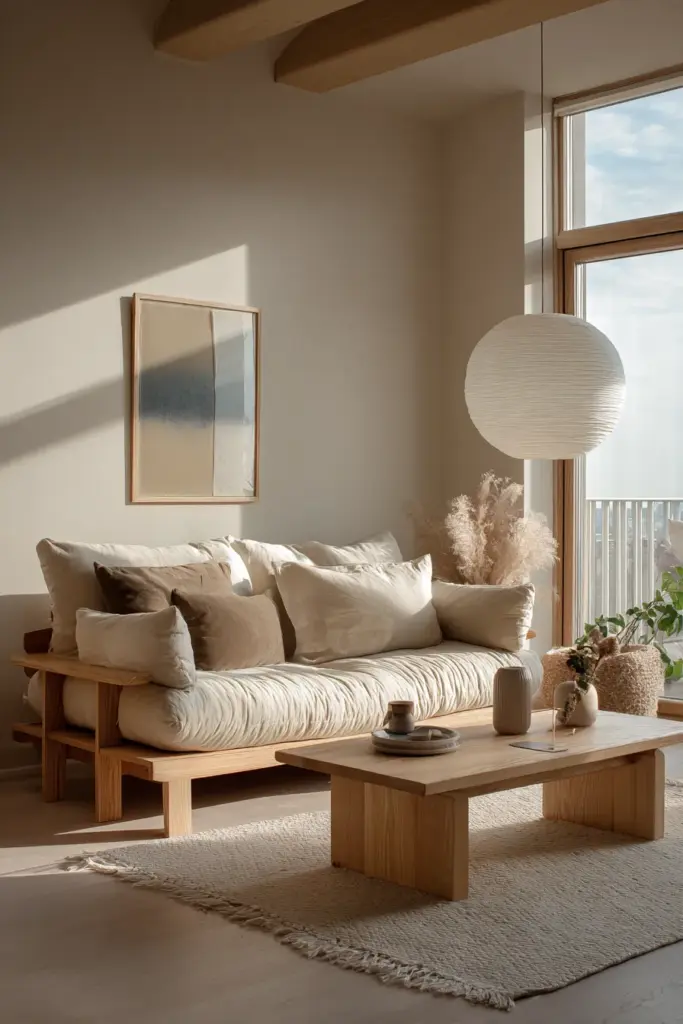
In our increasingly cluttered world, the Japandi living room offers more than aesthetic appeal. It provides a sanctuary where every element serves a purpose, where natural materials ground us, and where negative space becomes as meaningful as the furniture itself. This design philosophy doesn’t just change how your living room looks, it transforms how you feel within it.
Whether you’re redesigning your entire space or simply seeking to bring more intentionality into your home, understanding Japandi principles will guide you toward creating a living room that feels both curated and comfortable. From selecting the perfect furniture pieces that balance form and function to mastering the art of neutral color palettes with subtle warmth, this comprehensive guide will walk you through every essential element of Japandi living room design.
You’ll discover how to layer textures without creating clutter, how to choose lighting that enhances serenity, and how to incorporate personal touches while maintaining the style’s signature restraint. Together, we’ll explore the philosophy behind this beloved design movement and the practical steps to bring it into your own home.
Understanding the Japandi Design Philosophy
Japandi isn’t simply about copying a look from a magazine spread. It’s rooted in two profound design traditions that, despite their geographic distance, share remarkable common ground. Japanese design brings wabi-sabi, the appreciation of imperfection and transience, along with a deep respect for craftsmanship and natural materials. Scandinavian design contributes hygge, that untranslatable sense of coziness and contentment, plus a dedication to functionality and light.
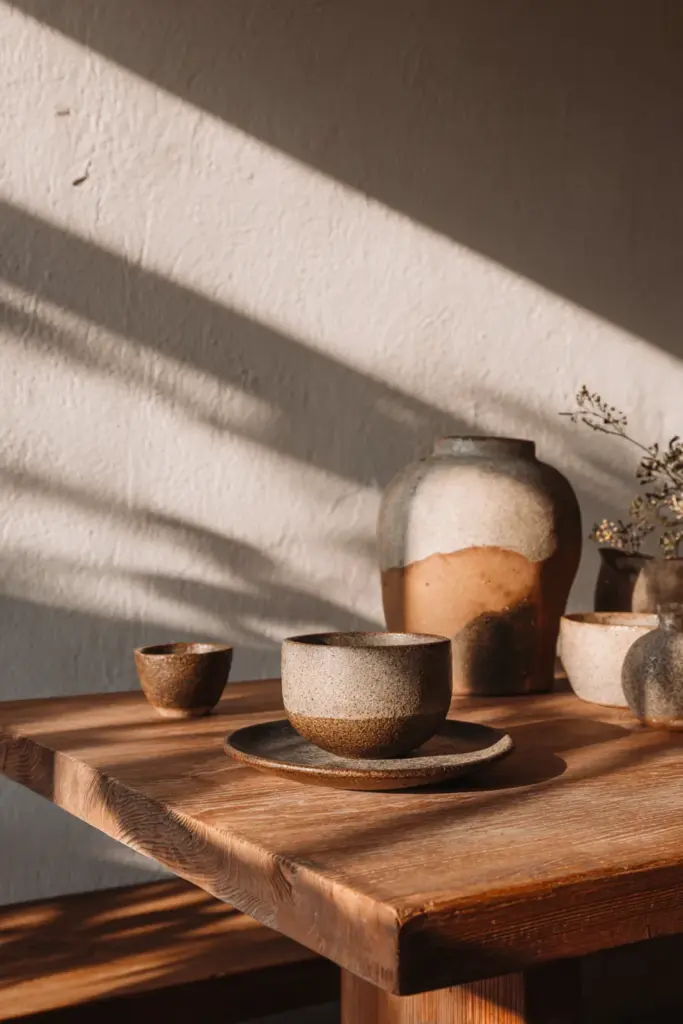
When these philosophies converge, something magical happens. The starkness that can sometimes characterize pure minimalism softens. The potential visual heaviness of Nordic design lightens. What emerges is a balanced approach where every object earns its place not just through beauty but through purpose.
The wabi-sabi influence in Japandi living rooms teaches us to embrace the beauty of natural aging, the slight irregularity in a handthrown ceramic vase, the organic grain pattern in reclaimed wood. This acceptance of imperfection creates spaces that feel lived-in and authentic rather than sterile showrooms. Meanwhile, Scandinavian principles ensure these spaces remain warm and inviting, never cold or austere.
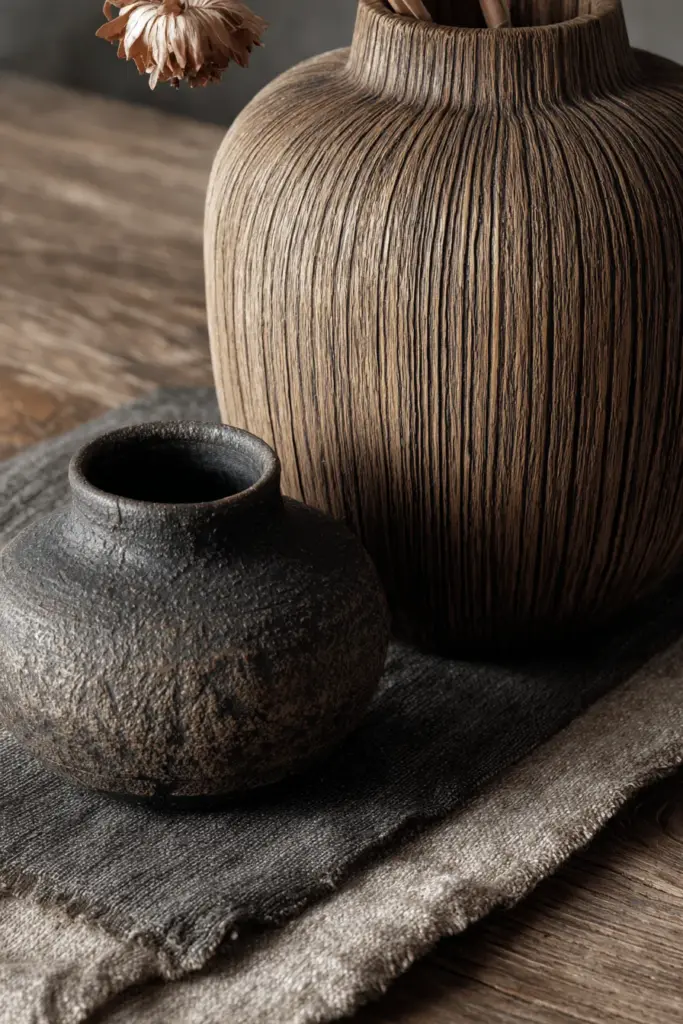
Central to Japandi design is the concept of “less but better.” This doesn’t mean your living room should feel empty or unwelcoming. Rather, it encourages thoughtful curation. Each piece of furniture, every decorative object, should contribute meaningfully to the room’s function or emotional resonance. A beautifully crafted wooden coffee table serves both practical needs and visual pleasure. A carefully chosen piece of art becomes a focal point for contemplation.
The psychology behind this approach runs deeper than trends. Research increasingly shows that cluttered environments elevate stress hormones and diminish our ability to focus. By contrast, spaces designed with intention and restraint promote mental clarity and emotional wellbeing. Understanding the psychological benefits of Japandi living room design helps explain why so many people feel immediately calmer when entering these thoughtfully composed spaces.
Natural materials form the foundation of Japandi aesthetics. Wood, stone, linen, cotton, and clay connect us to the earth and bring organic texture into our homes. These materials age gracefully, developing character over time rather than simply deteriorating. A linen sofa becomes softer with use. A wooden shelf darkens and deepens in tone. This celebration of natural aging aligns perfectly with sustainable living principles, as quality pieces built to last replace the cycle of disposable furniture.
Light plays an equally crucial role. Japanese design historically worked with limited natural light, creating intentional shadows and subtle gradations. Scandinavian design, born in regions with long dark winters, maximizes every ray of available light. Japandi living rooms honor both approaches, using layered lighting strategies that provide ambient warmth while preserving pockets of shadow and tranquility.
Creating Your Japandi Color Foundation
Color in Japandi design whispers rather than shouts. The palette draws primarily from nature, grounding the space in earth tones and neutral hues that create a serene backdrop for daily life. Think warm whites, soft grays, gentle beiges, and muted taupes. These aren’t the stark, cold neutrals of clinical minimalism but rather tones with subtle warmth and depth.
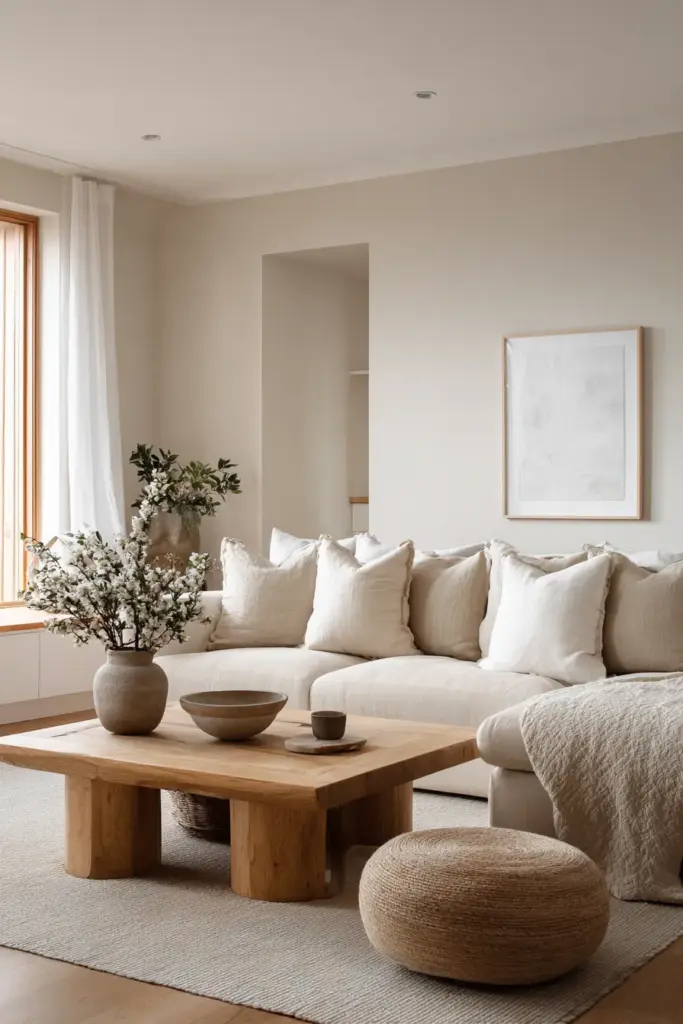
Your walls set the stage for everything else. Opt for warm white or soft greige, colors that shift beautifully throughout the day as natural light changes. These base tones provide a calm canvas that makes wooden furniture and natural textiles truly shine. They also maximize the sense of spaciousness, particularly important if you’re working with a small Japandi living room layout.
Accent colors in Japandi spaces come from nature’s more subdued moments. Sage green echoes forest undergrowth. Dusty terracotta recalls sun-baked clay. Charcoal gray mimics river stones. Deep navy suggests twilight skies. These colors appear sparingly, perhaps in a single accent chair, a throw pillow, or a ceramic vessel. The restraint makes each color choice feel intentional and impactful.
The beauty of this neutral foundation lies in its versatility and timelessness. Unlike trend-driven color schemes that date quickly, earth-toned palettes remain fresh year after year. They also provide flexibility as your tastes evolve. Swapping out a single textile or artwork can shift the entire mood without requiring a complete redesign.
Texture becomes especially important when working within a limited color range. Without bold colors to create visual interest, your eye naturally moves to surface variations. A chunky knit throw in cream adds dimension against a linen sofa. A smooth ceramic vase contrasts with rough-hewn wood. This interplay of textures prevents neutral spaces from feeling flat or boring.
Natural wood tones serve as your primary “color” beyond the neutral base. Light woods like oak, ash, or birch bring Scandinavian brightness. Darker woods like walnut or teak add Japanese depth. Many successful Japandi living rooms mix wood tones, creating subtle variation while maintaining cohesion. The key is ensuring wood pieces share a similar undertone, either leaning warm (golden, honey) or cool (gray, ashen).
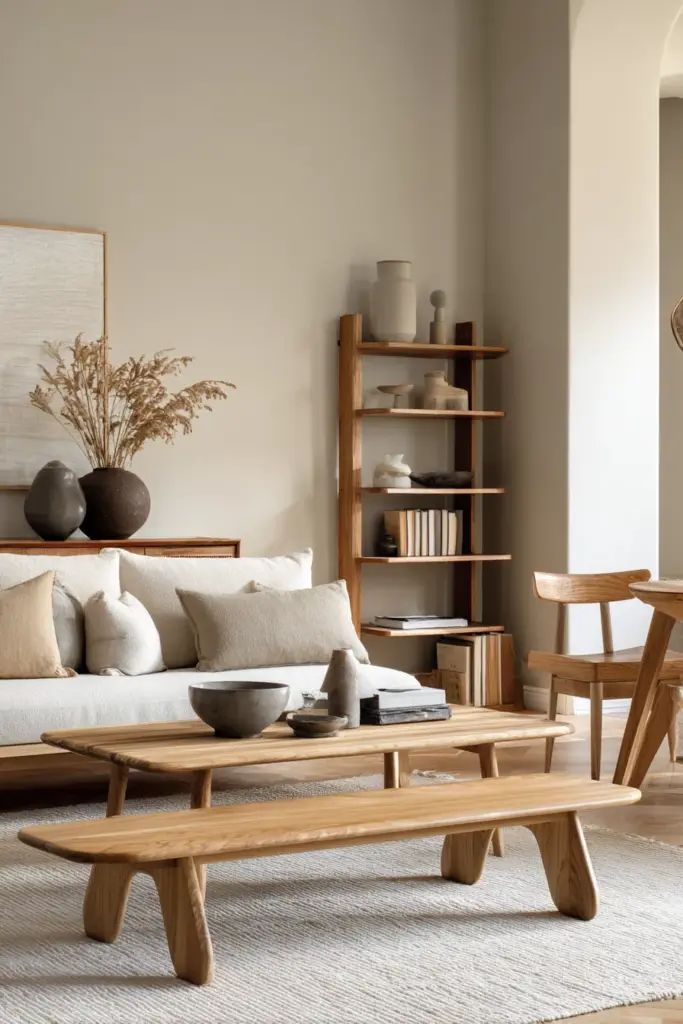
Black serves as an important grounding element in Japandi design. Unlike in stark modern interiors where black might dominate, here it appears in measured doses. Black metal lamp frames, window frames, or shelf brackets provide visual anchor points without heaviness. These darker elements create definition and prevent the space from feeling washed out.
When considering your complete Japandi living room color palette, think in terms of a 70-20-10 rule. Seventy percent should be your neutral base, twenty percent natural wood tones, and ten percent accent colors or black elements. This proportion ensures harmony while providing enough variation to maintain visual interest.
Seasonal Color Adjustments
One delightful aspect of working with a neutral foundation is how easily you can introduce seasonal warmth or coolness. Summer might call for lighter linens in crisp white and pale gray. Winter invites warmer tones, perhaps a rust-colored throw or amber glass vessels. These subtle shifts honor the Japanese tradition of seasonal awareness while maintaining your room’s essential character.
The psychological impact of your color choices shouldn’t be underestimated. Warm neutrals promote feelings of safety and comfort. Cool grays encourage clarity and focus. By understanding how different tones affect mood, you can fine-tune your palette to support how you want to feel in your living room.
Selecting Essential Japandi Furniture Pieces
Furniture selection in Japandi design requires a delicate balance between minimalism and livability. Each piece should be beautiful enough to stand alone yet functional enough to enhance daily life. This isn’t about filling space, it’s about choosing pieces that elevate your experience of the room.
Start with your Japandi living room sofa, likely the largest and most important furniture investment. Look for clean lines and low profiles that echo both Japanese floor-oriented traditions and Scandinavian simplicity. Avoid ornate details, tufting, or fussy embellishments. Instead, seek pieces where the beauty lies in proportion and craftsmanship.
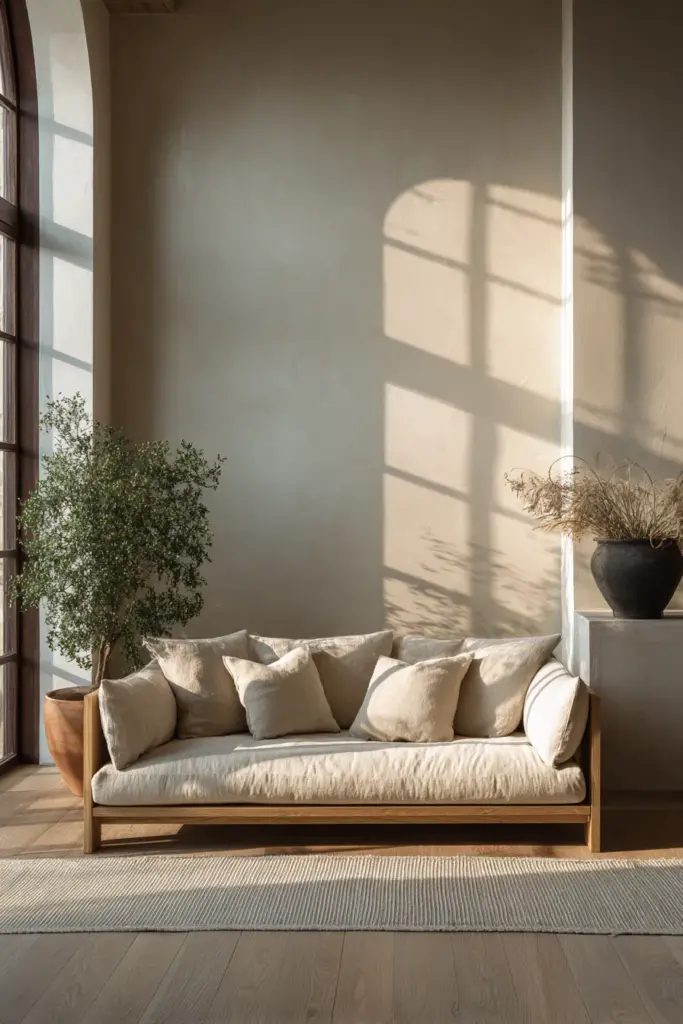
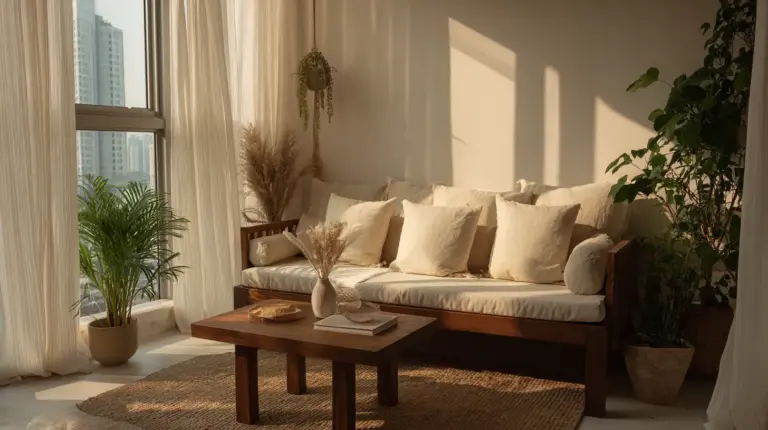
Sofa frames in light or medium wood with natural linen or cotton upholstery exemplify the Japandi aesthetic perfectly. These materials age beautifully and feel wonderful to touch. The neutral upholstery maintains your calm color palette while the wooden frame adds warmth and organic texture. Modular designs work particularly well, offering flexibility without sacrificing the clean-lined aesthetic.
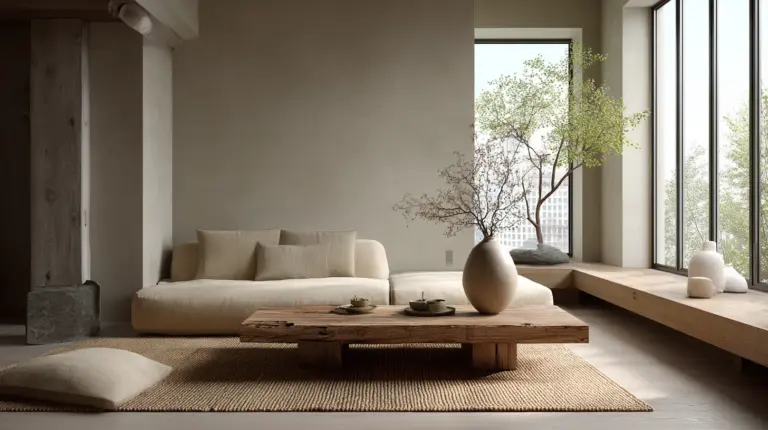
Coffee tables deserve careful consideration as they anchor your seating area and provide crucial functionality. The ideal Japandi coffee table combines simple geometry with natural materials. A solid wood table with visible grain and subtle imperfections honors wabi-sabi principles. Alternatively, a wooden table with slender black metal legs bridges Japanese and Scandinavian influences beautifully.
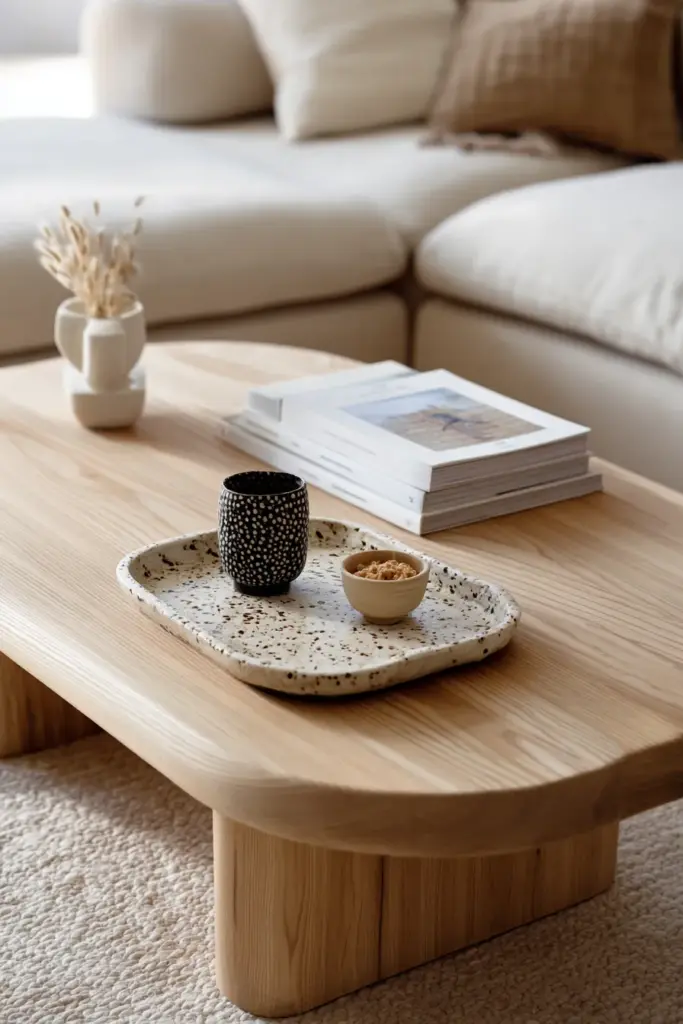
Keep coffee table styling minimal. A small ceramic tray, a single art book, perhaps a low vessel with a simple branch. Resist the urge to crowd the surface. Empty space isn’t wasted space in Japandi design, it’s intentional breathing room that allows each object to be truly seen and appreciated.
Storage solutions should be equally thoughtful. Open shelving made from natural wood provides display space while maintaining visual lightness. However, balance open storage with closed options to prevent visual clutter. Low credenzas or sideboards with simple door fronts hide everyday items while their clean lines and wood construction remain aesthetically pleasing.
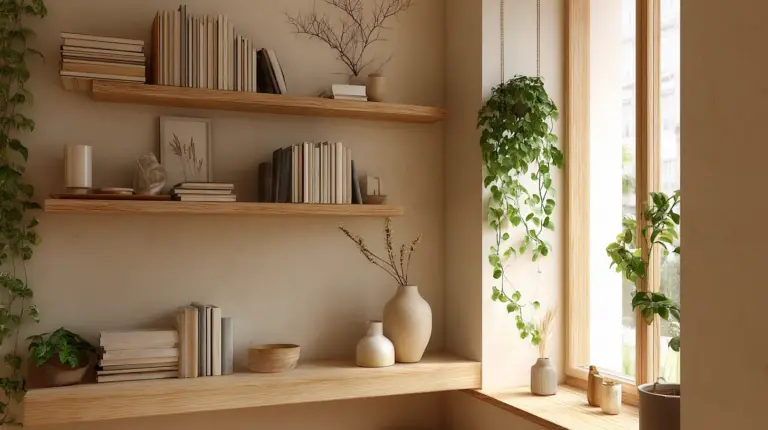
When arranging Japandi living room bookshelves, embrace negative space. Rather than cramming every shelf, leave room for objects to breathe. Arrange books both vertically and horizontally, interspersing them with small decorative objects. This creates rhythm and prevents the heavy, cluttered feeling of overstuffed bookcases.
Seating beyond the sofa adds functionality and visual interest. Floor cushions honor Japanese tradition while providing flexible seating options. A single accent chair in a complementary neutral or muted accent color creates a reading nook without overwhelming the space. Choose pieces with exposed wooden legs and simple upholstery that echoes your sofa’s aesthetic.
Side tables and occasional furniture should follow the same principles as larger pieces. Opt for simple forms in natural materials. A small round wooden side table, perhaps with a lower shelf for books or a small plant, provides utility without visual weight. Nesting tables offer flexibility, tucking away when not needed.
Furniture Scale and Proportion
Japandi furniture typically sits lower than standard Western pieces, creating a grounded, stable feeling. This doesn’t mean everything should hug the floor, but choosing pieces with lower profiles, especially sofas and chairs, enhances the calm, settled atmosphere characteristic of this style.
Pay attention to the relationship between furniture pieces. Everything should feel proportionally balanced. An oversized sectional might overwhelm a modest living room, while tiny furniture in a large space creates an awkward, disconnected feeling. Measure carefully and consider scale in relation to your room’s dimensions.
The beauty of investing in quality Japandi furniture lies in its longevity. These pieces don’t follow fleeting trends. A well-made wooden sofa or coffee table will serve you for decades, aging gracefully and developing character. This aligns perfectly with sustainable living principles and ultimately proves more economical than repeatedly replacing cheaper, trend-driven furniture.
Layering Textiles and Textures
Texture transforms a Japandi living room from potentially austere to genuinely inviting. Within the limited color palette, textural variation creates visual interest and tactile pleasure. The goal is layering different materials in a way that feels organic and uncontrived, as though the room evolved naturally over time.
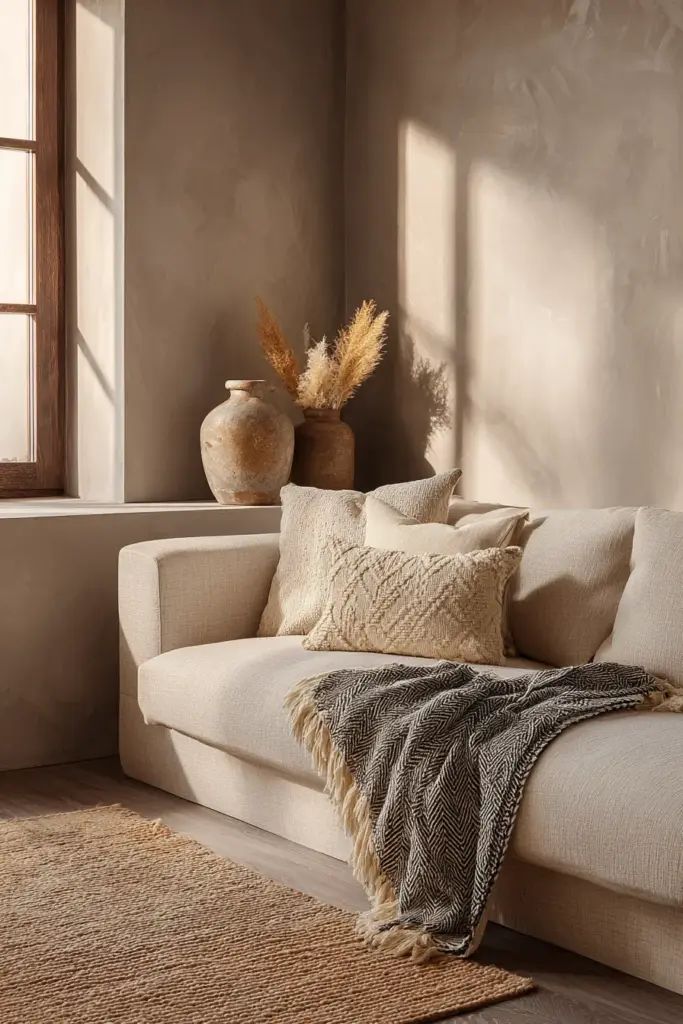
Start with your foundational textiles. A natural fiber rug grounds the seating area and defines the space. Jute, sisal, or wool in neutral tones work beautifully, providing subtle texture underfoot without competing visually. For those seeking something softer, a low-pile wool rug in cream, gray, or natural adds warmth while maintaining the clean aesthetic.
Understanding how to choose and style Japandi living room rugs can dramatically impact your space’s overall feel. Consider layering rugs for added depth, perhaps a larger jute rug with a smaller, softer sheepskin or wool piece on top. This creates dimension while honoring both the Japanese appreciation for floor-level comfort and Scandinavian coziness.
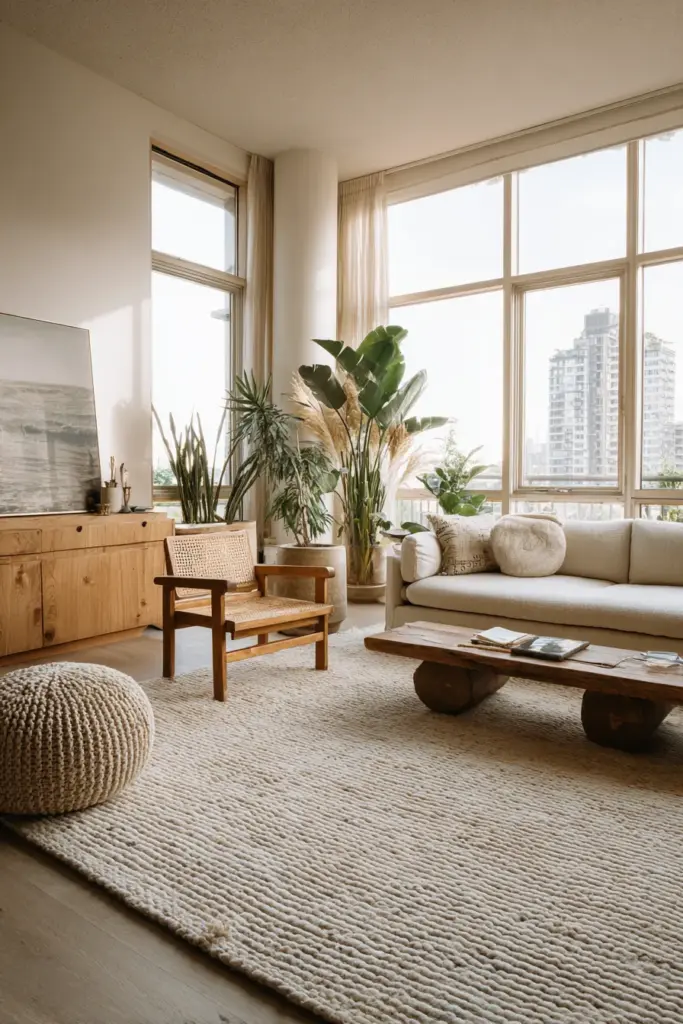
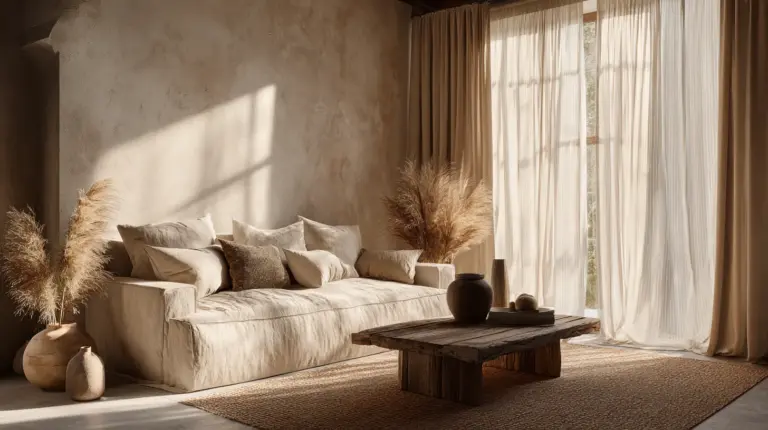
Window treatments should filter light gently while maintaining the room’s serene quality. Avoid heavy, ornate curtains in favor of simple panels made from natural linen or cotton. These fabrics drape beautifully, softening the lines of windows without adding fussiness. The key to selecting curtains for your Japandi living room lies in choosing natural fibers in neutral tones that puddle slightly on the floor, creating an elegant, relaxed look.
If privacy isn’t a concern, consider minimal window treatments like simple bamboo blinds or even leaving windows bare to maximize natural light. This approach works particularly well if you have a beautiful view you want to frame rather than obscure, as discussed in creating spaces with stunning natural views.
Sofa and chair textiles offer another opportunity for thoughtful layering. Linen upholstery provides a slightly rumpled, lived-in quality that embodies wabi-sabi principles. Cotton canvas offers durability with a softer hand. Both materials breathe well and age beautifully, developing a patina over time rather than simply wearing out.
Throw pillows and blankets add the final layer of comfort and texture. Choose natural materials in varied weaves and weights. A chunky knit throw in undyed wool, a smooth linen pillow in warm white, a nubby cotton cushion in soft gray. This variety creates visual interest while maintaining tonal cohesion. Limit pillows to three or four per sofa to avoid clutter.
The complete approach to selecting and layering Japandi textiles requires attention to how different materials interact. Pair smooth with rough, matte with subtle sheen, heavy with light. A smooth ceramic vase becomes more striking against a chunky knit throw. A sleek wooden coffee table gains interest when topped with a handwoven linen runner.
Natural texture extends beyond soft goods to hard surfaces. Exposed wood grain, whether smooth and polished or rough and reclaimed, adds organic pattern. Stone elements, perhaps in a side table or decorative object, provide cool contrast to warm wood and soft textiles. Even the slight texture of matte painted walls contributes to the overall sensory experience.
Seasonal Textile Rotation
One practical advantage of Japandi’s neutral palette is the ease of seasonal adjustments through textiles. Summer calls for lighter weights and cooler fibers, perhaps removing heavy wool throws in favor of lightweight linen. Winter invites layering those cozy elements back in, adding warmth without changing the essential aesthetic.
This seasonal awareness honors Japanese design traditions while providing practical comfort. It also keeps your space feeling fresh and responsive to natural cycles, preventing the static feeling that can plague overly designed rooms.
Illuminating Your Space with Intention
Lighting in Japandi design serves both practical and atmospheric purposes. The goal is creating warm, diffused light that enhances the room’s serene quality while providing adequate illumination for various activities. Harsh overhead lighting has no place here. Instead, think in layers.
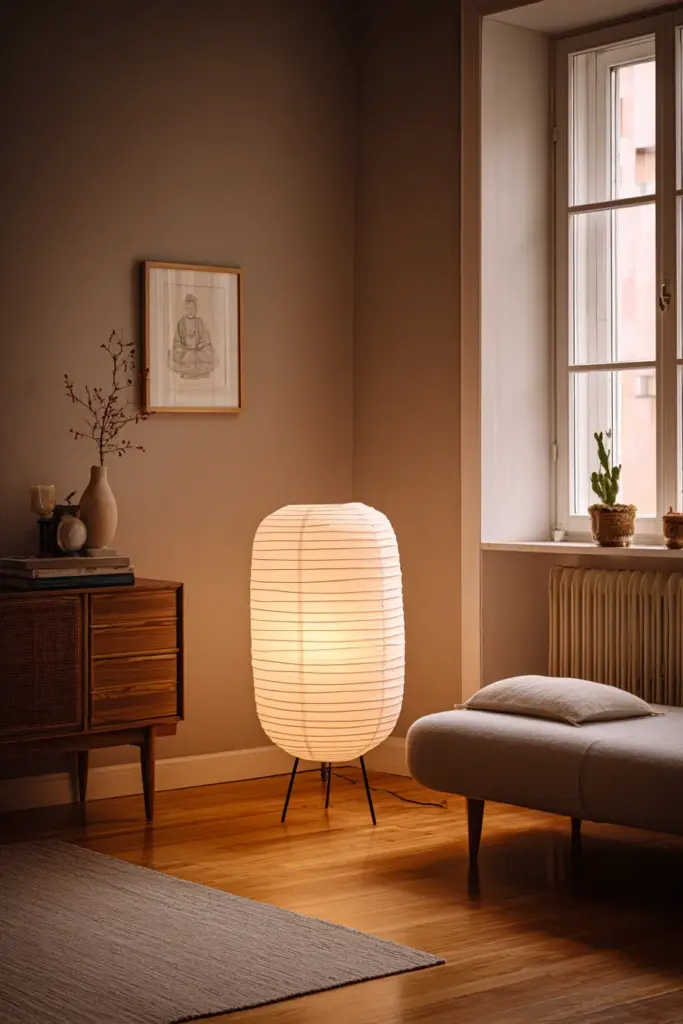
Ambient lighting provides overall illumination. Recessed ceiling lights on dimmer switches offer control over brightness levels throughout the day. Alternatively, a simple pendant light with a paper or fabric shade diffuses light beautifully, casting a soft glow that prevents sharp shadows. Japanese paper lanterns perfectly embody this approach, their rice paper shades creating gentle, even illumination.
Task lighting addresses specific needs without disrupting the overall calm. A slim floor lamp beside your reading chair provides focused light exactly where needed. Wall-mounted swing-arm lamps conserve surface space while offering adjustable illumination. Choose fixtures with simple forms in natural materials or matte black metal.
The comprehensive guide to Japandi living room lighting emphasizes the importance of multiple light sources at varying heights. This creates depth and allows you to adjust the ambiance based on time of day and activity. Morning might call for bright, energizing light. Evening benefits from dim, cozy illumination that signals the day’s end.
Accent lighting highlights specific features or objects. A small spotlight aimed at artwork draws the eye without overwhelming. LED strips hidden behind floating shelves create a subtle glow that adds dimension. These touches should be barely noticeable individually but collectively contribute to a thoughtfully lit environment.
Natural light remains your most valuable illumination source. Maximize it by keeping windows unobstructed when possible. Mirrors strategically placed opposite windows bounce light deeper into the room. Light-colored walls and ceilings reflect rather than absorb available daylight.
Choose light bulbs carefully. Warm white (2700K-3000K) creates the cozy atmosphere essential to Japandi design. Avoid cool white or daylight bulbs, which feel harsh and clinical. Smart bulbs offer the flexibility to adjust both brightness and color temperature throughout the day, supporting natural circadian rhythms.
Fixture Selection and Placement
Light fixtures themselves should exemplify Japandi design principles. Simple forms, natural materials, and restrained ornamentation. A wooden pendant light with clean lines, a paper lantern with minimal framework, or a sleek black metal floor lamp all work beautifully. Avoid ornate chandeliers, overly industrial fixtures, or anything that draws attention to itself rather than the light it provides.
Consider the interplay between light and shadow. Japanese design traditions embrace shadows as essential to creating depth and interest. Rather than illuminating every corner uniformly, allow some areas to remain dimmer. This variation creates a more dynamic, interesting space that changes throughout the day as natural light shifts.
Bringing Nature Indoors Through Plants and Natural Elements
Plants bridge the gap between interior and exterior, bringing life, movement, and natural beauty into your Japandi living room. Both Japanese and Scandinavian design traditions deeply value connections to nature, making greenery an essential rather than optional element.
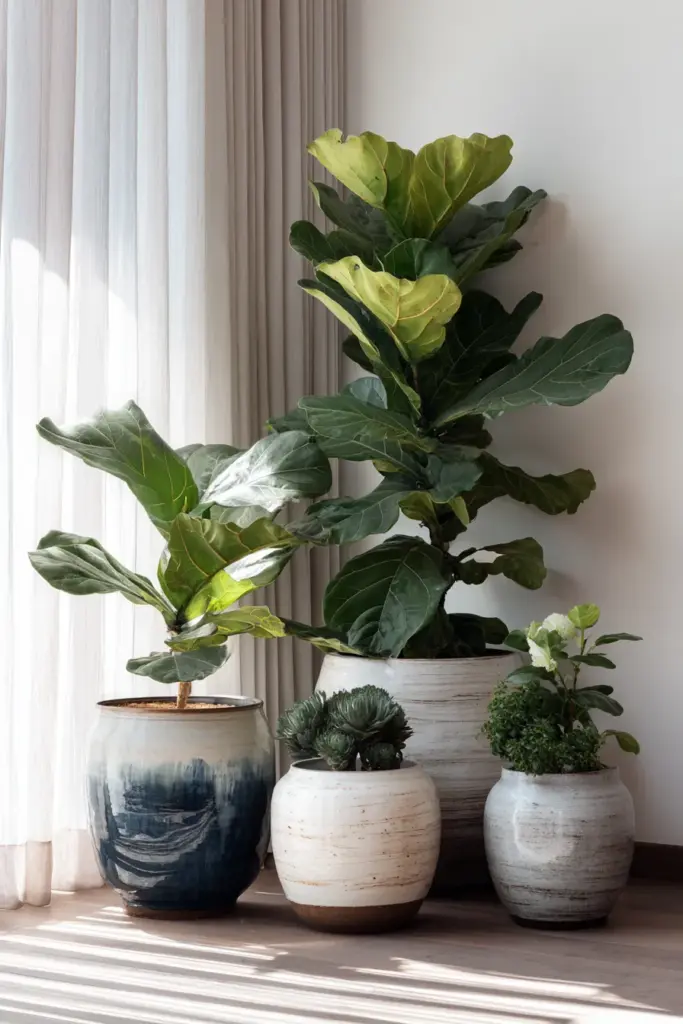
Select plants thoughtfully, considering both aesthetic and practical factors. Large statement plants like fiddle leaf figs or rubber trees provide sculptural presence. Medium-sized plants like snake plants or pothos offer manageable care requirements. Small succulents or air plants add delicate touches on shelves or side tables.
The art of incorporating plants in your Japandi living room extends beyond simply placing greenery randomly. Consider placement carefully. A large plant in a corner softens architectural lines. A trailing plant on a high shelf adds vertical interest. Clustering small plants creates impact without clutter.
Plant containers should align with your overall aesthetic. Natural ceramic pots in neutral tones, simple terracotta, or handmade stoneware all work beautifully. Avoid brightly colored or overly decorative planters that compete with the plants themselves. The container should quietly support rather than overshadow the living element it holds.
If outdoor space allows, consider how your living room connects to exterior greenery. Understanding how to integrate indoor and outdoor garden elements can extend your living space visually and create a stronger relationship with nature. Large windows framing garden views, or doors opening onto a small patio, blur the boundaries between inside and outside.
Beyond living plants, incorporate other natural elements. A simple vase with a single branch brings seasonal awareness. Dried grasses in a tall vessel add subtle movement and texture. River stones arranged in a shallow dish create a miniature landscape that invites contemplation. These elements connect you to natural cycles and the changing seasons.
Wood remains your primary natural material, appearing in furniture, shelving, and decorative objects. Choose pieces that showcase the material’s inherent beauty, visible grain, natural knots, and organic irregularities. Reclaimed wood adds character and sustainability credentials.
Stone and ceramic elements provide textural contrast to wood and textile. A marble or granite side table, a collection of handmade pottery, or simple stone bookends add weight and grounding. These materials age beautifully and connect you to earth elements.
Maintenance and Care
Living elements require care, but this maintenance becomes part of the mindful living practice that Japandi design encourages. Watering plants, pruning dead leaves, and rotating for even light exposure all create opportunities for engagement with your space. This attentiveness prevents the mindless accumulation of objects that characterizes less intentional design approaches.
Choose plants appropriate to your light conditions and lifestyle. Low-light tolerant varieties work for rooms with limited windows. Drought-tolerant plants suit busy schedules. Matching plants to your actual circumstances ensures they thrive rather than merely survive.
Curating Accessories and Decorative Objects
Accessories in Japandi living rooms require perhaps the most restraint and intention of any design element. The temptation to fill shelves and surfaces must be resisted. Instead, each decorative object should be carefully chosen for its beauty, meaning, or utility.
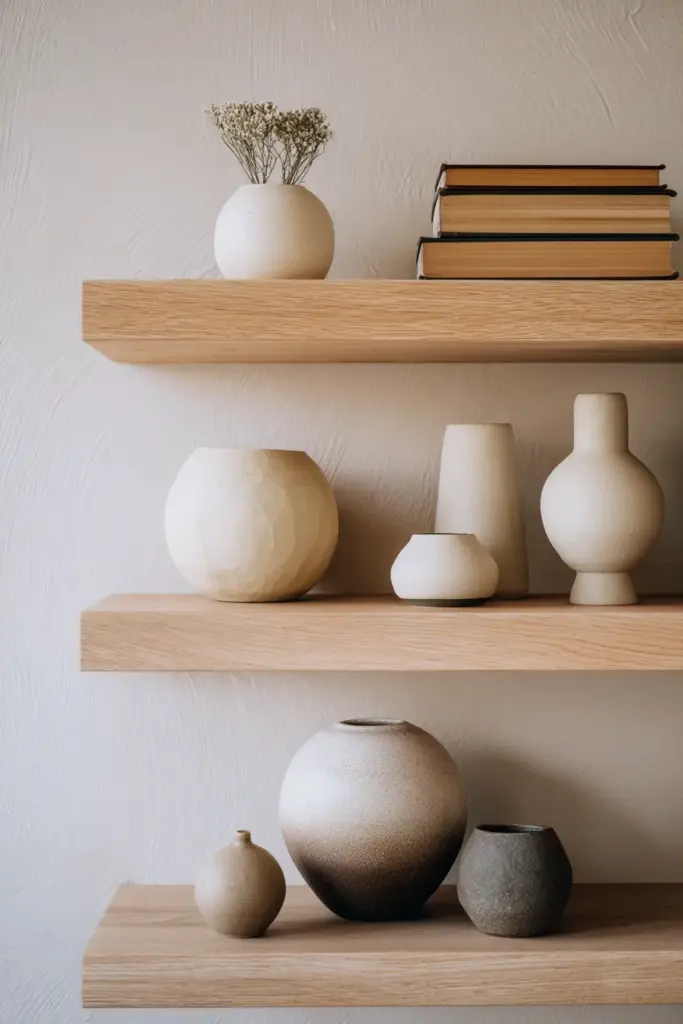
Think quality over quantity. One exceptional piece of art makes more impact than a gallery wall of mediocre prints. A single handcrafted ceramic vase provides more visual interest than a collection of mass-produced trinkets. This selective approach prevents visual clutter while ensuring each object receives proper attention.
When selecting accessories for your Japandi living room, consider the object’s origin and craftsmanship. Handmade items carry the maker’s intention and subtle imperfections that embody wabi-sabi principles. Natural materials age gracefully. Pieces with personal meaning add emotional resonance beyond mere decoration.
Artwork should be thoughtfully selected and simply presented. Large-scale abstract pieces in neutral tones create focal points without overwhelming. Black and white photography offers graphic impact. Simple line drawings provide interest without busy-ness. Frame choices should be minimal, thin black or natural wood frames that don’t compete with the art itself.
The guide to choosing art for Japandi living rooms emphasizes restraint and intention. Rather than covering every wall, select one or two statement pieces and give them space to breathe. The wall itself, in its neutral tone, becomes part of the composition.
Functional objects can serve decorative purposes. A beautiful wooden tray corrals remote controls while adding warmth to the coffee table. Handwoven baskets provide storage while contributing texture. A ceramic bowl holds keys by the door and serves as a sculptural element.
Books deserve special consideration. Rather than hiding them away, display carefully selected titles that reflect your interests and values. Arrange them with intention, mixing vertical and horizontal stacks, leaving space between groupings. Coffee table books should be chosen for both content and cover design, as they contribute visually to your space.
Textural objects add interest within the neutral palette. A piece of driftwood, a cluster of handmade pottery, or a simple woven basket all provide visual variety. Group objects in odd numbers (three or five) and vary heights for pleasing composition. Leave ample negative space around groupings.
Seasonal Rotation
One advantage of minimal accessorizing is the ease of seasonal updates. Swapping a few objects, perhaps adding a vase of seasonal branches in fall or lighter elements in spring, keeps your space feeling fresh without requiring major changes. This practice honors Japanese seasonal awareness while maintaining your foundational aesthetic.
Resist the urge to constantly add new accessories. Instead, occasionally rotate existing pieces, storing some away for later reintroduction. This prevents visual fatigue and allows you to appreciate each object anew when it reappears.
Making Japandi Work in Different Living Situations
Japandi design principles adapt beautifully to various living situations, from expansive homes to compact apartments, from owned properties to rental spaces. The key lies in understanding core principles rather than rigidly following rules.
For those working with limited square footage, strategies for creating a small Japandi living room focus on maximizing functionality while maintaining visual calm. Multi-purpose furniture becomes essential. A storage ottoman serves as both seating and hidden storage. A coffee table with a lower shelf provides display space without requiring additional furniture.
Vertical space becomes valuable real estate in smaller rooms. Wall-mounted shelves provide storage and display without consuming floor space. Tall, narrow bookcases draw the eye upward, making ceilings feel higher. However, resist the temptation to fill every vertical surface. Maintaining negative space remains crucial even when square footage is limited.
Light colors and strategic lighting prove especially important in compact spaces. Warm whites on walls maximize light reflection. Multiple small light sources prevent dark corners. Mirrors, used sparingly and intentionally, can bounce light and create a sense of greater space without feeling gimmicky.
Apartment dwellers and renters face unique constraints, typically unable to make permanent changes to walls, floors, or fixtures. However, Japandi design actually works beautifully within these limitations. The style’s emphasis on furniture and textiles rather than architectural elements means you can create a complete aesthetic without touching a wall.
Discover specific approaches for Japandi living room design for renters, focusing on removable solutions. Area rugs define space and cover less-than-ideal flooring. Freestanding furniture provides storage without built-ins. Removable wallpaper or large-scale art can transform a wall without permanent alteration. Command strips allow hanging without damaging walls.
Families with children might worry that Japandi’s minimalism conflicts with the reality of toys, books, and kid stuff. However, thoughtful storage solutions make this style entirely family-friendly. The key lies in creating designated spaces for children’s items and maintaining routines for tidying.
Exploring Japandi living room design with kids reveals how closed storage solutions hide toys when not in use. Low, accessible shelving allows children to participate in maintaining order. Choosing durable, washable textiles accommodates real-life mess. The calm, uncluttered environment benefits children’s development, providing visual rest and supporting focus.
Budget constraints need not prevent achieving Japandi aesthetics. The style’s emphasis on quality over quantity actually aligns well with mindful spending. Investing in fewer, better pieces proves more economical long-term than repeatedly buying cheap furniture that deteriorates quickly.
The comprehensive approach to creating Japandi living room decor on a budget prioritizes strategic investments. Start with foundational pieces like a quality sofa or dining table, then gradually add complementary items. Secondhand and vintage shops often yield excellent finds in natural materials. DIY projects, approached with care and intention, can create custom pieces at a fraction of retail cost.
Mixing Styles Thoughtfully
Japandi design doesn’t demand aesthetic purity. Many successful living rooms incorporate elements from other styles, creating personalized spaces that still honor core principles. The key lies in maintaining consistency in materials, color palette, and level of restraint.
Understanding how to mix Japandi with other living room styles opens creative possibilities. A mid-century modern chair might fit perfectly based on its clean lines and wood construction. A rustic element adds texture and character. Even a single traditional piece can work if it’s displayed with intention and surrounded by breathing room.
The differentiating factors between Japandi and pure Scandinavian design help clarify which direction feels right for your space. While both embrace minimalism and natural materials, Japandi typically features darker woods, more earth tones, and greater emphasis on negative space. Scandinavian design often includes brighter woods, more white, and slightly warmer, cozier feels.
Creating Focal Points and Special Features
Even in minimalist design, intentional focal points draw the eye and create visual hierarchy. Rather than competing elements all clamoring for attention, Japandi living rooms typically feature one or two carefully considered features that anchor the space.
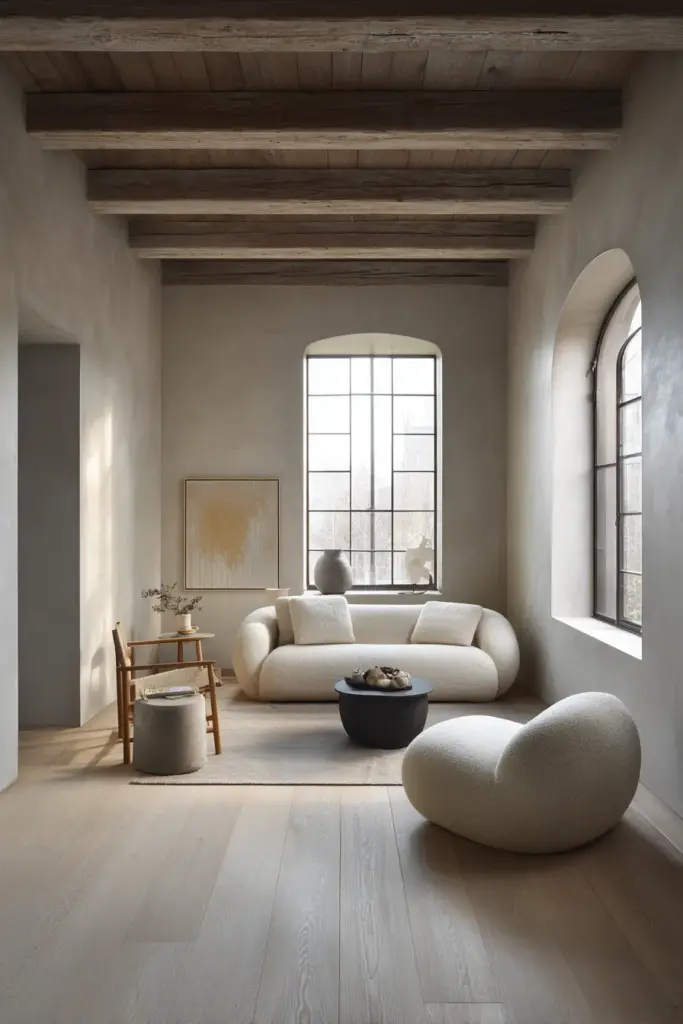
A fireplace naturally serves as a powerful focal point, combining practical warmth with visual appeal. Designing a Japandi living room around a fireplace involves keeping the surround simple and uncluttered. Clean-lined mantels in natural wood or simple stone surrounds work beautifully. Resist the urge to crowd the mantel with accessories. A single piece of art above, perhaps a few minimal objects on the mantel itself, allows the fireplace to remain the star.
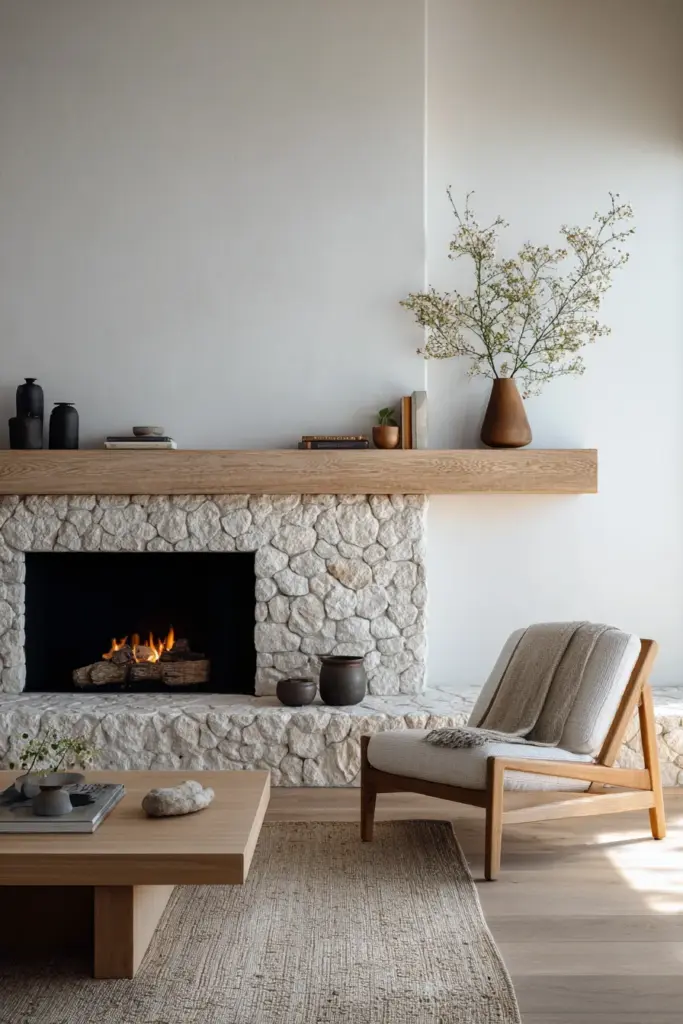
For modern homes, electric or gas fireplaces with minimal surrounds maintain the clean aesthetic while providing ambiance. The key lies in proportion and restraint. The fireplace should feel integrated into the room rather than added as an afterthought.
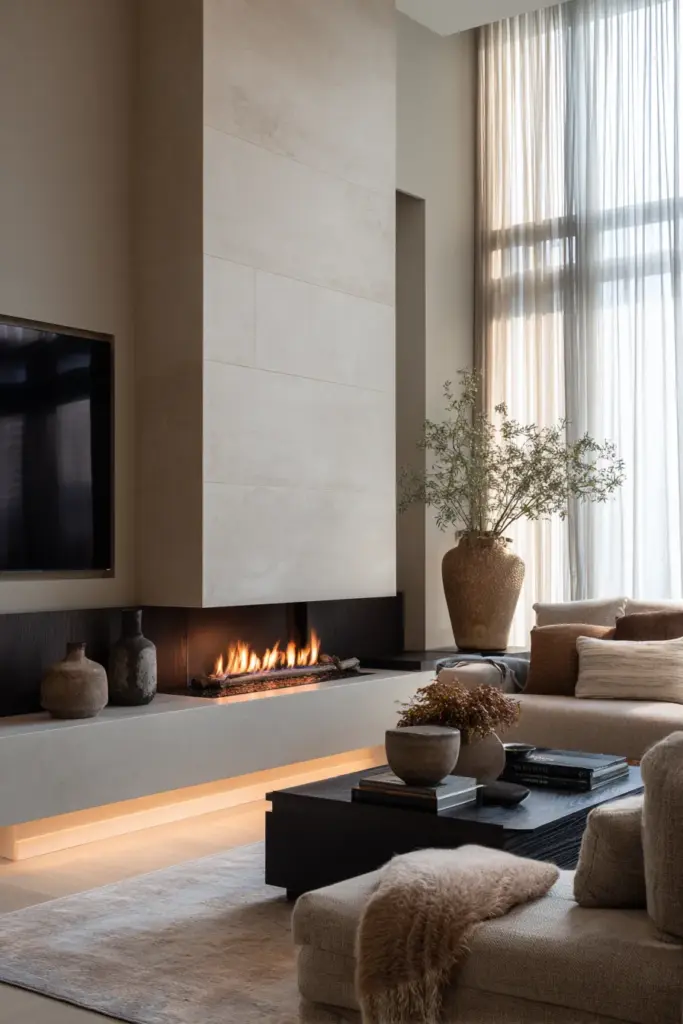
Windows with beautiful views deserve emphasis rather than obstruction. Position seating to take advantage of natural vistas. Keep window treatments minimal or absent when privacy allows. Understanding how to enhance living rooms with stunning views involves recognizing that sometimes the best design decision is simply framing and highlighting what’s already there.
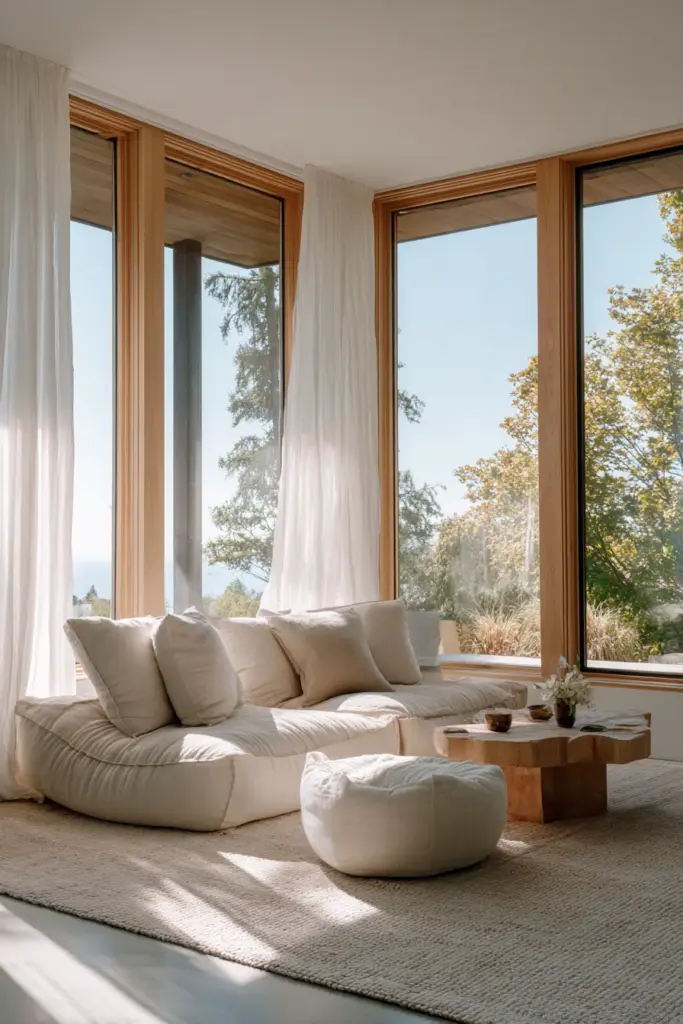
If your view is less than ideal, create internal focal points. A carefully composed shelf arrangement, a statement piece of art, or an especially beautiful furniture grouping can draw attention away from windows and into the room itself.
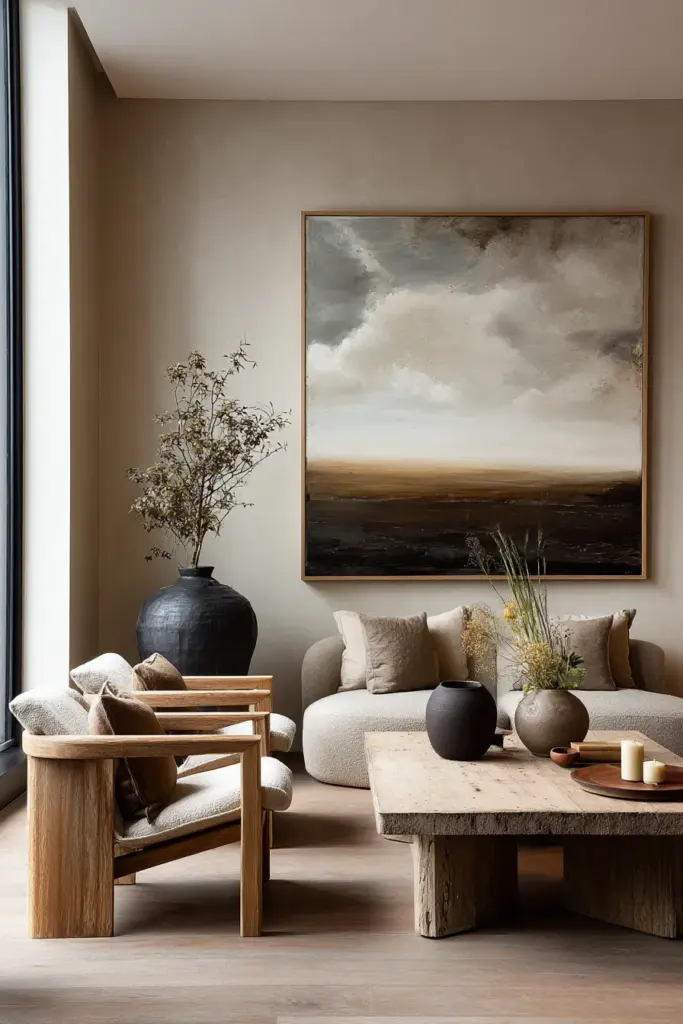
Architectural features like exposed beams, interesting ceiling lines, or built-in alcoves should be embraced rather than hidden. Paint them in tones that either blend seamlessly or provide subtle contrast. Use them as opportunities for creative display or functional enhancement.
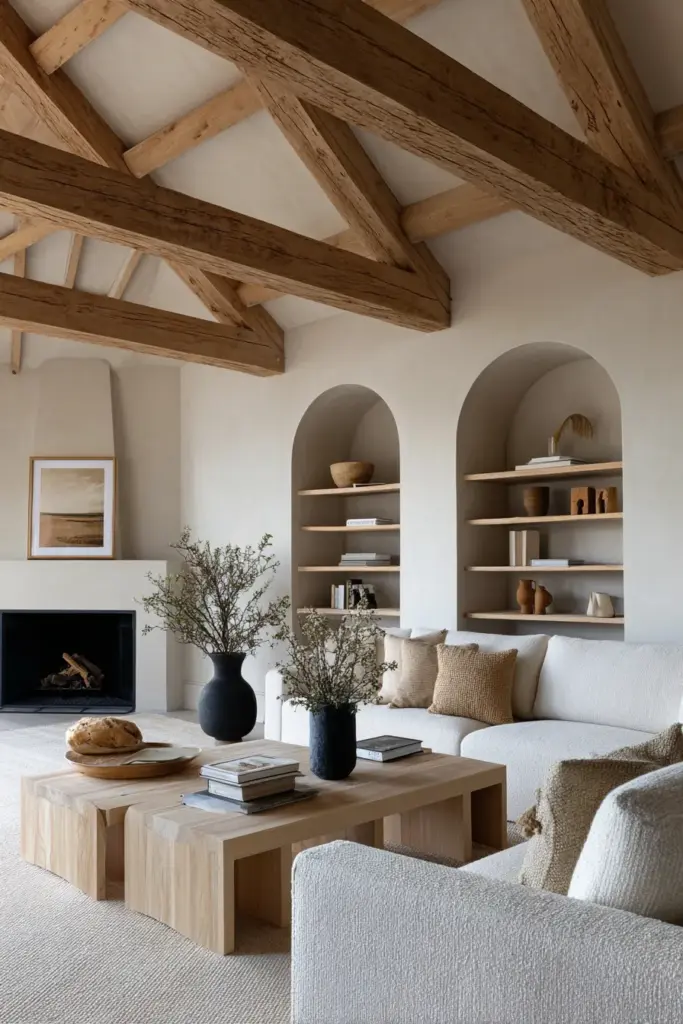
Creating Zones in Open Spaces
Many modern homes feature open-concept living areas that combine multiple functions. Creating distinct zones while maintaining flow requires thoughtful furniture placement and subtle visual cues. Area rugs can define a seating area within a larger space. A low bookshelf might delineate living room from dining area without blocking sightlines.
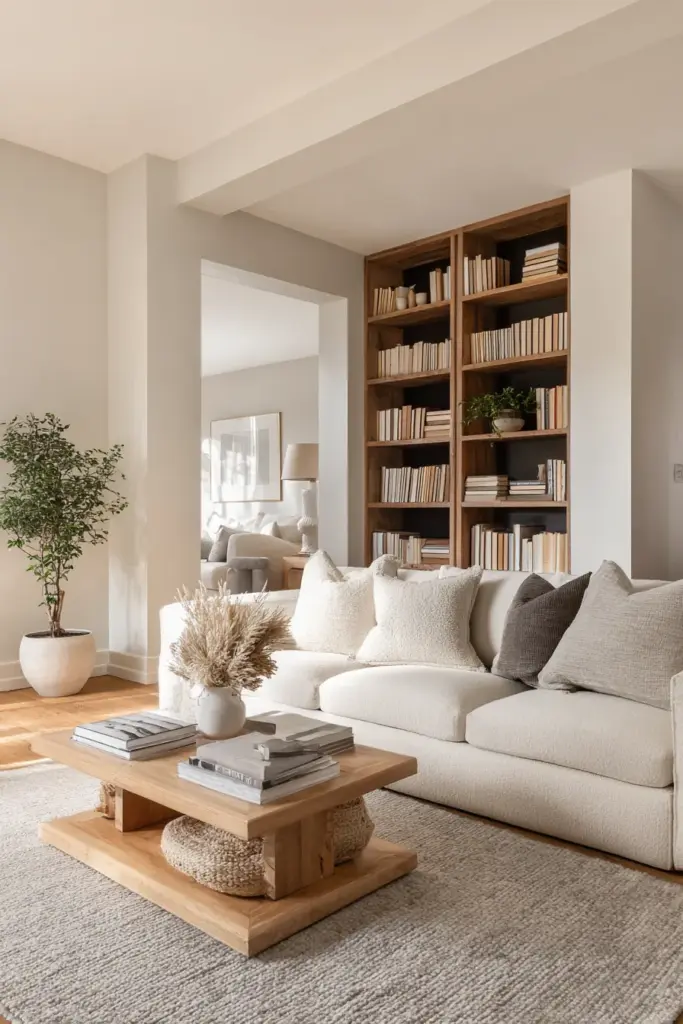
Lighting also helps establish zones. A pendant light over the seating area creates a defined gathering space. Different light levels in various zones allow flexibility, perhaps brighter task lighting in a reading corner, softer ambient light in the main seating area.
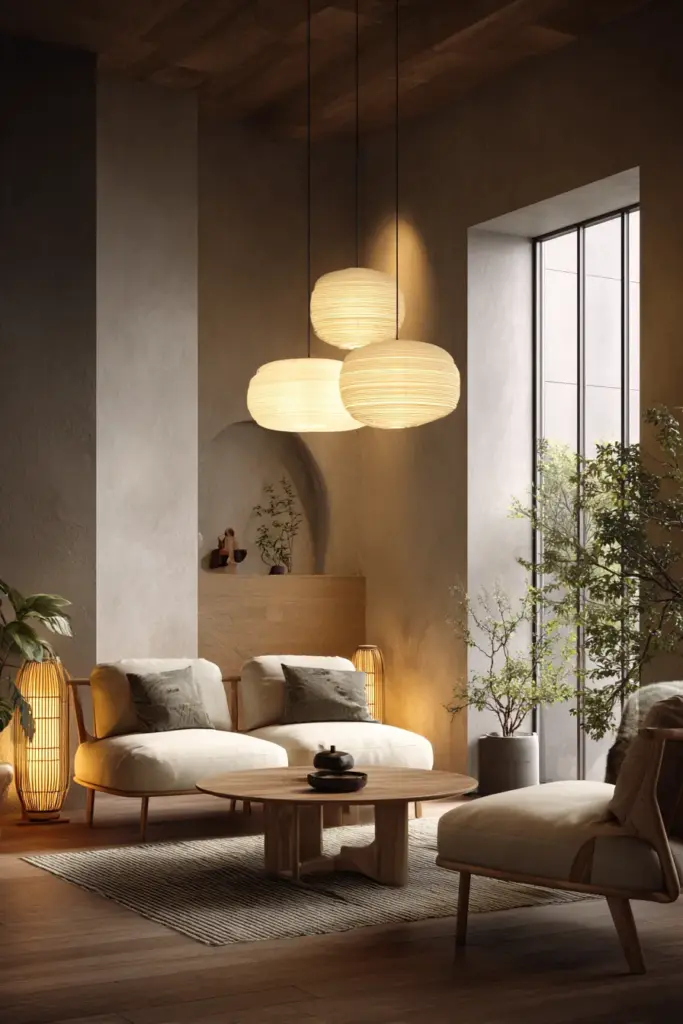
Maintaining and Evolving Your Japandi Living Room
Creating a Japandi living room represents the beginning, not the end, of your design journey. These spaces should evolve gradually, reflecting your changing needs and growing understanding of what brings you peace and joy.
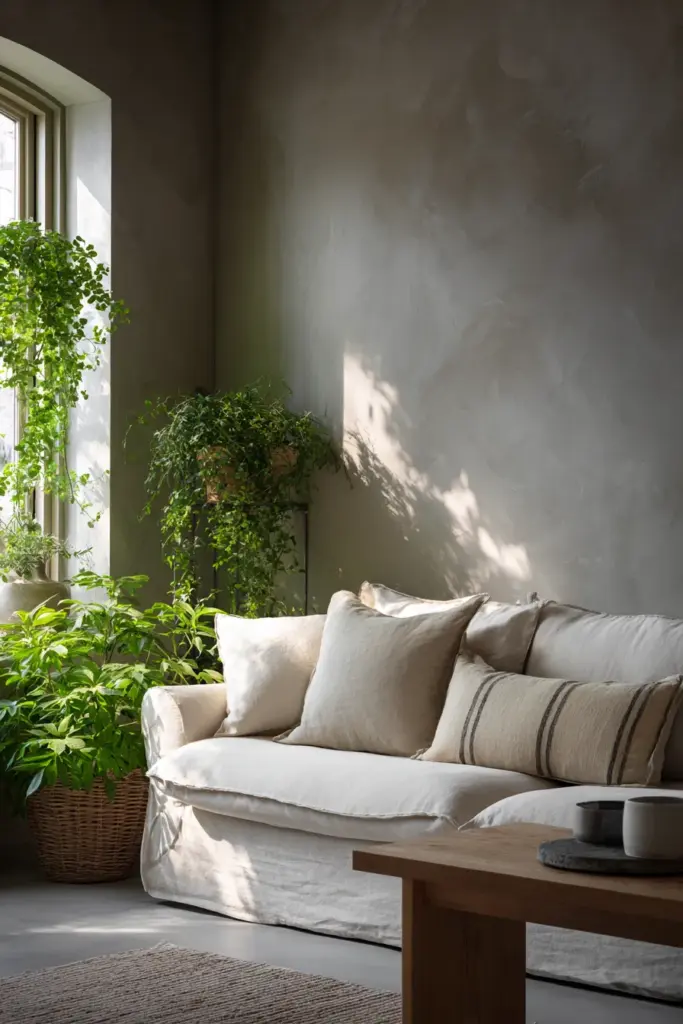
Regular maintenance keeps natural materials looking their best. Wood furniture benefits from occasional oiling to prevent drying. Linen and cotton textiles should be laundered according to care instructions, embracing the slight wrinkling that adds to their character. Plants need consistent care, proper watering, and occasional repotting.
The beauty of thoughtfully chosen, quality pieces lies in their durability. Unlike trend-driven furniture that quickly feels dated, classic Japandi pieces remain relevant for decades. This longevity makes initial investments worthwhile, both economically and environmentally.
Seasonal adjustments keep your space feeling fresh without requiring major overhauls. Learning from Japandi living room transformations can inspire your own evolutionary process. Small changes, rotating accessories, adjusting textile weights, or bringing in seasonal branches, honor the Japanese tradition of seasonal awareness.
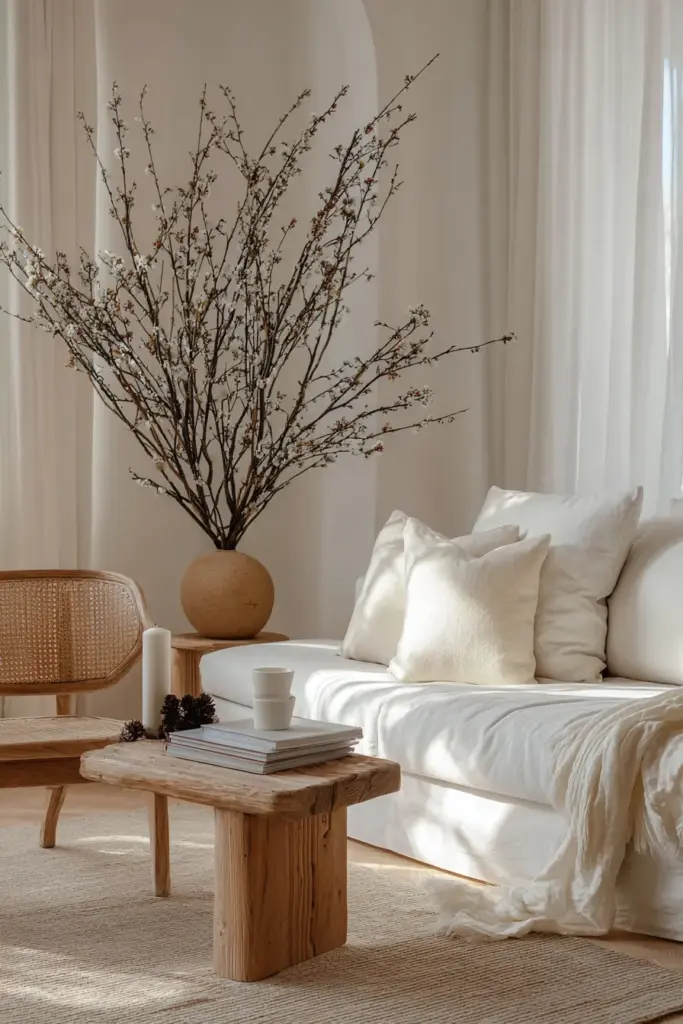
Stay informed about current Japandi living room trends while maintaining your personal vision. Trends can offer fresh ideas and inspiration, but core principles of simplicity, natural materials, and intentionality remain constant. Let trends inform rather than dictate your choices.
Finding inspiration through Japandi living room Instagram accounts and online communities can spark creativity and provide practical solutions to design challenges. However, remember that what works beautifully in a styled photoshoot might not suit your real-life needs. Filter inspiration through the lens of your actual lifestyle.
For those who enjoy hands-on projects, exploring DIY approaches to Japandi living room design offers opportunities to create custom pieces that perfectly suit your space and budget. Simple projects like building floating shelves, creating custom artwork, or refinishing vintage furniture can add personal touches while maintaining aesthetic consistency.
Embracing Impermanence
Wabi-sabi philosophy teaches appreciation for impermanence and natural aging. Your living room will evolve over time. Wood will darken. Fabrics will soften. Plants will grow. Rather than fighting these changes, embrace them as part of your space’s story. This acceptance relieves the pressure of maintaining showroom perfection and allows your home to feel genuinely lived-in.
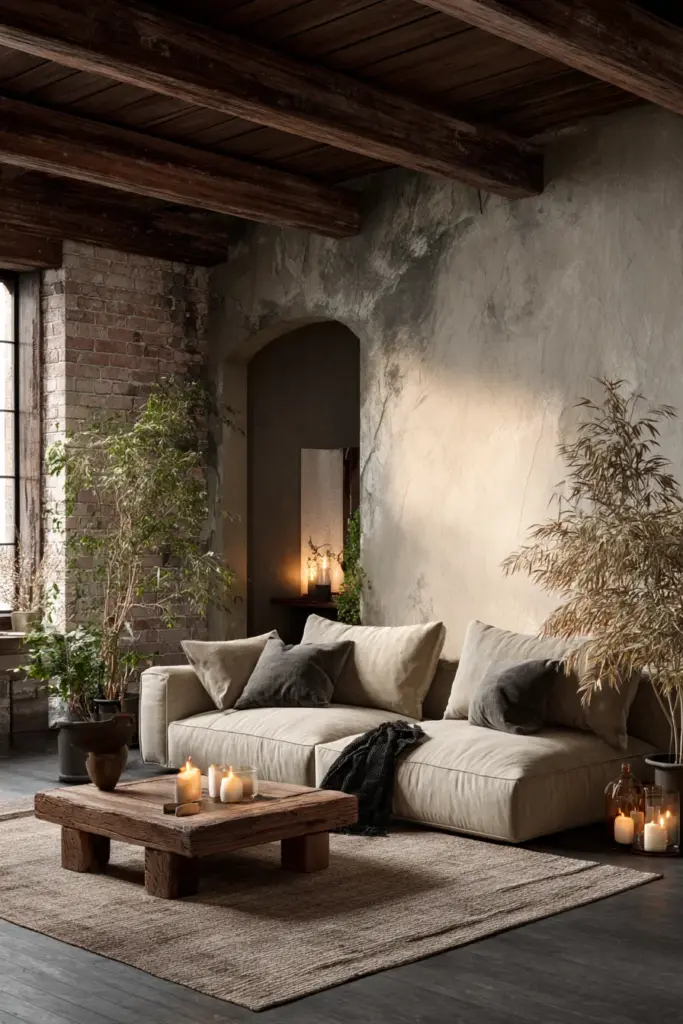
Regularly reassess each item in your space. Does it still serve a purpose or bring joy? If not, consider removing it. This ongoing curation prevents gradual accumulation and maintains the intentionality central to Japandi design.
Smart Storage Solutions for Seamless Living
Storage might seem mundane, but in Japandi design it’s essential to maintaining the uncluttered aesthetic that defines the style. The goal is hiding necessary items while keeping frequently used objects accessible and beautifully displayed.
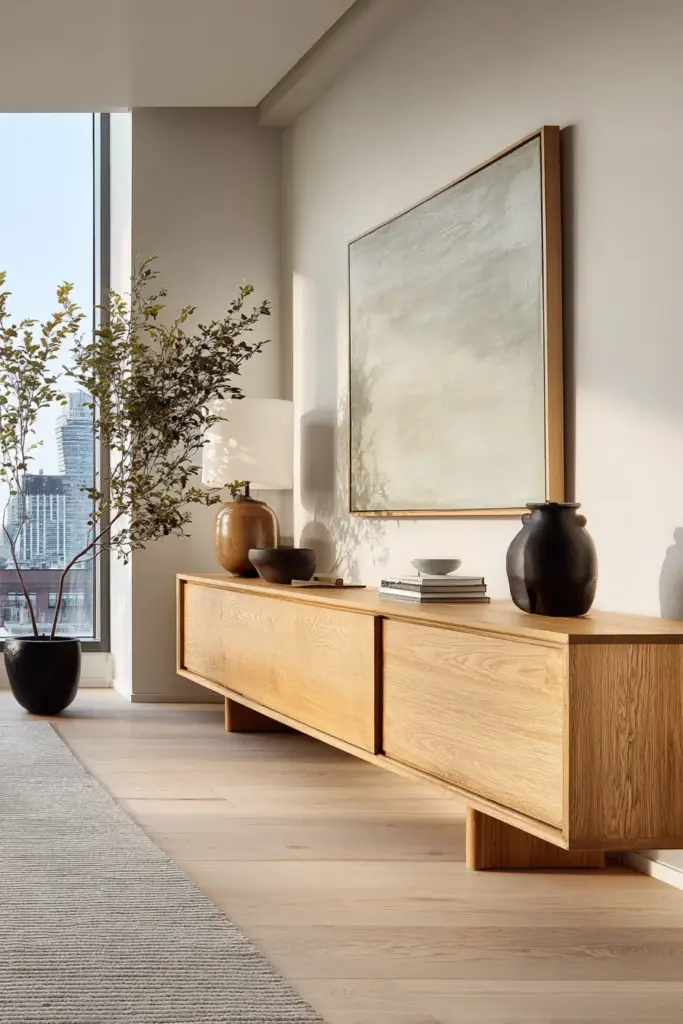
Implementing effective storage solutions in your Japandi living room begins with honest assessment of what you actually need to store. Remote controls, books, throws, electronics, and media all require homes. Rather than letting these items scatter across surfaces, create designated storage that keeps them organized and out of sight when not in use.
Low credenzas and media consoles provide substantial storage while maintaining clean lines. Choose pieces with simple door fronts that hide shelving or drawers. The exterior presents an unbroken surface that contributes to visual calm, while interior organization keeps items categorized and accessible.
Baskets and boxes in natural materials offer flexible storage that looks intentional rather than cluttered. Woven seagrass, rattan, or cotton rope baskets can hold throws, magazines, or toys while adding textural interest. Place them on lower shelves or beside furniture where they’re accessible but not obtrusive.
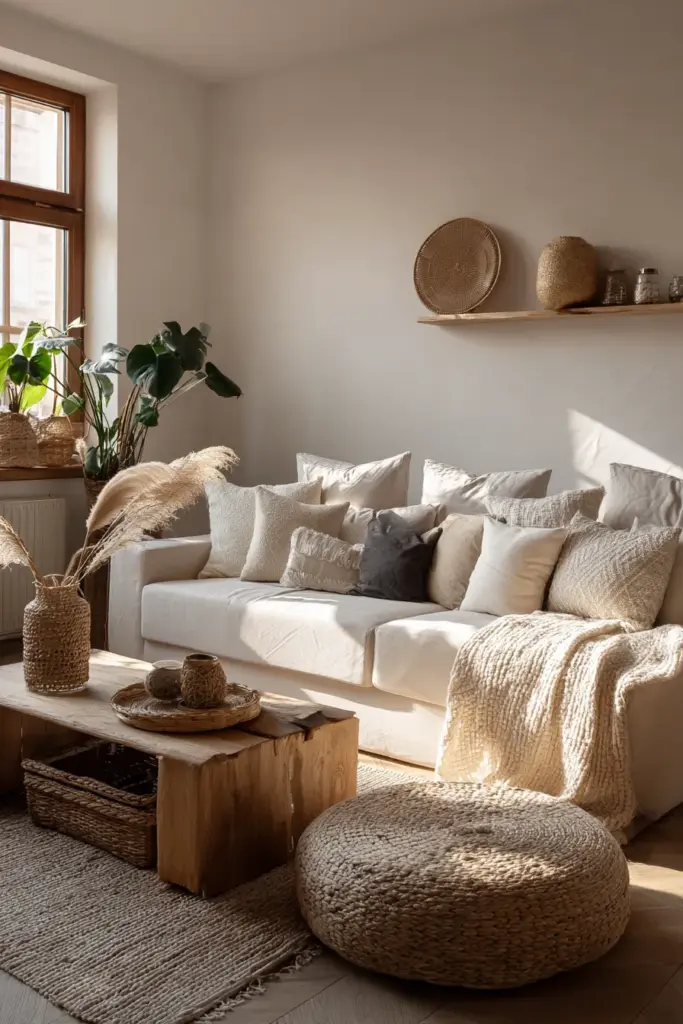
Built-in storage, when possible, maximizes efficiency while maintaining seamless aesthetics. Floating shelves utilize vertical space without visual weight. Floor-to-ceiling built-ins provide extensive storage while appearing architectural rather than furniture-based. Keep displays on these units minimal, balancing stored items with empty space.
Consider dual-purpose furniture throughout your planning. Ottomans with hidden storage, coffee tables with drawers, and benches with lift-up seats all provide functionality without adding visual clutter. These pieces work especially well in smaller spaces where every item must earn its place.
The Art of Display
What you choose to display deserves as much consideration as what you hide. Open shelving should feature carefully curated objects arranged with generous spacing. Group similar items together, vary heights and depths, and leave substantial areas completely empty. This negative space prevents the busy, cluttered feeling that can plague even beautiful objects when crowded together.
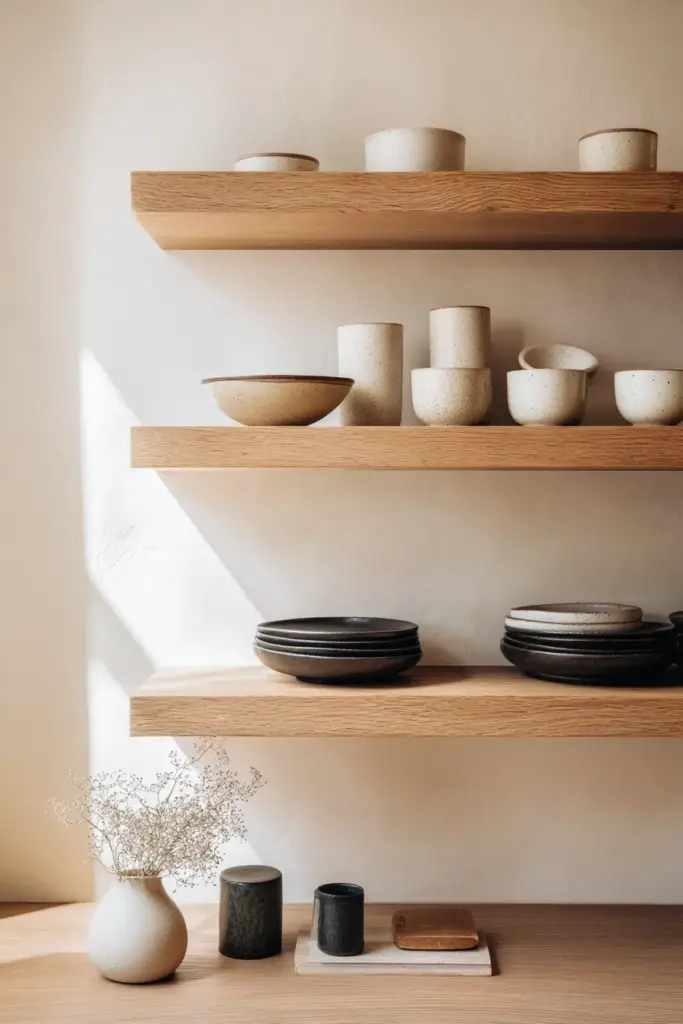
Rotate displayed items seasonally or whenever your space starts feeling stale. Store some objects away, bringing them back later for fresh appreciation. This practice prevents visual fatigue and keeps your space feeling dynamic.
Expert Tips for Japandi Living Room Success
Creating an authentic Japandi living room requires more than following a checklist. These expert insights will help you navigate common challenges and achieve a space that feels genuinely yours.
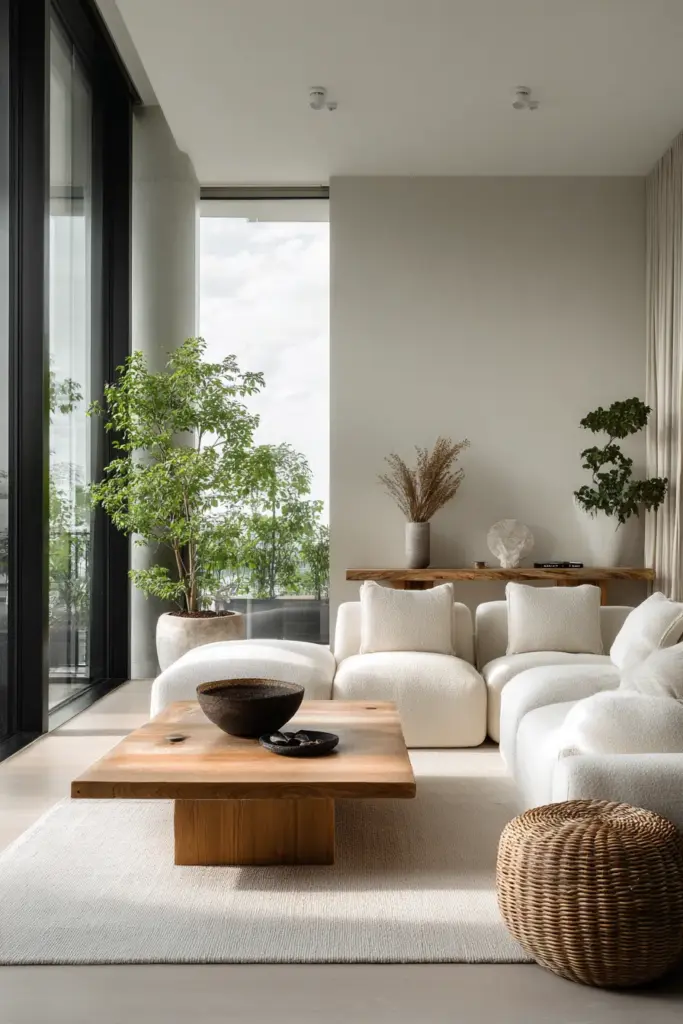
Start with a clear vision before purchasing anything. Collect inspiration images, noting what specifically appeals to you. Is it the color palette? The furniture proportions? The amount of negative space? Understanding which elements resonate helps you make cohesive choices rather than accumulating disconnected pieces.
Invest in fewer, better pieces rather than filling your space quickly with compromise choices. A single exceptional sofa you love will serve you better than three mediocre pieces bought to fill space. This patient approach aligns with Japandi principles and typically proves more economical long-term.
Pay attention to scale and proportion. Furniture should suit your room’s dimensions. Overly large pieces overwhelm small spaces, while tiny furniture makes large rooms feel disconnected. Measure carefully and consider how pieces relate to each other and to architectural elements.
Don’t fear empty space. Western design often emphasizes filling every corner, but Japandi embraces negative space as essential to visual calm. A mostly empty corner with a single plant feels intentional and peaceful. A crowded corner creates visual stress even if every item is beautiful.
Layer lighting from multiple sources rather than relying on a single overhead fixture. This creates depth, allows flexibility for different activities and moods, and prevents the flat, harsh lighting that undermines the serene atmosphere you’re cultivating.
Choose natural materials whenever possible, but ensure they’re practical for your lifestyle. If you have young children or pets, washable slipcovers might serve better than permanent upholstery. The most beautiful design fails if it doesn’t accommodate your real life.
Avoid common mistakes like over-accessorizing, choosing furniture that’s too large for the space, neglecting lighting, or prioritizing aesthetics over comfort. Your living room should be livable, not just photogenic. If your beautifully minimal sofa proves uncomfortable, you won’t enjoy the space regardless of how well it photographs.
Edit ruthlessly. When in doubt about whether to include an item, leave it out. You can always add later, but removing items you’ve already committed to and placed feels harder. Start minimal and build slowly, ensuring each addition genuinely enhances the space.
Consider the entire sensory experience, not just visual aesthetics. How does the room feel? Does sunlight warm certain spots at specific times? Do materials feel pleasant to touch? Does the space smell fresh? Creating a truly peaceful environment engages all senses.
Working with Existing Architecture
Not every home offers ideal architectural bones for Japandi design. Ornate moldings, unusual room shapes, or challenging layouts require creative problem-solving. Rather than fighting existing features, consider how to work with them. Painting ornate moldings in room-matching tones minimizes their visual impact. Thoughtful furniture placement can redefine awkward spaces.
If renovations are possible, simplify where you can. Removing unnecessary built-ins, simplifying window treatments, or painting walls in neutral tones all move spaces toward Japandi aesthetics. However, respect your home’s essential character rather than forcing an incompatible style.
Conclusion
Creating a Japandi living room offers more than aesthetic transformation. It’s an invitation to live more intentionally, to surround yourself with objects that serve clear purposes or bring genuine joy, and to embrace the peaceful clarity that comes from visual restraint.
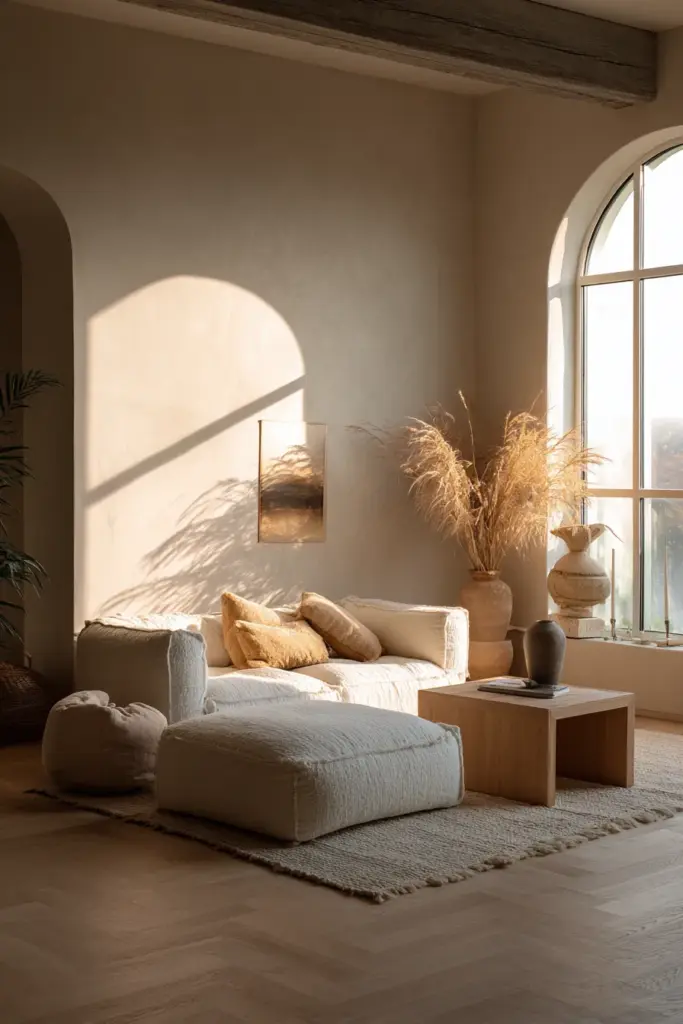
Throughout this journey, we’ve explored the philosophical foundations that make Japandi design meaningful rather than merely trendy. The marriage of Japanese wabi-sabi principles with Scandinavian hygge creates spaces that honor both simplicity and warmth, minimalism and livability. These aren’t contradictions but complementary approaches to creating homes that support our wellbeing.
The practical elements matter equally. Choosing furniture with clean lines and natural materials, building a foundation with neutral color palettes, layering textures thoughtfully, and illuminating spaces with intention, all these decisions compound to create environments that feel both curated and comfortable. Your living room should be a refuge, a space where visual calm supports mental clarity and emotional peace.
Remember that Japandi design isn’t about rigid rules or achieving Pinterest perfection. It’s about understanding core principles and applying them in ways that suit your life, your space, and your needs. A family with young children will interpret these principles differently than a couple in a downtown apartment. Both can achieve authentic Japandi aesthetics by staying true to the underlying values of intentionality, natural beauty, and functional simplicity.
As you continue developing your space, trust your instincts while remaining open to learning and evolution. Your living room will grow and change with you, developing character and patina over time. This natural aging process, embraced rather than fought, embodies the wabi-sabi appreciation for impermanence and authenticity.
Begin where you are with what you have. Start by editing ruthlessly, removing items that don’t serve clear purposes. Invest gradually in quality pieces that will serve you for years. Layer natural materials and textures. Maximize natural light. Create breathing room. These simple actions will move you steadily toward a space that supports your best self.
Continue your Japandi design journey with these essential guides:
- Complete Guide to Japandi Living Room Furniture
- Mastering Japandi Living Room Color Palettes
- Essential Lighting Strategies for Japandi Living Rooms
Frequently Asked Questions
What exactly is Japandi style and how does it differ from minimalism?
Japandi combines Japanese and Scandinavian design principles, creating spaces that are minimal yet warm. Unlike stark minimalism which can feel cold and austere, Japandi incorporates natural textures, cozy textiles, and functional beauty. It embraces the Japanese concept of wabi-sabi, appreciating imperfection and natural aging, while maintaining the Scandinavian emphasis on comfort and hygge. The result feels intentional and calm without sacrificing livability.
Can Japandi design work in a small apartment or living room?
Absolutely. Japandi principles actually work beautifully in compact spaces because the style emphasizes functionality, multi-purpose furniture, and visual calm. By limiting decorative objects, choosing appropriately scaled furniture, and maintaining a light color palette, even small rooms feel spacious and serene. The key lies in thoughtful editing and ensuring every item serves a clear purpose.
What colors are essential for a Japandi living room?
The foundation includes warm whites, soft grays, beiges, and natural wood tones. Accent colors come from nature’s more muted palette, like sage green, dusty terracotta, charcoal gray, or deep navy. These appear sparingly to maintain the calm, neutral base. Black serves as an important grounding element in small doses through metal accents or frames.
How do I make Japandi design feel cozy rather than cold?
Layer natural textiles like linen, cotton, and wool. Include warm wood tones rather than only cool grays. Use multiple light sources with warm-toned bulbs instead of harsh overhead lighting. Add living plants and organic elements. Choose warm neutrals over stark whites. The combination of natural materials, thoughtful lighting, and textural variation creates warmth within the minimal framework.
What type of furniture works best in Japandi living rooms?
Look for pieces with clean lines, low profiles, and natural materials. Wood frames with simple upholstery in neutral fabrics exemplify the style. Avoid ornate details, excessive tufting, or trendy embellishments. Furniture should be functional, comfortable, and beautiful in its simplicity. Quality craftsmanship matters more than quantity of pieces.
How many decorative accessories should I include?
Far fewer than you think. Quality over quantity applies strongly here. Choose a few meaningful pieces with excellent craftsmanship rather than filling surfaces with multiple items. Each object should have space to breathe and be truly appreciated. If a shelf or surface feels crowded, remove items until it feels balanced. Remember that empty space serves an important aesthetic function.
Is Japandi design expensive to achieve?
It can be, but doesn’t have to be. The philosophy of fewer, better pieces actually supports mindful spending. Invest gradually in quality items that will last decades rather than quickly filling space with inexpensive pieces that need frequent replacement. Secondhand shops, vintage stores, and DIY projects can yield excellent results. The minimal aesthetic means you need fewer total items, which can offset higher per-piece costs.
Can I incorporate color or does everything need to be neutral?
While neutrals form the foundation, muted accent colors absolutely have a place. Think nature’s quieter tones rather than bright, saturated hues. A single accent chair in dusty blue, throw pillows in sage green, or artwork featuring earthy terracotta all add interest without disrupting the calm palette. The key is restraint and choosing colors that feel grounded rather than energetic.
How do I maintain a Japandi living room with kids and pets?
Choose durable, washable materials and create smart storage solutions for toys and pet supplies. Closed storage hides clutter when not in use. Slipcovers on sofas allow for easy cleaning. The minimal aesthetic actually benefits families by reducing visual chaos and making cleaning easier. Involve children in tidying routines so maintaining order becomes a shared practice rather than a constant battle.
What plants work best in Japandi living rooms?
Choose varieties that suit your light conditions and care capabilities. Sculptural plants like fiddle leaf figs or rubber trees make statements. Easy-care options like snake plants or pothos work for busy lifestyles. Small succulents add delicate touches. The specific variety matters less than choosing healthy plants in simple containers that complement your overall aesthetic. Living greenery brings essential natural energy regardless of the specific species.
How often should I update or change my Japandi living room?
Japandi design emphasizes longevity over trends. Major furniture and foundational elements should last years or decades. However, small seasonal adjustments, rotating accessories, or swapping textiles can keep the space feeling fresh without constant overhaul. This approach respects both sustainability principles and the investment you’ve made in quality pieces.
Can I mix Japandi with other design styles?
Yes, when done thoughtfully. The key is maintaining consistency in materials, color palette, and level of restraint. A mid-century modern piece might fit beautifully based on its clean lines. Rustic elements can add character if they’re displayed with intention. However, mixing too many styles dilutes the calm, cohesive feeling that makes Japandi special. Choose additions that complement rather than compete with core principles.